
![On-Site Cabinet Spray Painting Denver: The Professional Guide to a Factory Finish [2026]](https://cabinetsrefinishing.com/wp-content/uploads/2026/08/on-site-cabinet-spray-painting-denver-the-professional-guide-to-a-factory-finish-2026-1344x500.jpg)
The role of cabinet stain vs paint comes down to one core decision: do you want to showcase your wood’s natural character, or do you want a clean, uniform color that transforms the entire look of your kitchen? Stain penetrates the wood fiber and enhances the grain. Paint sits on top and creates an opaque shell. Both are legitimate cabinet finishing options, but they behave differently under real kitchen conditions. This guide covers how each finish works, how long it lasts, what it costs, and which one fits your kitchen style and lifestyle.
How does cabinet stain work vs paint?
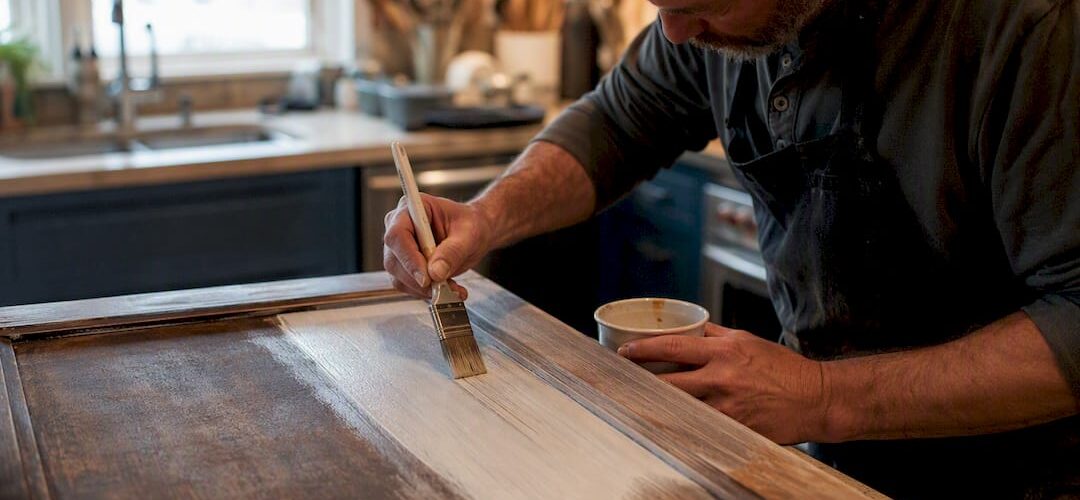
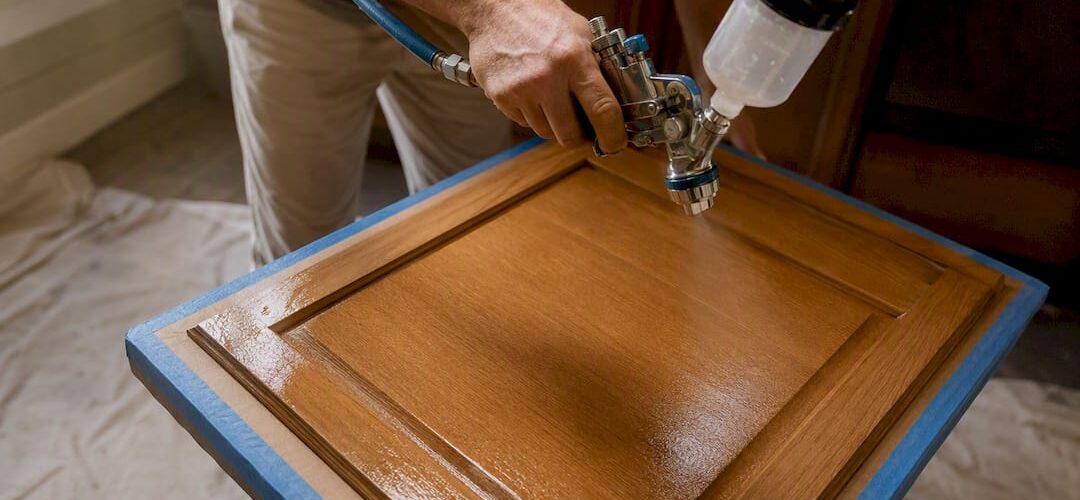
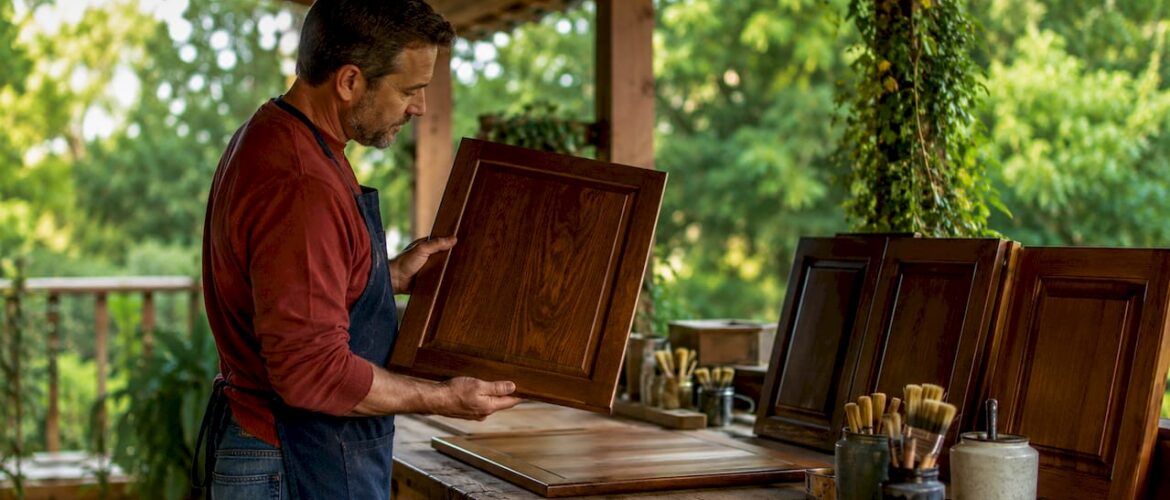
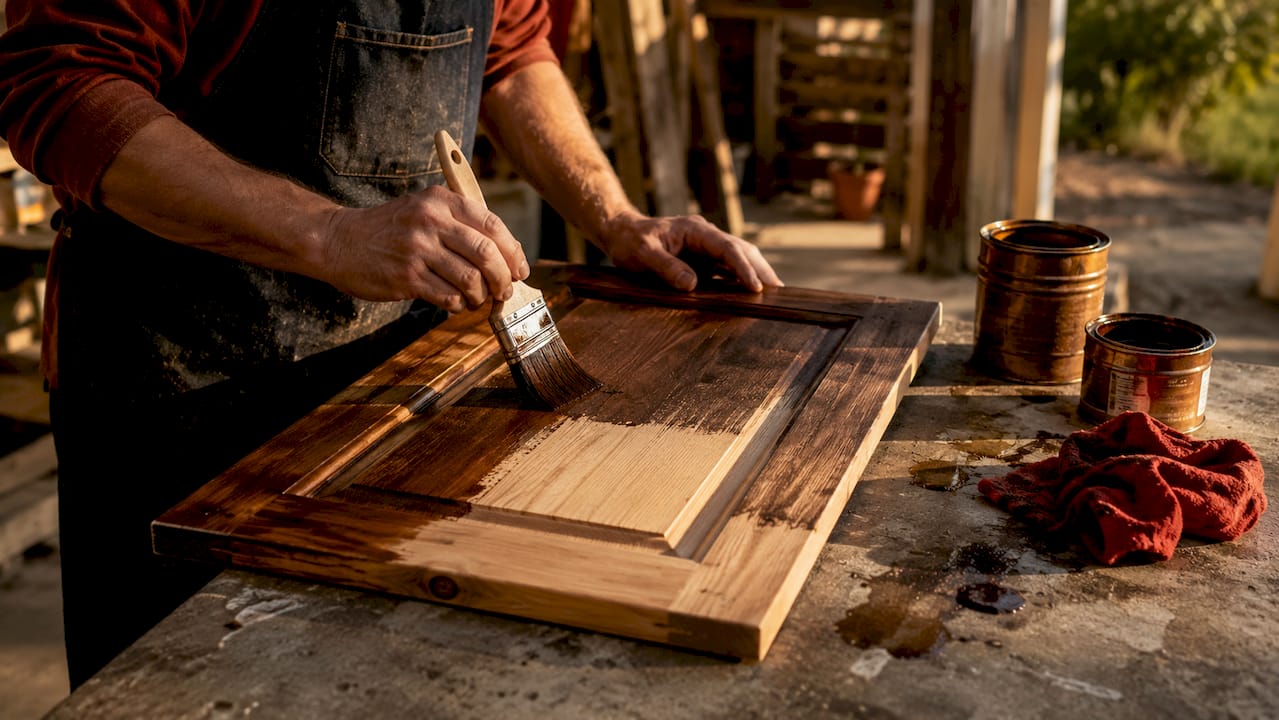
Stain is a penetrating finish. It soaks into the wood fiber, tints the surface, and lets the natural grain show through. The result is a warm, textured look that feels organic and handcrafted. Common stain types include oil-based stain, water-based stain, and gel stain. Gel stain is thicker and sits closer to the surface, making it easier to control on vertical cabinet doors.
Cabinet Painting Service Areas in Denver & Surrounding Cities, Cabinet Refinishing in Denverc County,
Serving Lakewood, CO, Littleton, CO, Golden, CO, Evergreen CO, Roxborough Park CO, Ken Carl Ranch CO,
Arvada, CO, Wheat Ridge, CO,
and Parker CO. Castle Pines CO. Englewood CO. Centennial CO.
Cabinet Painting in Arapahoe County, CO
Including Centennial, CO, Greenwood Village, CO,
Cherry Hills Village, CO, Englewood, CO,
and Aurora, CO.
Cabinet Painting in Adams County & Broomfield, CO
Serving Lakewood, CO, Littleton, CO, Golden, CO, Evergreen CO, Roxborough Park CO, Ken Carl Ranch CO,
Arvada, CO, Wheat Ridge, CO,
and Parker CO. Castle Pines CO. Englewood CO. Centennial CO.
Cabinet Painting in Arapahoe County, CO
Including Centennial, CO, Greenwood Village, CO,
Cherry Hills Village, CO, Englewood, CO,
and Aurora, CO.
Cabinet Painting in Adams County & Broomfield, CO
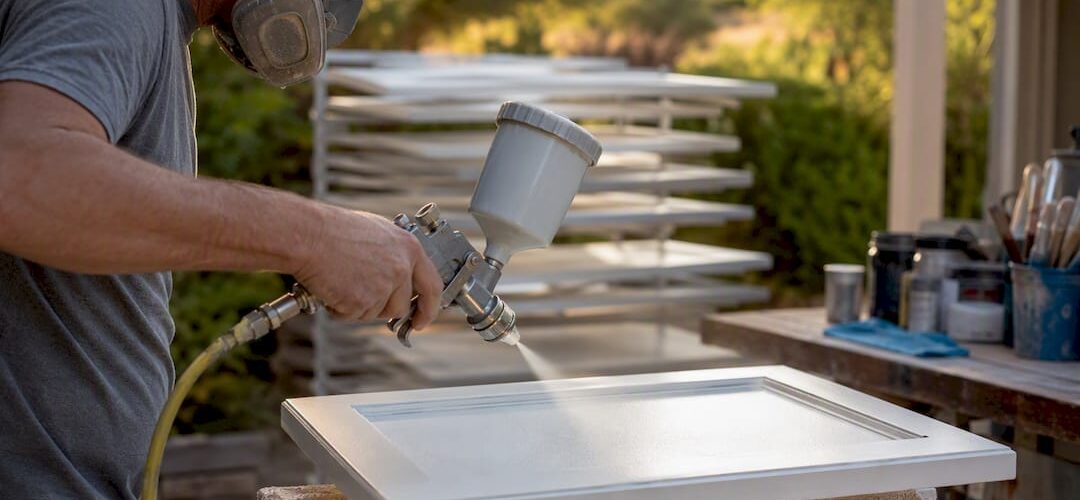
Paint is an opaque coating. It sits on top of the wood and hides everything underneath, including grain, knots, and minor surface flaws. Latex paint and oil-based paint are the two main categories for cabinets. Latex dries faster and cleans up with water. Oil-based paint produces a harder finish but takes longer to cure and has stronger fumes.
The surface prep requirements differ significantly between the two. Stain demands a clean, sanded, and sometimes conditioned wood surface to absorb evenly. Pre-stain conditioning is required on softwoods like pine to prevent blotchy, uneven results. Paint is more forgiving on imperfect surfaces and bonds well to primed plywood or MDF.
- Oil-based stain: Deep penetration, rich color, longer dry time
- Gel stain: Controlled application, excellent for vertical surfaces, strong UV resistance
- Water-based stain: Fast drying, low odor, less color depth than oil-based
- Latex paint: Easy cleanup, flexible, wide color range
- Oil-based paint: Hard cure, durable shell, strong odor during application
Pro Tip: If you are staining oak or cherry cabinets, skip the pre-stain conditioner. Dense hardwoods absorb stain evenly on their own. Save the conditioner for pine, alder, or birch.
What are the durability differences between stained and painted cabinets?
Painted cabinets last 10+ years structurally, but they show chips quickly in high-traffic kitchens. Stained cabinets age more gracefully. Minor dings and dents blend into the wood grain instead of standing out as white or bare spots. That difference matters a lot in a busy kitchen with kids, pets, or heavy daily cooking.
Paint forms a rigid shell on the surface. Paint’s rigid surface can crack with seasonal wood expansion and contraction. Stain penetrates the wood fiber and moves with it, which means stained finishes hold up better through Colorado’s dry winters and humid summers. This is a real advantage for Denver homeowners who deal with significant seasonal humidity swings.
Moisture protection is strong for both finishes when applied correctly. In humid kitchens over 60% relative humidity, both semi-gloss paint and oil-based stain with a polyurethane topcoat provide 95% protection against moisture-related damage when three topcoats are applied. The topcoat matters as much as the base finish.
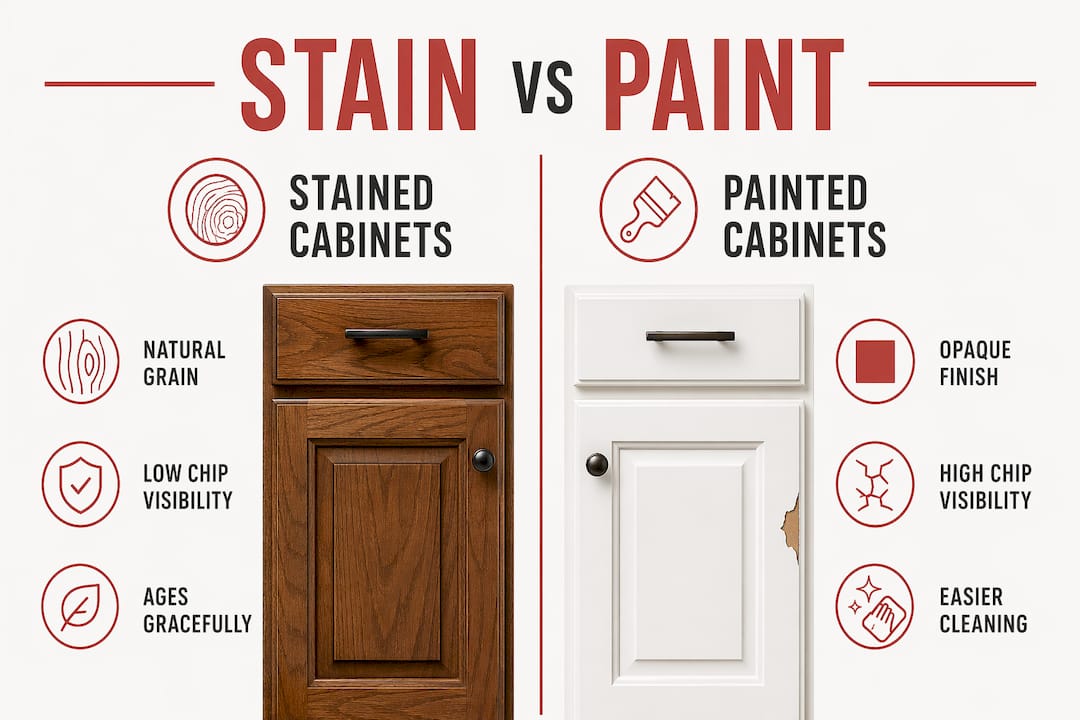
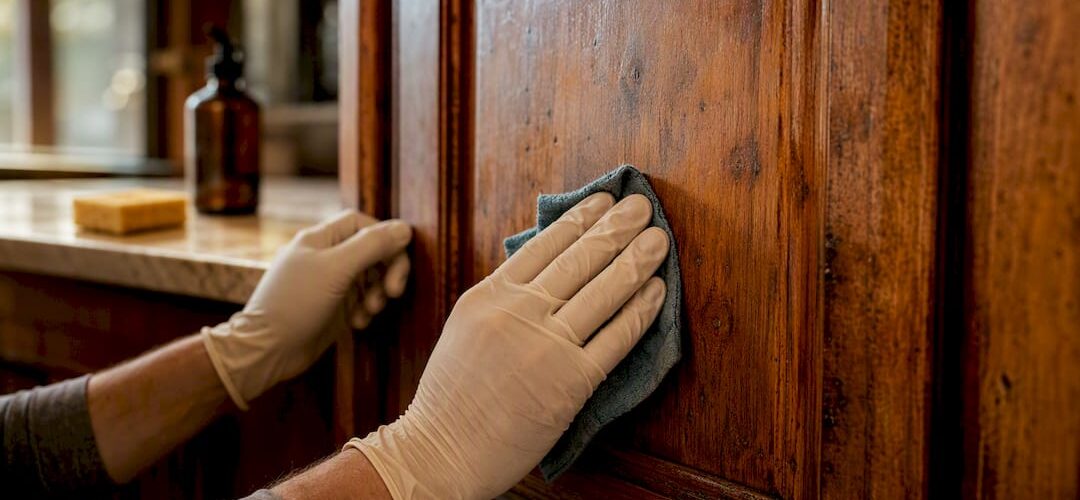
Cleaning is where paint has a clear edge. Painted cabinets offer easier cleaning because the smooth sealed surface does not trap grease. Stained cabinets have a textured grain that holds onto cooking oils and grime. You need a more disciplined cleaning routine with stained cabinets to prevent buildup.
| Factor | Stained Cabinets | Painted Cabinets |
|---|---|---|
| Chip visibility | Low, blends with grain | High, shows bare wood |
| Cleaning ease | Harder, grain traps grease | Easier, smooth sealed surface |
| Wood movement | Flexes with wood | Can crack at joints |
| Moisture resistance | Strong with poly topcoat | Strong with semi-gloss topcoat |
| Touch-up ease | Harder, requires refinishing | Easier, spot paint works |
Pro Tip: Apply a semi-gloss or satin topcoat over stain on cabinet doors. Flat or matte topcoats look beautiful but absorb grease and are nearly impossible to clean in a kitchen environment.
How do cost and project factors affect stain vs paint decisions?
Cost is one of the most practical factors in the stain vs paint cabinets decision. Professional painting services cost about 10–15% more than staining due to multi-step prep and high-grade topcoats. Paint runs approximately $4 per square foot compared to roughly $3.50 per square foot for stain. That gap adds up across a full kitchen.
Here is what drives the cost difference in a typical cabinet refinishing project:
- Surface preparation: Paint requires more thorough sanding, priming, and sometimes grain filling to achieve a smooth opaque finish. Stain prep is simpler on quality hardwoods.
- Material costs: Premium paints like Benjamin Moore Advance or Sherwin-Williams Emerald Urethane cost more per gallon than most stain products.
- Labor complexity: Achieving a factory-smooth painted finish requires multiple thin coats, sanding between coats, and careful edge work. Stain application is faster on open-grain woods.
- Wood species suitability: Paint hides flaws and suits lower-quality plywood, while stain enhances premium woods like cherry, maple, or walnut. If your cabinets are solid oak or cherry, staining them preserves and showcases that investment.
- Resale value impact: Stain applications on premium woods can boost resale value by 25–50% compared to painted equivalents. Buyers recognize and respond to natural wood grain in high-end kitchens.
For DIY projects, staining is generally more forgiving on hardwoods but punishing on softwoods. Painting is more forgiving on imperfect surfaces but demands patience and proper technique to avoid brush marks and lap lines. A professional refinishing project typically runs $3,000–$8,000, compared to $15,000–$40,000 for full cabinet replacement. That math makes refinishing the smarter choice for most homeowners. Check the Denver homeowner pricing guide for a detailed local cost breakdown.
Which finish fits your kitchen style?
The best finish for kitchen cabinets depends heavily on the design direction you are going for. Stain and paint each belong to different aesthetic worlds, and forcing the wrong one into your kitchen creates visual friction.
- Traditional kitchens: Stain is the natural choice. Warm wood tones in oak, cherry, or maple complement raised-panel doors, crown molding, and classic hardware. A medium walnut or golden oak stain reads as timeless rather than dated.
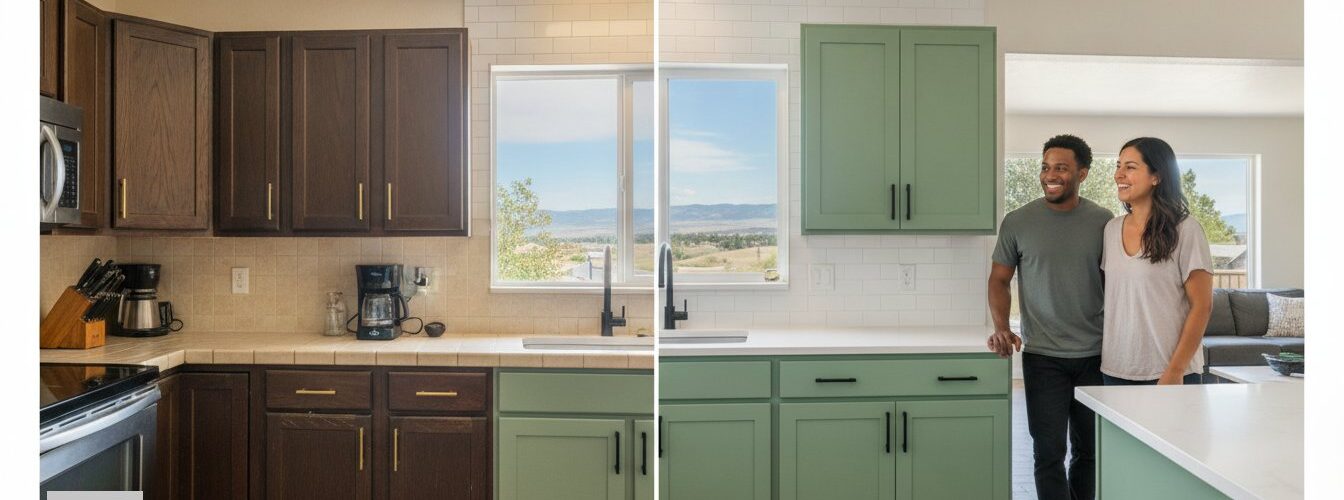
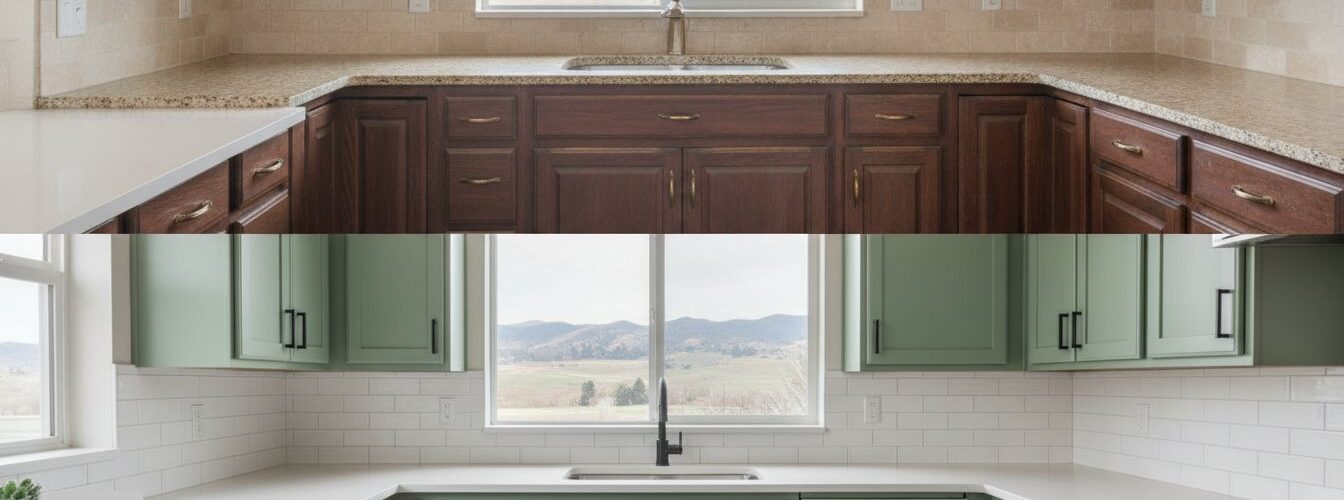
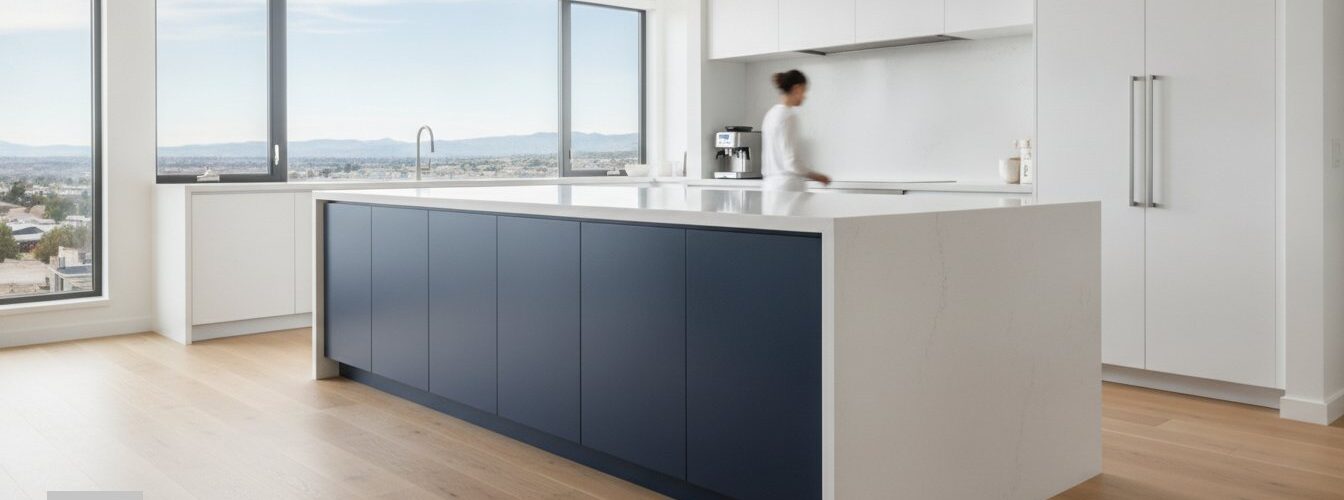
- Modern and contemporary kitchens: Paint suits modern and farmhouse design schemes where clean lines and bold or neutral colors define the space. White, navy, sage green, and charcoal gray are all paint territory.
- Farmhouse kitchens: Both finishes work here. A whitewash or gray stain gives a rustic, lived-in look. A crisp white or cream paint creates the clean farmhouse aesthetic seen in most design magazines.
- Transitional kitchens: A two-tone approach works well. Stained lower cabinets paired with painted uppers in white or off-white creates contrast without committing fully to either finish.
- Bold color statements: Paint wins outright. Stain is limited to wood tones. If you want navy blue island cabinets or forest green lowers, paint is your only real option.
Your maintenance tolerance matters as much as your style preference. Owners of painted cabinets must accept regular touch-ups as part of ownership, especially in high-traffic areas near handles and edges. Stained cabinets age more quietly. The grain absorbs minor wear and the finish does not announce every bump and scratch. If you cook daily and have a busy household, that forgiving quality has real value.
What practical tips help homeowners maintain cabinet finishes?
Getting the finish right from the start saves you from expensive repairs later. These tips apply whether you are doing it yourself or overseeing a professional project.
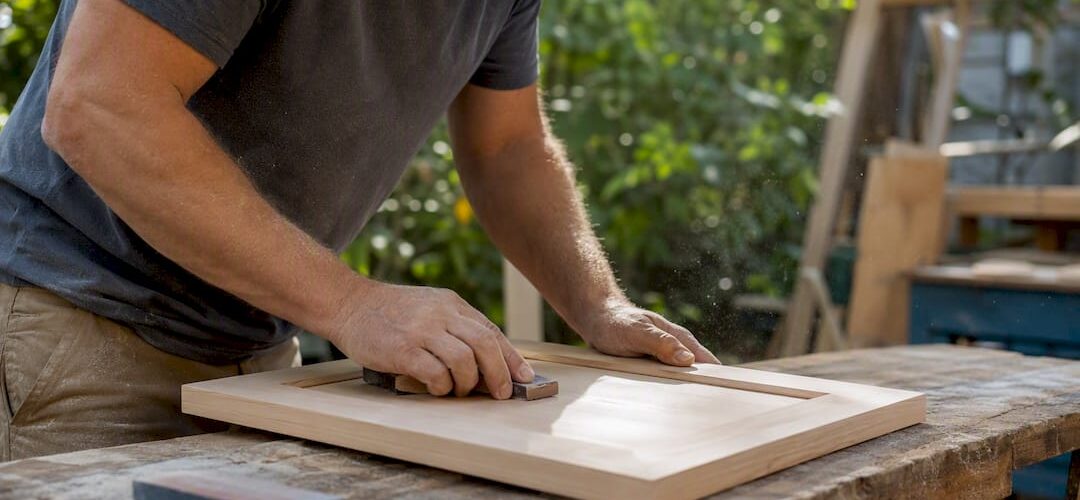
- Sand before staining, always. Start with 120-grit sandpaper, then finish with 180-grit. Skipping this step causes uneven stain absorption and a blotchy result.
- Clean stained cabinets weekly. Use a mild dish soap solution and a microfiber cloth. Stained cabinets require disciplined cleaning to prevent grease from building up in the wood grain. Monthly deep cleaning with a wood-safe degreaser keeps the finish looking sharp.
- Touch up painted cabinets with the original paint. Keep a labeled jar of your cabinet paint color for spot repairs. Sand the chipped area lightly, apply primer, then feather in the paint. For larger repairs, chipped paint repairs often fail without proper prep, so know when to call a professional.
- Account for wood movement. In dry climates like Denver, wood contracts in winter and expands in summer. Stain handles this better than paint. If you paint, use a flexible latex formula and apply it in moderate humidity conditions.
- Choose the right sheen. Satin and semi-gloss finishes outperform flat or eggshell in kitchens. They resist moisture and clean up without scrubbing the finish off.
Pro Tip: For gel stain on kitchen cabinets exposed to direct sunlight, the UV color retention is strong. Gel stain retained 92% of its color after 1,000 hours of UV exposure in testing. That is a meaningful advantage for south-facing kitchens.
Key takeaways
The choice between stain and paint is not about which finish is better overall. It is about which one fits your wood, your kitchen, and your willingness to maintain it.
| Point | Details |
|---|---|
| Stain enhances wood grain | Use stain on premium hardwoods like oak, cherry, or maple to showcase natural beauty. |
| Paint covers flaws effectively | Paint is the right call for plywood, MDF, or lower-quality cabinet boxes needing a clean look. |
| Durability depends on topcoat | Three coats of polyurethane or semi-gloss topcoat provide 95% moisture protection for either finish. |
| Paint costs 10–15% more | Higher prep and material costs make professional painting slightly pricier than staining per square foot. |
| Stain ages more forgivingly | Stained cabinets hide dings in the grain; painted cabinets show chips clearly at edges and handles. |
What i have learned after seeing hundreds of kitchen finishes
Homeowners consistently confuse “low maintenance” with “durable.” Those are not the same thing. Stained cabinets are highly durable on quality wood, but they are not low maintenance. The grain traps grease. You have to clean them consistently or the buildup becomes a real problem. Painted cabinets are easier to wipe down, but they chip at edges and handles within a few years in a working kitchen. Neither finish is truly hands-off.
The misconception I see most often is that paint is always the modern, practical choice. That is only true if your cabinets are made from materials that do not deserve to be seen. If you have solid cherry or quarter-sawn oak cabinets and you paint them, you are covering up something genuinely valuable. The resale value impact of that decision is real. Buyers notice natural wood grain in premium kitchens.
My honest recommendation is this: match the finish to the wood and the lifestyle, not the trend. If you cook every day, have kids, and want minimal upkeep, a semi-gloss painted finish in a neutral color is practical and looks great. If you have quality hardwood cabinets and you want a kitchen that feels warm and timeless, stain them, seal them properly, and clean them regularly. Both paths lead to a beautiful kitchen when executed well.
— Jesse
Get a factory-quality finish on your cabinets
Whether you are leaning toward a warm stained finish or a clean painted look, the result depends almost entirely on preparation and application quality. Cabinetsrefinishing uses a factory-finish methodology that includes meticulous sanding, priming, and multiple protective topcoats applied in a controlled environment. Projects are completed in 3–5 days, not weeks, and refinishing costs range from $3,000 to $8,000 compared to $15,000–$40,000 for full replacement. If you want a professional cabinet refinishing result that holds up in a real kitchen, contact Cabinetsrefinishing for a free estimate at 720-219-9716.
FAQ
What is the main difference between cabinet stain and paint?
Stain penetrates the wood fiber and enhances the natural grain, while paint creates an opaque coating that hides the wood entirely. Stain is best for premium hardwoods; paint works well on plywood or lower-quality cabinet materials.
Which finish is easier to maintain in a kitchen?
Painted cabinets are easier to clean because the smooth sealed surface does not trap grease. Stained cabinets require more frequent cleaning to prevent oil buildup in the wood grain texture.
Does staining cabinets add more resale value than painting?
Stain on premium woods like oak, cherry, or walnut can boost resale value by 25–50% compared to painted equivalents, according to cabinet finish research. Buyers in higher price brackets respond to visible natural wood grain.
Can i stain over painted cabinets or paint over stained ones?
Painting over stained cabinets is possible with proper sanding and priming. Staining over painted cabinets is not practical because the paint blocks wood absorption. You would need to strip the paint entirely before staining.
How long do painted kitchen cabinets last before chipping?
Painted cabinets last 10 or more years structurally, but chipping at edges and handles can appear within 2–4 years in high-traffic kitchens without a durable topcoat. A semi-gloss or satin urethane topcoat significantly extends the chip-free lifespan.
Recommended
- What Type of Paint is Best for Kitchen Cabinets? A Pro’s Guide – Cabinet Refinishing and Cabinet Painting Denver 720-219-9716
- Cabinet Painting vs Staining Cost: 2026 Denver Homeowner Guide – Cabinet Refinishing and Cabinet Painting Denver 720-219-9716
- The Best Sheen for Kitchen Cabinet Paint: A Professional Denver Guide – Cabinet Refinishing and Cabinet Painting Denver 720-219-9716
- Painting vs Staining Cabinets in Denver: The 2026 Homeowner’s Guide – Cabinet Refinishing and Cabinet Painting Denver 720-219-9716