
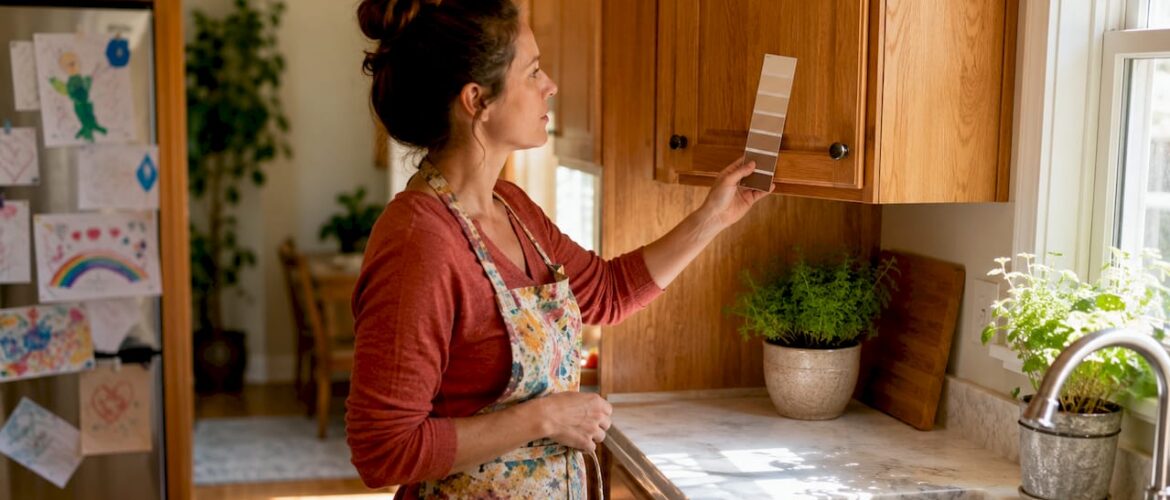
Family-friendly kitchen cabinet colors are defined as finishes that balance warmth, durability, and safe indoor air quality for households with children and pets. The best choices in 2026 are warm soft neutrals like warm white, taupe, greige, and nature-inspired tones like sage green. These shades reduce visual overstimulation, hide everyday marks, and pair well with low-VOC, satin finishes that keep your kitchen both safe and easy to clean. This guide covers the top color families, finish types, safety factors, and combination strategies that work for real family life.
1. What are the best color families for family-friendly kitchen cabinets?
Warm, soft neutrals are the top color family for family kitchens. Shades like warm white, oat, taupe, mushroom, and greige create calming backdrops that reduce sensory overload and keep attention on family interaction rather than the room itself. These tones also hide fingerprints and light smudges far better than stark white.
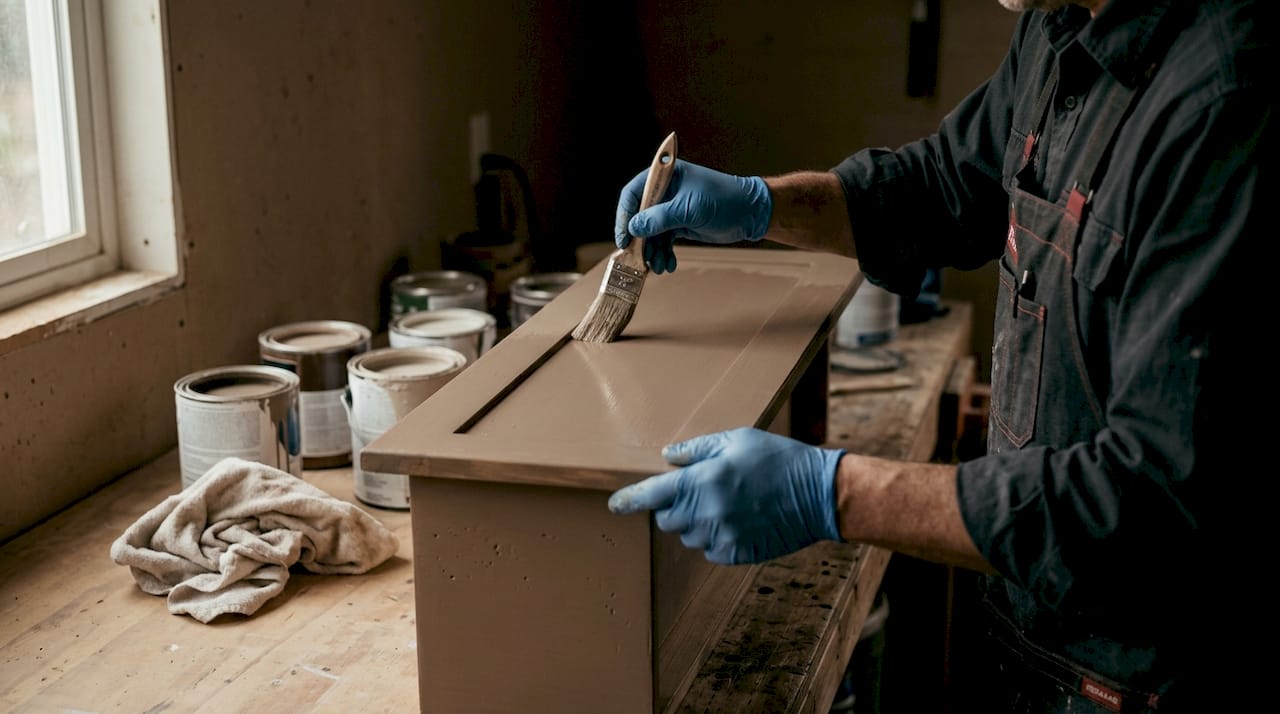
Nature-inspired muted greens rank a close second. Sage and olive tones are linked to mental calm and feel easy to live with long-term. Design experts endorse organic shades like sage green as timeless, family-safe choices that age gracefully through changing trends.
Earthy accents round out the palette. Dusty terracotta and muted rust work well as accent colors on islands or lower cabinets without overstimulating the space. Here is a quick breakdown of the top color families and their practical benefits:
- Warm whites and creams: Bright but not clinical; hide light marks; pair with any countertop material
- Taupe, mushroom, and greige: Hide marks better than stark white or cool gray; warm and welcoming
- Sage and olive green: Promote calm; timeless appeal; nature-inspired and easy to maintain
- Dusty terracotta and muted rust: Best used as accents; add warmth without visual noise
- Cool gray and stark white: Fading from favor in 2026; show fingerprints easily; feel clinical rather than welcoming
Designers predict a clear decline in bright white and cool gray cabinets, replaced by cream whites and warm beiges that create emotional resonance. That shift is not just aesthetic. It reflects how families actually use their kitchens every day.
2. How do cabinet finishes and sheens affect family-friendliness?
The finish you choose matters as much as the color. Satin is the most practical sheen for family kitchens. It balances stain resistance and low glare and holds about 65% of the painted cabinet market for good reason. Juice spills, cooking oil, and sticky handprints wipe off a satin surface without scrubbing.
Matte finishes are growing in popularity because they look soft and sophisticated. The tradeoff is real, though. Matte surfaces absorb grease and moisture more readily, making them harder to clean in a high-traffic kitchen. They work better in low-use spaces than in the heart of a busy home.
Semi-gloss offers maximum stain resistance but reflects light sharply. That glare highlights every dent, brush mark, and imperfection on cabinet doors. Most families find the tradeoff not worth it unless cabinets are in near-perfect condition.
Here is how the three main sheens compare for family use:
- Satin: Best all-around choice; wipeable; low glare; called a “spill-proof” finish by designers
- Matte: Soft look; harder to clean; better for low-traffic areas
- Semi-gloss: Easiest to wipe; shows imperfections; best for trim rather than full cabinet doors
Pro Tip: When selecting a paint product, ask for a wipeable, water-based formula in a satin sheen. These dry harder than standard latex and resist the repeated cleaning that family kitchens demand. Check out durable cabinet paint options before committing to a product.
3. What safety and air-quality factors should families consider?
Safe kitchen cabinet colors go beyond aesthetics. The finish applied to your cabinets directly affects the air your family breathes, especially in the first weeks after installation or refinishing.
Low-VOC and water-based paints are the standard for family-safe cabinetry. Modern low-VOC formulas minimize symptoms like headaches and dizziness caused by solvent fumes. This matters most in homes with young children, pregnant adults, or pets who spend significant time in the kitchen.
Cabinet boxes made from composite wood carry a separate risk. Formaldehyde emissions from particleboard and MDF are a real concern. TSCA Title VI compliance sets limits on formaldehyde in composite wood products. Ask your supplier for documentation, not just a marketing claim on the box.
Follow these steps when evaluating cabinet safety:
- Request the actual product data sheet for VOC content, not just the label claim
- Confirm TSCA Title VI compliance for any composite wood cabinet components
- Ask for water-based or UV-cured finish options from your refinishing contractor
- Ventilate the kitchen fully during and after any finishing work
- Wait the full cure time before regular occupancy, which varies by product but is typically 7–14 days
Pro Tip: “Low-VOC” on a label is not a regulated term in all states. Verify emissions certifications directly with the manufacturer or ask your contractor for the product’s technical data sheet.
4. How do you combine cabinet colors for a stylish family kitchen?
Two-tone cabinet combinations are the defining color scheme for family kitchens in 2026. The most practical approach pairs lighter tones on upper cabinets with warmer or slightly deeper tones on lower cabinets. Buttermilk uppers with clay lowers are a strong example. The lighter top keeps the room bright and open. The deeper lower tone hides the marks that happen at counter height and below.
This strategy works because it mirrors how kitchens actually get dirty. Upper cabinets collect far less daily contact than lower ones. Putting your most forgiving color where it gets the most wear is practical design, not just style.
Here is a comparison of popular two-tone combinations for family kitchens:
| Upper color | Lower color | Practical benefit | Potential drawback |
|---|---|---|---|
| Warm white | Sage green | Bright and calm; hides lower marks | Green can feel dated if overdone |
| Cream or buttermilk | Clay or taupe | Warm and inviting; excellent mark tolerance | Needs warm lighting to avoid looking muddy |
| Oat or greige | Muted olive | Earthy and cohesive; very forgiving | Can feel heavy in small kitchens |
| Soft white | Dusty terracotta | Playful warmth; accent-friendly | Terracotta works best on islands only |
A few tips for integrating accent colors without overstimulating the space:
- Limit bold accent colors to one surface, such as an island or a single accent wall of cabinets
- Use the same hardware finish throughout to unify a two-tone scheme
- Test paint samples in your actual kitchen lighting before committing, since warm tones shift significantly under LED versus incandescent light
- Explore cabinet color combinations that are proven to work together before choosing your palette
5. Practical tips for durable cabinet colors in busy family kitchens
Durability in a family kitchen comes from both color choice and finish quality. Warm neutrals and muted greens tolerate fingerprints and stains far better than stark white or dark colors. Dark cabinets highlight oils and fingerprints quickly. Families who want dark tones should limit them to islands or lower accent cabinets rather than full coverage.
Countertop material also affects how your cabinet color holds up visually. Quartz countertops with warm undertones complement greige and taupe cabinets without competing for attention. A properly sealed countertop surface also prevents moisture from migrating to cabinet faces, which protects the finish over time.
Professional refinishing extends cabinet life significantly. Cabinetsrefinishing uses a factory-finish methodology with meticulous surface preparation and multiple protective layers. That process produces a harder, more durable finish than most DIY applications. Projects typically complete in 3–5 days, and refinishing costs range from $3,000 to $8,000 compared to $15,000 to $40,000 for full cabinet replacement.
Here are the most practical tips for maintaining durable cabinet colors:
- Choose warm whites or greiges if you want a light color that does not show every mark
- Avoid solid black or very dark navy on all cabinets. Use them only as accents
- Clean cabinets with a damp microfiber cloth and mild dish soap. Avoid abrasive scrubbers on satin finishes
- Reapply a protective topcoat every few years on high-contact doors and drawer fronts
- Ask your contractor about low-VOC paint options that also deliver long-term durability
Pro Tip: If your current cabinets are in good structural shape, refinishing them in a family-friendly color costs a fraction of replacement and delivers a finish that is often harder and more durable than what comes on stock cabinets.
Key takeaways
The most durable and family-friendly cabinet colors are warm soft neutrals and nature-inspired muted tones, applied in a satin, low-VOC finish that balances easy cleaning with safe indoor air quality.
| Point | Details |
|---|---|
| Best color families | Warm whites, taupe, greige, and sage green hide marks and reduce overstimulation. |
| Top finish for families | Satin sheen offers the best balance of stain resistance, cleanability, and low glare. |
| Safety comes first | Request low-VOC, water-based finishes and TSCA Title VI documentation for composite wood cabinets. |
| Two-tone strategy | Pair lighter uppers with warmer or deeper lowers to hide marks where they happen most. |
| Refinishing over replacing | Professional refinishing costs $3,000–$8,000 versus $15,000–$40,000 for full replacement. |
Why I think most families are choosing cabinet colors the wrong way
Most homeowners pick a cabinet color from a paint chip under a store’s fluorescent lights, then wonder why it looks wrong at home. That single mistake leads to more repaints and regrets than any other factor I have seen.
The deeper issue is that families tend to choose colors for how they look in photos rather than how they perform in daily life. A stark white kitchen photographs beautifully. It also shows every coffee drip, every sticky handprint, and every grease splatter within the first week. Warm whites and greiges photograph almost as well and forgive far more.
The mental health angle is real and underappreciated. Soft, warm neutrals genuinely reduce the sensory load in a busy kitchen. A calmer visual environment supports calmer behavior, especially for kids. That is not interior design theory. It is backed by color psychology research and reflected in how 2026 design trends are moving away from clinical, high-contrast palettes.
My honest recommendation: pick your color for daily life, not for the listing photos. Choose a satin finish in a warm neutral, verify the VOC content, and invest in a professional application that will hold up for years. The color is the easy part. The finish quality and the safety of the product are where most families skip the homework.
— Jesse
Cabinetsrefinishing can help you get the color and finish right
Choosing the right color is only half the work. The finish quality determines how long it lasts and how safe it is for your family.
Cabinetsrefinishing specializes in cabinet refinishing in Denver using a factory-finish process that includes thorough surface preparation, multiple protective layers, and low-VOC product options. Projects finish in 3–5 days. The result is a harder, more durable surface than most off-the-shelf paints deliver. Refinishing with Cabinetsrefinishing costs $3,000–$8,000, compared to $15,000–$40,000 for full cabinet replacement. If you want a family-safe, stylish kitchen without a full remodel, get a refinishing quote or call and text 720-219-9716 today.
FAQ
What cabinet color hides fingerprints best?
Warm neutrals like taupe, greige, and mushroom hide fingerprints and oils far better than stark white or dark colors. Limiting dark tones to island accents rather than full cabinet coverage also reduces visible marks.
Is satin or matte better for family kitchen cabinets?
Satin is the better choice for family kitchens. It holds about 65% of the painted cabinet market because it resists stains, wipes clean easily, and produces less glare than semi-gloss.
What does low-VOC mean for cabinet paint?
Low-VOC means the paint contains fewer volatile organic compounds, which are the chemicals that off-gas after application and can cause headaches or respiratory irritation. Water-based, low-VOC formulas are the safest option for homes with children and pets.
Are two-tone kitchen cabinets practical for families?
Two-tone cabinets are highly practical for families. Lighter colors on upper cabinets keep the space bright, while warmer or slightly deeper tones on lower cabinets hide the marks that occur most at counter height and below.
How often do kitchen cabinets need to be refinished?
A professionally applied factory finish typically lasts many years with proper care. High-contact doors and drawer fronts benefit from a protective topcoat refresh every few years to maintain appearance and durability.
Recommended
- Kitchen Cabinet Color Trends 2026: Denver’s Guide to Modern Refinishing – Cabinet Refinishing and Cabinet Painting Denver 720-219-9716
- Cabinet Color Combinations That Work: 2026 Guide – Cabinet Refinishing and Cabinet Painting Denver 720-219-9716
- Cabinet Color Selection Refinishing Guide for 2026 – Cabinet Refinishing and Cabinet Painting Denver 720-219-9716
- Kitchen Cabinet Color Trends Denver 2026: The Homeowner’s Guide to Modern Refinishing – Cabinet Refinishing and Cabinet Painting Denver 720-219-9716