
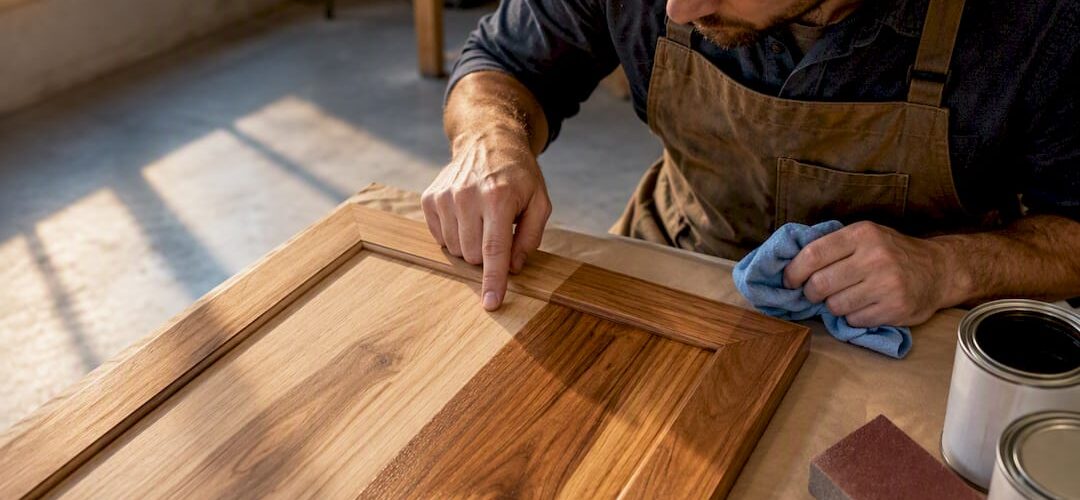
If you want to keep hickory’s dramatic grain and color swings, refinish with a stain or clear coat. If you want a uniform, calm look, paint over it, but budget extra time for stain-blocking primer and prep. Either way, pull one door, run the full system on it, let it cure completely, and check it under your actual kitchen lights before touching the rest of the cabinets.
TL;DR:
- Staining highlights hickory’s natural contrast, but it requires careful color-matching and testing on a full door to prevent blotching or uneven absorption.
- Painting provides a uniform finish that can hide wood variations but may allow grain and knots to show through if prep is rushed.
- Proper prep includes removing all residues, lightly scuff-sanding, fixing damages, and applying a stain-blocking primer to prevent extractive bleed-through.
- Use medium warm brown, walnut, or pecan stains for the best natural look; dark stains like espresso can increase contrast due to uneven absorption.
- Consider professional spray finishes for a durable, factory-like result on large projects, especially when changing from dark to light colors or working with veneers or textured doors.
Table of Contents
- Hickory Cabinet Refinishing: Paint vs Stain Trade-Offs
- Step-by-Step Prep: The DIY Sequence That Actually Works
- What Stain Colors Work Best on Hickory?
- Which Topcoat Holds Up Best on Hickory Cabinets?
- Fixing Bleed-Through, Telegraphing, and Adhesion Failures
- When a Factory-Finish Pro Is Worth the Cost
- A Practical Rule of Thumb for Hickory Refinishing
- Get a Factory-Finish Quote From Cabinetsrefinishing
- Sources
- FAQ
Hickory Cabinet Refinishing: Paint vs Stain Trade-Offs
Hickory is one of the most visually chaotic domestic hardwoods you can put on a cabinet door. The heartwood runs reddish brown to almost black, while the sapwood next to it can be nearly white. That contrast is what gives hickory its rustic, cabin-lodge look, and it’s also exactly why refinishing hickory wood trips people up. A stain that looks perfectly even on oak can turn blotchy and striped on hickory because the two wood types soak up pigment at completely different rates.
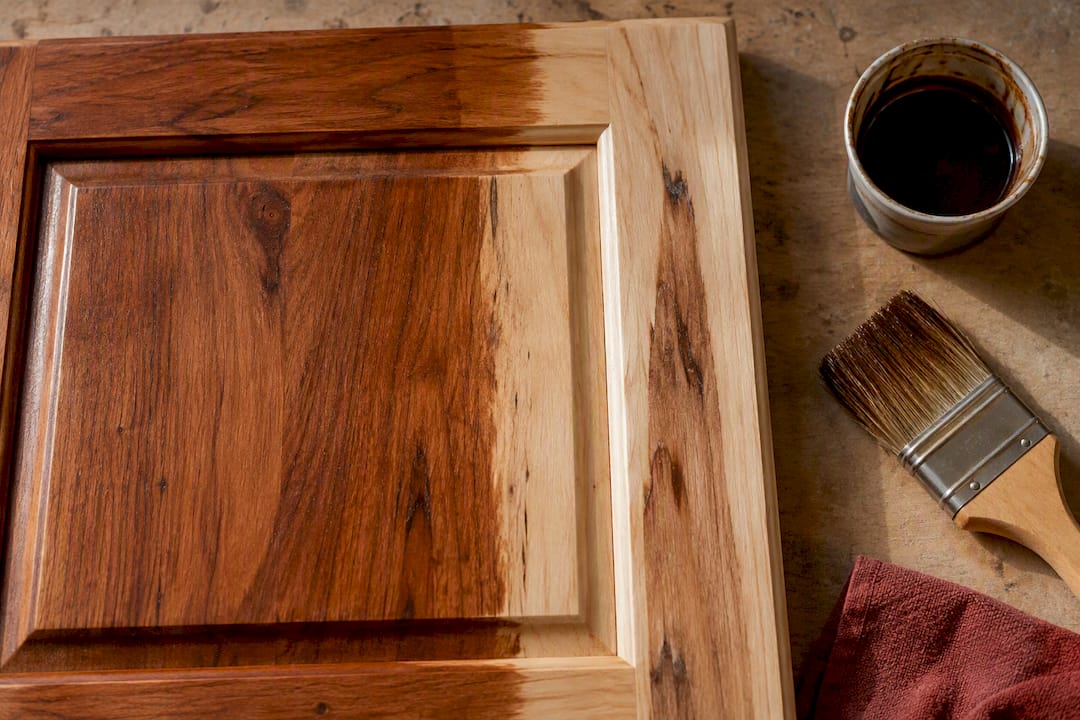
Staining or clear-coating preserves that natural drama. It’s the right call if you like hickory’s character or you’re restoring a kitchen that was built around a rustic theme. Painting erases the contrast and gives you a flat, consistent color, but hickory’s tight grain and any embedded knots can “telegraph,” meaning they show faintly through the paint film no matter how many coats you apply.
Here’s how the two approaches stack up in practice:
- Stain or clear finish: Keeps grain and character visible; needs careful color-matching between heartwood and sapwood; well-applied lacquer or catalyzed topcoats can outlast paint by years.
- Paint: Delivers uniform color and hides mismatched wood tones; requires more surface prep and a quality primer; knots and grain lines can still ghost through if prep is rushed.
- Longevity: A painted finish on kitchen cabinets typically holds up 5 to 8 years before touch-ups are needed, while a properly cured stain-and-topcoat system often lasts longer with routine care.
Neither option is wrong. The decision comes down to whether hickory’s natural variation is a feature you want to show off or a problem you want to hide.
Step-by-Step Prep: The DIY Sequence That Actually Works
Cabinet refinishing lives or dies on prep, and hickory punishes shortcuts more than most woods because of how unevenly it absorbs stain and how visible any leftover residue becomes under a clear coat. Follow this order and don’t skip steps to save an afternoon.
- Remove everything. Take off doors, drawer fronts, and hardware. Number each piece with painter’s tape and a marker so nothing gets mismatched during reassembly. Decide now whether you’re refinishing in place or setting up a garage or basement “shop” station, which gives you better dust control and even spray coverage.
- Degrease and rinse. Kitchen cabinets accumulate a film of cooking oil and grime that no sander touches. Use a dedicated degreaser, rinse with clean water, and let everything dry fully before moving on.
- Scuff-sand the old finish. You’re not stripping the cabinet down to bare wood in most cases. You’re creating a dull, slightly rough surface the new primer or stain can grip. Use the least aggressive method that gets the job done. This is especially true on veneered doors or anything with a routed profile, where heavy sanding can blow through the veneer or round off detail that took a factory to shape.
- Repair and fill. Fix dings, dents, and gaps with wood filler. If you’re painting, fill the grain too, since hickory’s open pores will show through paint otherwise. If you’re staining, leave the grain alone.
- Prime where needed. Hickory is notorious for extractive bleed, where natural tannins and resins leach through paint or clear coat and show up as yellow or brown discoloration weeks later. A stain-blocking, bonding primer is the fix, and it needs to go on before you commit to color.
- Sand lightly between coats, then test the entire system, primer, stain or paint, and topcoat, on one door or a hidden panel first.
Pro Tip: Run your test door through a full cure cycle, not just a “touch dry” check. Some bleed-through and color shifts don’t show up until 24 to 48 hours after the final coat.
For a deeper walk-through of technique, this sanding guide for cabinet refinishing covers how to avoid over-sanding on detailed doors.
What Stain Colors Work Best on Hickory?
Hickory’s uneven absorption is the single biggest obstacle to a clean stain job. Heartwood pulls in pigment fast and goes dark quickly, while adjacent sapwood barely takes color at all, so the same stain can look like two different woods on one door. That’s the nature of the species, not a sign you did something wrong.
Medium warm browns, walnut, and pecan tones tend to work well because they soften the contrast without erasing it. Brown-gray stains are a solid pick if you want something more contemporary than a traditional honey-oak look. Go very dark, like an espresso or ebony stain, and you’ll actually increase the visible contrast in places, since the lighter sapwood still won’t take pigment as deeply as the heartwood around it.
Before you commit:
- Prep and stain a full test door using the exact primer, stain, and topcoat sequence you plan to use on the whole kitchen.
- Let it cure completely, not just dry to the touch.
- View it under your kitchen’s real lighting, both daytime and evening, since undertones shift dramatically between natural and artificial light.
- Check specifically for bleed-through, telegraphing, and any blotching between heartwood and sapwood.
Which Topcoat Holds Up Best on Hickory Cabinets?
Your topcoat choice affects both durability and final color, and the two are more connected than most first-time refinishers realize. Waterborne clear coats stay closer to the original stain color over time and carry lower VOC content, which matters if you’re refinishing in an occupied home. Oil-based topcoats amber as they age, adding warmth that can deepen a stain’s tone in a way some homeowners love and others find muddies a lighter finish.
Lacquer and catalyzed finishes, the type used in cabinet shops, offer furniture-grade toughness that outperforms most brush-applied topcoats. The catch is that they typically require spray equipment and controlled shop conditions to lay down evenly, which is a real barrier for a garage DIY setup.
Whatever you choose:
- Apply thin coats rather than one heavy one; thick coats trap solvent and cure unevenly.
- Sand lightly between coats with a fine grit to knock down dust nibs and improve adhesion.
- Follow the manufacturer’s recoat window exactly. Waiting too long between coats can cause poor adhesion between layers, the same way waiting too little can trap solvent underneath.
Fixing Bleed-Through, Telegraphing, and Adhesion Failures
Three problems account for almost every failed hickory refinishing job, and all three are fixable if you catch them early.
- Bleed-through: Yellow or brown staining reappearing through primer or topcoat means hickory’s natural extractives are leaching out. The USDA Forest Products Laboratory is clear on this: adding more topcoat doesn’t stop bleed. Sand back to a sound surface and apply a genuine stain-blocking primer before you recoat.
- Telegraphing: If grain lines, knots, or old sanding scratches show through paint, you’ve got three options: fill the grain and resand, switch to a clear or tinted stain that lets the texture read as intentional, or accept it as part of hickory’s rustic character.
- Adhesion failures: Press a strip of tape onto a cured section and pull it off. If finish comes with it, the surface wasn’t cleaned or scuff-sanded enough. Severe peeling usually means stripping back to bare wood, or calling in a professional.
When a Factory-Finish Pro Is Worth the Cost
Refinishing hickory cabinets yourself is entirely doable for a single vanity or a small run of doors. Full kitchens are a different animal, especially if you’re going from a dark stain to a light paint or working with veneered or heavily profiled doors where sanding mistakes are expensive to fix.
Professional shops spray finishes in a controlled booth rather than brushing or rolling them on, which eliminates brush marks and gives a level, factory-like coat. That process typically includes color matching and multiple protective layers, and a shop can usually turn a full kitchen around in 3 to 5 days rather than the weeks a DIY project stretches into once you factor drying and cure time between coats.
Consider hiring out when:
- You’re changing the whole kitchen’s color scheme, especially dark to light.
- Your doors are veneered, textured, or heavily profiled.
- You want a warranty backing the work.
When you request a quote, ask for the specific product names being used, the number of coats included, and the warranty terms in writing. For the mechanics of what a shop-quality process looks like, see this step-by-step painting guide.
A Practical Rule of Thumb for Hickory Refinishing
My honest read after digging through the technical guidance on this: most homeowners overthink the stain-versus-paint decision and underthink the testing step. The rule is simple. Preserve hickory’s natural grain when you actually like that rustic contrast; paint it when you need uniformity or you’re matching other cabinetry in the house. Test everything on one door first, keep your expectations realistic about how long any finish lasts, and get a written quote from a pro before you take on a full kitchen solo.
— Jesse
Get a Factory-Finish Quote From Cabinetsrefinishing
Professional cabinet refinishing services offer a shop-sprayed, factory-quality finish with real color matching, multiple protective coats, and a job that can be completed in a few days rather than stretching across weeks of drying time between DIY coats. Cabinet refinishing projects through Cabinetsrefinishing typically run $3,000 to $8,000, well under the $15,000 to $40,000 that full cabinet replacement usually costs.
If your kitchen involves a big color shift, veneered doors, or you just don’t want to gamble a full kitchen on a first attempt, request a written estimate and ask specifically about the primer and topcoat products used, the number of coats, and the warranty terms. For painting and staining projects specifically, the cabinet painting and staining page breaks down what’s included, and if your project involves more than kitchen cabinets, the cabinet modifications and enhancements page covers additional options worth asking about in your quote.
Sources
- Finishing wood (USDA Forest Products Laboratory, Chapter 16 excerpt)
- Cabinet Refinishing Cost Calculator — 2026 Kitchen Estimator | UseCalcPro
FAQ
What stain looks best on hickory?
Medium warm browns, walnut, and pecan tones usually blend hickory’s heartwood and sapwood contrast most naturally. Very dark stains like espresso can actually increase visible contrast since sapwood resists absorbing deep pigment, so always test on a full sample door first.
What is the average cost to refinish cabinets?
Professional cabinet refinishing runs a national average of $1,500 to $4,500, with labor making up most of that cost. Cabinetsrefinishing’s own factory-finish projects typically fall between $3,000 and $8,000 depending on kitchen size and scope, still far below the $15,000 to $40,000 range for full cabinet replacement.
What is the best finish for hickory wood?
Lacquer and catalyzed finishes offer the toughest, most furniture-like durability but generally require spray equipment and shop conditions to apply evenly. For a DIY project, a quality waterborne topcoat is a practical middle ground since it keeps color truer and carries lower VOC content than oil-based alternatives.
Is hickory an expensive wood for cabinets?
Hickory sits in the mid-to-upper range for domestic cabinet hardwoods, and its cost comes more from the labor of managing its grain variation than the raw material itself. Refinishing existing hickory cabinets instead of replacing them is almost always the cheaper route, whether you handle prep yourself or hire a professional shop.