
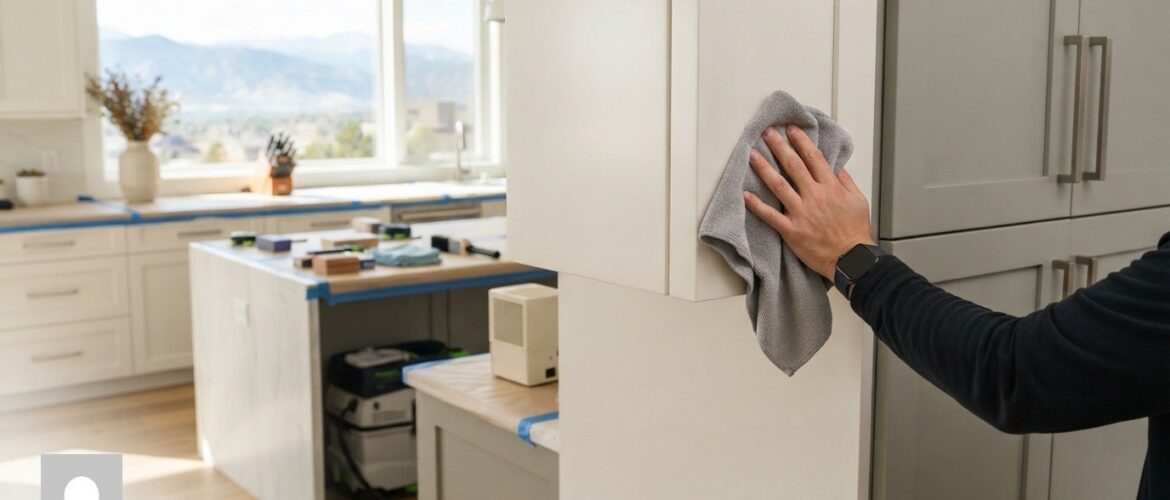
Preventative care protects factory-grade finishes far better than reactive repairs ever will. Across the Denver metro area, where winter indoor relative humidity routinely plunges below 20% and high-altitude sunshine accelerates surface wear, staying ahead of annual maintenance for painted cabinets is critical for protecting your kitchen investment. You chose painted cabinetry to elevate your home, and it is completely normal to worry about accidentally scratching a professional coating with the wrong household cleaner or watching dry Front Range air pull at delicate wood seams.
With over 45 years of specialized cabinet painting and refinishing experience, Cabinet refinishing Denver knows that consistent, proactive care keeps doors and face frames looking immaculate. In this guide, you will discover the exact seasonal inspection routines, indoor humidity benchmarks between 30% and 50%, and safe cleaning protocols needed to shield your casework year-round. From Littleton to Lakewood and Aurora, here is your comprehensive checklist to maintain lasting cabinet beauty and identify when subtle wear warrants expert attention.
Key Takeaways
- Executing systematic annual maintenance for painted cabinets shields the underlying wood from cooking grease, moisture penetration, and daily kitchen wear.
- A focused seasonal inspection of high-contact zones like sink bases and trash pull-outs catches localized wear before moisture damages the wood substrate.
- Gentle, non-abrasive cleaning agents preserve durable spray coatings, whereas harsh degreasers, bleach, and abrasive sponges quickly strip protective finishes.
- Stabilizing indoor relative humidity and managing direct sunlight exposure protects solid wood joinery against natural seasonal contraction and expansion across dry climates.
- Distinguishing between routine surface maintenance and professional cabinet refinishing ensures you preserve factory-grade smoothness without attempting risky spot touch-ups.
Why Annual Maintenance for Painted Cabinets Protects Your Investment
Annual cabinet maintenance isn’t about constant scrubbing or aggressive overhauls; it’s a systematic annual inspection paired with gentle preventative preservation. Daily cooking creates an airborne mixture of steam, vaporized oils, and heat that settles onto cabinet surfaces. When factory-grade coatings remain intact, they form an impenetrable shield over the underlying wood. Catching localized wear early prevents moisture from penetrating the wood grain, which extends the lifespan of your kitchen casework across Denver, Boulder, and Lakewood homes.
To see safe cleaning practices in real time, watch this helpful walkthrough on caring for kitchen cabinet surfaces:
The Anatomy of a Factory-Smooth Painted Coating
Professional cabinet refinishing achieves its glass-smooth finish through precision spray application rather than traditional brushwork. Industrial-grade coatings fuse chemically with specialized primers, creating a resilient, non-porous shell that resists chipping and flaking. Understanding basic cabinetry construction and materials helps explain why this barrier matters. Solid hardwood face frames and engineered core panels naturally absorb ambient humidity if edge seals fail, making preventative edge care your best defense against moisture intrusion.
Cost Preservation: Maintenance Versus Full Kitchen Remodeling
Committing to annual maintenance for painted cabinets delivers exceptional long-term financial value for Front Range homeowners. Total kitchen tear-outs disrupt your household for months and generate immense replacement expenses. Routine seasonal preservation preserves your existing layout while keeping solid hardwoods from swelling, checking, or warping. Simple surface upkeep protects the cured coating, ensuring you never have to replace structurally sound cabinets just because high-touch areas show localized surface fatigue.
The Complete Annual Painted Cabinet Inspection Checklist
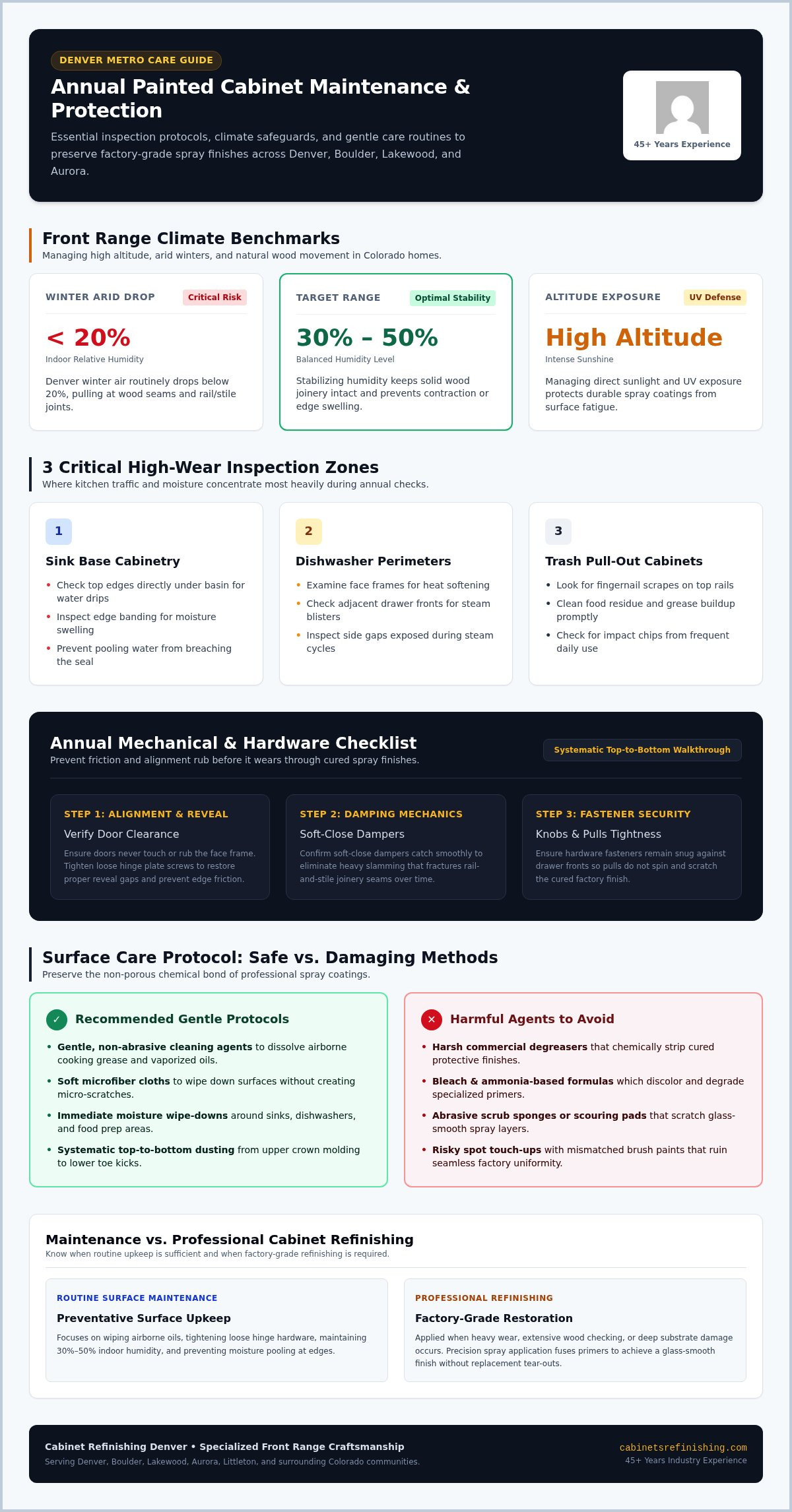
A methodical walk-through once a year keeps small mechanical shifts from turning into costly coating failures. Performing annual maintenance for painted cabinets means working systematically from the upper crown molding down to the lower toe kicks. Take a bright flashlight, open every door, and look closely at the edges where daily contact occurs. Catching alignment issues or early wear now preserves the integrity of your finish for years.
High-Wear Zones and Moisture Vulnerability Points
Kitchen traffic concentrates around three specific fixtures that require close scrutiny during your walk-through:
- Sink base cabinetry: Inspect the top edges of doors directly below the basin for water drips, pooled moisture, or swelling along the edge banding.
- Dishwasher perimeters: Check the face frames and adjacent drawer fronts for heat softening or microscopic blisters caused by escaping steam cycles.
- Trash pull-out cabinets: Examine top rails for fingernail scrapes, food residue, and heavy impact chips caused by repeated daily opening.
Hardware, Alignment, and Hinge Mechanical Checks
Cabinet doors should never make contact with the surrounding face frame. Over months of heavy use, cabinet hinges can loosen, causing doors to sag slightly and rub against adjacent woodwork. This friction gradually wears through cured spray finishes. Tighten loose hinge plate screws to restore proper reveal gaps, confirm that soft-close dampers catch smoothly, and check that knob fasteners remain snug against the drawer fronts so hardware doesn’t spin against the finish.
Detecting Micro-Cracks Along Wood Rail and Stile Joints
Solid wood five-piece doors naturally breathe as Colorado seasons transition from humid summer storms to arid winter freezes. Technical research into dimensional changes in wood confirms that ambient moisture fluctuations cause timber to expand across the grain. A hairline separation along the seam where the vertical stile meets the horizontal rail is often normal seasonal movement rather than coating failure. However, if you spot peeling paint, bubbling along the profile, or raw substrate exposed to the air, arrange a professional cabinet evaluation before kitchen vapor permanently damages the wood panel.
Surface Care Protocol: Gentle Cleaning and Degreasing Methods
Harsh retail degreasers and abrasive scouring pads cause more finish failures than everyday cooking ever will. Factory-grade cabinet finishes require surface chemistry that lifts bound oils without etching or softening the protective topcoat. Proper annual maintenance for painted cabinets centers on mild surfactant action rather than caustic stripping. Taking a restrained, deliberate approach to regular cleaning keeps the factory sheen consistent across all doors, drawer faces, and decorative trim.
Approved Cleaning Solutions for Painted Finishes
Protecting cured industrial wood coatings means selecting cleaning agents that respect the film’s chemical stability:
- Warm water and mild dish soap: A few drops of pH-neutral liquid soap in warm water safely breaks surface tension, lifting cooking oils without dulling the finish.
- Strictly avoid bleach and ammonia: Household ammonia, chlorine bleach, and aggressive citrus solvents chemically soften cured coatings, causing premature yellowing and permanent hazing.
- Skip abrasive cleansers: Scouring powders and melamine foam sponges act like fine sandpaper, stripping the uniform sheen and leaving chalky, irreparable burnish marks.
Proper Wiping and Drying Techniques
Technique matters just as much as your choice of cleaner. Always clean painted millwork using clean, lint-free microfiber towels. Wipe in the direction of the underlying wood grain rather than using aggressive circular scrubbing, which can create microscopic swirl marks on satin or semi-gloss sheens. For stubborn, hardened grease near the range hood, let a damp, warm microfiber cloth rest on the spot for sixty seconds to soften the oil before wiping it away with light pressure.
Never allow wash water to sit or evaporate on the finish. Aligning your household habits with EPA moisture and humidity guidelines means keeping kitchen surfaces dry and well-ventilated. Standing droplets pool along bottom door rails, seep behind profile corners, and lead to finish swelling. Keep a dry microfiber cloth in hand to buff the wood immediately after cleaning, ensuring your annual maintenance for painted cabinets leaves every surface completely moisture-free.
Managing Climate Factors: Humidity, Sunlight, and Seasonal Wood Movement
Regional climate plays an enormous role in cabinet preservation. Denver sits at 5,280 feet elevation, exposing Front Range homes to intense atmospheric stress. With roughly 300 days of annual sunshine and 20% to 25% greater ultraviolet radiation than sea-level regions, exterior-facing kitchen casework encounters heavy solar wear. Incorporating indoor climate management into your annual maintenance for painted cabinets prevents premature clearcoat breakdown, finish discoloration, and structural joint movement across Denver, Aurora, and Boulder residences.
Balancing Indoor Humidity to Prevent Joint Separation
Colorado winters bring prolonged dry spells. Forced-air heating systems frequently drive indoor relative humidity below 20%, which leaches moisture straight out of solid hardwood frames. As the timber shrinks, rail-and-stile joints pull apart. Maintaining an indoor relative humidity target between 30% and 50% stabilizes the wood substrate. Installing a whole-home humidifier or running portable units near open-concept kitchens minimizes dimensional movement, keeping factory-grade paint seams stable throughout dry winter months.
Protecting Painted Finishes from Direct Sun Exposure and Cooking Heat
Unfiltered sunlight and localized cooking vapor cause finish degradation over time. Protecting your kitchen investment requires smart daily habits and simple environmental defenses:
- Mitigate high-altitude UV rays: Install low-E window films or deploy solar shades to shield south- and west-facing cabinet doors from persistent photo-oxidation and yellowing.
- Engage range hood exhaust fans: Turn on mechanical ventilation whenever you boil or sear food to pull rising steam and aerosolized oils away from upper cabinet profiles.
- Reposition heat-generating countertop appliances: Slide air fryers, slow cookers, and electric kettles out from directly underneath upper cabinetry to prevent concentrated steam from softening factory topcoats.
When seasonal dryness or prolonged solar exposure causes paint failure or deep joint separation, reach out to our team to schedule professional Cabinet Refinishing Denver and restore your kitchen casework with durable, factory-grade spray coatings.
Maintenance Limits: When to Choose Professional Cabinet Refinishing
Every homeowner reaches a point where routine care meets its natural boundary. While annual maintenance for painted cabinets successfully prevents premature wear, gentle cleaning cannot reverse widespread finish deterioration. Knowing where simple upkeep stops and professional intervention begins protects your cabinetry investment. Attempting to hide worn factory coatings with craft paints or retail brushwork often leaves flashing, uneven textures, and visible lap marks that ruin the kitchen’s aesthetic.
Cabinet Painting Versus Cabinet Refinishing: Understanding the Difference
Homeowners frequently use these terms interchangeably, but they represent distinct professional processes:
- Cabinet Painting: Applies opaque, industrial-grade protective coatings over existing cabinetry, converting dated wood tones or older paint into a fresh, solid color.
- Cabinet Refinishing: Completely strips existing protective finishes down to raw wood substrate, allowing the grain to be custom-stained and sealed with clear protective coats.
Both methods offer massive budget savings compared to the costly tear-out and labor required for complete cabinet replacement, allowing Denver metro homeowners to achieve high-end results without rebuilding their kitchen layouts.
Signs Your Cabinetry Requires Professional Restoration
Watch for signs of fatigue that signal routine maintenance is no longer sufficient:
- Widespread coating failure: Peeling, chipping, or micro-cracking across multiple drawer faces and doors indicates film fatigue rather than minor surface wear.
- Substrate water damage: Darkened wood or swelling around the bottom rails of sink bases means moisture has breached the factory barrier.
- Flashing from amateur spot repairs: Dabbing retail enamel over industrial finishes creates patchy sheen variations that stand out under kitchen lighting.
Restoring a glass-smooth surface requires a rigorous, multi-step process. Our crew executes thorough decontamination, complete mechanical sanding, and extensive protective masking over flooring, countertops, and appliances. We then apply specialized industrial coatings using precision spray systems that brushwork can never replicate. When routine maintenance shows your finish needs structural renewal, contact Cabinet refinishing Denver for a detail-oriented expert assessment backed by over 45 years of local craftsmanship.
Preserve Your Factory Finish for Years to Come
Consistent, attentive care is the secret to protecting high-end kitchen millwork. By practicing routine annual maintenance for painted cabinets, you safeguard your woodwork against high-traffic friction, localized moisture damage, and Colorado’s dry climate swings. Gentle surfactant cleaning with soft microfiber cloths preserves factory-level sheens without stripping protective topcoats, while routine hinge adjustments keep doors perfectly aligned.
When daily kitchen wear eventually pushes past routine surface care, you don’t need a disruptive, budget-draining cabinet replacement. Backed by over 45 years of specialized experience across Denver, Boulder, Lakewood, and Aurora, our precision spray systems deliver an ultra-smooth, factory-grade finish built for lasting durability. Through meticulous surface preparation, mechanical sanding, and complete protective masking, we restore tired millwork to showroom standards. Reach out today to consult Painting Kitchen Cabinets Denver for a professional finish evaluation and enjoy a beautiful kitchen transformation that adds lasting value to your home.
Frequently Asked Questions
How often should painted kitchen cabinets receive routine maintenance?
Painted kitchen cabinets need a quick weekly wipe-down and a comprehensive annual maintenance check. Weekly care handles localized splatters and cooking oils near cooktops before grease bonds to the topcoat. Your thorough annual maintenance for painted cabinets involves checking hinge alignments, inspecting bottom door rails around the sink, and wiping down all casework with mild dish soap and warm water. This steady schedule prevents early coating degradation across Denver homes.
Can I use vinegar or all-purpose spray to clean my painted cabinets?
No, you should avoid vinegar, ammonia, and generic all-purpose sprays on painted cabinetry. Vinegar contains acetic acid that chemically breaks down clear protective topcoats over time, causing dull patches and premature discoloration. Commercial multi-surface cleaners often leave a chemical residue that softens cured enamel. Instead, stick strictly to warm water mixed with a few drops of mild, pH-neutral dish soap applied with a soft microfiber cloth.
Why are my cabinet joints showing hairline cracks during the winter?
Winter hairline cracks appear because solid hardwood naturally contracts when indoor relative humidity drops. Across the Front Range, cold outdoor air and indoor heating dry out timber, pulling five-piece rail-and-stile joints slightly apart. This subtle movement is a normal physical property of real wood rather than a coating failure. Running a whole-home humidifier to maintain 30% to 50% relative humidity significantly reduces this seasonal expansion and contraction.
What is the difference between cabinet painting and cabinet refinishing?
Cabinet painting involves spraying opaque, industrial-grade protective coatings over prepared cabinetry to give the kitchen a modern, solid color. Cabinet refinishing, by contrast, requires stripping existing finishes down to bare wood before applying stains and durable clear sealers to highlight natural wood grain. Both specialized services save significant money compared to buying new cabinets, delivering factory-smooth results without the expense or mess of complete tear-outs.
How do I prevent my cabinet doors from chipping at the edges?
Prevent edge chipping by regularly adjusting loose hinges and installing clear silicone door bumpers. Misaligned hinges cause doors to strike adjacent face frames or rub drawer boxes, which physically shears through cured finishes. Keeping hardware tight ensures uniform reveal gaps so edges never collide. Practicing gentle annual maintenance for painted cabinets also ensures that you spot loose hinge screws before contact friction causes irreparable edge damage.
Can chipped painted cabinets be spot-repaired without repainting the entire kitchen?
Isolated micro-chips can sometimes be touched up, but widespread chipping requires professional respraying of the affected doors. Amateur touch-ups using retail brush paints consistently flash under kitchen lighting, leaving noticeable variations in sheen, color, and texture. Professional refinishers remove compromised doors, mechanically sand the entire profile, and spray industrial-grade coatings in a controlled setting to ensure the repaired piece seamlessly matches the rest of your kitchen cabinetry.
How does dry climate air impact the durability of painted cabinets?
Dry climate air saps natural moisture from cabinet wood substrates, accelerating shrinkage and placing physical tension on paint seams. In high-altitude areas like Denver, Lakewood, and Aurora, low atmospheric humidity combined with intense solar heat causes wood panels to flex more drastically between seasons. Without proper climate stabilization and gentle surface maintenance, this cyclic stress makes standard finishes brittle, leading to premature flaking along stress joints and door perimeters.