
The single best defense against cabinet painting scams is refusing to hire anyone without a verified license, proof of insurance, and a written, itemized contract covering prep, materials, timeline, and payment terms. Walk away from anyone pushing a same-day deal, demanding cash up front, or quoting a price with no breakdown. If you’ve already been burned, report it to your state consumer protection office, the FTC, and local police right away.
TL;DR:
- Verifying licenses and insurance by calling the insurer and checking license numbers online quickly eliminates most scam contractors before signing any agreement.
- Requesting detailed, itemized estimates and seeing completed work photos from at least one year prior helps identify legitimate refinishing companies over scammers with vague bids.
- A professional project includes a written contract covering scope, materials, dates, warranty, and lien release clauses, with staged payments tied to clear milestones.
- Shop-based finishing with multiple protective coats, cabinet removal, and pre- and post-project documentation indicates higher-quality, durable results and reduces scam risks.
- Stopping work immediately and documenting everything are key steps if a scam suspicion arises, as keeping records simplifies legal and restitution processes.
Table of Contents
- What Do Cabinet Painting Scams Actually Look Like?
- How Do You Verify a Cabinet Painter Before Hiring?
- What Should Be in Your Cabinet Painting Contract?
- What Does Cabinet Refinishing Actually Cost?
- What Does Real Professional Cabinet Refinishing Look Like?
- What Should You Do If You Suspect a Scam Mid-Project?
- A Few Honest Words on Cutting Corners
- A Safer Path: Professional, Documented Cabinet Refinishing
- Where to Verify Contractors and Report Scams
- Sources
- FAQ
What Do Cabinet Painting Scams Actually Look Like?
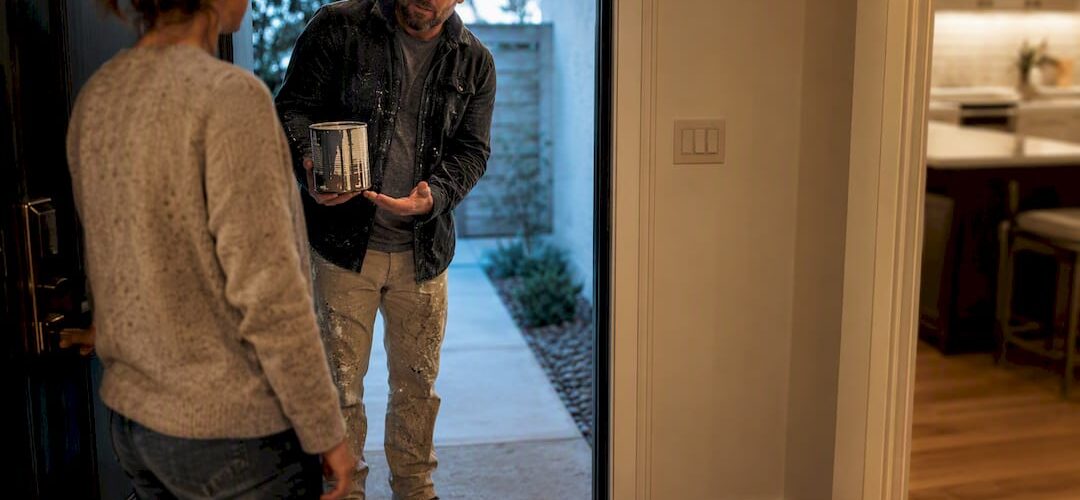
Most cabinet painting fraud follows a predictable script. Someone shows up unannounced claiming they were “just finishing a job nearby” and have leftover paint they can use to redo your cabinets at a discount. The FTC specifically flags this door-to-door pitch as one of the most common home improvement scam tactics, and for good reason: legitimate cabinet refinishers don’t cold-call driveways looking for scrap-material work.
A second pattern shows up in the bid itself. A suspiciously cheap quote usually means something got left out, not that you found a bargain. Watch for estimates that skip surface prep, list no specific paint or primer brand, or bundle “labor and materials” into one vague number with no breakdown. According to Angi’s reporting on painting contractor fraud, missing license and insurance information, incomplete written contracts, and mystery add-on charges after the job starts are the biggest recurring complaints homeowners file.
Pressure is the third tell. Scammers create artificial urgency: “This price is only good if you sign today,” or “I’ve got another job starting Monday, so I need a deposit now.” A contractor confident in their work doesn’t need to rush your decision.
Payment traps close the loop. Common warning signs include:
- A deposit request larger than what is reasonable for a partial payment of the total project cost
- Insistence on cash only, with no receipt offered
- A contractor who pushes you toward financing arranged through their own “in-house lender”
- Refusal to itemize what the deposit actually covers
Real damage happens fast. A Hinsdale homeowner learned this the hard way when a contractor collected a deposit, removed the cabinet doors, and never came back to finish the job. In 2026, an investigation by WMBF News uncovered a contractor who used fake invoices and staged text messages to look legitimate before disappearing with client payments. These aren’t rare, isolated incidents. They’re the same handful of tactics, repeated on different streets.
How Do You Verify a Cabinet Painter Before Hiring?
Verification takes maybe twenty minutes, and it eliminates most cabinet refinishing scams before they start. Work through these steps in order:
- Confirm the license and insurance. Ask for the contractor’s license number and general liability insurance certificate, then call the insurer directly to confirm coverage is active. Never accept a photo of a document as proof; documents get faked.
- Call at least two references. Ask specifically about timeline accuracy, whether the final price matched the quote, and how the crew handled unexpected issues.
- Ask for photos of a finished job, ideally one at least a year old. Fresh paint always looks good. Durability shows up over time.
- Check the business address. A real shop or warehouse address, a company vehicle with signage, and a consistent business name across their website and paperwork all suggest a real, established operation.
- Get three itemized estimates, not just three total prices. Comparing line by line reveals which bidders skipped prep work, primer, or hardware handling.
- Ask whether the doors and drawers are refinished in a shop rather than sprayed in place. Shop-based finishing under controlled conditions produces a harder, more durable result, and any legitimate refinisher should be able to describe their process in detail.
Reading online reviews helps too, but weigh patterns over individual complaints. Every contractor gets one bad review eventually.
Pro Tip: Ask the contractor to text you a photo of their license and insurance certificate, then look up the license number yourself on your state’s contractor licensing website. If they hesitate or can’t produce a number, that’s your answer.

What Should Be in Your Cabinet Painting Contract?
A verbal agreement protects nobody. Before any work starts, insist on a written contract that covers scope of work, specific paint and primer brands, number of coats, start and completion dates, full itemized pricing, warranty terms, and lien release language protecting you if the contractor doesn’t pay their suppliers.
Payment should follow a staged structure, not a lump sum. Never sign a contract with blank sections “to fill in later,” and never sign anything under time pressure. If a contractor won’t leave a copy of the signed contract with you, that alone is reason to walk.
| Contract element | Why it matters |
|---|---|
| Itemized scope and materials | Prevents “prep skipped” surprises later |
| Start and completion dates | Gives you recourse if the job stalls |
| Payment schedule tied to milestones | Limits your exposure if work stops |
| Warranty terms in writing | Confirms who fixes peeling or chipping later |
| Lien release clause | Protects you from supplier claims |
Photograph every cabinet, door, and drawer before removal, and keep an inventory of hardware. Documenting cabinet condition before work starts gives you leverage if something goes missing or gets damaged mid-project.
What Does Cabinet Refinishing Actually Cost?
Professional cabinet refinishing typically runs $3,000 to $8,000 for a full kitchen, compared to $15,000 to $40,000 for full cabinet replacement. Size of the kitchen, the number of doors and drawers, whether glazing is involved, and whether the work happens in a shop or on-site all move that number up or down.
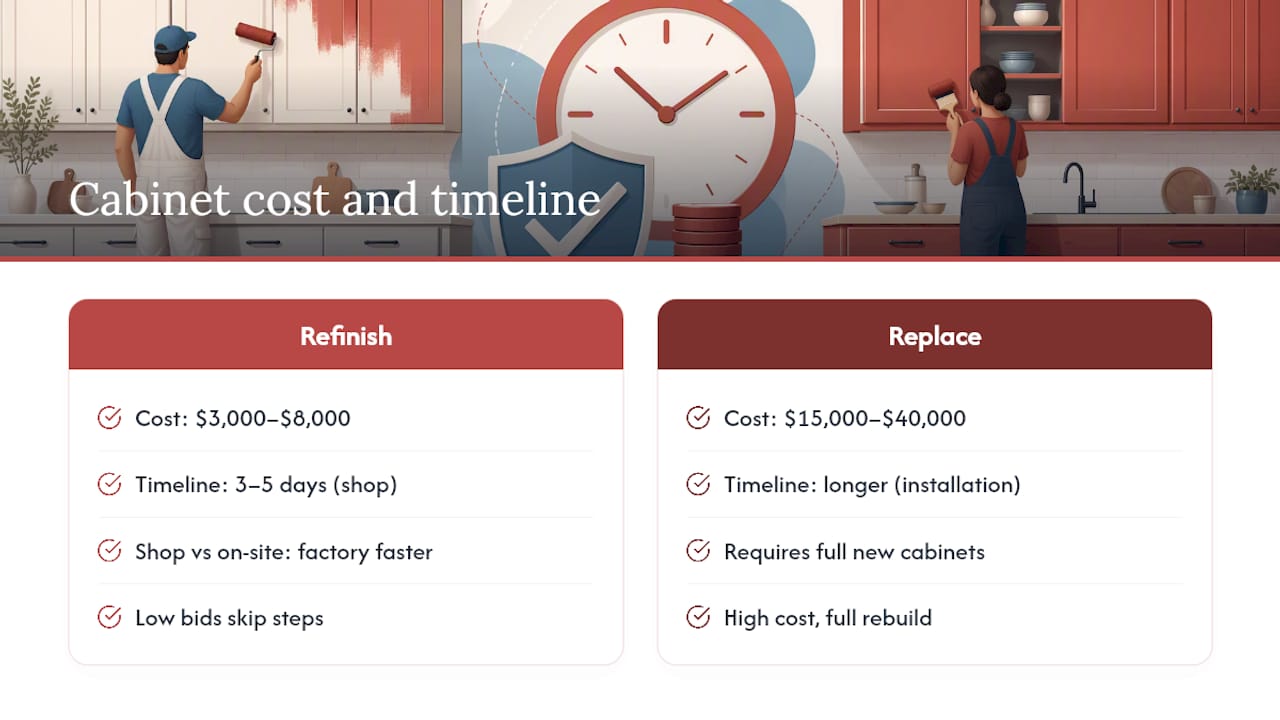
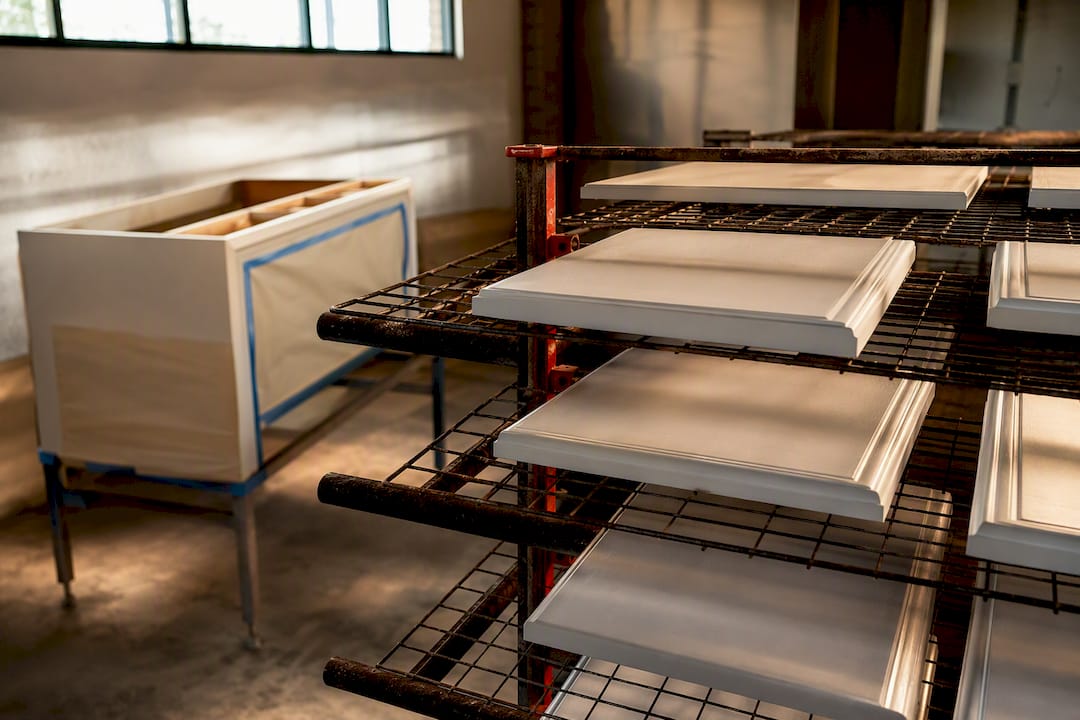
Timelines matter just as much as price. Shop-based, factory-style finishing can realistically complete in three to five days because doors cure under controlled conditions while installed cabinet boxes are prepped in parallel. In-place, brush-and-roller painting done entirely on-site tends to run longer and cure less evenly.
If a bid comes in dramatically below that range, or promises a one-day turnaround for a full kitchen, ask specifically what’s being skipped. Rock-bottom prices almost always mean no sanding, no primer coat, or a single thin topcoat instead of multiple protective layers. Getting multiple itemized quotes side by side is the fastest way to see which bidder actually priced the full job.
What Does Real Professional Cabinet Refinishing Look Like?
Legitimate cabinet refinishing starts with mechanical abrasion. Sanding the surface before priming is what makes paint adhere long-term, and skipping it is the single most common reason cheap paint jobs peel within months. Sherwin-Williams’ own guidance on sanding cabinets treats this step as non-negotiable, not optional prep.
Watch for these signs of a professional process on-site:
- All hardware removed, labeled, and bagged by cabinet, not tossed in one box
- Doors and drawers photographed and numbered before they leave the house
- Surrounding countertops, floors, and appliances fully masked off
- Multiple topcoats applied, not a single thin layer
Shop-sprayed finishes with several protective layers, cured under controlled conditions, hold up far better than a rushed on-site brush job. A three to five day shop turnaround can be entirely legitimate; it just means the crew is running doors through a controlled spray and cure process rather than painting them in your kitchen with the dust and humidity working against them.
Pro Tip: Ask to see the physical shop where doors are sprayed. A contractor who genuinely has one won’t hesitate to show you.

What Should You Do If You Suspect a Scam Mid-Project?
Act immediately once something feels wrong. Stop any further payments, photograph the current state of your cabinets and any damage, and save every text, email, and receipt tied to the job.
- Contact your bank or credit card company to dispute the charge if payment was made by card.
- File a report with local police, especially if property (like your removed cabinet doors) was taken.
- File complaints with your state consumer protection office, the FTC, the Better Business Bureau, and your state’s contractor licensing board.
- Send a certified demand letter requesting either completion or a refund within a specific deadline before filing in small claims court.
Investigations into cabinet fraud cases consistently show that customers who kept contracts, receipts, and photos had a much easier time building a case investigators could act on.
A Few Honest Words on Cutting Corners
The cheapest bid almost never reflects a great deal. It reflects skipped sanding, thinner coats, or a contract with no protection built in. Homeowners who verify credentials and demand a documented agreement rarely end up as cautionary tales. Run through the checklists here before you sign anything, and treat any resistance to that process as your answer.
— Jesse
A Safer Path: Professional, Documented Cabinet Refinishing
Cabinetsrefinishing addresses the exact risks covered above by building transparency into the process from the first estimate. Every project starts with a written, itemized quote, photo documentation of your cabinets before work begins, and a factory-quality shop finish, never a brush-and-roller job done in your kitchen. The process is built to eliminate the guesswork that scammers rely on.

Refinishing costs generally run $3,000 to $8,000, a fraction of full cabinet replacement, with most projects completing in three to five days thanks to shop-based spray finishing rather than on-site painting. If you’re ready to compare a real, documented estimate against the vague quotes you’ve been getting, request an itemized cabinet painting estimate or browse the full range of cabinet refinishing and glazing services before you sign anything with anyone else.
Where to Verify Contractors and Report Scams
Bookmark these before you start interviewing contractors. The FTC’s home improvement scam guidance covers verification steps and how to file a complaint. Your state’s contractor licensing board website lets you confirm a license number in minutes. Local police and your state consumer protection office are the right first calls if a contractor has already taken your money and disappeared.
Sources
- How To Avoid a Home Improvement Scam | Consumer Advice (FTC)
- Beware of These Painting Contractor Scams (Angi)
- How A Contractor Scammed Hinsdale Resident: Cops (Patch)
- How to sand cabinets (Sherwin‑Williams)
FAQ
What Are the Most Common Cabinet Painting Scams Right Now?
The top patterns are door-to-door “leftover materials” offers, bids missing license or insurance information, no written contract, large cash-only deposits, and unexpected add-on charges once work has started.
What Is the Average Price to Paint or Refinish Cabinets?
Professional cabinet refinishing typically costs $3,000 to $8,000 for a full kitchen, depending on size, repairs needed, and whether glazing is included. Bids far below that range usually mean prep steps like sanding or priming were left out.
How Can I Tell If a Contractor Is Scamming Me?
Warning signs include pressure to sign or pay immediately, a quote with no itemized breakdown, refusal to provide license or insurance documentation, and demands for large cash deposits before any work begins.
What Are the Three Most Common Painting Contractor Scams?
Missing or fake license and insurance credentials, contracts with no written scope or price breakdown, and large upfront deposits followed by unfinished or abandoned work top the list, according to industry reporting on painting fraud.
Should I Ever Pay for Cabinet Refinishing in Full Up Front?
No. A reasonable deposit followed by milestone payments protects you if the contractor stalls or disappears, and you should always hold the final payment until you’ve inspected the finished cabinets.
Recommended
- 15 Critical Questions to Ask Cabinet Painters in Denver Before Hiring (2026)
- Common Kitchen Cabinet Painting Mistakes: How to Avoid a Remodeling Disaster in 2026
- Cabinet Painting Satisfaction Guarantee: What Denver Homeowners Must Know
- How to Find a Reputable Cabinet Painter in Denver: The 2026 Homeowner Checklist