
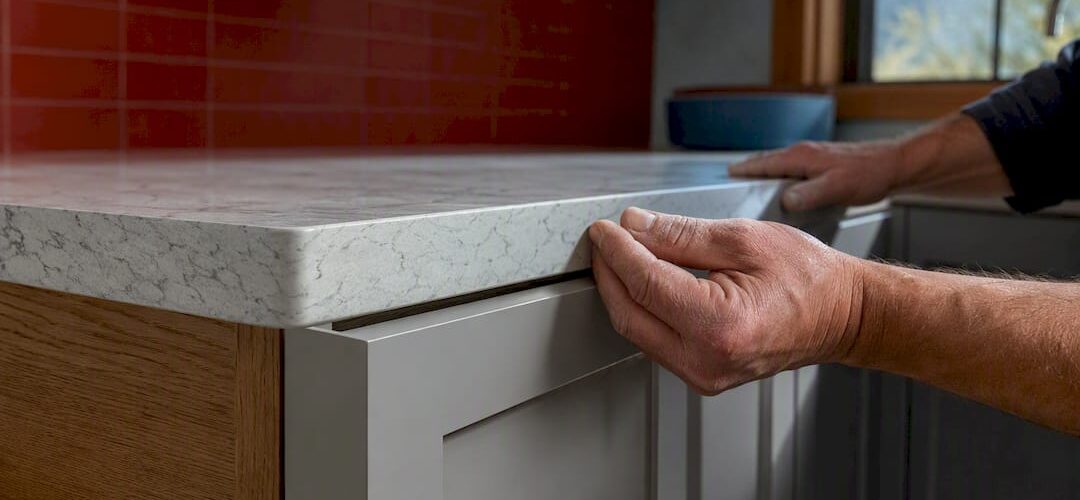
For most kitchen remodels, paint your cabinets after the countertops go in, not before. Countertop installation involves heavy lifting, adhesives, and tools that can nick or scuff a fresh finish, while a small paint touch-up afterward is quick and cheap to fix. There are real exceptions, especially with off-site spraying, and we’ll walk through exactly when those apply.
TL;DR:
- Painting cabinets after countertops are installed prevents damage from heavy lifting, adhesives, and tools that can scuff or nick fresh paint.
- Fully install and level cabinets before templating to ensure accurate countertop cuts, seams, and appliance openings.
- Off-site spraying or long delays before countertops arrive make painting cabinets first a viable option, with planned touch-ups afterward.
- Schedule cabinet painting during countertop fabrication, allowing full curing time before installation and final inspection for touch-ups.
- Protect fresh paint during countertop installation with masking and coverings, and confirm paint cure status to prevent chips or peeling.
Table of Contents
- Why Painting Cabinets Before Countertops Backfires for Most Projects
- Why Cabinet Layout Has to Be Locked in Before Countertop Templating
- When It Actually Makes Sense to Paint Cabinets First
- The Renovation Sequence That Avoids Costly Rework
- Protecting Fresh Paint When Countertop Crews Are on Site
- Paint That’s Dry Isn’t the Same as Paint That’s Cured
- What to Check After Countertops Go In
- What the Trade Doesn’t Tell Homeowners About Timing
- Get Your Cabinets Painted Right, on a Schedule That Actually Works
- Sources
Why Painting Cabinets Before Countertops Backfires for Most Projects
Countertop installers routinely brace against cabinet faces, drag slabs across edges, and apply epoxy or adhesive that can drip onto a painted surface. That’s the core reason most professionals recommend painting after countertop installation: fresh paint sitting exposed during a heavy install is asking for scuffs.
The math also favors finishing last. Touching up a small paint chip takes minutes and a small brush. Re-templating or re-cutting stone because of a fabrication issue costs real money and real time.
- Heavy slabs and lift equipment can chip cabinet edges during setup.
- Adhesives and epoxy sometimes drip or smear onto face frames.
- Tool contact during leveling and shimming scratches soft paint before it’s fully cured.
Painting last also lets your painter color-match trim and touch-ups to the actual installed counter, not a sample chip.
Why Cabinet Layout Has to Be Locked in Before Countertop Templating
Countertops aren’t cut in advance and dropped into place. Fabricators template directly off your installed, leveled cabinets, which is why cabinets need to be fully set before anyone measures for stone.
If cabinets shift, get swapped, or aren’t yet level when templating happens, the results show up fast:
- Seams land in the wrong spot or don’t align with cabinet centers.
- Overhangs come out uneven on islands and peninsulas.
- Sink and cooktop cutouts miss their marks by fractions of an inch that still won’t fit.
None of that means you can’t shop early. Collecting slab samples and coordinating cabinet color with your future countertop is smart groundwork. Just hold off on the final slab commitment and the fabricator’s tape measure until cabinets are physically installed and stable, a point designers echo when they say layout should drive material choices, not the reverse.
When It Actually Makes Sense to Paint Cabinets First
Painting before countertops isn’t wrong, it’s just situational. It works well in specific setups where the usual risks don’t apply.
- Full cabinet replacement or off-site spraying. Doors and drawer fronts get finished in a controlled shop environment away from the job site, which removes most installation risk entirely.
- A long gap before countertops arrive. If your slab order is months out, there’s no reason to leave bare cabinets sitting around. Just plan on a touch-up pass before final install.
- You want the visual payoff now. Some homeowners want the kitchen to look finished while they wait on countertop lead times, and they’re fine doing minor repairs later.
The common thread: every scenario above either removes the cabinets from the installation zone or accepts touch-ups as part of the plan.
The Renovation Sequence That Avoids Costly Rework
Here’s the order that keeps trades from stepping on each other and avoids paying twice for the same fix.
- Finish structural work and set cabinets. Get every box installed, leveled, and secured before anything else happens.
- Template the countertops. Call your fabricator once cabinets are final. This is a measurement visit, not installation day.
- Paint cabinets during the fabrication window. Countertop fabrication typically takes one to three weeks, which lines up almost perfectly with paint prep, application, and cure time.
- Let paint cure fully before install day. Confirm cure status with your painter, not just a dry-to-touch check.
- Install countertops. Schedule this once you know the paint has had enough time to harden.
- Walk the kitchen for touch-ups. Fix any small paint marks from the install and confirm hardware fit.
Pro Tip: If your fabricator’s install date slips earlier than expected, ask your painter whether a faster-curing coating can be used instead of pushing your countertop appointment. It’s usually easier to adjust the paint schedule than to reschedule a fabrication crew.
Protecting Fresh Paint When Countertop Crews Are on Site
If your painted cabinets are still fresh when installers arrive, protection is your job, not theirs.
- Mask cabinet edges and face frames with painter’s tape and rosin paper before installers start.
- Use sacrificial cardboard or plywood along the base cabinets where slabs get slid into place.
- Cover finished islands or peninsulas entirely if they’re not part of that day’s work.
Talk to the fabrication crew before they arrive. Tell them the cabinets were recently painted, ask them to set tools on drop cloths instead of cabinet tops, and request they avoid leaning slabs against painted end panels. If your paint is less than a few days old, it’s fair to ask the crew to delay by a day or two.
Pro Tip: A five-minute phone call to your countertop installer the day before, mentioning fresh paint, prevents most of the accidental scuffs homeowners deal with after install day.
Paint That’s Dry Isn’t the Same as Paint That’s Cured
Dry to the touch means the surface has stopped feeling tacky, usually within a few hours. Cured means the finish has fully hardened all the way through, and that can take days to a few weeks depending on the product. Scheduling installation based on dry time alone is how paint ends up dented or peeled where a slab brushed against it.
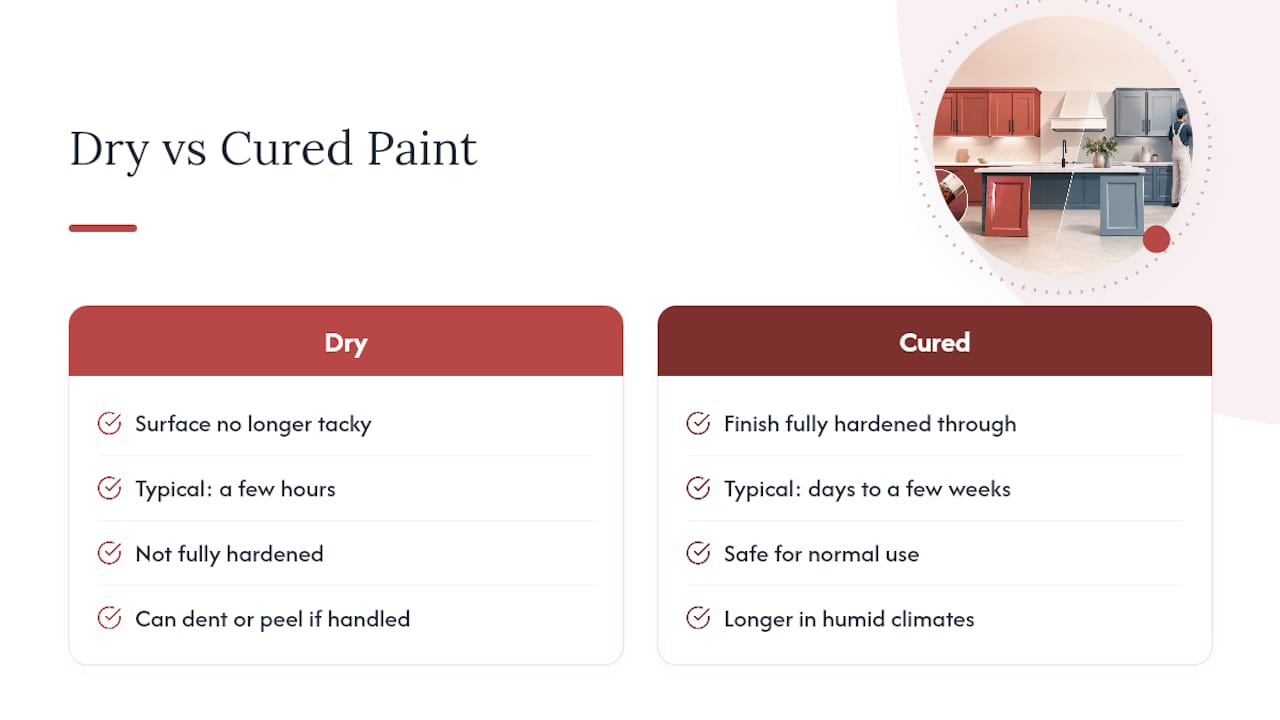
Humidity, paint type, and application method all shift that window. Humid climates especially can stretch cure times well beyond the label’s estimate, so build in extra buffer days rather than cutting it close. When in doubt, ask your painter for a firm cure date, and read more on how cure time affects when you can use painted cabinets normally.
What to Check After Countertops Go In
Once the slab is set, walk the kitchen with a flashlight before the installers leave.
- Check cabinet edges and face frames near the countertop line for nicks or scuffs.
- Confirm seams sit where they should and the backsplash gap is consistent.
- Test drawers and doors near the counter for clearance issues.
- Verify hardware is tight and aligned after any bumping during install.
Small paint marks are usually a quick DIY fix with matched touch-up paint. Anything involving a chipped edge, a color mismatch, or a seam problem in the stone itself is worth a professional’s evaluation rather than a DIY patch. Photograph any issues immediately. That documentation matters if you need to file a warranty claim with either your painter or your countertop fabricator.
What the Trade Doesn’t Tell Homeowners About Timing
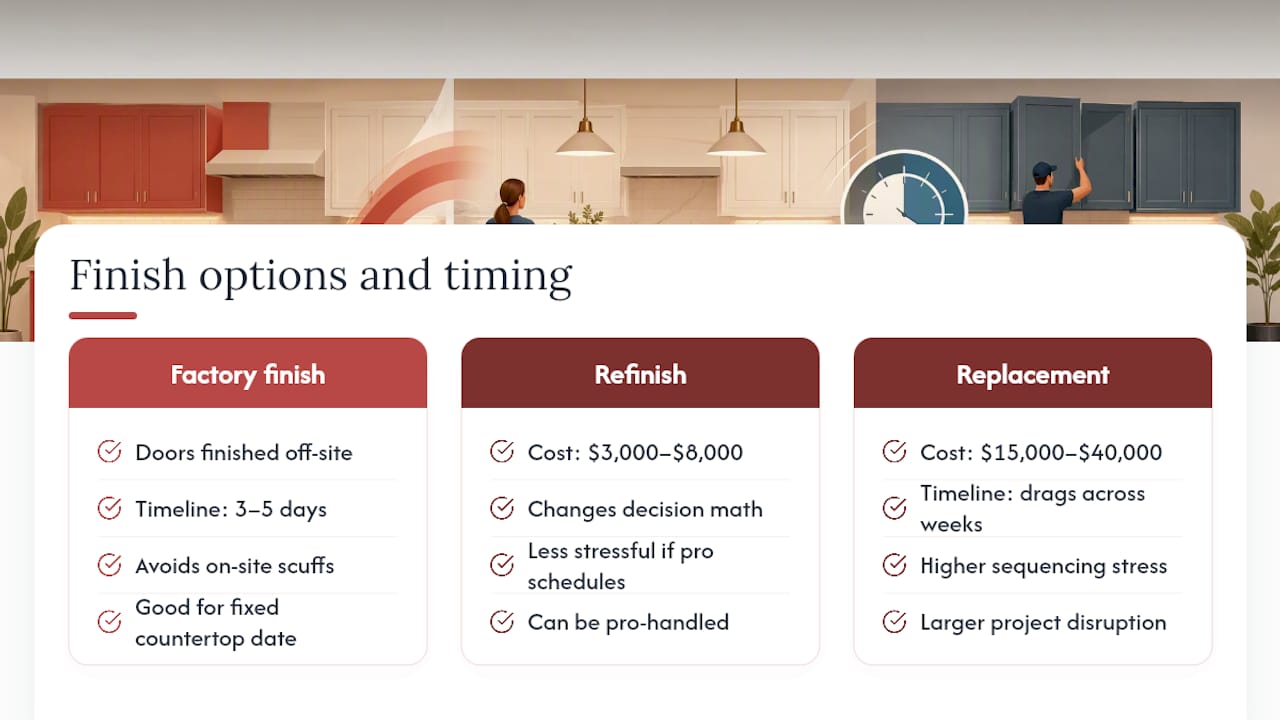
Most articles on this topic treat sequencing like a rulebook. In practice, it’s a scheduling problem more than a technical one. At Cabinet Refinishing Denver, our factory-finish process finishes doors and drawer fronts off-site, which sidesteps the entire “will the installers scuff my paint” question, and it’s a big reason projects wrap in three to five days instead of dragging across weeks.
Refinishing also changes the math on the whole decision. Homeowners comparing a $3,000 to $8,000 refinishing project against a $15,000 to $40,000 full replacement often find the sequencing question becomes less stressful once a professional is handling both the finish and the schedule. DIY works fine for low-risk projects with flexible timelines. Once your countertop install date is fixed, hire a pro who can guarantee the paint will be cured and protected on your schedule, not theirs.
— Jesse
Get Your Cabinets Painted Right, on a Schedule That Actually Works
Cabinet Refinishing Denver builds its process around exactly the sequencing problem this article covers. Our factory-finish method cures cabinets off-site before they ever meet a countertop crew, so you skip the scuff risk entirely and still get a finish that holds up for years, not months.

Most homeowners we work with are juggling a fabricator’s install date, a painter’s schedule, and their own patience, all at once. We handle the cabinet side of that equation with a fixed 3 to 5 day turnaround, so your countertop templating and installation can move forward without waiting on paint cure times or worrying about damage during the install. If you’re planning a remodel and want the cabinet portion locked down early, schedule your Denver cabinet refinishing estimate and call or text 720-219-9716 to get a date on the calendar.
Sources
- Do You Paint Cabinets Before Installing Countertops? Why Most Professionals Recommend Painting After Countertop Installation — PGMSA
- Should I Choose Cabinets or Countertops First for My New Kitchen? — Natural Stone City
- Kitchen cabinets vs countertops first: expert advice — Tasting Table
- How to paint kitchen cabinets — The Spruce