
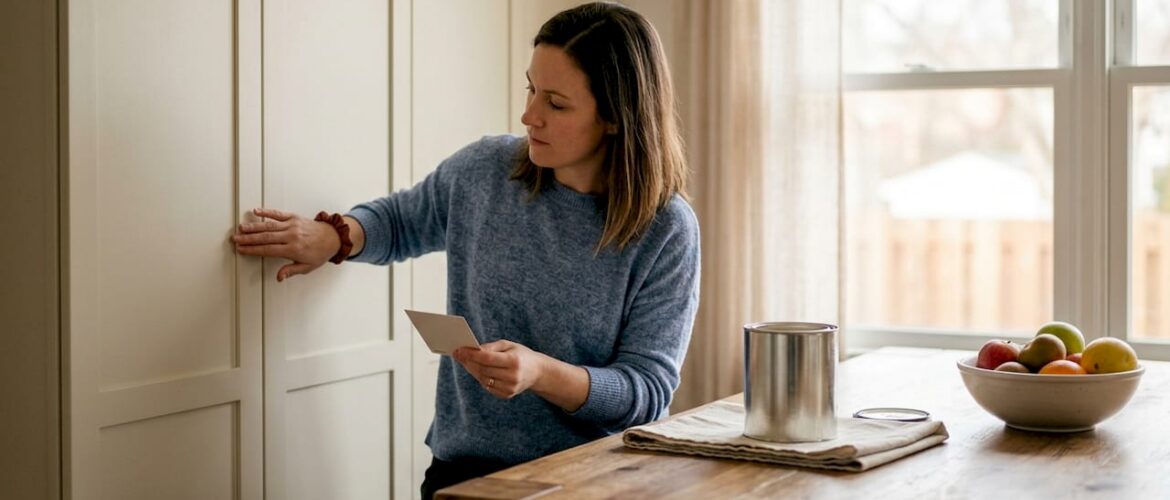
Matte finish is defined as a low-sheen coating that absorbs and diffuses light rather than reflecting it, making it the ideal surface for cabinet painting when you want warmth, depth, and forgiveness for everyday wear. Why matte finish suits cabinet painting comes down to one core truth: it hides what gloss exposes. Fingerprints, minor dents, brush marks, and surface flaws disappear under a matte coat that scatters light in every direction. Matte holds about 25% of the new cabinet market, with satin leading at 65%. That share is growing fast, driven by anti-fingerprint nano-coating technology and the rise of “quiet luxury” as a dominant design direction in 2026.
Why does matte finish suit cabinet painting so well?
Matte finish works for cabinet painting because it turns the surface into a light absorber, not a mirror. Gloss finishes create distracting reflections under LED lighting, while matte finishes provide consistent, glare-free surfaces that read as calm and intentional. That difference matters most in open-plan kitchens where cabinets face multiple light sources throughout the day.
The visual effect is significant. A matte surface creates depth and texture that gloss simply cannot replicate. Designers now frame matte as part of quiet luxury in cabinetry, offering softness and architectural warmth compared to the sharper modernism of gloss finishes. This trend is especially strong in European-style frameless cabinetry and in American farmhouse, Scandinavian, and transitional kitchen designs.
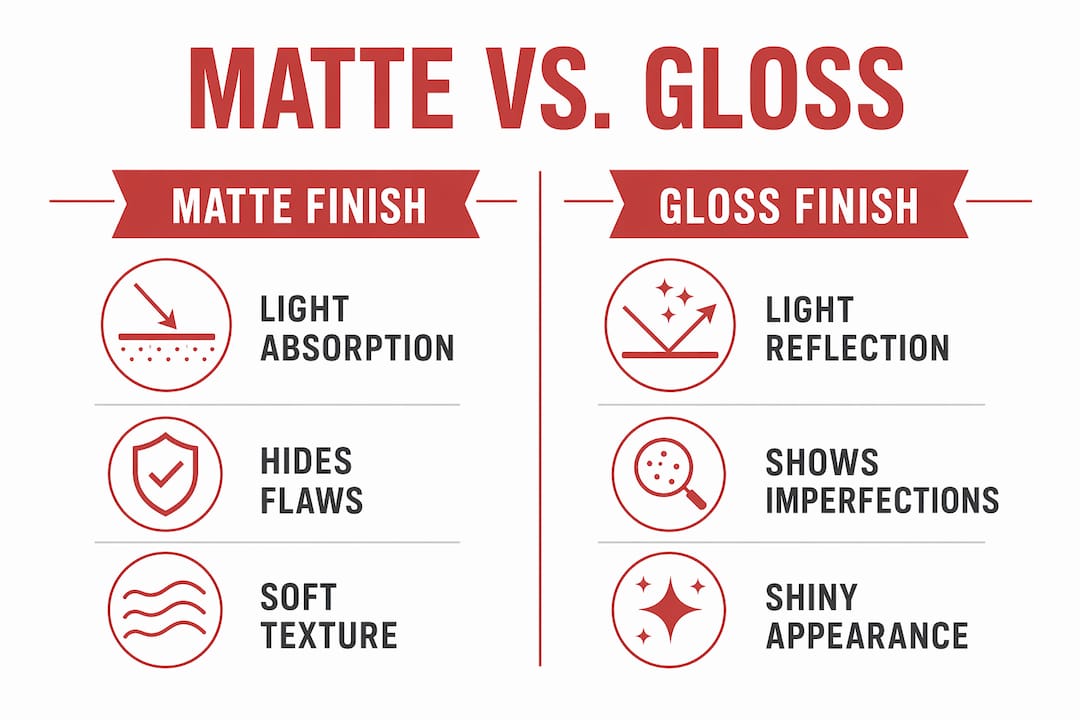
How matte and gloss handle light differently
The table below shows the key differences between matte and gloss finishes in real kitchen conditions.
| Feature | Matte finish | Gloss finish |
|---|---|---|
| Light behavior | Absorbs and diffuses | Reflects directly |
| Glare under LED lighting | None | High |
| Visibility of surface flaws | Low | High |
| Perceived warmth | High | Low |
| Best kitchen style | Farmhouse, Scandinavian, transitional | Modern, contemporary |
Matte finishes perform best in kitchens with abundant natural light, where gloss would create harsh reflections off windows. In smaller or darker kitchens, a light-colored matte finish keeps the space feeling open without the cold, clinical look that gloss can produce.
The practical takeaway is straightforward. If your kitchen has recessed LED lighting or large windows, matte absorbs those light sources and creates a soft, even glow across the cabinet faces. Gloss under the same conditions turns your cabinets into mirrors, pulling attention away from the overall design.
What are the functional advantages of matte finish on cabinets?
Matte finishes hide surface flaws better than glossy finishes by diffusing light and making scratches and dents less visible. This is not a minor benefit. Cabinets take more daily abuse than almost any other surface in a home, and a finish that forgives that abuse saves you time, stress, and repainting costs.
Families with young children benefit most from matte finishes because matte conceals fingerprints and smudges far better than gloss. A gloss cabinet door shows every handprint within minutes of cleaning. A matte door in the same kitchen looks clean for far longer between wipes.
The functional advantages stack up quickly:
- Hides minor scratches and dents without requiring touch-ups
- Reduces fingerprint visibility on high-touch doors and drawer fronts
- Masks surface prep imperfections like slight grain raise or minor sanding marks
- Works well on older cabinets where the substrate is not perfectly smooth
- Pairs with anti-fingerprint nano-coatings for even better performance in busy households
Modern matte coatings include anti-fingerprint nano-technologies that reduce traditional maintenance concerns and increase durability. This advancement has removed the biggest objection homeowners used to have about matte finishes. You get the aesthetic without the constant cleaning burden.
Pro Tip: If you are painting older cabinets with visible grain or minor dings, matte is the most forgiving finish you can choose. It works with the surface, not against it. Read through this matte finish cabinet guide before you buy your first can of paint.
What maintenance considerations come with matte cabinet finishes?
Matte finishes require more thoughtful maintenance than gloss, and knowing the rules upfront prevents most problems. Grease can soak into matte surfaces if not wiped away immediately, and professional sealers prevent this issue. That single fact explains why so many DIY matte paint jobs look dull and stained within a year.
The solution is not to avoid matte. The solution is to apply it correctly and clean it consistently. Follow these steps to keep matte cabinets looking sharp:
- Wipe spills and grease immediately. Do not let cooking residue sit on matte surfaces. A damp microfiber cloth removes most kitchen grime without damaging the finish.
- Use pH-neutral cleaners only. Harsh chemicals and abrasive scrubbers scratch and dull matte coatings. Dish soap diluted in warm water is the right tool.
- Apply a clear matte topcoat or sealer. Professional sealers over matte paint provide long-term durability and washability that bare matte paint cannot deliver on its own.
- Avoid dark matte colors near the stove. Dark matte finishes show water spots, dust, and oily residue more visibly, making them better suited for low-traffic or decorative cabinetry.
- Inspect the finish annually. Look for areas where the topcoat has worn through, especially around handles and drawer pulls. Spot-seal those areas before they become full repairs.
Pro Tip: Avoid common beginner mistakes like skipping the sealer or using the wrong cleaner. The most common painting mistakes with matte finishes are almost always about prep and protection, not the paint itself.
How to choose the right matte finish for your kitchen cabinets
Choosing the right matte finish starts with your kitchen’s lighting, traffic level, and color palette. There is no single correct answer, but there is a clear decision framework that works for most homeowners.
Light-colored matte finishes mask dirt better in high-use kitchens. Warm whites, soft grays, and greige tones are the most practical choices for families who cook daily. They hide dust and minor smudges while keeping the space feeling open and clean.
Key factors to weigh before choosing your matte finish:
- Kitchen size and light. Small kitchens with limited natural light do better with lighter matte shades. Large kitchens with good light can handle deeper matte tones.
- Traffic level. High-traffic kitchens need a matte finish with a clear protective topcoat or a factory-grade nano-coating for durability.
- Color depth. Light matte colors forgive daily use. Dark matte colors look stunning but require more frequent cleaning near cooking zones.
- Hardware pairing. Matte finishes pair well with brushed brass or matte black hardware, completing the design cohesion of the space. Avoid polished chrome or nickel, which clash visually with the softness of matte.
The table below matches common kitchen profiles to the best matte finish approach.
| Kitchen profile | Recommended matte color | Topcoat needed? |
|---|---|---|
| High-traffic family kitchen | Warm white or soft gray | Yes, always |
| Low-traffic or decorative space | Deep navy or forest green | Recommended |
| Small kitchen, limited light | Light greige or cream | Yes |
| Open-plan modern kitchen | Charcoal or warm taupe | Yes |
For durability guidance on specific paint products, the most durable cabinet paint guide from Cabinetsrefinishing breaks down which formulas hold up best under real kitchen conditions.
Key Takeaways
Matte finish suits cabinet painting because it absorbs light, hides daily wear, and aligns with modern design trends, provided you seal it properly and clean it consistently.
| Point | Details |
|---|---|
| Light absorption is the core benefit | Matte surfaces diffuse light, eliminating glare and hiding scratches, dents, and fingerprints. |
| Nano-coatings changed the game | Modern anti-fingerprint matte coatings make high-touch cabinetry practical without constant cleaning. |
| Sealers are non-negotiable | Bare matte paint absorbs grease; a clear topcoat is required for durability in any working kitchen. |
| Color choice affects maintenance | Light matte shades hide dust and grime better than dark matte colors in high-use kitchens. |
| Hardware pairing matters | Brushed brass and matte black hardware complete the design cohesion of matte cabinet finishes. |
What I have learned after years of watching matte finishes succeed and fail
Most homeowners who regret their matte cabinet choice made one of two mistakes. They either skipped the sealer, or they chose a dark matte color for a kitchen where they cook every night. Neither mistake is about the finish itself. Both are about planning.
The misconception I hear most often is that matte finishes are fragile. That was true ten years ago. Today, high-quality factory-applied matte finishes outperform lower-quality gloss finishes in durability and maintenance. The finish is not the weak point. The application is.
DIY matte paint jobs fail because they lack the protective layers that factory finishes include as standard. A brush-applied matte paint with no topcoat will absorb grease, dull out, and start looking tired within 18 months in a busy kitchen. A professionally applied matte finish with a non-porous clear coat will look sharp for years. That gap in outcome is almost entirely about process, not product.
My honest advice: if you want matte cabinets that last, treat the application like a factory process. Sand properly, prime thoroughly, apply thin coats, and seal with a purpose-built clear topcoat. If that sounds like more work than you want to take on, a professional refinisher who uses factory-grade methods is worth every dollar. The long-term durability of cabinet painting depends almost entirely on what happens before and after the color coat goes on.
Matte finishes suit family kitchens, modern kitchens, and anyone who values a calm, warm aesthetic over high-shine drama. They reward careful prep and punish shortcuts. Get the process right, and you will not look at your cabinets and wish you had chosen something else.
— Jesse
Professional matte cabinet finishes done right in Denver
Cabinetsrefinishing applies matte finishes using a factory-grade methodology that includes meticulous surface preparation, multiple protective layers, and a clear topcoat built for washability in working kitchens. The result is a finish that holds up to daily use without the grease absorption or dulling that DIY matte paint jobs typically develop within the first year.
Projects are completed in 3–5 days, and refinishing costs range from $3,000 to $8,000, compared to $15,000 to $40,000 for full cabinet replacement. If you want a matte finish that performs as well as it looks, get a refinishing estimate from Cabinetsrefinishing today. You can also call or text 720-219-9716 to discuss your kitchen and get a professional matte finish quote for your specific cabinets.
FAQ
Is matte finish durable enough for kitchen cabinets?
Yes, when sealed with a clear protective topcoat. Modern matte coatings with anti-fingerprint nano-technology are durable enough for high-touch kitchen cabinetry.
How does matte finish compare to gloss for hiding imperfections?
Matte finish hides scratches, dents, and fingerprints better than gloss because it diffuses light rather than reflecting it back toward the viewer.
What is the best way to clean matte cabinet finishes?
Use a damp microfiber cloth with pH-neutral dish soap. Avoid abrasive scrubbers and harsh chemical cleaners, which dull and scratch matte coatings over time.
Does matte finish work on dark cabinet colors?
Dark matte finishes look striking but show water spots and dust more visibly than light matte shades. They work best in low-traffic or decorative cabinet applications.
What hardware pairs best with matte cabinet finishes?
Brushed brass and matte black hardware complement matte cabinet finishes most effectively, creating visual cohesion between the soft surface texture and the hardware tone.
Recommended
- Matte Finish Cabinet Painting: The Ultimate Guide for Homeowners – Cabinet Refinishing and Cabinet Painting Denver 720-219-9716
- Cabinet Color Selection Refinishing Guide for 2026 – Cabinet Refinishing and Cabinet Painting Denver 720-219-9716
- The Best Sheen for Kitchen Cabinet Paint: A Professional Denver Guide – Cabinet Refinishing and Cabinet Painting Denver 720-219-9716
- Kitchen Cabinet Color Trends 2026: What’s Hot Right Now – Cabinet Refinishing and Cabinet Painting Denver 720-219-9716