
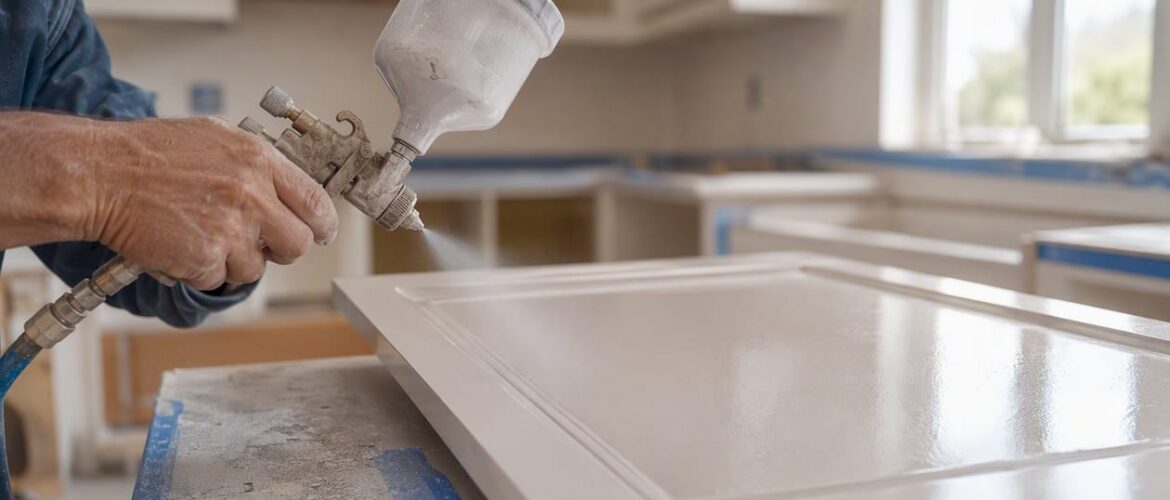
Professional cabinet refinishing or refacing is the right call for most Denver homeowners with worn, dated, or damaged cabinets. Projects typically run $3,000–$8,000 and wrap up in 3–5 days, compared to $15,000–$40,000 and weeks of disruption for full replacement. Call or text Cabinetsrefinishing at 720-219-9716, or request a free estimate online to get started.
Key Takeaways
Professional cabinet refinishing is the most cost-effective solution for most Denver homeowners with worn or dated cabinets, delivering a factory-quality finish in 3–5 days at $3,000–$8,000 versus $15,000–$40,000 for full replacement.
| Point | Details |
|---|---|
| Cost savings are substantial | Refinishing runs $3,000–$8,000 vs. $15,000–$40,000 for full cabinet replacement. |
| Most damage is repairable | Surface wear, minor water damage, and loose joints are fixable; rot, mold, and warped boxes usually require replacement. |
| Dry before you repair | Run a fan or dehumidifier for 24–48 hours before applying any filler or epoxy to prevent trapped moisture. |
| Get an itemized written quote | A line-item quote lets you compare bids accurately and spot hidden costs before signing. |
| Cabinetsrefinishing is the Denver option | Factory-finish projects completed in 3–5 days; call or text 720-219-9716 for a free estimate. |
Table of Contents
- What cabinet cures do professional refinishers actually offer?
- How the refinishing process works, step by step
- What does professional refinishing actually cost?
- Which cabinet problems can be fixed, and which require replacement?
- What to ask during estimates, and what a good quote covers
- What trust signals tell you a refinisher is worth hiring?
- Quick homeowner checks you can do before calling a pro
- Why refinishing is the more sustainable choice
- Cabinetsrefinishing delivers a factory finish in 3–5 days
- What I’d tell a Denver homeowner before they make this decision
- Sources
What cabinet cures do professional refinishers actually offer?
Most homeowners come in thinking they need new cabinets. What they usually need is one of these:
- Cabinet refinishing/painting: Doors and drawer fronts are removed, prepped, and sprayed with a factory-grade finish in your chosen color or stain. The result is a durable, smooth surface that looks nothing like a brush-painted DIY job.
- Cabinet refacing: The cabinet boxes stay in place. New veneer goes over the existing frames, and new doors and drawer fronts replace the old ones. Good option when the box structure is solid but the style is outdated.
- Door and drawer replacement: Swap just the doors and drawer fronts for a new profile or wood species while keeping everything else. Works well when the frames are fine but the doors are damaged or mismatched.
- Minor repairs: Joint regluing, wood filler for gouges, two-part epoxy for soft spots, hinge adjustment, and stripped screw-hole repair. These fixes often cost a fraction of a full refinish and extend cabinet life by years.
- Hardware upgrades: New pulls, knobs, and hinges can shift the entire feel of a kitchen. Many refinishers handle this as part of the project.
Finish options typically include paint (matte, satin, semi-gloss), stain, and glaze. For a closer look at how matte finish performs on cabinets versus shinier alternatives, that’s worth reading before you commit to a sheen. Veneers for refacing come in wood, thermofoil, and rigid thermofoil (RTF), each with different price points and durability profiles.
Pro Tip: Before your estimate appointment, pull up three or four before/after photos from the refinisher’s portfolio and bring them. It forces a concrete conversation about finish quality rather than a vague one about “looking nice.”
How the refinishing process works, step by step
A professional refinishing job follows a predictable sequence. Knowing it helps you plan your week.
- In-home measure and quote. A technician visits, counts doors and drawer fronts, assesses cabinet condition, and notes any repairs needed. You get a written, itemized quote.
- Homeowner prep. Clear the contents of your cabinets and countertops. Remove small appliances. The kitchen will be inaccessible for most of the project.
- Door and drawer removal. Doors and drawer fronts come off and go to a controlled shop environment for spraying. This cuts on-site dust and gives the finisher better control over the coat.
- On-site prep. Cabinet boxes are cleaned, degreased, lightly sanded, and masked. Any repairs (filling, epoxy work) happen at this stage. If water damage is present, the wood needs to dry thoroughly first. Using dehumidifiers or fans for 24–48 hours before applying fillers prevents moisture from getting trapped under the finish.
- Finish application. Multiple coats are sprayed in the shop and on-site. Each coat is lightly sanded between applications.
- Cure window. Epoxy repairs and finish coats typically need 24–48 hours to cure fully. Plan for limited kitchen use during this window.
- Reassembly and hardware install. Doors go back on, hardware is installed, and the technician does a final walkthrough with you. For a detailed look at what cabinet reassembly involves, that guide covers it well.
Most standard kitchens are done in 3–5 days. Custom color matching or extensive repairs can add a day or two.
What does professional refinishing actually cost?
The short answer: refinishing typically costs $3,000–$8,000 for a standard kitchen. Full replacement of the same kitchen runs $15,000–$40,000. That gap is real, and it’s the main reason most homeowners who get both quotes choose refinishing.
Several factors push a project toward the higher end of that range:
- Cabinet count and linear footage. More doors and drawer fronts mean more labor and materials.
- Current condition. Significant repairs (water damage, delamination, joint failure) add time and materials cost.
- Finish type. A custom color match or specialty glaze costs more than a standard paint color.
- Door replacement. Swapping doors entirely costs more than refinishing the existing ones.
- Hardware. New pulls and hinges are usually priced separately.
- Location and access. Tight spaces or unusual cabinet configurations can add labor time.
| Option | Typical cost range | Typical timeline | Waste generated |
|---|---|---|---|
| Professional refinishing | $3,000–$8,000 | 3–5 days | Minimal (existing cabinets kept) |
| Full cabinet replacement | $15,000–$40,000 | 2–6 weeks | High (all cabinets landfill) |
Always request an itemized written quote. A quote that lists only a lump sum gives you nothing to compare when you get a second bid.
Which cabinet problems can be fixed, and which require replacement?
Most surface and minor structural problems are repairable. The line gets crossed when the wood itself has failed.
Typically repairable:
- Peeling or bubbling veneer (can be re-adhered or replaced)
- Light water stains or surface discoloration
- Minor water damage where the wood is still firm
- Loose or separated joints (reglue with wood glue and clamps)
- Small gouges or dents (wood filler or two-part epoxy)
- Stripped screw holes for hinges (toothpicks and wood glue, or short dowels, work reliably per Family Handyman’s repair guide)
- Sagging or misaligned doors (hinge adjustment)
For water-damaged cabinets specifically, sanding, wood filler, two-part epoxy, and careful refinishing can restore a cabinet box that is structurally intact. When structural wood has softened, applying a penetrating wood hardener before the epoxy produces a stronger bond. Skipping that step risks filler failure under load. Two-part wood epoxy is the standard repair material, and it needs roughly 24–48 hours to cure before finishing.
Replacement triggers:
- Crumbly, spongy, or structurally compromised wood (rot has gone through the box)
- Active mold infestation inside the cabinet structure
- Extensively warped cabinet boxes that no longer close or align
- Water damage so widespread that repair cost approaches replacement cost
Homeowner action path: Press on the cabinet floor and sides near the sink. Soft or spongy wood means moisture has penetrated. Dry the area with a fan or dehumidifier for 24–48 hours, then photograph the damage from multiple angles. Bring those photos to your estimate appointment. A professional can tell you in minutes whether repair or replacement makes more sense.
After repairs, seal around the sink with silicone caulk and check under the sink periodically for slow leaks. Those two steps prevent most of the water damage that brings cabinets to this point in the first place.
For homeowners still deciding whether their situation calls for a touch-up or a full refinish, this DIY vs. professional refinishing guide lays out the decision clearly.
What to ask during estimates, and what a good quote covers
A written quote protects you. A verbal estimate protects the contractor.
Questions to ask before or during the estimate:
- What is your finish process, and how many coats do you apply?
- Do doors go to a shop, or are they sprayed on-site?
- What warranty do you offer on the finish, and what does it cover?
- How do you handle containment and cleanup?
- Are you licensed and insured in Colorado?
- Can you provide references from similar-size jobs?
- What is the payment schedule?
What a professional written quote should itemize:
- Labor (broken out by phase: prep, finish, reassembly)
- Materials (primer, finish coats, filler, epoxy)
- Door count and drawer front count
- Hardware (if included)
- Disposal fees (for replaced doors or hardware)
- Prep and cleanup
- Timeline and start date
Use this structure to compare two quotes side by side:
Fill in both columns during or after each estimate visit. Gaps in one quote that the other covers are usually where hidden costs live.
What trust signals tell you a refinisher is worth hiring?
The quality of a finish is hard to judge from a website. These signals narrow the field fast.
- Before/after gallery with real job photos. Look for consistent finish quality across multiple kitchens, not just one hero shot.
- Multi-year finish warranty. A refinisher confident in their process backs it in writing. Ask exactly what the warranty covers (peeling, chipping, adhesion failure) and what voids it.
- Verified customer reviews. Check Google reviews independently, not just testimonials on the company’s own site.
- Years in business and local presence. A Denver-based refinisher with a track record is easier to hold accountable than an out-of-state franchise.
- Showroom or by-appointment viewing. Seeing finished sample doors in person tells you more about sheen, color accuracy, and texture than any photo.
- References for similar-size jobs. Ask for two or three homeowners with kitchens comparable to yours. A call takes five minutes and can save you thousands.
When weighing whether to replace cabinet doors entirely versus refinishing them, this partner resource on door replacement considerations covers the practical trade-offs worth knowing.
Quick homeowner checks you can do before calling a pro
Warm water and a grease-cutting dish soap like Dawn is the most effective cleaning method for greasy cabinets. Hands-on testing by The Kitchn found it outperformed vinegar, baking soda mixtures, and commercial degreasers on heavy kitchen grease without damaging the finish. Harsh solvents strip existing coatings and make refinishing adhesion worse, not better.
Three quick checks before you call for an estimate:
- Press test. Push firmly on cabinet floors, sides, and the area around the sink. Firm wood is repairable. Soft or spongy wood signals moisture damage that needs professional assessment.
- Dry first. If you find wet or damp wood, run a fan or dehumidifier for 24–48 hours before doing anything else. Applying filler over wet wood traps moisture and causes the repair to fail.
- Photograph everything. Take close-up photos of peeling, discoloration, soft spots, and any visible mold. These photos give a refinisher the information they need to quote accurately without a second visit.
Pro Tip: For stripped hinge screws, push three or four toothpicks coated in wood glue into the hole, let it dry fully, then trim flush and re-drive the screw. It’s a reliable fix that takes ten minutes and costs almost nothing.
A short note on mold: surface mold on a cabinet exterior can sometimes be cleaned and refinished. Mold inside the cabinet box or in the structural wood is a different problem. Stop, dry the area, and get a professional assessment before proceeding. Do not apply filler or finish over active mold.
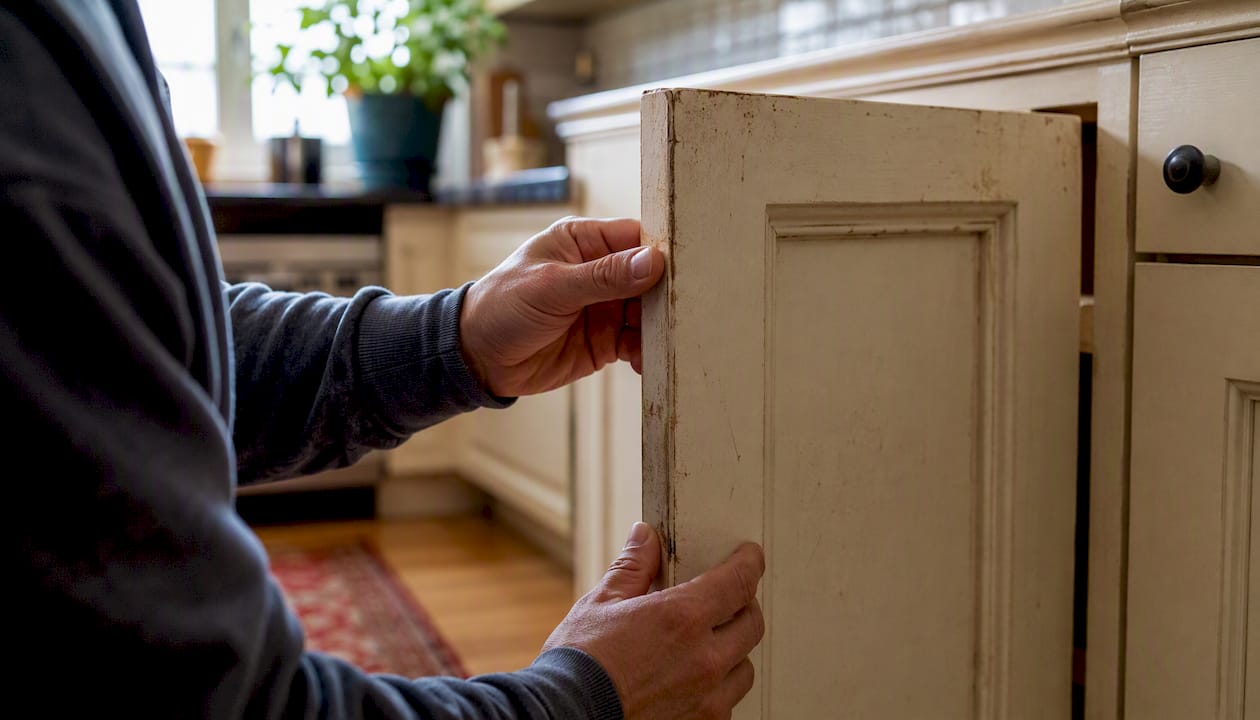
For a thorough prep walkthrough before any refinishing work, the grease removal guide from Cabinetsrefinishing covers exactly what proper cleaning looks like.
Why refinishing is the more sustainable choice
Full cabinet replacement sends an entire kitchen’s worth of wood, hardware, and substrate material to a landfill. Refinishing keeps all of it in place. The only materials consumed are prep chemicals, primer, and finish coats, which are a fraction of the environmental footprint of manufacturing and shipping new cabinetry.
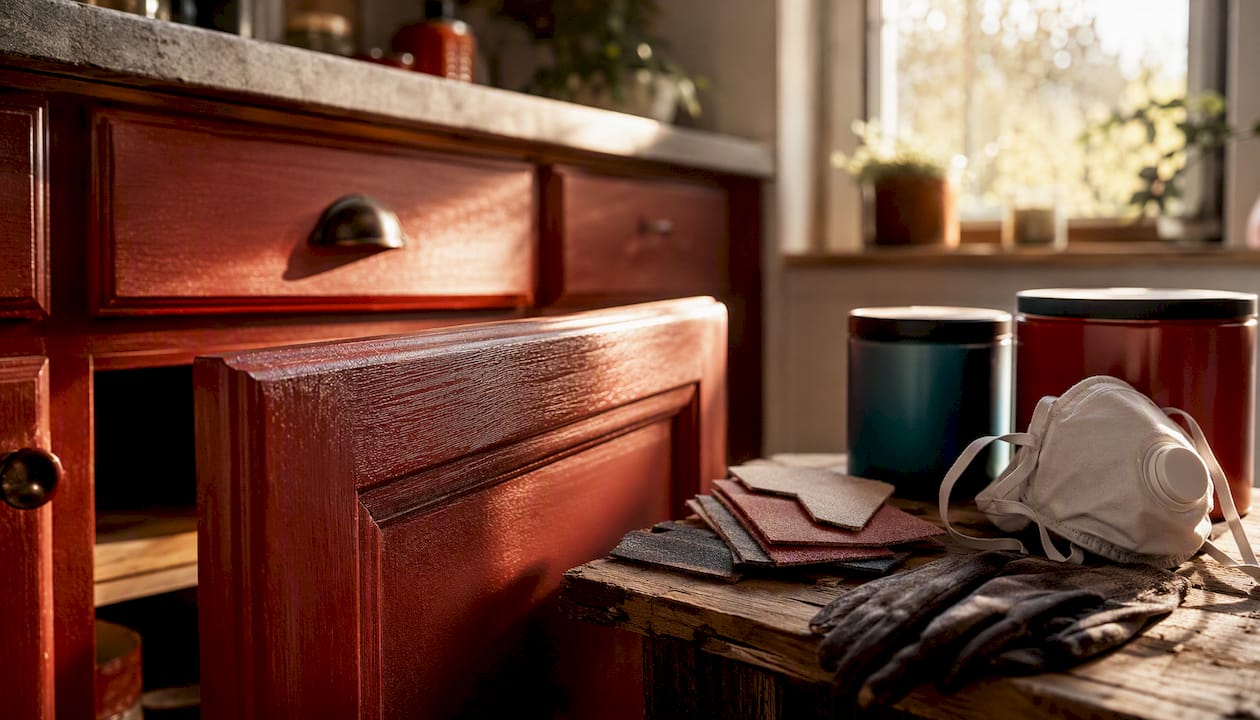
Low-VOC and water-based finish options have improved significantly. Many professional refinishers now offer them as a standard choice, not an upgrade. They cure well, hold up to kitchen conditions, and produce less off-gassing during and after application.
Refacing extends the life of existing cabinet boxes by a decade or more when the structure is sound. That’s a meaningful reduction in demand for new wood products. For homeowners who care about this, it’s worth asking your refinisher specifically which finish products they use and whether low-VOC options are available at your price point.
Cabinetsrefinishing delivers a factory finish in 3–5 days
Replacing a kitchen’s cabinets is expensive, slow, and wasteful when the bones are good. Cabinetsrefinishing gives Denver-area homeowners a faster, sharper alternative: a factory-finish refinishing process that produces a more uniform, durable surface than brush-applied paint and wraps up in 3–5 days. Projects typically run $3,000–$8,000, compared to $15,000–$40,000 for full replacement.

The factory-finish process means doors go to a controlled environment for spraying, multiple coats are applied with light sanding between each, and the result holds up to daily kitchen use without the brush marks or early wear that single-coat on-site painting produces. Cabinetsrefinishing also handles minor repairs, custom color matching, and hardware upgrades as part of the same project. Financing options are available. Call or text 720-219-9716, or request your free estimate online today.
What I’d tell a Denver homeowner before they make this decision
Most people calling about cabinet cures are really asking one question: “Is it worth it, or should I just replace everything?” After seeing how the factory-finish process plays out on real kitchens, the answer is almost always the same. If the cabinet boxes are structurally sound, refinishing is not a compromise. It’s the smarter call. You get a finish that looks and performs like new cabinetry, in less than a week, at a fraction of the cost. The homeowners who regret it are usually the ones who waited two years to call.
If you’re in the Denver metro area and your kitchen feels tired, start with a free estimate from Cabinetsrefinishing. Bring your damage photos, ask about the factory-finish process, and get the numbers in writing. That conversation costs nothing and tells you everything you need to decide.
Sources
- How to Repair a Water-Damaged Cabinet (2026) | Today’s Homeowner
- I Tested 5 Ways To Clean Greasy Cabinets: Here’s The Best | The Kitchn
- 10 Simple Kitchen Cabinet Repairs | Family Handyman
- How to Repair Kitchen Cabinets with Water Damage | 8 Easy Steps
Recommended
- Kitchen Decor Refresh Ideas: High-Impact, Low-Cost Upgrades.
- Kitchen Makeover on a Budget: Professional Cabinet Refinishing in Denver (2026) – Cabinet Refinishing and Cabinet Painting Denver 720-219-9716
- Quick Kitchen Cabinet Update: Professional Results for Denver Homeowners – Cabinet Refinishing and Cabinet Painting Denver 720-219-9716
- Modernizing Kitchen Cabinets on a Budget: The Denver Homeowner’s Guide to High-End Results