Have you ever wondered why a DIY paint job often looks like a weekend project while a professional finish feels smooth and indestructible? The truth is that the high-performance coatings used by experts aren’t found on the shelves of your local hardware store. If you are asking what paint do professional cabinet painters use, you have likely realized that standard latex or acrylic paints simply won’t hold up to the daily wear and tear of a busy Colorado kitchen. Many homeowners in Lakewood and the Denver area worry that their new finish will peel or chip within months, which is exactly what happens when you use the wrong materials.
Cabinet Painting Service Areas in Denver & Surrounding Cities, Cabinet Refinishing in Denver County,
Arvada, CO, Wheat Ridge, CO,
and Castle Pines CO. Englewood CO. Castle Rock CO, Centennial CO.
Cabinet Painting in Arapahoe County, CO
Including Centennial, CO, Greenwood Village, CO,
Cherry Hills Village, CO,
and Aurora, CO.
We agree that your kitchen deserves a surface that is both beautiful and tough enough to be scrubbed daily. This article explains the industrial-grade systems and meticulous preparation steps that separate a premium result from a standard house painting job. You will learn about the specialized spray application we use at Cabinet refinishing Denver to achieve a factory-like finish. With over 45 years of experience in the Denver area, we’ll show you why Cabinet refinishing Denver is the most cost-effective way to transform your home while ensuring a result that looks like it came straight from the manufacturer.
Key Takeaways
- Discover why industrial coatings are superior to standard retail paints for preventing peeling and chipping in high-traffic kitchens.
- Learn the technical advantages of 2K coating systems and how catalysts create a durable, factory-hard surface that resists chemicals.
- Understand the importance of a meticulous preparation process, including degreasing and sanding, to ensure a permanent bond for your cabinets.
- See how Denver’s unique low humidity and high UV levels dictate the specific materials required for long-lasting Cabinet Painting Denver projects.
- Identify what paint do professional cabinet painters use to achieve a smooth, spray-applied finish that looks like it came straight from the factory.
The Difference Between Retail Paint and Professional Cabinet Coatings
Many homeowners in Lakewood and Aurora head to the local paint store expecting a durable result. They often buy high-end latex or "cabinet-specific" retail paints. This is the primary reason most DIY and low-cost projects fail within the first year. Standard wall paint is designed to be flexible and breathable; it is not meant to withstand the constant friction and chemical exposure found in a kitchen. When you ask what paint do professional cabinet painters use, the answer is industrial coatings.
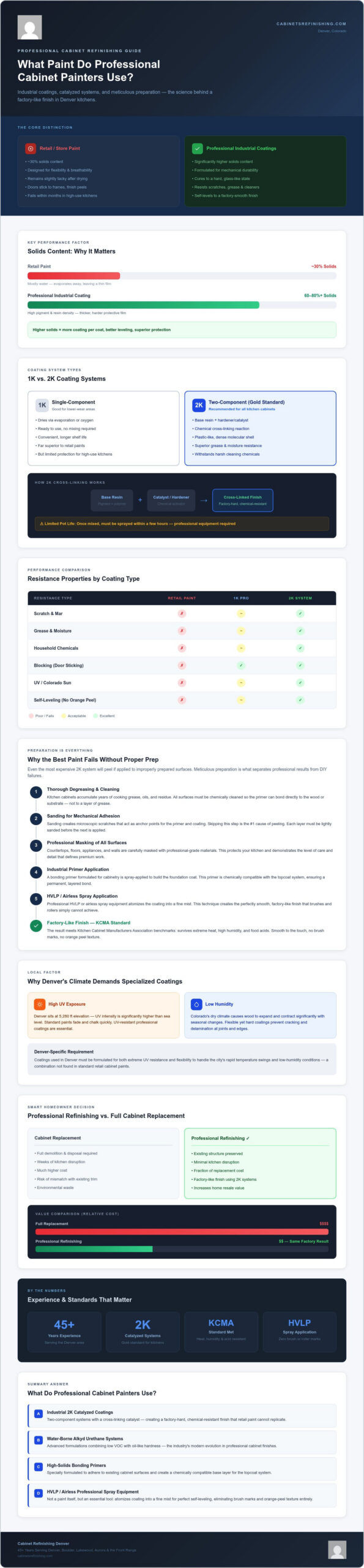
Industrial coatings are chemically different from the house paint used on your siding or drywall. These products have a much higher solids content. While retail paint might be 30 percent solids and 70 percent water, professional coatings carry a much higher percentage of pigments and resins. This creates a thicker, more protective film that levels out perfectly as it cures. To apply these heavy-duty materials, we use specialized HVLP or airless spray equipment. This equipment atomizes the coating into a fine mist. The result is a smooth surface that a brush or roller simply cannot replicate.
Why Retail ‘Cabinet Paints’ Often Fall Short
Retail paints must remain stable in a can for months on a store shelf. This requires chemical compromises that significantly reduce long-term durability. One major issue is "blocking resistance." Many retail paints remain slightly tacky even after they feel dry. This causes cabinet doors to stick to the frames, eventually peeling the finish off when you pull the door open. The professional coatings we use for Cabinet Refinishing Denver cure to a hard, glass-like state. They provide superior mechanical durability to resist scratches and high chemical durability to withstand grease, vinegar, and household cleaners.
The ‘Factory Finish’ Standard
A true factory finish is defined by its feel. It should be perfectly smooth to the touch with no "orange peel" texture or visible brush marks. Professional-grade materials are formulated to self-level. This means the coating flows together after being sprayed to eliminate any tiny imperfections. At Painting Kitchen Cabinets Denver, we focus on meeting the standards set by the Kitchen Cabinet Manufacturers Association (KCMA). These benchmarks ensure the finish can survive extreme heat, high humidity, and food acids without degrading. This level of protection is why our 45+ years of experience in the Denver area is vital for a lasting kitchen transformation that looks like it came straight from the manufacturer.
Technical Breakdown: 1K vs. 2K Coating Systems
Understanding the chemical composition of industrial finishes is the next step in answering what paint do professional cabinet painters use. Most professional finishes fall into two specific categories: 1K and 2K systems. A 1K coating is a single-component product that dries through evaporation or oxygen exposure. While these are convenient and far superior to retail paint, they don’t always offer the maximum protection required for high-use kitchens in busy homes. Many professionals use 1K products for lower-wear areas, but the gold standard for kitchen cabinets is the 2K system.
2K coatings are two-component systems. They consist of a base resin and a separate hardener or catalyst. When these two parts are mixed together, a chemical reaction occurs. This process, known as cross-linking, creates a molecular bond that is significantly stronger than any air-dried paint. This is why what paint do professional cabinet painters use often refers specifically to these catalyzed systems. They provide a level of resistance to grease, moisture, and harsh cleaning chemicals that 1K products simply cannot match. This chemical durability is what prevents the finish from softening or peeling near stove hoods or sink areas.
The Role of the Catalyst in 2K Systems
Adding a catalyst transforms the liquid coating into a dense, plastic-like shell. This chemical cross-linking provides incredible scratch and mar resistance, which is essential for Denver families with children or pets. However, these systems have a limited "pot life." Once the catalyst is added, the mixture begins to harden and must be sprayed within a specific timeframe, usually just a few hours. This technical requirement is why these coatings must be applied by specialists with professional spray equipment rather than DIY enthusiasts. The timing and mixture must be exact to ensure the finish cures properly and reaches its full hardness.
Water-Borne Alkyd Urethanes
The industry has moved away from traditional solvent-based oils toward high-performance water-borne urethanes. These modern coatings offer the superior leveling and "flow" of old-school oil paints but with much faster dry times and safer cleanup. They are also low in Volatile Organic Compounds (VOCs), which ensures better indoor air quality for your home during the project. For eco-conscious homeowners in Boulder or Lakewood, these systems provide a factory finish without the lingering chemical odors of traditional solvents. If you want to see how these advanced materials can transform your kitchen, exploring Cabinet Refinishing Denver is a great way to start your project. We have used these proven systems for over 45 years to deliver results that last.
Why the Best Paint Fails Without Meticulous Preparation
Even the highest-grade industrial coating will peel if the surface isn’t ready for it. The Golden Rule of Cabinet Refinishing Denver is that paint is only as good as the bond beneath it. We don’t just start spraying when we arrive at your home. Understanding what paint do professional cabinet painters use is only half the battle; the other half is the labor-intensive preparation that ensures it never peels. Our 38-year-refined process begins with removing decades of accumulated kitchen oils, steam, and airborne grease that standard cleaning methods leave behind.
Many homeowners ask what paint do professional cabinet painters use to get that smooth look, but the secret is actually the mechanical bond created through sanding. We scuff-sand every square inch of the cabinet boxes and doors. This creates "teeth" in the wood, giving the primer a textured surface to grab onto. Without this step, even a premium 2K finish might look good for a month but will eventually chip off in sheets. This is why we never skip the physical labor required to prep a kitchen properly.
Protection is a core part of our professional standard. We treat your Denver home like a laboratory to prevent overspray and dust from spreading. This involves meticulous masking of your countertops, floors, and appliances using high-grade tape and protective plastic. We isolate the work area entirely to ensure your kitchen stays clean while we achieve a factory-like result. This level of containment is one of the many reasons professional cabinet refinishing is a superior alternative to a standard house painting job.
The Invisible Step: Chemical De-Glosser and Cleaning
Standard dish soap isn’t enough for the chemical contaminants found in modern kitchens. We use professional de-glossers to remove hidden waxes and silicones left behind by furniture polishes and aerosol cleaners. These substances are "bond-breakers" that cause the finish to bead up or fish-eye. Our cleaning process ensures the primer can bite directly into the wood fibers for a permanent connection. This step is essential for homeowners in Lakewood and Boulder who want a finish that stands up to daily scrubbing.
Professional Priming Systems
A standard wall primer will not work on kitchen cabinets. We use specialized stain-blocking primers to prevent tannin bleed, which is a common problem with older oak cabinets. If you want a modern, flat look, we utilize high-build primers to fill in deep wood grain and minor imperfections. We also sand between every single coat of primer and paint. This repetitive process is what creates the ultra-smooth, professional surface our clients expect from a high-end transformation.
How Denver’s Climate Impacts Your Cabinet Paint Choice
Denver’s arid climate presents specific challenges for kitchen finishes that national blogs often ignore. High altitude means thinner air and significantly lower humidity levels than most other regions. These factors directly influence what paint do professional cabinet painters use along the Front Range. While homeowners in humid coastal areas might struggle with slow drying times, Denver professionals must manage the opposite problem. Coatings can dry too quickly, which prevents the material from leveling out into a smooth, factory-like surface.
UV exposure is another major factor in sun-drenched Colorado kitchens. Intense sunlight at 5,280 feet can cause inferior retail paints to yellow or become brittle much faster than they would elsewhere. Additionally, the extreme lack of moisture in our local air causes wood to contract and expand. This puts immense stress on the joints of your cabinet doors. Professional-grade coatings are engineered with higher flexibility. They move with the wood fibers rather than cracking at the seams, ensuring your kitchen stays beautiful for years.
Managing Flash Drying in Arid Air
In our 45+ years of experience in the Denver area, we’ve seen many DIY projects ruined by "flash drying." This occurs when the moisture in the paint evaporates before the coating has a chance to flow together. To combat this, we adjust our specialized spray techniques and use industrial retarders. These additives slow down the drying process just enough to ensure a glass-smooth finish. Understanding what paint do professional cabinet painters use includes knowing how to modify those coatings for our 15 percent humidity days. Without these professional adjustments, DIY attempts in Lakewood or Aurora often result in a rough "dry spray" texture that feels like sandpaper rather than a factory finish.
Joint Cracking and Wood Breathability
Cabinet doors are constructed from multiple pieces, specifically stiles and rails. The point where these pieces meet is a vulnerable area known as the joint bridge. In older Denver and Boulder homes, these joints move significantly as the seasons change and humidity fluctuates. Standard house paint is far too brittle for this movement and will quickly develop unsightly hairline cracks at every joint. Industrial coatings are designed specifically for this mechanical stress. They provide a durable, elastic seal that maintains its integrity even as the wood breathes. This local expertise is why we are the trusted choice for Cabinet Refinishing Denver homeowners rely on for long-term value.
Choosing a Cabinet Refinishing Partner in Denver
Selecting the right team for your kitchen update is just as important as the materials they apply. In the Denver area, many general house painters claim to offer cabinet services, but they often lack the specialized equipment and industrial coatings required for a factory finish. A true specialist understands that kitchen surfaces are high-traffic zones requiring mechanical and chemical durability. When reviewing an estimate, you should specifically ask what paint do professional cabinet painters use to ensure they aren’t just applying high-end retail latex. A professional estimate should detail a multi-step preparation process, including degreasing, sanding, and the use of catalyzed primers.
Choosing professional cabinet refinishing over replacement can save a significant amount of your remodeling budget while delivering a surface that looks brand new. Replacing cabinets involves weeks of construction, demolition, and the added cost of countertops and plumbing. Our specialized spray application provides a smooth, factory-like result in a fraction of the time. With over 45 years of local experience, we’ve mastered the nuances of the Colorado climate to ensure your finish remains beautiful for decades.
The Painting Kitchen Cabinets Denver Advantage
Our team at Painting Kitchen Cabinets Denver utilizes a 38-year-refined system designed for maximum adhesion and durability. We prioritize industrial-strength coatings that are both eco-friendly and low-VOC, making them safe for your family and the environment. Because we focus exclusively on cabinets, our process is highly efficient. We handle everything from the initial masking of your Lakewood or Boulder home to the final installation of your doors. This specialized focus allows us to provide a level of craftsmanship that general contractors simply cannot match.
Next Steps for Your Kitchen Transformation
Starting your project is a straightforward and transparent process. We offer modern, efficient communication methods to respect your time. You can receive an immediate estimate by using our digital messaging system to send photos of your current layout. During an in-home consultation, we’ll verify the condition of your wood and discuss your color goals. We provide clear instructions and set realistic expectations for the timeline of your transformation. If you’re ready to upgrade your kitchen without the stress of a full remodel, Get Your Free Cabinet Refinishing Estimate in Denver Today!
Start Your Kitchen Transformation Today
Achieving a factory-like finish requires more than a trip to the local hardware store. You now understand that what paint do professional cabinet painters use involves industrial 2K coatings and catalyzed systems that retail brands cannot match. These materials, combined with a meticulous 38-year-refined preparation process, ensure your cabinets resist grease and moisture for years. We also account for Denver’s unique arid climate to prevent cracking and ensure proper leveling during application. This technical expertise separates a professional refinishing project from a standard house painting job.
Painting Kitchen Cabinets Denver provides a premium alternative to costly cabinet replacement. Our team brings 45+ years of local experience to every Front Range project. We are licensed and insured Denver professionals who guarantee a factory-like finish that increases your home’s value. You don’t have to settle for brush marks or peeling paint when a durable, scrubbable surface is within reach. We take pride in our craftsmanship and prioritize the long-term satisfaction of every homeowner we serve.
Take the first step toward a beautiful kitchen. Get a Free Instant Quote from Denver’s Cabinet Experts and see how our specialized spray system can revitalize your home. We are ready to deliver the high-end results your kitchen deserves.
Frequently Asked Questions
Can I use regular Sherwin-Williams paint on my kitchen cabinets?
Regular Sherwin-Williams wall paint is not suitable for kitchen cabinets because it lacks the necessary hardness and chemical resistance. While retail stores sell "cabinet paint," these are often modified latex products that remain soft and susceptible to blocking. Professionals use industrial-grade coatings that cure to a much harder finish. These specialized materials bond deeply into the wood fibers, ensuring the surface doesn’t peel when exposed to kitchen oils or daily cleaning.
What is the most durable finish for kitchen cabinets in Denver?
A catalyzed 2K water-borne urethane system is the most durable finish for Denver homes. This coating is specifically engineered to withstand the Front Range’s low humidity and intense UV exposure. Unlike brittle retail paints, these professional systems remain flexible enough to handle seasonal wood movement without cracking. They provide a non-porous, chemical-resistant barrier that protects your cabinets from steam, grease, and household cleaners better than any other material.
Do professional cabinet painters use sprayers or brushes?
Professional cabinet painters use HVLP or airless spray equipment to ensure a glass-smooth surface. Brushes and rollers are never used for the final finish because they leave visible marks and uneven textures. Spray application allows the coating to atomize into a fine mist, which then levels out perfectly as it dries. This process is essential for achieving the factory-like look that characterizes high-end Cabinet Refinishing Denver projects.
How long does professional cabinet paint take to cure?
Most professional coatings are dry to the touch in about 30 minutes, but full chemical curing takes 7 to 14 days. You can usually use your kitchen carefully within 24 hours of the project completion. However, the finish is still hardening during the first two weeks. We advise homeowners to avoid scrubbing the surface or using heavy cleaners until the cross-linking process is fully finished to ensure maximum long-term durability.
What is the difference between 1K and 2K paint?
The main difference is the addition of a hardener or catalyst. 1K coatings dry through simple evaporation, while 2K systems require a chemical reaction to cure. This reaction creates a much stronger molecular bond, providing superior resistance to scratches and chemicals. If you are researching what paint do professional cabinet painters use, you’ll find that 2K systems are the industry standard for high-traffic kitchen environments due to this extreme durability.
Will the paint smell linger in my house after the job is done?
The modern industrial coatings we use have very low VOC levels, so lingering odors are not an issue. Any faint scent from the application usually disappears within a day or two. We also use professional-grade containment and air scrubbers to manage ventilation during the project. This ensures your Lakewood or Boulder home remains comfortable and safe for your family and pets throughout the entire cabinet refinishing process.
How do I clean professionally painted cabinets without damaging them?
Clean your refinished cabinets using a soft microfiber cloth dampened with warm water and a drop of mild dish soap. You should avoid abrasive scrub pads, wax-based polishes, or cleaners containing ammonia. Because professional industrial coatings cure to a hard, non-porous shell, they don’t absorb grease. Most spills and fingerprints will wipe away easily without the need for aggressive scrubbing or specialized chemical treatments.
Why is my cabinet paint peeling near the stove or sink?
Peeling near high-heat or high-moisture areas like stoves and sinks is often a sign of poor adhesion or the use of inferior retail paint. Steam and grease can soften standard latex finishes, causing them to delaminate from the wood. Professional 2K systems are specifically tested for heat and moisture resistance. Our meticulous 38-year-refined preparation process ensures a permanent bond that prevents the finish from lifting, even in these challenging kitchen zones.