

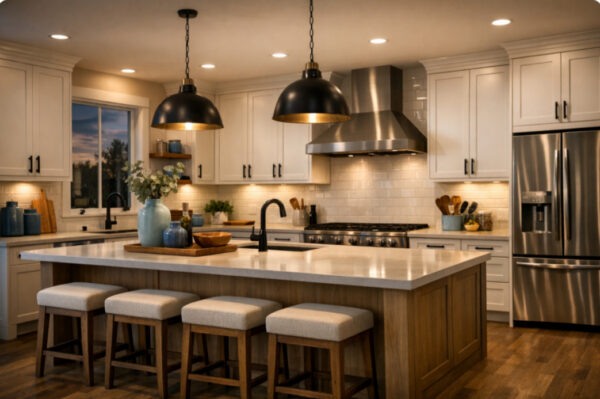
Smart cabinet finishing solutions for outdated kitchens
Why outdated kitchen cabinets are a smart place to start
My Review of Graco FFLP Tips for Spraying Cabinets
Outdated cabinets drag down the entire kitchen, even if your counters and floors still look good. For Denver homeowners, investors, and contractors, ripping everything out is rarely the most strategic move. Labor, debris hauling, and long lead times add up fast, and tenants or families lose access to the kitchen for weeks.
Cabinet finishing solutions for outdated kitchens give you another path. By reusing the existing cabinet boxes and focusing on the surfaces, you can achieve a high-impact visual upgrade with less cost, less downtime, and far less disruption.
This guide breaks down the major finishing options, when each makes sense, realistic cost ranges, and technical details that matter in Colorado’s dry climate. Whether you are updating a Golden bungalow to sell, modernizing an Arvada rental, or planning finishes for a client’s Denver loft, you will be able to choose the right solution, not just the cheapest one.
Understanding your cabinet finishing options
Before you pick colors or hardware, you need to understand the primary categories of cabinet finishing solutions for outdated kitchens and what problems they solve.
Painting, refinishing, refacing, and replacing compared
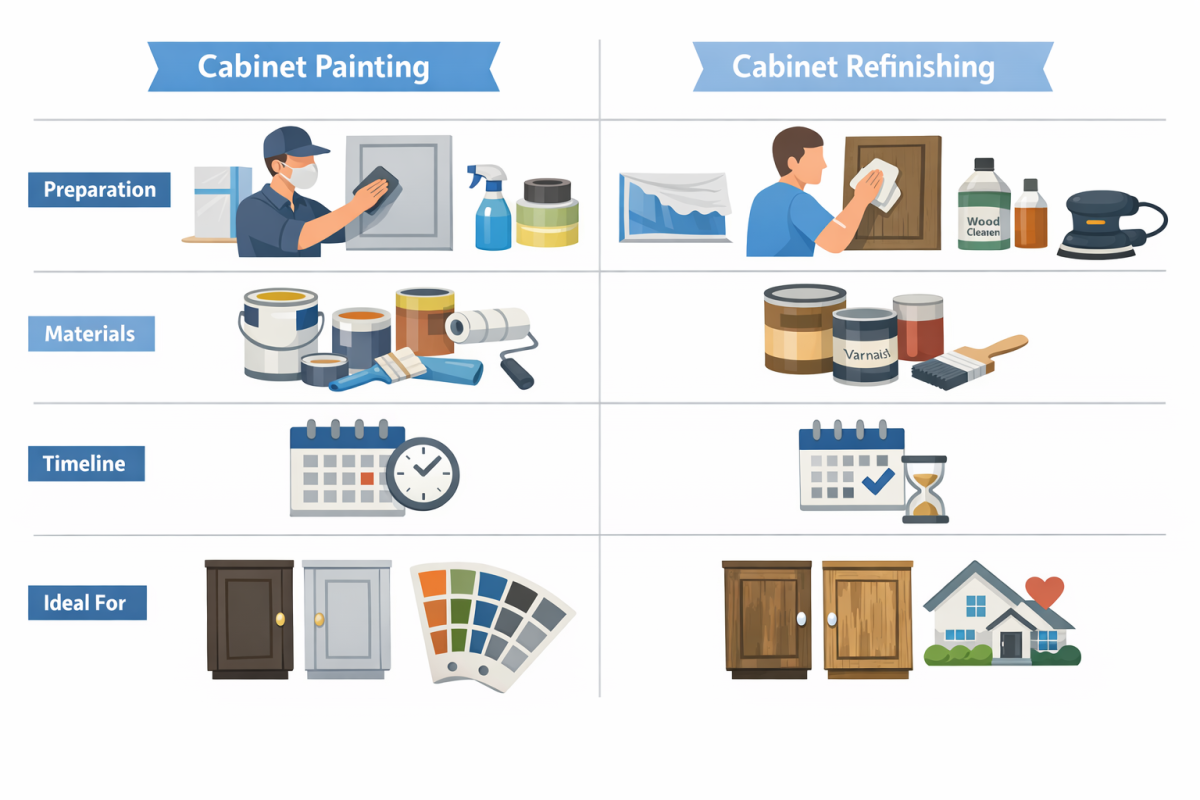
Use this comparison to match the method to your goals and budget.
| Solution | What it involves | Typical use case | Approx. cost vs full replacement* |
|---|---|---|---|
| Painting | Cleaning, light sanding, priming, new color topcoats | Cosmetic update when doors are in good shape | 20–35% |
| Refinishing | Stripping or sanding, stain or paint, clear topcoat | Preserve wood grain or upgrade finish durability | 30–50% |
| Refacing | New doors/drawer fronts, veneer on boxes, new hardware | Change door style completely, keep layout | 50–70% |
| Replacing | New boxes and doors, often new layout | Structural failure or major reconfiguration needed | 100% (baseline) |
*Percentages are rough national averages; Denver labor markets can push the upper end.
Key Takeaway: If the cabinet boxes are solid and the layout works, refinishing or painting usually delivers 70 to 90 percent of the visual impact of new cabinets for a fraction of the cost.
When refinishing is better than replacing
Choose refinishing or painting if:
- Boxes are plumb, level, and structurally sound.
- Doors close properly with minor adjustments.
- You like the general layout, even if the style feels dated.
- You want to avoid moving plumbing, gas, or electrical.
Full replacement becomes necessary if there is significant water damage, mold, sagging, or a need to relocate major appliances or walls.
For a deeper dive into these options, see this resource on cabinet refinishing and cabinet painting services in Denver, Golden, and Arvada.
Evaluating your existing cabinets like a pro
Before committing to any finish solution, perform a quick assessment. Investors, property managers, and contractors can use this checklist to make faster, better decisions on site.
Structural and layout assessment
Check:
- Cabinet boxes: Look inside for sagging bottoms, delaminated particleboard, or loose joints.
- Backs and sides: Probe suspicious areas near sinks, dishwashers, and fridges for moisture damage.
- Wall attachment: Confirm boxes are firmly anchored, especially on older plaster or brick walls common in Denver’s older neighborhoods.
- Layout functionality: Ask whether the traffic flow, storage access, and appliance placement work. If the layout is fundamentally flawed, finishing alone will not fix the frustration.
If boxes are slightly out of square, a professional refinisher can often correct door alignment with hinge adjustments.
Door and drawer condition
Examine:
- Warping or twisting on long doors such as pantry fronts.
- Cracked panels on raised-panel doors.
- Drawer slide integrity and capacity.
You can combine refacing and refinishing, for example by replacing only heavily damaged doors and refinishing the rest for a cohesive look.
Surface material and existing finish
Your finishing strategy depends on what you are working with:
- Solid wood: Ideal for both stain refinishing and high-end paint finishes.
- Wood veneer: Works well for paint and careful refinishing, but avoid aggressive sanding.
- Thermofoil or melamine: Usually best candidates for painting with specialized primers, or for refacing.
Pro Tip: Always test adhesion in an inconspicuous area. Scuff sand, apply primer and topcoat on a small spot, then do a tape pull test after curing. If paint peels easily, you need a different prep or primer.
Cabinet painting: fast, budget-friendly transformation
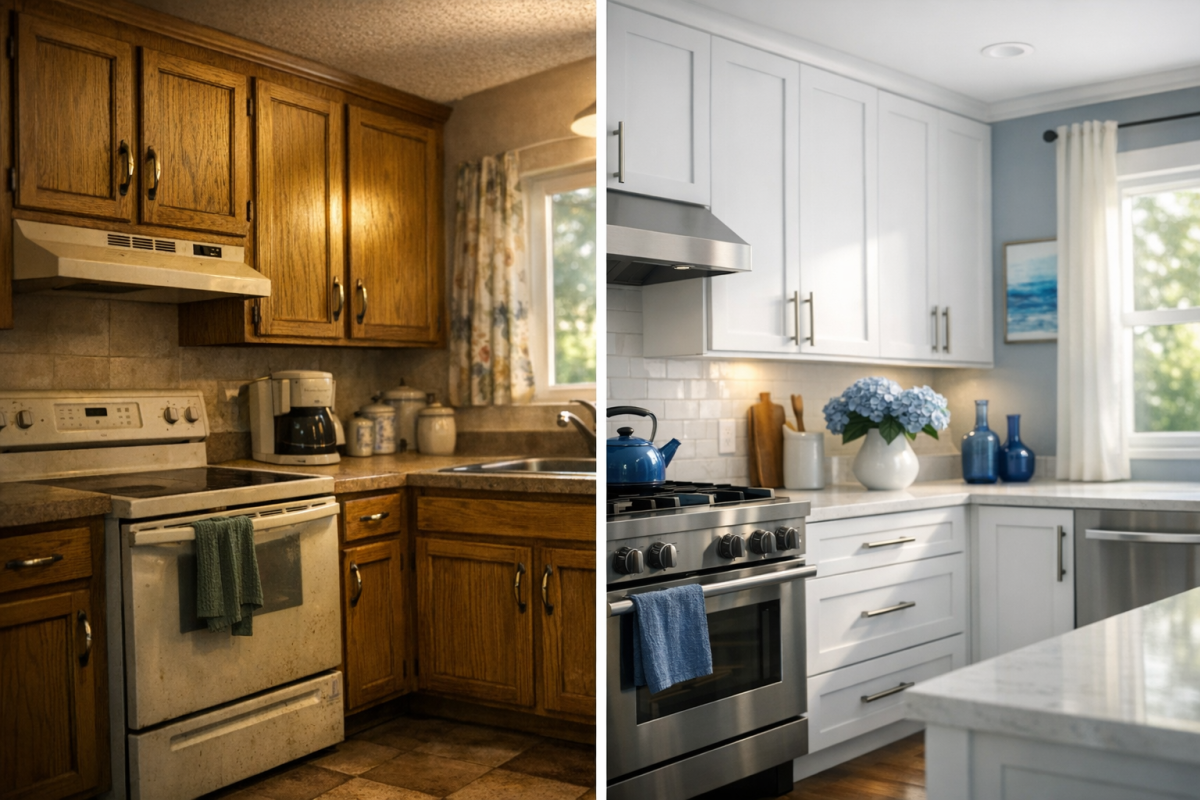
For many outdated kitchens, painting is the highest ROI solution, especially in rental properties and flip projects where timelines and budgets are tight.
When cabinet painting is the best choice
Painting is usually the right call when:
- You need a strong visual upgrade for resale photos or staging.
- The doors are structurally sound but stylistically dated, such as orange oak.
- You want to coordinate cabinet colors with existing countertops and flooring.
- You are targeting a specific buyer profile, for example white uppers with darker lowers in urban Denver condos.
Homeowners often pair cabinet painting with new hardware and lighting for significant perceived value without touching countertops.
Technical keys to a durable painted finish
A professional level painted finish is less about the paint itself and more about surface prep and application.
Critical steps:
- Degreasing: Kitchen cabinets accumulate oils and residues. Use a dedicated degreaser or TSP substitute, not just dish soap.
- Mechanical abrasion: Scuff sand with appropriate grits to create tooth for primer.
- Adhesion primer: Use high-bond, stain-blocking primer formulated for cabinets and trim.
- Sprayed or high-quality brush/roller application: Spraying usually produces the smoothest, factory-like finish, important for high-end homes.
The Denver climate is dry and can accelerate drying times.
Cabinet Painting Service Areas in Denver & Surrounding Cities, Cabinet Refinishing in Denver County,
Serving Lakewood, CO, Littleton, CO, Golden, CO, Evergreen CO, Roxborough Park CO, Ken Carl Ranch CO,
Arvada, CO, Wheat Ridge, CO,
and Parker CO. Castle Pines CO. Englewood CO. Centennial CO.
Cabinet Painting in Arapahoe County, CO
Including Centennial, CO, Greenwood Village, CO,
Cherry Hills Village, CO, Englewood, CO,
and Aurora, CO.
Cabinet Painting in Adams County & Broomfield, CO
Pro painters adjust with conditioners and careful timing to avoid lap marks and orange peel.
For more on the visual impact and process, see how to transform your kitchen with cabinet painting as a budget-friendly makeover solution.
Ideal colors for outdated kitchens
Color strategy depends on light, room size, and target market:
- Small or low-light kitchens: Soft whites, warm greiges, or light taupes reflect light and calm busy surfaces.
- Modern remodels: Deep navy, charcoal, or black lowers with white uppers create contrast and photograph extremely well.
- Rental units: Mid-tone greige or warm white hides wear better than pure white while still reading clean.
Key Takeaway: The right paint color can visually modernize laminate counters and older backsplash tile, buying you time before a full gut renovation.
Cabinet refinishing: preserving wood grain and increasing durability
If you have good-quality wood cabinets that look tired rather than ruined, refinishing preserves the natural character while upgrading color and protection.
When to refinish instead of paint
Refinishing, which usually means stripping or sanding to bare wood and applying new stain and clear coats, is ideal when:
- You have solid oak, maple, cherry, or alder cabinets.
- The existing finish is yellowed, dull, or heavily scratched.
- You want to move from orange or red undertones to more neutral or darker tones.
- The property is higher end, where buyers appreciate visible wood grain.
Refinishing can also be combined with paint, for example stained lowers and painted uppers, which works well in Denver’s contemporary mountain style homes.
Types of clear finishes and their pros and cons
The topcoat determines durability and maintenance. Common choices:
| Finish Type | Pros | Cons | Best For |
|---|---|---|---|
| Oil-based polyurethane | Very durable, warm tone, good for heavy use | Longer cure, more odor, ambering over time | Traditional wood tones, rentals |
| Waterborne lacquer | Fast drying, lower odor, non-yellowing | Requires proper equipment and technique | Modern, light wood tones, flips |
| Conversion varnish | Extremely durable, factory-like finish | Pro-only product, higher cost | High-end custom kitchens, busy families |
Important: Topcoat failure is what sends most kitchens back to the drawing board. Do not skimp on number of coats or cure time, especially around sinks and dishwashers where steam and splashes are constant.
To see what a full refinishing and painting workflow looks like in the Denver area, explore how to revitalize your kitchen with cabinet refinishing and cabinet painting in Denver.
Refacing and hybrid solutions for style and layout challenges
Sometimes color alone cannot fix dated cabinet profiles, exposed hinges, or ornate arches. In those cases, refacing or hybrid approaches achieve a more substantial transformation while still using existing boxes.
What cabinet refacing involves
Refacing typically includes:
- Removing old doors and drawer fronts.
- Applying real wood or laminate veneer to face frames and visible box ends.
- Installing new doors and drawer fronts in a modern style such as shaker.
- Upgrading to concealed soft-close hinges and modern hardware.
This is particularly attractive for:
- 1980s and 1990s homes with bulky oak arch-top doors.
- Rental buildings where consistent style across units matters.
- Flips where buyers expect soft-close hardware and clean lines.
Hybrid strategies to control cost
Mix and match tactics to keep budgets tight:
- Paint boxes, replace only doors: A common investor approach when boxes are sound but doors are unattractive.
- Refinish lowers, paint uppers: Retains warmth while modernizing visually.
- Selective refacing: Reface only highly visible runs such as an island, and paint the rest.
Pro Tip: On projects with limited budgets, prioritize the most photographed areas: the sink wall, range wall, and island. This is where buyers and renters focus attention, both in person and online.
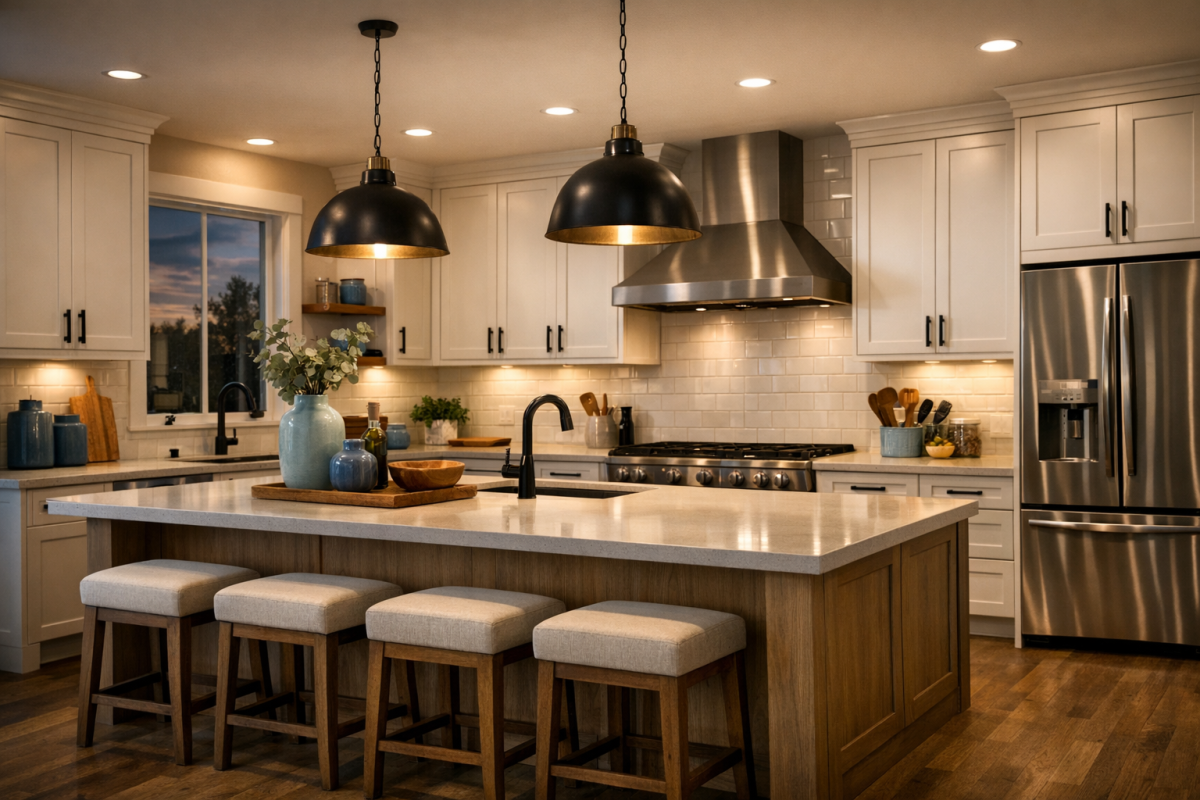
Cost, timeline, and disruption: what different users should expect
Homeowners, investors, designers, and property managers care about different metrics. The same finish solution can make sense or not, depending on your role and goals.
Cost and timeline benchmarks
Typical ranges for a standard 10 by 12 kitchen in the Denver metro area:
| Solution | Rough Cost Range* | Typical Timeline | Kitchen Usability |
|---|---|---|---|
| Professional painting | $3,000 to $6,000 | 3 to 7 days | Limited, some downtime |
| Professional refinishing (stain) | $4,000 to $8,000 | 5 to 10 days | Limited, more cure time |
| Refacing | $7,000 to $15,000 | 5 to 10 days | Partial use |
| Full replacement | $15,000 to $40,000+ | 2 to 6 weeks | Significant downtime |
*Ranges vary with cabinet count, paint type, access, and quality level. Multi-unit projects can reduce per-unit costs.
Perspective by audience
- Homeowners: Focus on durability and aesthetics. Spending slightly more on pro finishes makes sense when you live with the kitchen daily.
- Real estate investors and flippers: Focus on speed and impact per dollar. Painting often wins, especially if you control color choices across multiple properties.
- Property managers: Need durable, repeatable solutions. Stain refinishing with tough topcoats or mid-tone paints that hide wear is usually best.
- Designers and contractors: Balance client expectations, resale value, and construction sequencing. Choosing refinishing over replacement can free budget for counters and lighting.
Key Takeaway: Painting or refinishing can convert a full gut into a targeted upgrade, which often shifts a project from “too expensive” to “doable this year.”
When to call a specialist: Cabinet Refinishing Denver
Cabinet finishing is one of those trades where quality differences are obvious up close. Brush marks, drips, poor adhesion, or doors that stick will frustrate you or your client every single day in the kitchen.
If you are in the Denver metro area and want a professional-level result without the full remodel cost, Cabinet Refinishing Denver focuses specifically on cabinet painting and refinishing.
They can help you:
- Evaluate whether painting, refinishing, or hybrid solutions make the most sense for your cabinets.
- Select colors and sheens that work with existing countertops, flooring, and lighting.
- Plan around occupancy, whether you live in the home, manage a rental, or are prepping a flip for market.
- Achieve factory-smooth finishes with pro-grade coatings that stand up to Colorado’s dry air and intense sunlight.
You can explore project photos, detailed process descriptions, and service areas at:
Cabinet Refinishing Denver
Website: https://cabinetsrefinishing.com
Call-to-action: Learn more
Putting cabinet finishing solutions into practice
The fastest way to move from research to results is to map your specific kitchen to the right solution.
Next steps:
- Inspect your existing cabinets using the structural and surface checklist above.
- Decide your primary constraint: budget, timeline, or design outcome.
- Match that constraint to the solution that fits: painting, refinishing, refacing, or a hybrid.
- Gather 2 to 3 quotes from cabinet finishing specialists who can show real before-and-after work in your price range.
- Plan the project around key dates such as move-ins, listing photos, or tenant turnovers.
Cabinet finishing solutions for outdated kitchens let you keep what is structurally sound while transforming what you see and touch every day. With a clear understanding of your options and their trade-offs, you can make a decision that fits this property, this budget, and this year’s goals.
Frequently Asked Questions
Is it worth refinishing old kitchen cabinets instead of replacing them?
Refinishing is usually worth it if the cabinet boxes are sturdy and the layout works. You can save 50 to 70 percent compared with full replacement while still getting a dramatic visual upgrade. In higher end homes with solid wood cabinets, refinishing preserves quality materials that would be expensive to replicate. Replacement makes more sense when boxes are damaged, poorly built, or when you need a different layout.
How long do painted kitchen cabinets last in a busy household?
Professionally painted cabinets with quality prep and coatings typically last 8 to 15 years before needing touchups, even in active homes. Longevity depends on factors such as cleaning habits, humidity near sinks and dishwashers, and kids or pets bumping lower doors. Using hard-wearing enamel or cabinet-grade coatings and allowing full cure time significantly improves durability compared with DIY latex wall paint.
Can thermofoil or laminate cabinets be refinished or painted?
Yes, thermofoil and laminate cabinets can be refinished, but they require specific prep. The surface must be thoroughly cleaned and lightly abraded, then coated with a high-bond adhesion primer designed for slick substrates. Once primed correctly, they can receive cabinet-grade paint. Severely peeling thermofoil often benefits more from refacing or replacement of doors than from simple painting.
Is cabinet refacing cheaper than buying new cabinets?
Refacing is generally cheaper than buying new, especially when you factor in demolition, disposal, and potential changes needed to plumbing, electrical, and countertops. Expect refacing to cost about half to two-thirds of comparable quality new cabinetry. You keep the existing layout and boxes, but gain new doors, drawer fronts, and exterior finishes, which deliver most of the visual impact of a full replacement.
What colors are best for updating an outdated kitchen for resale?
For resale, aim for broadly appealing neutrals. Warm whites, soft greiges, and light taupes photograph well and complement most countertops and floors. Two-tone schemes such as white uppers with medium gray or navy lowers add interest while staying market-friendly. Avoid extremely dark or bold colors in small or low-light kitchens, since these can make spaces feel cramped and reduce buyer appeal.