

Why A Factory Finish Kitchen Matters For Your Cabinets
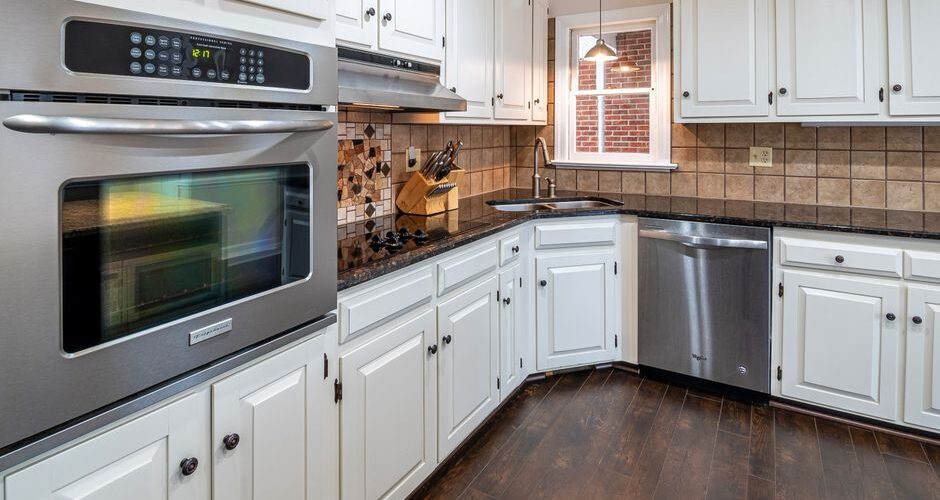
For homeowners, investors, and contractors, kitchen cabinets carry a lot of weight in resale value, first impressions, and daily enjoyment. The difference between a brush-painted DIY job and a true factory finish on kitchen cabinets is instantly visible: glass-smooth surfaces, crisp edges, and a durable coating that holds up to renters, kids, and heavy cooking.
Cabinet Painting Service Areas in Denver & Surrounding Cities, Cabinet Refinishing in Denver County,
Serving Lakewood, CO, Littleton, CO, Golden, CO, Evergreen CO, Roxborough Park CO, Ken Carl Ranch CO,
Arvada, CO, Wheat Ridge, CO,
and Parker CO. Castle Pines CO. Englewood CO. Centennial CO.
Cabinet Painting in Arapahoe County, CO
Including Centennial, CO, Greenwood Village, CO,
Cherry Hills Village, CO, Englewood, CO,
and Aurora, CO.
Cabinet Painting in Adams County & Broomfield, CO
Professional cabinet painters who specialize in factory finish kitchen cabinets combine fine-finish equipment, industrial-grade coatings, and a controlled process that typical house painters simply do not use. That is why many Denver homeowners and property investors now refinish instead of replace, especially when working with specialists such as those featured in resources like Denver Cabinet Painters A Flawless Factory Finish For Your Kitchen.My Review of Graco FFLP Tips for Spraying Cabinets
This guide breaks down exactly what “factory finish” really means, how pros achieve it, what it costs, and how to choose the right cabinet painter for your kitchen, rental portfolio, or flip.

Cabinet painting Denver
What “Factory Finish” On Kitchen Cabinets Actually Means
Most homeowners hear “factory finish” and think “smooth and shiny.” In reality, it describes a combination of surface preparation, material quality, and application method that closely matches what cabinet manufacturers use in their production lines.
Key Characteristics Of A Factory-Like Finish
A true factory finish on painted cabinets typically has:
- A perfectly smooth, leveled surface with no visible brush or roller marks
- Consistent color and sheen across all doors, drawers, and frames
- Hardened coating that resists chipping and blocking (doors sticking together)
- Edges and profiles that are fully coated without drips, sags, or heavy build-up
In Denver projects, professional refinishers often target this look and performance level using specialized spray systems and multi-step prep work. Services like Painted Kitchen Cabinets Denver Get A Flawless Factory Finish showcase what that result should look like in a typical Front Range kitchen.
How It Differs From Standard House Painting
Typical interior paint projects use wall paints, rollers, and basic prep. Factory finish cabinet work, by contrast, relies on:
- Catalyzed or cabinet-grade coatings
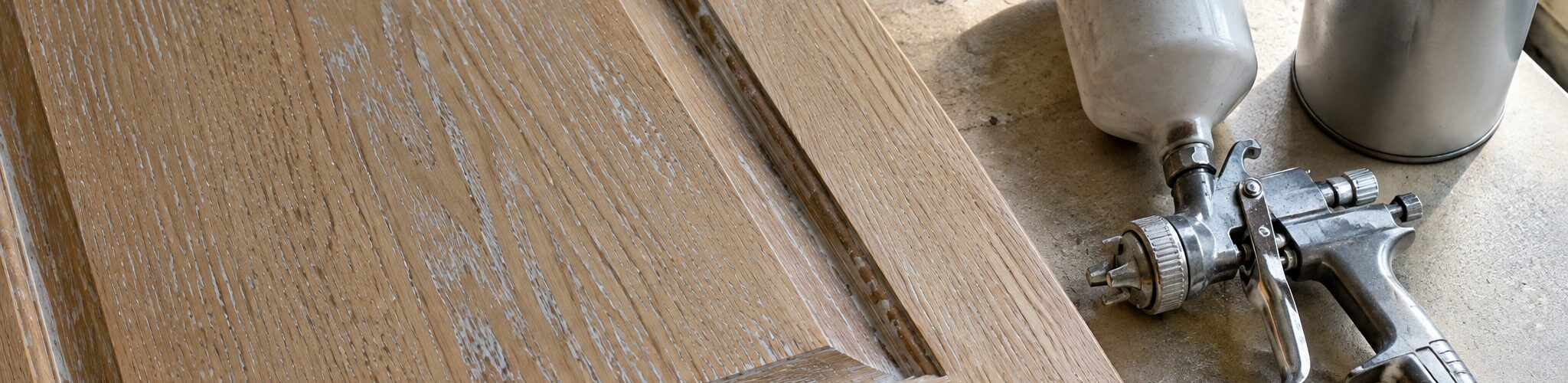
- Spray-only application with fine-finish tips
- Full disassembly of doors and drawers
- Controlled drying and cure times
Key Takeaway: If a painter plans to “roll and brush” your cabinets with standard wall paint, the result will not resemble a factory finish, no matter what the quote says.
How Professional Cabinet Painters Create A Factory Finish
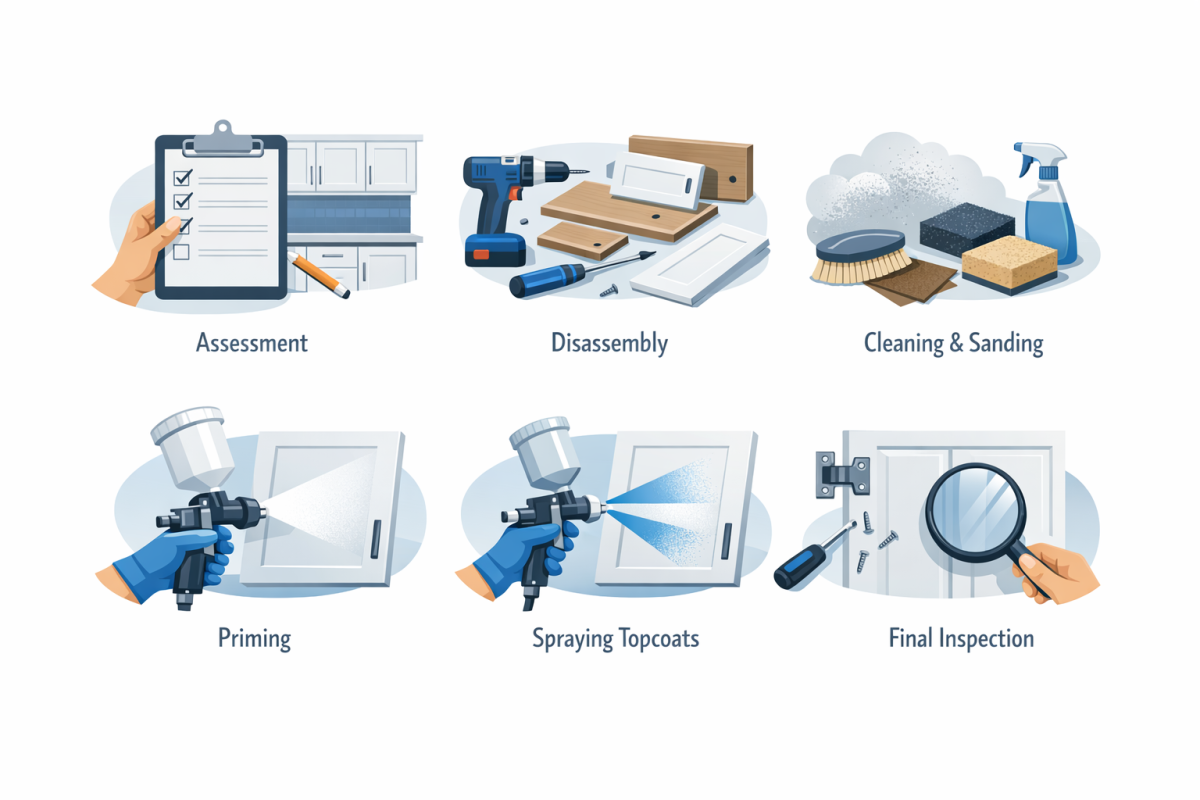
To get a factory-quality result in an occupied home, professional cabinet painters follow a predictable and disciplined workflow. Skipping any of these stages usually shows up later as peeling, chipping, or an uneven finish.
Step 1: Detailed Assessment And Planning
Before a single screw is removed, the contractor should:
- Identify cabinet material: oak, maple, cherry, laminate, or thermofoil
- Check for grease, smoke, or moisture damage, especially in rentals or older flips
- Discuss desired color and sheen, plus any island accents or two-tone designs
- Confirm timeline, access, and ventilation needs with homeowners or tenants
A good pro will also advise where refinishing is cost effective and where replacement is smarter, especially in heavy-use rentals or water-damaged bases.
Step 2: Disassembly, Labeling, And Protection
Factory-level work starts with organization:
- Removing all doors, drawers, and hardware
- Labeling each piece so every item returns to its exact location
- Masking floors, countertops, backsplashes, and appliances
- Creating a temporary on-site spray booth or using an off-site spray shop
For property managers and investors, this organization reduces downtime and mix-ups in multi-unit buildings.
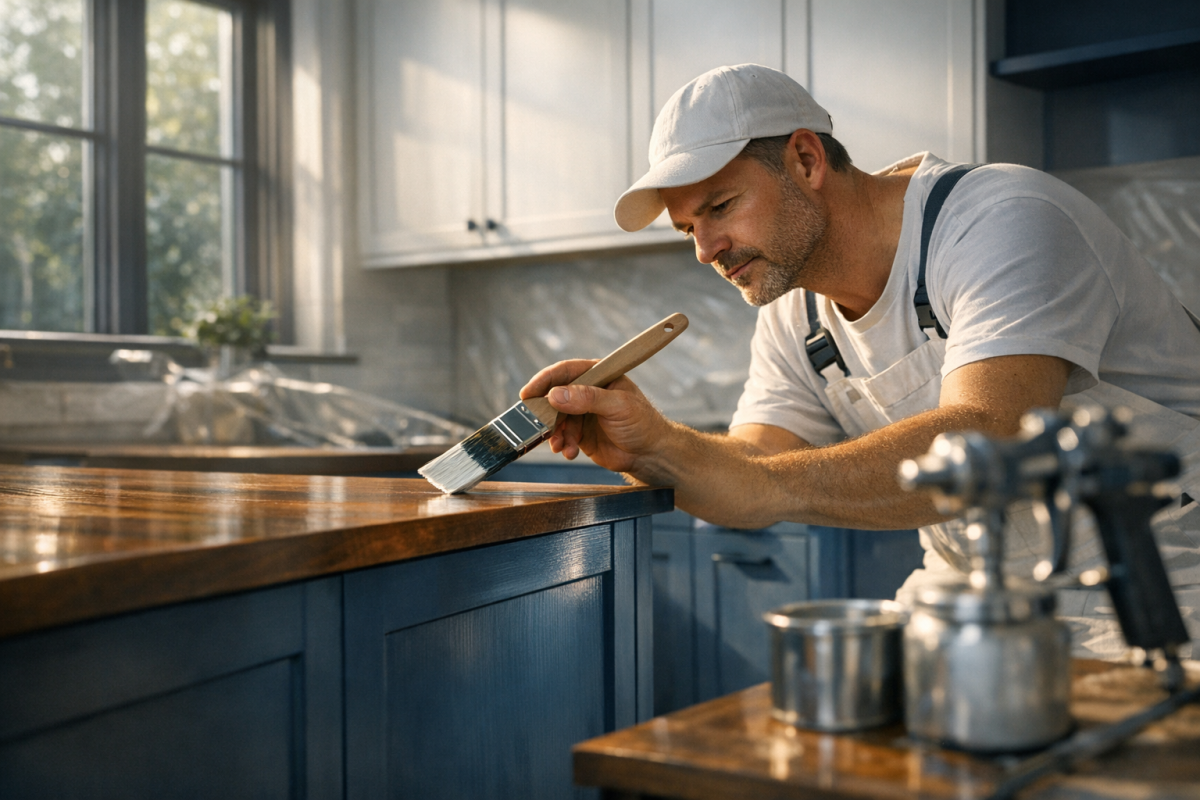
Cinematic close-up of a professional painter carefully removing cabinet doors in a modern Denver kitchen, protective plastic sheeting and masking visible.
Step 3: Aggressive Cleaning And Mechanical Prep
Even the best coating fails over grease or factory lacquer. Pros will:
- Degrease surfaces thoroughly with commercial cleaners or deglossers
- Sand or abrade existing finishes to promote bonding
- Repair dings, nail holes, and damaged corners with fillers or epoxy
- Caulk gaps where boxes meet walls or crown molding for a finished look
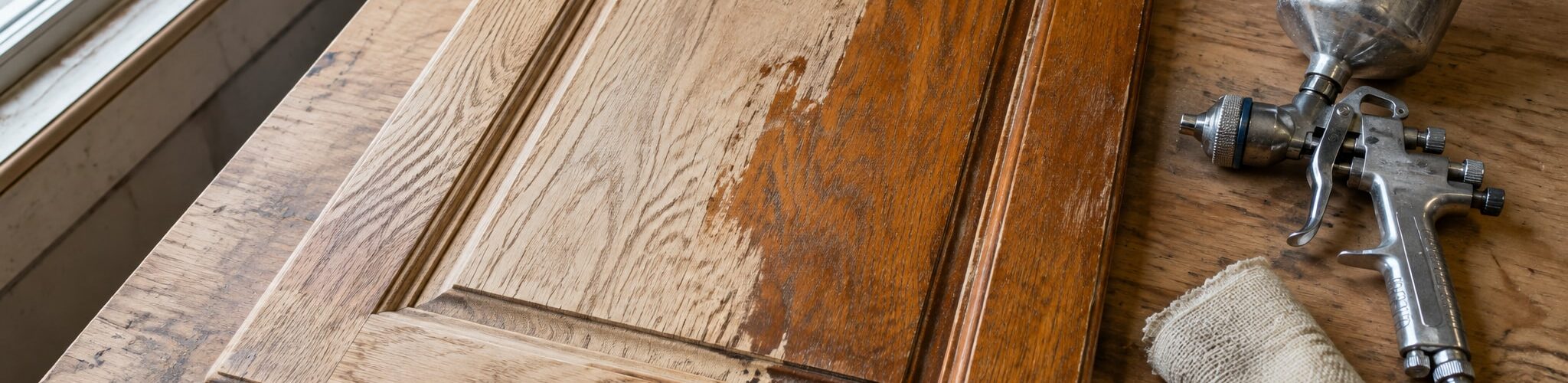
On oak cabinets, the painter may also use grain-filling techniques if the homeowner wants that ultra-smooth, nearly pore-free modern look.
Step 4: Priming And Multi-Coat Spraying
The “factory” part shows up here:
- Application of bonding or shellac-based primers designed for slick finishes
- Light sanding between coats for ultra-smooth surfaces
- Two to three sprayed topcoats of cabinet-grade enamel or urethane
- Controlled dry times and proper cure conditions
Pros use HVLP or airless sprayers with fine-finish tips, which atomize the coating far more evenly than DIY sprayers from big box stores.
The Right Paint And Products For A Factory Finish
Materials make a significant difference to both appearance and lifespan. Using the wrong products can cut cabinet life in half or lead to costly callbacks for contractors and building owners.
Cabinet-Grade Coatings vs Wall Paint
Professional cabinet painters choose products formulated for:
- High adhesion over existing finishes
- Hard, yet flexible films that resist impact and temperature swings
- Chemical resistance to kitchen cleaners and food splatters
- Smooth leveling that hides minor surface imperfections
Examples include:
- Waterborne alkyd enamels
- 2K polyurethanes and urethane-modified acrylics
- Conversion varnishes in shop-controlled environments
Wall paints, even in semi-gloss, are too soft and often remain tacky under stacked plates or against door bumpers.
Primers That Prevent Peeling And Staining
On older Denver homes, tannin bleed and stain migration are common. Pros counter this with:
- Shellac-based primers for knotty woods or heavy stain bleed
- High-adhesion bonding primers for slick laminates
- Stain-blocking primers on previously oil-based coatings
Skipping these steps is a major reason DIY cabinet projects peel or discolor within a year.
Pro Tip: Ask your cabinet painter to specify the exact primer and topcoat system they plan to use, including manufacturer and product line. This one question quickly separates specialists from generalists.
Cost, Timelines, And ROI For Different Property Types
For most readers, the real question is not just “Can I get a factory finish?” but “Does it make financial sense for this property?” Professional cabinet painters factor size, layout, and condition into their pricing, but there are useful ranges to consider.
Typical Cost Ranges In The Denver Area
While every project is unique, ballpark numbers can help planning:
| Property Type | Typical Scope | Approx. Range* |
|---|---|---|
| Owner-occupied kitchen | 20 to 35 doors/drawers, crown, island optional | $3,000 to $7,000 |
| Small rental or condo | 12 to 20 doors/drawers | $2,000 to $4,000 |
| Larger custom home kitchen | 35+ pieces, complex moldings, islands | $6,000 to $10,000+ |
*Ranges are illustrative and vary by condition, location, and selected coatings.
For comparison, full cabinet replacement with midrange boxes and installation can easily run two to three times these amounts, especially once countertops and plumbing are affected.
Project Duration And Downtime
Professional cabinet refinishing typically takes:
- 4 to 7 working days for a standard kitchen
- Longer for very large or multi-room projects
Most pros will:
- Keep the kitchen partially functional during the project
- Remove doors and drawers, but leave boxes accessible
- Return for a final walkthrough after full cure
This is especially important for families living on-site and for renters where extended downtime can create complaints or rent concessions.
Choosing Professional Cabinet Painters That Truly Deliver A Factory Finish
Not every painter who “does cabinets” can meet a manufacturer-level standard. For a result that stands up to scrutiny from buyers, tenants, and inspectors, vet your contractor carefully.
Credentials And Experience To Look For
Ask targeted questions such as:
- How many cabinet refinishing projects do you complete each year?
- Do you have dedicated cabinet crews or is this occasional work between other jobs?
- Can I see recent before-and-after photos of projects similar to mine?
- Do you spray all cabinet surfaces or brush and roll some areas?
Specialty providers such as Professional Cabinet Painting In Arvada Co Get A Flawless Factory Finish highlight this focus. Volume and specialization usually translate into better systems and more consistent results.
Process Transparency And Written Documentation
A reputable cabinet refinisher should provide:
- A written scope of work outlining prep, priming, and coating steps
- Product data or at least brand and product line names
- Clear timeline, payment schedule, and warranty details
Avoid vague proposals that simply say “prep and paint cabinets.” You are investing in a system, not just a color change.
Cinematic wide shot of a finished modern white kitchen with factory-smooth cabinet surfaces, natural light glowing on the satin sheen, Denver skyline hinted through a window.
Special Considerations For Investors, Flippers, And Property Managers
Factory finish cabinet painting is not just for forever homes. It can be a strategic tool for portfolio owners and professionals who need high visual impact with controlled cost.
For House Flippers In The Denver Metro
Cabinet refinishing can:
- Modernize dated oak or maple kitchens quickly
- Support higher listing photos and stronger online impressions
- Deliver 3 to 5 times return on investment compared to basic cosmetic work
However, you must coordinate timing with other trades so countertop, flooring, and backsplash work do not damage the new finish.
For Landlords And Property Managers
In rentals and multi-unit buildings, durable cabinet coatings:
- Reduce repaint frequency between tenants
- Withstand frequent cleanings and heavier wear
- Present well in unit showings and online leasing photos
Standardizing cabinet colors and sheens across a portfolio also simplifies future touch ups and repairs.
Important: Make sure your contractor uses coatings suitable for high-traffic environments in rentals, not softer trim paints that perform well only in low-use, owner-occupied homes.
When To Refinish Cabinets vs Replace Completely
Even the best professional cabinet painters cannot overcome structural issues or poor layouts. Knowing when not to refinish protects your investment.
Refinishing is usually a good fit when:
- Boxes are solid, plumb, and properly anchored
- Layout functions well for current or future occupants
- You want a style update without major construction
Replacement or partial reconfiguration may be better when:
- There is water damage, mold, or severe swelling in particleboard
- Drawers or hardware are failing and would require full replacement
- The layout is obsolete for modern expectations, for example, no island, tight galley without storage
Discuss these tradeoffs with your painter. Reputable pros will tell you when their service is not the right solution.
Considering Cabinet Refinishing Denver For Your Project
If your goal is a true factory finish on your kitchen cabinets, your choice of contractor is as important as your choice of color. Cabinet Refinishing Denver specializes in high-end sprayed finishes tailored to Front Range homes, rentals, and flips. Their process mirrors what you have seen in this guide: thorough prep, cabinet-grade coatings, and meticulous spraying that stands up to everyday use.
Whether you are updating a family kitchen, preparing a rental unit between tenants, or refreshing a flip prior to listing, partnering with a dedicated cabinet refinishing company can unlock factory-level results without factory-level disruption or replacement costs.
Learn how Cabinet Refinishing Denver approaches projects like yours at: https://cabinetsrefinishing.com – Learn more
Frequently Asked Questions
How long does a factory finish on painted kitchen cabinets typically last?
When applied by professional cabinet painters using cabinet-grade coatings, a factory-like finish can last 10 to 15 years or more with normal residential use. In rentals or heavy-use kitchens, plan on closer inspections around the 7 to 10 year mark, especially on high-touch areas such as trash pullouts and sink base doors. Gentle cleaning and avoiding harsh abrasives will significantly extend the life of the finish.
Can existing oak cabinets get a smooth factory finish look?
Yes, but it requires additional prep. Oak has a pronounced open grain that telegraphs through paint. To achieve a near factory-smooth appearance, pros often use grain fillers, multiple primer coats, and thorough sanding between stages. This adds labor and cost, but the result is a modern, sleek finish that hides most of the grain. If you want some texture visible, your painter can adjust the process accordingly.
Are sprayed cabinet finishes safe to use in occupied homes?
Professional cabinet painters who work in occupied homes use low-VOC, waterborne, or catalyzed coatings designed for interior use. They also rely on containment, ventilation, and filtration to manage overspray and odors. Homeowners may notice some odor during application and early cure, but this typically dissipates within a few days. Always confirm product safety data and ventilation plans with your contractor before work begins.
How do factory finish cabinet painters handle hardware and hinges?
Most pros remove existing hardware and hinges, label all items, and store them safely. If you are upgrading to new knobs, pulls, or soft-close hinges, the painter can fill and redrill holes as needed before coating. This is the best time to change hardware layout, since unneeded holes can be seamlessly repaired before priming and painting. Be sure to provide final hardware before drilling so measurements are precise.
Is cabinet refinishing always cheaper than replacing cabinets?
In most kitchens, professional refinishing is significantly less expensive than full replacement, particularly when you factor in demo, new boxes, installation, countertop disturbance, plumbing, and possible electrical changes. However, if cabinets are severely damaged, poorly built, or the layout is functionally obsolete, replacement may offer better long-term value. A qualified cabinet painter can help you evaluate which option makes more financial and functional sense for your specific space.