
A trustworthy cabinet refinishing estimate names your exact door and drawer count, spells out every prep step from degreasing through grain filling, and states the coating brand, application method, and number of primer and finish coats in writing. It gives per-item and total pricing, a working timeline separate from cure time, and confirms warranty coverage and insurance. If a bid skips any of these, you’re not comparing apples to apples. Cabinet Refinishing Denver builds its written quotes around exactly this level of detail, which is a good baseline for what you should demand from anyone bidding on your kitchen.
TL;DR:
- Most reputable bids specify the exact number and type of coats, coating brands, and application methods, with clear timelines and cure times in writing.
- The largest cost driver tends to be prep work, especially for cabinets with heavy grease, damage, or previous finish failure, leading to higher labor costs.
- Counting doors and drawers accurately or translating the project into linear feet allows for better comparison across different bidding methods.
- Contractors should list warranty coverage, insurance, and VOC levels explicitly to ensure long-term durability and safety of the refinished cabinets.
- Vague bids lacking specific product details, cure times, or warranties often indicate shortcuts and should be scrutinized before proceeding.
Table of Contents
- Cabinet Refinishing Estimate Checklist: Every Line Item To Look For
- What Drives the Price, and What Numbers Should Raise a Flag
- How To Count Your Doors, Drawers, and Convert To Linear Feet
- What Questions Should You Ask Before Signing?
- How Long Will the Project Actually Take?
- How Do You Compare Multiple Bids Fairly?
- Are Labor and Materials Broken Out Separately?
- What Happens If Prep Reveals Hidden Damage?
- What Warranty Should Back the Work?
- Should You Worry About VOCs and Coating Safety?
- Publisher Perspective: What Proper Prep Actually Looks Like
- Ready For an Estimate That Checks Every Box?
- Sources
- FAQ
Cabinet Refinishing Estimate Checklist: Every Line Item To Look For
A written quote that lumps everything into “cabinet refinishing, $4,500” tells you nothing about where your money goes or what happens if the contractor hits a snag. Break it into pieces and you can see exactly what’s covered and what isn’t.
Prep work, listed separately:
- Hardware removal and labeling (so doors go back on the right hinges)
- Degreasing (kitchen grease has to come off before anything sticks)
- Mechanical sanding or scuffing (this creates the surface primer actually bonds to)
- Filler and minor repairs (dents, chips, old hinge holes)
- Grain filling, if you have open grain wood like oak
- Masking and containment to protect counters, floors, and appliances
Coating system, named specifically:
- Primer coat count and brand
- Topcoat count and brand
- Clear coat, if used
- Micro sanding between coats
Scope and logistics:
- Door and drawer removal and rehang
- Interior cabinet painting, if included in scope
- Island and pantry door counts, listed separately from base cabinets
- Whether doors are sprayed on site or staged off site in a shop
- Cleanup and disposal of masking materials, drop cloths, and debris
Add-on items deserve their own line rather than getting buried in the base price: new hardware, soft close hinge upgrades, glass inserts, shelf liners, and any routing or refacing work. A detailed preparation guide shows how granular these steps really are when done correctly, and Remodelingexpense confirms that a legitimate estimate itemizes hardware removal, cleaning, sanding, priming, spraying, and touch up rather than folding them into one number.
Pro Tip: Ask the contractor to write “shop sprayed” or “sprayed on site” directly on the estimate. This one line tells you more about finish quality than almost anything else on the page.
What Drives the Price, and What Numbers Should Raise a Flag
Prep work is usually the biggest cost driver in any refinishing job, not materials. A kitchen with heavy grease buildup, a failed prior finish, or physical damage to the doors takes far more labor to prepare than one that’s just outdated, and refinishers commonly apply a percentage increase to the base price to cover that extra work.
National ballpark figures give you a sanity check, not a final answer. RealCostIQ’s 2026 calculator puts a typical kitchen refinish between $1,500 and $5,000, averaging around $3,100, with per-door rates shifting based on whether you’re getting a gel stain, a sand and restain, a strip and restain, or a conversion varnish finish. Some local companies offer project ranges covering a few thousand to several thousand dollars, reflecting a full factory-finish process rather than a lighter touch-up job.
A quote should break down roughly into these buckets:
- Preparation labor (typically the largest line item)
- Materials: primer, topcoat, clear coat, degreaser, filler
- Labor for spraying, reassembly, and hardware reinstall
- Minor repairs discovered during prep
- Masking, containment, and cleanup
- Hardware, if new pulls or hinges are part of scope
Thermofoil and laminate cabinets often cost more to refinish properly because they need specialized bonding primers, and Thumbtack’s cabinet refinishing data shows pricing swings widely enough by region that getting two or three written on-site quotes matters more than trusting any single national average. If a bid comes in dramatically under the range for your cabinet count and condition, ask what’s being skipped. Usually it’s the sanding step, and that shortcut shows up as peeling paint within a year or two.
How To Count Your Doors, Drawers, and Convert To Linear Feet
Getting your own count before contractors show up means you can catch pricing inconsistencies fast.
- Walk the kitchen and count every hinged door individually, including the island and pantry.
- Count every drawer front separately, even small ones under the sink.
- Note any tall pantry panels or glass front doors on their own line since they often carry a different rate.
- Multiply your total door and drawer count by a typical per-door rate to build a rough baseline you can compare against a contractor’s bid.
For a 20 door, 8 drawer kitchen, that’s 28 pieces. At a common per-door range, you can build a working estimate before anyone sets foot in your home. Some contractors quote by linear foot of cabinetry instead. If that’s how a bid arrives, ask them to translate it into a per-door figure so you can compare it against other quotes using the same math. Documenting your cabinet’s actual condition with photos before you request bids, as outlined in this guide to documenting cabinet condition, also helps contractors quote accurately the first time.
What Questions Should You Ask Before Signing?
Ask these in writing, not over the phone, so you have a paper trail if something goes wrong later.
- What coating brand and product will be used, by name?
- Is application by spray or by brush and roller?
- Are doors sprayed in a shop or on site in my kitchen?
- How many primer coats and how many finish coats?
- What does the prep process include: degreasing, sanding, grain filling?
- What is the cure time before hardware goes back on?
- Is there a written warranty, and can you provide proof of insurance?
- Who handles hardware removal and reinstallation?
Vague answers are the biggest warning sign. “We use cabinet paint” without a brand name, a single coat with no mention of a second, “we’ll sand it a little,” or no stated cure time all point toward a contractor cutting corners on the parts of the job you can’t see once it’s finished. Ask for the product’s technical data sheet and photos from a comparable past job. Anyone confident in their process will hand these over without hesitation.
How Long Will the Project Actually Take?
Working days and cure time are two different clocks, and mixing them up leads to disappointment.
- Working days cover prep, spraying, and reassembly, and most refinishing jobs run 3 to 5 working days depending on kitchen size.
- Full cure time is separate. A finish can feel dry to the touch within hours but still needs days to weeks to reach full hardness, and rehanging hardware or slamming a drawer too early can dent a finish that hasn’t cured.
- Off site shop spraying can shorten your kitchen’s downtime since doors cure in a controlled shop environment while base cabinets stay in place.
Get the cure time written into your estimate, not just mentioned verbally. This detail matters more than almost anything else for long-term durability, according to industry process guides on refinishing kitchen cabinets.
Pro Tip: If a contractor promises same-day rehang with no mention of cure time, ask directly how they reconcile that with the coating manufacturer’s cure specs. Their answer tells you a lot.
How Do You Compare Multiple Bids Fairly?
Price alone is a poor way to rank estimates. Weight the criteria that actually determine how the finish holds up.
- Prep quality (30%): does the bid name every prep step in detail?
- Coating system (25%): is the brand and product named, with coat count specified?
- Application method (15%): shop spray generally outperforms brush and roller for a smooth, durable finish.
- Timeline and cure time (10%): realistic and clearly stated in writing.
- Warranty and insurance (10%): documented, not just promised.
- Price (10%): the last factor, not the first.
Say Bid A is $500 cheaper but only lists “sand, prime, paint” with no brand names and no cure time. Bid B costs more but names a specific enamel product, states two primer coats and two finish coats, and includes a written three-year warranty. Bid B wins on almost every weighted category despite the higher price. Once you’ve picked a front runner, ask for the product data sheet, get the warranty in writing, and confirm a clear payment schedule before signing anything.
Are Labor and Materials Broken Out Separately?
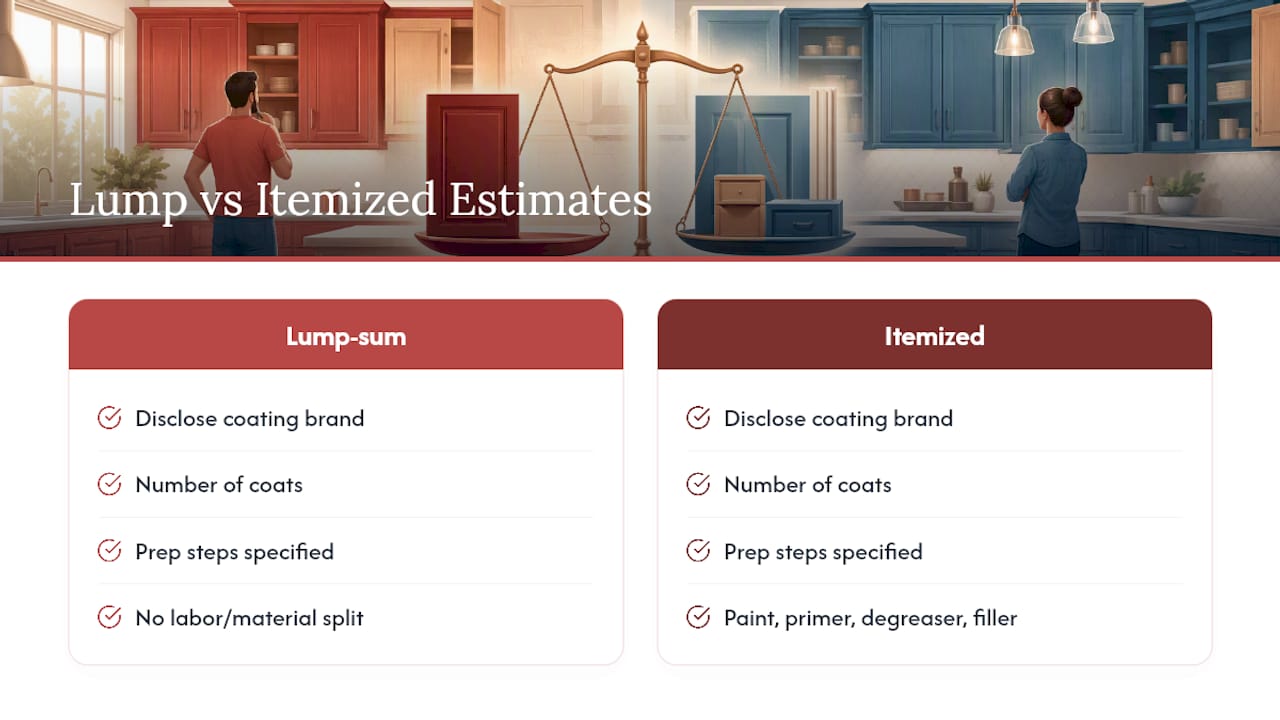
Some estimates combine labor and materials into one lump sum. Others itemize them. Neither approach is automatically wrong, but you need to know which one you’re looking at before you compare two bids side by side.
A lump sum quote should still specify what’s included: the coating brand, the number of coats, and the prep steps, even if the dollar figure isn’t split into labor versus materials. An itemized quote breaks out material costs (paint, primer, degreaser, filler) from labor hours, which can help you spot where the money actually goes if you’re trying to negotiate scope up or down.
Ask directly: “Is this price all inclusive, or are there separate charges I should expect for materials, disposal fees, or travel?” A contractor working from a shop based process, spraying doors off site, may build transport and staging into the labor line rather than listing it separately. That’s fine, as long as it’s disclosed. What you want to avoid is a quote so vague you can’t tell whether $4,000 covers everything or whether materials get billed on top once the job starts. Get the answer in writing, attached to the estimate itself, not just stated verbally during the walkthrough.
What Happens If Prep Reveals Hidden Damage?
Cabinet boxes and doors often hide problems that only surface once sanding and degreasing strip away years of buildup. Water damage near the sink, delaminating veneer on older laminate doors, or cracked wood at hinge points frequently doesn’t show up until a contractor is mid-prep.
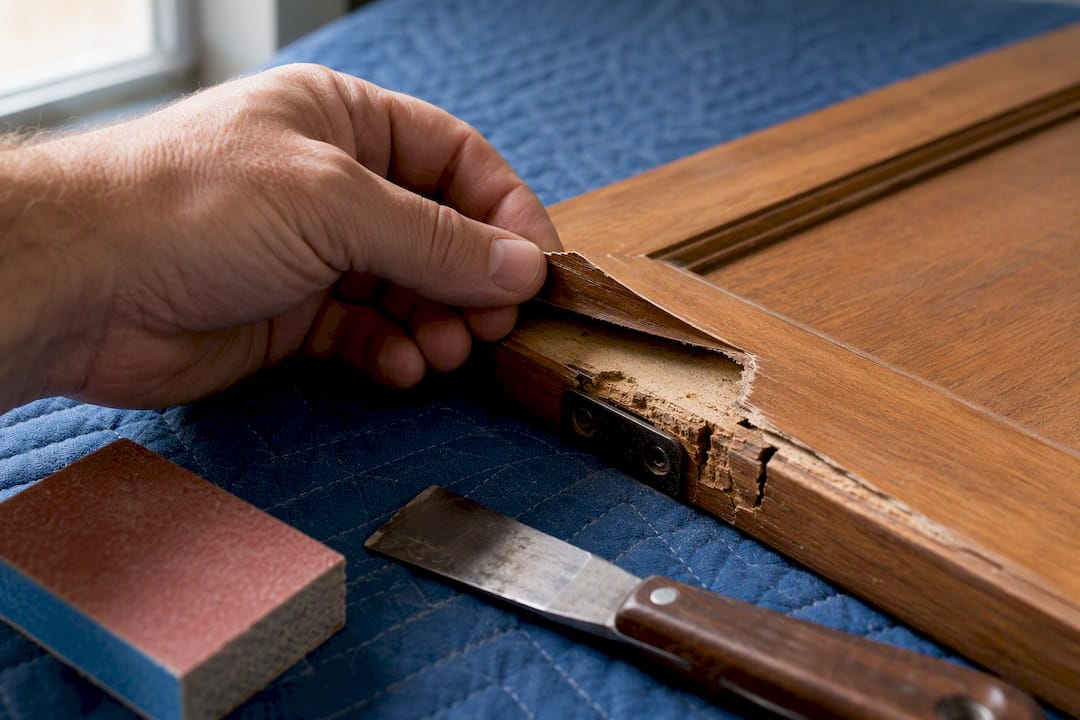
A solid estimate addresses this possibility up front rather than treating it as a surprise. Ask whether the quote includes a contingency for minor repairs, or whether unexpected damage triggers a separate change order. Reasonable contractors will explain their process: some build a small repair allowance into the base price for typical wear, then flag anything beyond that scope before proceeding, with your sign off required.
What you don’t want is an open ended “we’ll bill for whatever we find” clause with no cap or process attached. Ask for a rough range on what additional repairs typically cost per door or per hour, so an unexpected finding doesn’t turn into an unexpectedly large invoice. Get it in writing that any change beyond the original scope requires your approval before work continues. This single clause protects you more than almost any other line on the estimate since prep is exactly the stage where hidden problems get uncovered.
What Warranty Should Back the Work?
A refinishing job without a warranty puts all the risk on you. Ask specifically what’s covered: peeling, chipping, adhesion failure, and for how long.
Warranty terms vary by contractor, but a serious operation backs its coating system with a multi year guarantee rather than a vague verbal promise to “come back if there’s a problem.” Get the warranty length, what triggers a covered repair, and whether it transfers if you sell the home, written into the estimate itself. Verbal assurances disappear the moment there’s a dispute.
Also confirm the contractor carries liability insurance, separate from any warranty on the finish itself. Insurance protects your home if something goes wrong during the job, like an accidental scratch to a countertop or damage from overspray. A written estimate should state both the warranty terms and confirm active insurance coverage, ideally with a certificate you can request directly from the carrier rather than taking the contractor’s word for it.
Should You Worry About VOCs and Coating Safety?
Paints and finishes release volatile organic compounds, and older oil based cabinet paints tend to carry more of them than modern options. Since cabinets sit in a kitchen where you cook and eat daily, the coating’s VOC content matters more here than it might in, say, a garage refinishing project.
Ask what VOC level the proposed coating carries and whether low VOC or water based options are available for your job. Many professional grade cabinet enamels now perform comparably to older solvent based finishes while emitting far less odor and fewer airborne compounds during application and cure.
Ventilation during the job matters too, especially if any spraying happens inside your home rather than in an off site shop. A contractor spraying on site should explain their containment and ventilation plan. One spraying off site sidesteps much of this concern by keeping fumes and overspray out of your living space entirely. Either way, ask the question directly and get the coating’s VOC rating named in writing as part of your bid.
Publisher Perspective: What Proper Prep Actually Looks Like
A factory-finish approach centers on meticulous prep and multiple protective coats, which can help clients see projects wrapped in a few days at a fraction of the cost of full replacement. The difference between a job that lasts and one that doesn’t almost always traces back to how seriously the prep stage was taken, not how good the paint looked on day one.
— Jesse
Ready For an Estimate That Checks Every Box?
You’ve now got the full checklist: prep steps, coating brand, coat counts, door pricing, timeline, and warranty terms, all in writing. Quotes can be built around that exact structure, backed by a factory-finish spray process, low VOC materials, and a multi-year warranty, with many projects wrapping in 3 to 5 days at prices well under full cabinet replacement.

To get a quote that hits every item on this list, send photos of your cabinets, a rough door and drawer count, and any condition notes (water damage, peeling finish, heavy grease) before your walkthrough. That lets the estimator quote accurately instead of guessing on site. Ask specifically for the coating product name, application method, and cure time to be written into your proposal, along with proof of insurance. Start by visiting Cabinet Refinishing Denver’s main services page to request your written estimate, or check out the cabinet painting and staining page if you’re specifically weighing a paint versus stain finish for your kitchen.
Sources
- Refinish Cabinets Cost: 2026 Installed Price Calculator
- Kitchen Cabinet Refinishing Cost: $1,500–$5,000 (2026)
- Tips for refinishing kitchen cabinets
- Cabinet refinishing cost – Thumbtack
FAQ
What Should Be Included in a Cabinet Refinishing Estimate?
A complete estimate lists your exact door and drawer count, every prep step (degreasing, sanding, filler, masking), the coating brand and number of coats, application method, timeline, cure time, and warranty terms. If any of these are missing, ask the contractor to add them before you sign.
How Much Does Cabinet Refinishing Typically Cost?
A typical kitchen refinish runs $1,500 to $5,000 nationally, though pricing shifts based on condition, cabinet material, and coating system. Factory-finish projects often run significantly under the cost of full cabinet replacement.
How Long Does Cabinet Refinishing Take From Start to Finish?
Working days for prep, spraying, and reassembly typically run 3 to 5 days, but full cure time extends beyond that before the finish reaches maximum hardness. Confirm both timeframes in writing since rehanging hardware too early can damage a finish that hasn’t fully cured.
What’s a Red Flag in a Cabinet Refinishing Bid?
Vague coating descriptions like “cabinet paint” with no brand name, a single coat with no mention of a second, no stated cure time, and no written warranty are all signs of a contractor planning to skip steps. Ask for a product data sheet and a written warranty before accepting any bid.
Do I Need to Get Multiple Quotes Before Choosing a Contractor?
Getting two to three written, on-site quotes helps you catch pricing outliers and confirm your cabinets’ condition is being assessed accurately, since regional pricing varies more than national averages suggest. Compare bids using prep quality, coating system, and warranty terms, not just the bottom line price.