
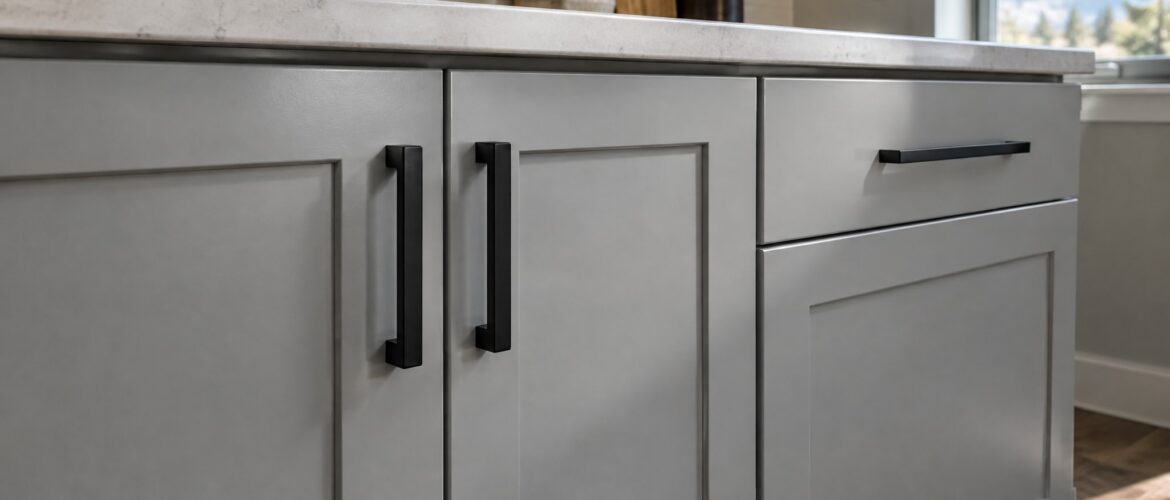
Denver homeowners facing a $25,000+ replacement quote often assume they have two choices: pay the premium or live with outdated cabinetry. Cabinet refinishing in Denver is a third path. It preserves your existing layout and delivers a factory-grade finish at a fraction of the demolition cost. This works for boxes and doors that are structurally sound but visually worn, and it frees up budget for new hardware or countertops instead of landfill fees.
Refinishing isn’t a fix for every kitchen problem, though. It can’t repair water-damaged particle board, reconfigure a bad floor plan, or address structural rot that needs a full tear-out.
Why Denver Homeowners Choose Cabinet Refinishing Over Replacement
Professional cabinet refinishing typically saves homeowners about 70% compared to a $25,000+ full cabinet replacement job. That gap exists because refinishing skips the expenses that come with demolition, disposal, plumbing disconnection, and weeks of kitchen downtime. You keep your existing footprint and still get the color and sheen update that actually transforms the look.
The savings aren’t just upfront, either. We’ve been doing this since 1979, and our shop specializes exclusively in spray-applied factory finishes using HVLP equipment and crosslinking urethane lacquer, not brushed paint. That specialization is what makes the finish hold up against Denver’s climate, so the lower price point stays cheap over decades instead of falling apart in year two.
Factory Finish vs. Painted Cabinets: Understanding the Technical Difference
Most general painters treat cabinets like walls. They apply latex products made for vertical drywall onto horizontal wood surfaces that take daily grease, heat, and friction. Real refinishing uses chemistry built for cabinetry, and it cures harder than the wood underneath. You want a finish that acts like furniture-grade coating, not wall paint pressed into service.
The Role of HVLP Spray Equipment and Crosslinking Urethane Lacquer
HVLP (high-volume low-pressure) spray equipment atomizes coating into fine particles that flow out evenly before drying. That’s what eliminates the brush marks and roller stipple you get from manual application. Crosslinking urethane lacquers and precat primers hold up against Colorado’s dry climate far better than standard latex paints, which tend to crack or peel. These two-component systems chemically bond during curing into a thermoset plastic shell that resists moisture and cleaning chemicals much better than air-dry alternatives.
Why Brushed and Rolled Paint Fails in Colorado’s Dry Climate
Colorado’s seasonal humidity swings make wood substrates expand and contract all year. Latex paint stays somewhat flexible and porous even after it dries, so moisture vapor migrates through the film and weakens adhesion over time. Brushed application also leaves microscopic ridges that trap grease and grime, which makes cleaning abrasive and speeds up wear around handles and edges.
The Professional Refinishing Process From Prep to Cure
We back our refinishing work with a 3-year warranty, and most projects wrap up in 2 to 5 days. Hitting that speed without cutting corners on longevity takes a disciplined workflow where prep eats more labor hours than the actual spraying. Rushed prep is the number one reason DIY attempts and handyman specials fall apart within a year.
Cleaning, Deglossing, and Repairing Existing Wood
Thorough degreasing removes decades of cooking oil residue that sanding alone can’t touch. Chemical deglossers etch the existing surface to give primer something to grab onto, without kicking up excessive dust. Old paint or finish doesn’t need full stripping unless it’s actively failing. A stable existing coating, cleaned and scuffed properly, is an excellent substrate on its own.
Spray Application and Drying Times for a Smooth Result
A controlled spray environment keeps airborne dust from settling into wet finish during the critical leveling phase. Multiple thin coats build depth and durability better than one heavy coat that risks runs or sags. Each layer gets enough flash-off time between passes so solvents evaporate fully before the next coat locks them in.
Evaluating Cabinet Refinishing Cost Against Full Remodels
Refinishing makes financial sense whenever the existing box construction is still solid and plumb. Demolition alone can burn through thousands of dollars before a single new material shows up on site. Our cabinet refinishing cost breakdown walks through how glazing, two-tone schemes, or island additions shift pricing, and the savings versus replacement still hold up even with those add-ons.
Compare quotes on finished square footage and material specs, not just the bottom-line number. A cheap paint job that peels in eighteen months costs more per year of service than a professional refinish that lasts fifteen. Where the budget goes matters as much as how much of it you spend.
Restoring Damaged Cabinetry Before Applying New Finishes
Proper restoration is what separates specialists from painters who just cover problems with color. Peeling veneer has to come off and get rebuilt with matching wood filler before any coating touches the surface. Misaligned doors need hinge adjustment or planing so the reveals stay consistent and read as quality work once painted.
Deep scratches and gouges need filling and sanding flush with the surrounding grain. Water damage at sink bases or dishwasher panels often means the substrate underneath is compromised, and no coating can fix that. Catching these problems upfront is what keeps callbacks and warranty claims from piling up later.
Selecting a Qualified Refinishing Contractor in the Denver Metro Area
Your choice of contractor decides whether you get a durable factory finish or expensive temporary cosmetics. Licensing and insurance protect you if something goes wrong on your property during the project. Warranty terms tell you more about a company’s confidence in its own materials and work than any marketing language will.
Verifying Licensing, Insurance, and Warranty Coverage
Reputable companies carry general liability and workers’ compensation coverage rated for residential refinishing work specifically. A three-year warranty on both materials and labor is the benchmark for professional-grade results in this region. Shorter warranties usually mean consumer-grade products, or a contractor who doesn’t trust their own application methods.
Questions to Ask About Materials and Turnaround Time
Ask specifically about primer types and topcoat chemistry. Don’t accept a vague answer like “high-quality paint.” Conversion varnishes, precat lacquers, and 2K polyurethanes signal someone who knows cabinetry; acrylic latex signals a residential painter working outside their lane. Confirm whether drying happens in controlled conditions or right there on site, since ambient temperature and humidity affect cure quality and how reliable the timeline actually is.
Maintaining Your Refinished Cabinets for Long-Term Durability
Crosslinking urethane finishes cure to real hardness, but they still need the right care to last. Skip ammonia-based cleaners and abrasive scrub pads, since both scratch the surface at a microscopic level over time. Mild soap and water with a soft cloth keeps the gloss even and prevents hazing around high-touch spots.
Managing indoor humidity protects the finish and the wood underneath it. Running exhaust fans while you cook or shower cuts down on the moisture spikes that stress the coating. Want to see what that looks like in practice? View our recent refinishing project photos to see how well-maintained finishes age in real Denver kitchens. When you’re ready to compare actual numbers for your own space, request a free refinishing consultation for pricing based on your cabinet condition and design goals.
Frequently Asked Questions
Do I have to strip old paint before refinishing cabinets?
No, stable existing paint does not require complete removal if it is well-adhered and not peeling. Professionals clean and degloss the surface to create proper bonding for new primer and topcoats. Stripping becomes necessary only when the current finish is failing, contaminated, or incompatible with professional coating systems.
How much does professional cabinet refinishing usually cost in Denver?
Most Denver metro projects range from $3,000 to $8,000 depending on kitchen size, door count, and finish complexity. This typically represents about 70% savings compared to full replacement quotes exceeding $25,000. Final pricing depends on factors like glazing, two-tone designs, and necessary repairs identified during inspection.
Does Home Depot offer cabinet refinishing services?
Home Depot primarily sells replacement cabinets and may refer you to third-party installers for new installations rather than refinishing existing ones. Their business model focuses on product sales rather than specialized restoration services requiring spray equipment and chemistry expertise. Dedicated refinishing shops like ours focus exclusively on restoring existing cabinetry with factory-grade finishes.
What type of clear coat goes over painted cabinets for durability?
Professional shops use crosslinking urethane lacquers or conversion varnishes that chemically cure into hard, furniture-grade surfaces. Consumer-grade polyurethanes and water-based topcoats lack the chemical resistance needed for kitchen environments. The right product bonds with the underlying color coat to create a unified system resistant to moisture, heat, and cleaning chemicals.