
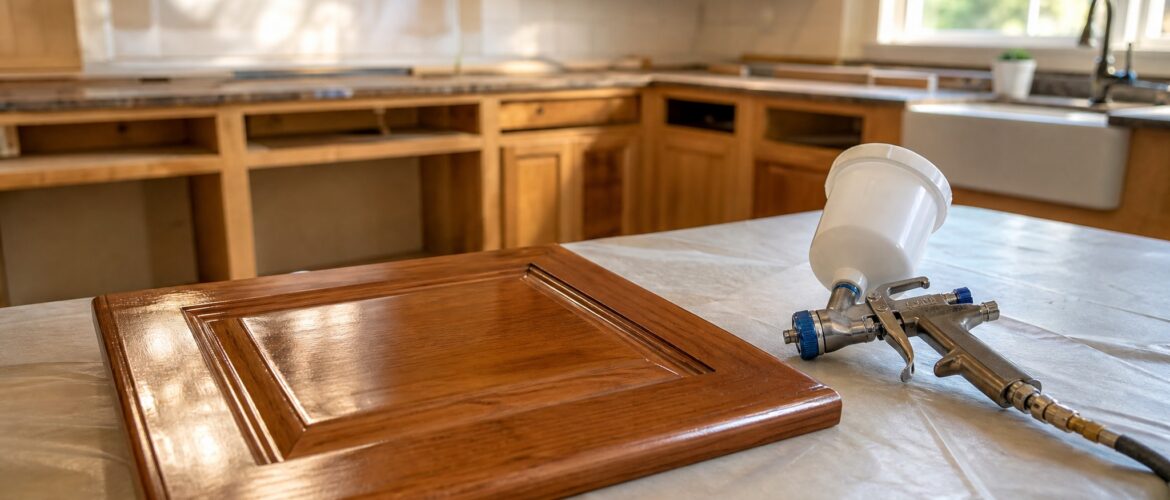
Most online pricing guides for cabinet refinishing cost Denver rely on national averages. They ignore local labor rates, material availability, and the demands of Colorado’s dry climate. You need numbers grounded in the actual Denver metro market to budget for a kitchen update in 2026. We’ve worked this area since 1979, spraying factory finishes instead of brushing on paint, and our estimates reflect real local conditions instead of aggregated data from unrelated regions.
Denver Cabinet Refinishing Cost vs Replacement Savings
Homeowners typically save about 70% compared to $25,000+ cabinet replacement costs through professional refinishing. That benchmark holds across the Denver metro because replacement quotes now routinely include demolition, disposal, new cabinetry, installation labor, and finish carpentry, all of which push totals well past twenty-five thousand dollars. Refinishing keeps your existing solid-wood boxes and frames and still delivers a comparable transformation at a fraction of that expense.
The 70% Savings Benchmark Against $25K Replacements
Your current cabinets likely have decades of structural life left even if the finish looks tired or the color feels dated. Replacement contractors profit from selling you entirely new boxes. Refinishing works with the quality lumber already installed in your kitchen. We’ve operated since 1979 with HVLP spray equipment and crosslinking urethane lacquer finishes backed by a 3-year warranty, and we deliver results that match new-cabinet aesthetics without the new-cabinet price tag. That savings gap widens further when your layout includes custom millwork or built-ins that would be expensive to replicate during a full tear-out.
Why National Averages Mislead Colorado Homeowners
Aggregator sites pull pricing from every state and average it into one figure that reflects neither Denver labor costs nor local material needs. Colorado’s low humidity calls for different primers and topcoats than coastal markets, and our altitude affects drying times and application technique. Search “how much does it cost to refinish kitchen cabinets” on one of these generic tools and you’ll get figures calibrated for vinyl siding in Ohio or stucco in Arizona, not wood-frame homes in Centennial or Littleton. Pricing tied to actual Denver projects is the only reliable basis for your budget.
Cabinet Refinishing Price Per Door and Linear Foot Breakdown
Pricing models matter because they determine whether your estimate reflects your actual kitchen or someone else’s average. Per-door rates work well for standard layouts with uniform sizing. Linear foot calculations often give a more accurate number for large or non-standard kitchens where cabinet dimensions vary a lot. Knowing which model applies to your space keeps you from getting hit with change orders mid-project.
Per-Door Pricing Variables for Standard Kitchens
Cabinet refinishing price per door moves with door style complexity, existing damage that needs repair, and hardware removal specific to your installation. Raised-panel doors with detailed molding take longer to prep and spray than flat slab fronts, and ornate corbels or light valances add labor time that flat per-unit rates have to account for. Your estimate should itemize these variables instead of burying them in a lump sum built on ideal conditions. We assess each component individually during consultation, so the final quote matches what we actually find in your kitchen.
Linear Foot Estimates for Custom Layouts
Large kitchens with continuous runs of cabinetry, or unusual configurations, often price more fairly by linear foot than by door count. This method captures the actual surface we prepare and finish, accounting for tall pantry cabinets, appliance garages, and island overhangs that throw off per-door math. Spray finish cabinet pricing calculated this way scales with your kitchen’s true scope. If your layout includes extensive built-ins or mixed cabinet depths, ask whether linear foot pricing gets you a more accurate number than counting doors.
Spray Finish Cabinet Pricing vs Brushed Paint Jobs
Brushed or rolled paint costs less upfront because it needs minimal equipment and no specialized ventilation. That lower price buys you visible brush marks, uneven film thickness, and a finish that chips within months under normal kitchen use. Professional spray application costs more upfront because it demands industrial equipment, a controlled environment, and higher-grade materials that cure into a durable surface.
HVLP Equipment and Crosslinking Urethane Lacquer Costs
We use HVLP spray equipment to atomize precat primer with crosslinking urethane lacquer into a smooth, factory-grade film that a brush can’t replicate. This system takes real capital, regular maintenance, and operator training that general painters typically don’t have. According to the manufacturer, precat primer paired with crosslinking urethane lacquer gives better adhesion and scratch resistance in Colorado’s dry climate than standard latex paints. The material costs more per gallon, but it cures harder and lasts years longer than consumer-grade alternatives from the big-box stores.
Long-Term Value of Factory-Grade Finishes
A cheaper brushed job that peels after two winters costs more over five years than one spray application that holds up for fifteen. We back our work with a 3-year warranty because the chemistry and application method produce durability you can verify, not just hope for. You can view completed refinishing projects to see what this finish looks like installed in real Denver kitchens. The point isn’t paying less today. It’s paying once for a result that survives daily use without failing early.
How Much Does It Cost to Refinish Kitchen Cabinets in 2026
Complete kitchen refinishing projects in the Denver metro range widely based on scope, finish type, and prep needs, and they don’t fit neatly into a single average. A small galley kitchen with minimal prep sits at one end of the spectrum. A large open-concept space with glazing, color changes, and extensive wood repair sits at the other. Where your project lands on that range depends partly on choices you make and partly on the condition of your existing cabinets. Rather than chasing a misleading median figure, get a detailed scope breakdown that ties cost directly to your kitchen’s condition and your chosen finish.
Budgeting well means understanding what drives your quote up or down before work starts. A transparent estimate separates labor, materials, prep, and finish, so you see exactly what you’re paying for. If a contractor offers only a bottom-line number with no line items, you can’t tell whether the price reflects real value or padded margin.
Factors Influencing Cabinet Painting Cost Denver
Every kitchen has its own conditions that affect final pricing beyond square footage or door counts. Prep intensity varies a lot between a well-maintained set of cabinets and one with grease buildup, water damage, or a failed paint job underneath. Finish choice compounds that variability, since some colors and sheens need extra coats or specialized primers to get proper coverage and durability.
Preparation and Repair Requirements
Degreasing, sanding, filling grain, and repairing minor wood damage eat up labor hours before any finish touches your cabinets. Kitchens near cooking surfaces often need intensive cleaning to strip off polymerized oils that block adhesion, and older homes may have nail holes, dents, or veneer delamination that need addressing. These steps are non-negotiable for lasting results, but they’re invisible in finished photos. Cabinet painting cost Denver quotes that skip a detailed prep assessment often turn into change orders once the work reveals hidden problems. We inspect thoroughly during estimation, so the price we quote is the price you pay.
Finish Type and Color Change Complexity
Dramatic color transitions, like dark stain to light paint or white to navy, need extra primer coats and careful masking to stop bleed-through or shadow lines. Specialty glazes, distressing, or multi-step faux finishes add labor layers that standard solid-color refinishing doesn’t require. If you’re weighing options beyond a basic refresh, our cabinet painting services and options page lays out which techniques suit your goals and budget. Complex finishes cost more because they demand skilled application and extended curing time between stages, not because of arbitrary markup.
Cabinet Refinishing vs Replacement Cost Comparison
Cost is only one axis of comparison. Timeline and disruption decide whether a project actually fits your life. Complete kitchen refinishing projects typically run just 2-5 days start to finish, which cuts the disruption compared to weeks of demolition and installation for a full replacement. During refinishing, your kitchen stays functional outside active spray hours. Replacement takes it out of commission for the duration.
Timeline and Disruption Differences
Replacement projects involve ordering lead times, demolition debris, temporary kitchen setups, and sequential trades that stretch the calendar unpredictably. Refinishing compresses the whole transformation into a single work week with predictable daily milestones. For homeowners juggling school schedules, remote work, or elderly relatives living onsite, that difference often matters more than the dollar gap. Parker area refinishing specifics show the same timelines hold across the metro regardless of neighborhood.
When Replacement Becomes Necessary
Refinishing can’t fix a structurally compromised cabinet box, severe water damage, or a layout that fundamentally fails your household’s workflow. If your existing cabinets are particleboard with failing joints, or you need to reconfigure plumbing and electrical behind the walls, replacement is the right call despite the higher cost. Refinishing restores surfaces and updates the look. It doesn’t change floor plans or fix poor original construction. An honest look at your cabinets’ structural integrity tells you whether refinishing serves you or just delays an inevitable replacement.
Getting Accurate Denver Refinishing Estimates
A free estimate should include a detailed scope breakdown covering prep, repairs, finish specs, and warranty terms, not vague promises. Check that any contractor you’re considering holds current Colorado licensing and carries adequate insurance for residential work. A legitimate estimate accounts for your kitchen’s specific conditions, not generic assumptions pulled from a rate sheet.
During an in-home consultation, expect a thorough look at door styles, box condition, hardware compatibility, and existing finish failures. Ask pointed questions about prep methods, product brands, coat counts, and curing protocols. A contractor who can’t answer these specifics probably lacks the technical foundation to deliver durable results. When you’re ready to compare real numbers for your kitchen, request a free refinishing estimate to get a transparent quote tailored to your layout and finish preferences.
Frequently Asked Questions
What is the average cost of refinishing kitchen cabinets in Denver?
Denver refinishing costs vary significantly based on kitchen size, door style, and preparation needs rather than conforming to a single average. Most homeowners spend roughly 70% less than the $25,000+ typical replacement quote, with final pricing determined by an in-home assessment of your specific cabinets. Avoid relying on national averages that do not reflect local labor rates or Colorado-appropriate materials.
Is $30,000 enough for a full kitchen remodel in Denver?
Thirty thousand dollars covers basic cabinet replacement and modest updates in smaller Denver kitchens but falls short for larger spaces or premium finishes. Full remodels including countertops, flooring, appliances, and layout changes frequently exceed this budget in the current market. Refinishing existing cabinets at roughly 70% savings frees funds for other renovation priorities without sacrificing visual impact.
What cabinet colors are considered outdated in 2026?
Honey oak, pickled pine, and high-gloss cherry stains read as distinctly dated in most Denver homes today. Overly gray-toned whites and cool greiges also feel passé compared to warmer neutrals and saturated tones gaining traction. Refinishing allows you to update color without replacing structurally sound cabinets, making trend corrections affordable.
How long does professional cabinet refinishing take?
Most complete kitchen refinishing projects require 2-5 days from initial prep through final cure. This timeline includes degreasing, sanding, priming, multiple topcoat applications, and reinstallation of doors and hardware. Full cabinet replacement typically spans several weeks due to demolition, ordering delays, and sequential trade scheduling.
Does refinishing work on laminate or thermofoil cabinets?
Refinishing works best on solid wood and wood veneer surfaces that accept primer and lacquer properly. Laminate and thermofoil cabinets present adhesion challenges that limit finish durability and may not justify the investment. An in-home assessment determines whether your specific cabinet material is a viable candidate for refinishing or requires replacement instead.