
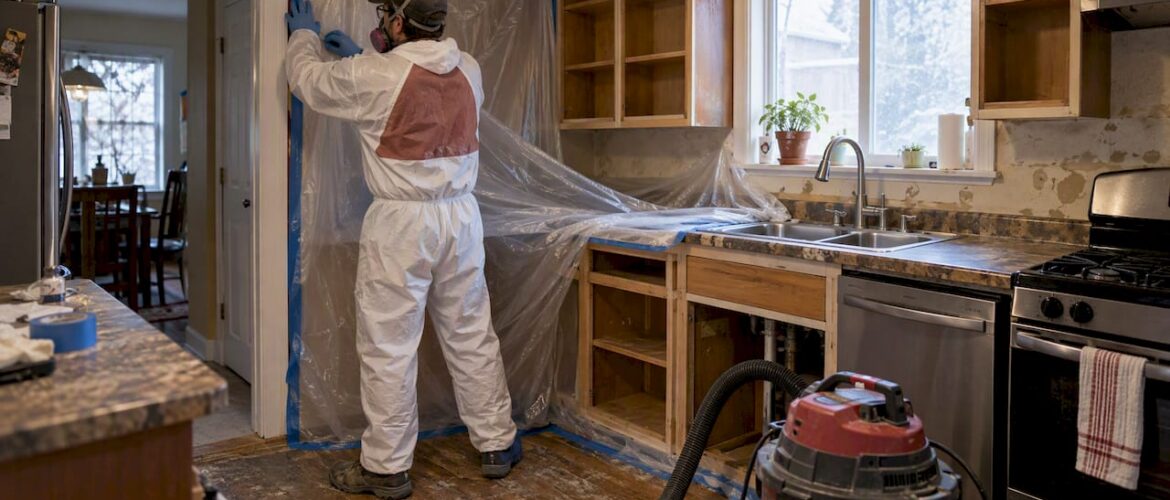
In Denver, the best time to schedule cabinet painting is whenever a contractor can guarantee stable, measured indoor temperature and controlled containment, which often lands in spring or fall but depends more on process than calendar date. A shop-based approach typically finishes in 3 to 5 days, and homes built before 1978 trigger federal lead-safety rules that matter more than the season you pick. Before you book anything, ask your contractor how they verify both.
TL;DR:
- Contractor process and indoor conditions matter more than season, with shop-sprayed finishes offering more stability and uniformity regardless of outdoor weather.
- Denver’s high winds and temperature swings can disrupt onsite painting, making controlled shop environments preferable for durability and safety.
- Homes built before 1978 require EPA lead-safe work practices during refinishing, with certified renovators and containment measures being mandatory.
- Costs vary widely depending on prep work, door style, hardware, and finishes, but shop-based projects typically cost less and take 3 to 5 days to complete.
- Proper planning includes verifying contractor credentials, understanding their process, and ensuring documented safety and warranty procedures before starting.
Table of Contents
- How Seasons and Indoor Conditions Affect Cabinet Painting in Denver
- What a Professional Refinishing Project Looks Like, Day by Day
- Lead-Safe Work Practices and Indoor Air Quality You Should Insist On
- How Denver’s Climate and Home Systems Change the Plan
- What Cabinet Painting Costs in Denver and What Drives the Price
- How to Choose a Cabinet Painting Contractor in Denver
- How a Shop-Based Factory Finish Solves the Timing and Safety Puzzle
- Why Timing Matters Less Than You Think
- Schedule Your Denver Cabinet Painting Project
- FAQ
- Sources
How Seasons and Indoor Conditions Affect Cabinet Painting in Denver
Homeowners often assume spring or fall is automatically better for cabinet painting, but the real variable is what happens inside your kitchen, not what the calendar says. Denver’s dry climate and big day-to-night temperature swings mean a contractor working onsite has to fight changing humidity and temperature as the sun moves, while a shop-based process sidesteps most of that entirely by curing cabinets in a controlled space.
That said, season still shapes logistics. Here’s how each one tends to play out:
- Spring (March to May): Mild days help with ventilation, but sudden cold fronts and wind can affect onsite dust control and open-window drying.
- Summer (June to August): Longer daylight helps scheduling, but afternoon heat spikes can cause finishes to dry too fast, risking brush marks or uneven sheen on surfaces painted onsite.
- Fall (September to November): Generally the most stable stretch for temperature and humidity, making it a popular window, though demand rises along with it.
- Winter (December to February): Indoor projects work fine since a shop environment keeps conditions constant, but onsite ventilation gets harder with windows closed most of the day.
Wind matters more than most homeowners expect. Denver’s gusty days can pull dust into an open work area or disrupt ventilation setups, which is one reason shop-spraying wins out over onsite painting for many projects regardless of month. If your contractor plans to work onsite, ask whether they’ll coordinate an HVAC shutdown during spraying and curing to prevent forced-air systems from pulling fumes or dust through the house.
Pro Tip: Ask your contractor for the measured temperature and humidity range they’ll maintain during the job, not just the season they recommend.
Before the crew arrives, clear cabinet contents, confirm a path for equipment access, and set up an alternate space for dishes and small appliances. A little prep on your end keeps the schedule tight no matter what month you start.
What a Professional Refinishing Project Looks Like, Day by Day
A realistic timeline helps you plan around the work and compare quotes that claim wildly different turnaround times. Here’s the typical sequence for a shop-based factory-spray job:
- Inspection and scope: The contractor assesses cabinet condition, counts doors and drawers, and flags any repairs or hardware changes needed.
- Prep and repairs: Surfaces are cleaned, sanded, and any damaged wood or loose joints are fixed before anything touches paint.
- Disassembly: Doors, drawers, and hardware are removed and labeled so everything returns to its original spot.
- Shop spraying: Doors and drawer fronts are sprayed in a controlled shop environment, while cabinet boxes are typically sprayed or finished onsite with containment in place.
- Topcoats and cure: Multiple protective layers are applied with cure time between coats, which is where most of the 3 to 5 day turnaround gets spent.
- Reassembly: Hardware and doors go back on, hinges are adjusted, and a final walkthrough confirms finish quality.
Delays usually trace back to a handful of causes: structural repairs discovered mid-project, specialty finishes like glazing that need extra cure time, or supply delays on custom hardware. None of these are red flags on their own, but a contractor should tell you upfront if any apply to your job.
On your end, plan for a few days without full kitchen access. Set up a temporary cooking station, keep pets away from the work area, and make sure the crew has a clear route in and out that doesn’t cross through finished rooms. If you manage a rental property, the same logistics apply, with the added step of coordinating tenant schedules around the work window.
Lead-Safe Work Practices and Indoor Air Quality You Should Insist On
If your Denver home was built before 1978, federal rules change how a contractor is legally allowed to work, and this matters more than any seasonal timing decision. The EPA Renovation, Repair and Painting program requires firms disturbing painted surfaces in pre-1978 homes to assign a certified renovator, set up containment, avoid prohibited high-dust methods, and verify the area is clean before calling the job done. Minor repairs under 6 square feet indoors are exempt, but full cabinet refinishing almost always exceeds that threshold.
The EPA’s own guidance is clear that lead risk is controlled primarily through work practices, not through picking a particular coating. Homes built before 1978 are automatically covered by federal RRP rules, which is a documented regulatory trigger, not a judgment call homeowners have to make themselves, according to the EPA’s RRP program.
The agency’s Steps to Lead Safe Renovation, Repair and Painting booklet spells out specifics: no open-flame burning, no heat guns above 1,100°F, no power sanding without HEPA exhaust control, and a cleaning verification step using wet wiping and visual inspection before the area is considered safe.
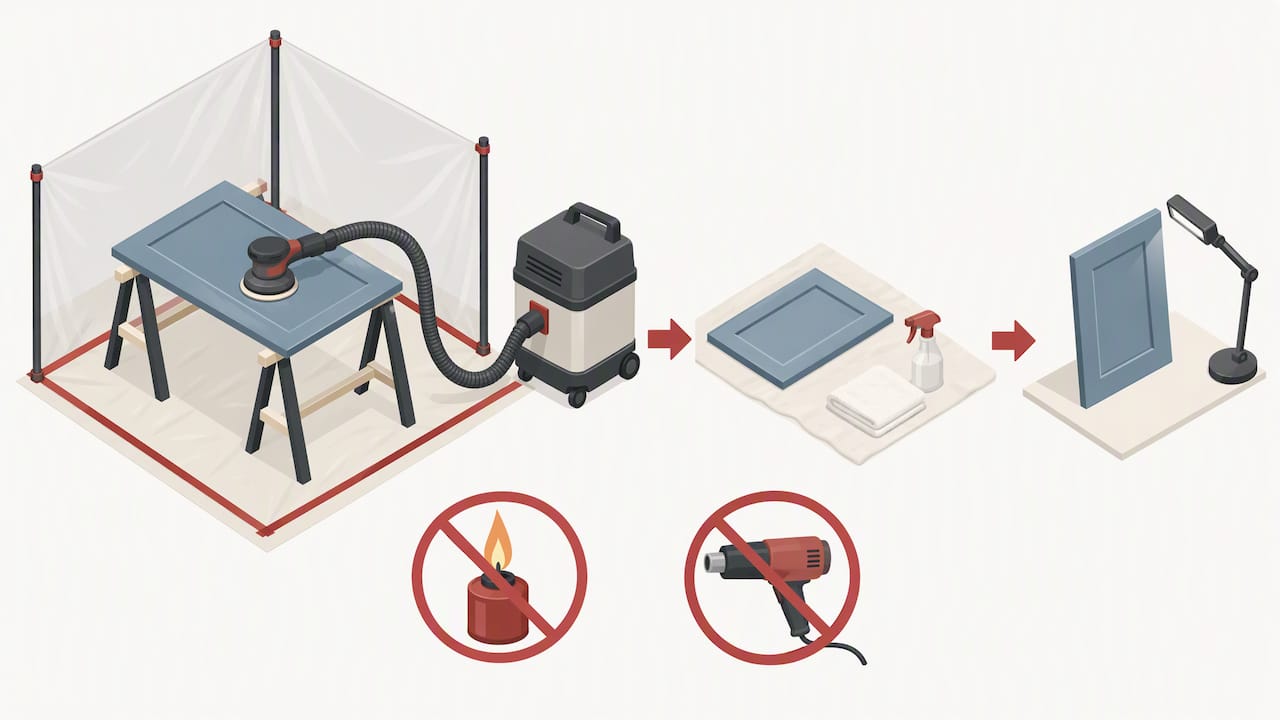
Separate from lead, VOC exposure is worth asking about even in newer homes. Low-VOC topcoats and proper ventilation reduce indoor air quality risks during finishing and curing, and shop-spraying keeps most off-gassing out of your house entirely.
Before signing a contract, ask:
- Is your renovator certified under EPA RRP, and can I see documentation?
- What containment method will you use, and where?
- How do you verify the area is clean when you’re done?
- Are your topcoats low-VOC, and how long should I ventilate before normal use?
How Denver’s Climate and Home Systems Change the Plan
Denver’s elevation and dry air speed up evaporation, which can cause finishes to skin over before they level out properly, leading to brush marks or uneven sheen on anything painted onsite. The city’s sharp diurnal swings, well documented in building science research for Denver, mean a room that’s comfortable at noon can shift considerably by evening, which matters for multi-coat finishes that need consistent curing conditions.
Forced-air heating systems create another wrinkle: the stack effect can pull fumes or fine dust from a work area into other parts of the house if HVAC isn’t isolated during spraying. A contractor working onsite should shut down or isolate the system and may use a portable dehumidifier or humidifier to hold conditions steady rather than guessing based on the season.
This is exactly why shop-spraying has become the preferred method for door and drawer fronts regardless of time of year: a controlled shop environment removes Denver’s outdoor variables entirely, leaving only the cabinet boxes to manage onsite under containment.
What Cabinet Painting Costs in Denver and What Drives the Price
Refinishing typically costs far less than full replacement, but the range within refinishing itself is wide enough that a single headline number doesn’t tell you much. Angi’s cost data notes that cabinet-painting quotes vary significantly based on door style, cabinet count, prep work, and finish type, which is why a low quote without a detailed scope should raise questions rather than confidence.
The biggest factors that move a quote up or down:
- Prep and repairs: Water damage, loose joints, or heavy grease buildup add labor before paint ever goes on.
- Door style and count: Raised-panel or ornate doors take longer to spray evenly than flat-panel designs.
- Hardware changes: New hinges, pulls, or soft-close upgrades are usually priced separately from the finish itself.
- Specialty finishes: Glazing or custom color matching adds steps and cure time compared to a standard solid color.
- Shop versus onsite labor: Shop-sprayed doors with onsite box work often cost differently than fully onsite jobs, depending on the contractor’s setup.
A written scope that breaks out these line items lets you compare bids fairly. If a quote skips prep detail or hardware costs entirely, ask for a revision before signing, because that’s usually where a “great deal” quietly becomes a change order. For more detail on local pricing and return on investment, see this breakdown of kitchen cabinet painting costs in Denver.
How to Choose a Cabinet Painting Contractor in Denver
Hiring well comes down to four things you can actually verify: credentials, process, warranty, and a clear scope. Use this sequence when vetting bids:
- Check certification and insurance. Ask for EPA RRP certification if your home predates 1978, and confirm general liability coverage.
- Ask for process proof. A shop-based factory-spray workflow with door labeling and tracking signals a contractor set up for consistency, not improvisation.
- Request their cleaning verification procedure. A contractor who can’t describe how they confirm the area is clean afterward likely isn’t following RRP practices closely.
- Get the warranty in writing. Ask what’s covered, for how long, and what voids it.
- Walk through the full written scope. Compare it line by line against other bids before deciding.
Red flags include vague scopes that just say “paint cabinets,” no mention of containment when your home is older, and no answer when you ask how they verify cleanliness. One local alternative worth knowing about if your cabinet doors are damaged beyond refinishing is door replacement through a specialty dealer, which some homeowners combine with refinishing the boxes.
Pro Tip: Hire only when scope, safety plan, timeline, and warranty are all documented in writing, not just discussed verbally.
How a Shop-Based Factory Finish Solves the Timing and Safety Puzzle
Our approach at Cabinet Refinishing Denver is built around spraying doors and drawer fronts in a dedicated shop rather than relying entirely on onsite brushwork, which is the piece that solves most of the timing and safety questions raised above. Projects typically complete in 3 to 5 days, with refinishing costs generally lower than those of full replacement.
Working in a shop means the curing environment stays constant regardless of Denver’s outdoor swings, and it keeps dust and VOC exposure out of your home while the heaviest spraying happens elsewhere. For cabinet boxes that have to be finished in place, we follow documented containment and cleaning verification steps rather than treating lead safety as an afterthought.
If you’re evaluating any contractor, including us, ask to see the process checklist they follow, their cleaning verification steps, and warranty documentation in writing before you commit to a start date.
Why Timing Matters Less Than You Think
The spring-versus-fall debate gets more attention than it deserves. What actually determines whether your cabinets come out looking factory-smooth is whether the contractor can hold temperature and humidity steady and whether they follow documented containment and cleanup steps, not which month is printed on the calendar.
I’d rather see a homeowner schedule a January job with a shop-based contractor who nails containment than a June job with someone painting onsite in fluctuating heat with no plan for dust control. Ask about process before you ask about availability, and the season question mostly answers itself.
— Jesse
Schedule Your Denver Cabinet Painting Project
If you’re ready to move forward, we handle cabinet refinishing, painting, glazing, and restoration for kitchens and bathrooms using a shop-based factory-spray process, low-VOC materials where appropriate, and a 3 to 5 day turnaround backed by a warranty.

Whether your project needs a simple color refresh or custom modifications, we match any color and handle minor repairs along the way. If your home was built before 1978, ask us for our EPA RRP documentation before work begins, it’s a reasonable request for any contractor touching painted surfaces in an older home.
Request an estimate through our cabinet painting page and we’ll walk you through scheduling, scope, and the safety steps that apply to your specific home.
FAQ
What is the average cost to paint kitchen cabinets?
Cabinet painting costs vary based on door count, style, prep work, and finish type, so a detailed written scope matters more than a single average figure, according to Angi’s cost breakdown. Refinishing through a shop-based process typically costs less than full cabinet replacement.
Are painted cabinets still trendy?
Painted cabinets remain a popular, durable option for updating a kitchen without a full remodel, especially with factory-quality finishes that hold up to daily use. Color and finish choices shift over time, but the underlying appeal of a refreshed look at a fraction of replacement cost hasn’t faded.
How often do you have to repaint kitchen cabinets?
How long a painted finish lasts depends heavily on the quality of the prep, the number of protective topcoats applied, and how the cabinets are used day to day. A factory-sprayed finish with proper multiple-coat application and a documented warranty tends to hold up significantly longer than a quick onsite brush job.
How many days should it take to paint kitchen cabinets?
A professional shop-based refinishing project typically takes 3 to 5 days from disassembly through reassembly, though specialty finishes or unexpected repairs can extend that window. Projects relying entirely on onsite brushwork without shop spraying often take longer due to slower cure times between coats.
When does my Denver home need EPA lead-safe certification for cabinet painting?
If your home was built before 1978, federal EPA RRP rules require a certified renovator and documented containment and cleanup procedures for most cabinet painting projects. Minor repairs affecting less than 6 square feet indoors are exempt, but full refinishing jobs almost always fall under the rule.
Sources
- EPA Renovation, Repair and Painting (RRP) Program
- How much does it cost to paint kitchen cabinets? (Angi)
- Building America case study: Denver, Colorado (DOE)