
Why kitchen cabinet painting in Denver is a smart upgrade
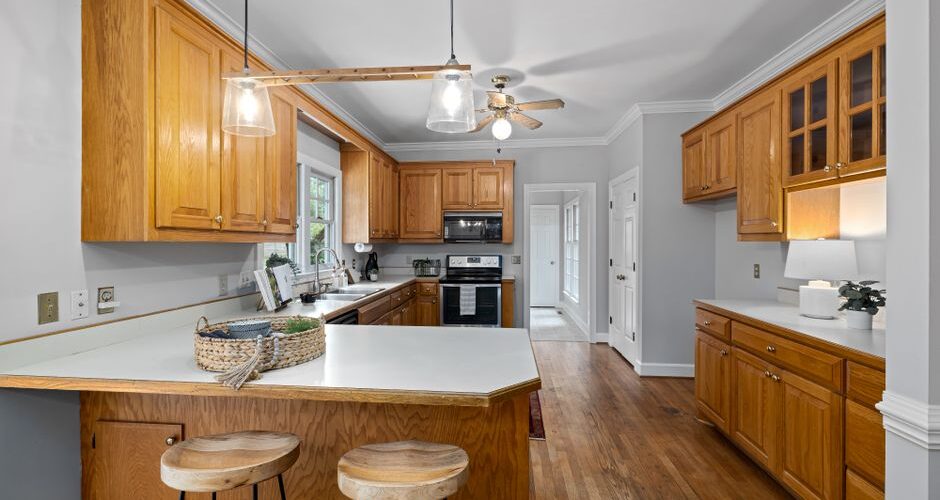
For Denver homeowners, investors, and contractors, kitchen cabinet painting is often the highest‑ROI cosmetic upgrade you can make without a full remodel. In a market where buyers expect modern, light kitchens, outdated oak or dark cherry cabinets can drag down both resale value and rental rates.
My Review of Graco FFLP Tips for Spraying Cabinets
Painting or refinishing cabinets typically costs a fraction of full replacement, often 60 to 70 percent less, yet can dramatically change how a space feels. In Denver’s competitive housing market, this can mean faster sales, higher offers, and better tenant quality, especially in neighborhoods like Highlands, Wash Park, Arvada, and Golden.
This guide walks through everything you need to know about kitchen cabinet painting in Denver. You will see cost ranges, prep steps specific to our dry, sunny climate, pros and cons of DIY vs professional work, and strategy tips tailored to homeowners, investors, property managers, and designers.
How Denver’s climate and market affect cabinet painting decisions
Denver is not just any market. Altitude, UV intensity, and buyer preferences all affect how your cabinet painting project should be planned.
Climate factors that impact paint choice
Denver’s climate creates a few specific challenges:
-
Low humidity
Paint can dry very fast, which sounds ideal, but it reduces leveling time and can leave brush marks if you use the wrong products or techniques. -
High UV exposure
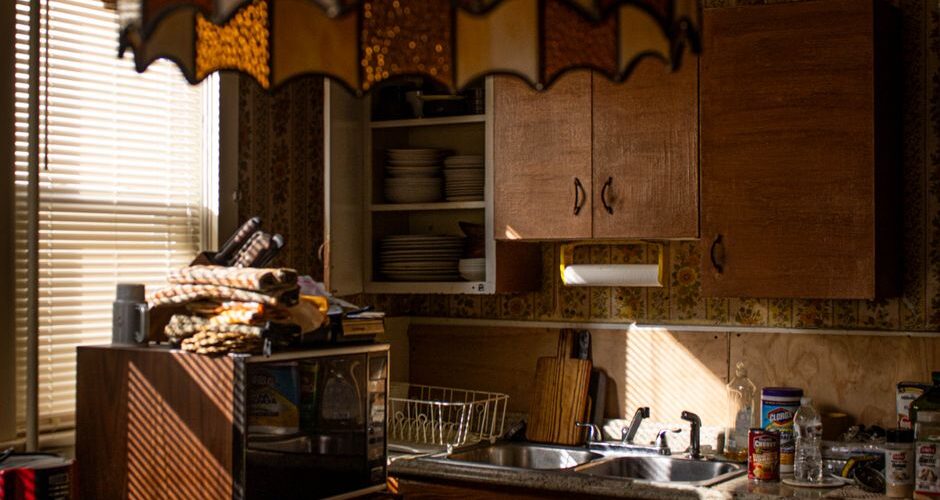
South and west facing kitchens get intense sunlight. Lower quality paints can yellow, chalk, or fade faster on cabinet doors and face frames. -
Wide temperature swings
Garages and basements used as makeshift paint booths can fluctuate from 40 to 80 degrees in a single day, which affects cure times and adhesion.
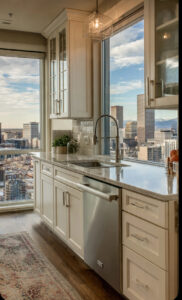
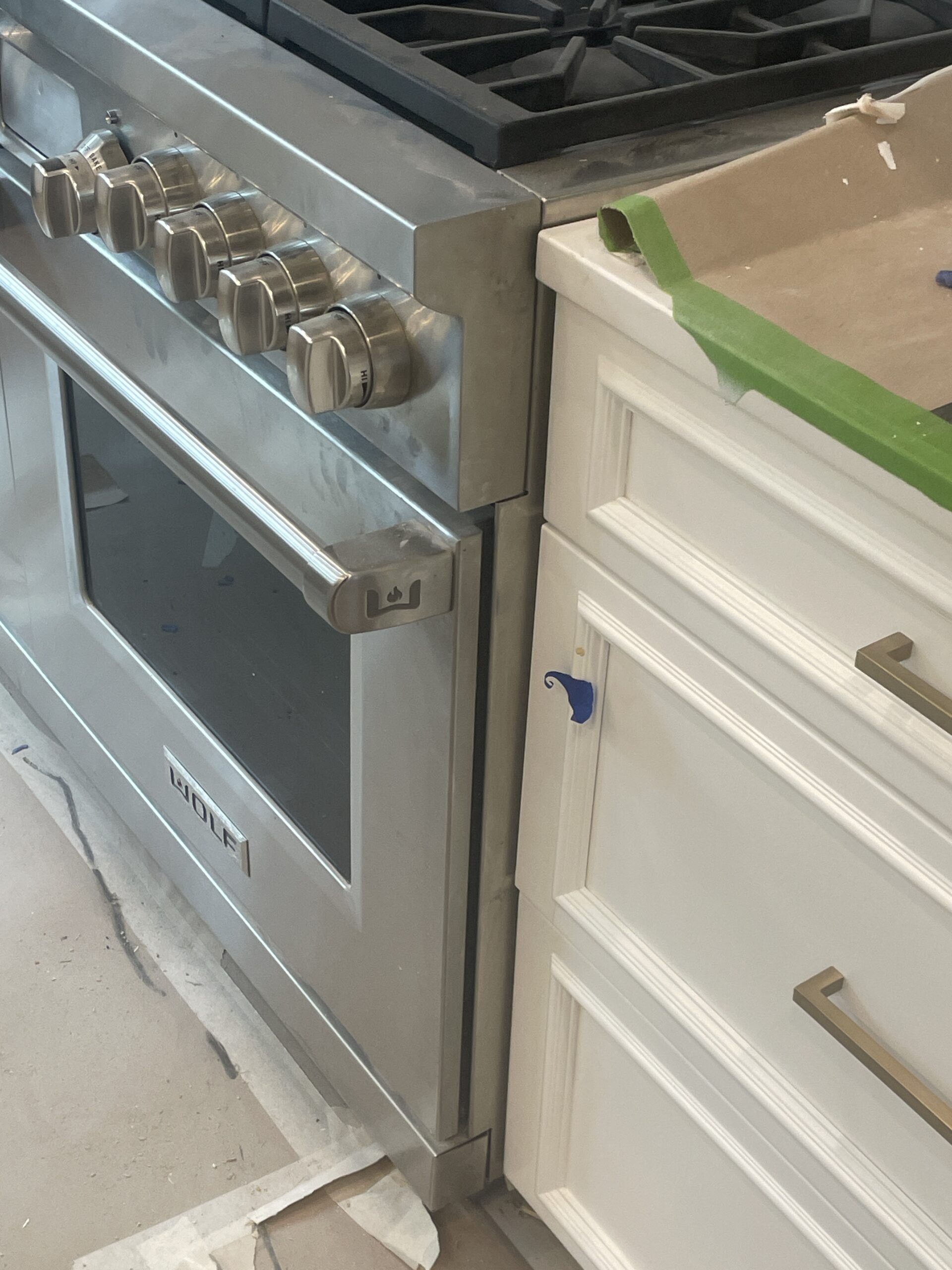
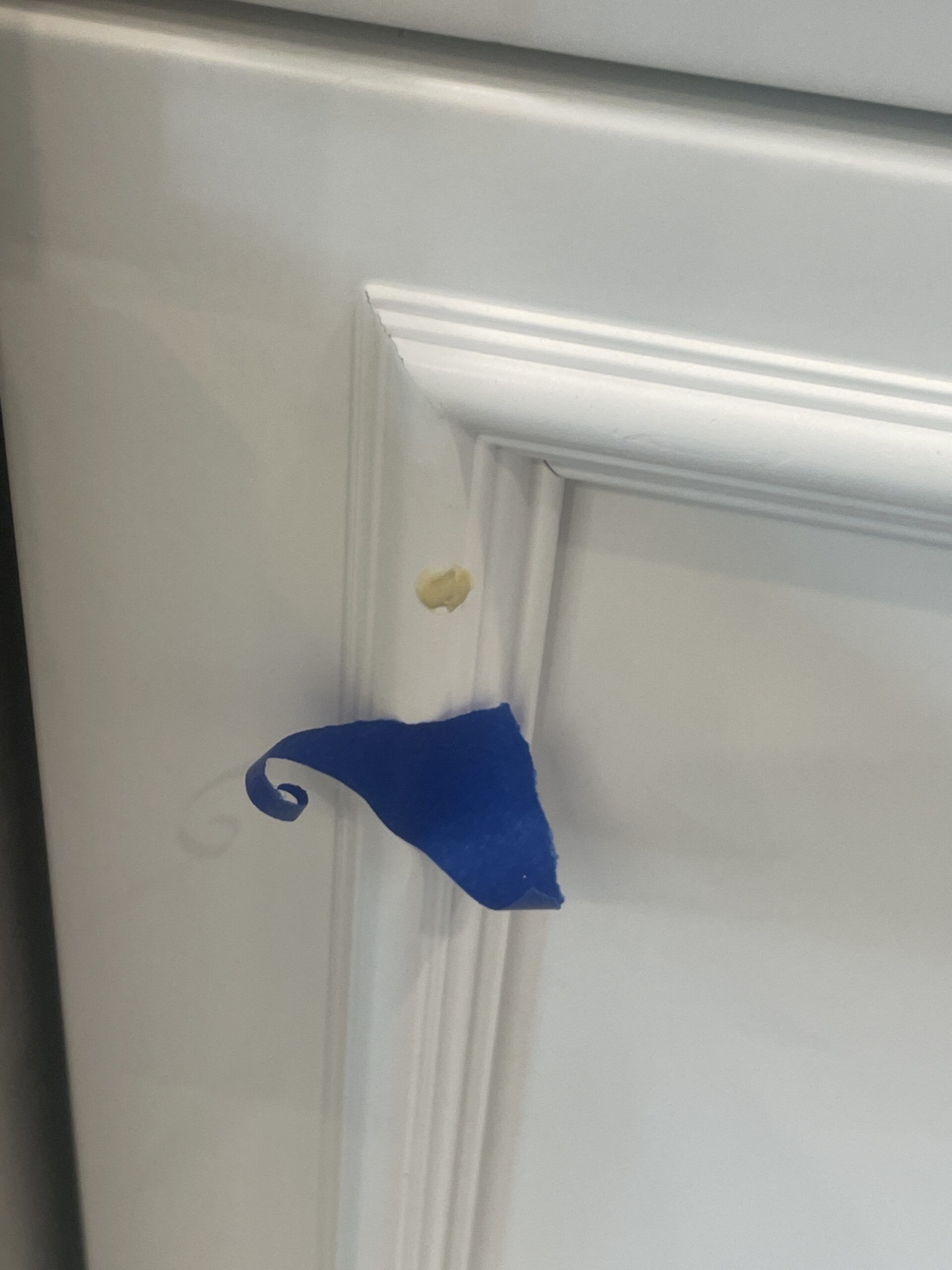
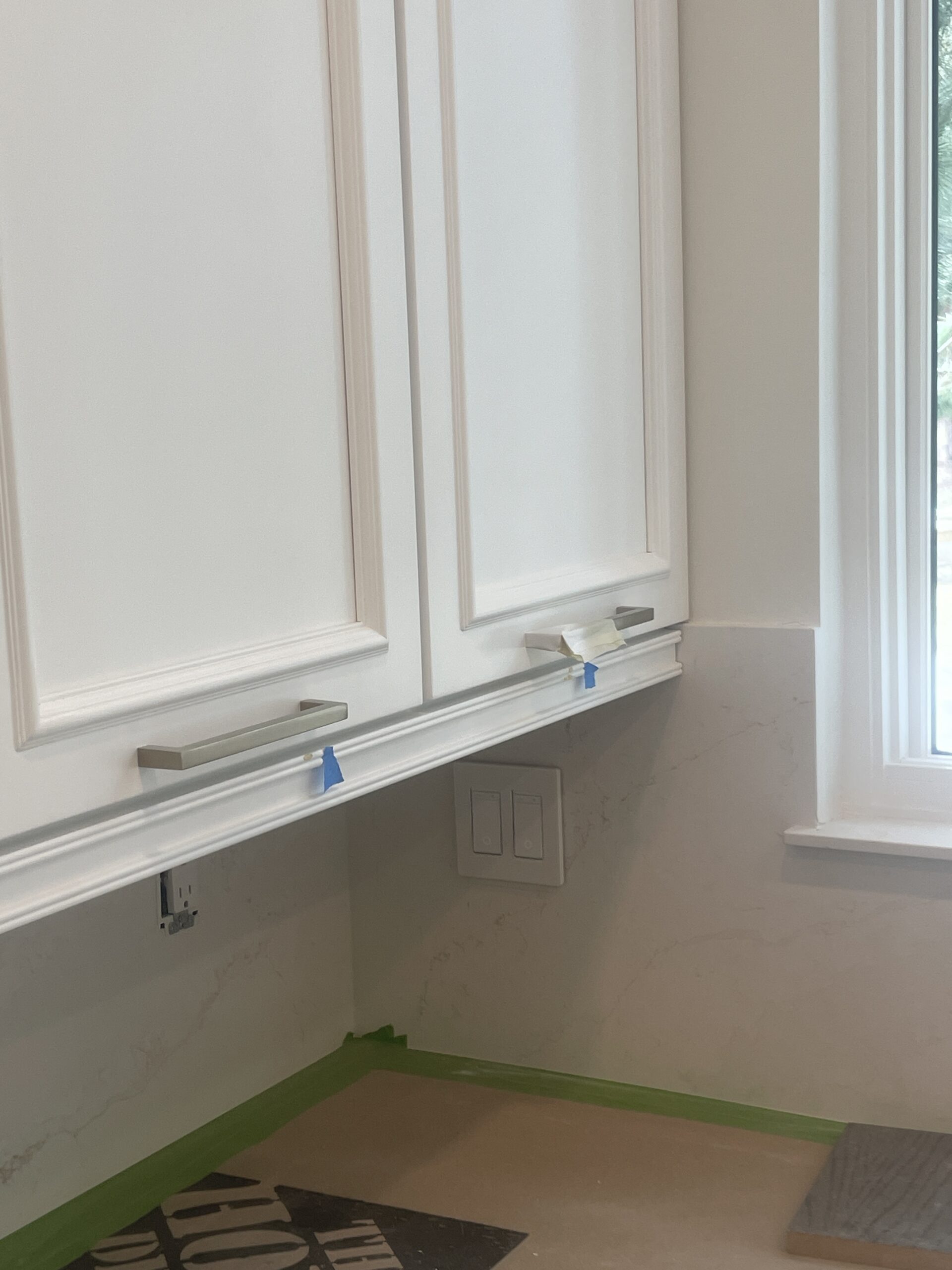
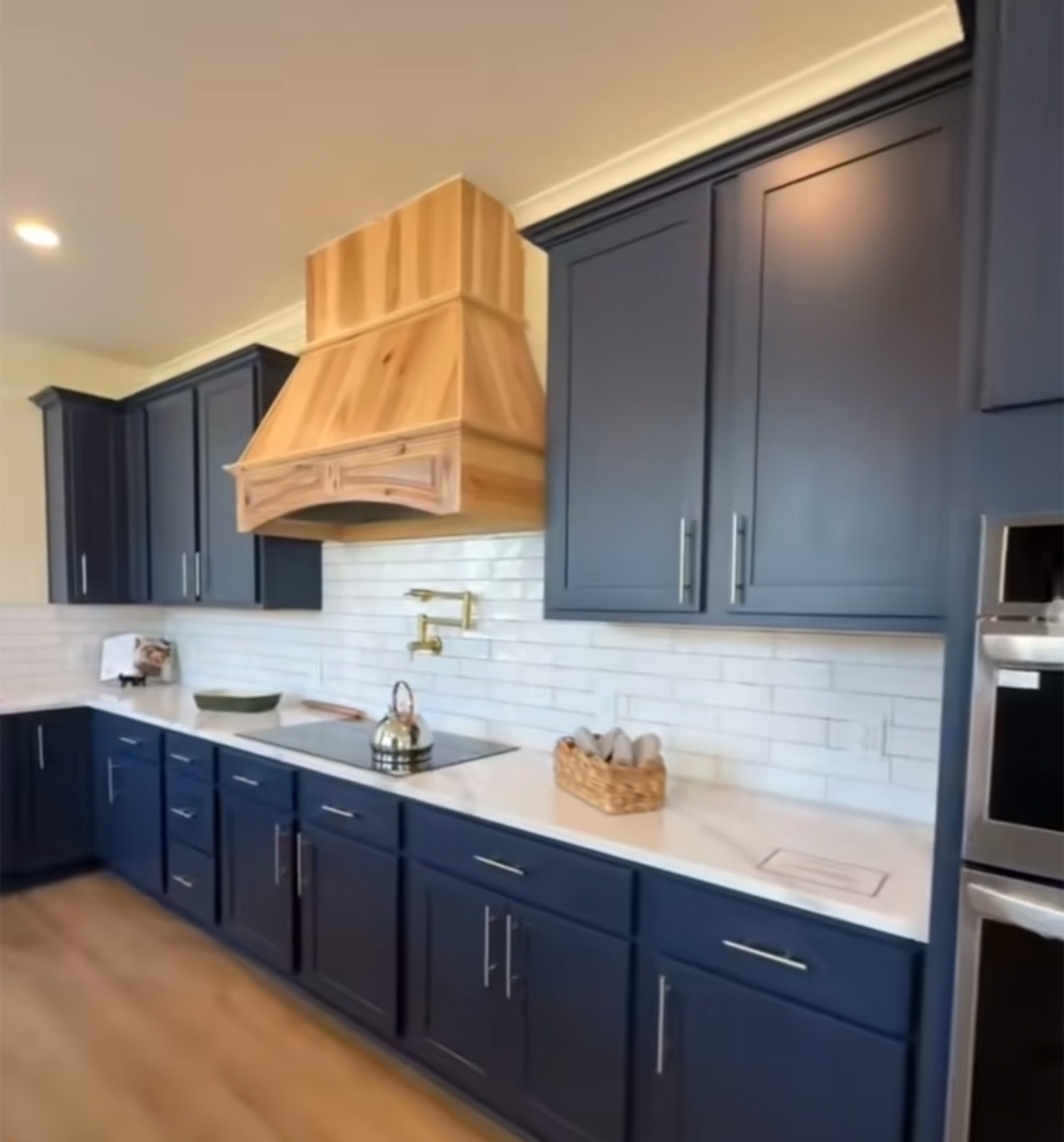
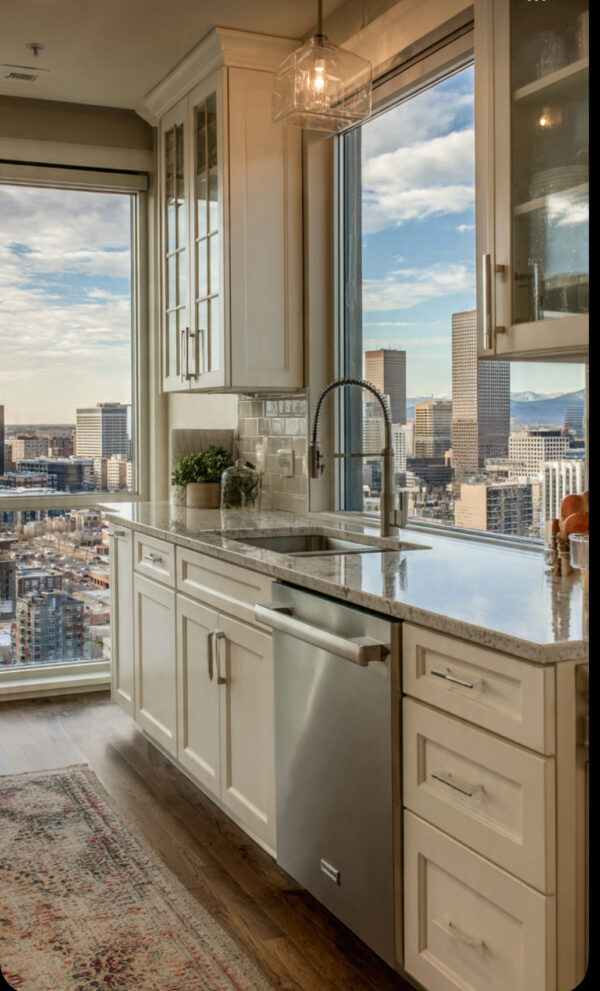
For cabinet painting, this usually means:
- Using high‑quality, enamel or urethane‑fortified cabinet paints that self‑level well
- Allowing longer cure times between coats than the label minimum suggests
- Avoiding low‑end latex wall paint on cabinets, which will not hold up to Denver’s dry air and heavy use
Key Takeaway: In Denver, product selection and cure time matter more than in milder climates. Cabinets may look good on day one with cheap paint, then chip and yellow within a year.
Local buyer and renter expectations
Front Range buyers and renters tend to favor:
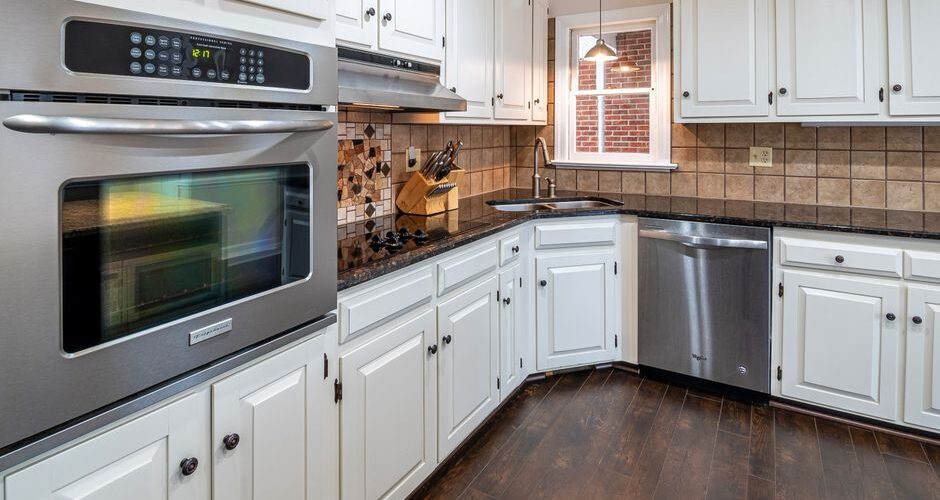
- Light, bright kitchens with white or soft, warm gray cabinets
- Simple, clean door styles over heavy ornamentation
- Updated finishes that photograph well for MLS or rental listings
Investors and flippers in Denver often report:
- Painted cabinets contributing to rent increases of $100 to $250 per month in mid‑tier properties
- Faster lease‑ups when listing photos show a modern white or two‑tone kitchen
- Stronger buyer response in moderate price points, where buyers want a move‑in ready look without paying for a full luxury kitchen
Costs of kitchen cabinet painting in Denver
Pricing varies by scope, condition, and finish, but most projects fall within predictable ranges.
Typical cost ranges in the Denver metro
For a standard 10×12 kitchen with 25 to 35 doors and drawers:
| Project Type | Typical Denver Range* | Notes |
|---|---|---|
| DIY materials only | $250 – $650 | Primer, paint, sundries, minor tool rental |
| Professional painting, basic enamel | $2,200 – $3,500 | Doors sprayed, frames brushed/rolled or sprayed |
| Premium pro finish, upgraded products | $3,500 – $5,500+ | Advanced prep, conversion varnish or urethane enamel |
| Full cabinet replacement | $12,000 – $30,000+ | New boxes, doors, counters, plumbing, electrical |
*These estimates reflect recent Denver market averages, but actual bids depend on layout, cabinet count, and condition.
For more detailed local examples and packages, see Cabinet Refinishing Services Denver Co Cabinet Painting Services Denver Co Kitchen Cabinet Painting.
Factors that move your price up or down
Expect pricing to shift based on:
- Cabinet layout and access
Tight galley kitchens with awkward corners or islands can add labor time. - Existing finish
Heavy varnish, oil‑based coatings, grease, or smoke damage require more prep. - Color changes
Going from dark stain to bright white usually takes more coats, especially on oak. - Door style and detail
Raised‑panel or detailed routed profiles take longer to spray and sand than flat‑panel doors. - Repairs and modifications
Adding soft‑close hinges, filling old hardware holes, or swapping doors increases scope.
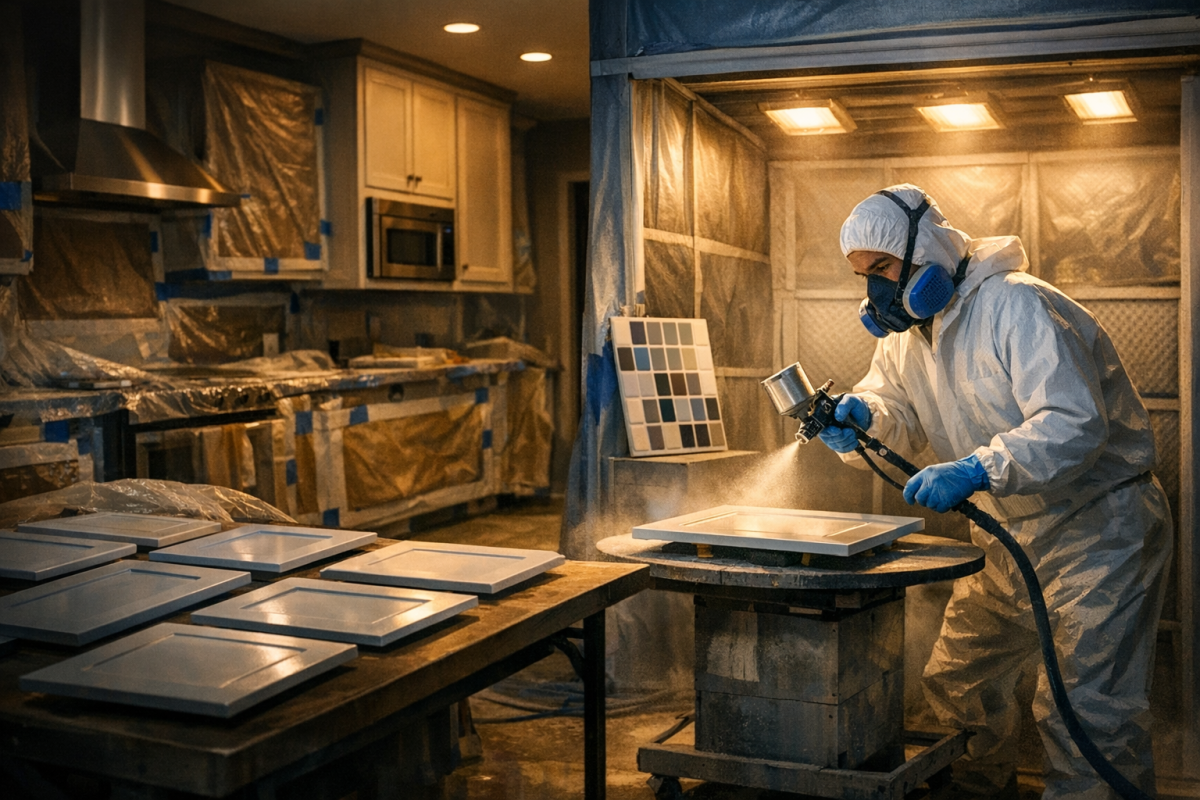
Denver contractors also factor in set‑up for proper spraying, which often includes portable spray booths, filtration, and masking that protects adjacent open‑concept areas.
Process: How professionals handle cabinet painting in Denver
Understanding the full process helps you evaluate bids and decide whether DIY is realistic.
Assessment and planning
A reputable Denver cabinet refinishing company will:
- Count doors, drawers, and exposed panels
- Inspect for peeling finishes, water damage near sinks, and loose hinges
- Identify wood species, especially grainy oak versus smoother maple or alder
- Confirm whether there is previous oil‑based or factory finish that needs specific primers
You should receive a written scope that lists products, number of coats, and what is included, such as minor repairs or new hardware hole drilling.
Prep work and masking
Successful cabinet painting lives or dies on prep. Typical steps:
- Removing all doors and drawers, labeling each piece
- Cleaning with a strong degreaser, especially near cooktops and microwaves
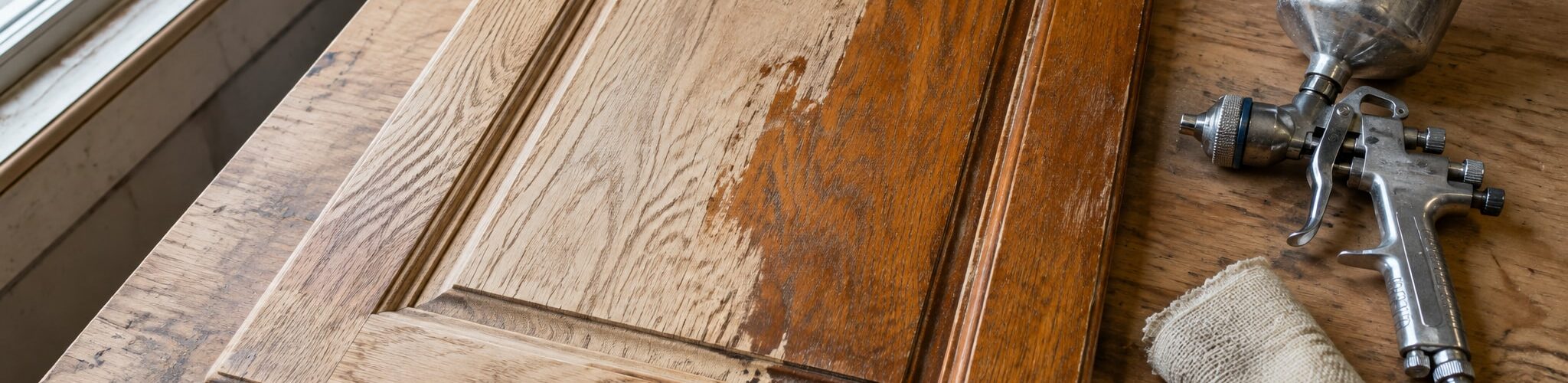
- Scuff‑sanding existing finishes to create mechanical adhesion
- Filling dings and imperfections, then sanding smooth
- Masking countertops, appliances, floors, and adjacent walls meticulously
- Setting up a spray area with ventilation and dust control
For occupied homes, containment is critical. Ask how the contractor will manage dust, odor, and access to your kitchen while work is underway.
Pro Tip: Request clear timelines for each phase. In Denver, many pros schedule so you have a functioning, but partially masked, kitchen during most of the project, with only short windows of full downtime.
Priming, painting, and curing
Professionals usually:
- Apply a bonding primer suitable for factory finishes and oily woods
- Sand between coats to maintain a smooth surface
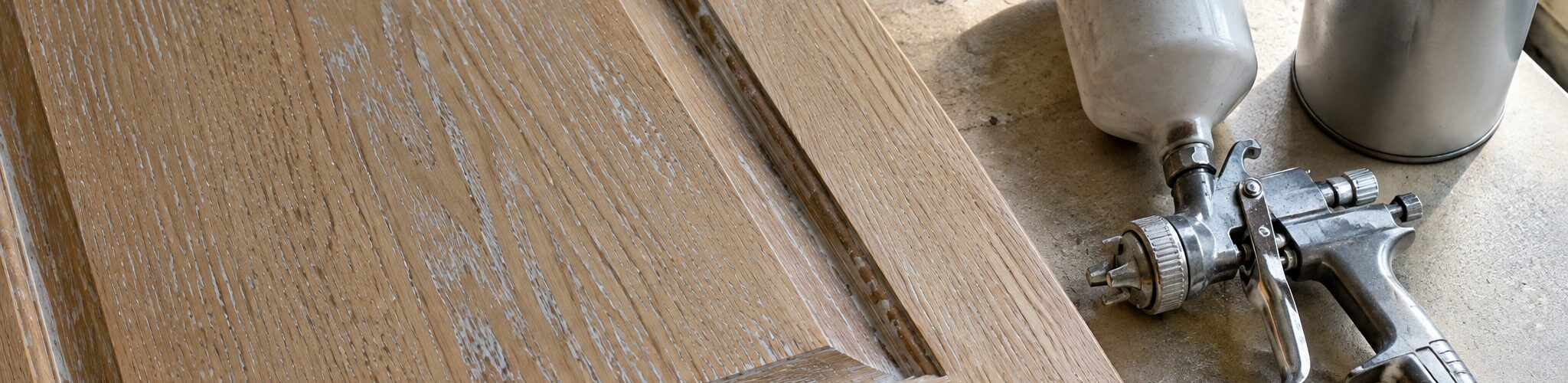
- Spray doors and drawer fronts for a factory‑like finish
- Either spray or brush‑and‑roll frames, depending on the home and containment
In Denver’s dry climate, surfaces may feel dry to the touch in a few hours, but full cure can take up to 30 days. During this period, you should:
- Avoid harsh cleaners or scrubbing
- Use handles instead of grabbing door edges
- Be gentle when sliding pots or appliances back into place
For an in‑depth look at refinishing workflows, you can review Cabinet Refinishing And Kitchen Cabinet Painting Denver.
Choosing colors and finishes that work in Denver homes
Color and sheen choices should align with your property type and target buyer or renter.
Color strategies by property type
-
Owner‑occupied homes
Consider classic white, soft off‑white, or greige for long‑term flexibility. Two‑tone schemes, such as white uppers and navy or charcoal lowers, work well in neighborhoods like Sloan’s Lake or Berkeley where buyers expect style. -
Rental properties
Use forgiving mid‑tone neutrals that hide scuffs. Warm gray or greige cabinets paired with durable quartz‑look counters help reduce turnover touch‑ups. -
Flips and resale properties
Keep colors broadly appealing, since MLS photos must grab attention. Bright white cabinets with matte black or brushed brass hardware still outperform trend‑heavy colors in most Denver submarkets.
For more regional style guidance, explore Cabinet Refinishing Cabinet Painting Services Denver Co Golden Co Arvada Co Kitchen Cabinet Painting.
Sheen and durability
For kitchen cabinets in Denver, consider:
- Satin or low‑sheen enamel
Balances washability with the ability to hide minor imperfections. - Semi‑gloss enamel
More durable, but will telegraph grain and prep issues more, especially on oak. - Specialty cabinet or trim enamels
Waterborne alkyd or urethane enamels cure harder and resist chipping better than standard wall paints.
Coordinating with counters, floors, and light
Since Denver has strong natural light, cabinet colors can look brighter and cooler than on a paint chip. Before committing:
- Test large samples on actual doors, not just on walls
- View them at different times of day, especially late afternoon when western sun hits
- Consider how existing tile, hardwood, or LVP colors interact with your cabinet choice
DIY vs professional cabinet painting in Denver
Deciding whether to tackle the project yourself depends on your time, tools, and tolerance for imperfections.
When DIY may make sense
DIY can work if:
- You have limited cabinets, such as in a condo or small rental
- The existing finish is in good shape, with minimal repair work needed
- You are comfortable spending several weekends on prep and painting
- A slightly less “factory” finish is acceptable
Plan for:
- Extensive masking and labeling
- Renting or buying a sprayer if you want a sprayed door finish
- Working in a ventilated, temperature‑controlled space, which can be harder in winter or during summer heat waves
DIYers often underestimate labor hours. Even a small kitchen can involve 40 to 80 hours when you include careful prep, dry times, and reassembly.
When to hire professionals
Professional cabinet painters in Denver bring:
- Commercial‑grade sprayers and containment systems
- Knowledge of which primers and enamels perform best in local conditions
- Systems for labeling, tracking, and reinstalling hardware
- Stronger warranties and predictable timelines
This is particularly important for:
- High‑end homes or custom builds
- Multi‑unit properties where downtime is lost revenue
- Projects tied to sale timelines, such as pre‑listing refreshes for flips
Important: If your property is built before 1978, ask specifically about lead‑safe practices. Although kitchen cabinets are often newer, some older homes still have original painted finishes that require EPA‑compliant handling.
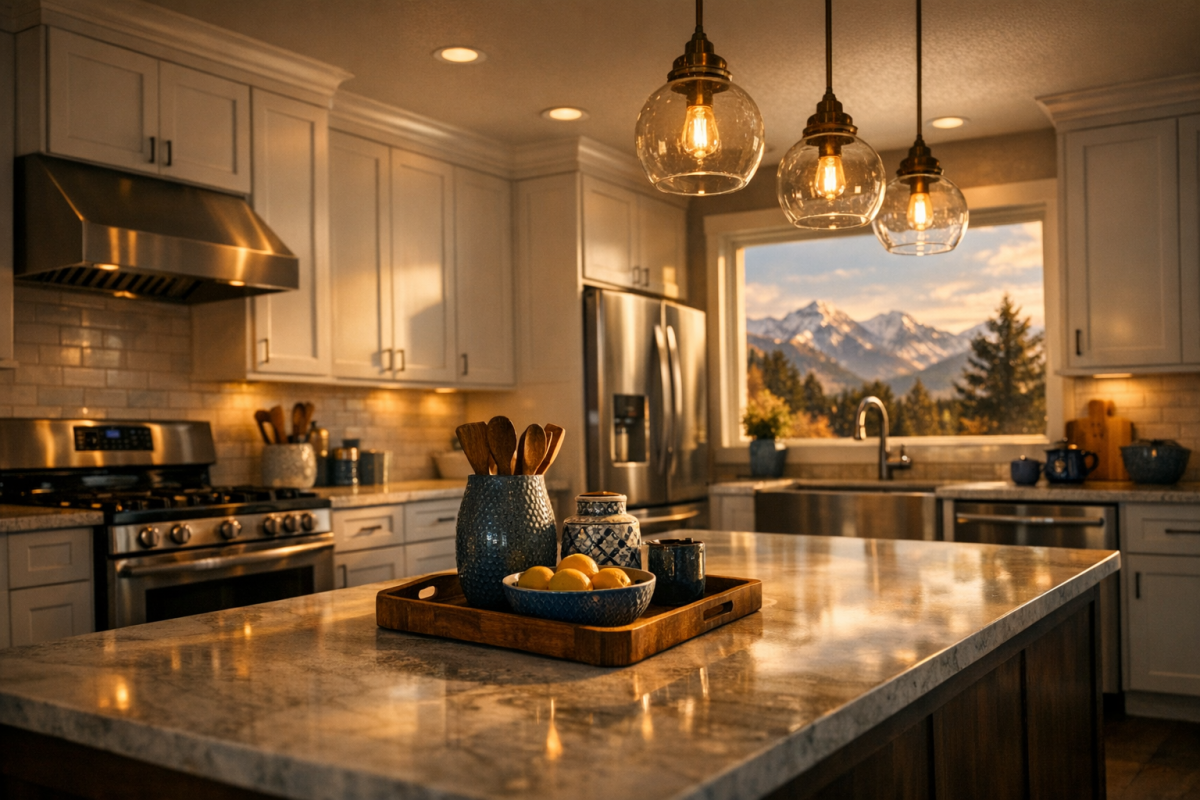
ROI considerations for investors, flippers, and property managers
For investors and managers, cabinet painting is not just an aesthetic decision. It is a financial calculation.
Rental properties and multi‑unit buildings
In Denver’s rental market:
- A fresh, modern kitchen often justifies rent increases and reduces vacancy
- Painted cabinets can delay the need for full kitchen replacement by 5 to 10 years
- Standardizing cabinet colors and finishes across units simplifies touch‑ups and turnovers
For example, a $3,000 cabinet painting project that supports a $150 per month rent increase pays back in roughly 20 months, then produces ongoing upside.
Flips and resale homes
For flips and owner sales:
- Painted cabinets frequently provide one of the highest returns per dollar spent in older Denver bungalows and 80s/90s builds
- Appraisers and buyers respond to overall kitchen condition, and painted cabinets influence perceived quality alongside counters and appliances
- Time to market matters; a pro team can often complete cabinets in 5 to 7 working days, which fits typical renovation timelines
Real-World Example: A Denver flipper updated only cabinets, counters, lighting, and paint in a 1990s kitchen. The cabinet painting portion cost about $3,800. The property received multiple offers in the first weekend and sold for roughly $18,000 more than comparable unupdated homes in the same subdivision.
When to refinish, reface, or replace cabinets
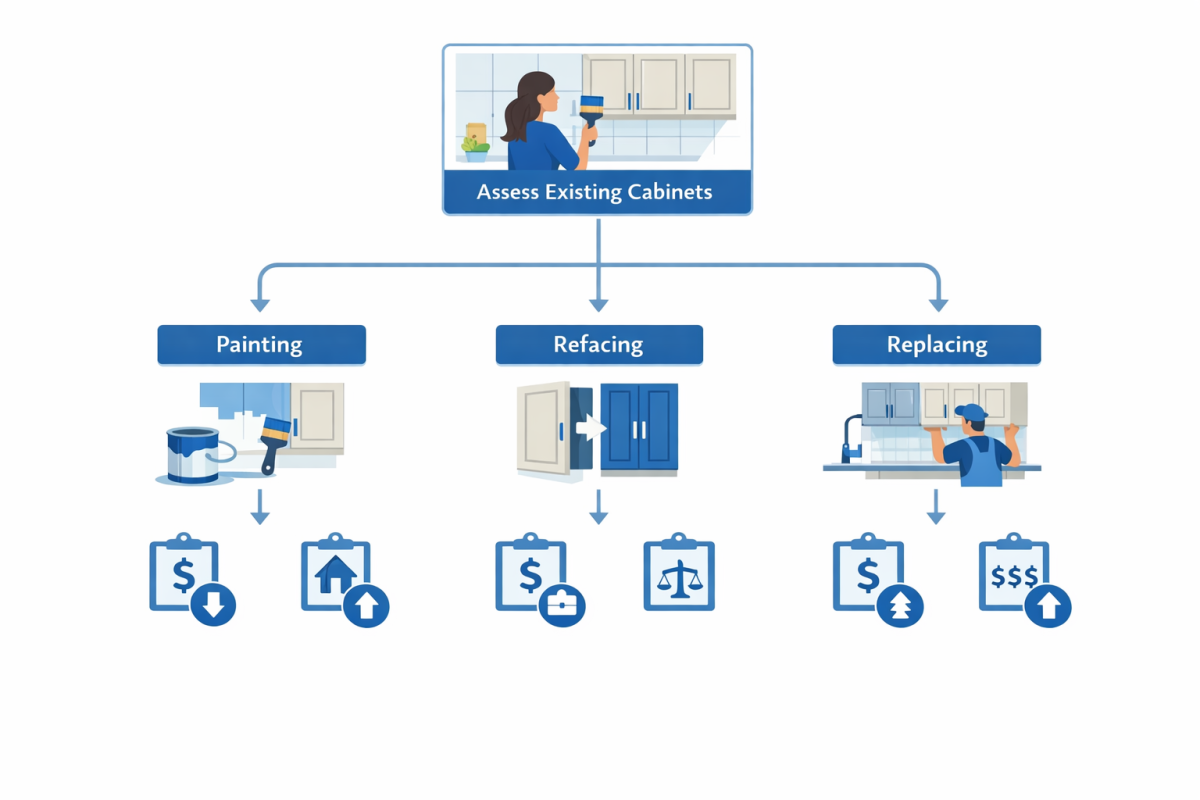
Cabinet painting is not always the right answer. Knowing the alternatives helps you choose the best path.
Good candidates for painting
Painting is usually ideal if:
- Boxes are structurally sound, with no major water damage or sagging
- You like the existing layout
- Doors are solid wood or high‑quality MDF, without deep swelling or cracking
- You want a fresh look without major construction
When to consider refacing or replacement
Consider refacing or replacing if:
- The layout is inefficient and you plan to move appliances or walls
- Boxes are particleboard and have suffered water damage
- You want a completely different door style that paint alone cannot achieve
- There are serious functional issues, such as poor storage, insufficient drawer capacity, or failing hardware
Refacing involves new doors and drawer fronts plus a new veneer on the existing boxes. It usually costs more than painting but less than full replacement.
How Cabinet Refinishing Denver can support your project
If you are planning kitchen cabinet painting in the Denver metro, partnering with a specialist can remove guesswork and reduce risk.
Cabinet Refinishing Denver focuses specifically on cabinet refinishing and painting in Denver, Golden, Arvada, and surrounding areas. They understand local climate challenges, common cabinet types found in Front Range homes and rentals, and what buyers and renters look for in updated kitchens.
A typical engagement includes:
- On‑site assessment and clear written scope
- Product recommendations tailored to your wood species, color goals, and property type
- Efficient, low‑disruption workflows that keep your household or tenants functional
- Factory‑like sprayed finishes on doors and drawers, with durable enamels selected for Denver conditions
If you need a reliable partner for an upcoming remodel, flip, or rental turn, explore options and request an estimate: Learn more.
Your next steps for a successful Denver cabinet painting project
To move forward with confidence:
- Walk your kitchen and honestly assess cabinet box condition and layout.
- Decide whether the project is best treated as an owner upgrade, rent‑maximization move, or resale strategy.
- Gather 2 to 3 professional bids that specify products, number of coats, and prep work.
- Test at least two color options on actual cabinet doors in your kitchen light.
- Schedule work around your occupancy needs and allow proper cure time before heavy use.
Handled correctly, kitchen cabinet painting in Denver can bridge the gap between outdated and market‑ready, often without touching your cabinet boxes or layout.
Frequently Asked Questions
How long does cabinet paint last in Denver’s climate?
With proper prep and high‑quality enamel, professionally painted cabinets in Denver typically last 8 to 15 years before needing a refresh. Longevity depends on use, cleaning habits, and sunlight exposure. South and west facing kitchens may show wear sooner. Using gentle, non‑abrasive cleaners and hardware on all doors and drawers significantly extends the life of the finish.
How long does a professional cabinet painting project take?
Most standard Denver kitchens take 5 to 7 working days. The schedule usually includes 1 day for removal, cleaning, and masking, 2 to 3 days for priming and painting, and 1 to 2 days for curing, reinstallation, and touch‑ups. Cure to full hardness can take up to 30 days, so you can use the kitchen, but should treat surfaces gently during that period.
Can I live in my home during cabinet painting?
Yes, most Denver homeowners stay in the home. Professionals use masking, plastic sheeting, and ventilation to control dust and odor. You may temporarily lose access to some drawers or appliances, but many contractors phase work so you retain partial kitchen use. If you are sensitive to odors or have small children, discuss timing and ventilation methods before scheduling.
Is it worth painting oak cabinets with heavy grain?
Painting oak cabinets can still be worthwhile, especially for rentals and flips, but the grain will remain visible unless you invest in grain‑filling. Many Denver properties successfully modernize golden oak with a high‑quality enamel in white or greige. If you want a completely smooth, modern look, additional prep or door replacement may be required, which affects cost.
What is the best paint for kitchen cabinets in Denver?
The best options are waterborne alkyd or urethane‑reinforced cabinet enamels, which combine the low odor of water‑based products with the hardness of traditional oil. These paints self‑level well in Denver’s dry air and resist chipping and yellowing. Avoid standard wall paints, which are not designed for the moisture, grease, and daily wear that kitchen cabinets experience.