

Why cabinet painting is a smart move for Denver rentals
For most Denver rentals, kitchens and bathrooms quietly decide how fast a unit rents and what it commands in monthly rent. Outdated or worn cabinets can make an otherwise solid property feel tired, even if the layout and location are strong.
My Review of Graco FFLP Tips for Spraying CabinetsCabinet painting for rental properties in Denver is one of the highest-ROI updates you can make. Compared with full replacement, professional painting is faster, less disruptive, and far more budget friendly, yet it still delivers that “updated” look tenants click on in listings.
When done correctly, cabinet painting can:
- Raise perceived value so you can justify higher rents
- Reduce vacancy time because the photos look more modern
- Extend the life of existing cabinets by 5 to 10 years
- Minimize waste versus ripping out functional boxes
This guide explains how to approach cabinet painting for rental properties in the Denver market specifically, including color choices, durability requirements, budgeting, and when it makes sense compared with refacing or replacement.
Key Takeaway: Treat cabinet painting as an investment decision, not just a cosmetic touchup. The right process and products can add thousands in rental income over the life of a tenancy cycle.
What cabinet painting for rentals actually involves
Cabinet painting is more than brushing a new color over old doors. For rental properties, especially in high-turnover urban markets like Denver, the process must prioritize durability and repeatability.
Core steps in a rental-grade cabinet paint job
A professional process typically includes:
-
Assessment
- Confirm boxes are structurally sound
- Check for water damage at sink bases and around dishwashers
- Identify peeling finishes, heavy grease, or smoke damage
-
Prep and repairs
- Degrease with industrial cleaners, especially near stoves
- Fill dings and hardware holes, sand to level
- Caulk open seams or gaps that telegraph through paint
-
Sanding and priming
- Mechanical scuff sanding for adhesion
- Stain-blocking primer for oak, knotty woods, or smoke-stained units
- Bonding primer for laminate or thermofoil surfaces
-
Spray or brush/roll finish
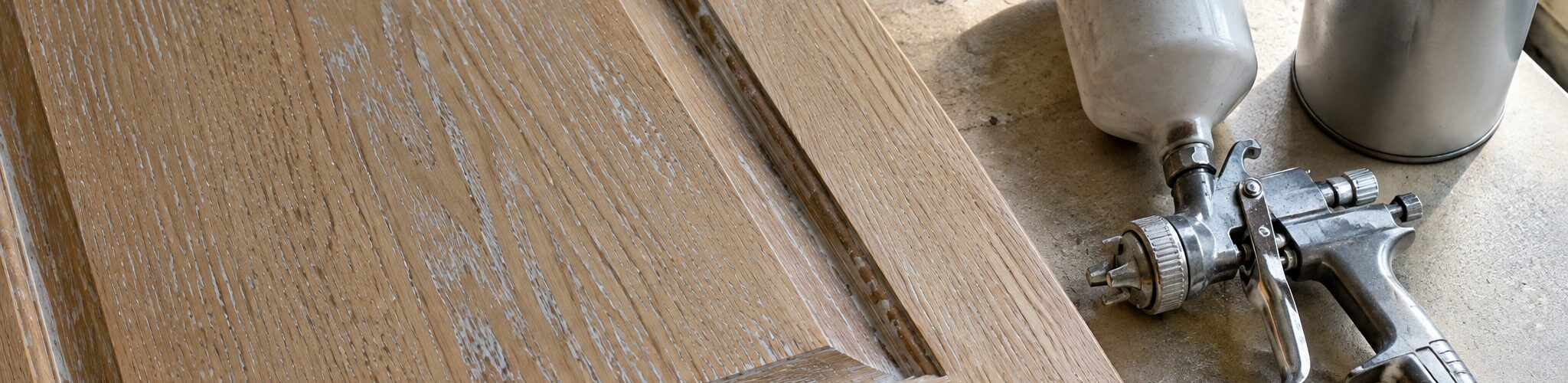
- Spraying gives the most “factory” look and is standard in pro cabinet refinishing services in Denver
- Multiple thin coats, with sanding between, for a smooth, durable finish
Why rental properties need a different standard
Tenants are harder on cabinets than owner occupants. You have:
- More frequent move-ins, which means more scuffs and dings
- Less incentive for tenants to clean properly
- Higher moisture from cooking and bathrooms in smaller spaces
A rental-grade paint job must be:
- Highly cleanable
- Resistant to chipping on high-touch edges and around pulls
- Easy to touch up between tenants
ROI of cabinet painting for Denver landlords and investors
If you are flipping, holding long term, or managing multi-unit buildings, ROI is the only reason to consider cosmetic upgrades. Cabinet painting performs well here when scoped correctly.
Cost ranges and upgrade options
Typical Denver pricing will vary by size and scope, but a realistic range for an average Denver kitchen is:
| Scope level | Description | Typical cost range* | When to choose |
|---|---|---|---|
| Basic turn-grade | Single color, existing hardware, minimal repairs | $2,000–$3,200 | Lower-priced rentals, fast turns |
| Mid-tier upgrade | New hardware, more prep, accent island possible | $3,000–$4,500 | B-class properties, small value-add |
| Premium rental | Two-tone, upgraded enamel, detailed repairs | $4,000–$6,000 | A-class or flip-ready units |
*Ranges are illustrative, not quotes. Get site-specific bids.
Compare that to $10,000–$25,000 for full cabinet replacement once you include demo, disposal, new boxes, counters, and plumbing reconnection.
Pro Tip: Run the numbers as a value-add: if a $3,500 paint upgrade supports a $150/month rent increase, that is $1,800 more per year. Your payback period is under 24 months, with continued upside beyond that.
Impact on rent and vacancy
Denver tenants respond strongly to listing photos. Fresh, light cabinets can:
- Increase achievable rent by $75–$200 per month, depending on class and neighborhood
- Cut days on market, especially in slower winter months
- Help justify small rent bumps at renewal, since the unit “still feels new”
For a 20-unit building, even a modest $50 per month bump per unit from updated kitchens can translate to $12,000 in additional annual income, which also increases property value on a cap-rate basis.
For a deeper breakdown focused on investor math, see this related resource on cabinet painting for rental properties and ROI.
Choosing the right colors and finishes for Denver renters
Color decisions affect both marketing and maintenance. Trends matter, but so do cleanability and how forgiving the color is between turnovers.
Color strategies by property type
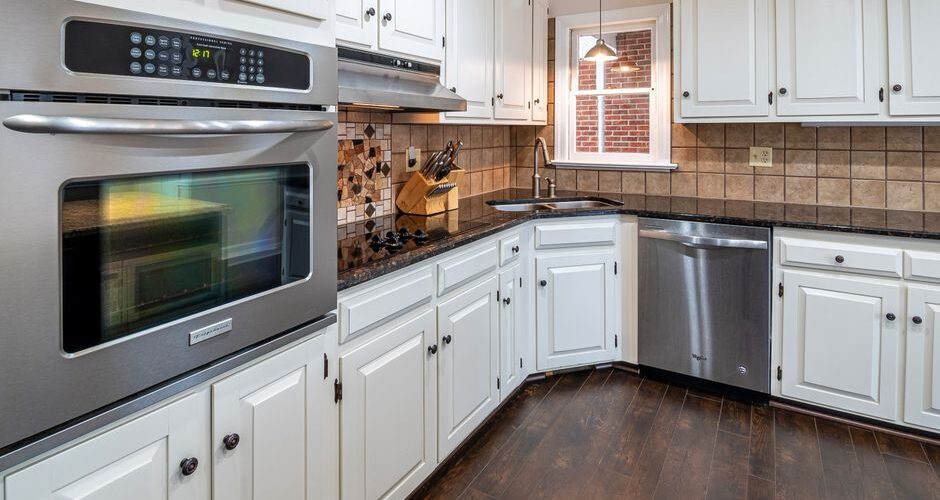
- Urban apartments and small condos
- Best: Soft whites, warm grays, or very light greige
- Reason: Brightens compact kitchens, photographs extremely well
- Suburban family rentals
- Best: Warm white uppers with slightly darker lowers or island
- Reason: Feels more “home-like” and hides kid scuffs on lower doors
- Higher-end flips or A-class rentals
- Best: Two-tone schemes, such as white uppers and navy, charcoal, or sage lowers
- Reason: Differentiates your listing while staying broadly appealing
Avoid extremely trendy or polarizing colors such as bright blues, yellows, or reds. They can limit your tenant pool and shorten the style lifespan.
Sheen and product considerations
For rentals, think in terms of abuse resistance:
- Sheen
- Satin or semi-gloss is ideal for cabinets. They wipe clean easily and show less wear than high-gloss.
- Product type
- High-quality acrylic or hybrid enamel specifically formulated for cabinets
- Avoid standard wall paint. It will not hold up to daily touching and cleaning.
Key Takeaway: Neutral but not sterile is the target. Aim for a color and sheen that looks updated today and still feels current five years from now, while standing up to aggressive cleaning between tenancies.
[IMAGE: Close-up of freshly painted white and greige rental kitchen cabinets with new hardware, cinematic]
Durability, prep, and avoiding costly repaint cycles
Most landlord horror stories about cabinet painting come from jobs that failed within a year: chipping around pulls, peeling above dishwashers, or stained finishes near stoves. These failures almost always trace back to three issues: poor prep, wrong products, or rushed timelines.
Prep details that matter
Insist on:
- Thorough degreasing
- Kitchens accumulate invisible oils that destroy adhesion. Skipping this step is the fastest way to peeling paint.
- Proper sanding
- At least a full scuff-sand on all surfaces, with more aggressive sanding on worn or glossy areas.
- Primer matched to substrate
- Stain-blocking primer for wood that bleeds
- Bonding primer for laminate or factory-finished doors
Product and process choices for rentals
For Denver rental properties, where temperature and humidity swing seasonally:
- Use cabinet-grade enamel that cures hard, not just “dries to the touch”
- Respect cure time before rehanging doors or allowing use
- Seal cut edges of particleboard to resist moisture near sinks and dishwashers
Warning: If your painter promises a full kitchen in and out in a single day, you will almost certainly pay for it later in chips, touchups, and angry calls from tenants.
If you want a detailed view of professional processes and service areas, review this overview of cabinet refinishing and painting services across Denver, Golden, and Arvada.
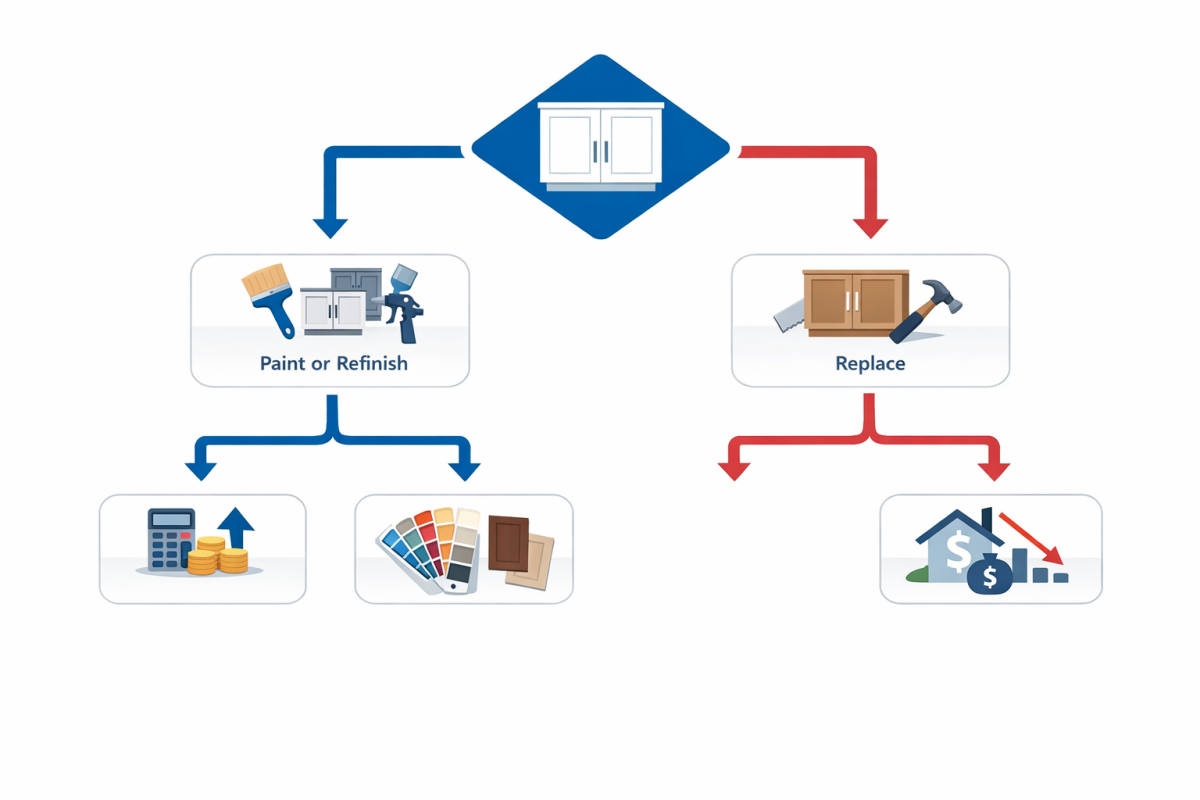
When to paint, refinish, or fully replace cabinets
Cabinet painting is powerful, but it is not always the right call. Making the correct decision upfront avoids throwing good money after bad.
When painting is the best option
Choose painting when:
- Boxes are structurally solid with no significant water damage
- Door styles are relatively simple and not heavily dated
- Layout is functional and you are not moving major appliances or walls
- Budget priority is speed and ROI, not luxury-grade customization
Common examples:
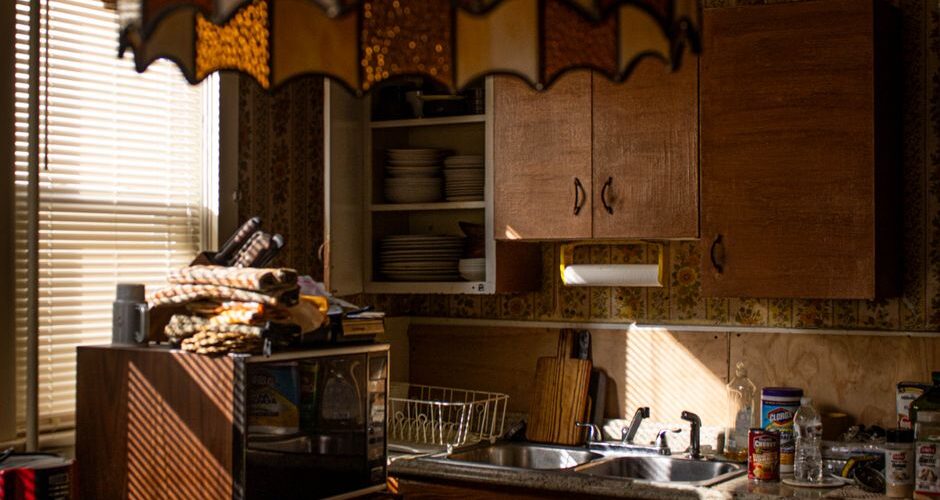
- 1990s oak cabinets with orange tone, still solid
- Builder-grade maple or alder that looks tired but works fine
- Laminate door fronts that are intact but visually dated
When refinishing or replacement makes more sense
Consider refinishing (staining) instead of painting when:
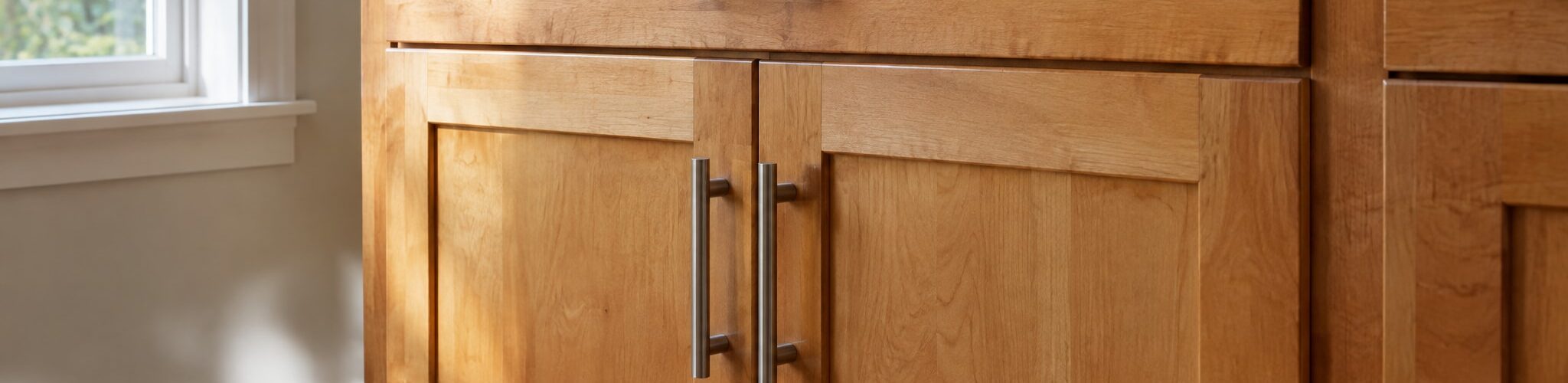
- You have high-quality wood with attractive grain
- You want a more natural or upscale look in owner-occupied units
Consider replacement when:
- Cabinet boxes are swollen, rotted, or sagging
- Layout needs a full rework for market positioning
- You are executing a full high-end flip where buyers expect new cabinetry
Pro Tip: For mid-market rentals, a common winning formula is fresh cabinet paint plus new hardware, updated counters, and a simple backsplash. This often captures 80 percent of the visual impact of a full remodel at a fraction of the cost.
Practical planning: scheduling, access, and tenant management
Denver landlords and property managers must fit cabinet painting into real-world constraints: lease dates, limited elevator access, HOA rules, and winter weather.
Best timing for cabinet painting
- Between tenants
- Ideal scenario. Vacant units allow full access and proper dry times.
- During larger turnovers
- Align cabinet painting with flooring, counters, or appliance upgrades to minimize total downtime.
- Seasonal scheduling
- Denver’s drier climate helps with curing, but extremely cold or humid days can slow drying in older buildings. Plan additional buffer in winter.
Coordinating with tenants in occupied units
Sometimes you cannot wait for a vacancy, especially in multi-unit rehabs. In these cases:
- Provide clear written timelines and access expectations
- Set up temporary kitchen workspaces if possible
- Schedule noisy sanding or spraying for work hours or agreed windows
- Use low-VOC products and proper ventilation to reduce disruption
[IMAGE: Cinematic wide shot of a Denver rental kitchen mid-project, doors removed, painter spraying cabinets]
Important: Mismanaged projects inside occupied units lead to bad reviews, renewal refusals, and potential legal headaches. Build in extra time and communication rather than rushing the job.
Key takeaways for Denver investors, managers, and remodelers
- Cabinet painting can deliver a strong rent and value lift without full remodel costs
- Prep and product selection decide whether the finish lasts one year or ten
- Neutral, light colors with satin or semi-gloss sheen work best across tenant profiles
- Painting is ideal for structurally sound boxes and functional layouts
- Proper scheduling minimizes vacancy and tenant disruption
Considering professional help?
If you are managing multiple doors in the Denver metro area, a DIY approach often costs more in lost rent days and redos than it saves in labor.
Cabinet Refinishing Denver specializes in cabinet painting for rental properties and investment units across Denver, Golden, Arvada, and surrounding communities. Their teams focus on:
- Rental-grade durability that stands up to frequent turnovers
- Fast, predictable scheduling that aligns with lease dates
- Color and sheen recommendations tailored to your tenant profile and rent targets
If you want to walk through options specific to your building, finishes that match your existing trim, and realistic timelines for upcoming vacancies, visit Cabinet Refinishing Denver and Learn more.
Frequently Asked Questions
How long does cabinet paint last in a Denver rental property?
With proper prep and professional products, cabinet paint in a rental can last 7 to 10 years before a full repaint is needed. High-traffic doors around trash pullouts and sinks may need touchups sooner, often between tenancies. Regular gentle cleaning, not abrasive scrubbing, will significantly extend the life of the finish and preserve your investment.
Is cabinet painting worth it for lower-end rentals?
Yes, in many cases it is. Even in C-class properties, a clean, bright kitchen strongly influences how “livable” the unit feels. If your existing cabinets are sound, a simple white or light greige paint job can justify a modest rent increase and reduce vacancy. Just avoid overspending by keeping finishes simple and focusing on durability rather than designer color schemes.
Can I paint laminate or thermofoil cabinets in my rental?
Yes, but only with the right prep and primers. Laminate and thermofoil require thorough deglossing, careful sanding, and a high-adhesion bonding primer. When done correctly, they can hold paint well. However, if the laminate is peeling or the thermofoil is delaminating, replacement doors or full cabinet replacement may be a better long-term solution.
How long should I keep the unit vacant after cabinet painting?
Most cabinet enamels are dry to the touch within hours but take days to fully cure. Ideally, allow at least 48 to 72 hours before heavy use, especially in kitchens. Schedule showings after the odor dissipates and cabinets are reassembled, but build in a few extra days between painting completion and move-in to avoid premature wear from boxes and cleaning.
Should I DIY cabinet painting or hire a pro in Denver?
Owner-occupants with time and skill can sometimes DIY. For rentals, especially multiple units, a professional is often the better financial decision. Pros bring spraying equipment, dust control, and proven systems that cut vacancy days. They also know which products withstand tenant use. Factor in your hourly value, potential mistakes, and lost rent before committing to DIY on investment properties.