
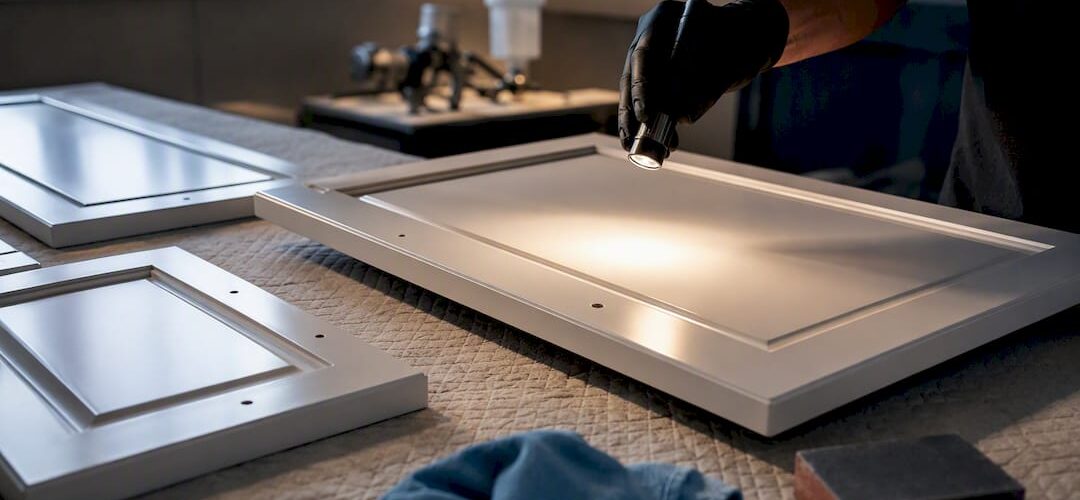
A single-sink bathroom vanity paint job in Denver typically runs within a broad cost range for materials and professional labor combined, with most homeowners landing near a moderate price point. Size, prep work (peeling veneer, water stains, repairs), and finish quality push that number up or down. Get 2 to 3 written estimates before you commit, or contact a local shop-based refinisher for a firm quote.
TL;DR:
- Denver bathroom vanity painting costs typically range from $300 to $1,200, depending on size, repair needs, and finish complexity.
- Labor usually accounts for the majority of the cost, with typical projects taking one to five days depending on whether work is done on-site or in a shop.
- Surface material heavily influences prep work; laminate and veneer require bonding primers to prevent early chipping, especially in humid bathroom environments.
- Hiring specialized cabinet refinishing companies with shop-based spray finishes offers longer-lasting, more durable results than DIY brush applications.
- Always obtain 2 to 3 written estimates comparing primer choices, scope of work, warranty terms, and potential extra charges before selecting a contractor.
Table of Contents
- Bathroom Vanity Painting Cost Denver: The Line-Item Breakdown
- What Makes One Vanity Quote Higher Than Another?
- How Long Does a Vanity Painting Project Take?
- Should You Paint the Vanity Yourself?
- Real Denver Pricing Examples by Scenario
- Why a Shop-Based Factory Finish Often Beats a Weekend DIY Job
- What’s a Fair Local Cost Range for a Denver Vanity?
- Where to Find Vanity Painting Help in Denver
- What Kind of Warranty Should You Expect?
- Get Bids Before You Commit
- Ready to Get an Actual Number for Your Vanity?
- Sources
- FAQ
Bathroom Vanity Painting Cost Denver: The Line-Item Breakdown
A written estimate should separate materials from labor, and knowing what belongs in each column keeps you from overpaying or getting blind sided by add-ons. Most Denver quotes for bathroom cabinet painting price break down roughly the same way regardless of who does the work.
Materials typically include:
- Bonding primer for adhesion on painted or laminate surfaces (roughly $20 to $40 per quart)
- Cabinet-grade paint, usually a hybrid enamel formulated for high-touch surfaces
- A clear topcoat for moisture resistance in a bathroom environment
- Masking film, tape, and drop cloths to protect countertops, floors, and mirrors
Labor covers:
- Assessment and hardware removal (hinges, pulls, knobs)
- Sanding and surface repair
- Spraying or brushing the primer and finish coats
- Reassembly and final cleanup
Labor is almost always the biggest line item on the invoice, not materials. One industry cost guide notes that labor commonly makes up the majority of a professionally installed vanity paint job, which is why two quotes with near-identical material lists can still land $200 apart.
Watch for extras that aren’t always itemized upfront: veneer or laminate repair, new hardware if the old pulls don’t match a fresh look, a second color coat for two-tone vanities, and disposal fees for old doors or drawer fronts. None of these are red flags on their own. They’re red flags when a contractor adds them after the job starts instead of flagging them during the walkthrough.
What Makes One Vanity Quote Higher Than Another?
Two vanities that look similar can carry very different price tags once a contractor actually opens the doors. The math comes down to surface area, material type, and how much repair work hides underneath the existing finish.
Door and drawer count drives labor time more than overall vanity width. A 60 inch double-sink vanity with four doors and four drawers takes meaningfully longer to mask, sand, and spray than a 36 inch single-sink unit with two doors, even though the size difference sounds modest.
Surface material changes the prep entirely. Solid wood accepts primer without much fuss. MDF and veneer need careful attention to edges and seams, since peeling veneer or swollen MDF from bathroom humidity can mean replacing sections before painting even starts. Laminate and melamine are the trickiest: without the right bonding primer, paint chips off in sheets within months. Trade guidance on adhesion specifically flags nonporous surfaces like melamine as needing a dedicated bonding primer to avoid this kind of early failure.
- Water damage or swelling near the sink cutout adds repair hours before any paint goes on
- Ornate door profiles (raised panels, decorative molding) take longer to mask and spray evenly
- Cabinet-grade enamel costs less than conversion varnish but offers less resistance to scratches and moisture over time
Pro Tip: Ask your contractor which primer they plan to use on your specific vanity material before signing anything. If they can’t answer without seeing the cabinets first, that’s actually the right answer. A contractor who quotes primer sight unseen over the phone is skipping a step.
How Long Does a Vanity Painting Project Take?
A typical process runs in a predictable sequence, whether the work happens in your bathroom or in a shop:
- On-site assessment and written quote, including surface material and repair needs
- Hardware removal and masking of surrounding surfaces (walls, floors, countertop, mirror)
- Sanding, cleaning, and any veneer or water-damage repair
- Primer application, followed by cure time
- Spray or brush application of finish coats, with drying time between coats
- Reassembly of hardware and final inspection
A single small vanity often finishes in one to two days for in-home work. Shop-based processes, where doors and drawers are removed and sprayed off-site, typically run 3 to 5 days start to finish because the controlled environment allows fuller cure times between coats. Book outside peak spring and summer remodel season if you want a faster start date.
Should You Paint the Vanity Yourself?
DIY materials for a single vanity often cost under $100, and a motivated homeowner can finish a straightforward wood vanity in a weekend. That math looks appealing until you factor in what happens with the trickier surfaces.
Documented DIY cost breakdowns show simple jobs staying cheap, but the same source flags higher failure rates on veneer and laminate vanities when the wrong primer gets used or cure times get rushed. A brush-and-roller finish also cures unevenly compared to a sprayed finish, which is part of why shop-based spray application tends to hold up longer without chipping at the edges.
- DIY makes sense when: the vanity is solid wood, in good condition, and you have a full weekend and proper ventilation
- Hiring a pro makes sense when: the surface is laminate or veneer, there’s visible water damage, or you want a warranty backing the work
- Skip DIY entirely if: you need the bathroom back in service within 24 hours, since cure times matter more than most people expect
Real Denver Pricing Examples by Scenario
These scenarios assume Denver metro labor rates and a straightforward residential job, not a commercial property. Your actual quote will vary based on the contractor, your specific vanity, and current material costs.
Small single-sink vanity, good condition, solid wood:
Two doors, no repairs needed, single color, cabinet-grade enamel. Expect a total cost generally starting in the lower hundreds of dollars.
Standard 36 inch vanity with light repair:
Two doors, one drawer, minor veneer touch-up at one corner, bonding primer required. Expect a mid-range total cost commonly between several hundred dollars, varying by repair needs.
Large or double vanity, high-durability finish:
Four to six doors and drawers, water-damage repair near the sink, conversion varnish topcoat for extra moisture resistance. Expect a higher-end total cost typically upwards of several hundred dollars depending on finish and repair.
These ranges track closely with the scenario-based pricing used across similar markets, and with the itemized breakdown for Denver specifically, which lists comparable materials and labor splits for local projects.
Why a Shop-Based Factory Finish Often Beats a Weekend DIY Job
A factory-finish approach, where cabinet doors and drawers come off and get sprayed in a controlled shop environment, cures more evenly than an in-home brush job. That even cure is a big part of why the finish resists chipping at high-touch edges months later instead of weeks.
Some cabinet refinishers build their process around full prep, multiple sprayed protective layers, and a shop-based workflow completed in 3 to 5 days rather than the weeks a full cabinet replacement demands.
Some companies cite savings ranging broadly for full cabinet refinishing projects compared to complete replacements, framing refinishing as an alternative to full cabinet replacement.
That gap matters most for homeowners who like their existing vanity layout and just want it to look new again, without the cost or downtime of tearing it out.
What’s a Fair Local Cost Range for a Denver Vanity?
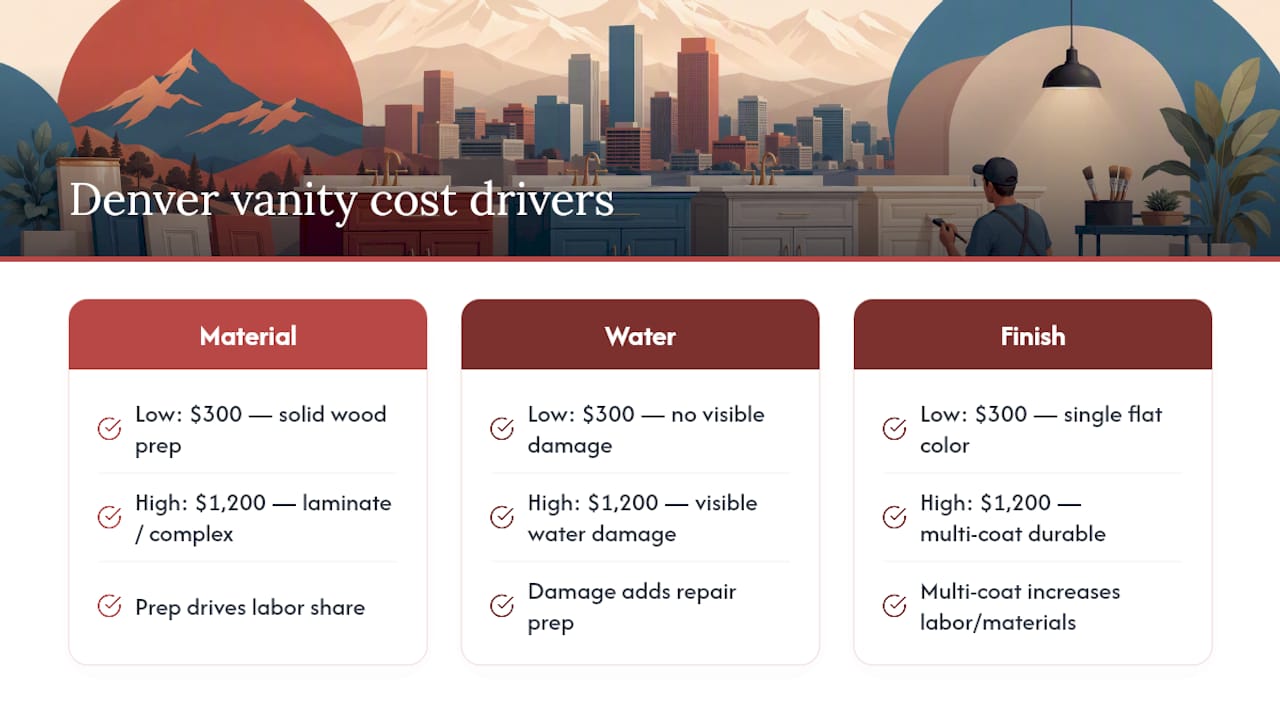
Denver-area pricing for a single vanity generally sits between $300 on the low end and $1,200 on the high end for larger or more complex jobs, based on the itemized local estimate built specifically around Denver materials and labor rates. That’s a wide range, and the width is the point. A landing page from one national painting franchise’s South Denver location lists a stated minimum for professional bathroom painting projects, which tells you something useful: even a “small” project has a labor floor that doesn’t disappear just because the vanity is compact.
Where you land inside that range depends on three things you can check before a contractor even shows up: the vanity’s material (solid wood costs less to prep than laminate), whether there’s visible water damage near the sink, and whether you want a single flat color or a more durable multi-coat finish. A vanity in a half-bath used twice a day sees far less wear than a primary bathroom vanity used by a family of four, and that wear shows up in how long a cheaper finish actually lasts.
One more local reality worth knowing: Denver’s dry climate is actually kind to paint cure times compared to humid regions, but bathroom humidity from showers still concentrates right at the vanity, which is exactly why bonding primer and a real topcoat aren’t optional extras here.
Where to Find Vanity Painting Help in Denver
Denver homeowners have a few paths for getting a bathroom vanity repainted, and they land in three general categories. National painting franchises with local branches, like the South Denver location mentioned above, tend to focus on wall and trim painting with cabinet work as an add-on service. General handyman services will paint a vanity, but usually without spray equipment or a shop setup, which limits finish durability. Specialized cabinet refinishing companies build their entire process around cabinetry, using spray equipment and dedicated primers matched to the surface material.
For homeowners weighing that third category, Cabinetsrefinishing operates specifically in the Denver metro area with a shop-based process built around cabinet and vanity work, including bathroom vanity refinishing as a named service line. That focus tends to matter more than it sounds like it should: a company that paints walls, trim, and cabinets all day treats a vanity differently than one that paints vanities and nothing else.
Before hiring anyone, ask for photos of past bathroom vanity work specifically, not kitchen cabinets or exterior trim. Bathroom finishes face different stressors (humidity, toothpaste, hairspray) than a kitchen island, and a portfolio heavy on one but empty on the other is worth a direct question.
What Kind of Warranty Should You Expect?
Warranty terms vary widely across Denver contractors, and that gap is one of the clearest signals of quality you can check before signing anything. A handyman painting a vanity as a side job may offer no written warranty at all, just a verbal promise to “come back if something’s wrong.” A dedicated cabinet refinishing company typically backs the work with a specific written term.
Some dedicated cabinet refinishing companies offer written warranties on their refinishing work, often tied to their preparation and finishing methodologies. A warranty like that isn’t just a marketing line. It’s a signal that the contractor is confident enough in their prep process (the sanding, the primer selection, the cure times) to put a number on it.
When you’re comparing bids, ask each contractor to state their warranty terms in writing, not verbally during the walkthrough. Ask specifically what voids it. Most warranties won’t cover damage from improper cleaning products or excessive moisture exposure beyond normal use, and knowing that upfront avoids a dispute later.
Get Bids Before You Commit
Get 2 to 3 written bids, and compare more than the bottom-line number. Look at the primer each contractor plans to use, whether they’re spraying or brushing, and what warranty backs the work. A vague scope of work, no mention of prep steps, or a suspiciously low price with no written guarantee are all signs to walk away. Book outside peak spring remodel season for faster scheduling.
— Jesse
Ready to Get an Actual Number for Your Vanity?
Every range in this article is still a range. What you actually pay depends on your vanity’s material, its condition, and the finish you want, and the only way to nail that down is a real quote from someone who’s looked at it. Some specialized cabinet refinishing companies offer shop-based factory finishes, custom color matching, and turnaround times faster than typical full remodels.

Here’s what to expect when you request an estimate: someone assesses the vanity on-site, checks the surface material and any repair needs, and sends a written quote before any work begins. No guessing at what “extras” might show up later. If you’re specifically weighing a bathroom vanity project, the bathroom vanity refinishing page covers what’s included, and the cabinet refinishing cost estimator is a fast way to get a ballpark before you book a full walkthrough. For kitchen cabinets alongside a bathroom project, the cabinet refinishing and painting services page lays out the full range of offerings, including the pricing example of $3,000 to $8,000 for full refinishing projects.
Sources
- Cost to paint bathroom cabinets in Denver, CO
- Paint a Bathroom Vanity Cabinet | ShunTool
- Cost to Paint a Bathroom Vanity: Price Ranges and Practical Tips 2026 – Design Transition Studio
FAQ
How Much Should a Contractor Charge to Paint a Bathroom Vanity?
A fair charge for a single-sink vanity in Denver runs from about $300 on the low end up to $1,200 on the higher end depending on size, repair needs, and finish, based on the Denver-specific itemized estimate. Larger or double vanities with repair work can run toward the higher end of that range.
How Much Does a Handyman Charge to Paint a Bathroom Vanity?
A general handyman typically charges less than a specialized cabinet refinisher, but usually without spray equipment or bonding primer matched to the surface. That lower price often trades off durability, since brush-applied finishes on laminate or veneer are more prone to early chipping.
Is It Cheaper to Paint Cabinets or Replace Them?
Painting or refinishing is almost always cheaper than full replacement. Cabinetsrefinishing’s own project range runs $3,000 to $8,000 for full cabinet refinishing, which the company cites as cost savings compared to complete replacement projects.
Is It Hard to Repaint a Bathroom Vanity Yourself?
A solid wood vanity in good condition is a manageable weekend DIY project for a competent homeowner. Laminate or veneer surfaces are much harder to get right, since documented DIY guidance notes higher failure rates on these materials without the correct bonding primer and full cure time.