
A painted cabinet project typically runs from about $150 to $400 in materials for a confident do-it-yourselfer, while hiring a professional usually lands between $1,992 and $4,494 for a full kitchen, with specialty finishes pushing higher. Labor and prep work, not paint, account for most of that spread. The real price swings come from door count, cabinet material, surface condition, and the finish system you choose.
TL;DR:
- A typical full kitchen refinishing costs between $1,992 and $4,494, with labor and prep work making up most of the expense.
- Material choices, door style, surface condition, and finish complexity can significantly increase the project cost, especially in large kitchens or with detailed finishes.
- Surface damage or structural issues in cabinets may require repairs or replacement, which can approach the full cost of new cabinets if severe.
- Painting costs for a single job generally range from $425 to $1,466, with estimates based on door count, surface area, and finish detail.
- DIY projects can save money but often stretch over weekends and risk rework, whereas professional shop-based finishing offers faster, more durable results.
Table of Contents
- Average Cabinet Painting Costs and What They Include
- What Factors Actually Change Your Quote
- Why Labor Eats Most of the Budget
- How Contractors Price the Job
- DIY or Hire a Pro: Weighing the Real Trade-Offs
- Extras That Commonly Show Up on the Final Bill
- How to Build a Realistic Budget and Compare Quotes
- What a Factory-Finish Process Looks Like in Practice
- Where the Real Value Comes From
- A Professional Option If You’d Rather Not DIY It
- FAQ
- Sources
Average Cabinet Painting Costs and What They Include
The national average cost to refinish cabinets is $3,116, based on thousands of verified projects, with most homeowners paying between $1,992 and $4,494 for a full kitchen. That range covers prep, priming, spray or brush application, and reassembly, but not always hardware or repairs, which show up as separate line items on many quotes.
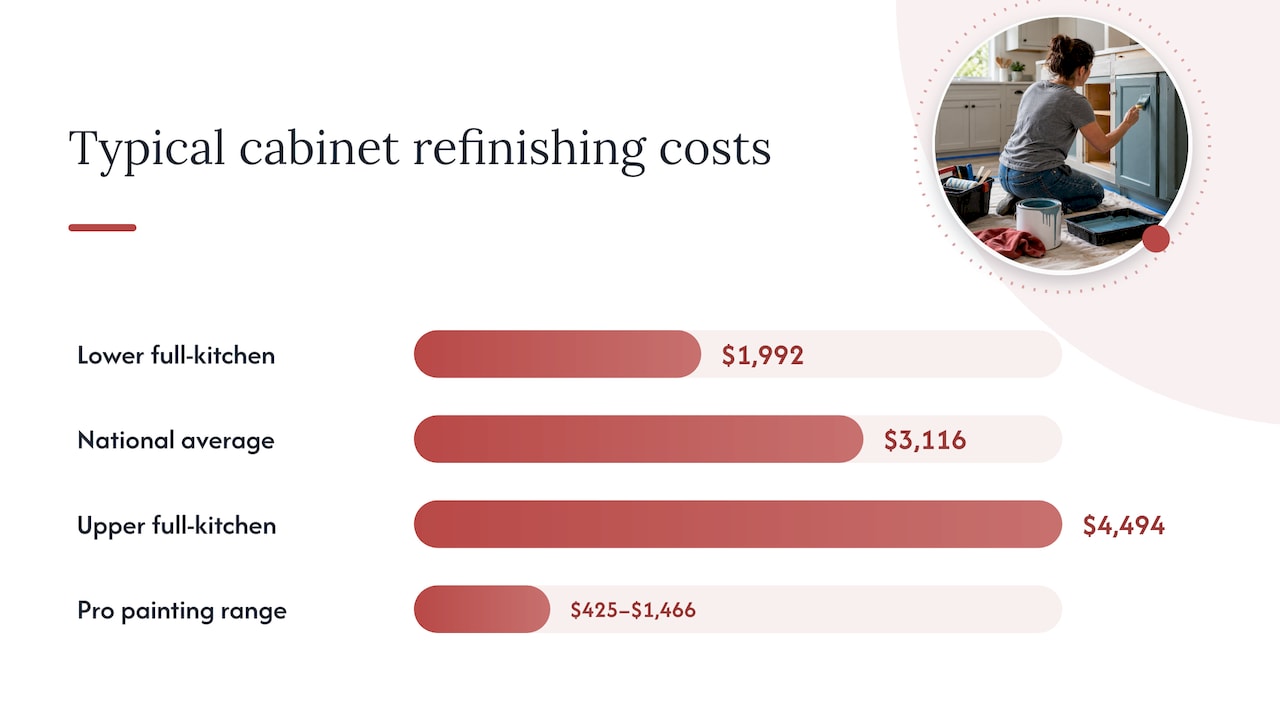
Painting alone, without the deeper structural work sometimes bundled into “refinishing,” tends to run narrower. Industry reporting puts professional cabinet painting between roughly $425 and $1,466, with many projects settling near the middle of that band depending on scope and kitchen size. Unit-cost models from Homewyse price the work at $4 to $10 per square foot, or $2,000 to $4,500 for a typical professional job, a useful way to sanity-check any quote you receive.
Kitchen size changes the math directly:
- A small kitchen with 10 to 15 doors often lands near the lower end of the national range.
- A medium kitchen with 20 to 30 doors and drawers tends to sit near the $3,000 average.
- A large kitchen with 40 or more doors, drawers, and specialty pieces can push past $4,500, especially with two-tone or glazed finishes.
Location matters too. Labor rates follow local wage patterns tracked by the Bureau of Labor Statistics, so a quote in a high-cost metro area will run higher than the same job in a smaller market, even when the scope is identical. Contractor specialization plays a role as well: a shop set up for factory-style spray finishing often quotes differently than a general handyman, reflecting different equipment, materials, and turnaround times.
What Factors Actually Change Your Quote
Every quote starts with a door and drawer count, because each piece requires its own round of cleaning, sanding, masking, priming, and coating. A kitchen with 15 doors takes meaningfully less time than one with 40, and most per-door pricing models reflect that directly.
Cabinet material changes adhesion requirements and therefore labor. Solid wood generally accepts paint well after proper sanding. MDF and laminate or melamine surfaces often need a bonding primer and extra prep steps to keep paint from peeling, which adds time and cost. A contractor who skips this step on laminate cabinets is setting up an early failure, regardless of the paint brand used.
Door style matters just as much as material. A flat slab door paints quickly because there’s one flat plane to cover. A raised-panel door with grooves, bevels, and profiles takes considerably longer, since every edge needs separate attention and multiple light coats to avoid drips in the recesses. Industry pricing commentary notes that detailed raised-panel doors can take two to three times longer than slab doors, which shows up directly in per-door charges.
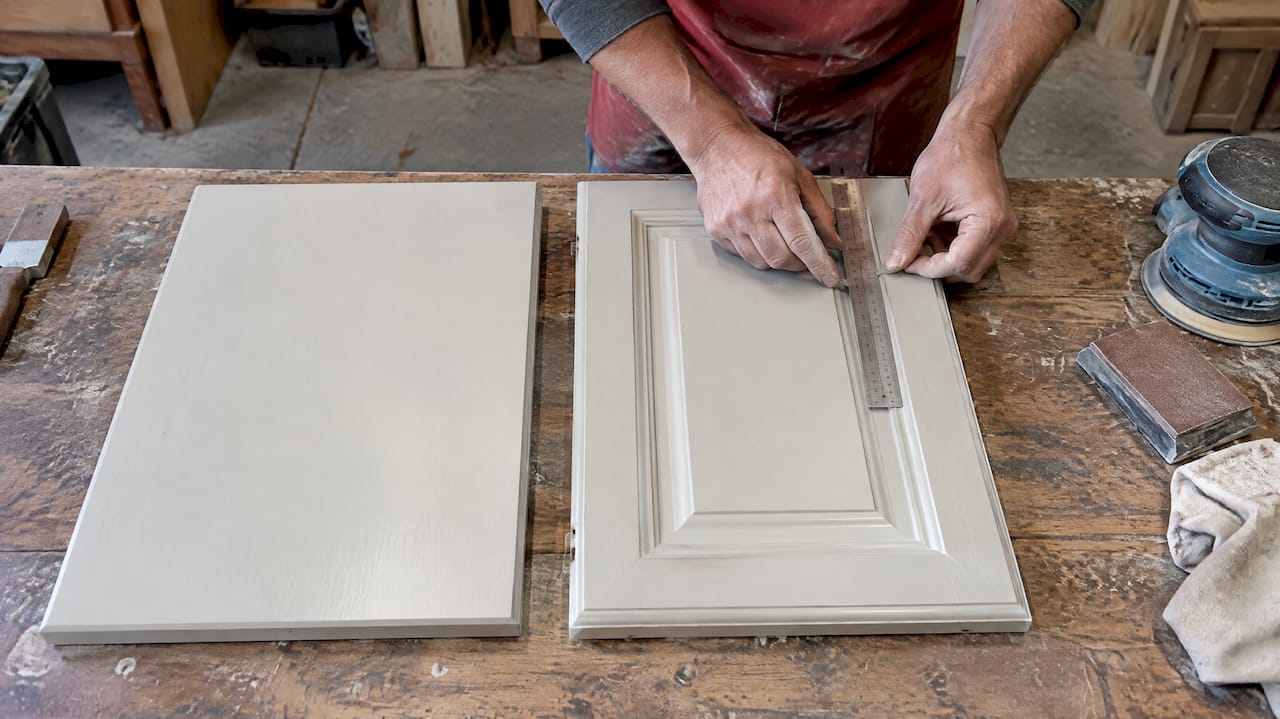
Condition is the variable that can derail a budget. Surface damage like chips, water stains, or loose veneer needs repair before any primer goes on. Rot or structural failure in the box itself is a different problem: at that point, repair costs can approach what a new cabinet box would cost, and replacement becomes the more sensible move for that piece, even if the rest of the kitchen gets painted, as explained in avoiding common pitfalls in DIY door replacement.
Finish complexity adds steps that add hours. A single solid color is the baseline. Two-tone kitchens, glazing, or distressing each require additional masking, drying time between stages, and more careful technique, which is why these options sit at the top of most pricing menus.
Paint chemistry affects both durability and labor. Waterborne cabinet enamels have become the standard for kitchen work because they cure hard and resist yellowing, but they still need proper surface prep to bond. Sherwin-Williams technical guidance emphasizes thorough sanding and deglossing before any primer or topcoat goes on, noting specific grit sequences and the use of chemical deglossers where sanding isn’t practical. Skipping that step is one of the most common reasons painted cabinets fail within a year or two, a mistake covered in more detail in our guide to common DIY cabinet painting mistakes.
Where the work happens changes the price too. Shop-based finishing, where doors are removed and sprayed in a controlled environment, usually costs more than on-site brush-and-roll work, but it eliminates the dust and overspray risk that comes with painting in an occupied kitchen.
Pro Tip: Ask any contractor exactly which grit sequence and primer they use on your cabinet material; a vague answer is a reliable red flag.
Why Labor Eats Most of the Budget
Paint itself is a small line item. Industry estimates put labor at roughly 70% to 85% of the total cost of cabinet painting and refinishing, which explains why two contractors using similar materials can quote very different totals.
A quoted price reflects hours, not paint cans: the typical sequence includes door and drawer removal, degreasing, sanding or deglossing, minor repairs, masking, priming, spraying multiple coats, curing time between coats, and final reassembly. Each step adds labor hours, and skipping any of them to save money tends to show up as peeling or chipping within a year.
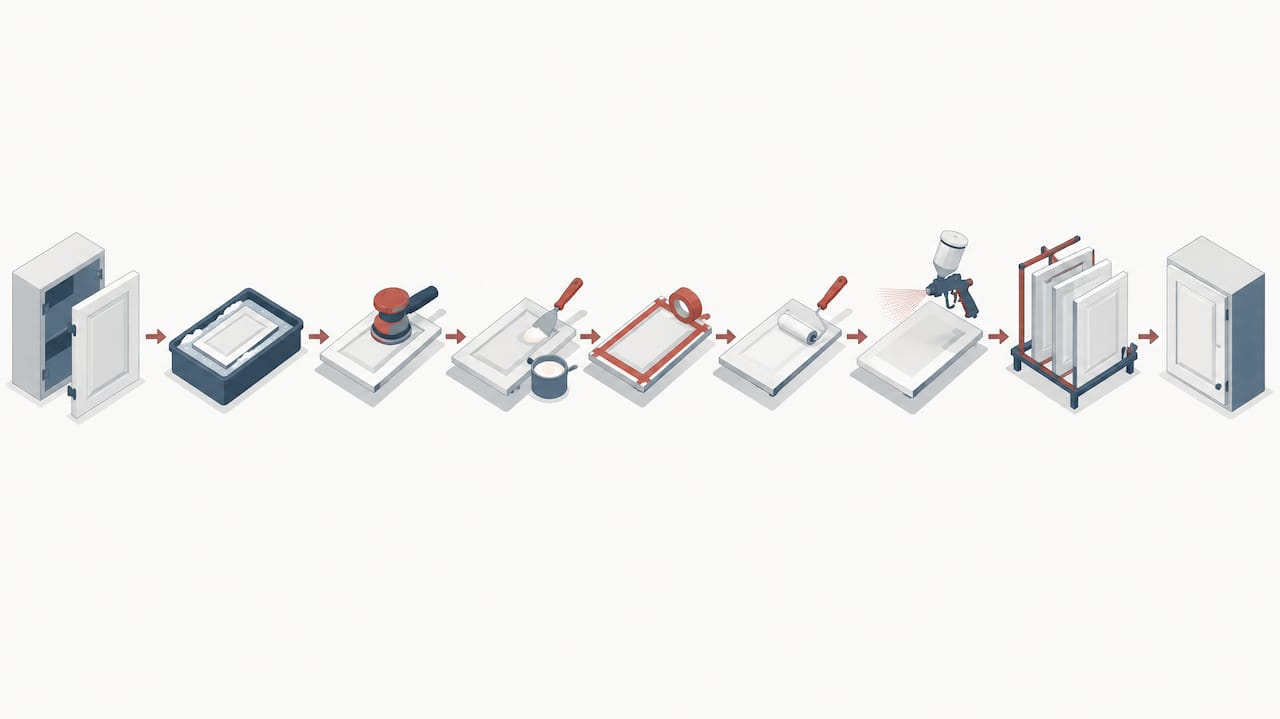
Shop workflows, where cabinets are removed and finished off-site, often quote higher labor costs upfront. In exchange, they reduce the rework and callbacks that come from painting in a dusty, occupied kitchen. A controlled spray booth also allows thinner, more even coats, which is part of why factory-style finishing tends to outlast on-site brush work. Our breakdown of what professional cabinet sprayers actually use covers the equipment difference in more detail.
How Contractors Price the Job
Quotes come in a few common formats, and knowing which one you’re looking at makes it much easier to compare bids.
- Per door: often $40 to $100 per door depending on style and condition, a simple way to scale pricing to kitchen size.
- Per square foot: commonly $4 to $10 per square foot, useful for comparing jobs of different cabinet layouts.
- Per linear foot: measures cabinet run length rather than individual doors, popular with contractors who also handle refacing.
- Hourly or flat-fee: less common for painting specifically, but sometimes used for small touch-up jobs or single-piece work.
Before accepting any quote, ask what’s included: hardware removal and reinstallation, interior painting, drawer boxes, and repair work are sometimes bundled and sometimes billed separately. Request an itemized breakdown so you can compare two bids on equal terms rather than just comparing bottom-line numbers.
DIY or Hire a Pro: Weighing the Real Trade-Offs
A motivated homeowner can paint a full kitchen for roughly $150 to $400 in materials: sandpaper, deglosser, primer, cabinet-grade enamel, brushes or a sprayer rental, and painter’s tape. The time commitment is the bigger cost. Expect to spend one to two full weekends on a medium kitchen once you account for drying time between coats.
- Budget for rework: uneven sanding or skipped deglossing is the most common DIY failure point, and repainting a botched job often costs more than hiring a pro from the start.
- Factor in equipment: a quality sprayer rental or purchase adds $50 to $150, and a poor spray technique can waste as much paint as it uses.
- Weigh your timeline: DIY projects routinely stretch past their planned weekend when repairs or extra coats are needed, while a shop-based professional job is often finished in days.
Pro Tip: If your cabinets are solid wood in good condition and you’re painting a single color, DIY is realistic. Raised-panel doors, two-tone finishes, or laminate surfaces are where professional experience pays for itself.
Professionals earn their fee on complex finishes, tight timelines, and warranty coverage that a DIY job simply can’t offer. If a kitchen needs to be back in service within a week, or the finish calls for glazing or a two-tone look, the added cost of hiring out is usually worth it.
Extras That Commonly Show Up on the Final Bill
A handful of line items catch homeowners off guard because they’re easy to forget when estimating from a base price.
- Hardware and hinges: replacing knobs, pulls, or hinges is often billed separately from painting itself.
- Under-cabinet lighting: a common add-on running about $230 to $300 per light when bundled into a kitchen refresh.
- Stripping old finishes: heavily layered or damaged cabinets sometimes need full stripping before sanding can even start.
- Lead-based paint testing: cabinets in homes built before 1978 may require testing and special handling, which adds cost and time.
- Disposal and mobilization fees: removing old materials and travel to your location sometimes appear as flat add-on charges.
- Rush scheduling: expedited timelines can carry a premium, particularly during peak renovation season.
How to Build a Realistic Budget and Compare Quotes
Getting quotes you can actually compare starts with your own measurements, not a contractor’s estimate alone.
- Count every door and drawer front, including small ones like spice racks, since each is billed individually in most pricing models.
- Measure total cabinet square footage by multiplying height and width of each face, useful for checking per-square-foot quotes.
- Ask specific questions: what prep steps are included, which paint system will be used, is there a warranty, and will doors be finished on-site or in a shop.
- Request an itemized quote broken into prep, materials, labor, and extras, so you can spot where one bid differs from another.
| Pricing clue | What it usually means |
|---|---|
| Quote far below $1,992 for a full kitchen | Likely missing prep steps or using lower-grade paint |
| Quote near $3,116 national average | Matches typical full-kitchen refinishing scope |
| Quote per square foot at $4–$10 | Consistent with standard professional pricing |
| No mention of warranty or finish system | Red flag, ask before signing |
A quote missing a clear prep description or finish warranty is worth questioning before you sign anything.
What a Factory-Finish Process Looks Like in Practice
Shop-based spray finishing is one documented way contractors address the labor-heavy nature of this work. Doors are removed, cleaned, sanded, primed, and sprayed in a controlled environment rather than in your kitchen, which reduces dust and overspray while allowing thinner, more even coats to cure properly between applications.
A factory-style process emphasizes multiple protective layers and a shop environment over brush-and-roller application, aiming for a harder, more durable finish than typical on-site painting.
When evaluating any contractor who claims a similar factory-finish approach, ask to see how doors are transported, how long the shop process takes, and what warranty backs the finish. A documented turnaround and clear warranty terms are reasonable things to verify before paying a deposit.
Where the Real Value Comes From
The homeowners who get the best long-term result aren’t the ones who found the cheapest paint. They’re the ones who paid for proper prep and a finish system built for kitchen use. A $200 discount on labor that skips deglossing or uses a weak bonding primer tends to cost far more within two years, once the finish starts chipping near the handles.
As a rule of thumb, refinishing makes financial sense whenever your cabinet boxes are structurally sound and the look, not the function, is what’s outdated. Get three itemized quotes, confirm the warranty terms, and make sure the promised timeline matches your household’s actual schedule before committing.
— Jesse
A Professional Option If You’d Rather Not DIY It
If measuring doors and comparing sanding techniques sounds like more than you want to take on, professional refinishing gets you a comparable kitchen update without the repainting weekends. We offer cabinet refinishing, painting, glazing, restoration, and staining using a shop-based, factory-finish spray process, with projects typically completed in a few days rather than the weeks a full cabinet replacement would take.

Refinishing through this process generally costs significantly less than full cabinet replacement. When you request a quote, ask us for the same things you’d ask any contractor:
- An itemized breakdown of prep, repairs, and finish coats.
- Confirmation of whether doors are finished in our shop or on-site.
- Warranty terms and expected turnaround for your kitchen size.
Start by visiting our cabinet refinishing and painting services page, or go directly to the cabinet painting service page to request an itemized quote for your kitchen.
FAQ
How much should cabinet painting cost?
Professional cabinet painting commonly runs $425 to $1,466 for painting alone, while a fuller refinishing project averages $3,116 nationally, with most homeowners paying between $1,992 and $4,494. The exact figure depends on door count, material, and finish complexity.
How do professionals charge for repainting cabinets?
Contractors typically price by the door, by the square foot, or occasionally by the linear foot, with square-foot pricing commonly running $4 to $10. Labor usually makes up the majority of the quote, often 70% to 85% of the total cost, since prep and finishing take far more time than the paint itself.
Is it cheaper to paint kitchen cabinets or replace them?
Painting or refinishing is almost always cheaper than full replacement, since refinishing projects average around $3,116 compared to the much higher cost of new cabinet boxes and installation. Replacement only becomes the more sensible choice when the boxes themselves are structurally damaged beyond repair.
How much does it cost to have kitchen cabinets painted professionally?
Professional painting generally falls between $425 and $1,466 for the painting work itself, while full refinishing with prep and repairs averages closer to $3,116. Kitchen size, door style, and finish choice are the biggest factors that move a quote up or down within that range.
Sources
- How Much Does It Cost to Refinish Cabinets? | Angi
- How to Sand Cabinets | Sherwin-Williams
- Cost to Paint Kitchen Cabinets | Homewyse
- Occupational Employment and Wage Statistics | BLS