

If you want the lowest upfront cost and a wipeable, seamless surface, thermofoil wins. If you’re staying in your home long term and want a finish that can be touched up, repainted, and matched to any color for decades, a factory-painted finish is the smarter buy. The real trade-off is heat and moisture tolerance versus repair flexibility. If your priority is budget, jump to the cost section below; if it’s longevity or a heavy-cooking kitchen, the decision guide further down will steer you faster.
TL;DR:
- Thermofoil offers the lowest upfront cost and a seamless, wipeable surface but typically lasts only 10 to 15 years, especially near heat sources.
- Factory-painted cabinetry with conversion varnish or 2K polyurethane can last 15 to 20 years and is easier to repair and match over the long term.
- Thermofoil’s durability decreases significantly with exposure to heat, moisture, or steam, which can cause bubbling and peeling at the edges.
- Repainting cabinets is a cost-effective solution for worn painted finishes, while thermofoil doors usually require full replacement once vinyl lifts.
- For long-term ownership and repairability, painted finishes outperform thermofoil, but initial savings favor thermofoil in short-term or budget-sensitive projects.
Table of Contents
- Thermofoil vs Painted Cabinets: What Thermofoil Actually Is
- What Painted Cabinets Actually Are
- Which Finish Lasts Longer in a Real Kitchen
- How to Keep Each Finish Looking Good
- Style, Color, and Sheen: Which Finish Looks Better Longer
- What Thermofoil vs Painted Cabinets Actually Costs
- Which Finish Fits Your Kitchen: A Decision Guide
- Why Professional Refinishing Beats a Full Rebuild
- An Honest Take on Finish Choice
- How Cabinetsrefinishing Can Help You Decide and Move Forward
- Sources
- FAQ
Thermofoil vs Painted Cabinets: What Thermofoil Actually Is
Thermofoil is a thin PVC vinyl film that’s heat bonded onto a substrate, almost always MDF or particleboard, under high pressure and heat until it fuses into one solid skin. That process is what gives slab-style thermofoil doors their seamless, almost molded look. Nothing peels or chips at a seam because there isn’t one.
Five-piece thermofoil doors work differently. Each panel and rail gets wrapped individually, so seams exist at the joints, and that’s usually where failure starts first if the door ever takes on moisture or heat stress.
A few things worth knowing about how thermofoil is built:
- The MDF substrate underneath is more dimensionally stable than solid wood, so doors resist warping in humidity swings.
- Vinyl film comes in a limited but growing range of wood-grain and solid colors, mostly whites, grays, and a few earth tones.
- The wrapped, joint-free surface on slab doors means fewer grease traps in tight corners.
- Because the finish is applied at the factory in one continuous run, quality is consistent door to door.
That consistency is also thermofoil’s ceiling. Once the vinyl is compromised, there’s no repainting your way out of it. You’re replacing the door.
What Painted Cabinets Actually Are
Painted cabinets start with a substrate, usually MDF for flat center panels and solid wood for the frame rails and stiles, then get coated in one of two very different ways. That distinction matters more than most buyers realize when they’re comparing quotes.
Factory-applied finishes go through multiple coats of primer, color, and topcoat, often conversion varnish or a two-component (2K) polyurethane, then get cured in an oven. That cure cycle hardens the finish chemically in a way air-drying paint simply can’t match, which is why factory-cured coatings outperform standard brush-applied paint on scratch and stain resistance.
Site-applied paint, whether it’s a contractor spraying in your garage or a DIYer with a brush, air-dries instead of curing under heat. It looks fine on day one, but it typically needs touch-ups sooner.
- MDF panels take paint evenly because there’s no wood grain telegraphing through.
- Solid wood frames add strength but can show seasonal movement at joints over time.
- Factory conversion varnish and 2K systems resist scratches and chemical cleaners far better than air-dry latex or alkyd paints.
- Painted finishes can be color-matched to virtually anything, which matters if you’re working with an interior designer or matching existing trim.
Which Finish Lasts Longer in a Real Kitchen
Thermofoil holds up well against everyday grease and light scuffing, but its failure mode is predictable: heat and moisture cause the vinyl to bubble, peel at the edges, or yellow over time, especially near dishwashers, ovens, and sunny windows. Under favorable conditions, most thermofoil doors last somewhere in the 10 to 15 year range before edges start lifting.
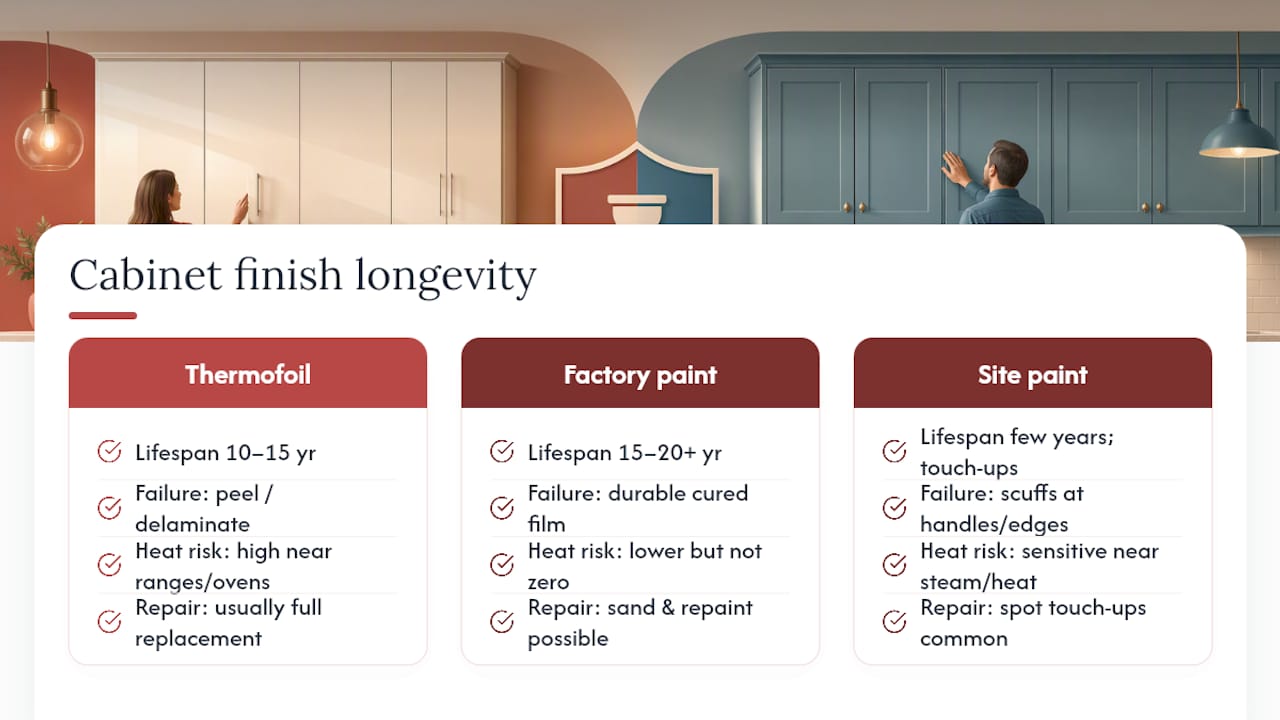
Factory-painted cabinets using conversion varnish or 2K poly tend to run longer, often 15 to 20 years or more under normal household use, because the industrial cure process produces a harder, more chemically stable film than anything achievable outside a spray booth. Site-applied paint jobs fall well short of that window and usually need touch-ups within a few years around handles and high-traffic edges.
The heat ceiling is the real dividing line. Thermofoil manufacturers generally warn against installing panels too close to ranges, wall ovens, or toaster stations without adequate clearance. Modern vinyl films tolerate more heat than older generations did, but the risk of edge lifting near a heat source never fully disappears. Steam from a dishwasher door left open too often creates the same slow damage near the sink base.
Repairability is where the two finishes really part ways. A scratched or chipped painted door can be sanded, primed, and repainted, sometimes just spot-touched. A delaminated thermofoil door usually means full door replacement or a refacing project, since there’s no reliable way to patch peeling vinyl and have it disappear.
How to Keep Each Finish Looking Good
Cleaning thermofoil is simple: a damp microfiber cloth and mild dish soap handle most grease. Avoid ammonia-based cleaners and anything abrasive, since they can dull the vinyl sheen or work into seams over time. Painted cabinets tolerate a slightly wider range of cleaners, but a soft cloth with a gentle degreaser still beats anything with bleach or solvents, which can strip conversion varnish’s protective sheen.
Repairs follow very different paths depending on the finish:
- Minor paint chips or scratches can often be spot-touched with matched paint and a fine brush, invisible once cured.
- Full repainting of an existing painted cabinet box is realistic and often cheaper than replacement, especially if the substrate is sound.
- Thermofoil edge lifting has no real spot-fix. Once vinyl peels, the door needs replacement or the whole cabinet needs refacing.
- Full cabinet refinishing by a professional resets a painted kitchen to near-factory condition in days, not weeks.
Pro Tip: Before hiring anyone, ask what coating chemistry they use and whether they offer a written warranty. A contractor spraying standard latex with a brush isn’t giving you the same durability as conversion varnish or 2K poly applied through proper spray equipment.
Style, Color, and Sheen: Which Finish Looks Better Longer
Paint wins on flexibility, full stop. You can match any color, layer in glazing for depth, and pair it with more elaborate millwork profiles since paint follows detail and shadow lines that vinyl can’t replicate as cleanly. Thermofoil looks best on modern slab-style doors with minimal ornamentation, which is exactly why it dominates budget-friendly and rental-grade kitchens.
Sheen matters more than most people expect. Satin has become the default for painted cabinets because it hides minor imperfections while still wiping clean easily, striking a better balance than high-gloss, which shows every fingerprint and roller mark.
- Painted finishes support intricate panel details, glazing, and custom color matching.
- Thermofoil’s wrapped, seamless surface reduces grease buildup in recessed profiles on family kitchens.
- Satin sheen is the safer bet for painted cabinets; semi-gloss shows flaws faster.
- Some homeowners mix finishes, thermofoil on lower cabinets that take daily abuse, painted uppers where color and detail matter more.
Perceived quality tends to track with sheen consistency and edge detail more than finish type alone. A well-executed thermofoil kitchen can look every bit as clean as a painted one on install day. The gap shows up years later.
What Thermofoil vs Painted Cabinets Actually Costs
Thermofoil is generally the cheaper option upfront because manufacturing is machine-driven and faster than multi-coat factory painting. That savings can evaporate fast if vinyl delaminates and you’re replacing doors every decade instead of touching up paint.
Lifecycle cost is where the math actually matters. Refinishing existing painted cabinets rather than replacing the whole kitchen tends to run a fraction of full replacement, while a full teardown and rebuild multiplies both cost and downtime. If you’re staying in the home 15 years or more, that gap compounds.
A few things that swing project price in either direction:
- Door count and cabinet box size drive material and labor cost more than finish type alone.
- Substrate choice (MDF versus solid wood) changes paint adhesion and prep time.
- Finish chemistry (conversion varnish and 2K poly cost more than standard latex) affects both price and durability.
- Factory labor versus site labor changes turnaround time and consistency of the final coat.
Before committing, decide whether you’re solving for the lowest number today or the lowest number over the next decade. They’re rarely the same finish.
Which Finish Fits Your Kitchen: A Decision Guide
Match your top priority to the finish that actually serves it, not the one that sounds nicer in a showroom.
- Tight budget, short ownership horizon: thermofoil is the practical choice, especially on slab-style doors away from heat sources.
- Staying 15+ years, want repairability: factory-painted finishes with conversion varnish or 2K poly pay off in fewer disruptive replacements.
- Low-maintenance priority, light cooking: thermofoil’s wipeable surface and seamless slab profile handle daily grease well.
- Heavy cooking, lots of steam and heat: painted cabinets, kept clear of direct heat exposure, tolerate that environment better long term.
Layout matters as much as material choice. Keep thermofoil away from ranges, ovens, and dishwasher steam paths; put painted or higher-performance finishes in those hot zones instead. Before signing a contract, ask every contractor or supplier three questions: what’s the heat rating on the finish, what warranty backs the work, and what’s the actual repair policy if something fails in year three.
Pro Tip: If a quote seems unusually low, ask specifically whether the paint is factory-cured or air-dried on site. That single answer explains most of the price gap you’ll see between bids.
Laminate and wood veneer are worth a look if neither thermofoil nor standard paint fits your budget or heat concerns, but for most kitchens the real decision comes down to these two.
Why Professional Refinishing Beats a Full Rebuild
A factory-quality painted finish doesn’t require gutting your kitchen. Professional refinishing applies the same multi-coat, oven-cured logic that makes factory finishes durable, just on your existing cabinet boxes instead of brand-new ones.
That approach relies on:
- Thorough prep, including degreasing, sanding, and priming every surface before color goes on.
- Multiple protective coats applied by spray equipment rather than a brush or roller.
- A written warranty that specifies what’s covered and for how long.
Watch for red flags when hiring: no written warranty, no clear explanation of the coating chemistry, or a timeline that sounds too fast to include proper cure time between coats. Refinishing costs for a typical kitchen run $3,000 to $8,000, compared to $15,000 to $40,000 for full replacement, and most projects finish in three to five days rather than the weeks a rebuild demands. That gap is exactly why refinishing makes sense for painted cabinets showing wear, and even for some thermofoil kitchens ready for a full refacing upgrade.
An Honest Take on Finish Choice
The conventional advice treats this like a simple budget-versus-quality trade-off, and that undersells how much your ownership horizon should drive the decision. A thermofoil kitchen installed for a five-year flip is a smart, low-risk move. The same thermofoil installed by someone planning to stay 20 years is a bet against their own kitchen, especially near the range.
What gets overlooked most is repairability. People fixate on day-one appearance and day-one price, then get blindsided in year eight when a delaminated door means full replacement instead of a $200 touch-up. Paint’s real advantage is n’t looking, it’s that it degrades gracefully and lets you fix problems in pieces instead of all at once.
If I had one piece of advice: don’t choose a finish based on what your kitchen looks like today. Choose based on how you plan to use it and how long you’re staying. That single question resolves most of this debate faster than any spec sheet.
— Jesse
How Cabinetsrefinishing Can Help You Decide and Move Forward
If your current cabinets are painted but showing wear, or thermofoil doors are starting to lift at the edges, refinishing gets you a factory-quality result without a replacement-level bill. Cabinetsrefinishing uses a factory-finish spray process with multiple protective coats, not a brush or roller job, and most projects wrap in three to five days.

Services cover cabinet painting, glazing, staining, and modifications, all backed by a written warranty and low-VOC materials if that matters for your household. Before you request an estimate, have your cabinet count, current finish type, and target color or sheen ready, it speeds up the quote significantly. If you’re not sure whether your cabinets are painted or thermofoil, that’s worth figuring out before you call, since it changes what prep work is needed. Reach out for a consultation and get a real number instead of guessing at replacement costs.
Sources
- Thermofoil cabinets pros and cons | Today’s Homeowner
- Kitchen cabinet finishes explained | IST Cabinets
- Thermofoil vs. Paint: Which is Better for Kitchen Cabinets? | Deslaurier
- What is the most durable kitchen cabinet finish? | CAC by Design
FAQ
Are Thermofoil Cabinets Worth Buying?
Thermofoil is worth it if you want a lower upfront cost, easy cleaning, and you’re not planning to keep the kitchen for decades. It’s a weaker bet in kitchens with heavy cooking or direct heat exposure near ranges and ovens, where vinyl film can bubble or peel.
How Can You Tell If Cabinets Are Thermofoil?
Run your hand along an edge or corner. Thermofoil has a seamless, slightly rubbery wrapped feel with no visible wood grain texture, while painted wood or MDF shows a harder, slightly more textured surface even under a smooth topcoat. Check the underside or interior of a door too, exposed MDF edges with a wrapped vinyl skin are a clear tell.
How Long Do Thermofoil Cabinets Last?
Most thermofoil cabinets last 10 to 15 years under favorable conditions, away from heavy heat and steam exposure. Lifespan drops noticeably near ranges, ovens, or dishwashers where heat and moisture accelerate edge lifting and delamination.
Can You Repair or Repaint Thermofoil Cabinets?
Thermofoil can’t be spot-repaired once the vinyl peels or bubbles, since there’s no reliable way to patch it invisibly. The realistic options are full door replacement or professional refacing and refinishing, which can convert a worn thermofoil kitchen into a durable painted finish.
Is It Cheaper to Refinish or Replace Cabinets?
Refinishing is almost always cheaper. Professional cabinet refinishing typically runs $3,000 to $8,000, compared to $15,000 to $40,000 for full cabinet replacement, and finishes in days rather than weeks.