
Last January, a homeowner in Highlands Ranch watched their expensive kitchen update suffer when 15% humidity levels caused the wood to shift and the finish to stress. It’s a frustrating sight for anyone who wants to know how to protect painted cabinets from the unique challenges of the Mile High City. You’ve worked hard for a beautiful home; you shouldn’t have to worry about your investment peeling or chipping before the first year is even over.
We understand that fear because we’ve seen it happen with amateur paint jobs across the Denver metro area for over 45 years. This guide shares the industrial strength secrets we use at Painting Kitchen Cabinets Denver to achieve a durable, factory finish that stands up to daily life. You’ll discover the exact cleaning protocols and preventative measures needed to keep your surfaces flawless for a decade or more. We are going to break down the science of wood movement in our dry climate and explain why the right prep work is the only way to guarantee a result that lasts.
Key Takeaways
- Understand how Denver’s unique low humidity and high UV levels impact wood expansion and why industrial-strength coatings are vital for long-term durability.
- Discover why standard hardware store topcoats often fail and how professional-grade precatalyzed primers create a permanent, factory-like bond.
- Learn the essential “Soft Touch” maintenance techniques and the vital difference between drying and curing times to master how to protect painted cabinets effectively.
- See why meticulous surface preparation and professional de-glossing are the most important steps in preventing chips and ensuring a flawless finish.
- Compare the benefits of professional cabinet refinishing in Denver versus replacement to achieve a high-end kitchen transformation while saving 60-70% on costs.
Protecting Your Painted Cabinets in the Denver Climate
Understanding how to protect painted cabinets starts with acknowledging the unique environmental stressors in the Mile High City. Denver averages 300 days of sunshine annually. This creates a beautiful environment but places immense stress on kitchen surfaces. True protection isn’t just a topcoat; it’s the synergy of high-performance coating chemistry and industrial-grade surface adhesion. At Painting Kitchen Cabinets Denver, we’ve spent 45 years perfecting finishes that withstand these specific local conditions.
Humidity and Wood Movement in Colorado
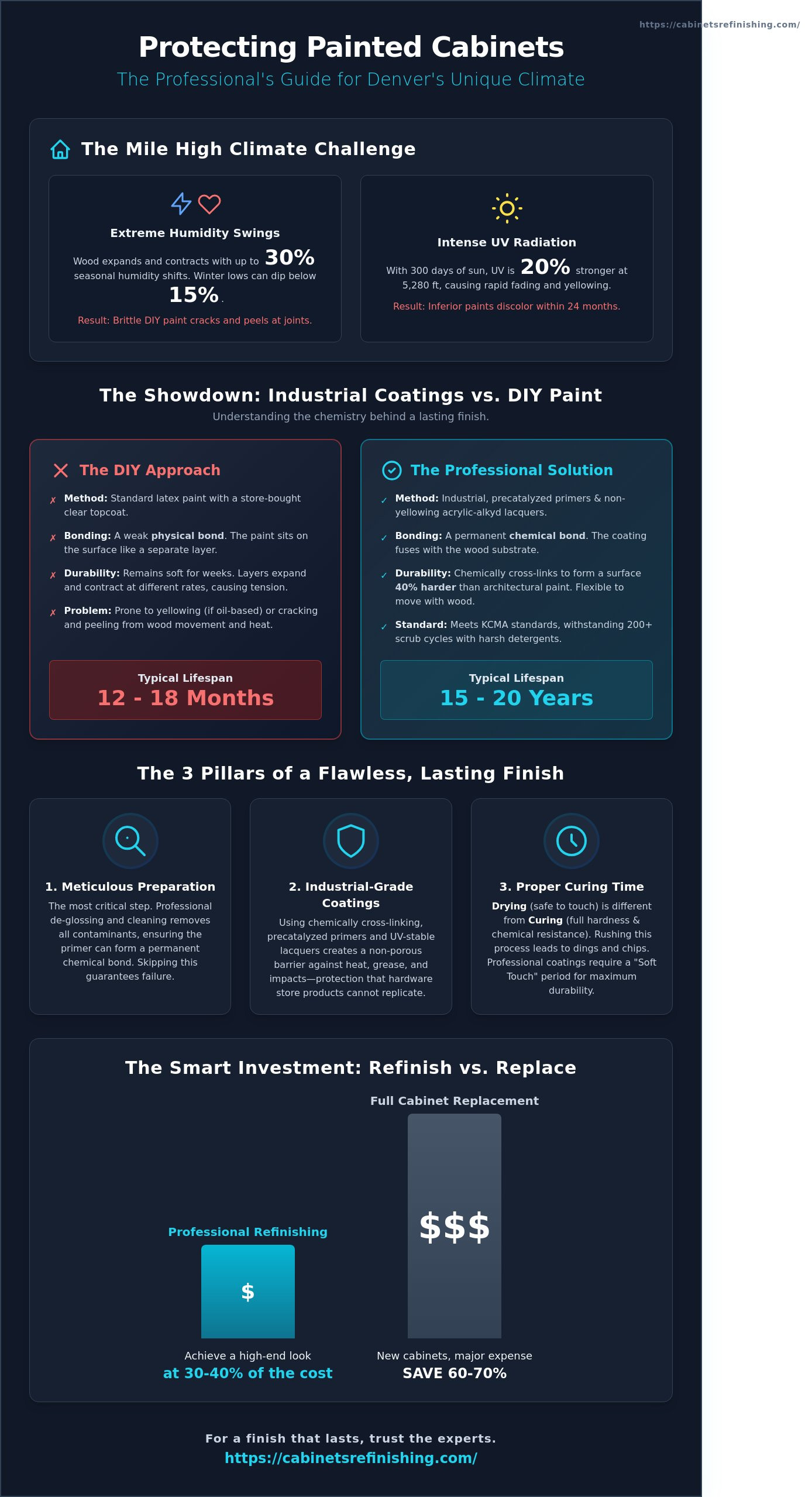
Average indoor humidity in Highlands Ranch and Parker can drop below 15% during winter months. This extreme dryness causes natural wood to shrink, while summer moisture causes it to expand. If you use standard DIY store-bought paints, the finish becomes brittle and cracks at the joints. Professional cabinet refinishing Denver systems use flexible, high-solids coatings designed to move with the wood. These industrial finishes maintain their integrity during the 30% shifts in seasonal humidity common in the Front Range.
The Role of UV Protection
Kitchens in Boulder or Aurora often feature large windows that invite intense high-altitude sunlight. At 5,280 feet, UV radiation is approximately 20% stronger than at sea level. This intensity causes inferior pigments to yellow or fade within 24 months of application. We utilize industrial finishes with stable pigments that resist ambering. UV-stable coatings for high-altitude homes are finishes engineered with light stabilizers that prevent molecular breakdown from solar radiation. This ensures your finish looks as vibrant in year ten as it did on day one.
Daily wear and tear represents the final hurdle for cabinet longevity. Typical kitchen activities create several common wear points:
- Thermal Stress: Cooktops generate temperatures exceeding 110 degrees Fahrenheit near cabinet faces, which can soften low-quality paints.
- Chemical Exposure: Cooking grease and oils are acidic and will penetrate porous DIY finishes, leading to peeling.
- High Traffic: Areas around handles and trash pulls see 50 or more touches per day, requiring a finish with high impact resistance.
Homeowners often ask about how to protect painted cabinets from these daily hazards. The answer lies in using chemically cross-linked industrial coatings rather than simple water-based latex. Our process creates a non-porous barrier that resists grease and heat. This professional approach provides a factory-like result that withstands the rigors of a busy Denver kitchen while maintaining its aesthetic appeal for decades.
The Truth About Topcoats and Industrial-Strength Coatings
Most homeowners assume that adding a store-bought clear coat is the best way how to protect painted cabinets. This is a mistake. Standard hardware store latex paint remains soft for weeks. When you trap that soft paint under a rigid clear coat, the layers expand and contract at different rates. This tension causes the finish to crack or delaminate within 12 to 18 months. Real protection comes from the chemistry of the coating itself, not an extra layer of plastic applied over the top.
Industrial-strength coatings use cross-linking chemistry to achieve durability. During the curing process, molecules form permanent chemical bonds with each other. This creates a surface that’s 40% harder than standard architectural paint. Precatalyzed primers are the foundation of this system. They contain a built-in hardening agent that activates once applied, ensuring the finish won’t gum up or soften when exposed to kitchen heat or high humidity. This is the same technology used in high-end furniture manufacturing, providing a level of protection that consumer-grade products cannot match.
Why Industrial Lacquers Outperform DIY Sealers
Professional lacquer creates a chemical bond with the substrate. Unlike a physical bond where paint simply sits on the surface, a chemical bond fuses the layers together. Painting Kitchen Cabinets Denver utilizes these industrial materials to meet the KCMA (Kitchen Cabinet Manufacturers Association) scrub test. This rigorous standard requires the finish to withstand 200 cycles of weighted scrubbing with harsh detergents without wearing through. It’s the difference between a finish that looks good for a season and one that remains flawless for 15 to 20 years.
Avoiding the Yellowing Trap
Oil-based topcoats were the industry standard for decades because of their hardness. They’re a poor choice for modern Denver homes with white or light-colored cabinets because they oxidize and turn yellow over time. We use non-yellowing acrylic-alkyd hybrids instead. These coatings provide the rock-hard durability of oil with the permanent color clarity of water-based finishes. You can identify a high-quality finish by its feel; it should be smooth like glass, not sticky or rubbery. If you want to see this factory-grade quality in person, you can request a consultation to view our finished samples. Understanding how to protect painted cabinets starts with choosing materials designed for the kitchen environment, not the local hardware store shelf.
Why Meticulous Prep is the Best Protection Against Chipping
Most homeowners believe the durability of their kitchen comes from the final coat of paint. This is a mistake. At Painting Kitchen Cabinets Denver, we spend 75% of our labor hours on surface preparation before a single drop of color touches the wood. This “Prep-First” philosophy is the reason our finishes don’t peel or flake under daily use. If you want to know how to protect painted cabinets, you must understand that the bond happens in the first few hours of the project. We’ve spent 45 years refining a system that creates a permanent mechanical bond between the wood and our industrial coatings.
Sanding is a critical part of this foundation. We don’t just scuff the surface. Our team uses specific grit sequences to create a “profile” or “tooth” in the wood. This allows the primer to bite deep into the grain. Without this step, paint sits on top of the wood like a sticker. One bump from a heavy pot or a vacuum cleaner would cause it to chip instantly. Our process ensures the finish becomes part of the door itself.
The Cleaning and De-greasing Process
Standard household cleaners are not strong enough for professional cabinet refinishing. Denver kitchens collect years of atomized cooking oils, steam, and skin proteins. These contaminants are often invisible to the naked eye. If 1% of that grease remains on the wood, the primer will pull away. This creates “fish-eyes,” which are small circular craters where the finish fails to adhere. We use industrial-strength de-glossers to strip every trace of oil. This deep cleaning is a vital factor in preventing premature finish failure.
Professional Masking and Containment
A professional spray application provides a smooth, factory finish that brushes cannot match. However, it requires total containment to protect your Centennial or Lakewood home. We treat your kitchen like a laboratory. Our technicians seal off every inch of your space to ensure zero overspray reaches your living areas. We protect your home using these specific steps:
- Covering all flooring with heavy-duty builder’s paper and tape.
- Sealing countertops, backsplashes, and appliances in plastic sheeting.
- Installing zip-wall barriers to isolate the kitchen from the rest of the house.
- Using high-volume exhaust fans to manage air quality and fumes.
This level of detail keeps your Arvada home pristine while we transform your cabinets. High-quality masking is a core part of how to protect painted cabinets and your property simultaneously. We take pride in leaving your home cleaner than we found it, with a flawless finish that stands the test of time.
Daily Maintenance: How to Care for Your Refinished Cabinets
Patience is the first step in maintaining a professional finish. While our industrial-strength coatings are dry to the touch within 4 hours, they require a full 30-day “cure” period to reach maximum chemical hardness. During this first month, the finish is susceptible to impressions and scratches. Treat your kitchen with extra care during this window. Avoid deep cleaning or using heavy appliances near the surfaces until the 30-day mark passes. Learning how to protect painted cabinets involves recognizing that the hardening process is a chemical reaction that cannot be rushed.
Spills are inevitable in a busy Denver kitchen. The key is immediate action. When liquids like coffee, wine, or tomato sauce hit the surface, blot them up instantly with a soft cloth. Don’t let moisture sit on the edges of doors or near the sink. Standing water can penetrate the seams of the wood over time, leading to swelling or finish failure. A quick response prevents permanent staining and protects the integrity of the factory finish we provide.
Safe Cleaning Agents for Painted Surfaces
The best cleaning solution isn’t found in a specialized chemical bottle; it’s a simple DIY mixture. Use two drops of mild dish soap in a quart of warm water. This gentle solution cuts through grease without eating away at the protective topcoat. You must avoid ammonia, bleach, and citrus-based cleaners at all costs. These harsh chemicals can strip the sheen and cause the paint to become brittle. Never use green scouring pads or abrasive sponges. Instead, use a clean microfiber cloth. Always follow up with a dry towel to remove any remaining moisture, as this prevents water spots and mineral buildup from Denver’s hard water.
Hardware and Bumpers: The Silent Protectors
Hardware serves as a functional shield for your investment. High-quality knobs and pulls prevent your hands from making direct contact with the painted wood. Human skin oils are naturally acidic and can degrade even the toughest coatings over 5 to 10 years of repeated touch. If you notice a door hanging crooked, adjust the hinges immediately. A door that rubs against the cabinet frame will wear through the finish in less than 6 months of daily use.
- Silicone Bumpers: Ensure every door has 1/16-inch clear silicone or felt bumpers to absorb the impact of closing.
- Hinge Maintenance: Tighten loose screws annually to keep doors aligned and prevent wood-on-wood friction.
- Hardware Clearance: Choose pulls that offer enough space for your fingers to clear the cabinet face entirely.
If you want a durable factory finish for your kitchen, text us for an accurate price immediately and see the difference 45 years of experience makes.
Professional Cabinet Refinishing in Denver vs. Replacement
Choosing to refinish your kitchen instead of replacing it saves 60% to 70% of the total project cost. New cabinet installation often requires 3 to 6 weeks of construction mess and demolition. Painting Kitchen Cabinets Denver eliminates that headache. We use our 45 years of local experience to transform your space in a fraction of the time. This professional update increases your home value in Colorado immediately. It’s the most efficient way to get a high-end look without the high-end price tag. Learning how to protect painted cabinets starts with choosing a professional grade finish from the very beginning.
Our team understands the specific needs of Denver homeowners. We focus on durability and quality. You get a kitchen that looks brand new without the stress of a full remodel. We’ve spent decades perfecting our systems to ensure every client is satisfied with their results. We provide a service that is both premium and practical.
The Spray Application Advantage
A sprayed finish is far superior to any brush-on method. It’s the only way to achieve a smooth-to-the-touch factory feel. Brushes and rollers leave behind texture and marks that look amateur and collect grime. Our industrial strength coatings are applied using professional equipment to ensure a flawless surface. This method is a vital factor in how to protect painted cabinets against daily wear and tear. You won’t see brush marks or uneven spots. You get a modern, sleek appearance that looks like it came straight from the manufacturer’s floor.
Getting an Accurate Quote for Your Denver Home
We value transparency for our clients in Highlands Ranch and Castle Rock. You don’t have to wait days for a salesperson to visit your house for a basic estimate. Simply count your cabinet doors and drawers. Send that number to us for an immediate price. This direct approach saves time and ensures you know exactly what to expect. Text us for an accurate price immediately! We provide clear communication and honest pricing from the start. Our reputation is built on being straightforward with every homeowner we serve.
Get the Factory Finish Your Denver Home Deserves
Maintaining a beautiful kitchen in the Front Range requires more than just careful cleaning. You need a foundation built on industrial-strength coatings and meticulous prep work. While many homeowners wonder how to protect painted cabinets, the real secret lies in the professional application of precatalyzed primers and lacquers. Our team brings over 45 years of professional experience to every project. We ensure your cabinets withstand Denver’s dry climate and daily wear. Choosing Cabinet Refinishing Denver saves you significant money compared to a full kitchen tear-out. You get a flawless, factory-like finish that resists chipping and staining for years. We’ve perfected this system over four decades to guarantee your satisfaction.
We’re proud to serve families in Denver, Boulder, and throughout the entire Front Range. Don’t settle for amateur results when you can have a durable, high-end transformation that increases your home’s value. Text us today for an accurate price on your Cabinet Refinishing Denver project!
We look forward to helping you create a kitchen you’ll love for a lifetime.
Frequently Asked Questions
Do I need to put a clear coat over my painted cabinets?
You don’t need a clear coat if your contractor uses industrial strength, precatalyzed lacquers. These professional coatings provide a factory finish that’s already durable and chemical resistant. Adding a clear coat can actually cause yellowing or peeling issues after 2 or 3 years. At Painting Kitchen Cabinets Denver, we apply 2 specific layers of industrial primer and 2 layers of topcoat to ensure lasting durability without extra clear layers.
How long do professionally painted cabinets last in Denver?
Professionally painted cabinets typically last 8 to 12 years in a Denver home when maintained correctly. Our 45 years of experience shows that high quality industrial coatings withstand the 15% average humidity levels in Colorado better than standard latex paints. This longevity depends on the 5 stage prep process we use, which includes thorough degreasing and sanding to ensure the finish doesn’t fail or flake over time.
What is the best cleaner for painted kitchen cabinets?
The best cleaner for your cabinets is a simple mixture of warm water and 3 drops of mild dish soap. Use a soft microfiber cloth to wipe down surfaces once a week to prevent grease buildup. Avoid harsh chemicals or citrus based cleaners because they can break down the finish over 3 or 4 years of use. Learning how to protect painted cabinets starts with using non abrasive cleaning methods every day.
Can I use a magic eraser on my painted cabinets?
You should never use a magic eraser on your painted cabinets. These sponges act like 3000 grit sandpaper and will dull your factory finish after just 1 or 2 uses. If you have a stubborn scuff, use a damp cloth and light pressure instead. Protecting your investment means keeping abrasive materials away from the lacquered surfaces at all times to maintain that flawless look.
How do I prevent my cabinet doors from sticking to the frames?
Prevent sticking by installing 1/8 inch clear silicone bumpers on the corners of every door and drawer front. We wait 4 hours between coats to ensure the industrial finish is dry to the touch before reassembling your kitchen. In Denver’s dry climate, the coating takes about 14 days to reach 100% hardness, so you should handle them with extra care during those first 2 weeks.
What happens if I chip a professionally refinished cabinet?
If you chip a cabinet, you can easily fix it using a small touch up kit provided at the end of our service. Most chips occur within 2 inches of the handle or on lower base cabinets from vacuum cleaners. Because we use a spray application for a factory finish, we recommend using a small artist brush to dab the paint into the chip rather than brushing it on for the best results.
How long does the cabinet refinishing process take in a typical Denver home?
A typical cabinet refinishing project in Denver takes 3 to 5 days from start to finish. We spend the first 8 hours on meticulous preparation, including masking your floors, countertops, and appliances with 3M protective materials. Our team completes the spraying process in a controlled environment to ensure you get a flawless finish without the 4 week wait time of a full kitchen remodel.
Is cabinet painting better than refacing for protection?
Cabinet painting provides a more seamless look and better value, saving you 50% to 60% compared to the cost of refacing. Refacing often involves glues and thin veneers that can delaminate in 5 or 6 years due to Denver’s dry air. Our Painting Kitchen Cabinets Denver process uses industrial strength coatings that bond directly to the wood, offering superior protection against moisture and heat for a decade or more.