


Why Factory Finish Cabinet Painting Matters In Denver Homes
Factory finish cabinet painting is the process of refinishing or repainting cabinets so the result looks like they came directly from the manufacturer. Surfaces are smooth, consistent and durable, with no brush marks and with a hard, furniture grade finish. For Denver homeowners, investors and contractors, this is one of the highest impact ways to transform a kitchen or bathroom without the cost and disruption of full replacement.
In a market where buyers scrutinize kitchens first, a factory level finish can help a resale listing or rental unit stand out from competing properties that have obvious brush painted cabinets or peeling finishes. Unlike basic DIY repainting, factory finish cabinet painting relies on specialized prep, pro grade products and controlled application methods that perform better in Denver’s dry climate and high UV exposure.
This guide explains what factory finish cabinet painting really means, how Denver experts achieve it, realistic costs and timelines, and how to choose the right partner for your project.
Key Takeaway: “Factory finish” is not a buzzword. It refers to a specific process and standard that mimics or exceeds new cabinet finishes from the manufacturer.
What “Factory Finish” Cabinet Painting Really Means
Many painters advertise “factory finish,” although their process is closer to standard wall painting. To evaluate quality, you need to understand the core elements that define a true factory level result.
Surface appearance and feel
A genuine factory finish has:
- Completely smooth surfaces with minimal texture
- No visible brush or roller stipple
- Consistent sheen and color from door to door
- Edges, profiles and panel recesses that are fully covered, with no thin spots
If you run your hand over a door, it should feel similar to new furniture or brand new cabinet doors from a showroom, not like painted trim.
Products that cure into a hard film
Factory finishes usually use:
- Catalyzed or 2K coatings
- High performance acrylic urethanes or conversion finishes
- Industrial grade primers with strong adhesion
Denver experts often select products formulated to resist chipping, moisture, and temperature swings that are common in local homes, especially across seasonal changes.
Controlled application methods
Most factory level finishes are:
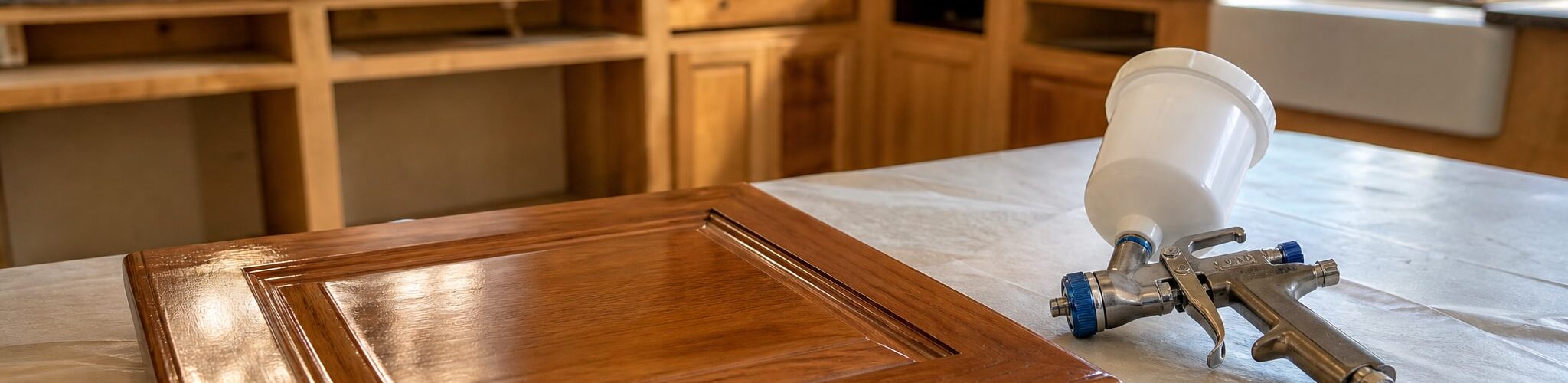
- Sprayed using HVLP, airless, or turbine systems
- Applied in multiple, very thin coats
- Sanded between coats for a glassy surface
Top Denver cabinet specialists often remove doors and drawer fronts to spray them horizontally in a clean, controlled environment, while using carefully masked spray setups in the kitchen for boxes and frames.
Pro Tip: When interviewing painters, ask what specific primer and topcoat system they use, and whether they spray every coat. Vague answers usually signal a standard paint job, not a factory finish.
How Denver Experts Achieve A Factory Finish Step By Step
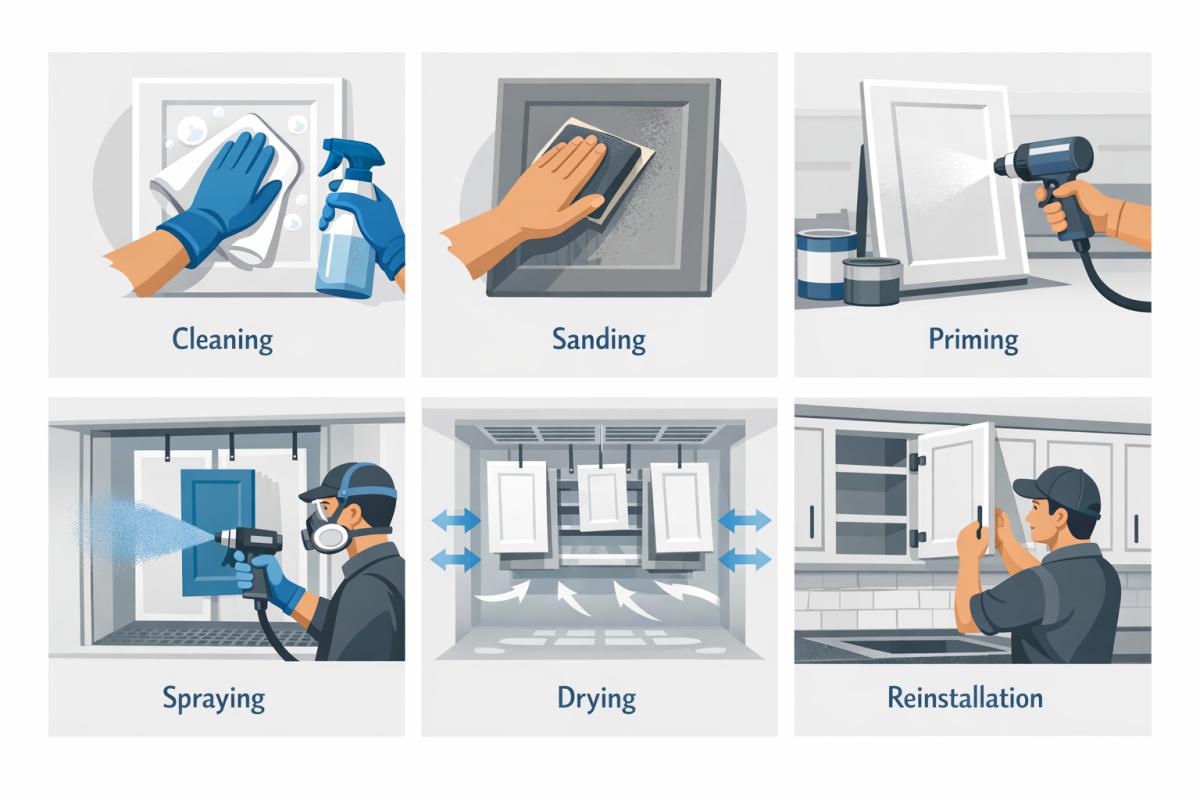
A flawless result is less about the final coat and more about disciplined preparation. Here is how experienced Denver teams typically approach a factory finish cabinet painting project.
Detailed inspection and planning
A reputable contractor will:
- Inspect cabinet material, existing finish and damage
- Identify areas with water exposure, grease buildup, or UV fading
- Flag warped doors or failing hinges that might need repair or replacement
- Discuss color, sheen and durability requirements for your use case
For investors and flippers, this planning step includes balancing cost with market expectations in your target price range.
Intensive cleaning and prep
Factory finishes fail quickly if surfaces are not perfectly clean. Pros typically:
- Degrease with industrial cleaners to remove cooking oils and residues
- Lightly degloss or sand existing finishes to create mechanical “tooth”
- Fill dings, nail holes and damaged corners with appropriate fillers
- Caulk gaps where frames meet walls if needed for a refined look
Denver’s dry air can make dust control challenging, so top companies use plastic barriers, zip walls and filtered exhaust fans to protect adjacent spaces.
Priming for adhesion and stain blocking
Priming is where professional work diverges sharply from DIY:
- Bonding primers are used for slick factory laminates or thermofoil
- Stain blocking primers are used over oak, cherry or knotty woods to prevent tannin bleed
- Multiple light primer coats are sanded with fine grits to level grain and minor imperfections
At this stage, cabinet boxes in place are usually masked, and detached doors are mounted on drying racks or stands.
Sprayed topcoats and curing
To reach a true factory grade surface, Denver experts typically:
- Apply 2 to 3 sprayed topcoats in thin layers
- Use controlled lighting to spot sags, dry spray, or thin spots
- Respect manufacturer cure times, which may differ from “dry to touch” times
Full cure can take from 7 to 30 days depending on the product, although cabinets are usually usable much sooner with basic care.
Why Factory Finish Cabinet Painting Is Ideal For Denver Properties
For homeowners, investors and property managers along the Front Range, factory finish cabinet painting offers a sweet spot between budget, speed and resale impact.
Cost savings compared to replacement
While costs vary by size and condition, cabinet painting or refinishing often runs 50 to 70 percent less than full cabinet replacement. In many Denver kitchens, a factory finish repaint can:
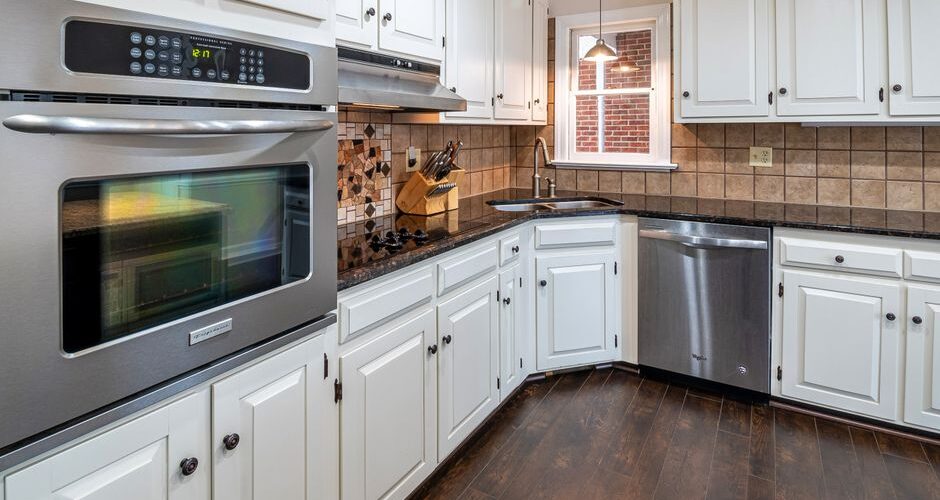
- Transform a dated oak kitchen into a modern white or two tone design
- Avoid the need to modify countertops, flooring or tile backsplashes
- Preserve solid wood boxes that are structurally sound
For a typical 10 by 12 Denver kitchen, replacement might run into the tens of thousands, while high quality painting usually sits in a much more accessible range. For specific service details and project types, see Cabinet Refinishing Services Denver Co Cabinet Painting Services Denver Co Kitchen Cabinet Painting.
Faster turnaround and less disruption
Most occupied home projects finish in about 3 to 7 working days on site, depending on scope. This is attractive for:
- Sellers trying to hit a listing date
- Landlords aiming to reduce vacancy between tenants
- Families who cannot lose access to the kitchen for weeks
Dust control, temporary plastic walls and staged work areas help keep the rest of the house functional.
Performance in Denver’s climate
Denver’s altitude, intense sun and low humidity can be hard on finishes:
- UV exposure can yellow some coatings or fade darker colors
- Low humidity can exaggerate wood movement and minor cracking at joints
- Temperature swings between seasons stress lower quality paints
Factory grade cabinet coatings selected by local experts are formulated to resist these issues better than standard wall paint, which means fewer chips and touch ups over the next 5 to 10 years.
Key Takeaway: In Denver’s market, a crisp factory finish on cabinets is one of the most efficient ways to make a kitchen feel like a remodel, without paying for a full tear out.
[IMAGE: Close up of freshly painted white shaker cabinets in a modern Denver kitchen, cinematic]
Choosing The Right Factory Finish Cabinet Painting Experts In Denver
Not every painter is equipped to deliver a factory level result. Here is how to separate specialists from generalists.
Questions to ask during consultations
Ask potential contractors:
- Do you specialize in cabinets, or is this an add on to wall painting?
- What prep steps do you follow on every job, regardless of cabinet material?
- Which primer and topcoat system do you use, and why?
- Are all coats sprayed, or do you brush/roll any stages?
- Can I see recent Denver projects similar to mine, including close up photos?
You can find good examples of specialized processes at Expert Cabinet Refinishing Cabinet Painting Services Denver Co.
Signs of a true cabinet refinishing specialist
Look for:
- Dedicated cabinet work photos, not just broad painting galleries
- Clear explanation of their spray setup and dust control
- Comfort with both occupied homes and vacant flips or rentals
- Familiarity with different cabinet materials: oak, maple, alder, laminate, thermofoil
- References from Denver clients where cabinets have held up over several years
Important: If a painter suggests using the same paint they use on walls or trim, that is a red flag for cabinet longevity and chip resistance.
Evaluating proposals and pricing
When comparing bids, consider:
- Level of detail in the scope and prep steps
- Whether doors and drawers will be fully removed and sprayed
- Inclusions such as minor repairs, hinge adjustments and soft close upgrades
- Warranty terms, and what is covered for chipping or peeling
The cheapest bid almost never reflects a true factory finish process. For multi property investors, a consistent, durable process usually pays off in fewer maintenance calls and better tenant satisfaction.
Factory Finish Options: Colors, Sheens And Design Choices
Once you select an expert, design decisions drive how “high end” the finished space feels.
Choosing cabinet colors
For Denver homes and rentals, popular strategies include:
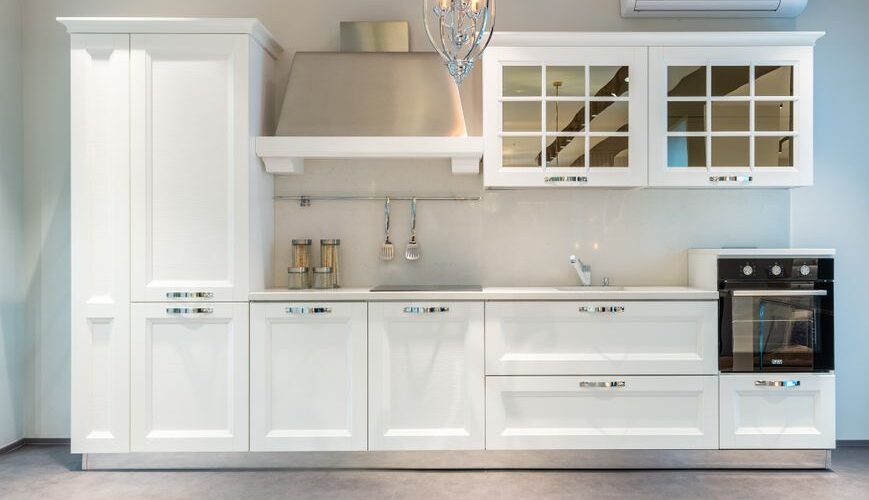
- Clean whites and off whites for maximum light and broad buyer appeal
- Soft grays or greige tones that pair with existing granite or quartz
- Navy, deep green or charcoal on islands or lowers, with white uppers for a designer look
- Warm taupes to update golden oak trim and floors without full replacement
Experienced refinishers can often help match existing trim or recommend colors that bridge dated countertops with modern tastes.
Sheen levels and why they matter
Common cabinet sheen choices:
- Satin: Subtle, hides minor imperfections, easy to clean
- Semi gloss: Reflects more light, looks crisp and modern, shows dust and smudges a bit more
- Matte or eggshell: Softer look, usually less durable for heavy use cabinets
Many Denver experts recommend satin or a soft semi gloss that balances aesthetics and cleanability, especially for rental or flip projects.
Hardware and small upgrades
Cabinet refinishing is the perfect time to:
- Update knobs and pulls to black, brushed brass, or modern stainless
- Add soft close hinges or drawer slides
- Adjust door alignment and gaps for a straighter, showroom look
These relatively low cost touches dramatically increase perceived quality, especially in listing photos.
[IMAGE: Before and after split shot of dated oak cabinets transformed to sleek white factory finish in a Denver condo, cinematic]
Common Myths And Mistakes About Factory Finish Cabinet Painting
Even experienced homeowners and investors often misunderstand what drives long term results.
Myth: “Any good painter can give a factory finish”
Cabinet refinishing is a niche. The equipment, products and workflow are different from standard interior painting. A painter who excels at walls might not have the spray skills, dust control or product knowledge to refinish cabinets at a factory level.
Myth: “I can get the same result with high end DIY paint”
Quality products help, but the difference usually lies in:
- Industrial primers that are not available in big box stores
- Spray equipment and techniques that minimize texture
- Time spent on sanding between coats and surface correction
Homeowners can achieve good results in some cases, but a side by side comparison with a seasoned cabinet refinisher is usually obvious, especially on close inspection.
Mistake: Rushing use before full cure
Cabinets may be dry to touch within hours, but the finish continues to cure and harden:
- Avoid harsh cleaners, scrubbing, or stacking heavy items for the first 7 to 14 days
- Use gentle opening until the coating reaches full hardness
- Ask your contractor for written care instructions and cure timelines
Warning: One of the fastest ways to damage a beautiful new finish is to aggressively clean or slam doors during the first week after painting.
When Factory Finish Cabinet Painting Makes The Most Sense
Not every situation calls for cabinet painting, but in many Denver scenarios it is the smartest play.
Ideal situations
Factory finish cabinet painting is usually the best option when:
- Boxes are solid and layouts function well, but finishes look dated
- You are preparing a property for sale and want maximum visual impact per dollar
- You own rentals or multi unit buildings where full kitchen replacements are cost prohibitive
- You are updating surfaces like counters and backsplashes, but cabinets are still structurally sound
For broader projects that involve multiple rooms or units, review options at Expert Cabinet Refinishing Cabinet Painting Services In Metro Denver Co.
When replacement might be better
Full cabinet replacement may be the right choice if:
- Boxes are water damaged, sagging, or severely out of plumb
- You want to change layout significantly, like removing walls or adding an island
- Low grade particleboard cabinets are crumbling at hinges or bottoms
A good refinishing expert should tell you honestly if painting is not the right long term solution.
How Cabinet Refinishing Denver Helps You Get A Factory Finish
If you want a true factory finish result without guessing on products and processes, partnering with a dedicated specialist matters.
Cabinet Refinishing Denver focuses specifically on high performance cabinet painting and refinishing for:
- Owner occupied homes that need tight dust control and quick turnarounds
- Real estate investors and flippers who need repeatable, market ready finishes
- Property managers overseeing multi unit updates throughout Metro Denver
Their process includes detailed prep, industrial primers and sprayed topcoats tailored to Denver’s climate and usage patterns. If you are considering a kitchen or bathroom update, or need consistent results across multiple properties, explore how their approach compares to basic painting services.
Cabinet Refinishing Denver
Call to action: Learn more about how a true factory finish process can upgrade your cabinets without full replacement.
Frequently Asked Questions
What is the difference between factory finish cabinet painting and regular painting?
Factory finish cabinet painting uses higher performance coatings, more extensive prep and sprayed application to create a smooth, furniture grade surface. Regular painting often uses wall or trim paints applied with brushes and rollers, which leave texture and are more prone to chipping. The factory level approach aims to replicate the look and durability of new cabinets from a manufacturer, not just change the color.
How long does a factory finish cabinet painting project take in Denver?
Most residential projects take 3 to 7 working days on site, depending on kitchen size and complexity. Day one usually focuses on prep, masking and removing doors. Middle days are for priming and spraying. The final day covers reinstallation and touch ups. While the surface may be dry enough for light use quickly, full cure can take 7 to 30 days, so gentle handling is important at first.
How long will a factory painted cabinet finish last?
With proper prep and high quality products, a factory level cabinet finish can last 8 to 15 years or more, depending on use. Busy families and rental units may see more wear at high touch areas like under sinks and near trash pull outs, but touch ups are usually minor. Choosing the right sheen and cleaning with non abrasive products also extends the life of the finish.
Is factory finish cabinet painting worth it for a rental or flip?
For many Denver investors and flippers, it is one of the best returns on investment. Factory level finishes photograph extremely well, which boosts online listing performance, and they look far more expensive than they cost compared to full replacement. In rentals, durable finishes reduce repaint frequency and make units feel higher end, which can support stronger rents and reduce vacancy.
My Review of Graco FFLP Tips for Spraying Cabinets
Can any type of cabinet be refinished to a factory finish?
Most solid wood and quality veneer cabinets can be refinished successfully. Laminate and thermofoil can often be painted as well, as long as the existing surface is stable and properly prepped with the right bonding primers. Cabinets that are structurally failing, have severe water damage, or use very low grade particleboard might not be good candidates, and replacement may be more practical.
What maintenance do factory painted cabinets need?
Routine maintenance is straightforward. Wipe with a soft cloth and mild soap, avoid abrasive pads or strong chemicals and dry spills promptly, especially near sinks and dishwashers. During the first few weeks, handle gently while the finish fully cures. Periodically check hinges and hardware for looseness, since properly aligned doors reduce rubbing, which helps preserve edges and corners.
Cabinet, Painting, and Refinishing Denver CO