
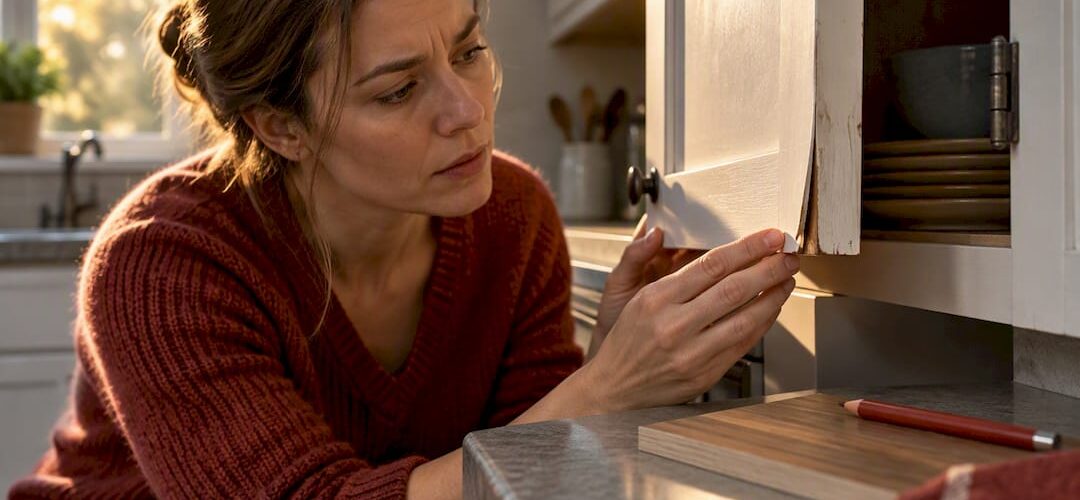
Usually, painting is worth it, but only when your cabinet boxes are structurally sound. If the plywood or MDF underneath is solid, paint is one of the cheapest ways to change a kitchen’s whole feel. If the boxes are swollen, soft, or delaminating, paint just hides a problem that keeps getting worse. Run the press test on the sidewalls before you pick a color.
TL;DR:
- Painting is suitable only if cabinet boxes are structurally sound and free of moisture damage or delamination, as paint cannot fix underlying issues.
- A press test on sidewalls and a wiggling test on doors can confirm if cabinets are good candidates for painting or require replacement.
- High-traffic areas near moisture and heat, such as under the sink or stove, cause faster paint deterioration and often need more careful prep or replacement.
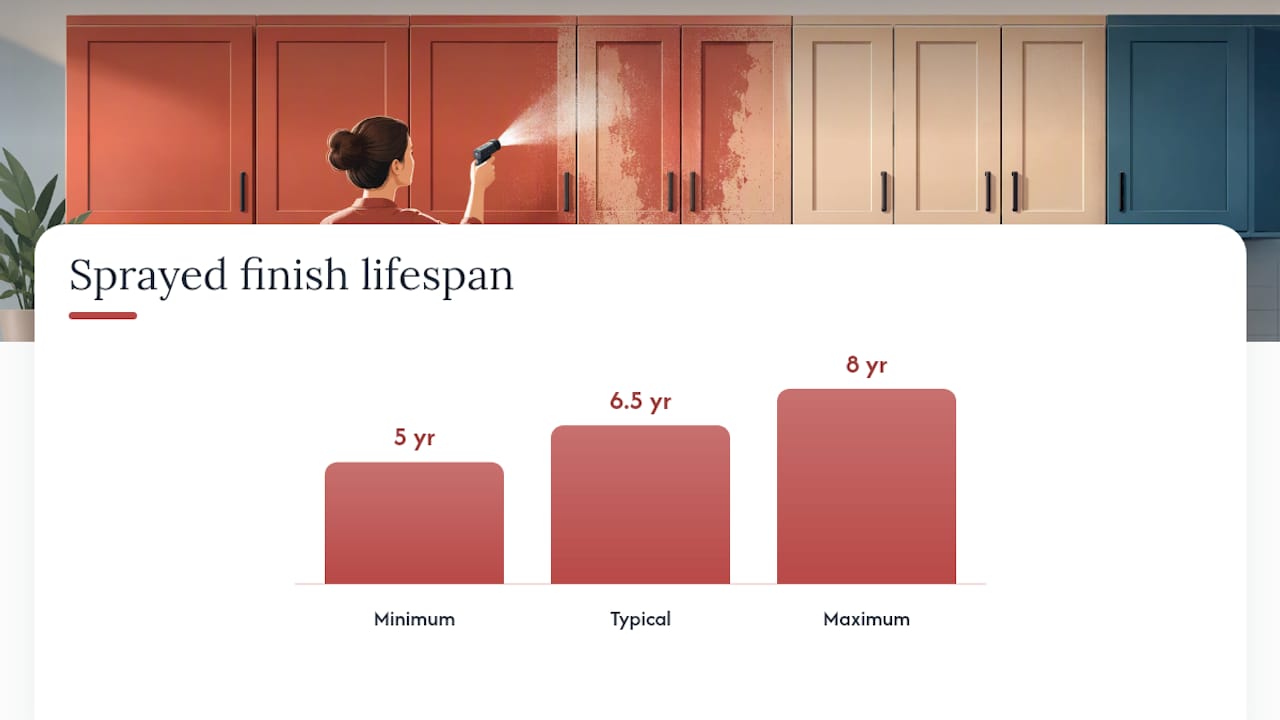
- Professional sprayed finishes tend to last 5 to 8 years, but proper prep and factory-like application are critical for durability, especially on sound wood or MDF.
- Alternatives like refacing or full replacement offer longer-lasting results, with refacing lasting 10 to 15 years and costing more upfront, but better suited for aesthetic or layout changes.
Table of Contents
- What Makes Cabinets Not Worth Painting
- When Painting Is the Right Call
- Alternatives to Painting: Refacing, Replacing, and Quick Fixes
- Cost, Timeline, and Lifespan by Option
- The Five-Minute Kitchen Walkthrough That Decides Everything
- How Painted Cabinets Age Compared to Other Finishes
- Why a Factory-Finish Process Beats a DIY Weekend
- A Faster, Sturdier Way to Get the Factory Look
- Sources
- FAQ
What Makes Cabinets Not Worth Painting
Cabinet refinishers call this the “sound substrate” question, and it decides almost everything else. Paint is a cosmetic fix. It changes color and sheen, but it can’t reinforce a warped door or glue a delaminating panel back together. When the box underneath is compromised, painting turns into an expensive way to postpone a replacement you’ll pay for twice.
Durability fails first at pressure points. Handles, drawer runners, and the cabinets flanking the sink or stove take the most abuse, and that’s exactly where cheap paint jobs show cracking within a year. Moisture near the sink and heat near the range both attack the bond between finish and wood, so a rushed prep job in those specific zones fails faster than anywhere else in the kitchen.
Preparation is the part most homeowners underestimate. A finish that actually holds up requires stripping hardware, degreasing every surface (kitchen grease is everywhere, even where it’s invisible), sanding to give the primer something to grip, and applying a bonding primer before any color goes on. Skip a step, and the paint peels in sheets within months. This is also why DIY brush jobs and professional spray finishes look and perform so differently. A sprayed factory-like finish applied with the right prep is the single biggest factor in how long a paint job actually lasts.
Some materials fight back no matter how careful the prep work is:
- Thermofoil doors are vinyl laminate heat-bonded to MDF; paint doesn’t adhere well and often peels at the edges within a season.
- Delaminating laminate surfaces have already lost their bond to the substrate, and paint can’t restore that adhesion.
- Water-damaged particleboard that feels soft, spongy, or shows visible swelling is a replacement candidate, not a paint candidate, because screws and new hardware won’t hold in compromised board.
Paint is also unforgiving of history. A fresh coat doesn’t hide problems, it highlights them. Old hinge holes from a hardware swap, warped door panels, and dents that used to blend into a busy wood grain all become visible under a smooth, single-color finish. If your doors have cosmetic scars from twenty years of use, painting can actually draw more attention to them rather than less.
Resale value cuts both ways. A neutral, professionally sprayed finish (soft white, greige, sage) tends to read as a value-add to buyers and appraisers. A bold, trendy, or dated color reads as a future project for whoever buys the house next. That’s not a reason to avoid painting, but it’s a reason to think twice before committing to a color that feels exciting today and dated in five years.
When Painting Is the Right Call
Two quick physical tests tell you more than any amount of online research. Run them before you spend a dollar on paint or a contractor quote.
- Press test. Push firmly on the cabinet’s sidewalls and bottom panel. Solid resistance means a sound box. Give, flex, or a soft or spongy feel means moisture damage that paint won’t fix.
- Racking test. Grab a door and gently wiggle it side to side. Tight, quiet movement means the joints and hinges are solid. Looseness or creaking suggests the frame itself is failing.
Plywood, MDF, solid wood, and stable prepainted surfaces are all good painting candidates, since they hold primer and finish coats reliably over time. Painting also makes the most sense in specific real-world scenarios: you’re on a tight budget, you’re prepping a rental or a flip and need a fast visual upgrade, or you genuinely like your current layout and just want a new look rather than a new floor plan.
Done professionally, a sprayed finish typically lasts 5 to 8 years before it needs touch-ups or a recoat, assuming the prep work was thorough.
Pro Tip: Do both tests on at least three different cabinets, including one under the sink where moisture exposure is highest. A single sound cabinet doesn’t mean the whole kitchen passes.
Alternatives to Painting: Refacing, Replacing, and Quick Fixes
Painting isn’t the only lever for changing how a kitchen looks. Each alternative solves a different problem, and knowing which one matches your actual complaint saves you from an expensive misfire.
- Refacing replaces door and drawer fronts and re-veneers the exposed box surfaces while keeping the existing cabinet frames in place. It’s the right call when you want a new door profile or a different material feel but the layout works fine. Refacing generally lasts longer than paint alone, often 10 to 15 years, though it costs more upfront and can’t touch your kitchen’s footprint.
- Full replacement is the only option that changes the layout itself, whether that’s adding storage, moving the sink, or opening up a wall. It’s also the longest-lasting and most expensive route, and it comes with weeks of disruption rather than days.
- Hardware swaps, glass inserts, and open shelving are the fastest, cheapest cosmetic changes available. New pulls and knobs alone can shift a kitchen’s whole personality in an afternoon, and swapping a few solid doors for glass-front ones adds visual lightness without touching the box.
- Vinyl wrap can look convincing when the material is good and the surface prep is careful, but cheaper wraps are prone to edge lifting and failure from heat and moisture, especially near the stove or dishwasher.
If your actual frustration is the door style rather than the color, it’s worth reading about how to update cabinet style without a full replacement before committing to any single fix. And if the issue is more about the room’s overall feel than the cabinets themselves, acoustic and decorative wall panels are a paint-free way to change a kitchen’s atmosphere.
Cost, Timeline, and Lifespan by Option
Here’s how the three main paths stack up on the numbers that actually drive most decisions.
| Option | Typical Cost Range | Project Timeline | Expected Lifespan | What It Changes |
|---|---|---|---|---|
| Painting | $1,500–$5,500 | A few days to about a week | 5–8 years | Finish and color only |
| Refacing | $3,000 to $8,000 | One to two weeks | 10–15 years | Door profile and surface material |
| Full replacement | $15,000 to $40,000 | Several weeks | 15+ years | Layout, storage, and structure |
These figures reflect a standard 10 by 10 kitchen; larger kitchens or custom materials push every column higher. The pattern worth noting is where painted finishes age fastest: high-touch spots like drawer fronts near the dishwasher and doors flanking the range see wear years before a quiet upper cabinet does, since heat and moisture cycles break down a painted bond faster than dry, low-traffic surfaces.
The Five-Minute Kitchen Walkthrough That Decides Everything
You don’t need a contractor visit to get a real answer. Walk your kitchen with these steps in order.
- Open the sink cabinet and check for soft wood, staining, or a moldy smell. Any of these points toward replacement, not paint.
- Press the sidewalls of two or three boxes. Firm resistance means you’re clear to move forward.
- Wiggle a few doors to test the racking. Tight movement is good; looseness signals frame failure.
- Ask what you actually want to change. Just color? Paint works. Door style? Look at refacing. Layout? That’s a replacement conversation.
- Match your budget and timeline to the right fix using the cost table above before requesting quotes.
Soft boxes, visible mold, or major delamination are hard stops. At that point, get replacement estimates instead of paint quotes.
Pro Tip: Take photos during the walkthrough. Any contractor you call, whether for painting, refacing, or replacement, will ask about box condition before quoting, and photos speed that conversation up considerably.
How Painted Cabinets Age Compared to Other Finishes
A painted finish and a refaced or replaced surface don’t age the same way, and that difference shows up in your maintenance calendar for years after the project wraps.
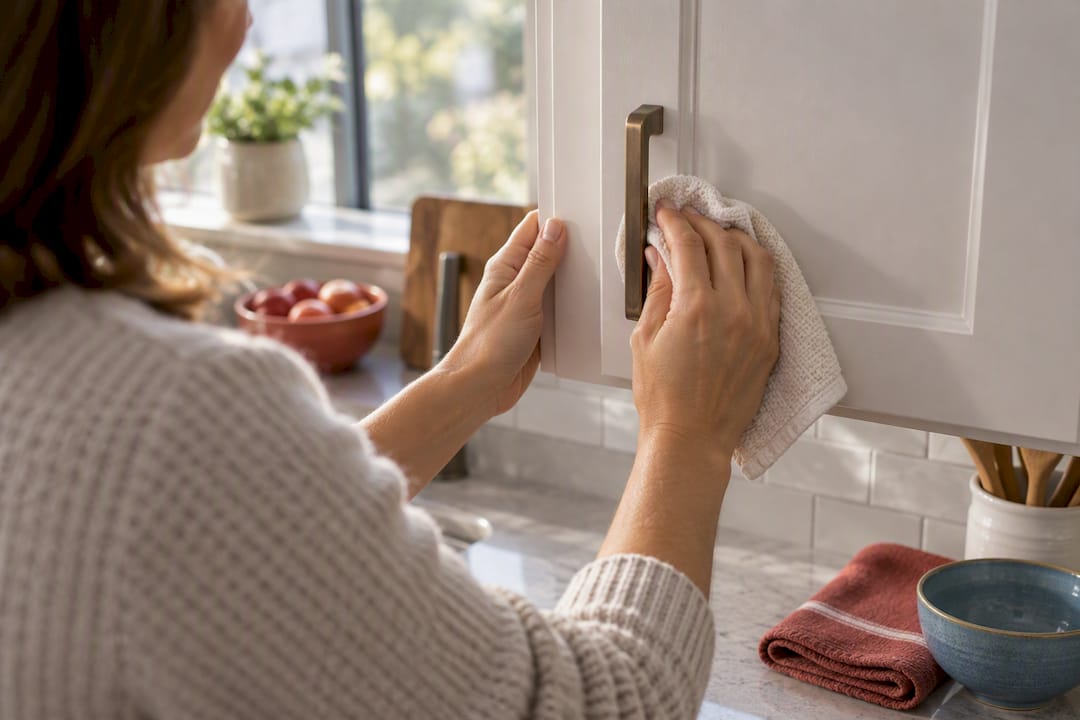
Painted cabinets need gentle, non-abrasive cleaning, since scrubbing with anything rough dulls the sheen and can expose the substrate underneath. High-touch areas, door edges, handle zones, and anything near the stove, usually need a touch-up coat every few years even when the rest of the kitchen still looks fresh. That’s a normal part of owning painted cabinets, not a sign something went wrong.
Refaced surfaces, by contrast, use factory-applied veneers or laminates that resist scuffing better than a site-applied paint coat, so they typically go longer between any kind of refresh. Full replacement resets the clock entirely. New boxes and doors come with manufacturer finishes designed for daily wear, though even those eventually show the same fatigue at hinges and handles that any kitchen surface does.
The practical takeaway: painted cabinets aren’t lower maintenance than the alternatives, they’re differently maintained. Budget for the occasional touch-up as part of the deal, not as a sign the paint job failed.
Why a Factory-Finish Process Beats a DIY Weekend
Most painting regrets trace back to prep, not paint quality. A shop-based, factory-finish process (spray application instead of brush or roller, full hardware removal, and multiple protective coats) closes the gaps that cause chipping and peeling within a year. Cabinetsrefinishing brings this approach to Denver-area kitchens with a 3 to 5 day turnaround, which matters most for homeowners who want durability without living without a kitchen for weeks. If your boxes pass the press and racking tests but you don’t trust your own spray gun skills, that’s exactly the point where hiring a professional stops being optional and starts being the difference between a five-year finish and a five-month one.
— Jesse
A Faster, Sturdier Way to Get the Factory Look
Painting your own cabinets on a weekend can save money upfront, but it also means living with brush marks, uneven coverage, or a finish that starts chipping by the following winter if the prep wasn’t thorough. This service uses a shop-based, sprayed finish process built for durability rather than speed alone, backed by color matching and a warranty on the work.
This approach fits homeowners with sound cabinet boxes who want a genuinely durable refresh, sellers prepping a rental or flip on a deadline, and anyone who’s already run the press and racking tests and confirmed their kitchen is a good candidate for professional cabinet painting. Turnaround runs 3 to 5 days rather than the weeks a full replacement demands, and the cabinet refinishing service typically runs $3,000 to $8,000, against $15,000 to $40,000 for a full replacement project. If your walkthrough checked out, request a quote and get a firm timeline before you commit to a color.
Sources
For deeper cost breakdowns and box-condition testing methods, see real cost comparisons across painting, refacing, and replacement, a decision guide covering the press and racking tests, and a durability and process breakdown for how prep quality changes finish lifespan.
FAQ
Is It Worth Painting Your Kitchen Cabinets?
Usually yes, if the boxes are structurally sound and you mainly want to change color or sheen. Professional painting typically runs $1,500–$5,500 and a well-executed sprayed finish can last 5 to 8 years.
Are Painted Cabinets Going Out of Style?
Painted finishes themselves aren’t going anywhere, but specific colors do cycle in and out of favor faster than wood tones. Neutral, professionally sprayed finishes tend to hold their appeal longer than bold or trend-driven colors.
Does Painting Cabinets Devalue a Home?
A quality, neutral paint job tends to help resale value rather than hurt it, since it modernizes a kitchen without a full renovation cost. A rushed or poorly prepped paint job, or a bold color choice, can read as a future project to buyers and work against you.
What Are the Downsides of Painting Cabinets?
The biggest downsides are that paint can’t fix structural problems, can’t change layout, and requires real prep work (degreasing, sanding, priming) to last. Cabinets with water-damaged or swollen particleboard or thermofoil surfaces are especially poor candidates.
How Do I Know If My Cabinets Are Worth Refacing Instead of Painting?
Refacing makes more sense when you want a different door profile or material but your boxes are sound and the layout works. It costs more than painting but lasts longer, often 10 to 15 years, against roughly 5 to 8 years for paint alone.