
Why cabinet spraying in Littleton needs a local approach
Spraying cabinets in Littleton, Colorado is not just about buying a sprayer and a gallon of paint. Local climate, home values, and construction styles all affect how you prep, prime, and finish. If you get it right, you can turn a dated oak or maple kitchen into a “showing-ready” space that looks like a factory finish and boosts resale value. If you get it wrong, you can end up with peeling doors, orange-peel texture, and a lingering paint smell that tenants or buyers instantly notice.
My Review of Graco FFLP Tips for Spraying Cabinets
This guide walks homeowners, investors, designers, and contractors through the best way to spray cabinets in Littleton using professional practices that fit our dry, high-altitude Front Range conditions. You will see product types that work, setup methods that protect surrounding areas, and sequencing that keeps your project on schedule and on budget.
Understanding Littleton’s climate and typical cabinet conditions
Littleton sits at roughly 5,300 feet elevation with low humidity and big daily temperature swings. That affects how coatings behave on wood, especially older cabinets.
How elevation and dryness affect cabinet paint
Low humidity and high elevation mean:
- Waterborne coatings dry very fast, sometimes too fast, which can cause lap marks and rough texture.
- Solvent-based products can off-gas quicker, increasing odor intensity for a short window.
- Open grain woods like red oak shrink slightly and show grain telegraphing if products or sanding are not chosen carefully.
Plan for:
- Shorter open time for brushing or back-rolling, which is why spraying is preferred for a smooth finish.
- Tighter recoat windows, often 45–90 minutes for some waterborne products.
- The need for controlled conditions inside, since outdoor spraying is usually not viable due to wind and dust.
Common cabinet types in Littleton-area homes
Most Littleton properties, especially in neighborhoods built from the 1980s through the early 2000s, feature:
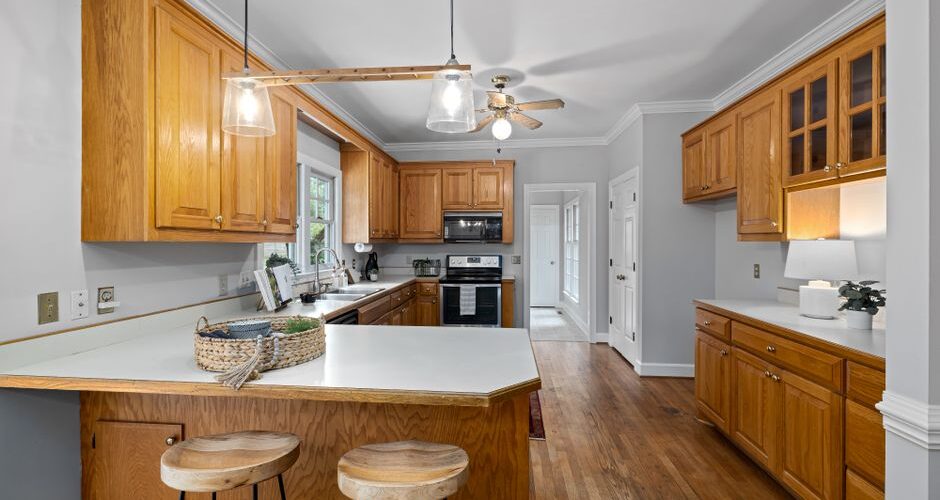
- Stained red oak cabinets with heavy open grain
- Maple or alder face frames with veneer panel doors
- Builder-grade maple or laminate cabinets in newer builds and townhomes
- Painted cabinets in flips and rentals that may already have one or two failing coatings
Each responds differently to spraying. For example, 1990s oak in Columbine or Ken Caryl often needs grain management, while newer Stapleton-style builds converted into rentals may just require adhesion-focused prep.
Key Takeaway: The best way to spray cabinets in Littleton starts with matching your products and process to dry mountain air and the specific wood species in your home, not just copying a generic YouTube tutorial.
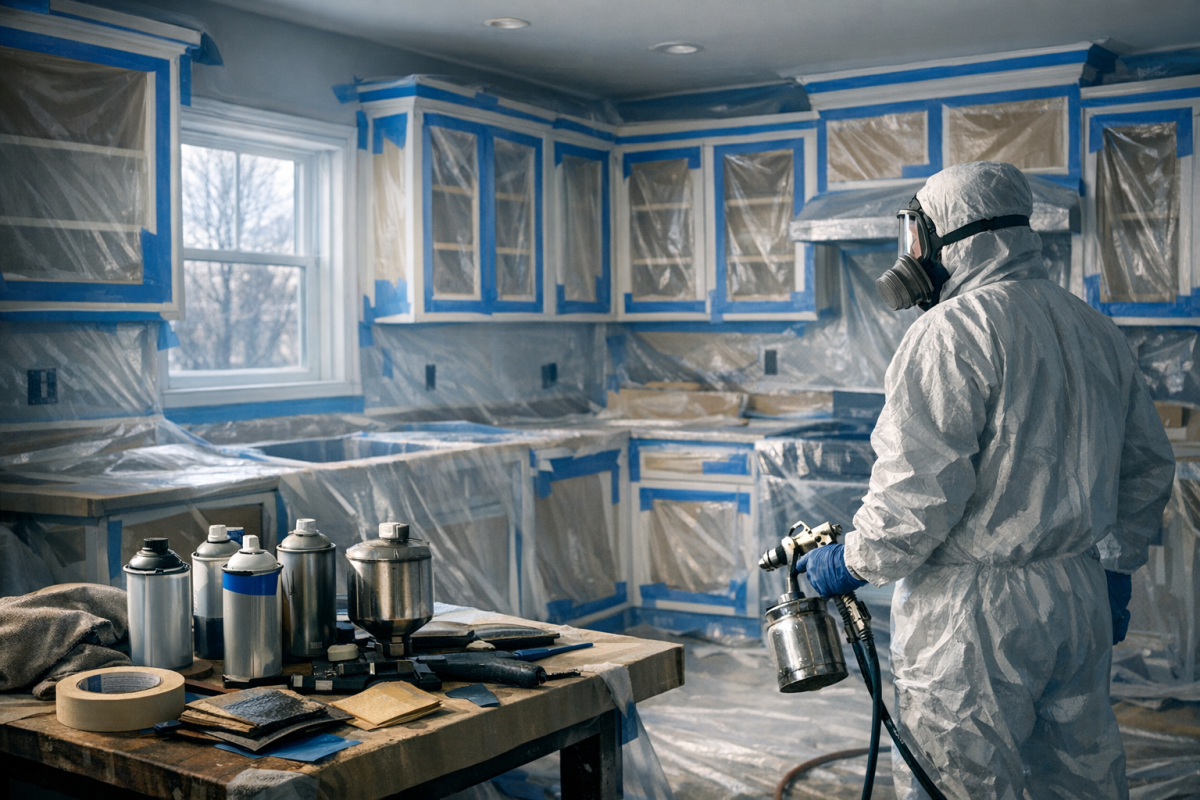
Choosing the right products and sprayer for Colorado conditions
The products and equipment you choose determine how durable, smooth, and odor-controlled your result will be. For Littleton projects, you want a system tuned to indoor work in occupied homes.
Paints and coatings that perform well in Littleton
For most residential kitchens and baths, consider high-grade waterborne systems that are designed for cabinets and trim. Look for:
- Waterborne acrylic or acrylic-alkyd cabinet enamels, which cure hard but remain flexible
- Products labeled as “non-yellowing,” important for white and light colors at altitude
- Manufacturer specs that mention “block resistance” and “self-leveling,” which reduce sticking and brush marks
Avoid standard wall paints. They are too soft for daily use and will show wear around pulls within months, especially in busy rental properties.
For high-end homes or luxury flips, many professionals in Metro Denver use specialized cabinet refinishing systems similar to those described in Expert Cabinet Refinishing Cabinet Painting Services In Metro Denver Colorado. These systems typically include dedicated primers, bonding agents, and topcoats engineered to work together.
Sprayer types that give a factory-like finish
For kitchen cabinets, two sprayer categories dominate:
| Sprayer Type | Best Use Case | Pros | Cons |
|---|---|---|---|
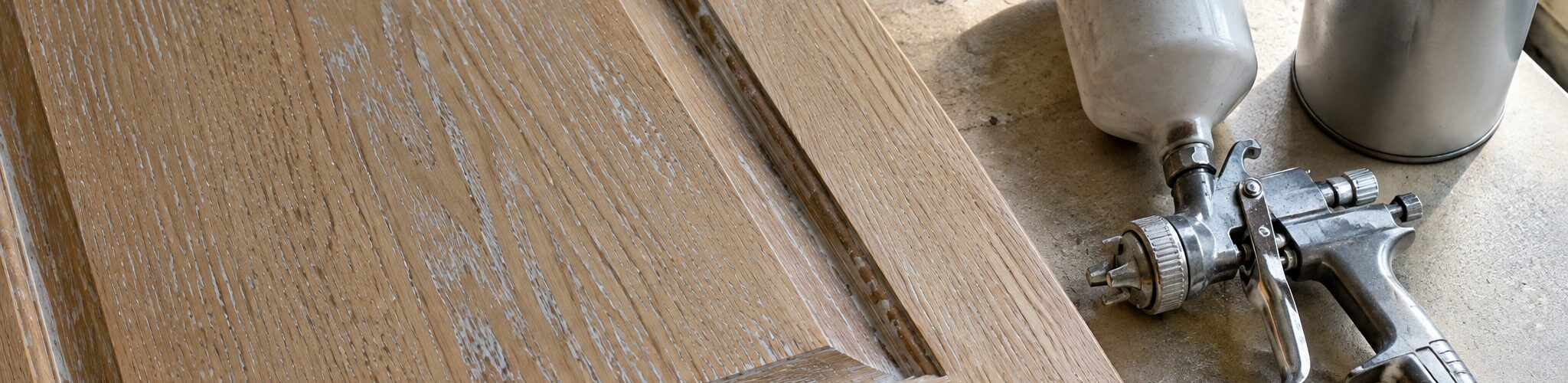
| HVLP (High Volume Low Pressure) turbine or conversion gun | On-site cabinet doors and frames | Fine atomization, less overspray, great control in homes | Slightly slower, more technique-sensitive |
| Airless with fine finish tip | Larger sets, commercial or multi-unit jobs | Fast coverage, good for multiple kitchens | More overspray, needs excellent masking |
In an occupied Littleton home, an HVLP setup is often the best way to spray cabinets. It balances quality and containment, especially in subdivisions where neighbors are close and you cannot easily work outdoors.
Pro Tip: Whichever sprayer you choose, invest in a dedicated fine finish tip or fluid set. This is the single most important hardware choice for achieving that “factory” feel instead of a textured, repainted look.
Professional-level prep: the real “secret” to spraying cabinets
Most cabinet failures in Littleton are not the fault of the paint, they come from rushed prep. Elevation and dryness mean coatings bite fast, so any contamination still on the surface gets permanently sealed in.
Cleaning and degreasing for Colorado kitchens
Even in relatively new Littleton builds, airborne cooking oils and cleaners sit on cabinet surfaces. Before sanding or priming:
- Remove doors and drawer fronts, label them carefully, and move hardware to a safe container.
- Wash every surface with a dedicated degreaser or a TSP alternative, focusing on handles, door edges, and above the range.
- Rinse thoroughly with clean water to remove residue that can interfere with adhesion.
Skipping this step leads to fish-eyes and flaking around knobs, especially in rental properties with heavy cooking.
Sanding, repairs, and grain management
After cleaning and drying:
- Scuff sand all surfaces with 150–220 grit to break the existing finish.
- Fill dings, nail holes, and old hardware locations with high-quality wood filler or epoxy filler.
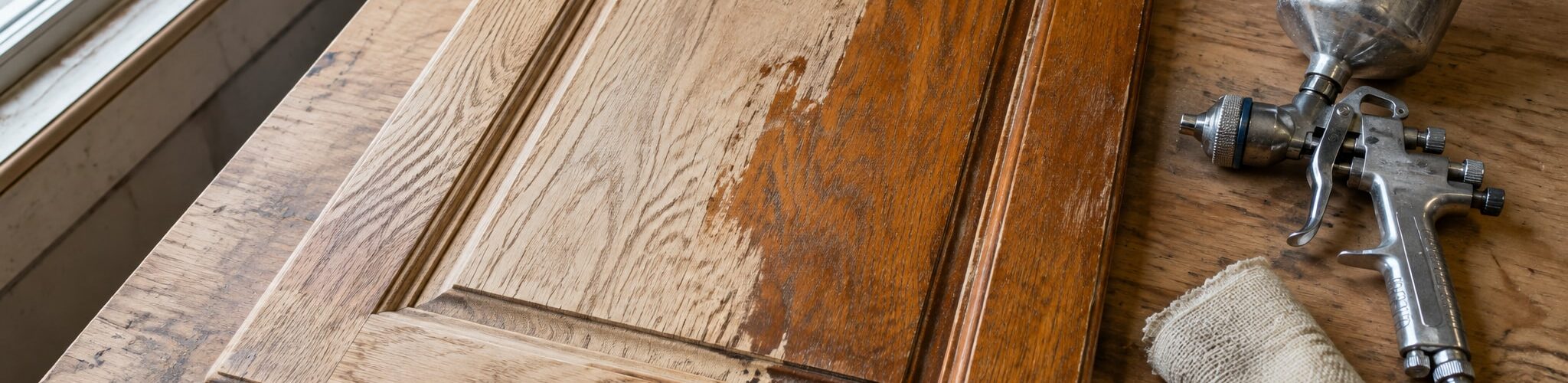
- For heavy oak grain, consider grain filling or at least a sanding sealer and cross-grain sanding to reduce telegraphing.
Littleton’s dry air makes fillers and putties cure quickly, which is helpful for production schedules. Just be sure you sand smooth before primers lock everything in.
Priming for adhesion and stain blocking
Primers do the heavy lifting in Colorado’s older cabinets. Select:
- A bonding primer designed to grip factory finishes and lacquer, particularly for 1990s and early 2000s builds.
- A stain-blocking primer when you see heavy knots, tannins, or dark stain that might bleed into whites and grays.
Apply at least one solid coat over all surfaces, then sand lightly with 220–320 grit to flatten fibers and dust nibs. This gives your topcoat something smooth to level over, which matters a lot in Littleton’s low-humidity environments where paint sets fast.
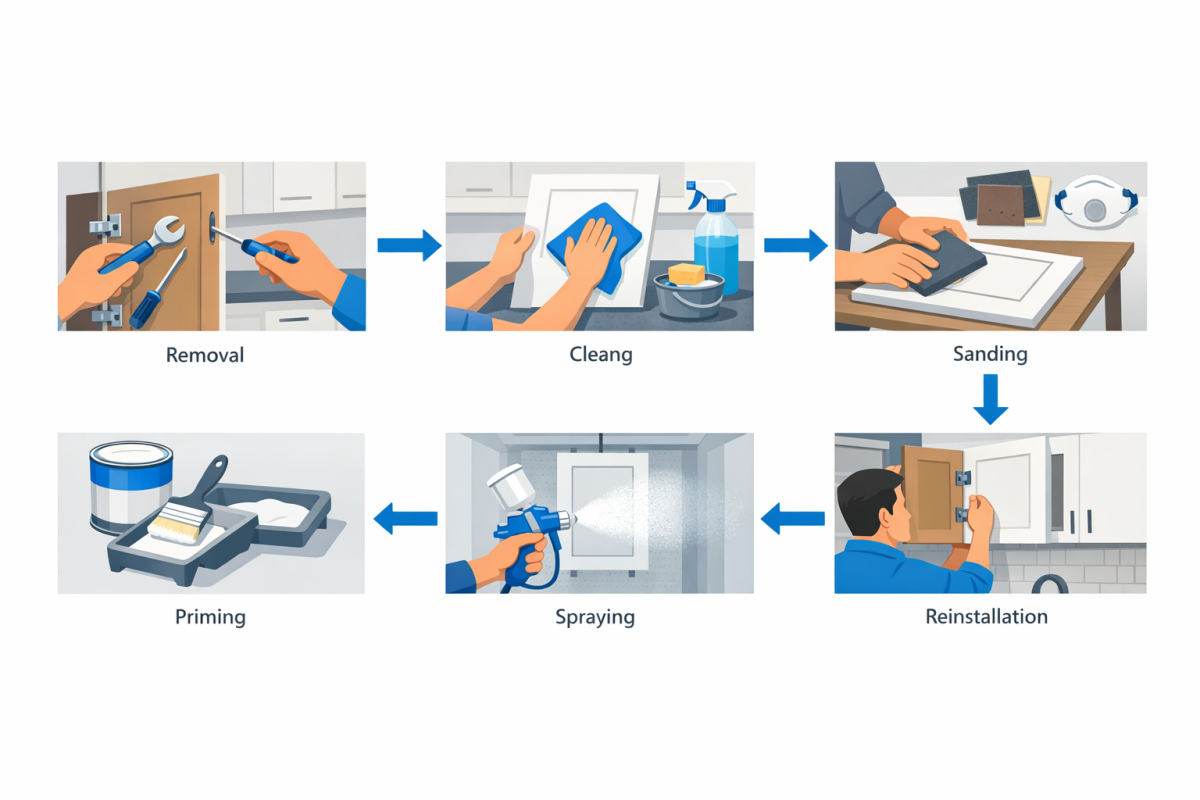
Containment, ventilation, and on-site setup in Littleton homes
Even the best spray work will cause headaches if you fog paint over new flooring or allow overspray to reach adjacent rooms. A controlled setup separates professionals from weekend experiments.
Building a temporary spray zone
In occupied homes or rentals, construct a temporary “spray booth” indoors:
- Mask off the kitchen entryways with plastic zipper doors or taped floor-to-ceiling plastic sheeting.
- Cover floors with rosin paper or heavy-duty drop cloths, then plastic over high-risk areas.
- Use masking paper and tape to protect ceilings, walls, and inside cabinet boxes if you are not painting interiors.
For doors and drawer fronts, many Littleton contractors set up a dedicated spray area in a garage. Littleton’s dry air helps with cure times, but you must manage temperature to stay within the coating’s recommended range.
Managing ventilation and dust
Because you are usually working indoors due to wind and weather, control air quality carefully:
- Use an exhaust fan with filters vented through a doorway or window to pull overspray out.
- Run an air scrubber or HEPA filter if available to reduce dust that might land in your finish.
- Turn off HVAC supply vents in the spray area so dust is not stirred up during spraying.
Important: In Colorado’s winter and shoulder seasons, you may not be able to leave doors or windows open for long. Plan shorter spray sessions with adequate flash time and use low-odor, low-VOC products whenever possible.
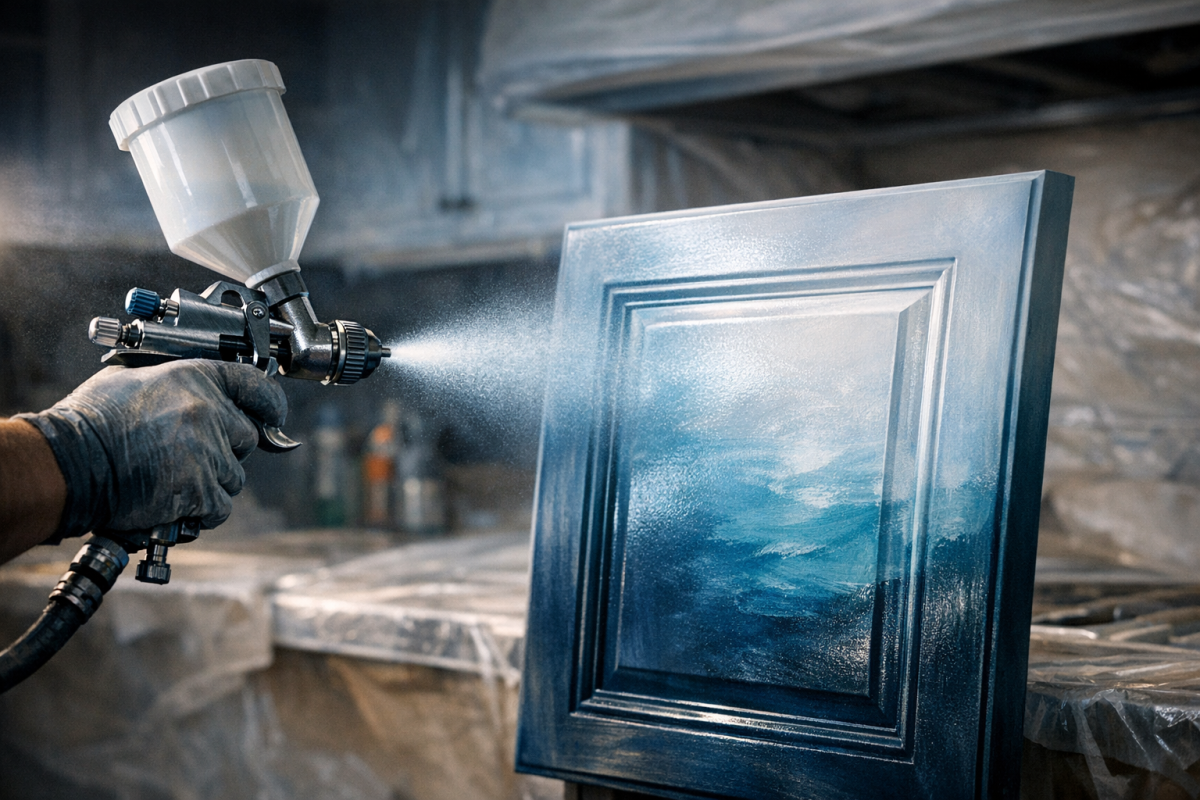
Spraying technique: settings, passes, and drying in dry air
Once prep and masking are dialed in, technique becomes the next quality driver. The goal is an even, fine film that levels before it fully sets in Littleton’s dry conditions.
Dialing in your sprayer for cabinet finishes
Before you hit the actual doors:
- Test your pattern and fluid flow on cardboard or scrap, using the same primer or paint you will spray on the cabinets.
- Adjust pressure or fluid until you see a soft, even fan without heavy edges or spitting.
- Maintain a typical working distance of 6–8 inches from the surface with HVLP, slightly more for airless.
Use multiple light-to-medium coats rather than one heavy pass. In Littleton’s dry air, heavy coats skin over quickly and are more likely to sag.
Spraying sequence for doors, drawers, and frames
A practical workflow that works well in Littleton homes:
- Spray backs of doors and drawer fronts first, allow to dry, then flip and spray fronts.
- Spray cabinet frames and end panels on-site after doors are removed and protected.
- Maintain consistent gun speed and overlap roughly 50 percent on each pass.
Most professional-grade cabinet products used around Denver recommend two coats of primer and two topcoats for kitchens. Follow manufacturer data sheets and watch recoat windows closely. At altitude, surfaces may be dry to touch quickly, but internal curing still needs time.
Curing time and handling in Colorado homes
In Littleton’s climate, waterborne cabinet finishes often reach “handle dry” in 1–3 hours, but:
- Allow at least overnight before reinstalling doors and drawers.
- Avoid heavy use, aggressive cleaning, or stacked items in cabinets for 7–14 days.
- For rental turnovers, communicate this to tenants clearly to avoid premature damage.
Key Takeaway: The best way to spray cabinets in Littleton is to treat “dry to touch” as just the beginning. True durability arrives after full cure, which can take two weeks even in dry air.
When to hire professionals in Littleton and nearby Parker
DIY spraying is possible, but many Littleton homeowners and investors decide the learning curve, equipment cost, and risk to resale value are not worth it. There are scenarios where a professional refinisher is the practical choice.
Situations that favor a professional refinisher
Consider hiring a pro when:
- You own a high-value property in neighborhoods like Bow Mar, Grant Ranch, or Ken Caryl.
- You manage multiple rental units and need consistent, repeatable results with minimal vacancy.
- There is existing coating failure, chipping, or peeling that requires specialized primers and repair.
- You are integrating cabinet color changes with broader staging or design updates.
Specialized teams, like those who provide Premier Cabinet Refinishing Cabinet Painting Services In Metro Denver Colorado, bring dialed-in systems, ventilated setups, and experience with local building stock that most DIY projects cannot match.
Littleton vs Parker vs central Denver projects
Homes in Littleton and Parker often feature similar cabinet construction, but layout and expectations differ:
- Parker properties may lean more toward luxury finishes, which fit well with services like Luxury Cabinet Painting Cabinet Refinishing In Parker Colorado.
- Central Denver neighborhoods mix historic homes with modern infill, often requiring custom solutions.
- Littleton and unincorporated Jefferson County homes frequently have original oak that responds very well to professional refinishing when handled correctly.
The core spraying process is similar, but color choices, sheen, and detailing are often tailored to match local buyer expectations in each micro-market.
How Cabinet Refinishing Denver can simplify your Littleton project
If you like the idea of a sprayed, factory-style finish but do not want to manage equipment, containment, or cure schedules, a specialized service can remove the guesswork.
Cabinet Refinishing Denver focuses on cabinet-specific refinishing systems that are tuned for Metro Denver’s high-altitude climate. Their process typically includes:
- On-site assessment of your existing cabinets and prior coatings
- Controlled cleaning, sanding, and bonding priming tailored to your wood species
- Professional spraying of doors and frames using fine-finish equipment
- Color and sheen recommendations that align with Littleton buyer and renter preferences
For homeowners planning a remodel, investors turning units quickly, or designers who need predictable, repeatable results, this type of service compresses project timelines and significantly reduces risk.
To see how their approach could apply to your Littleton kitchen or bath, visit Cabinet Refinishing Denver at https://cabinetsrefinishing.com and select Cabinet Refinishing Denver to review options, then Learn more about scheduling and color planning.
Putting it into practice: your next steps in Littleton
To get the best sprayed cabinet finish in Littleton, start by assessing your cabinets, climate conditions, and tolerance for DIY experimentation. Match product systems and sprayer type to your home and schedule, then invest most of your time in meticulous cleaning, sanding, and priming before you ever pull the trigger on your gun.
If your project involves resale value, rental income, or high-end design expectations, consider partnering with a specialist who already works in the Metro Denver environment and can deliver a durable, factory-style finish in a predictable timeframe. Whether you spray them yourself or hire it out, a well-executed cabinet refinish is one of the highest-ROI updates you can make in a Littleton kitchen or bath.
Frequently Asked Questions
Is spraying or brushing better for cabinets in Littleton, Colorado?
Spraying is usually better if you want a factory-like finish with minimal texture. Littleton’s dry air shortens open time, which makes brushing more likely to leave brush marks or drag lines. A properly set up HVLP or fine-finish airless sprayer can lay down very smooth coats that level well, especially over correctly primed and sanded surfaces. Brushing can work in small baths or laundry rooms, but spraying is preferred for kitchens.
What kind of paint holds up best on sprayed cabinets in Littleton?
High-quality waterborne cabinet enamels or acrylic-alkyd hybrids work best. They balance hardness with flexibility, which is important in Colorado where indoor humidity swings between seasons. Look for products specifically labeled for cabinets or trim with good blocking resistance and non-yellowing properties. Avoid standard wall paints, since they are too soft for high-contact surfaces and will quickly show wear around knobs and edges.
How long does it take to spray kitchen cabinets in a typical Littleton home?
For an average-sized Littleton kitchen, professional teams often need 3–5 working days on-site, plus curing time. Day 1 is usually removal, cleaning, and sanding. Days 2 and 3 often cover priming, sanding between coats, and topcoating. Reinstallation and touch-ups follow, while full cure may take 7–14 days. DIY timelines are usually longer, especially if you are learning the equipment as you go.
Can I spray cabinets in my Littleton garage, or should I work indoors?
You can spray in a garage if temperatures and dust levels are controlled, but Littleton’s weather can be unpredictable. Cold nights, wind, and airborne debris can compromise finishes. Many pros set up a garage spray area for doors, with careful masking and filtration, while spraying frames inside a contained kitchen space. Always keep temperatures within the product’s recommended range and ensure adequate ventilation and dust control.
Will sprayed cabinet paint crack or peel due to Colorado’s dry climate?
Sprayed finishes hold up very well in Littleton when prep and product selection are correct. Failures usually come from poor cleaning, inadequate sanding, or using the wrong primer, not from the climate itself. Using a bonding primer, sanding between coats, and allowing proper cure time greatly reduce the risk of cracking or peeling. For high-use kitchens or rentals, professional systems provide an extra margin of durability.