
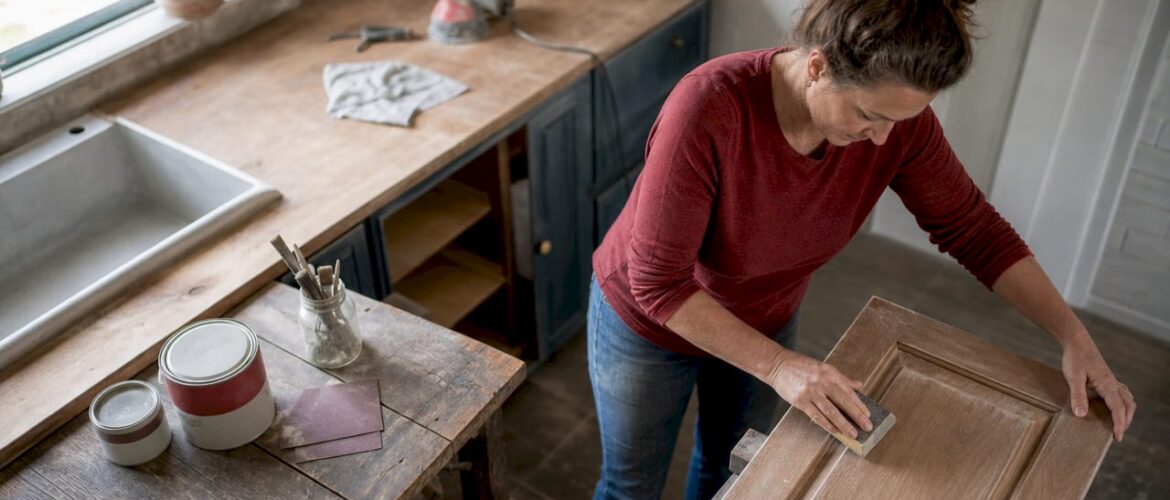
Cabinet refinishing is defined as the process of cleaning, sanding, and recoating existing cabinet boxes while preserving their structural framework, and it delivers a measurably lower cabinet refinishing environmental impact than full replacement. A standard 10×10 kitchen replacement sends 400 to 800 lbs to the landfill, while refinishing generates a fraction of that waste. Refinishing also skips the manufacturing, milling, and shipping chain that makes new cabinetry so carbon-heavy. For homeowners who want a kitchen that looks fresh without the environmental cost, refinishing is the clearest path forward.
1. How cabinet refinishing minimizes landfill waste and preserves resources
Cabinet refinishing preserves the most material-intensive part of any kitchen: the cabinet boxes. Boxes account for the bulk of wood, hardware, and engineered material in a cabinet system. Refinishing updates only the finish and, when needed, the doors. The structural boxes stay exactly where they are.
The waste difference between refinishing and replacement is not marginal. Full replacement can send 400 to 800 lbs of material to a landfill for a standard kitchen. That figure includes demolished boxes, old doors, face frames, and packaging from new units. Refinishing generates a small fraction of that, mostly in the form of used sandpaper, tape, and coating containers.
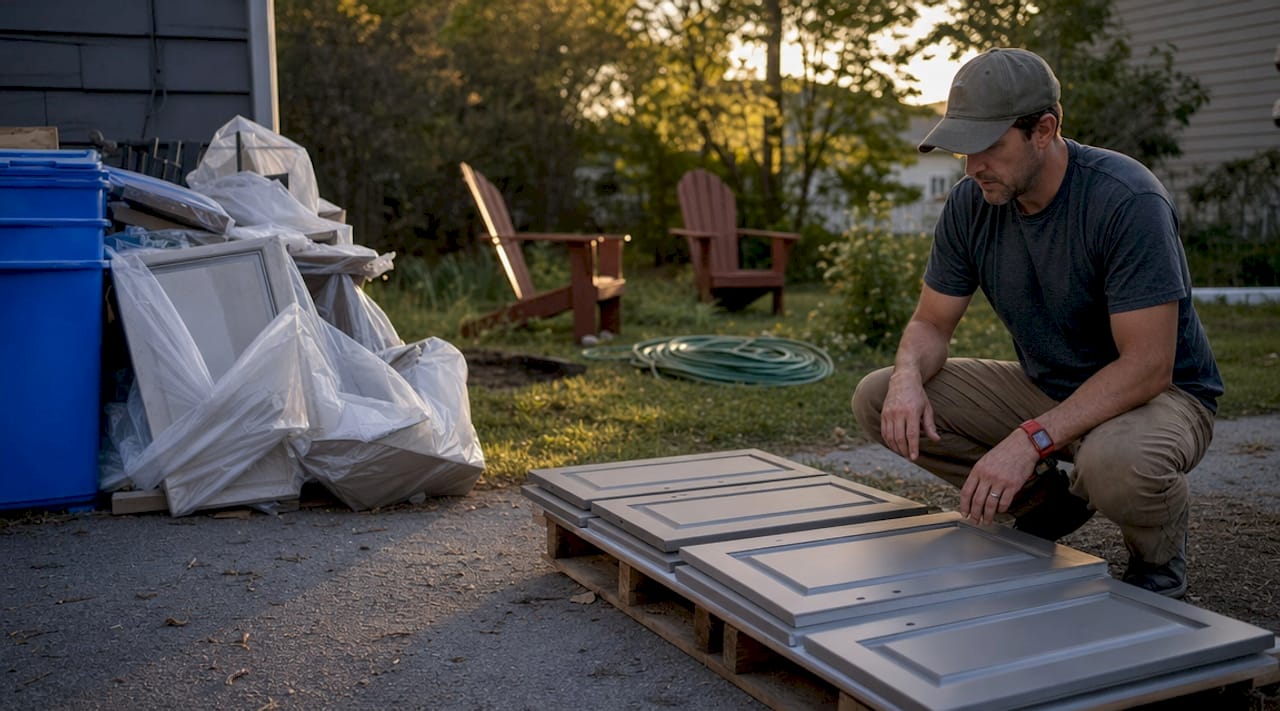
Here is how the three main cabinet update methods compare on waste output:
| Method | Estimated waste (10×10 kitchen) | Cabinet boxes preserved? |
|---|---|---|
| Refinishing | Under 10 lbs | Yes |
| Refacing | 50 to 100 lbs | Yes |
| Full replacement | 400 to 800 lbs | No |
Thinking about cabinets in terms of boxes, fronts, and finish makes the environmental math simple. Refinishing touches only the finish layer. Refacing replaces fronts and finish. Replacement discards everything.
Pro Tip: Inspect your cabinet boxes before committing to any update. If the boxes are structurally sound with no water damage or warping, refinishing is almost always the lower-waste choice.
2. VOC emissions and eco-friendly coatings in cabinet refinishing
Volatile organic compounds, or VOCs, are the chemical emissions released by paints, stains, and coatings during application and curing. Indoor VOC levels are typically 2 to 5 times higher than outdoor levels, which makes coating selection a genuine health and environmental concern during any refinishing project.
Regulatory pressure has pushed the coatings industry toward cleaner formulas. The EU Paints Directive, for example, drove reformulation that reduced VOC emissions by 60% between 2004 and 2019 by shifting solvent-based products to water-based alternatives. In the U.S., the EPA and state agencies like California’s CARB have set similar thresholds. Low-VOC coatings contain roughly 50 to 250 g/L of VOC content, while zero-VOC products fall below 5 g/L.
The most forward-looking option in the market today is bio-based acrylic polymer paint. These bio-acrylic binders contain over 20% bio-carbon, align with USDA BioPreferred standards, and deliver near-zero VOC emissions without sacrificing durability. They reduce fossil feedstock dependency while performing comparably to conventional cabinet finishes.
“Comprehensive indoor air quality improvements depend on addressing wet paint VOCs and curing emissions over time, not just at the moment of application.” — American Coatings Association
Key coating categories to consider for eco-friendly cabinet refinishing:
- Zero-VOC waterborne finishes: Best for indoor air quality during and after application
- Bio-based acrylic coatings: Reduce fossil inputs and meet USDA BioPreferred criteria
- Low-VOC oil-modified waterborne: Offers durability closer to oil-based with reduced emissions
- UV-cured coatings: Cure instantly under UV light, eliminating most solvent evaporation
Pro Tip: Open windows, run exhaust fans, and keep the kitchen ventilated for at least 48 hours after applying any coating, even zero-VOC products. Curing emissions continue after the surface feels dry.
3. Refinishing vs. refacing vs. replacement: environmental pros and cons
The three cabinet update options differ sharply in environmental cost, and the gap is wider than most homeowners realize. Refinishing preserves the full cabinet structure and generates minimal waste. Refacing replaces doors and face frames but keeps the boxes, producing moderate waste. Full replacement demolishes everything and triggers a full manufacturing and shipping cycle for new units.
| Factor | Refinishing | Refacing | Replacement |
|---|---|---|---|
| Waste generated | Minimal (under 10 lbs) | Moderate (50 to 100 lbs) | High (400 to 800 lbs) |
| Raw materials needed | Coatings only | New doors, veneers, hardware | Full cabinet system |
| Carbon footprint | Lowest | Moderate | Highest |
| Cabinet boxes preserved | Yes | Yes | No |
| Typical cost range | $3,000 to $8,000 | $6,000 to $15,000 | $15,000 to $40,000 |
Replacement involves manufacturing, milling, assembly, packaging, and cross-country transport before a single cabinet reaches your kitchen. Each step burns energy and emits carbon. Refinishing skips every stage of that chain.
The right choice depends on cabinet condition. Boxes with structural damage or severe water rot may genuinely need replacement. But when the boxes are sound, refinishing delivers the lowest environmental cost by a significant margin.
4. Practical tips to maximize eco-friendly cabinet refinishing benefits
Choosing to refinish is the first step. Doing it with the right materials and methods determines how green the outcome actually is. These steps give you the most sustainable result:
- Select certified low-VOC or zero-VOC coatings. Look for products that meet EPA standards or carry Green Seal certification. Brands like Benjamin Moore Advance and Sherwin-Williams Emerald Urethane offer low-VOC cabinet-grade finishes.
- Prepare surfaces thoroughly. Proper sanding and degreasing improve adhesion, which means the finish lasts longer. A durable finish that holds for 10 or more years reduces the frequency of refinishing and lowers cumulative environmental impact.
- Avoid solvent-based chemical strippers. Products containing methylene chloride or N-methylpyrrolidone release high levels of VOCs and require hazardous waste disposal. Water-based strippers or mechanical sanding are cleaner alternatives.
- Use reusable tools where possible. Foam rollers, quality brushes, and spray equipment can be cleaned and reused across multiple projects. Disposable applicators add to landfill waste.
- Plan containment carefully. Plastic sheeting and painter’s tape keep overspray and sanding dust contained. This protects indoor air quality and makes cleanup faster with less waste.
- Check for lead paint in older homes. EPA regulations require lead-safe practices in homes built before 1978. Certified contractors use containment and cleaning methods that prevent lead dust from spreading.
Pro Tip: Applying two thin coats instead of one heavy coat reduces drips, improves adhesion, and uses less product overall. Less product means lower VOC output and less packaging waste.
5. The broader environmental benefits of cabinet refinishing beyond the kitchen
The cabinet refinishing environmental impact extends well past your kitchen walls. Every set of cabinets that gets refinished instead of replaced reduces demand for lumber, plywood, and medium-density fiberboard. That reduced demand directly supports lower deforestation rates, since extending cabinet life delays raw material extraction and slows the cycle of forest clearing for wood products.
The manufacturing chain for new cabinets is energy-intensive at every stage. Trees are harvested, milled into lumber or processed into engineered wood, assembled into cabinet units, finished in a factory, packaged, and shipped. Each stage burns fossil fuels. Refinishing eliminates all of it.
This approach aligns directly with circular economy principles, which prioritize extending the useful life of existing products over extracting new materials. When refinishing is adopted widely across a neighborhood or city, the cumulative effect on landfill diversion and carbon reduction becomes significant.
“Refinishing aligns with circular economy goals by extending cabinet life and reducing raw material extraction, delaying landfill disposal and reducing demand for lumber and engineered wood.” — Imperial Cabinets
Key environmental benefits that reach beyond the kitchen:
- Reduced deforestation: Less demand for new wood products means fewer trees harvested
- Lower manufacturing emissions: No milling, assembly, or factory finishing required
- Reduced transport carbon: No cross-country shipping of new cabinet units
- Landfill diversion: Existing materials stay in use rather than entering the waste stream
- Support for green-certified processes: Refinishing projects using certified low-VOC coatings qualify for green renovation standards in many jurisdictions
Key takeaways
Cabinet refinishing is the lowest-waste, lowest-carbon method for updating kitchen cabinets because it preserves existing structures, eliminates manufacturing demand, and reduces landfill burden by hundreds of pounds compared to full replacement.
| Point | Details |
|---|---|
| Waste reduction is dramatic | Refinishing generates under 10 lbs of waste versus 400 to 800 lbs for full replacement. |
| Coating choice determines air quality | Zero-VOC and bio-based acrylic finishes protect indoor health and reduce fossil inputs. |
| Durability multiplies savings | A finish that lasts 10 or more years lowers cumulative environmental impact per year. |
| Circular economy alignment | Refinishing extends cabinet life, reducing lumber demand and supporting deforestation reduction. |
| Lead safety is non-negotiable | Homes built before 1978 require EPA-certified lead-safe practices during any refinishing work. |
Why refinishing deserves more credit than it gets
Most homeowners I talk to think of cabinet refinishing as a budget compromise. They assume the “real” renovation is replacement, and refinishing is what you do when you can’t afford better. That framing is wrong, and it costs people both money and environmental credibility.
The sustainability case for refinishing is not subtle. You are preserving hundreds of pounds of material that would otherwise go to a landfill. You are skipping an entire manufacturing and shipping chain. You are choosing a process that, when done with the right coatings, produces minimal chemical emissions. That is not a compromise. That is the better choice on every measurable axis.
The one area where I think homeowners genuinely need to pay more attention is coating selection. Not all “eco-friendly” labels mean the same thing. A product marketed as natural can still emit significant VOCs during curing. The research from the American Coatings Association makes this clear: emissions continue after application, and truly green refinishing means choosing products with verified low emissions across the full curing cycle, not just at the moment of application.
If you are a DIY enthusiast, the practical path is straightforward. Choose a certified low-VOC or zero-VOC waterborne finish, prepare your surfaces properly, ventilate aggressively, and apply thin coats. The result will last longer, perform better, and carry a fraction of the environmental cost of new cabinets. That combination of durability, savings, and sustainability is exactly what makes refinishing the smarter renovation choice for 2026.
— Jesse
Ready to refinish with sustainability in mind?
Choosing the right professional makes the difference between a finish that lasts two years and one that holds for a decade. Cabinetsrefinishing uses a factory-finish methodology with multiple protective layers and meticulous surface preparation, completing most projects in 3 to 5 days at a cost of $3,000 to $8,000 compared to $15,000 to $40,000 for replacement.

Their team selects low-VOC, durable coatings that protect your indoor air quality while delivering a finish that reduces how often you need to refinish at all. For homeowners who want a kitchen that looks new without the environmental cost of replacement, explore the full refinishing process or browse sustainable finishing solutions to find the right approach for your kitchen.
FAQ
Does cabinet refinishing actually reduce landfill waste?
Yes. Full cabinet replacement sends 400 to 800 lbs of material to a landfill for a standard 10×10 kitchen, while refinishing generates under 10 lbs of waste by preserving the existing cabinet boxes.
What makes a cabinet coating eco-friendly?
A coating is considered eco-friendly when it contains less than 50 g/L of VOC content (zero-VOC threshold is below 5 g/L) and uses water-based or bio-based binders instead of solvent-based formulas.
How does refinishing help reduce deforestation?
Refinishing eliminates demand for new lumber, plywood, and engineered wood by extending the life of existing cabinets. Fewer new cabinets ordered means fewer trees harvested and less forest cleared for wood production.
Is cabinet refinishing safe for older homes?
It can be, with the right precautions. The EPA requires lead-safe renovation practices in homes built before 1978, including containment, wet sanding, and certified contractor oversight to prevent lead dust exposure.
How long does a professionally refinished cabinet finish last?
A properly prepared and applied cabinet finish typically lasts 8 to 15 years depending on the coating type, surface preparation quality, and daily use. Durable finishes reduce the frequency of refinishing and lower the overall lifecycle environmental impact.
Recommended
- Cabinet Refinishing for Interior Designers: The Strategic Guide to High-End Kitchen Transformations – Cabinet Refinishing and Cabinet Painting Denver 720-219-9716
- Cabinet Refinishing Process Explained: A Denver Homeowner’s Guide to Factory-Like Results – Cabinet Refinishing and Cabinet Painting Denver 720-219-9716
- Refinishing Cabinet Boxes On-Site: The Professional Guide to Factory-Grade Results – Cabinet Refinishing and Cabinet Painting Denver 720-219-9716
- Cabinet Painting Project Management: A Professional Guide for Denver Homeowners – Cabinet Refinishing and Cabinet Painting Denver 720-219-9716