
Two quotes for the same set of kitchen cabinets can differ by a wide margin, and the paint is rarely the reason. The difference is almost always the application method. One crew sprays. The other brushes and rolls. Once you understand what actually happens during each process, the price gap stops looking random and starts looking like a description of two different jobs.
The core trade is simple. Brush and roll spends more human hours on the surface doing the work by hand. Spray spends more hours on masking, containment, and equipment, then applies the coating in a fraction of the time. Both are legitimate ways to refinish cabinets. They just produce different results, and they charge you for different things.
Two Different Jobs Hiding Behind Two Quotes
When a painter writes an estimate, they are estimating hours. Brushing and rolling cabinets is slow work because every door face, stile, rail, and inside corner has to be worked by hand. Rollers handle broad flat areas reasonably well, but the moment you hit an edge, a recessed panel, or an inside corner, the roller stops being useful and a brush takes over. That back and forth is where the labor goes.
Spray work compresses the actual coating step dramatically. Painters who do both consistently describe spraying as easier and faster than brushing or rolling. That speed does not automatically make a sprayed job cheap, because the time savings get reinvested into preparation and protection. But it does explain why a spray quote is structured so differently from a hand-applied one.
What a Spray Finish Actually Is
Spraying atomizes paint and lays it onto the cabinet surface as a fine, even film. Because there is no tool touching the surface, there is nothing to leave a texture behind. The result is a refined, uniformly smooth finish across doors, drawer fronts, and frames.
That uniformity is the whole point. A sprayed film builds consistently across flat panels and into profiles, which is why spraying is the method associated with a factory-style look. Professional painters with access to spray equipment generally prefer it for cabinet work, and the reason is straightforward: nothing compares to the way sprayed paint lays down on a door.
Spraying also changes how much sanding and rework a job needs between coats. One painter working on cabinet doors described spray priming as much quicker and neater than brush priming, with multiple color coats and sanding between them. Neater application means fewer defects to chase and correct later.
What Brush and Roll Actually Delivers
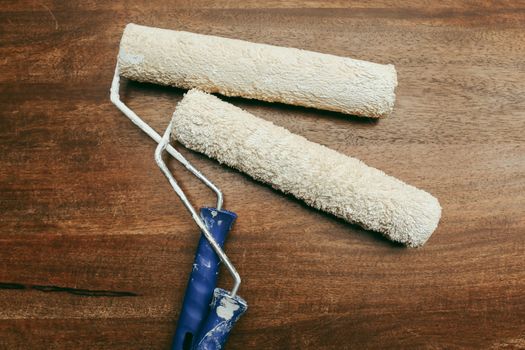
Brush and roll is not a bad method. It is a hand method. Rollers are genuinely useful for the flat areas of cabinet doors and drawer fronts, and brushes are the right tool for edges and corners. A skilled painter can produce a brush and roll finish that looks good, and many homeowners have lived with one happily for years.
The honest limitation is texture. Every pass of a roller leaves a slight stipple, and every brush stroke leaves a directional mark. Some of that levels out as the paint flows, and some of it does not. The final surface carries the memory of the tools that made it.
There is also a speed ceiling. Brushing and rolling a full kitchen takes longer per unit of surface area, and that time is the single largest line item in a hand-applied quote. You are paying for hours, not for materials.

Where Your Money Actually Goes
The table below breaks down what each method spends your money on. It is not a price list, since quotes vary by kitchen size, door style, and condition. It is a map of where the hours disappear.
| What you are paying for | Spray finish | Brush and roll |
|---|---|---|
| Application speed | Fast. Coating covers large areas quickly. | Slow. Every surface is worked by hand. |
| Equipment and setup | Spray equipment plus masking and protection of the surrounding space. | Basic tools. Minimal setup overhead. |
| Surface texture | Uniform, smooth film with no tool marks. | Roller stipple and brush marks are part of the result. |
| Edges, corners, profiles | Coated in the same pass as the flats. | Roller on flats, brush on edges and corners. |
| Best fit for the paint | Thinner, fast-drying products built for spraying. | Paints formulated to flow and level by hand. |
| Rework risk | Lower. Fewer defects to sand back. | Higher. Marks and drips get corrected by hand. |
One point that surprises homeowners: spraying is not automatically the more expensive column. Painters who spray regularly argue it can be slightly more cost-effective once speed is factored in, which runs against the common assumption that spray work is a luxury upgrade. The real variable is not the method itself, it is how much preparation and protection the job requires.
The Finish Difference You Can See and Feel
Run your hand across a sprayed cabinet door and you feel paint. Run your hand across a brushed and rolled door and you feel paint plus the direction of travel. That is the difference in one sentence.
In a kitchen with recessed panel doors, raised profiles, or any kind of detail work, the gap widens. A roller cannot get into a recessed panel without leaving texture at the transition. A brush can, but it leaves its own lines. Spray reaches every surface the same way, so the flat and the detail match.
This matters most in kitchens where light hits the cabinet fronts at a shallow angle. Side lighting and under-cabinet lighting are unforgiving. They turn a subtle roller stipple into a visible pattern and a stray brush stroke into a line you cannot stop seeing.
Why Some Paints Only Work Well One Way
Paint formulation and application method are not independent choices. The products designed to dry rapidly and level into a hard film are excellent through a spray gun and genuinely difficult to brush and roll. Painters describe those fast-dry, thin-bodied products as great for spraying and a struggle to hand apply, because they set up before a brush or roller can smooth them out.
At the other end of the spectrum are paints built for hand application. The best of them dry to a hard finish and flow and level well enough to hide brush and roller marks better than average, and they can be applied either by hand or by spray.
This is why a cheap brush and roll job and a quality brush and roll job can look so different. The failure usually is not the method. It is a fast-drying spray-grade product pushed through a roller by someone who did not read the system.
What Brush and Roll Cannot Hide
Hand application hides less. Every imperfection in the substrate, every sanding scratch, every bit of grain raise, and every drip becomes harder to disguise when you are building the film by hand. Spray lays a thinner, more even coat, which means the prep work shows through just as honestly in the other direction, but the tool marks do not compound the problem.
The practical takeaway is that brush and roll raises the skill floor required to get a clean result. Spray rewards preparation. Hand application rewards preparation and technique in equal measure.
Questions Worth Asking Before You Sign
- Which application method will be used on the doors, the drawer fronts, and the frames? Some crews spray doors in a shop and roll frames on site.
- Will the cabinets be removed for finishing, or finished in place?
- How many coats, and is sanding between coats included?
- What product system is being used, and was it chosen for spraying, for hand application, or for both?
- What does the warranty cover, and for how long?
Those five answers tell you more about a quote than the total at the bottom. A low number built on one coat and no sanding is not the same product as a low number built on efficient spraying.
How We Approach It
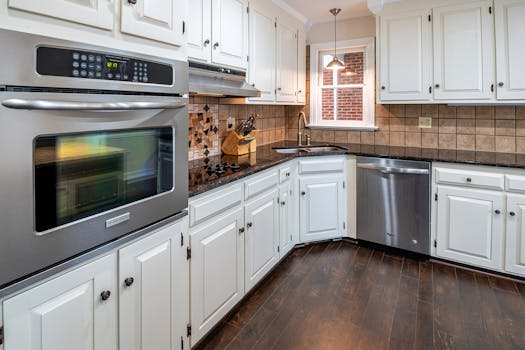
Our shop sprays cabinets and does not offer brush and roll as an option. We refinish and repaint existing kitchen cabinets across Denver, Aurora, Littleton, Englewood, Centennial, Parker, Boulder, Lakewood, Arvada, and Golden, and we color match to Sherwin Williams and Benjamin Moore systems. Every job carries a three-year warranty, and we have been refinishing cabinets in the Denver area for decades.
We work this way because sprayed cabinets give the factory-style finish that hand application cannot match, and because refinishing existing cabinets is faster, less expensive, and less wasteful than replacing them. If you are weighing a refinish against a full remodel, the spray method is the reason a refinish can deliver a result that looks like new cabinetry.
Frequently Asked Questions
Is spray finishing really faster than brushing and rolling?
Yes, on the coating step itself. Painters who do both describe spraying as easier and faster because the material goes on in one even pass instead of being worked in by hand. That saved time gets partly reinvested in masking and protecting the surrounding kitchen, so the total job length is closer than the application speed alone suggests.
Can brush and roll cabinets look as smooth as spray?
A skilled painter can produce a good brush and roll finish, but not an identical one. Rollers leave a slight stipple on flat areas and brushes leave directional marks on edges and corners. Spray lays down a uniformly smooth film with no tool contact, which is why sprayed cabinets are described as having a refined, even finish.
Why do some painters insist on spraying instead of rolling?
Because the paint system often demands it. Products that are thin and designed to dry rapidly spray beautifully and are difficult to brush or roll before they set. Professional painters with spray equipment tend to prefer it for cabinet work, since nothing compares to how sprayed paint lays down on a door.
Is a spray finish more expensive than brush and roll?
Not necessarily. Spraying is often assumed to be the premium option, but painters who spray regularly argue it can actually be slightly more cost-effective because of the speed. The variables that move the number most are kitchen size, door style, current condition, and how much preparation the cabinets need.
What should I confirm before choosing a method?
Ask which method applies to doors, drawer fronts, and frames, how many coats are included, whether sanding between coats is part of the scope, and what the warranty covers. Those details separate a durable refinish from a thin touch-up, regardless of which application method the crew uses.