
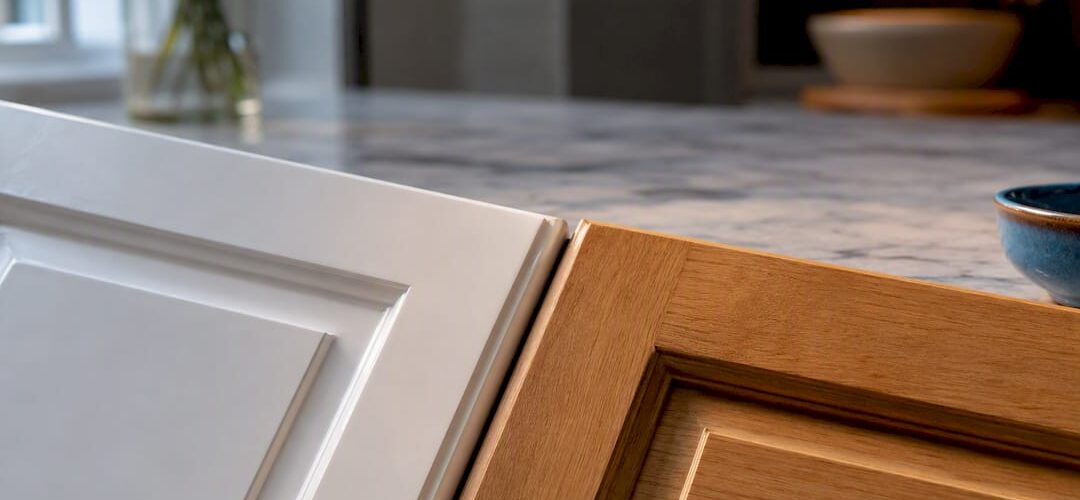
If your kitchen runs small or gets limited daylight, a warm off-white finish will read best. If you want visible wood grain, lower visible wear, and a room with more natural texture, wood cabinetry is the stronger pick. Two-tone layouts split the difference, and it’s not a fringe choice: Houzz’s 2026 data shows wood now edging out white among renovating homeowners, 29% to 28%. The checklist further down will tell you exactly where you land.
TL;DR:
- Warm white tones now outperform stark whites for their softer, more natural look that pairs well with wood flooring and stone countertops.
- Light wood cabinets like white oak and ash are the most popular among designers, offering a modern feel with visible grain, while dark woods like walnut suit larger, well-lit kitchens.
- Sealed wood cabinetry naturally conceals fingerprints and scuffs better than painted surfaces, making it more practical for busy households.
- Refinishing existing cabinets in a warm white or refreshed wood tone provides a cost-effective alternative to full replacement, with shorter project timelines.
- Two-tone kitchens, combining white upper cabinets with wood lower cabinets or vice versa, are increasingly favored for their balance of brightness and texture.
Table of Contents
- White Cabinets vs Wood Cabinets: How They Change a Room’s Look
- Which Finish Holds Up Better Over Time?
- What Do White and Wood Cabinets Cost, and How Do They Affect Resale?
- Can You Combine White and Wood Cabinets?
- How Do You Decide Between White and Wood for Your Kitchen?
- Why Refinishing Is Often the Smarter Way to Get Either Look
- The Bottom Line on White vs Wood Cabinets
- What This Trend Data Actually Means for Your Kitchen
- Sources
White Cabinets vs Wood Cabinets: How They Change a Room’s Look
The gap between white and wood isn’t just color, it’s how each one handles light. White cabinets bounce daylight around a room, which is why they’ve dominated small kitchens and dark-facing rooms for over a decade. Wood cabinets absorb light and introduce texture, grain, and depth that flat paint can’t fake. The choice hinges on what your kitchen already lacks.
Cool, stark white (think bright, blue-toned white) is falling out of favor. Design coverage now points to warmer, creamier whites replacing the clinical look that defined the 2010s, largely because warm tones pair better with natural materials like wood flooring, brass hardware, and stone counters. Shades like Benjamin Moore White Dove or Sherwin-Williams Alabaster show up repeatedly in current kitchen renovations because they soften rather than sterilize a space.
Wood tones split into three lanes worth knowing before you pick a species:
- Light wood (white oak, ash): reads modern and airy, close to the visual weight of white but with grain texture. This is the tone NKBA’s professional survey flags as the most specified wood among design pros right now.
- Medium wood (maple, cherry): a middle ground, warm without dominating a room, good for kitchens that want wood’s texture but still need brightness.
- Dark wood (walnut): dramatic and rich, best in larger kitchens with strong ambient light. Walnut cabinets in a small, dim kitchen tend to swallow the room.
One thing designers are actively avoiding: the orange-toned honey oak that defined 1990s kitchens. Current wood cabinetry leans toward tighter grain and cooler undertones, which is part of why white oak has become the default recommendation for anyone worried wood will look dated in five years.
For pairing, warm white cabinets do well against wood floors, veined stone counters, and matte black or brushed brass hardware from the latest interior door trends. Wood cabinets pair cleanly with white or pale quartz counters, since too much wood on wood can flatten a room’s contrast. In open-plan layouts, white cabinets keep sightlines light and connect the kitchen visually to adjacent living spaces. In small or north-facing kitchens, warm white almost always outperforms wood on brightness alone, but a wood island can still add warmth without darkening the whole room. If you’re weighing color families more broadly, our breakdown of current cabinet color trends covers what’s gaining ground beyond just white and wood.
Which Finish Holds Up Better Over Time?
Painted white cabinets show everything. Grease near the stove, fingerprints around handles, and water spots by the sink all sit visibly on a flat painted surface, especially in high-gloss sheens. Satin or semi-gloss finishes hide more than eggshell or matte, and they’re easier to wipe down without dulling the paint.
Wood cabinets have a built-in advantage here: grain naturally camouflages minor scuffs and fingerprints in a way flat paint can’t. That’s a real factor in kitchens with kids, pets, or heavy daily cooking. Sealed wood also tolerates humidity better than raw wood, though any wood cabinet near a dishwasher or sink still needs a quality sealant to prevent swelling or warping at the seams.
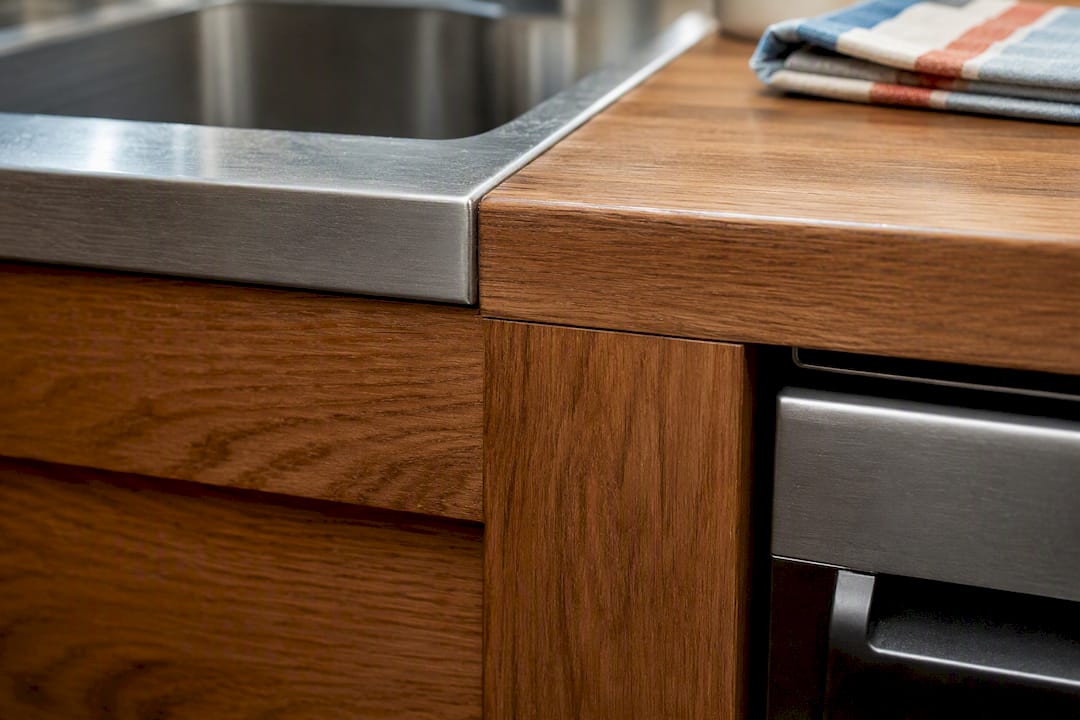
Substrate matters as much as finish. Solid wood holds paint and stain well but moves slightly with humidity changes. Plywood is the most stable choice for both painted and stained cabinets. MDF takes paint beautifully, smooth and consistent, but it doesn’t stain well and swells if it gets wet repeatedly.
A simple maintenance routine keeps either finish looking sharp:
- Wipe down cabinet fronts weekly with a mild soap and warm water, avoiding ammonia-based cleaners on painted surfaces.
- Spot-treat grease near the stove immediately rather than letting it build up on paint or grain.
- Reseal wood cabinets near sinks or dishwashers every few years depending on exposure.
- Touch up small paint chips with matched touch-up paint before they spread.
- Call a professional refinisher once wear is visible across multiple cabinets rather than one or two doors.
Pro Tip: Run your hand along the cabinet edge near the stove and sink after a year of use. If you feel roughness or lifting paint before you see it, that’s your cue to schedule a touch-up rather than wait for full peeling.
What Do White and Wood Cabinets Cost, and How Do They Affect Resale?
Cost differences come down to material and labor, not just paint versus stain. Painted cabinets typically cost less in materials but require more prep (sanding, priming, multiple coats) to get a clean factory look. Wood cabinets in species like maple or white oak cost more upfront in semi-custom or custom builds, and walnut sits at the top of most builders’ price sheets.
Full replacement isn’t the only path to either look. Refinishing existing cabinets typically runs $3,000 to $8,000, compared to $15,000 to $40,000 for a full cabinet replacement — the kind of gap that changes a renovation budget entirely. That’s the range Cabinetsrefinishing works within for Denver-area kitchens, using a multi-coat factory finish process instead of tearing out and rebuilding.
Resale value doesn’t split cleanly along white versus wood lines. Realtor coverage of the Houzz findings notes that warm tones, whether painted or stained, tend to outperform stark or dated finishes. Warm white and light wood species like white oak both read as broadly appealing to buyers, while cool blue-white and heavy orange oak tend to age poorly in listing photos.
- If you’re selling within two to three years, prioritize warm, neutral finishes over bold color or dramatic dark wood.
- If this is a forever kitchen, personal preference should outweigh resale math entirely.
- If your budget is tight, refinishing existing cabinets in a warmer white or refreshed wood tone gets you most of the visual upgrade without a full remodel.
Can You Combine White and Wood Cabinets?
Two-tone kitchens solve the false choice between white and wood by using both. The most common formula: white or off-white upper cabinets with wood lower cabinets. It keeps the room bright at eye level while putting a more durable, forgiving finish where spills and scuffs actually happen.
The reverse setup works too, a wood island against a white perimeter, which tends to suit larger kitchens where the island already functions as a visual anchor. Houzz’s two-finish data backs up why this pairing dominates: white leads uppers at 40% and wood leads lowers at 37% in kitchens using two finishes.
A few rules keep two-tone kitchens from looking like a mismatch:
- Match hardware finish across both cabinet colors, mixed metals read intentional only when it’s a deliberate accent, not an accident.
- Keep the white warm if the wood tone leans warm; pairing a cool white with warm oak creates visible clash.
- Use the same door style on both finishes so the split reads as a design choice, not two unrelated cabinet runs.
If you’re planning this yourself, our two-tone refinishing guide walks through layout options in more detail.
How Do You Decide Between White and Wood for Your Kitchen?
Run through these factors before choosing a direction, in this order:
- Light: Check how much natural daylight your kitchen gets at midday. North-facing or windowless kitchens lean toward warm white; south-facing or well-lit kitchens can handle wood without feeling dark.
- Size: Small kitchens (under 150 square feet) generally read larger with light cabinets. Bigger kitchens can absorb dark wood without feeling cramped.
- Household use: Heavy daily cooking and kids or pets favor wood’s forgiving grain over painted surfaces that show every mark.
- Resale horizon: Selling within a few years pushes you toward warm, broadly appealing finishes over bold or trend-specific choices.
- Existing materials: Look at your counters, floors, and backsplash before committing, the finish needs to work with what’s already installed, not fight it.
- Ventilation and moisture: Kitchens with poor ventilation or high humidity need sealed wood or moisture-resistant paint regardless of style preference.
Before committing, run a few cheap tests. Photograph your kitchen at midday and again after dark with the lights on, whites and woods shift dramatically under warm bulbs versus daylight. Tape painted and stained 6×6 sample boards to your cabinets and live with them for a week. Watch how fingerprints and grease actually show up on each sample near the stove.
If your existing cabinets are structurally sound (solid boxes, working hinges, no water damage) but the finish looks dated, refinishing is almost always the smarter move over replacement. Our color selection guide for refinishing projects can help you pick a shade that fits both your space and the trend data above.
Why Refinishing Is Often the Smarter Way to Get Either Look
You don’t need a full gut renovation to land on either side of this comparison. Cabinetsrefinishing’s factory-finish process uses multiple sprayed protective coats over properly prepped surfaces, the same approach used on new cabinetry, applied to what you already own. Projects typically wrap in three to five days rather than the weeks a full replacement demands.
Refinishing makes the most sense in three situations: converting dated oak to a warm white, refreshing a wood tone that’s aged into something orange or dull, or getting a durable painted finish without waiting on custom cabinet lead times.
| What to ask a refinisher | Why it matters |
|---|---|
| What finish system do they use (spray vs. brush)? | Spray-applied factory finishes resist chipping far better than brushed paint |
| Do they offer a warranty on the finish? | Signals confidence in adhesion and durability over time |
| Can you see a sample panel first? | Confirms sheen and color match before committing the whole kitchen |
| How do they protect the space during work? | Proper ventilation and dust containment protect your home during multi-day spray work |
Before hiring anyone, ask to see before-and-after examples of oak-to-white conversions specifically, since that transformation reveals more about prep quality than almost any other job type.
The Bottom Line on White vs Wood Cabinets
Small or dim kitchen: go warm white. Want texture, warmth, and forgiving wear: go wood, white oak or maple if you want it to look current in a decade. Can’t decide: two-tone gives you both without compromise. Next step, grab paint and stain samples, tape them up, photograph your kitchen morning and night, then decide. If your current cabinets are structurally solid, refinishing them gets you either look for a fraction of replacement cost.
What This Trend Data Actually Means for Your Kitchen
The conventional advice on this topic treats white and wood as a permanent style war, one side wins, the other loses. That’s not what the data shows. A one-point gap between wood and white in the Houzz numbers isn’t a landslide, it’s a market that’s roughly split and trending toward whichever finish feels warmer and less clinical. That’s the real signal: warmth is winning, not wood specifically.
Where most homeowners go wrong is picking a finish based on a photo from a magazine kitchen with better light than theirs. The tape-and-photograph test matters more than any trend report, because your kitchen’s north-facing window or your family’s grease-heavy cooking habits will outvote a design trend every time.
If you take one thing from this, prioritize testing in your actual space over chasing what’s popular. And if your cabinets are structurally fine but visually stuck in 2015, refinishing solves the problem faster and cheaper than a full remodel ever will.
— Jesse
Sources
- The end of all-white kitchens — why wood is dominating kitchen design again (Forbes/Houzz)
- Wood cabinets overtake white as top choice in kitchen remodels (NAR)
Recommended
- Painting Oak Cabinets White: The Professional Before and After Transformation Guide
- Cabinet Refinishing vs. Replacing in Denver: A 2026 Homeowner’s Decision Guide
- Update Cabinets Without Replacing: The 2026 Denver Homeowner’s Guide
- Modernizing Kitchen Cabinets on a Budget: The Denver Homeowner’s Guide to High-End Results