
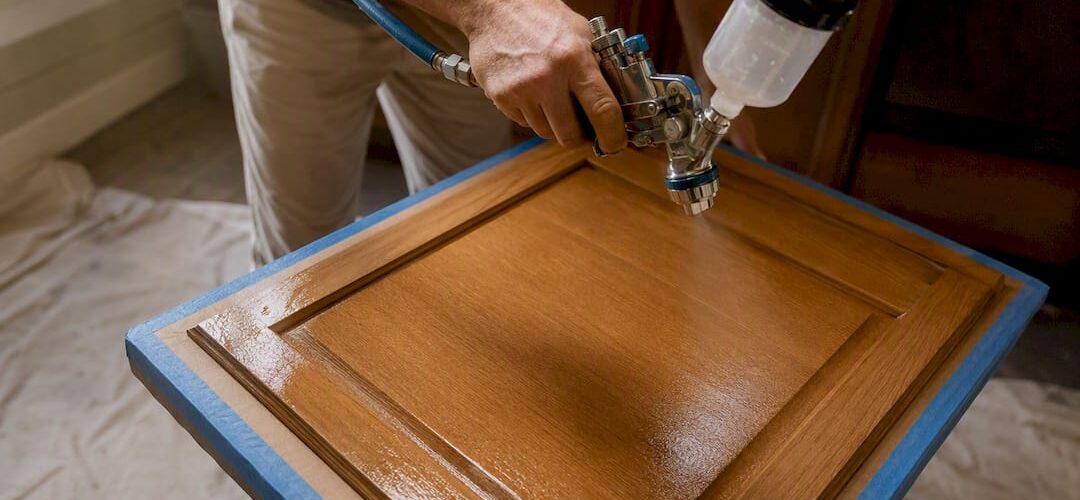
Yes. For most homeowners, modern water-based cabinet coatings beat solvent-based alternatives on nearly every metric that matters at home.
- Low odor, low VOC: you can finish cabinets without evacuating the kitchen for a week.
- Real durability: 2K waterborne systems now rival solvent finishes for hardness and wear.
- Faster turnaround: shorter dry and recoat windows mean less time with your kitchen in pieces.
Cabinet Refinishing Denver typically completes a full factory-finish job in 3 to 5 days, with homeowners saving between $3,000 and $8,000 compared to full cabinet replacement.
Key Takeaways
Water-based cabinet coatings now deliver durability close to solvent-based finishes while cutting VOC exposure, odor, and hazardous waste at every step.
| Point | Details |
|---|---|
| Low VOC, low odor | Water-based coatings cut fumes significantly, making kitchens livable during the project. |
| 2K systems close the gap | Two-component waterborne coatings match solvent-level hardness without ventilation upgrades. |
| Prep decides longevity | Degreasing, sanding, and correct primer matter more than the paint brand chosen. |
| Humidity affects cure time | High humidity slows drying and can trap moisture under a rushed topcoat. |
| Cabinet Refinishing Denver | Delivers factory-finish results in 3 to 5 days, saving homeowners $3,000 to $8,000 versus replacement. |
Table of Contents
- Key Benefits of Water-Based Cabinet Coating
- Does Water-Based Finish Hold Up as Well as Oil-Based?
- How Do You Apply Water-Based Coating to Cabinets?
- Which Water-Based Coating Type Fits Your Cabinets?
- Should You DIY Your Cabinets or Hire a Pro?
- What Does Cabinet Refinishing Cost and How Long Does It Take?
- Are Water-Based Cabinet Coatings Better for the Environment?
- How Do You Fix Common Water-Based Coating Problems?
- Why We Recommend Water-Based Finishes for Most Kitchens
- Get a Factory-Finish, Low-VOC Cabinet Upgrade
- Sources
Key Benefits of Water-Based Cabinet Coating
The biggest draw isn’t just eco-friendliness. It’s that you no longer have to trade air quality for a finish that holds up.
- Cleaner air while you work and live. Waterborne coatings carry far lower VOC content than solvent-based paints, which matters when you’re painting cabinets in an occupied kitchen rather than a ventilated shop, according to a review of waterborne polymer coatings.
- Faster recoats, shorter project windows. Water-based finishes dry to the touch quickly and typically accept a second coat within hours, not days.
- No yellowing over time. High-quality acrylic emulsions and waterborne alkyds now resist the amber cast that plagues oil-based finishes on white and light-colored cabinets.
- Easier cleanup, less hazardous waste. Soap and water replace mineral spirits, and you skip the disposal headache that comes with solvent-soaked rags and leftover thinner.
- Wider adoption means better product choices. Water-based paints now make up roughly 80% of residential paint sales in many markets, so manufacturers keep improving the cabinet-specific formulas.
Pro Tip: A satin or low-sheen finish hides minor prep flaws better than gloss, but if your family tends to leave fingerprints everywhere, a slightly higher sheen wipes clean faster and shows less buildup over the years.
Does Water-Based Finish Hold Up as Well as Oil-Based?
Mostly, yes, and the gap keeps narrowing every year. Older water-based paints had a reputation for softness and scuffing, but that reputation is out of date for cabinet-grade products.
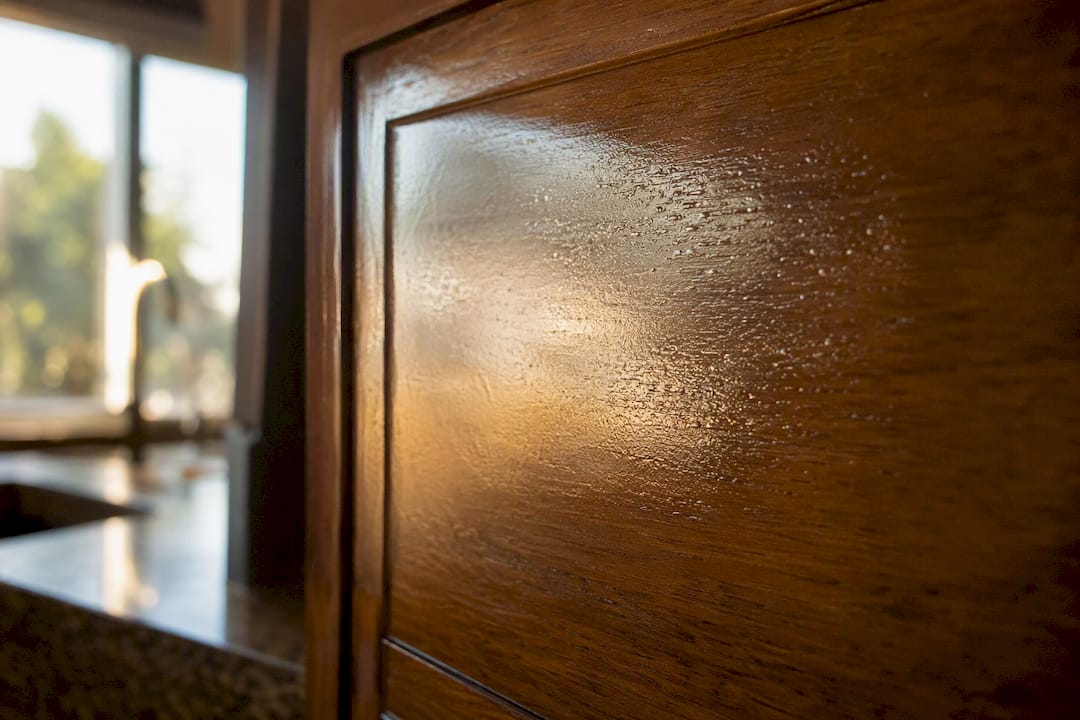
Standard solvent-based enamels still win in a few niche categories, especially ultra-hard specialty industrial coatings and certain outdoor clear finishes on raw wood, where long-term UV and moisture durability remains a challenge for waterborne clears even with nanomaterial additives showing promise. Indoors, on cabinet boxes and doors, that disadvantage mostly disappears.
The real leap forward is the 2K waterborne system, a two-component water-based coating that cures chemically rather than just drying. These systems deliver fast, high-hardness finishes without requiring the ventilation upgrades or facility changes solvent systems demand, which is exactly why professional refinishers have shifted toward them for factory-style results.
Where water-based still lags:
- Ultra-glossy piano-finish looks that some solvent lacquers achieve more easily.
- Outdoor cabinetry or exposed wood trim facing direct sun and rain.
- Extremely low-temperature garages or basements, where cure times stretch out.
Waterborne coatings now represent the largest global coatings category by volume, a shift driven as much by performance gains as by regulation.
How Do You Apply Water-Based Coating to Cabinets?
What matters most isn’t the paint can, it’s the prep underneath it. A perfect coat over grease and old wax will fail no matter how good the formula is.
- Remove all hardware, doors, and drawer fronts, and label everything.
- Degrease every surface with a dedicated cleaner. Kitchen cabinets collect cooking oil residue that plain soap won’t cut.
- Sand with 150 to 220 grit to knock down sheen and give the primer something to grip.
- Fill dents, chips, or gouges, then re-sand those spots smooth.
- Prime with a bonding primer suited to the substrate. MDF and laminate need a different primer than solid wood.
- Apply two to three thin topcoats, sanding lightly between coats once each is dry to the touch.
- Let doors cure fully, often 24 to 72 hours, before rehanging.
Humidity and temperature swing dry times more than most DIYers expect. Cabinet Refinishing Denver’s guide on how humidity affects cabinet paint application covers the specifics, but the short version: high humidity slows evaporation and can trap moisture under a topcoat if you rush it.
- Spraying gives the smoothest, most factory-like result and avoids brush marks entirely.
- Brushing or rolling works fine for flat panels but requires patience and the right synthetic-bristle brush to avoid streaking.
- Doors stacked or closed too soon after coating can stick together, a problem called blocking. Give every coat its full recoat window.
Pro Tip: If you’re using a 2K waterborne product, mix only what you’ll use within its pot life, usually a few hours, and work in a space with real airflow. These systems cure chemically once mixed, so unused material in the pot hardens and can’t be saved for later.
Which Water-Based Coating Type Fits Your Cabinets?
You’ll run into four main families at the paint counter, and picking the wrong one is the most common DIY mistake.
- Acrylic latex is the budget entry point. Easy to apply, forgiving for beginners, but softer over time and less resistant to daily kitchen abuse.
- Acrylic-alkyd hybrids combine water cleanup with the leveling and hardness closer to oil-based enamel. Most contractor and DIY guides now recommend this category first for cabinet projects.
- Water-based polyurethane works as a clear or tinted topcoat over stained wood, prized for scratch resistance on high-traffic surfaces.
- 2K waterborne systems are the professional-grade option, used where you need factory-level hardness and chemical resistance without solvent fumes.
For painted MDF, stick with an alkyd hybrid over a proper bonding primer. Solid wood cabinets tolerate any of the four, though polyurethane topcoats shine for stained finishes. Previously factory-finished cabinets need extra scuff-sanding and a primer built to bond to slick factory topcoats, regardless of which product you choose.
Should You DIY Your Cabinets or Hire a Pro?
Small, low-stakes projects favor DIY: a single bathroom vanity, a basic color refresh with no structural repairs, or a tight budget where your time is the trade-off.
Full kitchens, custom color matching, structural door repairs, or anything using a 2K waterborne system are better left to a professional. These systems demand mixing accuracy, spray equipment, and cure control that’s hard to replicate in a garage.
Cabinet Refinishing Denver’s factory-finish method typically completes an entire kitchen in 3 to 5 days, with homeowners saving $3,000 to $8,000 compared to full cabinet replacement.
A quality pro service brings:
- Spray booths or containment setups for a dust-free, streak-free finish.
- Controlled cure environments that shorten the total project timeline.
- A warranty backing the work, something a DIY job never comes with.
What Does Cabinet Refinishing Cost and How Long Does It Take?
DIY material costs run modest, usually a few hundred dollars in paint, primer, and sandpaper for an average kitchen, but the time investment often stretches across multiple weekends once you factor in dry times between coats.
Professional refinishing runs $3,000 to $8,000 for most kitchens, well below the $15,000 to $40,000 typical replacement cost.
- A pro job typically follows a 3 to 5 day arc: day one for prep and priming, two to three days for coats and recoats, and a final day for cure and reassembly.
- Custom color matching, extensive wood repairs, or a 2K waterborne system add time and cost.
- Weather and indoor humidity can stretch a DIY timeline well past a week if you’re painting during a rainy stretch.
Are Water-Based Cabinet Coatings Better for the Environment?
Waterborne coatings cut VOC emissions substantially compared to solvent-based paint, and they don’t require hazardous solvent disposal, which reduces environmental risk at the project level, not just in a factory setting.
Indoor air quality improves immediately. Low odor matters most in a kitchen you’re still cooking in during the project.
Regulatory pressure and sustainability mandates are accelerating the shift toward waterborne systems across the coatings industry, a trend that benefits homeowners directly through better, safer product formulas.
- Keep windows open and a fan running even though odor is minimal.
- Wear gloves and eye protection during sanding and priming, the dustier steps.
- Rinse brushes and trays with water rather than solvent, cutting your hazardous waste to nearly zero.
Cabinet Refinishing Denver’s breakdown of low-VOC paint options covers specific product recommendations for kitchens.
How Do You Fix Common Water-Based Coating Problems?
Most issues trace back to rushing the clock, not a bad product.
- Doors sticking shut (blocking): wait longer between coats, or switch to a topcoat with better block resistance.
- Orange peel texture: thin the material slightly or adjust spray technique, then re-sand and respray the affected panel.
- Peeling or poor adhesion: strip back to bare substrate and re-prime with a proper bonding primer, this is almost always a prep failure, not a paint failure.
- Lingering tackiness: give it another 48 hours before assuming failure. Water-based coatings can feel soft during cure even after they look dry.
Call a professional when you’re dealing with substrate damage, chemical incompatibility between old and new coatings, or a failed 2K application. Those problems usually need equipment and expertise beyond a home fix.
Why We Recommend Water-Based Finishes for Most Kitchens
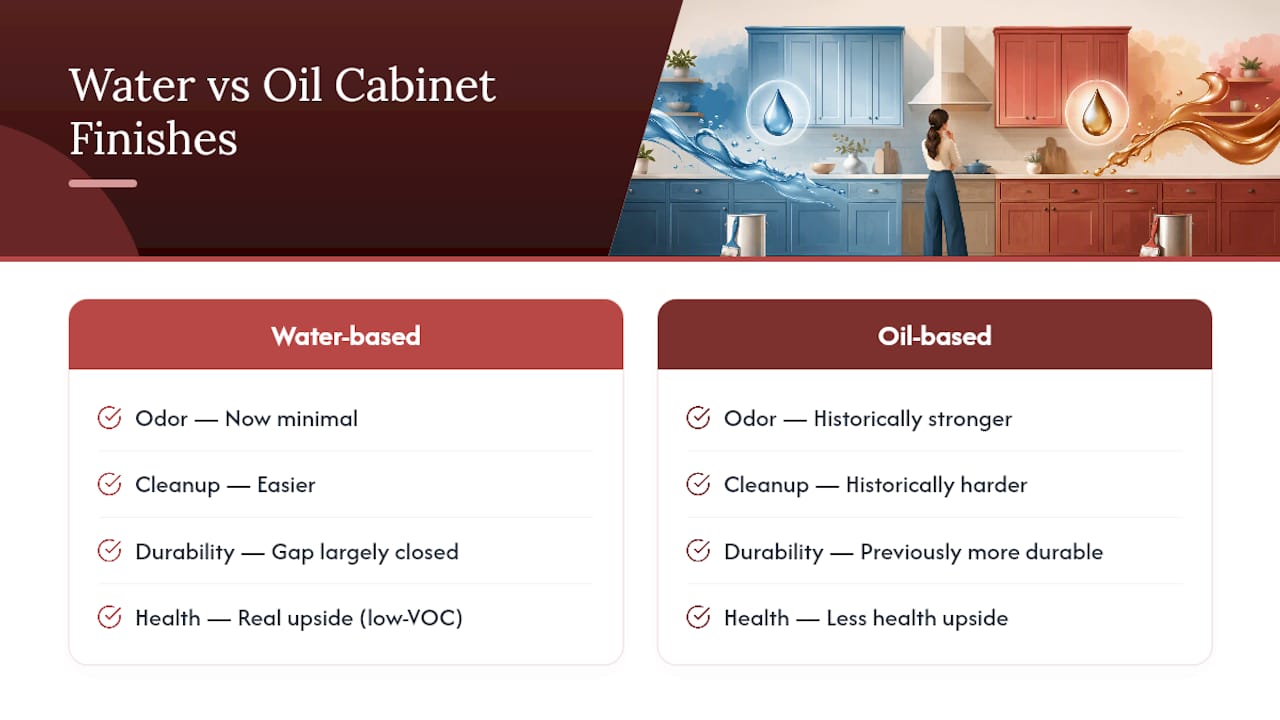
Water-based coatings are simply the right default for homeowners now. The odor, the cleanup, and the durability gap that used to justify oil-based paint have largely closed, and the health upside for a kitchen you live in every day is real. When a job calls for factory-grade results or a 2K system, that’s the point to bring in a company built around low-VOC, spray-applied finishes rather than pushing through it yourself.
Get a Factory-Finish, Low-VOC Cabinet Upgrade
If you want the durability of a 2K waterborne system without buying spray equipment or guessing at cure times, that’s exactly the gap Cabinet Refinishing Denver fills. Their factory-finish process uses professional spray techniques and custom color matching, and most kitchens are finished in 3 to 5 days rather than the weeks a full replacement demands.
The process starts with the same prep fundamentals covered above, but with controlled spray booths and cure environments a garage setup can’t match. If your cabinets are solid but tired, request a quote for cabinet refinishing in Denver and find out whether a low-VOC factory finish fits your kitchen and budget.
Sources
- Review on waterborne polymer coatings and market adoption
- Waterborne industrial coatings: technology and safety overview
- Case: Bayhydur Quix Ultra for kitchen cabinets — 2K water-based system benefits
Are water-based cabinet coatings durable enough for kitchen use?
Yes, especially 2K waterborne systems, which now match solvent-based hardness for everyday kitchen wear.
Do water-based coatings really have lower VOCs than oil-based paint?
Yes. Waterborne coatings carry substantially fewer volatile organic compounds than solvent-based systems, improving indoor air quality during and after the project.
Can I apply water-based coating over old oil-based cabinet paint?
Yes, with the right bonding primer and thorough scuff-sanding first; skipping that step is the top cause of peeling.
How long before I can use cabinets after a water-based coating?
Light use is fine after 24 to 72 hours, but full cure and hardness can take up to two to three weeks.
Recommended
- Best Low-VOC Cabinet Paint Options for Your Kitchen – Cabinet Refinishing and Cabinet Painting Denver 720-219-9716
- Cabinet Finish Sheen Levels: Impact quality of Your cabinets
- Durable Paint for Kitchen Cabinets in Denver: Professional vs. DIY Coatings – Cabinet Refinishing and Cabinet Painting Denver 720-219-9716
- What Type of Paint is Best for Kitchen Cabinets? A Pro’s Guide – Cabinet Refinishing and Cabinet Painting Denver 720-219-9716