
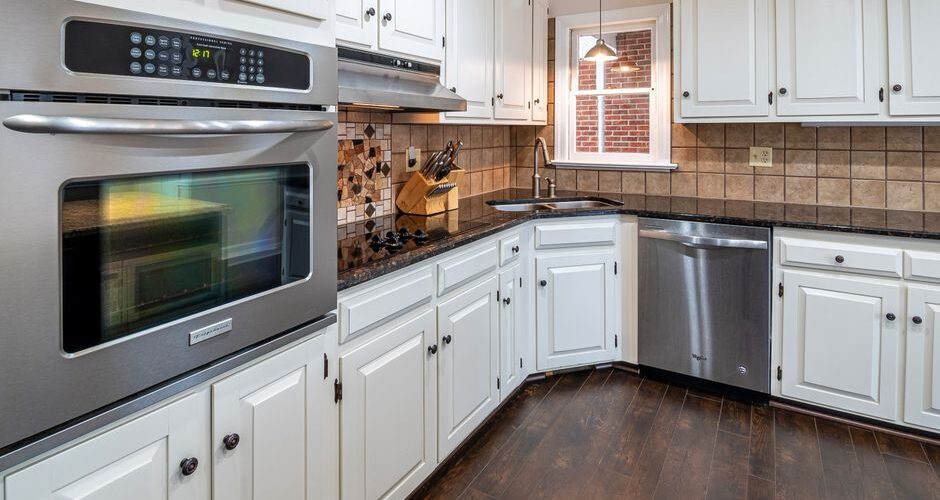
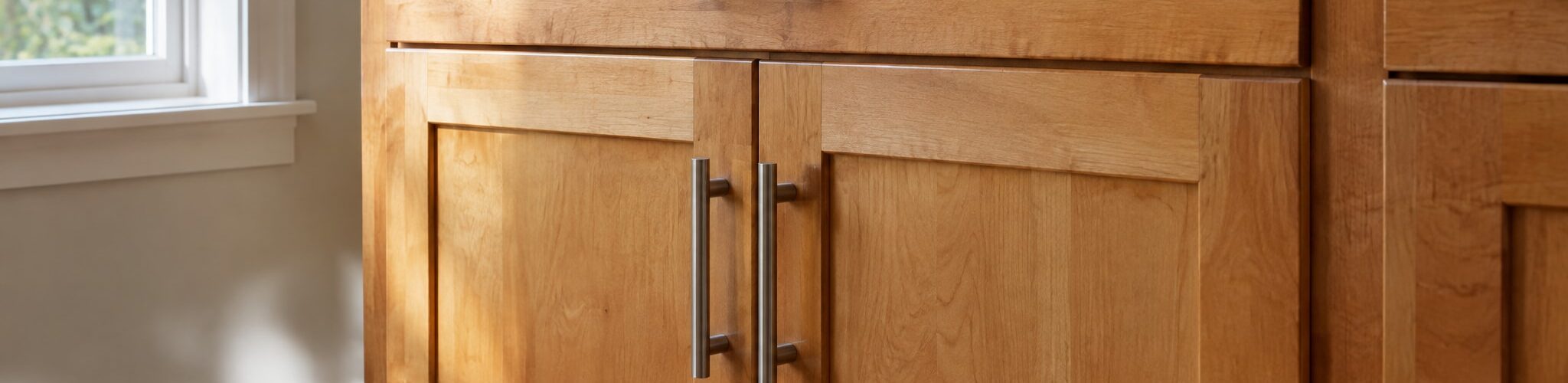
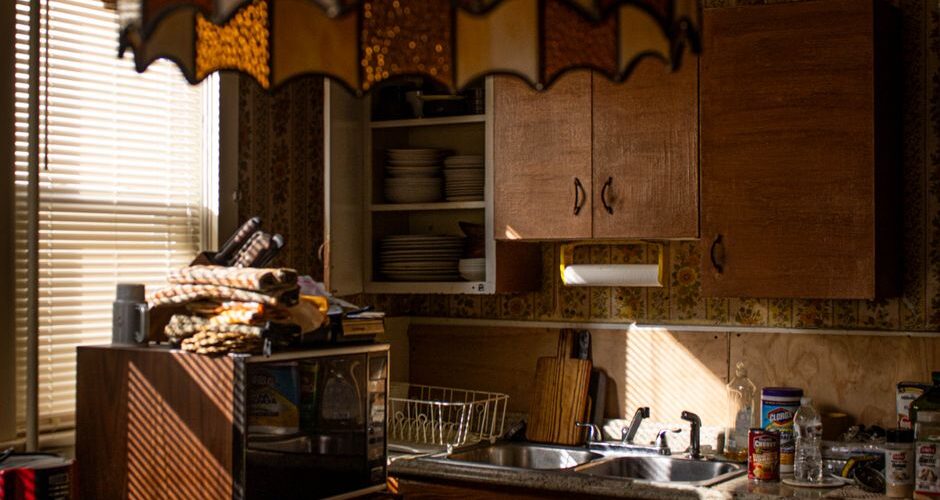
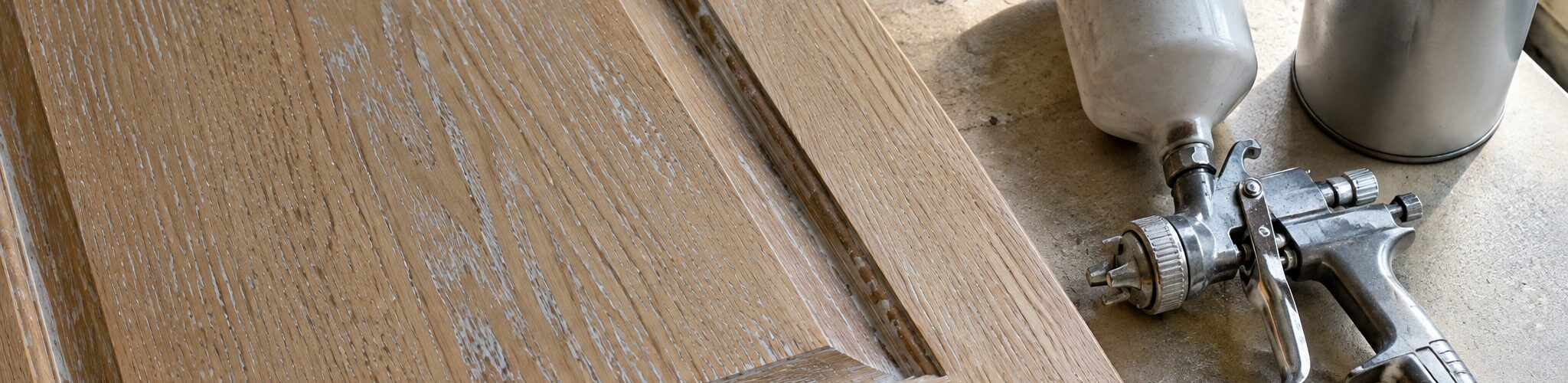
That peeling, yellowed thermofoil finish on your kitchen cabinets is a common problem. You want a kitchen you can be proud of, but a full remodel isn’t in the budget. You’ve also heard that painting thermofoil is a recipe for disaster, with paint chipping and peeling in months. The truth is, most amateur attempts do fail-but it doesn’t have to be that way. The key to a durable, factory-like finish lies in the process. Successful refinishing thermofoil cabinets isn’t about slapping on a coat of paint; it requires specific prep work, industrial-strength primers, and the right topcoat to create a bond that actually lasts.
Cabinet Painting Service Areas in Denver & Surrounding Cities, Cabinet Refinishing in Denver County, CO
Serving Lakewood, CO, Littleton, CO, Golden, CO,
Arvada, CO, Wheat Ridge, CO, Evergreen, CO,
and Morrison, CO. Parker CO. Castle Pines CO. Englewood CO. Centennial CO.
Cabinet Painting in Arapahoe County, CO
Including Centennial, CO, Greenwood Village, CO,
Cherry Hills Village, CO, Englewood, CO,
and Aurora, CO.
Cabinet Painting in Adams County & Broomfield, CO
In this 2026 pro’s guide, we cut through the misinformation and give you the facts. We will show you the exact, no-nonsense process the experts use for a flawless, long-lasting finish. You will learn the vital steps for prep work, the right materials to use, and how to realistically decide if this is a DIY project you should tackle or when it’s time to call in a professional for guaranteed results. Stop guessing and learn how to transform your kitchen without the cost of a total replacement.
Key Takeaways
- Discover why the vinyl surface on thermofoil cabinets requires a completely different prep process than wood for a finish that won’t peel.
- Learn the non-negotiable first step for a durable finish, which involves using a specific type of cleaner to remove years of built-up grime.
- Decide if a DIY project is right for you by comparing the true costs and risks of refinishing thermofoil cabinets versus hiring an experienced professional.
- Get a professional checklist to evaluate any painter’s process, ensuring they take critical steps like removing doors for a true factory-like finish.
What Are Thermofoil Cabinets & Why Are They So Hard to Paint?
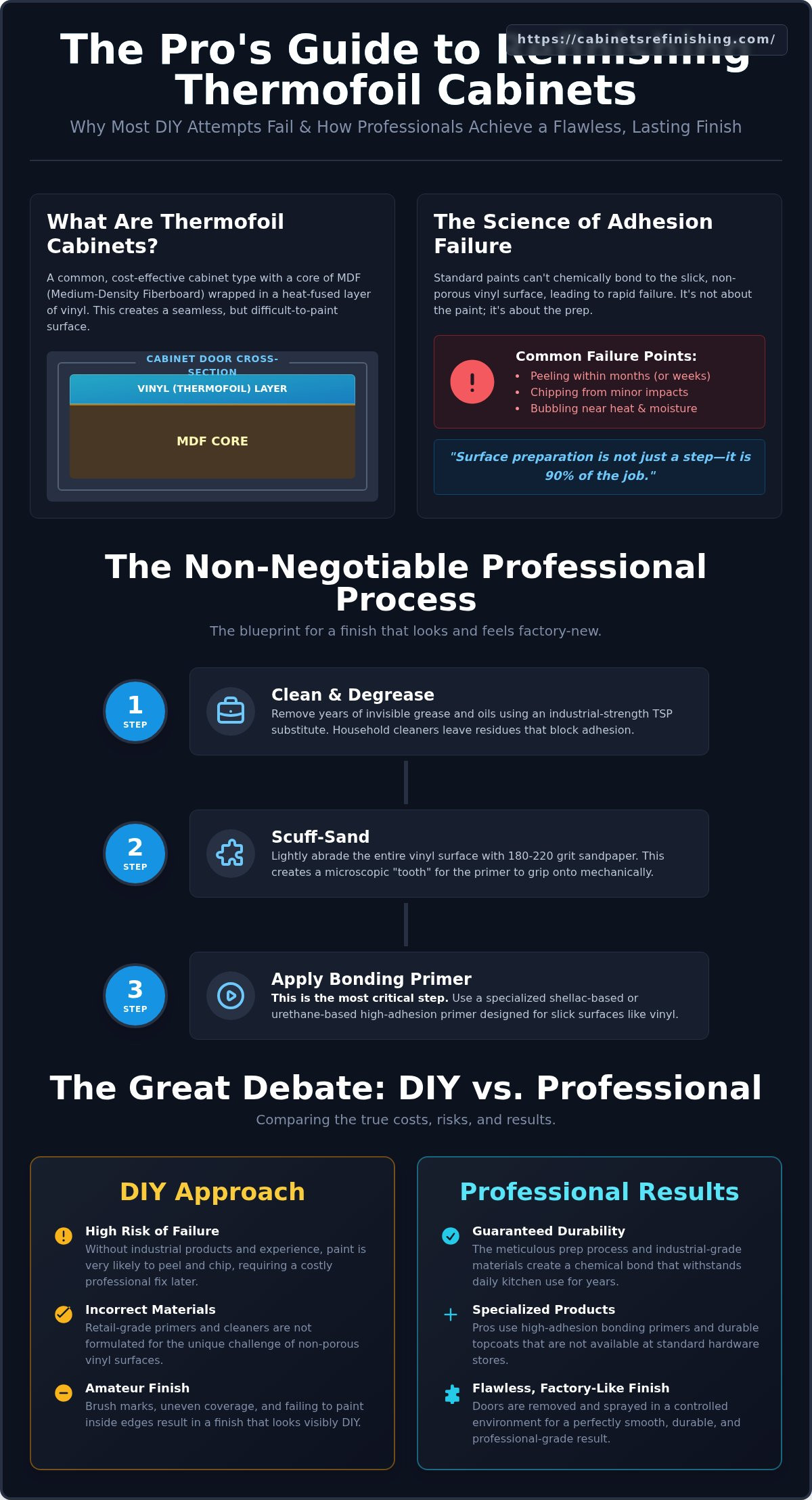
Before you begin any project, it’s vital to know exactly what you’re working with. Thermofoil cabinets are a common and cost-effective choice, but they present unique challenges for refinishing. Many homeowners ask, What are thermofoil cabinets? In simple terms, they are constructed from an MDF (Medium-Density Fiberboard) core that is wrapped in a thin layer of vinyl. This vinyl is heat-fused to the surface to create a seamless, smooth finish that is easy to clean. However, this same vinyl layer is prone to peeling, bubbling, and yellowing over time, especially when exposed to heat and moisture.
To better understand this material and the challenges it presents, watch this helpful video:
The primary reason thermofoil is so difficult to paint is its non-porous vinyl surface. Unlike wood, which has a grain that paint can soak into and bond with, vinyl is essentially plastic. Standard paints and primers simply sit on top of this slick surface without creating a strong, durable bond. This leads to common failure points like peeling, chipping, and bubbling within months, or even weeks, of application. Without industrial-strength prep work and the right bonding primers, your hard work will not last.
Identifying Thermofoil in Your Kitchen
Not sure if your cabinets are thermofoil? Here are a few clear indicators to look for:
- A Seamless Finish: The face and edges of the cabinet doors and drawer fronts have a smooth, almost plastic-like finish with no visible seams.
- A Different Backside: Check the back of a cabinet door. It is often a different color or texture, typically a flat white or wood-grain melamine.
- Signs of Peeling: Look for areas where the vinyl layer is peeling or bubbling away from the MDF core. This is most common near heat sources like your oven, dishwasher, or toaster.
The Science of Adhesion Failure on Vinyl
The challenge of refinishing thermofoil cabinets comes down to chemistry. Standard primers are designed to bond with porous surfaces like wood or drywall, not slick vinyl. They cannot create the chemical bond needed for long-term durability. Furthermore, heat and steam from cooking can get under the edges of the vinyl, causing it to delaminate from the MDF base. When this happens, any paint on top will fail with it. This is why surface preparation is not just a step-it is 90% of the job. Proper cleaning, scuff-sanding, and the use of an industrial-strength bonding primer are absolutely critical for a factory finish that lasts.
The Professional Prep Process: Your Blueprint for Success
The difference between a peeling, amateur paint job and a durable, factory-like finish comes down to one vital factor: preparation. When refinishing thermofoil cabinets, there are no shortcuts. This is the foundational work that guarantees your new finish will withstand the daily demands of a busy kitchen. Skipping any of these non-negotiable steps will lead to failure, wasting both your time and money. Our professional process is built on meticulous prep work to ensure a flawless and lasting result.
Step 1: Cleaning and Degreasing
Kitchen cabinets are exposed to years of airborne grease, cooking oils, and cleaning residues. Before you even think about sanding, this grime must be completely removed. We recommend using an industrial-strength degreaser like a TSP (Trisodium Phosphate) substitute. Avoid all-purpose household cleaners, as many contain silicones or oils that leave a film and prevent paint adhesion. The process is simple but critical: scrub every surface thoroughly, rinse with a clean, damp cloth, and allow the cabinets to dry completely.
Step 2: Sanding and Priming for Maximum Grip
Thermofoil is a slick, non-porous vinyl surface, which means paint needs help to stick. This is where scuff sanding is essential. The goal is not to remove the thermofoil but to create a rough texture, or "tooth," for the primer to mechanically bond to. Use a 180 to 220-grit sandpaper to lightly abrade all surfaces. After wiping away the dust, apply a specialized high-adhesion bonding primer. Primers designed for slick surfaces, such as shellac-based or urethane-based formulas, are the only choice for a professional-grade grip.
Step 3: Repairing Damaged Thermofoil Before Painting
Before your final coats, you must address any peeling or damaged thermofoil. If the vinyl is just slightly lifted at an edge, you may be able to secure it with a strong construction adhesive. However, for significant bubbling, cracking, or peeling, the best course of action is to remove the damaged vinyl section completely. Carefully peel it back and use a utility knife to cut a clean edge. Then, sand the exposed MDF substrate smooth so it is perfectly flush with the remaining thermofoil. Use a quality wood filler to patch any dings in the MDF for a seamless final look.
The Great Debate: DIY vs. Professional Refinishing for Thermofoil
You’ve decided your thermofoil cabinets need an update, but now you face the biggest question: should you do it yourself? While a DIY approach can seem tempting, refinishing thermofoil cabinets is not a simple weekend paint job. The outcome hinges on meticulous prep work and specialized application techniques. The choice comes down to a trade-off between your budget, your time, and the quality of the final product you’re willing to accept.
A DIY project can take multiple weekends of dedicated effort, from sanding and priming to applying multiple coats of paint. In contrast, a professional team completes the job efficiently with minimal disruption. The most critical difference, however, is the final look and longevity. A DIY job will almost always have a hand-painted appearance, while professionals deliver a flawless, durable finish that mimics a factory installation.
Cost Breakdown: Materials vs. Labor
A DIY project requires a significant investment in high-quality materials to prevent failure. Expect to spend:
- High-adhesion Primer: $50 – $80 per gallon
- Cabinet-specific Paint: $60 – $100 per gallon
- Supplies (sandpaper, rollers, tape, etc.): $75 – $150+
In the Denver area, professional refinishing typically ranges from $2,500 to $6,000+, depending on kitchen size. This is an investment in a guaranteed outcome, industrial-strength materials, and a warranty that protects your cabinets for years to come.
The Finish Quality: Sprayed vs. Rolled
This is where the difference between amateur and professional work becomes undeniable. A brush and roller, no matter how carefully used, will leave behind texture, stippling, and brush marks. At Cabinet refinishing Denver, we use professional-grade sprayers to apply thin, even coats of industrial-strength lacquer. This method is the only way to achieve a smooth, hard-wearing, and truly flawless factory finish that is impossible to replicate by hand.
A Pro’s Checklist for a Durable Thermofoil Finish
When you invest in having your kitchen cabinets refinished, you expect a finish that lasts. The difference between a paint job that peels in a year and one that looks new for a decade comes down to the professional’s process and materials. Use this checklist to vet any contractor and ensure you get the durable, factory-like finish you deserve.
A true professional’s process for refinishing thermofoil cabinets will always include:
- Off-Site Finishing: Doors and drawers are removed and taken to a dedicated spray booth. This prevents overspray in your home and allows for a flawless, controlled application that can’t be replicated on-site.
- Specialized Bonding Primer: The contractor must use a high-adhesion primer specifically formulated to bond tenaciously to non-porous surfaces like the vinyl on thermofoil.
- Industrial-Strength Topcoat: The final coats must be an industrial-grade, catalyzed lacquer or 2K polyurethane, not standard house paint from a big-box store.
- A Written Warranty: The service should be backed by a clear, written warranty that protects your investment against product failure like chipping or peeling.
The Right Materials Make All the Difference
Do not let a painter use latex or acrylic wall paint on your cabinets. These products are designed for low-traffic walls and will fail quickly under the daily wear and tear of a kitchen. Professional cabinet coatings are chemically engineered for extreme hardness and durability. A "catalyzed" lacquer is a professional-grade product that uses a hardener to trigger a chemical reaction, curing the finish into a non-porous shell that resists moisture and chipping far better than any paint that simply air-dries. For this reason, avoid any "all-in-one" paint and primer products, as they lack the specific bonding power and durability required for a lasting cabinet finish.
Questions to Ask Any Cabinet Painter
Before you hire, arm yourself with these essential questions. A true professional will have confident, detailed answers that align with the checklist above. Vague responses are a major red flag.
- What is your specific, step-by-step process for preparing thermofoil surfaces before priming?
- What exact brand and type of bonding primer and catalyzed topcoat will you be using on my cabinets?
- Can you show me video examples of your recently completed thermofoil projects, not just photos?
- How do you guarantee a flawless, factory-like finish on the doors and drawers?
- What, exactly, does your warranty cover and for how long is it valid?
Asking the right questions ensures you hire a true expert. When you’re ready for a no-nonsense answer and a professional result, we’re here to help. Get a fast, accurate quote by texting us your project details.
How We Achieve a Flawless Finish on Thermofoil in Denver
While the steps above provide a general guide, achieving a durable, factory-grade finish requires professional equipment and experience. At Painting Kitchen Cabinets Denver, we have spent over 38 years perfecting our methods, especially for challenging materials. Our entire system is built to overcome the unique adhesion problems of vinyl-wrapped doors, making us the trusted experts for refinishing thermofoil cabinets in the Denver area.
We don’t just paint over problems; we re-engineer the surface for a finish that lasts. This is not a job for house painters. It requires industrial-strength coatings and a meticulous process that we have down to a science.
Our Proven Process for Lasting Results
Our commitment to a flawless finish begins with taking your cabinet doors and drawer fronts to our dedicated, off-site finishing facility. This controlled, dust-free environment is essential for the quality we guarantee. While we work on your cabinet boxes in your home, we ensure all surrounding surfaces are completely masked and protected.
Our off-site process includes:
- Meticulous Prep: We properly clean, sand, and prepare every surface. This is the foundation of a lasting finish and the most critical step in our entire process.
- Industrial-Strength Primer: We apply a specialized, precatalyzed primer designed to bond permanently to slick surfaces like thermofoil.
- Factory Finish Spray: Using professional-grade sprayers, we apply multiple coats of industrial-strength, catalyzed lacquer for a smooth, hard, and durable surface.
- Curing and Reinstallation: Once the finish is fully cured, we carefully transport everything back to your home for a professional reinstallation, leaving your kitchen transformed.
Get Your Free Quote in the Denver Metro Area
We provide expert cabinet refinishing services across the Front Range, including Denver, Boulder, Aurora, Colorado Springs, and the surrounding communities. Getting an accurate, no-obligation price is simple. Just text us a few pictures of your kitchen and a count of the doors and drawers you want refinished. We’ll respond with a firm price right away-no hidden fees or lengthy sales calls.
Our transparent process and outstanding results are why homeowners trust us for refinishing thermofoil cabinets correctly the first time. Don’t settle for a temporary fix when you can have a permanent, beautiful solution.
Ready for a factory finish? Text us for an accurate price immediately.
Trust the Pros for a Lasting Thermofoil Transformation
As we’ve covered, thermofoil cabinets present a unique challenge. Their slick vinyl surface means that meticulous, professional-grade prep isn’t just important-it’s the vital factor for a finish that won’t peel or chip. While a DIY approach might seem tempting, achieving a durable, factory-like finish requires specialized knowledge and industrial-strength coatings that simply aren’t available at a hardware store.
This is why trusting a seasoned expert for your refinishing thermofoil cabinets project is the only way to guarantee a beautiful, long-lasting result. With over 38 years of experience serving Denver, Boulder, and the entire Front Range, we have perfected the process. We deliver an industrial-strength, factory-like finish that transforms your kitchen.
Ready to see the difference professional quality makes? Text us a picture of your cabinets for a fast, accurate quote! Let’s give your kitchen the durable, stunning update it deserves.
Frequently Asked Questions About Refinishing Thermofoil Cabinets
Can you paint over thermofoil cabinets that are already peeling?
Yes, but proper prep work is the vital factor for success. You cannot simply paint over the peeling vinyl. All loose and bubbling thermofoil must be carefully removed. The edges of the remaining vinyl are then sanded smooth to create a seamless transition with the exposed MDF underneath. Skipping this critical preparation step is the primary reason for paint failure; we ensure a flawless surface before any primer is applied for a durable, long-lasting finish.
What kind of paint do you use on thermofoil cabinets for a durable finish?
For a durable, factory finish, we use industrial-strength coatings, not standard house paint. The process requires a high-adhesion, precatalyzed primer designed to bond permanently to slick surfaces like vinyl and MDF. For the topcoat, we apply a hard-wearing, catalyzed lacquer. This professional-grade system creates a non-porous, chemical-resistant surface that withstands daily kitchen use and cleaning far better than any latex or acrylic paint an amateur painter might use.
How much does it cost to have thermofoil cabinets professionally painted?
The cost to professionally paint thermofoil cabinets depends on the size of your kitchen and the extent of the thermofoil damage that needs repair. A small to medium-sized kitchen typically ranges from $2,500 to $5,000. For an accurate price immediately, we make the process simple. Just count your total number of cabinet doors and drawers and text us the count along with a few pictures of your kitchen. We provide a firm quote based on that information.
Is it better to paint, reface, or replace thermofoil cabinets?
If your cabinet boxes are structurally sound, painting is by far the most cost-effective and efficient option. A professional paint job delivers a transformative, like-new appearance for a fraction of the cost of refacing (replacing doors and drawer fronts) or a full replacement. Refacing is more expensive than painting but cheaper than replacing, while a full replacement is the most costly and disruptive. Painting provides the highest return on investment for a major kitchen update.
How long does painted thermofoil last?
When done correctly by experienced professionals, a painted thermofoil finish can easily last 8 to 15 years, or even longer. The longevity is not determined by the paint alone but by the entire system, from meticulous cleaning and sanding to the application of industrial-strength primers and lacquers. A DIY job using the wrong materials might peel or chip within a year, but our professional process is designed for maximum durability and a finish that stands the test of time.
Do I need to remove the thermofoil vinyl before painting?
You only need to remove the sections of thermofoil that are actively peeling, bubbling, or damaged. Any vinyl that is still firmly bonded can be scuff-sanded and painted over. After removing the loose sections, we feather-sand the edges to ensure there is no visible line. Then, a high-adhesion primer is applied to the entire surface-both the remaining vinyl and the exposed MDF-to create a uniform foundation for a flawless topcoat.
Is refinishing thermofoil cabinets worth the investment?
Absolutely. Professional refinishing thermofoil cabinets is an outstanding investment that completely transforms your kitchen’s appearance at a fraction of the cost of a full remodel. It solves issues like peeling and yellowing while allowing you to choose any modern color you desire. This service not only enhances your daily enjoyment of the space but also significantly boosts your home’s resale value, making it one of the smartest and most impactful home improvement projects available.