
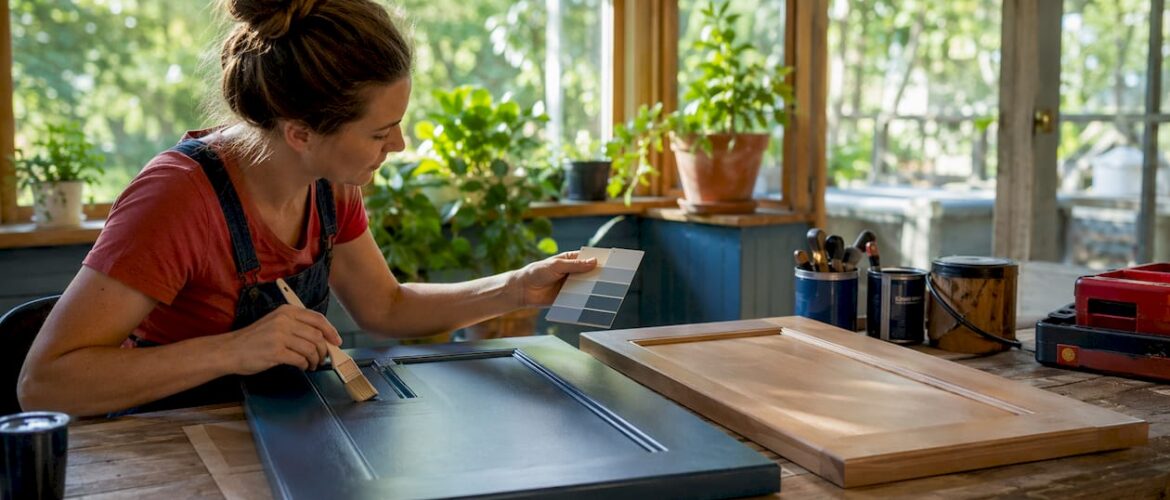
Hire a professional when you want a factory-quality finish, a 3–5 day project timeline, and a result that holds up for years. DIY makes sense only if your cabinets are structurally sound, you have spray experience, and you can accept a shorter finish lifespan. One hard fact worth knowing upfront: professional refinishing in Denver typically runs $3,000–$8,000, while full cabinet replacement costs $15,000–$40,000. DIY materials run hundreds of dollars, but hidden costs can add up fast when mistakes require professional correction.
- Choose a pro if cabinets show water damage, delamination, or structural wear
- DIY is realistic only with solid boxes, prior spray or brush experience, and patience for a multi-week process
- Risk note: skipping degreasing, uneven sanding, and wrong paint type are the most common DIY failures, and fixing them often costs more than hiring a pro from the start
Table of Contents
- How do professional vs DIY refinishing results actually compare?
- When is DIY cabinet refinishing actually realistic?
- Questions to ask a pro before you hire, and red flags to watch for
- Why surface prep separates professional results from DIY
- Safety and environmental factors worth knowing before you start
- Cabinetsrefinishing brings factory-finish results to Denver kitchens
- Key Takeaways
How do professional vs DIY refinishing results actually compare?
| Dimension | Professional | DIY |
|---|---|---|
| Cost | $3,000–$8,000 | $200–$700 materials; higher if corrections needed |
| Timeline | 3–5 days | two to four weekends minimum |
| Finish quality | Factory-smooth, spray-applied | Brush/roller marks common without spray skill |
| Durability | 8–12 years with normal use | 5–8 years for careful work |
| Disruption | Contained, predictable schedule | Kitchen out of use for weeks |
| Skill required | Handled by crew | High; steep learning curve |
| Warranty | Typically included | None |
The durability gap is the number that surprises most Denver homeowners. A professionally applied finish lasts noticeably longer, which changes the math on “saving money” with DIY considerably.
When is DIY cabinet refinishing actually realistic?
DIY works when all of these are true, not just some:
- Cabinet boxes are solid. No soft spots, swelling, or water stains on the substrate.
- You own or can rent a quality sprayer. Brush and roller finishes rarely match spray results on flat cabinet faces.
- You have time. A full kitchen takes most DIYers two to four weekends, not one afternoon.
- You’re comfortable with prep work. Degreasing, sanding to the right grit, and priming correctly account for most of the final result. Check the common DIY mistakes before you start.
- You accept the lifespan trade-off. Even a careful DIY job typically yields 5–8 years versus 8–12 for professional work.
If even one of those conditions is missing, the project tends to stall or fail. A good rule of thumb: if you’re asking whether you’re ready, you probably need more prep time or a professional.
Questions to ask a pro before you hire, and red flags to watch for
Ask these:
- Do you use spray application or brush/roller? (Spray is the standard for factory results.)
- What does your prep process include? Degreasing, sanding grit progression, and priming should all be named.
- Do you provide a written warranty, and what does it cover?
- Can you show before-and-after photos from Denver kitchens specifically?
Walk away if:
- They quote without inspecting the cabinets in person
- No written warranty is offered
- They can’t explain their surface prep steps
- The price is dramatically below the $3,000–$8,000 Denver range without a clear reason
Pro Tip: Beware of DIY door replacement pitfalls that apply equally to cabinet work: measurement errors and improper fitting during reassembly are among the most expensive mistakes to correct after the fact.
Why surface prep separates professional results from DIY
Prep is where most DIY refinishing jobs quietly fail. Professionals use commercial degreasers to strip cooking grease that standard cleaners miss, then sand with a controlled grit progression. HEPA-filtered sanding systems contain dust instead of spreading it through your home, which matters both for air quality and for the finish itself. Dust contamination in wet paint causes texture defects that no amount of topcoats will hide.

DIY prep typically means dish soap, a palm sander, and whatever primer is on the shelf. That gap in process is why proper prep determines finish lifespan more than any other single factor. Professionals also assess cabinet boxes for damage before spraying, catching soft wood or delamination that would cause a new finish to fail within months.
Safety and environmental factors worth knowing before you start
Solvent-based cabinet paints and strippers release VOCs that require serious ventilation. In a Denver kitchen, that means open windows, fans, and ideally no one else in the house during application and curing. Professionals use finish systems matched to the substrate and work in controlled conditions, which reduces fume exposure and speeds safe curing. Many also offer low-VOC or water-based options that are safer for households with children or pets.
DIY applicators often underestimate drying time and reassemble cabinets before the finish has fully cured, which causes adhesion failures and surface marks. Proper curing for oil-based finishes can take 24–72 hours per coat, longer in Denver’s dry air.
Cabinetsrefinishing brings factory-finish results to Denver kitchens
Skip the multi-week DIY project and get a finished kitchen in 3–5 days. Cabinetsrefinishing uses professional spray equipment, HEPA dust containment, and a factory-finish process that includes minor repairs, custom color matching, and eco-friendly finish options, all at a fraction of cabinet replacement cost.

Every project starts with a structural assessment so hidden damage gets fixed before the first coat goes on. The result holds up for years, backed by a warranty you won’t get from a weekend DIY job. Denver homeowners ready to stop guessing and start with a real result can book a cabinet refinishing estimate or call/text 720-219-9716 today.
Key Takeaways
Professional refinishing delivers a factory-quality finish in 3–5 days at $3,000–$8,000, lasting 8–12 years, while DIY costs less upfront but typically yields a shorter lifespan and higher risk of costly mistakes.
| Point | Details |
|---|---|
| Cost gap is real | Pro runs $3,000–$8,000; DIY materials cost $200–$700 but corrections can erase those savings. |
| Durability difference | Professional finishes last 8–12 years; careful DIY work typically reaches 5–8 years. |
| Prep drives results | HEPA sanding, commercial degreasing, and grit-controlled prep are what separate factory results from DIY. |
| DIY checklist | Solid cabinet boxes, spray equipment, and multi-weekend availability are all required for a realistic DIY attempt. |
| Cabinetsrefinishing | Offers factory-finish spray refinishing in Denver with minor repairs, custom colors, and a 3–5 day turnaround. |
Recommended
- Professional Refinishing Process Steps for Denver Kitchens – Cabinet Refinishing and Cabinet Painting Denver 720-219-9716
- Cabinet Refinishing vs. Replacing in Denver: A 2026 Homeowner’s Decision Guide
- Refinishing Cherry Cabinets in Denver: The 2026 Professional Guide to Wood Restoration
- Refinishing Old Cabinets to a Factory Finish: DIY Guide – Cabinet Refinishing and Cabinet Painting Denver 720-219-9716