
Why Factory-Finish Cabinet Refinishing Matters In Denver Kitchens
In the Denver Metro Area, a full kitchen remodel can easily exceed $40,000, which puts many projects on hold. Refinishing existing cabinets with a true factory-quality finish offers a way to transform the space for a fraction of that cost, often in the $4,000 to $10,000 range depending on kitchen size and scope.
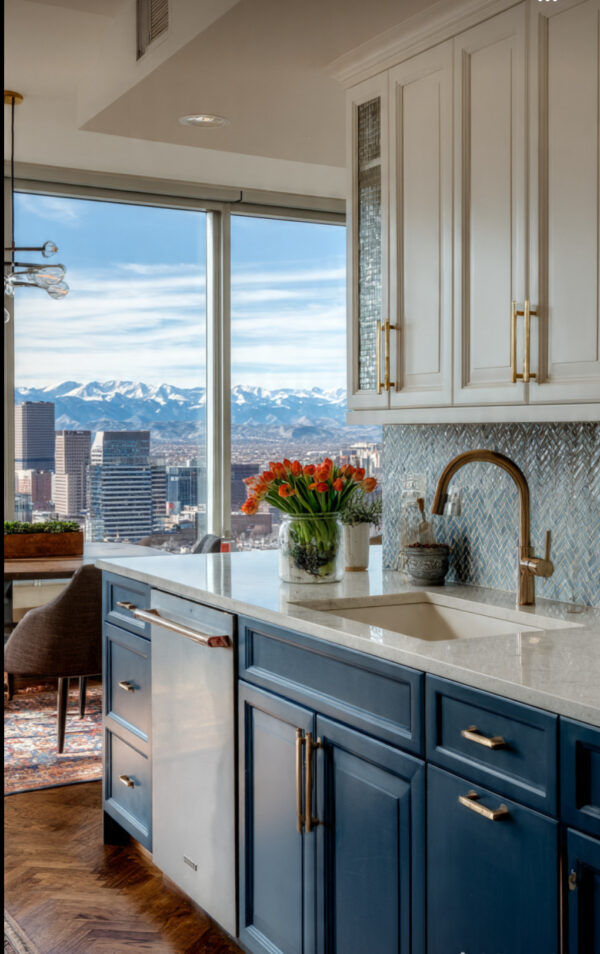
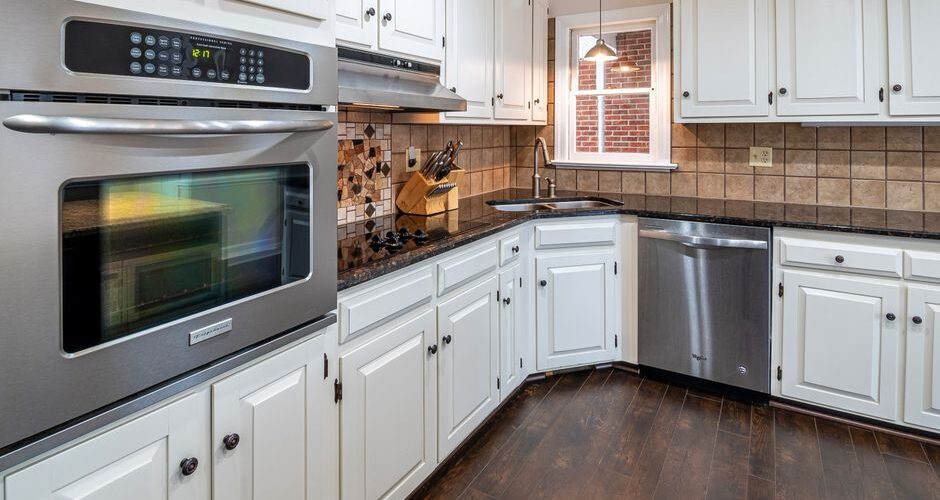
Kitchen cabinet refinishing with factory finish Denver
However, not all cabinet painting or refinishing is the same. A proper factory finish uses specialized products and equipment that mimic or exceed what big manufacturers apply in controlled environments. This is crucial in Colorado’s dry climate, which can cause cheap finishes to crack, peel, or yellow far faster than expected.
Cabinet Painting Service Areas in Denver & Surrounding Cities, Cabinet Refinishing in Denverc County,
Serving Lakewood, CO, Littleton, CO, Golden, CO, Evergreen CO, Roxborough Park CO, Ken Carl Ranch CO,
Arvada, CO, Wheat Ridge, CO,
and Parker CO. Castle Pines CO. Englewood CO. Centennial CO.
Cabinet Painting in Arapahoe County, CO
Including Centennial, CO, Greenwood Village, CO,
Cherry Hills Village, CO, Englewood, CO,
and Aurora, CO.
Cabinet Painting in Adams County & Broomfield, CO
This guide explains what “factory finish” actually means, how the process works, realistic timelines and pricing in the Denver market, and how homeowners, investors, and contractors can evaluate providers so the finish still looks great five to ten years from now.
What “Factory Finish” Really Means For Kitchen Cabinets
Many companies advertise a “factory-like finish,” but the quality varies widely. A true factory finish for cabinet refinishing in the Denver Metro Area typically involves specific materials, prep standards, and equipment.
Materials That Mimic Manufacturer Coatings
A factory-level system usually includes:
- Industrial primers that bond to lacquered, stained, or previously painted cabinets
- 2K (two-component) urethane or epoxy-enriched coatings for hardness and chemical resistance
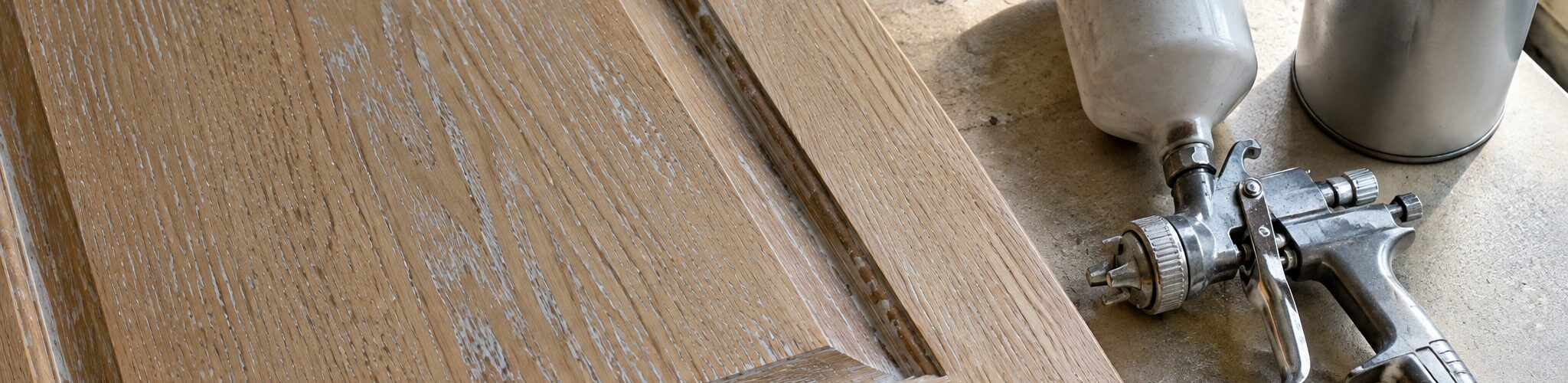
- Fine finish spray equipment that produces a smooth, uniform surface with no visible brush marks
Compared with typical wall paints, these coatings cure harder, resist scratching from dishes and hardware, and tolerate repeated cleaning.
Key Takeaway: If the contractor is using regular wall paint or “cabinet paint” from a big box store without catalysts or industrial primers, you are not getting a true factory finish.
Application Standards That Set Factory Finish Apart
Look for these indicators of a professional process:
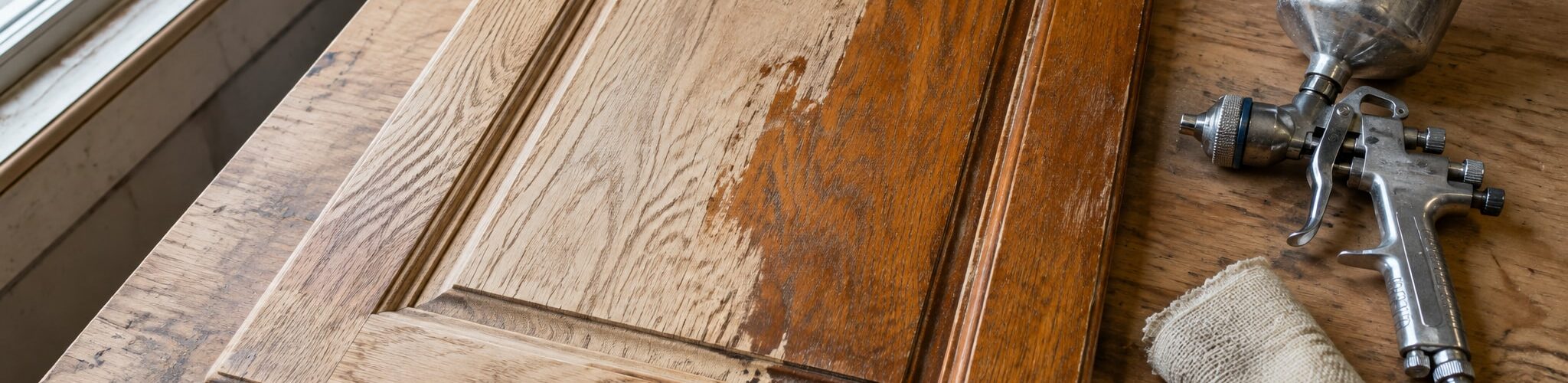
- Doors and drawers are removed and sprayed horizontally, not painted in place
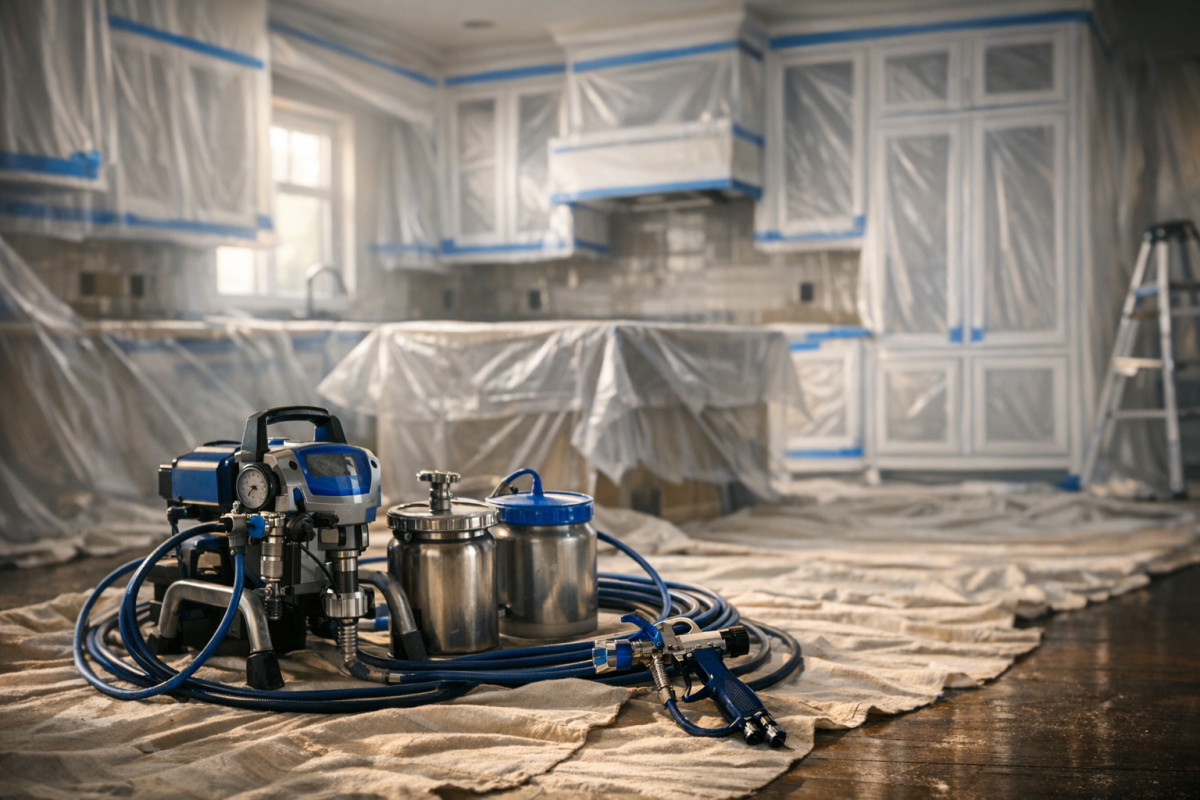
- Spraying is done with HVLP or airless fine finish systems, not rollers and brushes
- Coats are applied in controlled passes to avoid orange peel and drips
- Proper dry and cure times are respected between coats
In Denver’s low humidity, finishes can skin over quickly, which can hide adhesion or leveling issues that only appear later. Pros adjust product choice and technique to account for the climate.
Step-by-Step Process Of Kitchen Cabinet Refinishing With Factory Finish
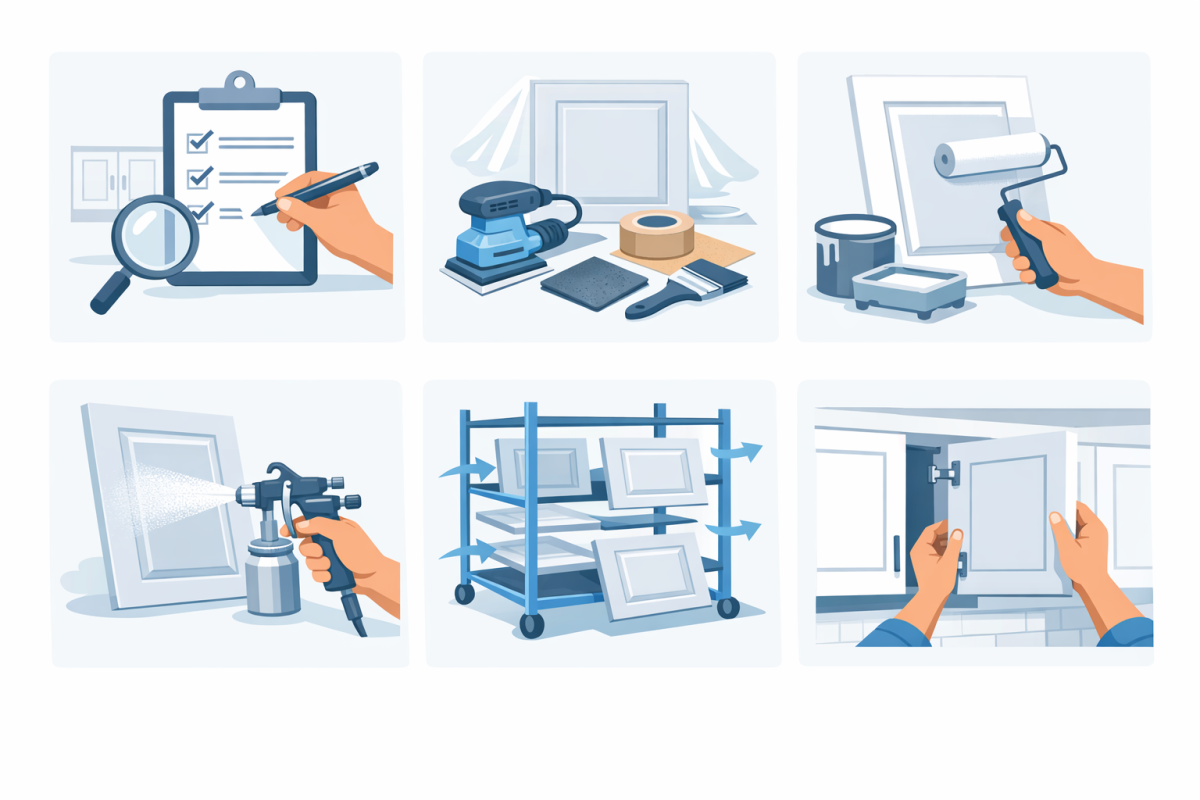
A factory-quality refinish follows a systematic workflow. Skipping any step usually shows up later as peeling, chipping, or visible grain patterns.
Detailed Prep Is Non-Negotiable
Most of the work happens before any paint is sprayed:
- Degreasing and cleaning: Removes cooking oils, fingerprints, and silicone contamination
- Mechanical abrasion (sanding): Provides a profile for primer to grip
- Repairs: Fills dents, nail holes, and deep grain if a smoother look is desired
- Masking and protection: Floors, appliances, and walls are carefully covered
For Denver properties with heavy cooking or short-term rental turnover, multiple degreasing passes are often required, especially around handles and the range.
Priming For Adhesion And Stain Blocking
Primer is the bond between the existing cabinet surface and the new topcoat. Professionals select primers based on:
- Existing finish (factory lacquer, varnish, thermofoil, or older paint)
- Wood species and tannin content (oak, maple, cherry, alder)
- Desired final appearance, for example heavy grain vs smooth
In many Denver projects, a shellac- or urethane-based primer is used to block tannin bleed, which prevents yellowing under white or light-colored finishes.
Spraying And Reassembly
A typical sequence:
- Shop work: Doors and drawers are transported off-site to a controlled spray environment
- On-site work: Cabinet boxes are prepped and sprayed in place with similar products
- Curing: Parts are left to cure to handling strength before reinstallation
- Hardware reinstallation or upgrades: New handles, pulls, and soft-close hinges are added as needed
Cost, Timelines, And What To Expect In The Denver Metro Area
Budget and schedule are crucial for homeowners, investors, and contractors. Refinishing with a factory finish sits between basic repainting and full replacement in both cost and performance.
Typical Price Ranges In Denver Metro
Actual pricing depends on kitchen size, door count, and condition, but typical ranges are:
| Kitchen Type / Scope | Approximate Range (Denver Metro) |
|---|---|
| Small condo or rental kitchenette | $3,000 – $4,500 |
| Average single-family kitchen | $4,500 – $7,500 |
| Large or custom kitchen with upgrades | $7,500 – $12,000+ |
| Add-ons (crown, end panels, light rail, etc.) | Project-specific |
Compared to replacement, homeowners often save 40 to 70 percent while still achieving a “like new” look.
For a deeper cost and options breakdown, see this guide on Transform Your Kitchen The Ultimate Guide To Cabinet Refinishing In Denver Metro Area.
Project Duration And Disruption
Most factory-finish refinishing projects in Denver follow this rough timeline:
- In-home work: 3 to 5 days for prep, masking, and spraying cabinet boxes
- Shop work: 5 to 10 days for doors and drawers including cure time
- Total duration: 1.5 to 3 weeks from start to final walkthrough
The kitchen is partially usable during much of this period, which is a major advantage for families and tenants compared with a full gut remodel.
Pro Tip: If you are a landlord or house flipper, schedule the project right after tenants move out or immediately after closing. This compresses vacancy time and avoids renter disruption.
How Factory-Finish Refinishing Compares To Other Options
Choosing the right approach depends on your property goals, budget, and timeline. Here is how factory-finish refinishing stacks up against alternatives.
Comparison With Basic Cabinet Painting
| Aspect | Factory-Finish Refinishing | Basic Cabinet Painting |
|---|---|---|
| Coating type | Industrial 2K urethane / catalyzed systems | Standard acrylic / latex paints |
| Application | Sprayed, fine-finish, controlled process | Often rolled or brushed |
| Durability | 8–15+ years with proper care | 3–7 years depending on use |
| Finish look | Smooth, manufacturer-like | Variable, often visible texture |
| Ideal for | Long-term homes, high-end rentals, flips | Shorter hold rentals, lower budgets |
If you want a quick, low-cost update for a short-term rental, basic painting can work. For a primary residence or premium rental where finishes are selling points, factory-level refinishing is generally worth the extra investment. For a detailed overview of both, see Cabinet Refinishing Cabinet Painting In The Denver Metro Area.
Comparison With Full Cabinet Replacement
Full replacement still makes sense when:
- The existing layout is poor for workflow
- Boxes are structurally failing or heavily water damaged
- You want to add significant storage, move walls, or change appliance locations
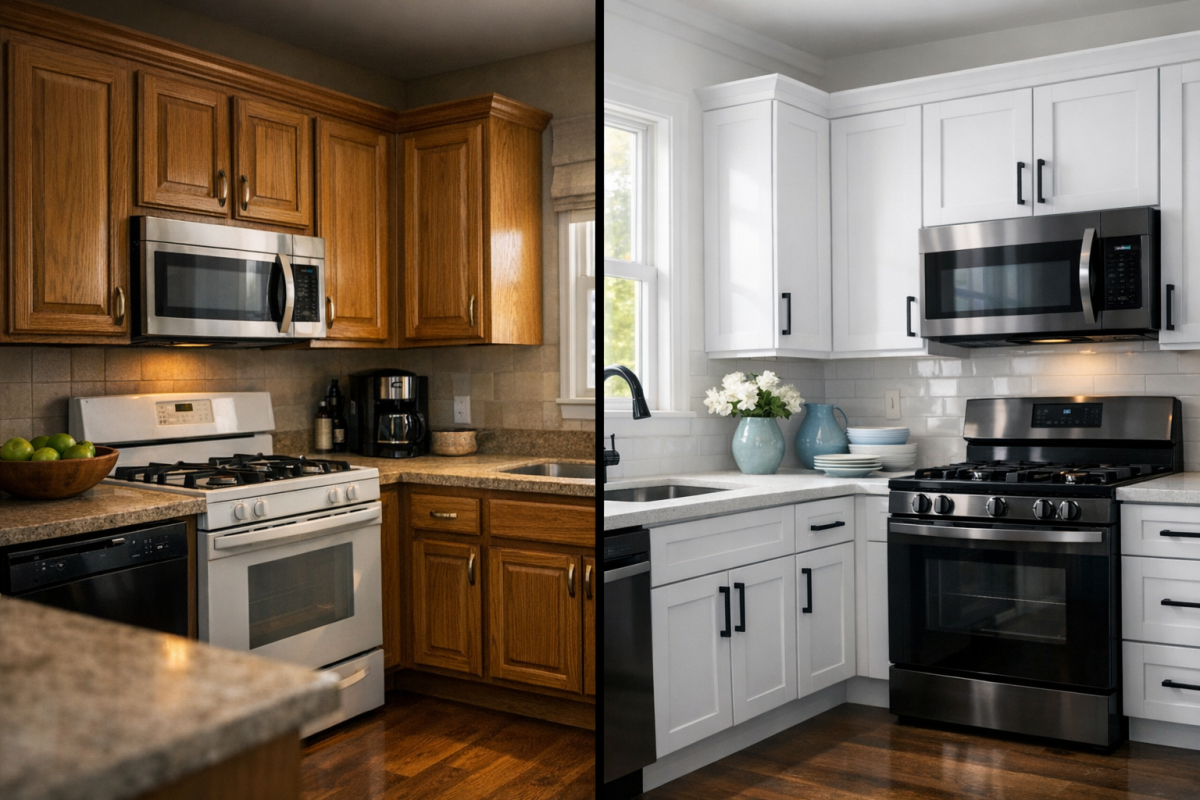
However, when the layout works and boxes are sound, factory-finish refinishing combined with new hardware and countertops can create a “new kitchen” experience at a fraction of the cost and time.
Best Practices For Different Property Types In Denver
Although the technical process is similar, strategy differs for homeowners, investors, and design professionals.
Owner-Occupied Homes
Priorities typically include:
- Long-term durability
- A timeless look that still feels updated
- Coordinating with existing floors and countertops
Popular choices in Denver include:
- Warm whites and off-whites that work with both cool and warm tones
- Muted greige tones on lowers with white uppers
- Deep navy or charcoal islands as accents
Homeowners should focus on a finish that will still feel current in 8 to 10 years.
Rental Properties And Multi-Unit Buildings
Property managers and investors are often balancing turnover time with return on investment:
- Choose mid-tone colors that hide wear better than pure white
- Opt for hardware that is sturdy and easy to replace
- Standardize color and hardware across units for economies of scale
Factory-level finishes often pay for themselves in fewer repaints over a 5 to 10 year horizon, especially in busy units.
House Flippers And Real Estate Investors
Flippers in Denver’s competitive market can use cabinet refinishing with factory finish to:
- Shift budget toward high-impact items such as counters and lighting
- Launch listings faster due to shorter lead times
- Position the kitchen as “like new” without full custom-cabinet pricing
Combined with new quartz counters and a backsplash, professionally refinished cabinets often help appraisers and buyers perceive the kitchen as a near-full renovation.
Expert Insight: In many Denver neighborhoods, buyers focus first on the kitchen’s visual impact, not on whether the boxes were replaced. A flawless finish and modern hardware often deliver the same emotional response at a lower cost.
How To Evaluate A Denver Cabinet Refinishing Company
Not all providers have the equipment or experience to deliver consistent factory-quality results. Ask targeted questions and look for specific indicators.
Questions To Ask During Estimates
- What products and coating systems do you use on cabinets?
- Are your finishes 2K urethane, catalyzed, or standard acrylic?
- Do you remove doors and drawers and spray them in a controlled environment?
- How do you handle oak grain if the client wants a smoother finish?
- What is your typical project timeline for a kitchen my size?
- Can you provide before-and-after photos of similar projects in the Denver area?
A reputable provider will answer these clearly and without hesitation.
Red Flags To Watch For
Be cautious if you hear:
- “We use the same paint we use on walls”
- “We do a light scuff and paint right over”
- “We brush and roll everything, you will not notice a difference”
- No mention of primer selection or cure times
Firms that specialize in cabinet work, such as those that highlight fine-finish spraying in their marketing, are more likely to provide a durable result. For examples of this type of service, review Premier Cabinet Refinishing Kitchen Cabinet Painting In Denver Metro.
Care, Maintenance, And Longevity Of Factory-Finished Cabinets
Even the best finish can be damaged by abuse or harsh chemicals. Clear maintenance practices preserve the look and protect your investment.
Daily Use And Cleaning
Recommended habits:
- Wipe spills quickly, especially around sinks and dishwashers
- Clean with mild soap and water or a manufacturer-approved cleaner
- Avoid abrasive pads, scouring powders, and concentrated degreasers
- Use door and drawer hardware to avoid touching the finish with greasy hands
With these practices, many factory-quality finishes maintain their appearance for a decade or more.
Dealing With Colorado’s Climate
Denver’s dry air and large temperature swings can stress wood:
- Maintain indoor humidity where possible, especially in winter
- Avoid hanging wet dish towels over doors, which can cause localized swelling
- Use vent hoods when cooking to reduce grease and moisture buildup
Important: A quality factory finish protects the wood, but it cannot completely overcome structural issues caused by chronic leaks, flooding, or extreme humidity swings. Address any moisture problems promptly.
Ready To Upgrade? How Cabinet Refinishing Denver Can Help
If you want the benefits of a factory-quality finish without the cost and disruption of full cabinet replacement, a specialized refinishing partner is essential.
Cabinet Refinishing Denver focuses specifically on cabinet refinishing and painting in the Denver Metro Area. Their process is built around:
- Detailed prep tailored to Colorado homes and rentals
- Professional-grade primers and 2K coatings for a true factory-like finish
- Fine-finish spraying both in-shop and on-site
- Scheduling that respects families, tenants, and project timelines
Whether you are updating your personal kitchen, upgrading a rental unit between tenants, or preparing a flip for market, they can help you choose colors, finishes, and hardware that match your goals and budget.
Learn more about their approach, see project photos, and request an estimate at
https://cabinetsrefinishing.com.
Call to action: Learn more
Frequently Asked Questions
How long does a factory-finish cabinet refinishing job last?
With proper prep, industrial coatings, and normal household use, a factory-finish refinishing job typically lasts 8 to 15 years before any touchups are needed. Longevity depends on factors such as cleaning habits, humidity control, and how heavily the kitchen is used. Rentals and busy family kitchens may show wear sooner, while lower-traffic homes often see finishes last well beyond a decade.
Is cabinet refinishing with factory finish worth it for rentals in Denver?
For mid to higher-end rentals, the investment is usually worthwhile. The harder, more durable finish reduces the need for frequent repaints between tenants, which lowers long-term maintenance costs. It also supports higher rents and better tenant attraction, since updated kitchens are a top decision factor. In very low-end units with high turnover, basic painting may still be more cost-effective.
Can you change dark oak cabinets to a smooth white factory finish?
Yes, but achieving a smooth white finish on oak requires additional work. Oak has a pronounced grain pattern that can telegraph through the paint. To minimize this, professionals may use grain-filling techniques, multiple primer coats, and strategic sanding. The process adds cost and time, but the result is a much smoother, more modern look that closely mirrors factory-painted cabinets.
How long will my kitchen be out of service during refinishing?
Your kitchen is rarely fully out of service. Most Denver projects allow limited use throughout, aside from short windows when spraying occurs. Typically, expect 3 to 5 days of heavier disruption while boxes are prepped and sprayed, and another week or so while doors and drawers are finished off-site. Many homeowners continue to cook simple meals for much of the process.
Can cabinet refinishing fix water damage or warped doors?
Minor water stains, small edge swelling, and surface imperfections can usually be repaired before refinishing. Significant water damage, delamination, or badly warped doors are more difficult. In those cases, some doors or sections may need replacement, or a hybrid approach may be recommended. A professional evaluation will determine whether full refinishing alone is appropriate or whether selective replacement is required.