
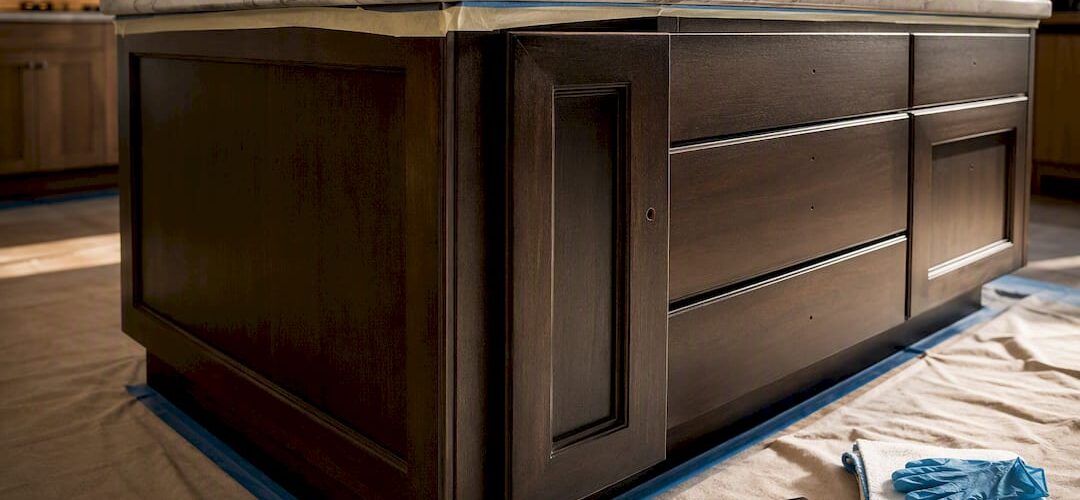
Painting a single kitchen island in Denver typically runs a few hundred dollars for a straightforward color refresh, covering basic sanding, masking, and two coats. Add a factory-finish spray process, hardware removal, or a contrasting color scheme and the number climbs toward the low thousands. For comparison, a full kitchen cabinet repaint or refinish runs $3,000 to $8,000. Denver’s UV exposure and short outdoor painting season tend to push both figures toward the higher end.
TL;DR:
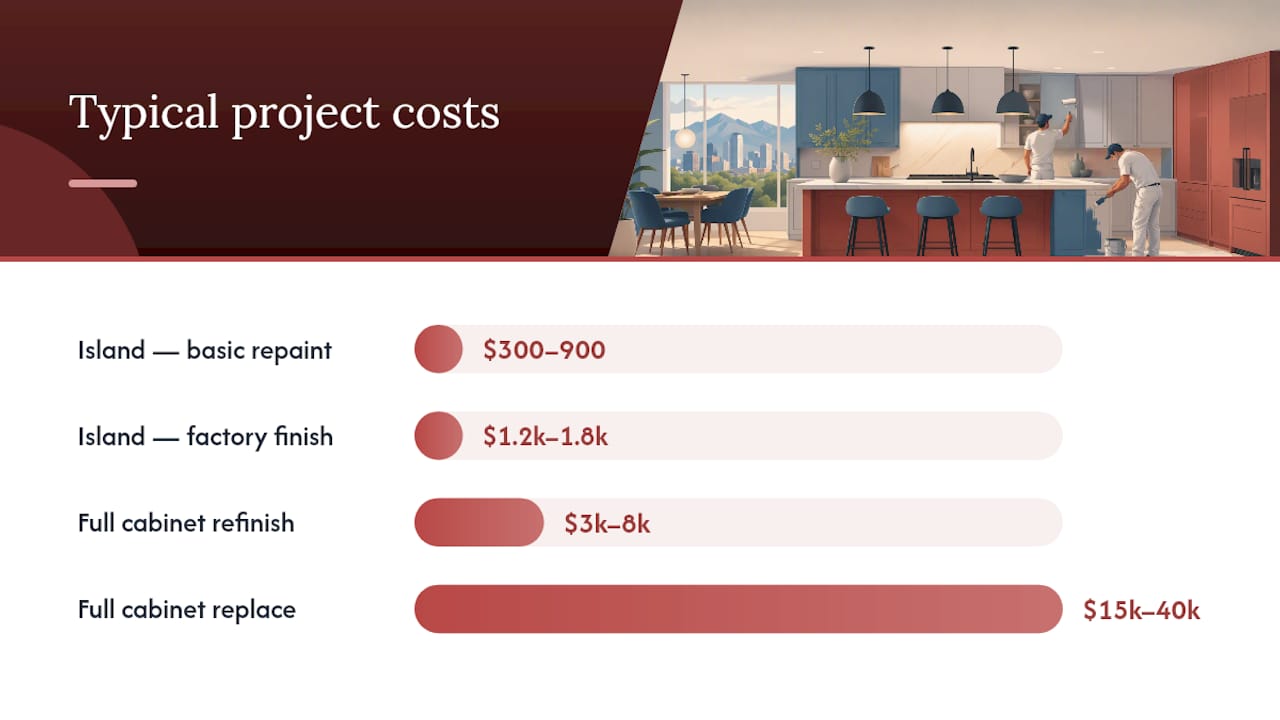
- Island repainting costs $300 to $900 for basic painting or up to $1,800 with a full spray finish and hardware removal.
- Repainting a full kitchen cabinet set with a factory finish ranges from $3,000 to $8,000, which is significantly cheaper than replacing the cabinets entirely.
- Labor costs for specialized spray work can reach $75 to $120 per hour, and prep work often accounts for the majority of the total price.
- Factors like high altitude, UV exposure, and seasonal demand often increase prices and extend project timelines in Denver.
- Properly estimating includes understanding costs for prep, material quality, spraying method, and asking detailed questions about warranty, licensing, and surface treatment.
Table of Contents
- How Much Does Island Painting Cost in Denver Right Now?
- What’s Actually in a Painting Estimate: Labor, Materials, and Prep
- Should You Paint the Island, Refinish the Cabinets, or Replace Everything?
- Why Denver Quotes Vary So Much From House to House
- How Long Does the Project Take and When Should You Book It?
- What to Ask Before You Sign a Painting Quote
- Why Refinishing Often Beats a Simple Repaint in Denver Kitchens
- Get a Local Quote From Cabinet Refinishing Denver
- Where These Denver Cost Figures Come From
- Sources
How Much Does Island Painting Cost in Denver Right Now?
Homeowners searching for island painting cost in Denver usually land somewhere between two very different jobs: a quick DIY-adjacent refresh and a full factory-finish conversion. Both are legitimate, but the price gap between them is wide enough to catch people off guard.
For general interior painting, Denver contractors quote roughly $2.50 to $6.00 per square foot in 2026, with a typical single-room job landing in the low thousands and a full 2,000-square-foot interior repaint falling between $4,000 and $10,200. Exterior work costs more per square foot, largely because of altitude and sun exposure. Denver exterior painting runs about $3.00 to $7.00 per square foot, and a 2,000-square-foot home’s exterior repaint commonly totals $5,200 to $12,500.
Kitchen islands and cabinets sit in their own category because they’re priced per piece or per linear foot, not per square foot of wall. Here’s how the numbers typically shake out across project types:
| Project Type | Typical Denver Range | Notes |
|---|---|---|
| Interior room repaint | $2.50–$6.00/sq ft | Standard walls and trim, two coats |
| Whole-home interior | $4,000–$10,200 | 2,000 sq ft home, Paintpricing |
| Exterior repaint | $3.00–$7.00/sq ft | Higher due to UV and prep needs |
| Whole-home exterior | $5,200–$12,500 | 2,000 sq ft home |
| Kitchen island (paint only) | $300–$900 | Surface prep and two coats |
| Kitchen island (full refinish) | $1,200–$1,800 | Spray finish, hardware, disassembly |
| Full kitchen cabinet repaint/refinish | $3,000–$8,000 | Whole kitchen, factory-finish process |
A modeled whole-house painting bid for Denver in 2026 sits around a typical market bid of $10,645, with a fair range between $9,679 and $12,747. That’s a useful anchor point when you’re trying to figure out whether a quote for your whole home, rather than just the island, is in the right ballpark.
Timing matters too. Late spring through early fall is peak season for exterior work and whole-house jobs, so crews book up and prices firm up. Interior projects, including islands and cabinets, don’t depend on weather the same way, which is why late fall and winter tend to be the better window for a better rate on cabinet or island work specifically.
What’s Actually in a Painting Estimate: Labor, Materials, and Prep
A painting quote isn’t one number. It’s three or four cost categories stacked together, and knowing the split helps you spot a lowball bid before you sign anything.
General interior and exterior painters in Denver charge roughly $42 to $68 per hour depending on experience and crew size. Specialty work, including cabinet refinishing and historic home restoration, commands a premium: expect $75 to $120 per hour for crews trained in spray-finish techniques. That premium exists because cabinet work demands tighter tolerances than wall painting. A drip on a wall blends in. A drip on a cabinet door is the first thing anyone notices.
Materials are the second-biggest chunk. Contractor-grade paint runs $30 to $50 per gallon, while premium lines built for durability and UV resistance can run $60 to $90 per gallon or more. A standard room needs two to three gallons for two coats; a full kitchen cabinet set typically needs primer plus two topcoats across all doors, drawers, and boxes, which adds up fast once you count both sides of every door.
Here’s where the money actually goes on a typical project:
- Labor: 50% to 65% of total cost, higher for specialty spray work
- Materials (paint, primer, sealer): 15% to 25%
- Prep and repairs (sanding, patching, caulking): 10% to 20%
- Overhead, insurance, and disposal: 5% to 10%
Prep work is the category most homeowners underestimate. Patching nail holes, sanding glossy cabinet surfaces so paint adheres, and stripping old wallpaper all take real time before a single coat goes on. Angi’s Denver guide notes that ceiling height and existing surface condition are two of the biggest cost drivers homeowners overlook, and the same logic applies to cabinets. Cabinets with decades of grease buildup or old lacquer need more sanding time than a lightly used island installed five years ago.
Island and cabinet work specifically almost always requires spraying rather than brushing or rolling, because a sprayed finish is the only way to get the smooth, factory-look surface most homeowners want. Spraying means the doors and drawers usually come off and get finished in a separate, ventilated space, then get reinstalled and rehung. That disassembly and reassembly step, plus the extra masking needed to protect countertops, floors, and appliances around a stationary island, is exactly why island pricing doesn’t track cleanly with a per-square-foot wall rate.
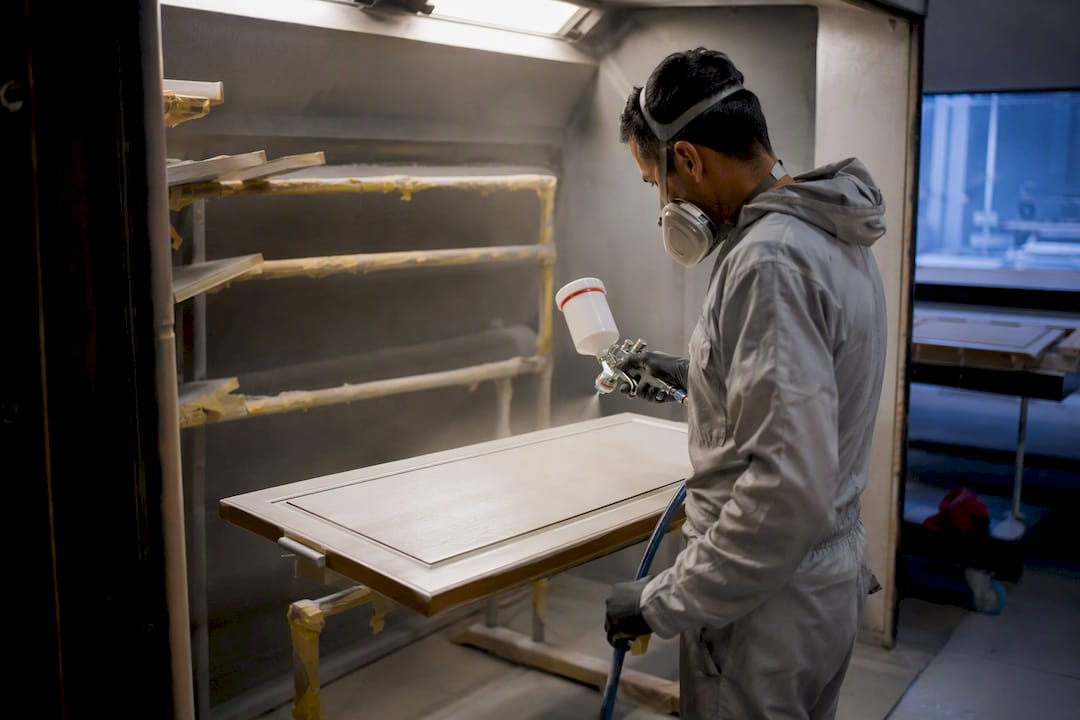
A whole-house painting bid modeled for Denver homeowners in 2026 shows labor and materials as the two largest cost blocks in a typical $10,645 project total, reinforcing that where your money goes on a big job is largely the same as on a small one, just at a different scale.
Pro Tip: Ask your contractor whether island doors and drawers will be sprayed off-site or on-site. Off-site spraying usually produces a smoother, more even finish because the crew controls dust and temperature, but it can add a day or two to your timeline.
Should You Paint the Island, Refinish the Cabinets, or Replace Everything?
The island is rarely priced in isolation once you start comparing your options, because the same crew, the same spray booth, and the same masking setup handle either job.
Painting just the island as a standalone piece, without touching the rest of the kitchen, typically costs $300 to $900 for a basic surface repaint and $1,200 to $1,800 for a full factory-finish process with hardware removal and a color change. The lower end assumes the island is in decent shape and you’re not changing color dramatically. The higher end applies when you’re going from a dark wood stain to a bold contrasting color, which usually needs extra primer coats to block the old finish from bleeding through.
Cabinet refinishing for the entire kitchen, done with a factory-finish spray methodology, typically runs $3,000 to $8,000 and takes about three to five days from start to finish. Compare that to full cabinet replacement, which usually runs $15,000 to $40,000 and takes several weeks once you account for custom orders, demolition, and installation. For homeowners whose cabinet boxes are structurally sound but visually dated, refinishing closes most of the visual gap at a fraction of the cost and time.
A few scope items reliably push island and cabinet pricing higher:
- Waterfall or finished island ends, which add visible surface area that has to match perfectly
- Open shelving sections, which take longer to mask and finish cleanly than closed cabinet doors
- Full hardware removal and reinstallation versus just painting around existing pulls
- A dramatic color change (light to dark, or the reverse), which often requires an extra primer or seal coat
- Glazing or distressing techniques layered on top of a base color
If your island or cabinets have deep scratches, water damage, or warped doors, a standard painter working with a brush and roller often can’t deliver a smooth result. That’s when a factory-finish refinishing specialist earns the higher hourly rate. Their spray equipment and multi-coat process fill minor imperfections in a way brush work simply can’t match.
Pro Tip: If you’re only repainting the island and leaving the rest of the cabinets alone, ask for a sample panel in your chosen color first. Islands often become the boldest color in the kitchen, and a small test panel saves you from a costly repaint if the shade reads differently under your kitchen’s lighting.
Why Denver Quotes Vary So Much From House to House
Two homes with identical square footage can get painting quotes that differ by thousands of dollars, and Denver’s specific geography and market conditions explain most of that gap.
Altitude and UV exposure top the list. Denver sits over a mile above sea level, and that thinner atmosphere lets more ultraviolet light through than at lower elevations. Contractors often recommend UV-stable, premium coatings for exterior work and south-facing surfaces, and while that upgrade costs more upfront, it can reduce how often you need to repaint. Spending more on the right coating today is frequently the cheaper choice over a five- to ten-year horizon.
Other factors that swing a quote up or down include:
- Season: Peak demand from May through September lifts prices on exterior jobs; booking in shoulder months often gets better rates and faster scheduling.
- Neighborhood: Established neighborhoods with older homes and more custom millwork tend to see higher per-project quotes than newer subdivisions with simpler trim.
- Crew availability: Specialty cabinet-refinishing crews are a smaller pool than general painters, so their calendars fill up faster during busy months.
- Surface type: Stucco exteriors need different prep and product than wood siding or brick, and each surface has its own labor time built in.
- Access: Two-story homes or properties requiring scaffolding add labor hours that a single-story ranch simply doesn’t need.
None of these factors are unique to Denver in concept, but the combination of high altitude, a compressed outdoor painting season, and a tight specialty labor market makes the local swing bigger than what you’d see in a milder, lower-elevation city.
How Long Does the Project Take and When Should You Book It?
Timeline expectations vary a lot depending on whether you’re painting one island or repainting an entire exterior, and Denver’s weather window adds another layer to plan around.
- Single kitchen island: One to two days, including prep, spraying, and reinstalling hardware.
- Full kitchen cabinet refinishing: Three to five days for the factory-finish process from start to finish, including drying time between coats.
- Interior room repaint: One to three days depending on room size and how many coats the color change needs.
- Whole-house exterior repaint: Five to ten days, weather permitting, for a typical 2,000-square-foot home.
Peak-season booking (May through September) often means a two- to four-week wait for exterior crews, since labor scarcity in tight local markets tends to spike demand right when weather cooperates. Interior and cabinet work doesn’t face the same seasonal crunch, but popular crews still book out several weeks in busy months.
Cure times matter more at altitude than most homeowners expect. Lower humidity generally speeds surface drying, but full cure, when the finish reaches its maximum hardness, still takes several days. Reinstalling hardware or loading the island back up with heavy items too early can leave soft spots that show fingerprints and scuffs for weeks.
Pro Tip: Book cabinet and island refinishing in late fall or winter. Demand drops once exterior season ends, so specialty crews often have faster availability and more room to negotiate scheduling around your routine.
What to Ask Before You Sign a Painting Quote
A good estimate should read like a contract, not a guess. Before you compare bids, gather a few basics: rough measurements of the space or cabinet count, a few photos of current condition (including any damage), and a general idea of your target color or finish. Having this ready before a contractor’s visit speeds up the estimate and reduces the chance of a mid-project surprise fee.
A thorough written estimate should spell out:
- Number of prep steps included (sanding, patching, degreasing, caulking)
- Exact number of coats, including primer if a color change requires it
- Brand and product line of paint being used, contractor-grade versus premium
- Whether doors and drawers are sprayed on-site or transported to a shop
- Cleanup and disposal of old materials, drop cloths, and packaging
- Written warranty terms and what they cover
Ask your contractor these questions directly, and don’t accept a vague answer:
- Are you licensed and insured, and can I see proof of both?
- Can you provide references or examples from recent Denver-area projects?
- Do you spray cabinets and islands off-site, or on-site with containment?
- Do you offer low-VOC or eco-friendly paint options?
- Can I see a sample panel in my chosen color before the full job starts?
Watch for a few warning signs that separate a solid contractor from a risky one. A scope of work that just says “paint kitchen” with no mention of prep steps or coat counts is a red flag, since it leaves too much room for corners to get cut. A bid that comes in dramatically lower than every other quote you received usually means shortcuts somewhere, whether that’s fewer coats, no primer, or unlicensed labor. And any contractor who can’t produce proof of insurance or won’t put a warranty in writing shouldn’t be on your shortlist, no matter how good the verbal pitch sounds.
If you’re weighing painting an island against replacing cabinet doors entirely, it’s also worth getting a comparison quote from a door and closet specialist like One Day Doors & Closets in the Denver area, since door replacement pricing sits in a different bracket than refinishing and helps you see the full range of options side by side.
Why Refinishing Often Beats a Simple Repaint in Denver Kitchens
A straight repaint and a factory-finish refinish look similar in a photo but age very differently. The refinishing process built around meticulous prep and multiple protective coats holds up to daily kitchen wear, grease, and Denver’s dry indoor air far longer than a standard brush-and-roll repaint. That durability gap is the real reason refinishing costs more per hour than general painting: you’re paying for a finish that’s built to last, not just look good on install day.
The numbers back this up. Refinishing a full kitchen typically runs $3,000 to $8,000 and finishes in three to five days, against $15,000 to $40,000 and several weeks for full replacement. For a homeowner whose cabinet boxes are solid but whose finish is outdated or worn, that gap makes refinishing the more defensible dollar-for-dollar choice, not just the cheaper one.
Where this pays off most is in kitchens with good bones and dated color. A homeowner not planning to overhaul their layout, just wanting a fresher look before a sale or simply because they’re tired of oak-toned cabinets from the 1990s, gets the biggest return relative to cost., and
The conventional wisdom that “you get what you pay for” with replacement doesn’t hold up as cleanly as people assume. A well-executed refinish, done with proper prep and quality coatings, can outperform a rushed, budget replacement job in both looks and longevity.
— Jesse
Get a Local Quote From Cabinet Refinishing Denver
Cabinet Refinishing Denver specializes in exactly the work this guide covers: kitchen and bathroom cabinet refinishing, painting, and glazing using a factory-finish spray process, with custom color matching for islands, full cabinet sets, and everything in between. Instead of paying replacement-level prices for a kitchen that just needs a new look, homeowners can save time and expense with professional cabinet refinishing, often completed in a matter of days.

Every project starts with meticulous prep and layers of protective finish designed to hold up to daily kitchen use, whether that’s a single standalone island or a full set of cabinets. If your island is the one piece of the kitchen you’re tired of looking at, or your whole cabinet set needs a refresh without a remodel-sized budget, request a quote for cabinet refinishing in Denver and call or text 720-219-9716 to talk through your specific project and timeline.
Where These Denver Cost Figures Come From
The price ranges in this guide draw from published 2026 Denver painting cost data, a modeled whole-house bid analysis for the Denver market, and Angi’s local interior painting guide, which breaks down common cost drivers homeowners run into during estimates.
Labor rate context comes from BLS occupational wage data, which helps explain why Denver’s specialty painting rates run higher than national averages. For anyone planning exterior work that involves scaffolding or street access, Denver’s city planning resources outline permitting and logistical considerations worth checking before a project starts.
Sources
- Denver Painting Cost (2026): Check Your Bid
- Occupational Employment and Wage Statistics (BLS)
- Denver government resources
- How Much Does It Cost to Paint the Interior of a House in Denver, CO? | Angi