

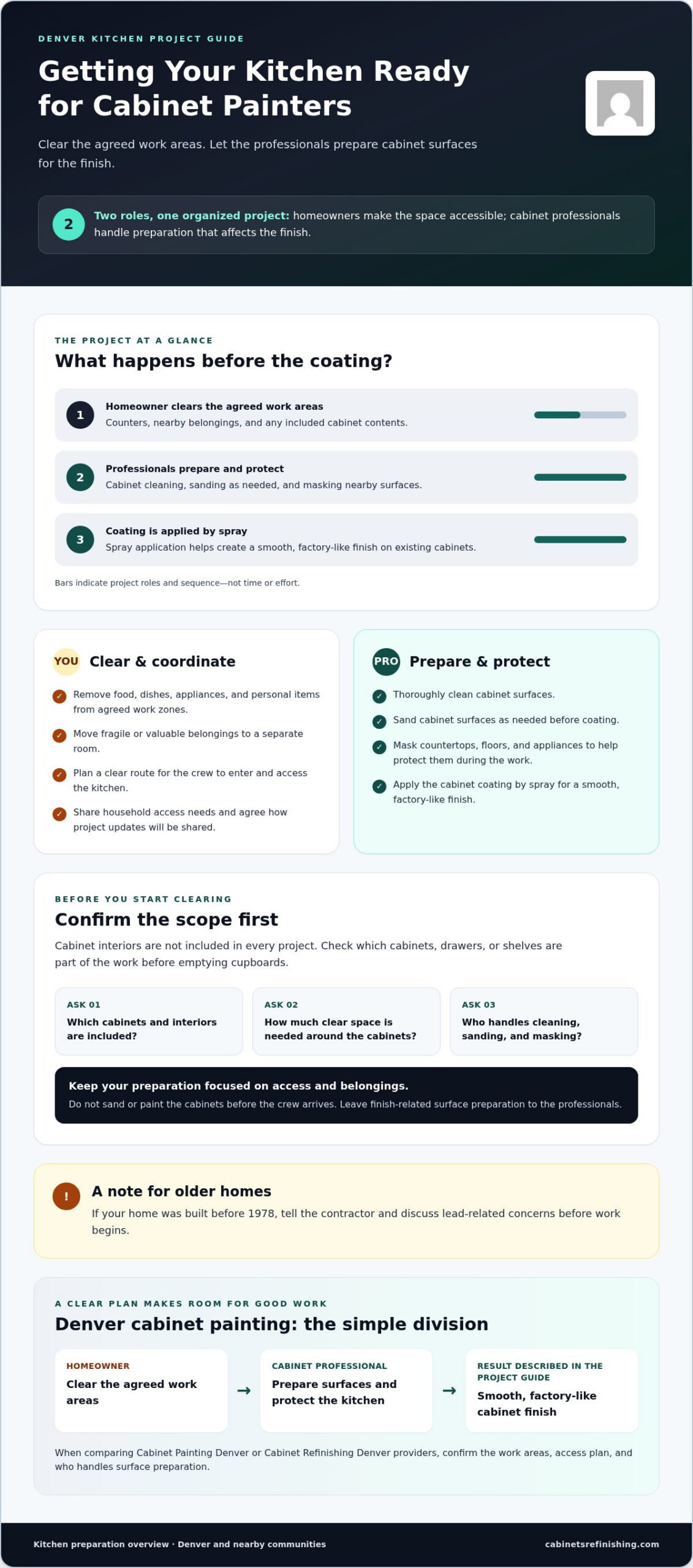
If you’re wondering how to prepare your kitchen for painters, begin by clearing the agreed work areas, not by sanding or cleaning the cabinets yourself. You may be unsure what to empty, whether appliances need to move, or how nearby surfaces will be protected. A smooth project depends on both sides: homeowners make the kitchen accessible, while cabinet professionals handle preparation that affects the finish.
Before cabinet painters arrive, remove items from counters and any cabinets included in the project, clear nearby belongings, and plan for limited kitchen access during the work. The crew handles cabinet cleaning, sanding, and masking of countertops, floors, and appliances, then applies the coating by spray to create a smooth, factory-like finish. This guide covers a practical pre-project checklist, what to confirm with your contractor, and how painting differs from refinishing. You’ll also find questions to ask when choosing a cabinet painting contractor in Denver and nearby communities. Clear expectations can help the crew get started while you update suitable existing cabinets without replacing them.
Key Takeaways
- Learn how to prepare your kitchen for painters by clearing agreed work areas and confirming whether cabinet interiors are included.
- Plan a clear route to the kitchen so the crew can access cabinets and set up their work area.
- Understand which preparation tasks, including cabinet cleaning, sanding, and masking, are handled by the professionals.
- See how spray application helps create a smooth, factory-like finish on existing cabinets.
- Know what to confirm in the project scope when choosing a Cabinet Painting Denver professional.
Preparing Your Kitchen for Painters: Roles and Tasks
Getting ready for cabinet painters can feel like a balancing act. You want the kitchen prepared, but you don’t want to interfere with the work or risk the finish. If you’re researching how to prepare your kitchen for painters, focus on clearing the room and agreeing on the plan. Leave cabinet surface preparation to the professionals.
Homeowner preparation clears the room; professional surface preparation gets the cabinets ready for coating. This division helps keep the project organized and protects the parts of your kitchen that aren’t being painted. A professional house painter handles preparation as part of the trade, while cabinet painters follow a process suited to cabinet surfaces and coatings.
For a visual overview of what to expect before work begins, watch this video:
Which kitchen preparation tasks belong to the homeowner?
Your role is to make the agreed work areas accessible, not to start preparing cabinet surfaces. Before the crew arrives:
- Remove everyday items from counters and the areas around the cabinets.
- Ask which cabinet contents need to be removed and when. Confirm whether interiors are included before emptying them.
- Agree on how the crew will enter and access the kitchen, and how project updates will be shared.
Tell the contractor about household needs in advance, such as times when the kitchen must remain accessible. Clear expectations help the crew plan the work area and help you avoid moving more than necessary.
What do professional cabinet painters prepare themselves?
Cabinet painters handle the surface preparation that affects the finish. They thoroughly clean cabinet surfaces and sand them as needed before coating. They also mask countertops, floors, and appliances to help protect them during the work. These steps call for an appropriate process and care, so don’t sand or paint the cabinets before the crew arrives.
Surface preparation and masking are part of the professional workflow, not tasks to improvise with household coverings. If you’re comparing Cabinet Painting Denver providers, ask each contractor who handles cleaning, sanding, and masking. A clear scope tells you what to move, what can stay, and how access will work. That’s a practical starting point for preparing the kitchen while leaving finish-related work to the crew.
Clear Cabinets and Counters Before Your Denver Cabinet Painters Arrive
A simple plan makes the kitchen easier to work in and prevents unnecessary clearing. First, confirm the work areas and project scope with your contractor. Cabinet interiors aren’t included in every job, so don’t empty every cupboard until you know which cabinets, drawers, or shelves are part of the work.
What should you remove from counters and open work areas?
Start with the countertops and nearby surfaces in the active work zone. Remove countertop appliances, dishes, food, and personal items so the crew has clear access. Move fragile or valuable belongings out of the kitchen work area rather than placing them on a nearby table or shelf that may be close to the work.
Ask how much clear space is needed around the cabinets. The answer can help you decide what to move from an island, dining area, or adjacent counter. Keep your preparation focused on access and your belongings. Don’t start sanding or painting; cabinet surface preparation is part of the professional process.
- Clear food, dishes, and appliances from the agreed work zones.
- Move fragile or valuable items to a separate room.
- Set aside daily essentials you’ll need, such as a few dishes or a coffee maker, and ask where they can remain safely.
If your home was built before 1978, mention that to the contractor and review the EPA’s Protect Your Family from Lead guidance. This provides a starting point for discussing lead-related concerns before work begins.
Do you need to empty every cabinet?
Not necessarily. It depends on the agreed scope, including whether cabinet interiors are included and which cupboards, drawers, and shelves need to be accessible. Ask the contractor for specific instructions before packing anything. This helps you avoid unnecessary work while ensuring that contents are removed from cabinets that need to be prepared.
Once you know what to empty, group items by cabinet or use, then label the boxes or containers. For example, keep baking supplies together and note which cupboard they came from. This makes it easier to return items to the right place when the work area is ready for normal use.
These steps cover your part of how to prepare your kitchen for painters: clear the agreed areas, move personal belongings out of the work zone, and confirm what the crew needs to access. If you’re still defining the scope, review the Denver cabinet painting and refinishing services available for existing cabinets and discuss which areas your project includes.
Protect Your Home and Keep the Kitchen Accessible During Cabinet Painting
A clear route helps the crew reach the kitchen, bring in equipment, and organize the job without navigating around household belongings. Before work begins, move obstacles from the path between the entrance and kitchen, including shoes, bags, small furniture, or items stored near the cabinets. Confirm which entrance the crew should use and where they can park so arrival and setup are straightforward.
Professional masking is part of cabinet preparation. Countertops, floors, and appliances are key nearby surfaces to discuss masking before cabinet work begins. Masking helps protect adjacent surfaces during preparation and coating, while defining the work area. Ask what the crew will mask and how the work area will be contained for your project. The plan can depend on your kitchen layout and the agreed scope.
How do painters protect countertops, floors, and appliances?
Cabinet painters prepare nearby surfaces as part of the professional process, rather than leaving homeowners to guess what needs covering. Before the project starts, walk through the kitchen with the contractor and point out countertops, flooring, appliances, or other adjacent areas you’re concerned about. Ask what the crew plans to mask, which areas will remain accessible, and whether you should move anything beyond the agreed work zone.
Clear communication helps you understand where the work will happen and what to expect, without assuming a particular masking material or containment method.
How can you plan for kitchen access and household routines?
Cabinet painting can affect how you use the kitchen while work is underway. Discuss meals and household schedules with the crew in advance, especially if family members, children, or pets need to move through nearby areas. Ask which parts of the kitchen may be temporarily unavailable and whether there are access instructions for the work area.
Make a simple plan for essentials you’ll need during the project. Set aside a few everyday items in another room or decide where meals can be prepared if the kitchen isn’t available. Keep children and pets away from active work areas according to the contractor’s instructions.
When considering how to prepare your kitchen for painters, planning access is as useful as clearing surfaces. Confirm where the crew can park, which entrance to use, and the clearest route for carrying equipment. Kitchen layouts and entry access vary across Denver homes, so sharing these details ahead of time helps the crew plan its setup and gives your household a clearer picture of what to expect.
Understand the Professional Preparation Behind a Smooth Cabinet Finish
A smooth cabinet finish depends on more than the final coat. Professionals follow an ordered process to prepare the surface and consider nearby kitchen areas before application. Understanding the process helps clarify what the crew handles and what to ask before work begins.
Why are cleaning, sanding, and masking part of professional preparation?
Cabinet surfaces are thoroughly cleaned to remove residues that can interfere with coating. Professional sanding then prepares the existing surface for the selected finish. These steps affect the final result, so leave them to the painting crew rather than attempting them yourself. The crew also masks nearby countertops, floors, and appliances to help protect them during cabinet work.
After preparation, the coating is applied. Spray application can create an even, smooth appearance across cabinet doors and frames, supporting a factory-like result. The application method is only one part of the process; careful preparation matters too. Ask a prospective contractor to explain the sequence and how it applies to your cabinets and project scope.
Is cabinet painting different from cabinet refinishing?
Yes. Cabinet painting applies a new painted finish to existing cabinets, while cabinet refinishing strips old finishes and restores a wood appearance with stain or lacquer. The right service depends on the cabinets’ condition and the look you want. Ask the contractor to assess the existing finish and explain which service fits, rather than assuming the terms describe the same process.
Both services update existing cabinets. When the cabinets are suitable for a new finish, painting or refinishing can cost significantly less than replacing them. Cost is not the only consideration: decide whether you want an opaque painted look or prefer the character of a restored wood finish, then confirm what preparation and coating work each option involves.
Before hiring a Cabinet Painting Denver or Cabinet Refinishing Denver professional, ask how the crew handles cleaning, sanding, masking, and spray application. Make sure the scope clearly identifies painting or refinishing. If you’re considering an update to your existing cabinets, explore professional cabinet painting and refinishing to learn about the available services.
Finish Your Pre-Painting Checklist and Choose a Denver Cabinet Painting Professional
Before the project begins, make sure you know what’s included and what the crew needs from you. Confirming the scope and a few practical details can prevent confusion about cabinet contents, access, and household routines. Use this checklist:
- Clear the agreed work areas and move personal belongings away from the route and active work zone.
- Confirm how the crew will enter, where equipment can be brought in, and which kitchen areas may be unavailable.
- Review which cabinets and surfaces are included, including whether cabinet interiors are part of the work.
- Ask who handles cabinet cleaning, sanding, masking, and spray application.
Your goal isn’t to do the crew’s technical work. It’s to establish clear expectations so the professionals can prepare and coat the cabinets as planned.
What should you confirm with the cabinet painting contractor?
Ask the contractor to explain the project scope in plain language. Confirm which cabinets are included and how the team handles cleaning, sanding, masking, and spray application. Discuss access arrangements, household routines, and the schedule before work begins. A clear explanation makes it easier to understand your role and plan around the work.
When comparing Denver-area professionals, look for relevant experience, a clearly explained preparation and coating process, and examples of completed cabinet projects. These details can help you assess whether the contractor’s approach matches your expectations. Ask for clarification if a step or responsibility is unclear.
When should you request a cabinet painting consultation?
Talk with a cabinet professional if you’re unsure whether painting or refinishing better suits your existing cabinets, or if you’re weighing an update against replacement. Painting and refinishing can renew suitable existing cabinets without installing new ones, making them options to explore. The right fit depends on the cabinet condition, the finish you want, and the work included in the scope.
For homeowners in Denver and nearby communities, a project discussion can help clarify these choices and the preparation involved. Discuss your Denver cabinet painting project and the details that matter for your kitchen.
Get Your Kitchen Ready for a Confident Start
Knowing how to prepare your kitchen for painters comes down to a few clear steps: remove belongings from agreed work areas, confirm which cabinets are included, and plan how your household will access the kitchen. You don’t need to take on the technical work. Cabinet professionals handle cleaning, sanding, masking, and coating as part of the preparation process.
Before work begins, review the project scope and ask who is responsible for each preparation step. Cabinet painting gives existing cabinets a new painted finish, while refinishing restores a wood appearance. Professional spray application supports a smooth, factory-like result. Either service may be worth discussing if you want to update suitable cabinets without replacing them.
Cabinet refinishing Denver provides cabinet painting and refinishing for homeowners in Denver and nearby communities, including Highlands Ranch, Parker, Castle Pines, Englewood, Cherry Hills, Washington Park, Lakewood, Arvada, Wheat Ridge, Littleton, Aurora, and Centennial. Request a cabinet painting consultation to discuss your cabinets, the finish you want, and how to prepare your kitchen. A clear plan can help you move into the project with confidence.
Frequently Asked Questions
How should I prepare my kitchen before cabinet painters arrive?
Clear counters and agreed work areas, then confirm access and project details with the contractor. Move dishes, food, countertop appliances, and personal belongings away from active work zones. Ask which cabinets need to be emptied, whether interiors are included, and which parts of the kitchen may be unavailable. You don’t need to clean, sand, or paint the cabinets yourself. For Denver homeowners, a clear plan helps the crew begin with fewer avoidable obstacles.
Do I need to empty my kitchen cabinets before they are painted?
Empty only the cabinets, drawers, and shelves the contractor identifies as part of the project. Cabinet interiors and project scope can differ, so ask what needs to be cleared before packing everything away. Set aside essentials you’ll need during the work, and group or label stored items by cabinet. This makes putting things back easier and helps avoid emptying cupboards that may not need to be accessed.
Do cabinet painters clean and sand the cabinets before painting?
Professional cabinet painting typically includes thorough cleaning and sanding to prepare cabinet surfaces for coating. These are finish-critical steps, so leave them to the painting crew rather than attempting them before the project. The preparation sequence supports a smooth, even finish, and professional spray application can create a factory-like appearance. Ask the contractor to explain how cleaning, sanding, and coating are handled for your cabinets.
Can I use my kitchen while the cabinets are being painted?
Kitchen access may be limited while cabinet work is underway, so ask the contractor which areas will be temporarily unavailable and when. Discuss meal plans, household routines, and access needs before work begins. If children or pets are in the home, ask how to keep them clear of active work areas and follow the crew’s instructions. Planning ahead helps your household adjust without assuming the kitchen will remain fully usable.
What is the difference between cabinet painting and cabinet refinishing?
Cabinet painting applies a new painted finish to existing cabinets, while cabinet refinishing strips the existing finish and restores a stained or lacquered wood appearance. The right service depends on the cabinets’ condition and the look you prefer. Ask a cabinet professional to assess the existing finish and describe the preparation and coating involved. Painting and refinishing are distinct services, not interchangeable names for the same process.
Is painting kitchen cabinets a good alternative to replacing them?
Painting can be a cost-effective alternative to replacement when the existing cabinets are suitable for a new finish and you want to change their appearance. A professional can discuss the cabinet condition, desired look, and whether painting or refinishing is a better fit. Painting Kitchen Cabinets Denver serves homeowners in Denver, Highlands Ranch, Parker, Castle Pines, Englewood, Cherry Hills, Washington Park, Lakewood, Arvada, Wheat Ridge, Littleton, Aurora, and Centennial, and has over 38 years of experience.