
Why Experienced Local Cabinet Painters Matter In Denver
Cabinet painting in Denver is not a simple “paint and go” project. Altitude, dry air, and big temperature swings between mornings and afternoons all affect how coatings level, cure, and hold up over time. If you hire a painter who treats Denver like any other market, you can end up with peeling doors, sticky finishes, or visible spray marks within a year. <="https://discover.hubpages.com/living/My-Review-of-Graco-FFLP-Tips-for-Spraying-Cabinets" target="_blank" rel="noopener">My Review of Graco FFLP Tips for Spraying Cabinets
For homeowners, investors, designers, and contractors, cabinets are one of the highest impact surfaces in a kitchen or bath. They also take daily abuse. Choosing local cabinet painters with experience in Denver Colorado is the difference between a quick facelift and a finish that looks factory‑new for years.
This guide walks you through what “experienced in Denver” actually means, how to vet cabinet specialists, what to expect in pricing and timelines, and when refinishing beats full replacement. You will leave with a checklist you can use on your very next contractor call.
What “Denver Experience” Really Means For Cabinet Painting
Most painters can put color on wood. Far fewer understand how Denver’s conditions interact with modern cabinet coatings. When you look for local cabinet painters with experience in Denver Colorado, confirm they have expertise in these Denver‑specific factors. https://cabinetsrefinishing.com/cabinet-refinishing-vs-refacing-in-denver-the-2026-homeowners-comparison-guide/
Knowledge Of Climate And Altitude
Denver’s combination of high altitude and low humidity speeds up solvent and water evaporation. This affects:
- Open time and leveling, especially for sprayed finishes
- Risk of lap marks, dry spray, and rough texture
- Curing schedules for 2K urethanes, lacquers, and hybrids
Ask how they adjust for local conditions. Experienced Denver cabinet painters will talk about:
- Modifying reducer/thinner ratios and tip sizes
- Controlling shop or garage temperature and humidity
- Staging doors so dust does not settle while the finish flashes off
Key Takeaway: If a painter cannot clearly explain how they adapt products and process to Denver’s altitude and dry air, they are not a true local cabinet specialist.
Familiarity With Common Local Substrates
Denver’s housing stock includes:
- 1960s–1980s oak in tri‑levels and ranches
- 1990s–2000s builder‑grade maple or thermofoil in suburbs
- Newer MDF shaker doors in infill and luxury builds
An experienced local crew knows how to handle:
- Open‑grain oak that clients want to look “like smooth factory white”
- Chipping thermofoil that may need partial re‑skin instead of simple paint
- MDF edges that swell and require special priming to stay crisp
They should have photos of Denver‑area projects for each of these cabinet types.
Track Record In Denver Neighborhoods
Local experience is not just technical. It also means:
- Knowing HOA restrictions in Highlands Ranch or Stapleton/Central Park
- Being familiar with historic homes in Wash Park or Congress Park
- Understanding investor timelines in Lakewood, Aurora, and Thornton rentals
Look for contractors who can point to repeat work for Denver property managers, investors, and designers, not just one‑off homeowner jobs.
For deeper detail on local project types, see this related resource on cabinet refinishing and kitchen cabinet painting in Denver Colorado.
How To Vet Local Cabinet Painters In Denver Step By Step
Use the following process to confidently select local cabinet painters with experience in Denver Colorado instead of generalists.
Verify Specialization, Not Just “We Also Paint Cabinets”
Start by checking their website and reviews:
- Do they have entire pages dedicated to cabinet refinishing, like these cabinet refinishing services in Denver?
- Are at least 30–40 percent of their recent Google reviews cabinet projects?
- Do portfolio photos show kitchen and bath cabinets, not only walls and exteriors?
Painters who “also do cabinets” often lack the spray equipment, clean space, and multi‑day process required for durable factory‑style finishes.
Questions To Ask On The First Call
Use this shortlist as a script:
- How many cabinet projects have you completed in the Denver metro in the last 12 months?
- What products do you typically use on cabinet boxes and doors, and why?
- Where do you spray doors and drawers, and how do you control dust?
- How long before freshly painted cabinets can be used normally?
- Can you provide three recent Denver references specifically for cabinet work?
You are listening for concise, confident answers that reference Denver conditions, not vague promises like “we use the best paint” or “it will be very durable.”
Documentation, Licensing, And Insurance
Insist on:
- General liability and worker’s comp certificates naming you or your entity
- A written scope of work, including number of coats and products by name
- Warranty terms, usually 1–3 years for cabinet refinishing in Denver
Pro Tip: Ask for a sample cabinet door they have finished. Reputable Denver cabinet painters often keep one in their truck. Inspect it under strong light for smoothness, brush marks, and dust nibs.
What A Professional Denver Cabinet Painting Process Should Include
A true cabinet refinishing specialist follows a disciplined, multi‑day process. If a contractor suggests they can repaint your kitchen in a single day, treat that as a red flag.
Essential Steps From Prep To Reinstall
| Step | Action | What To Look For In A Denver Pro |
|---|---|---|
| 1 | Label & remove doors/drawers | Organized labeling to avoid mix‑ups, hardware stored safely |
| 2 | Clean & degrease | Strong degreasers, extra focus near ranges and handles |
| 3 | Sand & de‑gloss | Mechanical sanding or de‑glosser, attention to profiles and edges |
| 4 | Repair & caulk | Fill dings, adjust gaps, address grain if requested |
| 5 | Prime | Bonding primer suited to Denver’s dry conditions, often sprayed |
| 6 | Sand between coats | Finesse sanding to achieve ultra smooth finish |
| 7 | Topcoat(s) | 2 or more coats of cabinet‑grade enamel, lacquer, or urethane |
| 8 | Cure & reassemble | Adequate cure time before re‑hanging and light use |
Shop Versus On‑Site Work In Denver
Ask where the majority of spraying happens:
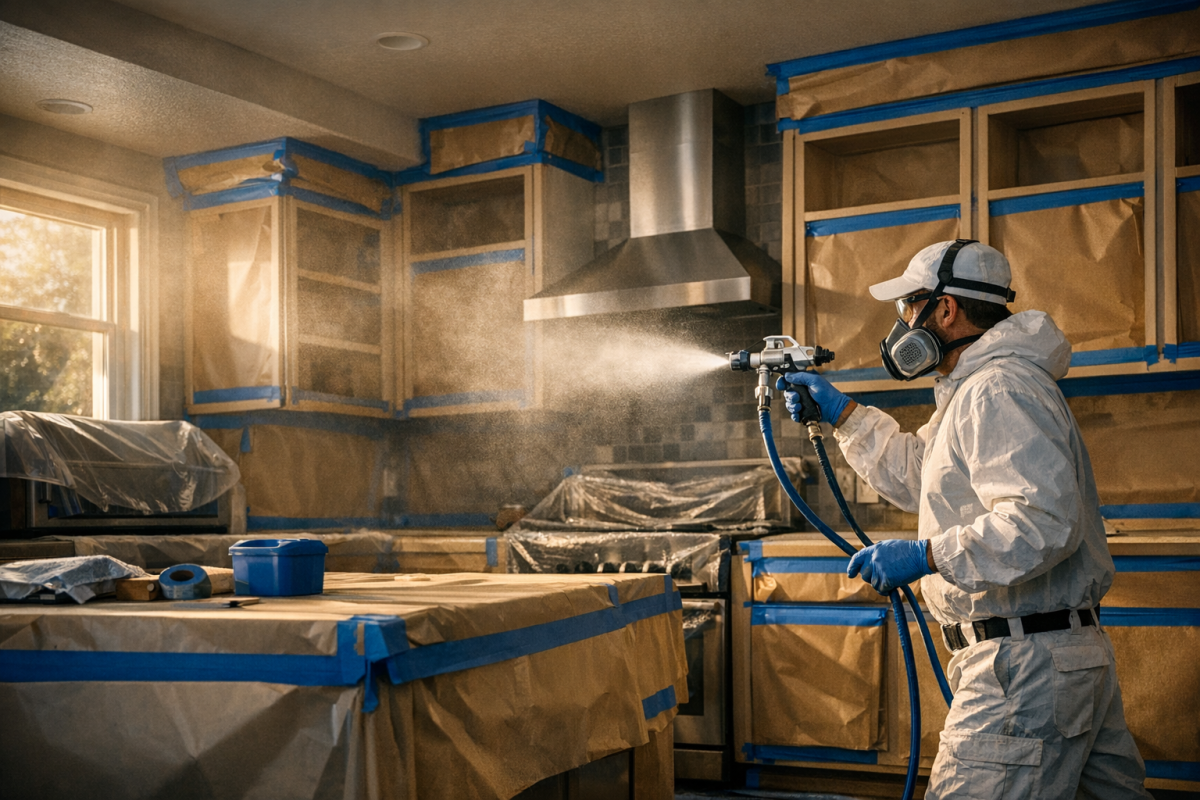
- Doors and drawers are usually taken offsite to a controlled shop or mobile spray booth.
- Cabinet frames and boxes are prepped and sprayed in place with masking and ventilation.
Given Denver’s dust and construction activity, controlling overspray and airborne particles is critical to a smooth finish.
Realistic Timelines
For an average 30–40 door kitchen:
- Onsite work: 3–5 days
- Total project including offsite spraying and curing: 7–10 days
If you are a landlord or flipper with tight turnover windows, share your dates up front. An experienced Denver team can phase units or prioritize rental kitchens that must be rentable within a specific week.
Cost Expectations For Local Cabinet Painters In Denver
Pricing varies, but there are clear patterns you can use to budget accurately.
Typical Price Ranges
For Denver metro projects, many experienced cabinet painters fall within these ranges:
| Project Type | Typical Range (Denver Metro) | Notes |
|---|---|---|
| Small kitchen (15–20 doors) | $2,000–$3,000 | Basic layout, minimal repairs |
| Average kitchen (30–40 doors) | $3,000–$5,000 | Most Denver homes and rentals |
| Large / high‑end kitchen | $5,000–$8,000+ | Extensive island, glass fronts, advanced repairs |
| Add bathroom vanities | +$400–$1,000 | Depends on quantity and condition |
These numbers assume professional prep and spraying, not hand‑brushed quick repaints.
Factors That Increase Or Decrease Cost
Costs go up when:
- Grain filling oak for a “non‑grain” look
- Repairing water damage near sinks or dishwashers
- Adding new hardware with different hole spacing
- Working in tight timeframes that require overtime or extra crews
Costs can be lower for:
- Simple color changes on smooth maple or MDF
- Vacant properties where crews can work uninterrupted
- Combining multiple units for investors or property managers
Comparing Quotes The Right Way
When you receive three bids that vary by 30 percent or more, line them up by:
- Number of coats and named products
- Process steps included and where spraying occurs
- Warranty length and what it covers
Avoid choosing solely by price. In Denver, a cheap cabinet job that fails within 18 months will cost more once you factor in stripping or re‑coating.
For a detailed look at professional options, review this guide to expert local cabinet painters near me in Denver.
When Refinishing Beats Replacement Or Refacing In Denver
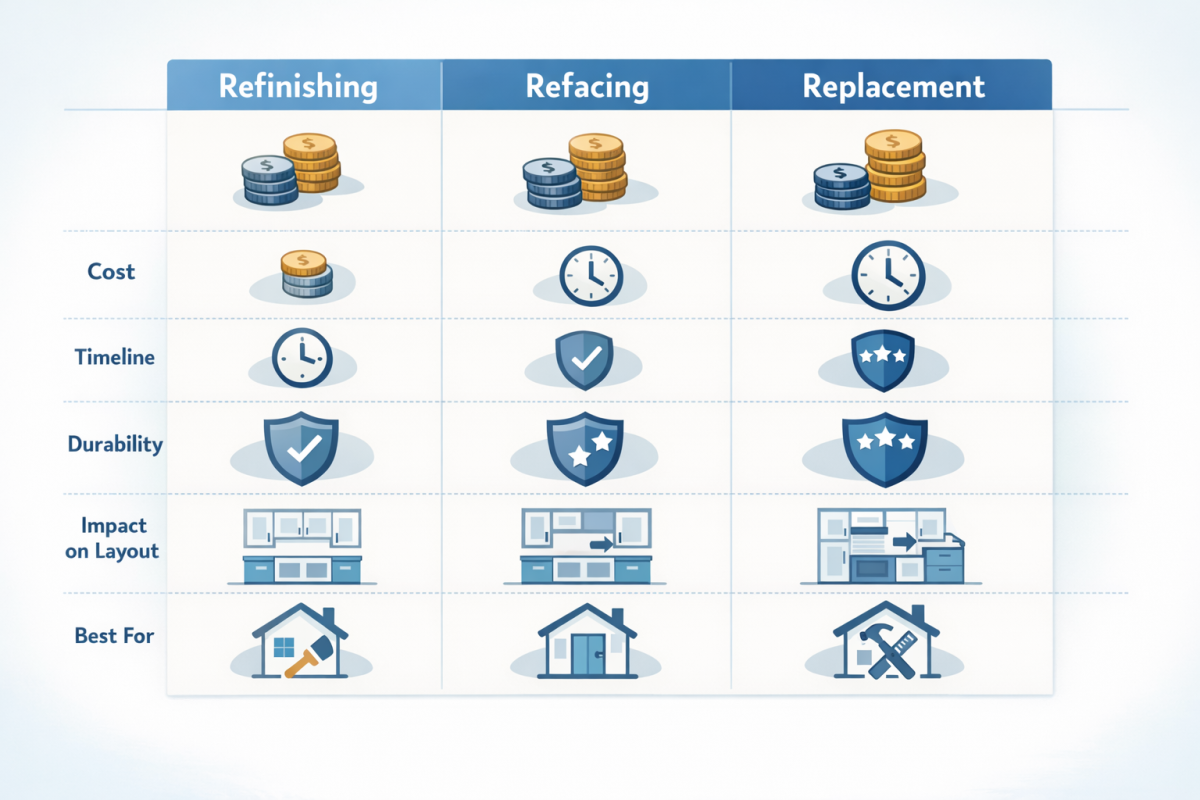
Homeowners and investors often ask whether to replace, reface, or refinish. In many Denver kitchens and baths, repainting/refinishing offers the best ROI.
Situations Where Refinishing Makes Most Sense
Refinishing is usually the best option when:
- Cabinet boxes are structurally sound and well‑laid‑out
- You like the existing layout, but the finish is dated or yellowed
- You plan to keep or sell the property within 5–10 years
- You want to free budget for counters, appliances, or flooring
For Denver investors and flippers, cabinet refinishing can convert a 1990s oak kitchen into a modern white or two‑tone look that photographs beautifully, typically in under two weeks.
When Replacement Or Refacing Is Better
Consider full replacement or professional refacing when:
- Boxes are particle board and swollen from repeated leaks
- You intend to reconfigure the kitchen footprint or add major storage
- Doors are heavily warped or significantly damaged
Even then, a local cabinet painter can often refinish new doors and boxes to match adjacent built‑ins or to correct a factory finish you do not like.
Impact On Denver Property Values
Updated cabinets are consistently among the top three features Denver buyers mention in feedback to agents, along with countertops and flooring. A professionally refinished kitchen can:
- Support higher listing prices for flips
- Reduce days on market for resale homes
- Justify rental increases in competitive submarkets
Important: Cheap, brush‑marked cabinet paint jobs can hurt appraised value and scare off buyers. Lenders and inspectors notice peeling finishes and DIY overspray, which can trigger repair requests.
Practical Tips For Homeowners, Investors, And Designers
Different audiences will prioritize different outcomes. Here is how to approach cabinet painting in Denver depending on your role.
For Homeowners Updating Their Own Kitchens Or Baths
- Ask to see color samples in your exact lighting conditions. Denver’s strong natural light can make whites look cooler or grays appear blue.
- Discuss sheen carefully. Satin or semi‑gloss is common. Matte can look sophisticated but is less forgiving of heavy use.
- Confirm protection of counters, floors, and adjacent rooms, especially in open‑concept spaces.
For Real Estate Investors And House Flippers
- Choose durable, broadly appealing colors that photograph well. Warm whites and soft grays often work best.
- Standardize specs across properties, including product line and sheen, so touch‑ups are predictable.
- Schedule cabinet work early in the project, before new counters or final flooring, to minimize risk of damage.
For Designers, Stagers, And Contractors
- Partner with a cabinet specialist who can handle both occupied homes and vacant job sites.
- Request consistent documentation: product lists, color codes, and maintenance guidelines you can give to clients.
- Clarify who is responsible for hardware sourcing and installation, particularly on high‑end or custom pieces.
When You Need A Proven Local Specialist: Cabinet Refinishing Denver
If you prefer to skip the trial‑and‑error phase and work with a team that focuses on cabinet refinishing in the Denver metro, Cabinet Refinishing Denver is built for exactly that need.
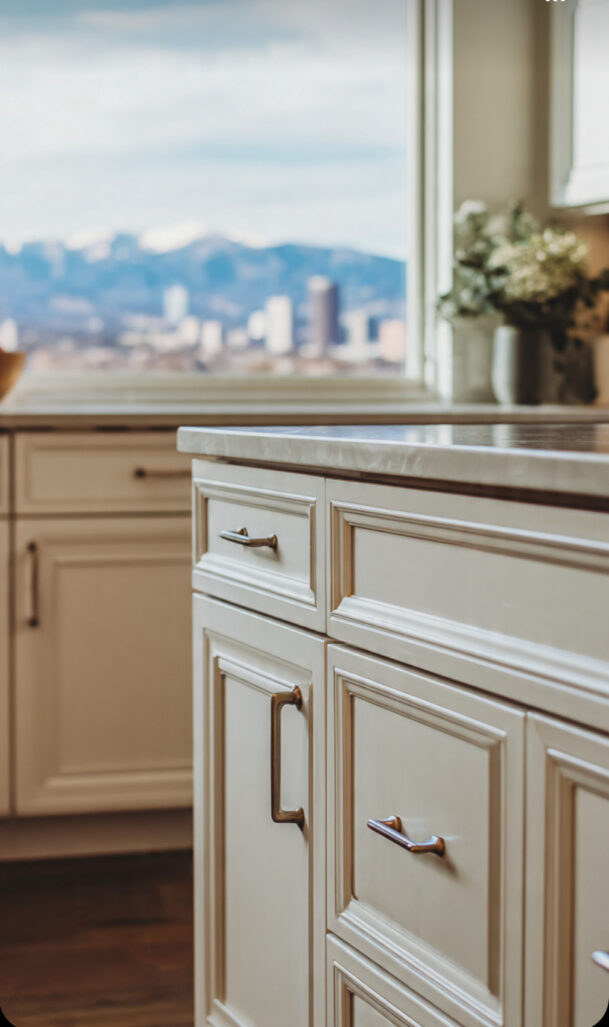
Cabinet painting Denver
They specialize in:
- Factory‑style sprayed finishes tailored to Denver’s dry climate
- Kitchens, baths, and built‑ins for homeowners, investors, and property managers
- Detailed prep on oak, maple, thermofoil, and MDF common in Front Range homes
You can review extensive local before‑and‑after projects, product details, and process breakdowns directly on their site.
To explore whether refinishing is the right fit for your Denver project, visit Cabinet Refinishing Denver: https://cabinetsrefinishing.com – Learn more.
Helpful Video Resource
Your Next Steps For A Successful Denver Cabinet Project
To move from research to action:
- Walk your kitchen or baths and note cabinet material, layout, and any damage.
- Gather inspiration photos that match Denver’s light and your home’s style.
- Shortlist two or three local cabinet painters with experience in Denver Colorado.
- Use the vetting questions and process outlined above for each contractor.
- Choose the team that demonstrates clear Denver experience, a disciplined process, and transparent pricing.
Investing a few extra hours in selection usually means your cabinets will still look new years later, not just for the listing photos or the first tenant.
Frequently Asked Questions
How long does cabinet paint last in Denver’s climate?
With proper prep, cabinet‑grade products, and an experienced Denver contractor, you can expect 8–10 years of serviceable life in typical homes, sometimes longer. High‑traffic rentals may see more wear at handles and trash pull‑outs, but touch‑ups are usually localized. The key is correct bonding primer, multiple topcoats, and controlled curing so the finish hardens fully in Denver’s dry air.
What is the best paint for kitchen cabinets in Denver Colorado?
There is no single “best” product, but look for professional cabinet enamels, lacquers, or 2K urethanes designed for high‑use surfaces. Experienced Denver cabinet painters often favor waterborne or hybrid systems that cure hard and resist yellowing. The critical part is that the system includes a compatible bonding primer and is applied in a controlled environment with the right temperature and humidity.
Can I stay in my home while cabinets are being refinished?
Yes, most Denver homeowners remain in place during cabinet projects. A professional crew will isolate the kitchen or bath with plastic, ventilation, and floor protection. You will have limited access to appliances for a few days, so plan simple meals or temporary setups. Families with small children or sensitive individuals may choose to be out during heavy spraying days, especially in tight floor plans.
How do I know if my cabinets are worth refinishing instead of replacing?
Your cabinets are good candidates for refinishing if the boxes are solid, doors close properly, and the layout still works for your household or tenants. Minor cosmetic issues, such as worn finish or small dings, are normal and repairable. Severe water damage, sagging boxes, or large layout changes usually point toward replacement. An experienced Denver cabinet painter can evaluate this during an onsite visit.
<="https://discover.hubpages.com/living/My-Review-of-Graco-FFLP-Tips-for-Spraying-Cabinets" target="_blank" rel="noopener">My Review of Graco FFLP Tips for Spraying Cabinets
How far in advance should I book local cabinet painters in Denver?
In Denver’s busy remodeling seasons, reputable cabinet specialists often book 4–8 weeks out, sometimes more. Investors aiming to coordinate with closings or tenant move‑outs should contact painters as soon as a purchase contract is firm. For homeowners, reaching out at least a month ahead gives you time to confirm colors, schedule around vacations, and coordinate with countertop or flooring trades if needed.