
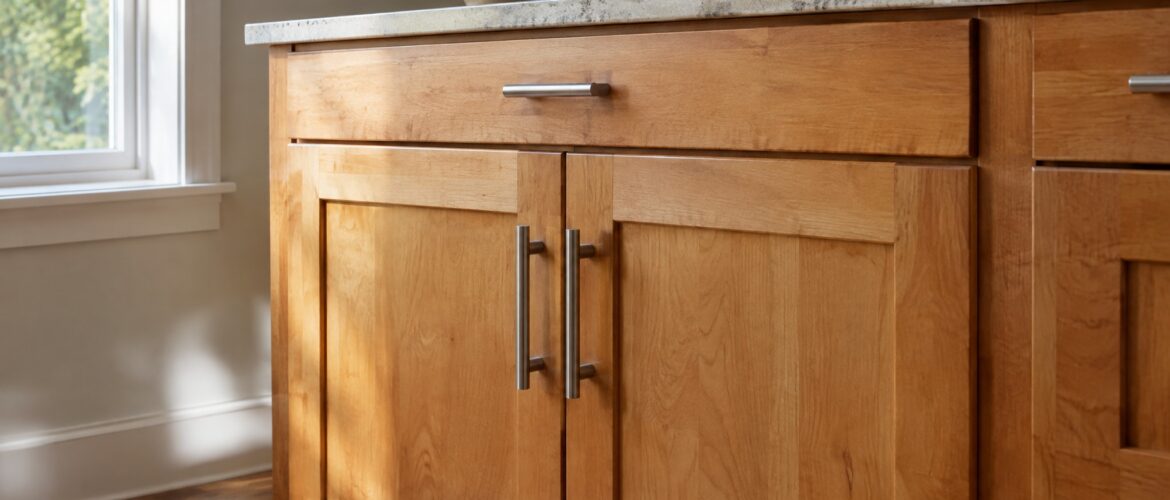
Parker homes built in the 2010s often feature solid oak or maple cabinetry that was high quality when installed but now shows the cumulative effects of Colorado’s arid climate. The wood dries out over years of low humidity. That causes finish failure around hardware and visible grain texture that no amount of cleaning can restore. You’re likely weighing a $25,000+ replacement quote against the uncertainty of whether refinishing can actually replicate the smooth, hard surface your cabinets had when new. Cabinet refinishing Parker CO homeowners trust requires more than a fresh coat of paint. It takes a chemical and mechanical process built for local conditions.
We’ve operated as a dedicated refinishing shop since 1979, and our approach rejects brushed or rolled applications entirely in favor of spray-applied factory finishes. That distinction matters because Parker’s newer-build aesthetics and HOA standards expect seamless surfaces, not visible brush marks or orange-peel texture from DIY-grade methods. When you choose professional cabinet refinishing services in Parker, you’re selecting a controlled industrial process performed by specialists who understand how crosslinking urethane lacquer interacts with dried-out wood in this specific environment. The result is a finish indistinguishable from factory new, at a fraction of replacement cost and without weeks of kitchen demolition.
Achieving a Factory Spray Finish in Parker Homes
Your cabinets endure seasonal humidity swings that cause wood fibers to expand and contract, creating stress points where standard paints crack and peel within months. A proper refinishing system has to address this substrate movement chemically before any color goes on. That’s why we use precat primer with crosslinking urethane lacquer rather than conventional latex or acrylic enamels. This two-component chemistry creates molecular bonds between coats that stay flexible enough to move with the wood, while curing to a hardness that resists fingernail scratches and household chemicals. Standard cabinet painting in Parker can’t match this because single-component paints dry through evaporation alone, leaving a film that sits on top of the wood rather than integrating with it.
Why HVLP and Crosslinking Urethane Outperform Brushed Paint
Consider a typical scenario we see in Parker kitchens: maple cabinets from a 2015 build where the original stain has faded unevenly, drawer fronts show wear patterns around the pulls, and the clear coat has started checking along panel edges from prolonged dryness. A painter using brushes or rollers would fill these defects with body filler and apply thick paint that obscures detail and leaves visible brush texture. Our HVLP spray equipment atomizes the crosslinking urethane lacquer into fine particles that flow into the grain pores and cure without building excessive mil thickness. That preserves the crisp profile of door rails and molding details that define newer-build craftsmanship.
This technical difference becomes immediately visible under the LED task lighting common in modern Parker kitchens. Brushed applications leave ridges and stipple patterns that catch light at oblique angles, telling anyone who walks in that the cabinets were painted rather than manufactured. Spray-applied finishes skip this tell because the material self-levels during application and cures through chemical reaction rather than solvent evaporation, producing a surface tension uniformity that mimics OEM factory lines. We’ve run HVLP spray equipment and crosslinking urethane lacquer systems since 1979, instead of standard brush-and-roll methods, and that’s decades of calibration data for getting this result consistently across different wood species and existing finish conditions.
The durability gap widens over time as Colorado’s dry air keeps pulling moisture from the wood substrate. Crosslinking urethane lacquer holds its adhesion through this desiccation cycle because the cured film keeps enough elasticity to move with the wood without losing cohesion. Brushed latex paints turn brittle as they age in low-humidity environments, which leads to the hairline cracking around joints and hardware cutouts that forces premature rework. When evaluating refinishing contractors in the Denver metro, verify that their process includes this specific chemistry rather than generic “cabinet paint” claims that skip the crosslinking component essential for long-term performance in our climate.
You should also understand what this process doesn’t fix. Refinishing restores surface appearance and protection, but it can’t correct structural damage, warping, or poor original construction. If your cabinet boxes are compromised or doors no longer align due to frame failure, replacement remains the right call. For structurally sound cabinets suffering only from cosmetic wear and finish degradation, though, spray-applied crosslinking urethane delivers factory-equivalent results that meet Parker’s aesthetic expectations without the waste and expense of a full demolition.
Refinishing Cost vs Replacement for Parker Kitchens
Homeowners typically save about 70% compared to a $25,000+ full cabinet replacement job, with comparable aesthetic results. This savings comes directly from preserving your existing cabinet boxes, which in Parker’s newer construction are typically furniture-grade plywood or solid wood that’s still structurally sound despite surface wear. Demolition and disposal costs vanish entirely, as do the expenses tied to plumbing disconnection, countertop removal, and drywall repair that come with full tear-outs. You keep functional storage that still meets current building codes, and you only pay for the visible surfaces that actually determine perceived quality.
The timeline compression adds value beyond the dollar savings. Standard turnaround is 2-5 days, which keeps kitchen disruption to a minimum for Parker families compared to the multi-week remodels that make the space unusable and force takeout meals or a temporary move. Replacement projects routinely stretch to four or six weeks once you factor in demolition, rough-in adjustments, cabinet delivery delays, and punch-list corrections. Your kitchen is back in full function within a workweek. That cuts out the hidden costs of displaced living that never show up on a contractor estimate but hit household logistics and stress levels hard.
For precise budgeting, review current per-door pricing for 2K poly finishes to see how your specific cabinet count and configuration translate to a firm quote. Pricing varies with door style complexity, existing finish condition, and color change requirements, but the 70% savings benchmark holds consistently across typical Parker kitchen layouts. This comparison assumes structurally sound boxes. If your cabinets have water damage, termite infestation, or outdated interior fittings that violate current code, replacement may offer better long-term value despite the higher upfront cost.
We give transparent quotes after an on-site assessment, because phone estimates can’t account for substrate prep variables unique to each project. What we can guarantee is that professional spray finishing costs substantially less than replacement while delivering visual results that satisfy both personal standards and HOA aesthetic requirements. The comprehensive 2026 refinishing cost guide has more detail on the line-item differences between refinishing and replacement proposals you may be comparing.
Ensuring Long-Term Performance After Refinishing
Warranty and Durability in Colorado’s Dry Climate
Every project includes a 3-year warranty covering finish adhesion and durability, backed by a licensed and insured shop. We can offer that because crosslinking urethane lacquer performs predictably in Colorado’s climate when applied correctly. We stand behind the chemistry because forty-plus years of local projects have shown us how it behaves under the exact environmental stress your cabinets will face. The warranty specifically covers peeling, chipping, and adhesion loss, the failure modes most common in dry climates where wood movement tests finish flexibility. Standard latex warranties often exclude these exact issues, because manufacturers know their products can’t withstand prolonged desiccation cycles.
The difference between our warranty and generic painter guarantees comes down to specificity. Many contractors offer vague “satisfaction” promises with no defined remediation terms, or they exclude environmental factors entirely. Our warranty names adhesion and finish integrity as covered conditions because these are measurable outcomes tied directly to proper substrate prep and correct chemical application. If your refinished cabinets develop finish problems tied to our process within the warranty period, we fix them at no cost. That accountability only works because the underlying chemistry can actually perform as promised.
You maintain this performance through simple care that matches the finish chemistry. Avoid abrasive cleaners and wax-based polishes; they leave surface films that don’t mix well with urethane lacquer. Mild soap and water keep the cured finish clean without introducing residues that attract dust or get in the way of future touch-ups. The crosslinked surface resists staining from common kitchen substances because its molecular structure leaves no open pores for contaminants to get into, which makes maintenance genuinely easier than with traditional painted surfaces that need periodic resealing or polishing to stay protected.
Frequently Asked Questions
How much does cabinet refinishing cost in Parker, CO?
Professional refinishing typically costs about 70% less than a $25,000+ full cabinet replacement, with exact pricing depending on door count, style complexity, and existing finish condition. We provide firm quotes after on-site assessment because substrate preparation needs vary by project. Review our current per-door pricing for 2K poly finishes to estimate your specific situation.
Is it cheaper to refinish or replace kitchen cabinets?
Refinishing is significantly cheaper when your existing cabinet boxes are structurally sound, saving roughly 70% versus full replacement while achieving comparable visual results. Replacement becomes necessary only when boxes suffer water damage, structural failure, or outdated interiors that violate current code. Most Parker homes built in the 2000s and later have solid boxes suitable for refinishing.
Does Home Depot offer cabinet refinishing services?
Home Depot sells cabinet paint and supplies for DIY projects but does not operate an in-house refinishing service with spray-applied factory finishes. Their product offerings are designed for consumer brush-and-roll application, which produces different results than professional HVLP spray systems using crosslinking urethane lacquer. Dedicated refinishing shops like ours specialize exclusively in this trade-level process.
How long does professional cabinet refinishing take?
Our standard turnaround is 2-5 days from start to completion, allowing your kitchen to return to full function within a single workweek. This timeline includes all preparation, spraying, and curing phases performed on-site or in our shop depending on project scope. Full cabinet replacements typically require four to six weeks by comparison.
What warranty should I expect from a cabinet refinisher?
Reputable refinishing specialists in Colorado should offer at least a 3-year warranty specifically covering finish adhesion and durability against peeling or chipping. Verify that the warranty names these failure modes explicitly rather than offering vague satisfaction guarantees. Our warranty is backed by licensing, insurance, and four decades of local project history validating the crosslinking urethane chemistry we use.