
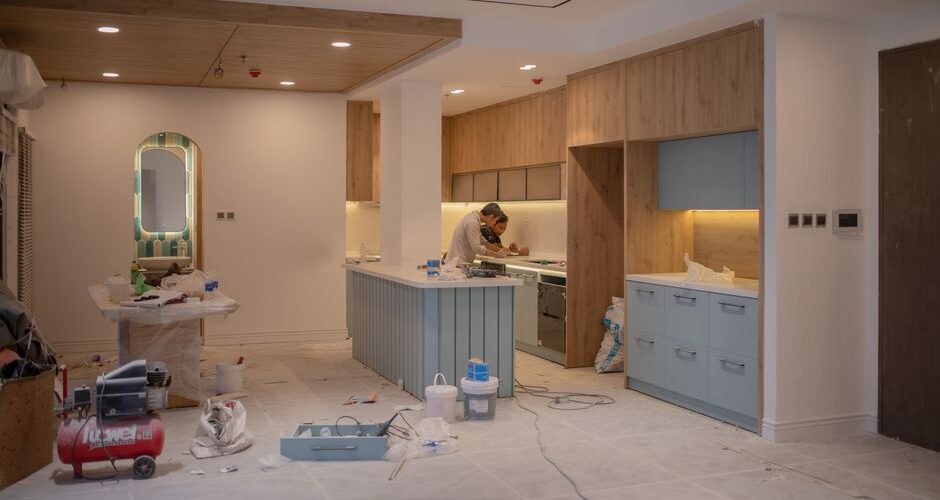
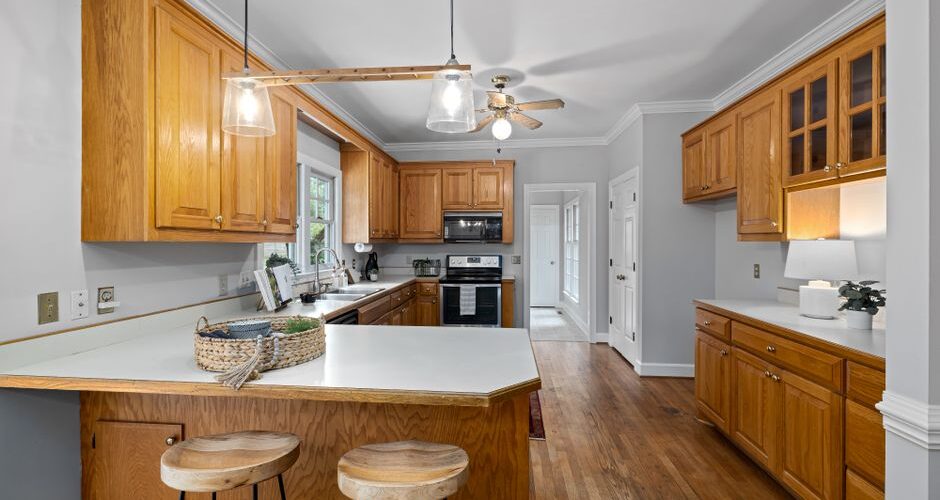
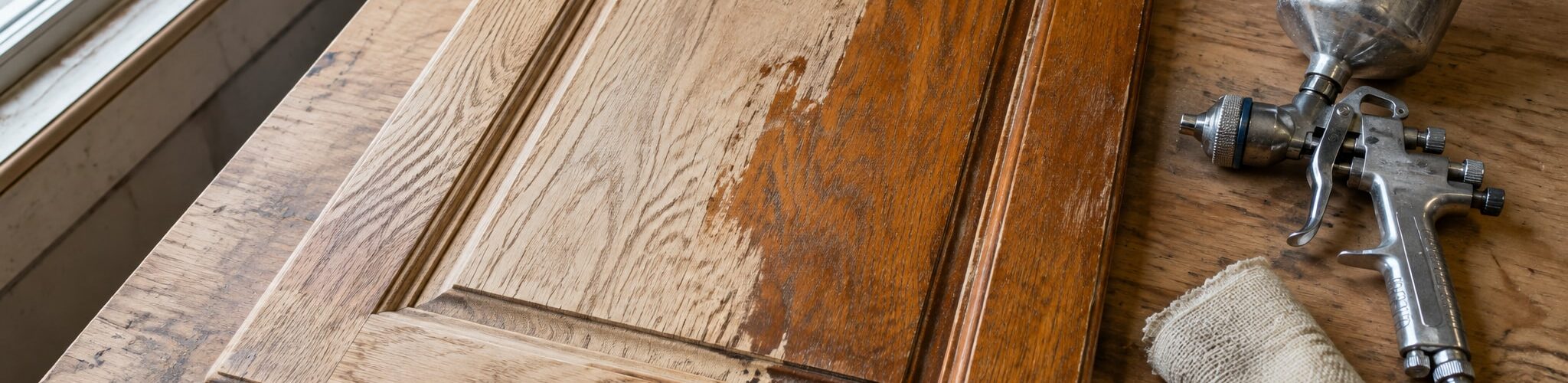

Professional cabinet refinishing keeps your kitchen functional throughout most of the project, with actual downtime limited to one or two days at most. The process strips and recoats your existing cabinet surfaces without tearing out boxes or halting your household. Done right, you cook dinner on day two.
What cabinet refinishing with minimal disruption actually involves
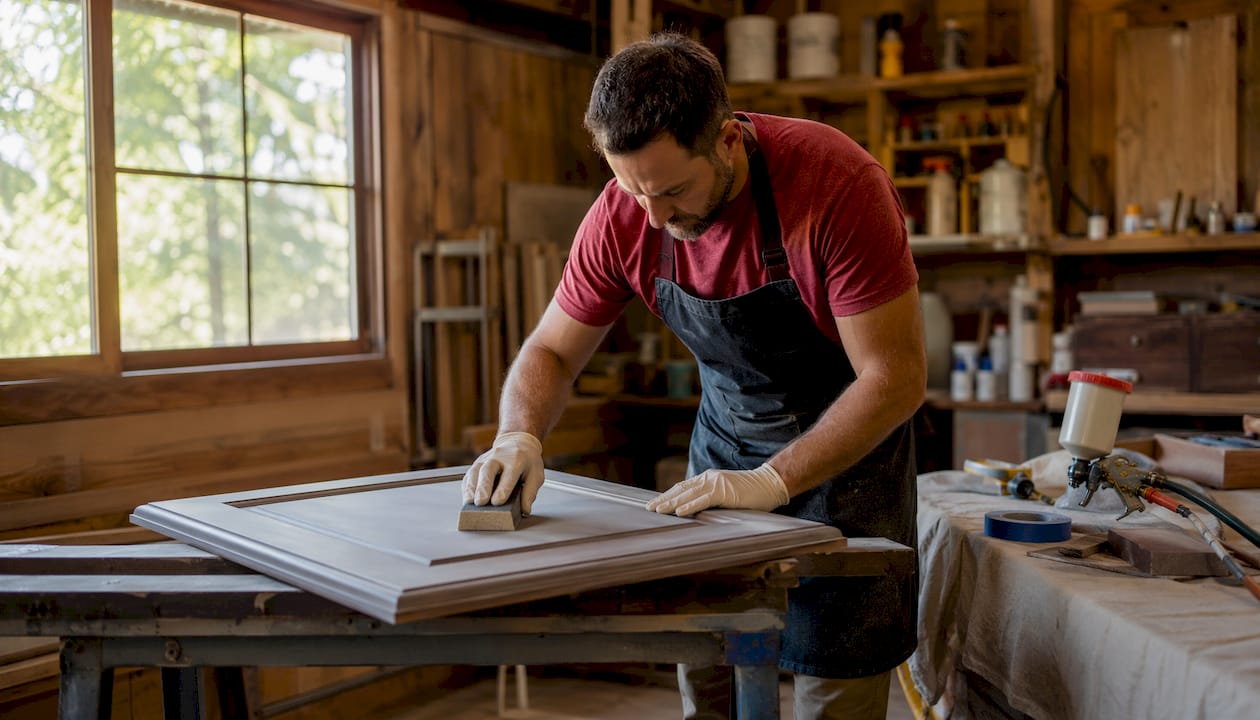
Cabinet refinishing means removing the old finish from your cabinet doors, drawer fronts, and frames, then applying fresh coatings for a like-new appearance. The key to keeping your family’s routine intact is where the work happens. Doors and drawers leave your kitchen for off-site spraying in a controlled environment, while the fixed cabinet boxes get refinished on-site with containment measures in place.
Here is what a low-disruption refinishing project typically includes:
- Off-site door and drawer spraying: Cabinet doors travel to a spray booth, keeping fumes and sanding dust out of your home entirely.
- Plastic containment walls: Sealed plastic sheeting and taped seams isolate the work zone from the rest of your living space.
- HEPA vacuum systems: Sanding dust gets pulled into filters rather than drifting through your house.
- Low-VOC coatings: Modern polyurethane and lacquer formulas produce minimal odor, so your home stays livable.
- Appliance access throughout: Your refrigerator, stove, and sink remain usable during most of the project.
- Targeted prep scope: You clear only the cabinets in the immediate work zone, not the entire kitchen.
The result is a kitchen that looks transformed without the chaos of a full remodel.
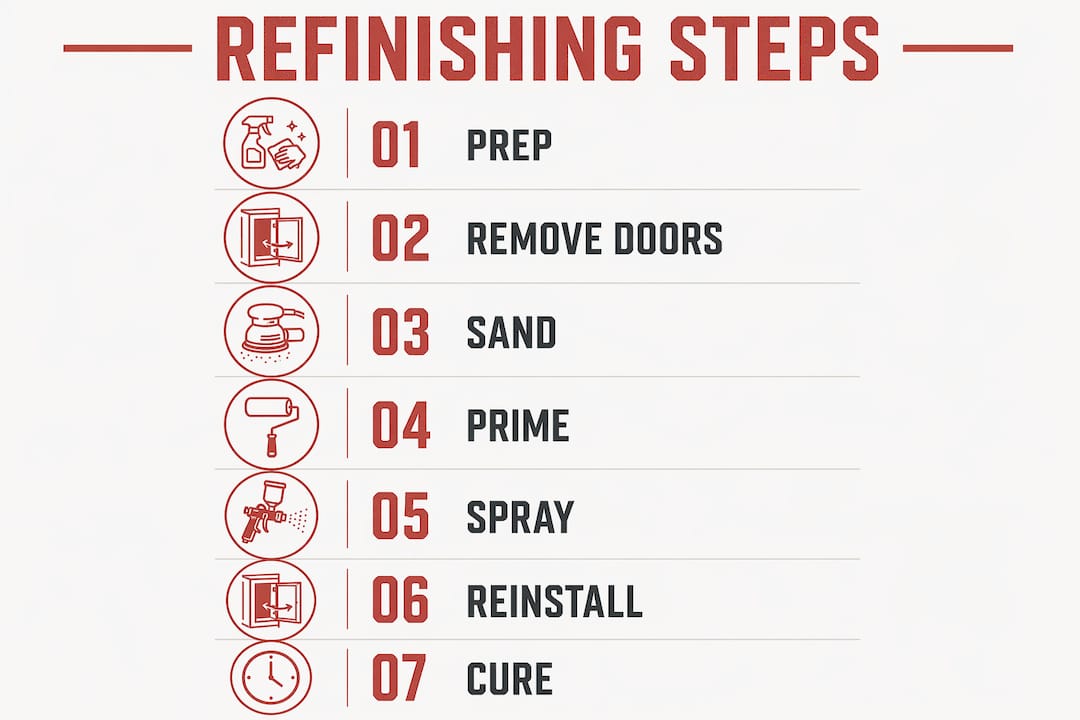
How the refinishing process works, step by step
A well-run project follows a predictable sequence, and each phase is planned to protect your daily routine.
- Initial consultation and assessment. A technician visits your kitchen, evaluates cabinet condition, and maps out the project timeline. You discuss finish options, color, and any scheduling needs specific to your household.
- Cabinet door and drawer removal. On day one, doors and drawer fronts come off and leave for the off-site spray facility. The cabinet frames stay in place. Your kitchen is open-shelf style at this point, but fully usable.
- On-site preparation and containment. Technicians install plastic containment walls, lay floor protection, and cover countertops and appliances. Frames get cleaned, degreased, and sanded with HEPA vacuuming running throughout.
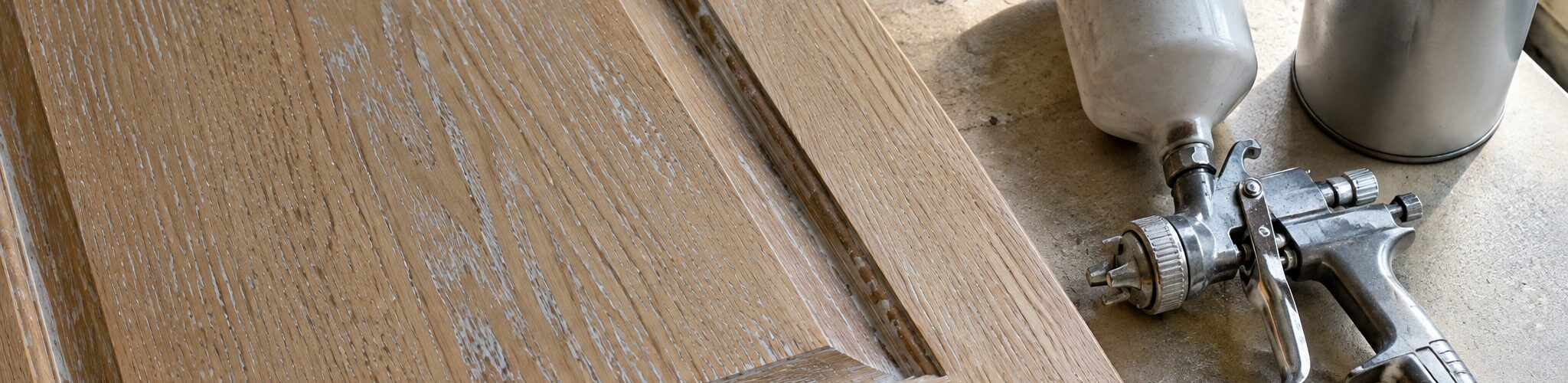
- Off-site spraying and curing. Doors and drawers receive bonding primer, multiple finish coats, and cure time in a temperature-controlled booth. This is where off-site spray painting delivers a factory-quality result that on-site brush work simply cannot match.
- On-site frame finishing. Cabinet boxes get their final coats applied on-site. Low-VOC lacquers mean no lingering chemical smell by the time the crew leaves for the day.
- Reinstallation and final walkthrough. Doors and drawers return and get rehung. Hardware goes back on. The crew does a final inspection and you get your kitchen back, typically within 3 to 5 days total.
Pro Tip: The night before the crew arrives, stage your most-used items — coffee maker, a few plates, kids’ cups — on the dining table or a folding shelf in the hallway. You will not need to dig through bins all week.
Key benefits for busy families
The financial case for refinishing is hard to argue with. Professional cabinet refinishing typically costs $3,000 to $8,000, compared to $15,000 to $40,000 for full cabinet replacement. That gap funds a lot of other home priorities.
Beyond cost, here is what busy households gain:
- Short project window. Most jobs wrap in 3 to 5 days versus 4 to 8 weeks for replacement, so your kitchen is not a construction zone for a month.
- Reduced noise and dust. The loudest, messiest work happens off-site or under containment, not in your living space.
- No relocation needed. You stay in your home and cook normally throughout most of the project.
- Eco-friendly approach. Keeping your existing cabinet boxes out of the landfill reduces waste, and modern low-VOC finishes cut chemical exposure for your family.
- Durable, long-lasting results. Proprietary finishing systems using multiple protective layers and advanced UV curing technology produce a finish that holds up to daily family use for years.
For families weighing whether their cabinets even qualify, reviewing signs your cabinets need refinishing rather than replacing is a useful first step.
What before-and-after transformations look like
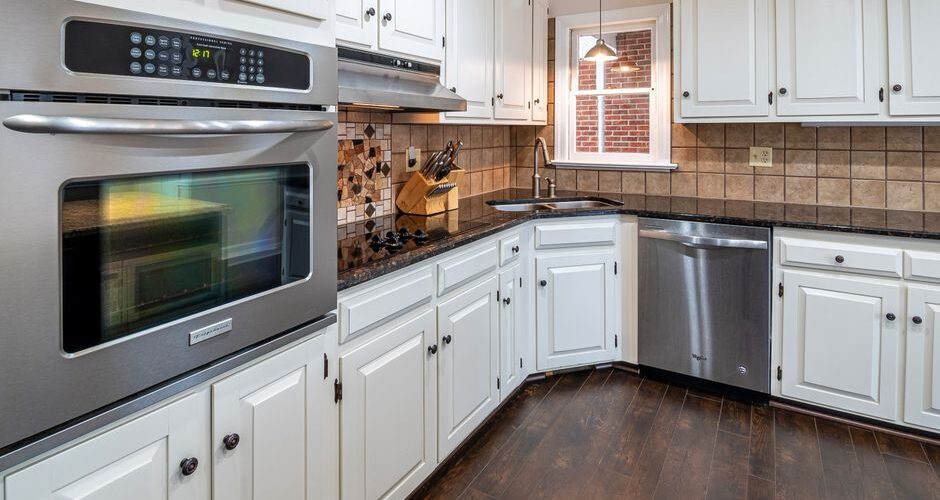
The visual impact of professional refinishing surprises most homeowners. Cabinets that looked dull, yellowed, or dated come back with a clean, factory-smooth finish that reads as brand new.
Common transformation types include:
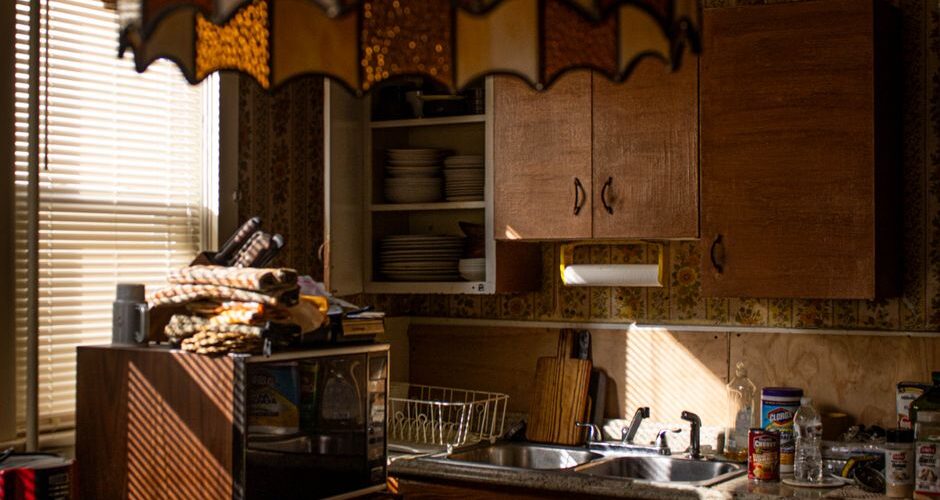
- Dark stained oak to bright white: One of the most popular updates, this swap makes a kitchen feel larger and more modern without touching the layout.
- Worn builder-grade maple to deep navy or charcoal: A two-tone approach, with upper cabinets in white and lowers in a bold color, adds design depth at a fraction of replacement cost.
- Chipped painted cabinets restored to a satin finish: Peeling corners and scuffed edges disappear under fresh primer and topcoat, with no visible seams or patchwork.
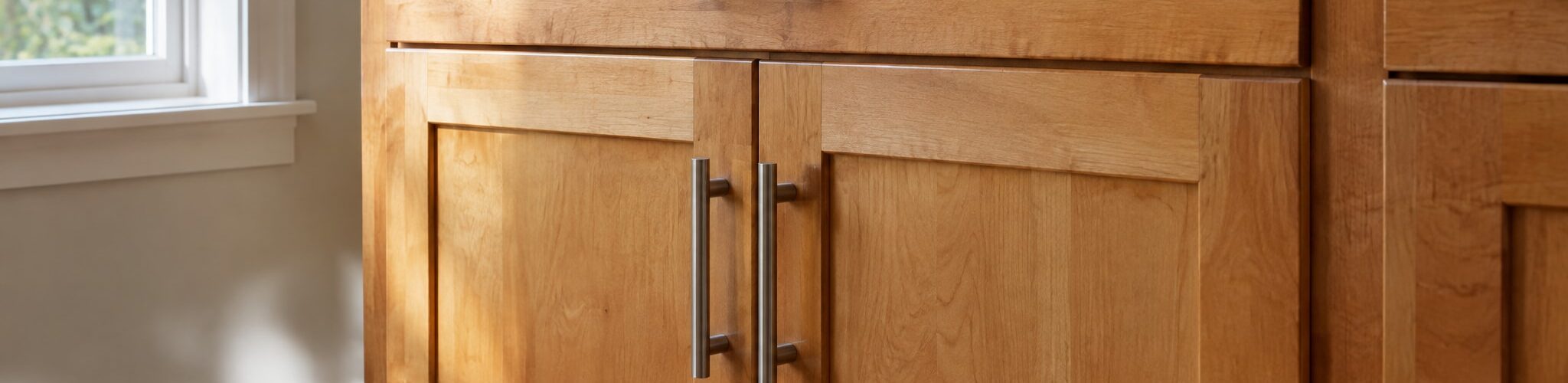
- Natural wood grain preserved with a clear protective recoat: For homeowners who love their wood tone but need a fresh, durable surface, a clear refinish brings the grain back to life.
The transformation happens without a single cabinet box leaving the wall, which is exactly why the kitchen stays usable throughout.
What homeowners say about the experience
Real customer feedback on professional refinishing consistently focuses on two things: how little it disrupted daily life, and how dramatic the result looked.
Customer testimonials like these reflect what multi-unit refinishing clients report as well: dramatic transformations with minimal inconvenience and real savings over remodeling.
Professional techniques that keep your household running
The gap between a disruptive refinishing job and a smooth one comes down to process discipline. Experienced refinishers build disruption control into every phase, not as an afterthought.
- Off-site spraying eliminates on-site fumes. When doors and drawers leave for a spray booth, the chemical-heavy coating steps happen away from your family entirely.
- Sealed containment systems. Plastic walls with taped seams and negative-pressure setups prevent sanding dust from migrating into bedrooms, living rooms, or home offices.
- HEPA vacuuming during sanding. Dust gets captured at the source rather than settling on surfaces throughout your home.
- Proprietary multi-layer finishing systems. State-of-the-art materials and UV curing technology, applied in controlled conditions, produce a harder, more durable surface than brush-on consumer products.
- Targeted prep scope. Professionals clear only the immediate work zone, so the rest of your kitchen storage stays intact and accessible.
Pro Tip: If anyone in your household works from home or has respiratory sensitivities, ask your refinisher to schedule the on-site sanding phase for a morning when you can open windows. The HEPA system handles most of it, but fresh air helps.
Pairing a well-executed refinishing project with durable interior finishes elsewhere in the home extends the overall value of the upgrade.
How to coordinate with your refinishing service around family needs
Clear communication before the project starts prevents most scheduling conflicts. Tell your refinisher upfront about anything that affects timing: a remote worker who needs quiet mornings, a baby’s nap schedule, a pet that needs to be kept away from the work zone, or a family event on the weekend.

Ask specifically which days involve the most noise and dust. Sanding and prep work on days one and two tend to be the loudest. If you can plan a school outing or a day trip for those days, the project feels almost invisible. Most professional crews are used to working around family schedules and will adjust start times or phase sequencing when asked.
Get the full project timeline in writing before work begins, including when doors will be off-site and when reinstallation happens. Knowing the open-shelf phase lasts a set number of days lets you plan meals and storage without guessing.
Common challenges and how to handle them
A few predictable friction points come up in nearly every refinishing project. Knowing them in advance makes them easy to manage.
Temporary loss of cabinet doors. While doors are off-site for spraying, your cabinets are open shelving. Stage your most-used items on the counter or a nearby table before day one so you are not hunting through stacked bins for the coffee filters.
Sanding noise during prep. The first day or two involve hand sanding and power sanding on the cabinet frames. It is not construction-level noise, but it is noticeable. Remote workers and light sleepers should plan accordingly.
Cure time before normal use. The finish is dry to the touch quickly, but full hardness takes several days after the final coat. Avoid hanging heavy towels on door handles or slamming cabinets for about a week after reinstallation.
Pet management. Dogs and cats are generally fine staying in the home, but the sanding phase can be stressful for animals sensitive to noise. A quiet room away from the kitchen works well for those days.
What cabinet refinishing costs and how to budget for it
The cost range for professional refinishing, $3,000 to $8,000, covers most standard kitchens and reflects cabinet count, finish type, and any prep complexity. Full cabinet replacement runs $15,000 to $40,000 for the same kitchen, a gap that makes refinishing the obvious choice when the cabinet boxes are structurally sound.
| Cost factor | Refinishing | Full replacement |
|---|---|---|
| Typical price range | A few thousand dollars | Tens of thousands of dollars |
| Project duration | 3–5 days | 4–8 weeks |
| Kitchen downtime | 1–2 days | Entire project duration |
When budgeting, ask for a firm quote based on photos or an in-person visit rather than a rough range. Reputable refinishers price by cabinet count and finish complexity, so the number should not shift after the project starts. Factor in any hardware upgrades you want to add at the same time, since the labor overlap makes it the most cost-efficient moment to swap pulls and hinges.
DIY vs. professional refinishing: which causes less disruption?
DIY cabinet refinishing materials cost a few hundred dollars for a typical kitchen, but the disruption trade-off is significant. A DIY project typically spans several weekends of active work, plus about one to two weeks of cure time before doors go back on. Your kitchen runs as open shelving for an extended period, and the sanding, priming, and painting all happen inside your home.
Professional refinishing compresses that timeline to 3 to 5 days and moves the messiest steps off-site. The finish quality difference is also real. Spray-applied coatings in a controlled booth produce a harder, smoother surface than brush or roller application in a home environment, where dust, humidity, and temperature variation all affect how the finish cures.
For a family with kids, pets, or anyone working from home, the professional route causes less total disruption despite the higher upfront cost. The DIY path makes sense for homeowners with flexible schedules, intermediate finishing skills, and patience for a longer open-shelf period. For everyone else, the math on professional cabinet refinishing in Denver tends to favor hiring it out.
Ready to refresh your kitchen without the chaos?

Cabinetsrefinishing delivers a factory-quality finish in 3 to 5 days, with your kitchen staying usable throughout. Projects run $3,000 to $8,000 for most Denver-area kitchens, a fraction of replacement cost. Call or text 720-219-9716 for a firm quote, or visit Cabinetsrefinishing Denver to get started.
Key Takeaways
Professional cabinet refinishing keeps your kitchen functional throughout most of the project, costs $3,000 to $8,000, and wraps in 3 to 5 days versus weeks for full replacement.
| Point | Details |
|---|---|
| Kitchen stays usable | Actual downtime is limited to 1–2 days; appliances and sink remain accessible throughout. |
| Cost advantage | Refinishing runs $3,000–$8,000 versus $15,000–$40,000 for full cabinet replacement. |
| Project timeline | Most professional jobs complete in 3–5 days, compared to 4–8 weeks for replacement. |
| Off-site spraying | Doors and drawers are finished away from your home, eliminating on-site fumes and dust. |
| Prep scope | You clear only the immediate work zone; the rest of your kitchen storage stays intact. |
Recommended
- Cabinet Refinishing Environmental Impact: A Homeowner’s Guide – Cabinet Refinishing and Cabinet Painting Denver 720-219-9716
- How to Live in Your House During Cabinet Painting: A Denver Homeowner’s Guide
- Cabinet Refinishing Between Tenant Turnovers: A Landlord’s Guide – Cabinet Refinishing and Cabinet Painting Denver 720-219-9716
- Professional Cabinet Restoration in Denver: Revitalize Your Kitchen Without the Cost of Replacement