
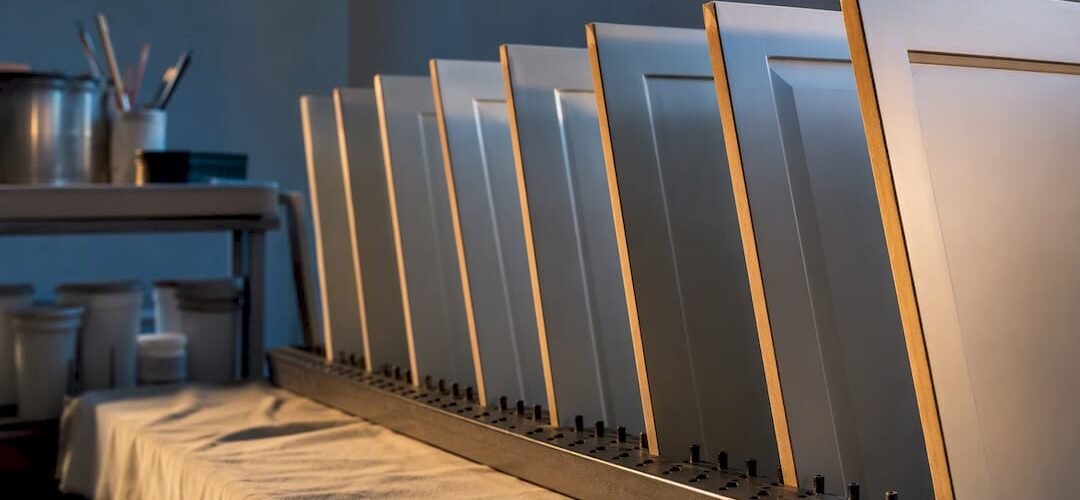
Plan on 3 to 7 business days of active work for an average kitchen’s cabinet refinishing, with larger or more complex projects stretching toward the high end. Factor in an extra 2 to 4 weeks beyond that for scheduling, shop processing, and any surprise repairs your painter finds once the doors come off. DIY jobs run longer still, often eating multiple weekends instead of one work week.
TL;DR:
- Projects with more cabinets, complex finishes, or structural issues can extend active work to over a week, with total lead times reaching four weeks or more.
- Shop spray finishing in controlled environments significantly shortens curing times and overall schedules compared to in-home brushing, with active phases often lasting 3 to 5 days.
- Proper scheduling should prioritize refinishing before flooring and after countertop templating to minimize delays and protect the new finish from damage.
- DIY refinishing often takes three to four weekends for a full kitchen, with extended drying, sanding, and touch-up efforts that can surpass professional timelines.
- Accurate timing depends on shop capacity, project scope, and environmental conditions, so requesting detailed written schedules and cure times is essential for tight deadlines.
Table of Contents
- Cabinet Refinishing Lead Times: Quick Ranges By Project Scope
- What Affects How Long Refinishing Takes
- A Realistic Day-By-Day Schedule For Professional Refinishing
- DIY Cabinet Refinishing: What the Timeline Actually Looks Like
- Cure Times: When Cabinets Are Actually Safe to Use
- Refinishing vs. Refacing vs. Replacing: How the Timelines Compare
- How to Plan and Schedule Cabinet Refinishing During a Renovation
- How Professionals Shorten Lead Times Without Cutting Corners
- What We Recommend for Schedule-Sensitive Renovations
- Get a Firm Cabinet Refinishing Schedule From Cabinetsrefinishing
- Sources
Cabinet Refinishing Lead Times: Quick Ranges By Project Scope
Most homeowners want one number before they commit to anything else on the renovation calendar. Here’s how that number shifts depending on kitchen size and finish choice.
- Small galley kitchen, simple paint: 2 to 4 days of active work; total lead time (including scheduling) often lands around 1 to 2 weeks.
- Medium kitchen, standard layout, single-color paint: 3 to 5 days of active work is the most common window quoted by contractors, with total lead time closer to 2 to 3 weeks once shop capacity and drying are factored in.
- Large kitchen or open-concept layout with an island: active work stretches toward a full week, and total lead time can run 3 to 4 weeks depending on contractor backlog.
- Stain or restain projects: usually add a day or two versus paint because stain requires more careful wood prep and often more coats.
- Specialty finishes (glazing, two-tone cabinetry, distressing, or custom hardware relocation) push active work to the 6 to 7 day range and can add a week or more to overall lead time if custom hardware needs to be ordered.
These ranges assume cabinets are structurally sound. Water damage, warped doors, or a previous coating that’s failing changes the math fast, which is exactly what the next section covers.
What Affects How Long Refinishing Takes
A quote that says “5 days” isn’t wrong. It’s just an average, and averages move based on five variables that show up in nearly every project.
- Cabinet count and layout. A kitchen with 30 doors and 15 drawers takes longer to prep, spray, and reinstall than one with 18 doors. Islands and tall pantry units add awkward angles that slow both removal and reassembly.
- Condition issues. Peeling finish, water stains near the sink, or a prior coating that’s flaking off means extra stripping and repair time before anyone can prime.
- Finish complexity. A single flat color is the fastest option. Glazing, multi-step stains, or a color change from dark wood to white paint all require more coats and more dry time between them.
- Shop capacity and seasonality. Spring and early summer are peak renovation months in most markets, and a backed-up shop schedule is often the single biggest driver of a multi-week wait before work even starts.
- Humidity and temperature. Cure chemistry slows down in cold or damp conditions, which is why winter projects sometimes need a longer buffer before cabinets go back into daily use.
Pro Tip: Ask your contractor how many active jobs their shop is running simultaneously. A shop juggling six kitchens at once will quote you honestly, but your actual start date may sit further out than the “3 to 5 days” they mention for the work itself.
A Realistic Day-By-Day Schedule For Professional Refinishing
Professional refinishing isn’t one continuous task. It’s a sequence of phases split between your kitchen and a spray shop, and understanding that split explains why pros can finish faster than most DIYers even though they’re doing more thorough prep.
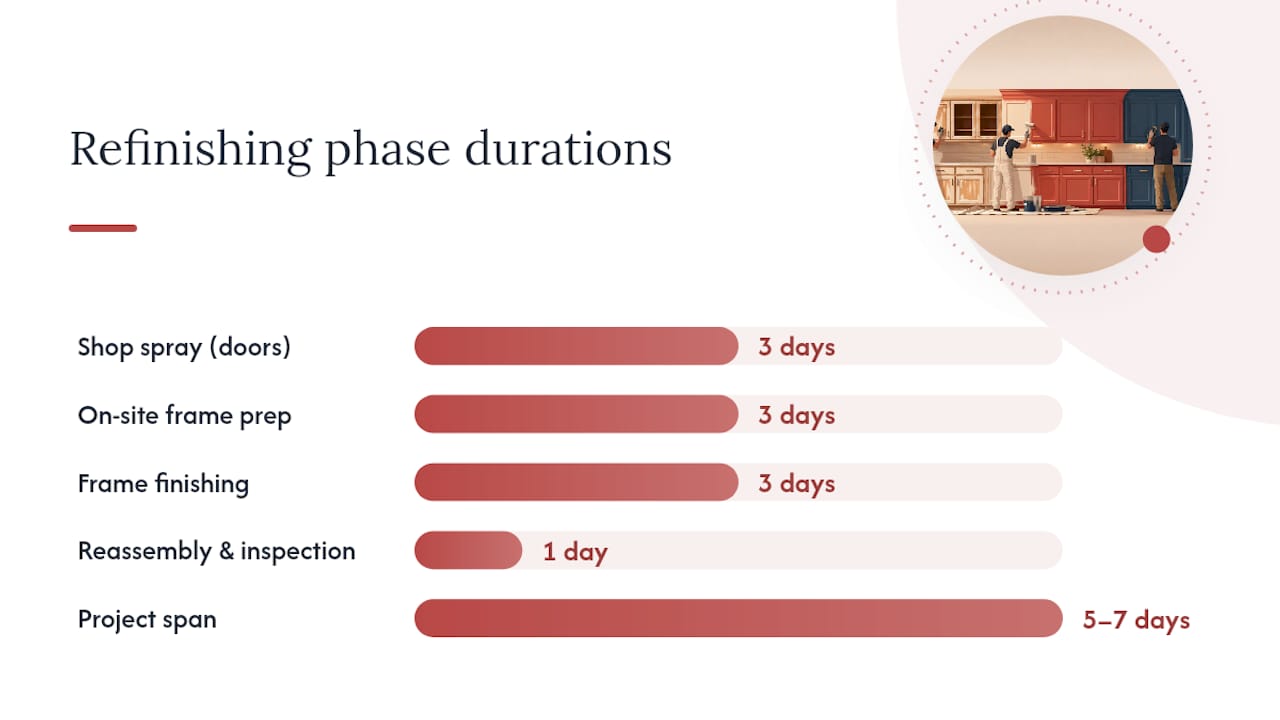
A typical professional schedule for an average kitchen spans 5 to 7 days of coordinated shop and on-site work. Here’s roughly how that breaks down:
- Day 1: Labeling, removal, and inspection. Every door and drawer front gets numbered so it returns to its exact spot. This is also when hidden damage, like water swelling near the sink cabinet, gets flagged before it becomes a mid-project surprise.
- Days 1 to 3: Shop spray sequence. Doors and drawer fronts travel to a controlled shop environment for spraying, which is a meaningful departure from brushing cabinets in place. Multiple primer coats go down first, each sanded lightly before the next layer, following the same multi-coat process professional refinishers describe as essential for durability. Topcoats follow the same pattern: spray, dry, sand, repeat.
- Days 2 to 4: On-site frame prep. While doors are in the shop, cabinet boxes and face frames left in your kitchen get cleaned, sanded, and primed. Counters and appliances typically stay usable during this phase, since the boxes remain mounted.
- Days 4 to 6: Frame finishing and shop completion. On-site frames receive their topcoats while shop-sprayed doors finish curing on drying racks.
- Day 6 or 7: Reassembly and inspection. Hardware goes back on, doors get rehung, and a final walk-through catches any spots needing touch-up before the crew leaves.
The shop phase is where the real time savings happen. Spraying in a dust-controlled environment with dedicated drying racks lets multiple coats cure on a predictable schedule instead of waiting on unpredictable air-dry conditions in your kitchen. That’s also why some specialists report finishing smaller jobs in as little as 2 to 3 days, while thorough full-kitchen processes run the fuller 5 to 7 day window with extended cure guidance afterward.
One distinction matters here: dry-to-touch is not the same as fully cured. Your cabinets may look and feel finished on day 6, but the coating is still hardening underneath. Treat the first few weeks gently, even after the crew has packed up and left.
DIY Cabinet Refinishing: What the Timeline Actually Looks Like
DIY refinishing is genuinely cheaper on materials, but the time cost catches most homeowners off guard. What a contractor squeezes into one work week often turns into three or four weekends of stop-and-start effort.
- Prep and sanding alone can eat an entire weekend on a kitchen with more than 20 doors, especially without a proper sander and dust extraction setup.
- Multiple thin coats are non-negotiable for a smooth finish, and each coat needs real dry time. Without a dedicated shop space, you’re often waiting on garage or basement ventilation between applications.
- Outdoor drying weather becomes a scheduling constraint of its own. Humid or cold days extend dry time, and pushing forward anyway usually shows up later as tackiness or visible brush marks.
- Touch-ups at the end are almost guaranteed on a first attempt, adding another day or two you probably didn’t budget for.
DIY makes sense for a small scope, like refinishing a single bathroom vanity, if your schedule is genuinely flexible. For a full kitchen on any kind of deadline, whether that’s a move-in date or a listing photo shoot, hiring a shop-based pro almost always saves time and reduces the risk of a finish that fails within a year. Reviewing proper sanding technique before starting can at least shorten the prep phase if you’re set on doing it yourself.
Cure Times: When Cabinets Are Actually Safe to Use
“Dry” and “cured” mean two different things, and mixing them up is the fastest way to damage a fresh finish. Most systems reach dry-to-touch in as little as 30 minutes, with a recoat window of roughly 2 to 4 hours for certain coating products. Full cure, meaning the finish has reached its maximum hardness and chemical resistance, typically takes anywhere from 7 to 30 days depending on the specific product used.
- First 24 to 48 hours: treat doors gently. Avoid slamming them shut or hanging anything heavy on new hardware.
- First 7 to 14 days: skip harsh cleaners, degreasers, and abrasive sponges. A soft, damp cloth is the safest option.
- Full 30-day window: this is when the coating reaches its final hardness, so it’s worth holding off on heavy daily wear, like resting hot pans directly on cabinet surfaces, until that point passes.
Cold or humid conditions slow every stage of this timeline, which is one more reason winter projects deserve a wider buffer. Product cure windows vary enough between manufacturers that it’s worth asking your contractor for the specific product’s cure schedule rather than assuming a generic “24 hours and you’re good” answer applies.
Refinishing vs. Refacing vs. Replacing: How the Timelines Compare
Cabinet refinishing wins the speed contest in almost every scenario, but it’s worth understanding why the alternatives take longer before you commit to one path.
- Refinishing keeps your existing cabinet boxes and simply changes the surface finish, which is why active work fits into roughly a week. The main lead-time variable is shop scheduling, not fabrication.
- Refacing replaces door and drawer fronts with new material while keeping the boxes, but those new fronts have to be fabricated and delivered first. That adds a manufacturing and shipping lead time on top of installation, often pushing total timelines to several weeks even before installers show up. A side-by-side look at painting versus replacing doors lays out how much that fabrication step adds.
- Full replacement requires design consultations, custom cabinet ordering, demolition, and new installation, a sequence that commonly adds weeks to months depending on how custom the order is.
If your cabinet boxes are structurally sound and your calendar is tight, refinishing is the option built for that constraint.
How to Plan and Schedule Cabinet Refinishing During a Renovation
Getting the timeline right isn’t just about picking a contractor. It’s about sequencing that contractor correctly against everything else happening in your kitchen.
- Request estimates 2 to 6 weeks ahead of when you want work to start, especially during spring and summer when contractor backlogs are longest and shop slots fill up fastest.
- Sequence refinishing before flooring and after countertop templating, so dust from other trades doesn’t land on a freshly cured finish and countertop measurements aren’t disrupted by cabinet removal.
- Ask specific scheduling questions: what’s the shop versus on-site split, what’s the exact cure timeline for their product, is there a written warranty, and what’s the contingency plan if hidden damage turns up on day one?
- Watch for red flags: a contractor who won’t commit to a written schedule, can’t describe a shop workflow, or gives you a vague “a few days” answer without specifics is more likely to run long.
Pro Tip: Get the schedule and cure windows in writing before signing. A verbal “should be done by Friday” isn’t a commitment, and it won’t help you if your flooring crew shows up the same day cabinets are still curing.
How Professionals Shorten Lead Times Without Cutting Corners
The factory-finish approach that shop-based refinishers use isn’t just a marketing phrase. It’s a workflow built specifically to compress timelines while improving durability, which is a rare combination in home renovation.
- Moving doors to a controlled shop eliminates the dust, temperature swings, and uneven drying that slow down in-home spray jobs.
- Batching doors on dedicated drying racks lets a shop run multiple coats across an entire kitchen’s worth of doors simultaneously instead of one at a time, which is one of the biggest reasons batched workflows finish faster.
- Multiple thin coats with sanding between stages build a harder, more even finish than a single thick coat, without actually adding much time when the shop is running several kitchens through the same drying cycle at once.
That workflow is exactly why documented 3 to 5 day active timelines for cabinet refinishing hold up in practice, not just in a sales pitch.
What We Recommend for Schedule-Sensitive Renovations
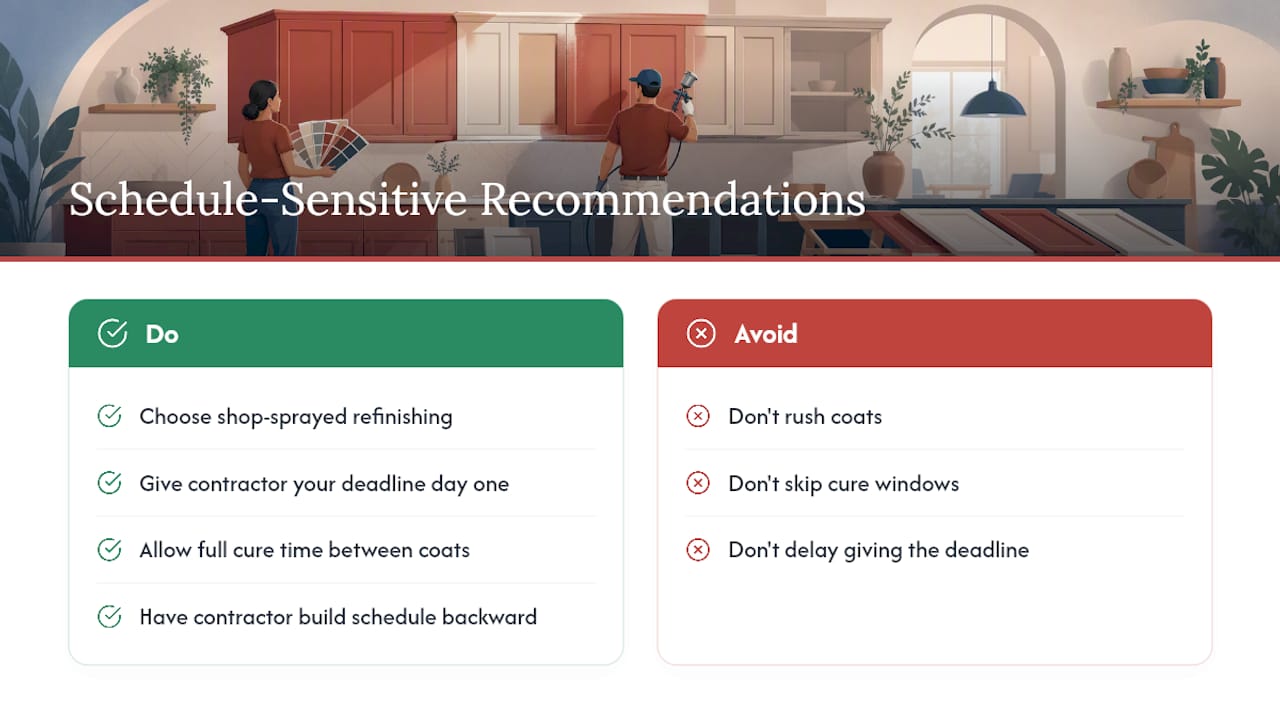
If you’re working around a move-in date or a listing deadline, shop-sprayed refinishing is the strongest option on the table. It’s the only method that reliably delivers a durable, factory-style finish inside a week of active work.
Don’t let a tight calendar tempt you into rushing coats or skipping cure windows. A finish that hasn’t fully cured chips and scuffs within months, which costs you more time later than the few extra days you saved up front. If you’re timing this around a specific date, tell your contractor that date on day one, not day three, so they can build the shop schedule backward from it.
— Jesse
Get a Firm Cabinet Refinishing Schedule From Cabinetsrefinishing
If you want a shop-based process instead of guessing how long a DIY weekend project will actually take, Cabinetsrefinishing runs on documented 3 to 5 day active timelines using a factory-finish spray methodology, at a fraction of the $15,000 to $40,000 cost typically tied to full cabinet replacement.

At estimate time, ask directly about the shop-versus-on-site split, the exact cure window for the coating system being used, and what warranty backs the finish. Those three questions tell you more about a realistic schedule than any generic “a few days” promise. If your kitchen renovation has a hard deadline, whether that’s a move-in date or a home sale, request a local estimate or call and text 720-219-9716 to get a written schedule before you commit other trades around it.
Sources
For more on cure science and scheduling, see the day-by-day professional timeline, cure time guidance for Denver kitchens, and deck stain cure windows for a useful cross-industry comparison.
- How Long Does Cabinet Refinishing Take? | Parallel Painting
- Amy Howard Miracle Cabinet product guidance