
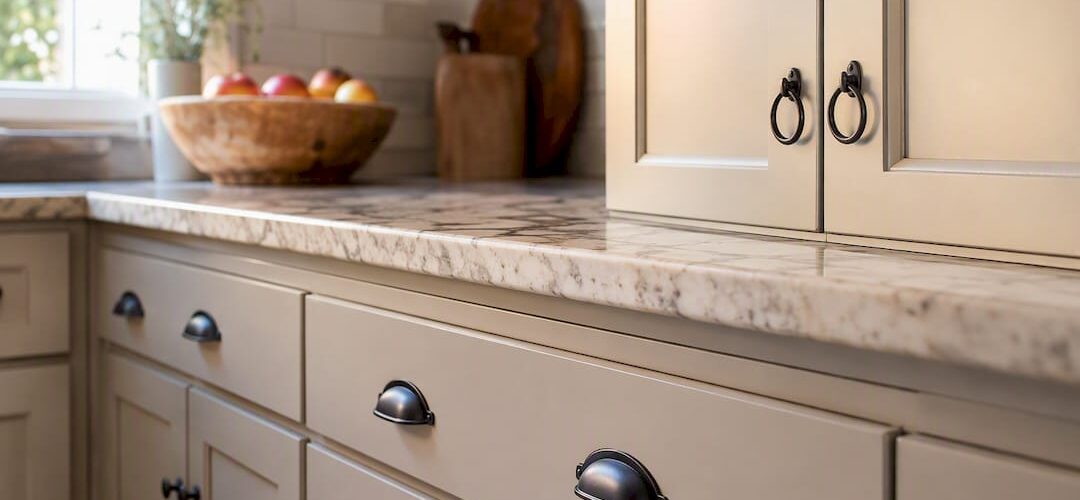
The best cabinet hardware strategy for families is simple: put sturdy, ergonomic pulls on anything that gets pulled hard and often, use rounded, low-projection hardware anywhere small hands reach, cap your hardware styles at two or three, and pick finishes that hide fingerprints instead of showing every touch. That combination covers the three things families actually fight with, wobbly drawers, sticky-fingered smudges, and toddlers getting into the wrong cabinet, without sacrificing a kitchen that looks pulled together.
Before you order anything, do three things:
- Measure your existing hole centers (the distance between screw holes) so new hardware doesn’t force you to patch or refinish the cabinet face.
- Pick one dominant finish for 80% of the kitchen, then use a second finish sparingly as an accent.
- Buy a sample or two before committing to a full order. Hardware looks different under kitchen lighting than it does on a screen.
Designers lean on rules like the Rule of Thirds for proportion, and standard hole-center sizes such as 96mm, 128mm, and 160mm show up on nearly every drawer you’ll shop for. If your cabinets already show wear around the hardware or the color no longer fits your plans, pairing new pulls with professional refinishing through a service like Cabinetsrefinishing often solves both problems in one project.
Key Takeaways
Durable, function-matched hardware in two or three consistent styles, paired with fingerprint-hiding finishes, solves nearly every hardware complaint families raise about their kitchens.
| Point | Details |
|---|---|
| Match hardware to function | Use sturdy bar pulls on heavy drawers and simple knobs on light-use doors and uppers. |
| Limit your style count | Stick to two or three hardware styles total, repeated consistently for a cohesive look. |
| Measure before you order | Check hole centers (commonly 96mm, 128mm, or 160mm) to avoid new drilling or patching. |
| Prioritize forgiving finishes | Matte black, brushed nickel, and patinated bronze hide fingerprints better than polished metals. |
| Use latches for hazard zones | Under-sink and chemical storage cabinets benefit from latches that slow down small children. |
Table of Contents
- Cabinet Hardware Styles for Families: Types and Where They Belong
- How to Mix Cabinet Knobs and Pulls Without Looking Cluttered
- Cabinet Finishes That Hold Up to Family Life
- Sizing and Placement Rules That Prevent Costly Mistakes
- Safety, Materials, and Durability for Growing Families
- What Cabinet Hardware Costs and Where to Buy It
- Pairing Hardware Updates With Professional Refinishing
- Keeping Hardware Clean Across Different Finishes
- Styling Hardware to Match Your Home’s Decor
- Adapting Hardware as Kids Grow Up
- Ergonomics for Every Age in the House
- Sources
Cabinet Hardware Styles for Families: Types and Where They Belong
Not every drawer or door needs the same hardware, and treating them like they do is where a lot of kitchens go wrong. The type of hardware you choose should follow function first, style second, especially in a house where cabinets get opened forty times a day by people of very different hand strength and patience.
- Knobs. Single-point, round or square fixtures that work best on doors and lightly used cabinets, upper cabinets, glass-front sections, bathroom vanities. They’re cheap, easy to grip, and forgiving if a small hand grabs them wrong.
- Pulls (bar pulls). Longer, two-point hardware designed for drawers that see real weight. Cookware drawers, pantry pull-outs, and anything under 100 pounds of dishes belongs here.
- Bin or cup pulls. Half-moon shaped, mounted at the bottom edge of a drawer front. Popular in farmhouse and vintage-industrial kitchens, and genuinely comfortable for kids because the whole hand slides underneath rather than pinching a bar.
- Ring pulls. A pull that hangs from a single backplate, giving a more decorative, almost jewelry-like look. Better suited to lower-traffic cabinets since the moving ring can loosen faster under heavy daily use.
- Latches. Mechanical closures, sometimes decorative, sometimes purely functional, that require more coordination to open than a standard pull. These are your best friend for cleaning supplies, knives, and anything under the sink.
- Edge pulls. Hardware mounted on the top edge of a drawer or door with no visible knob or bar, creating a minimalist, almost hardware-free look. They’re sleek but can be harder for a five-year-old to locate and grip.
Function-first placement means matching hardware to how hard and how often a drawer gets used, not just what looks best in a photo. A heavy pot drawer needs a real pull, not a delicate knob that will loosen within a year.
Pro Tip: Put bin pulls or bar pulls on anything below waist height that kids can reach, and save ring pulls or edge pulls for cabinets above counter level that only adults use regularly.
How to Mix Cabinet Knobs and Pulls Without Looking Cluttered
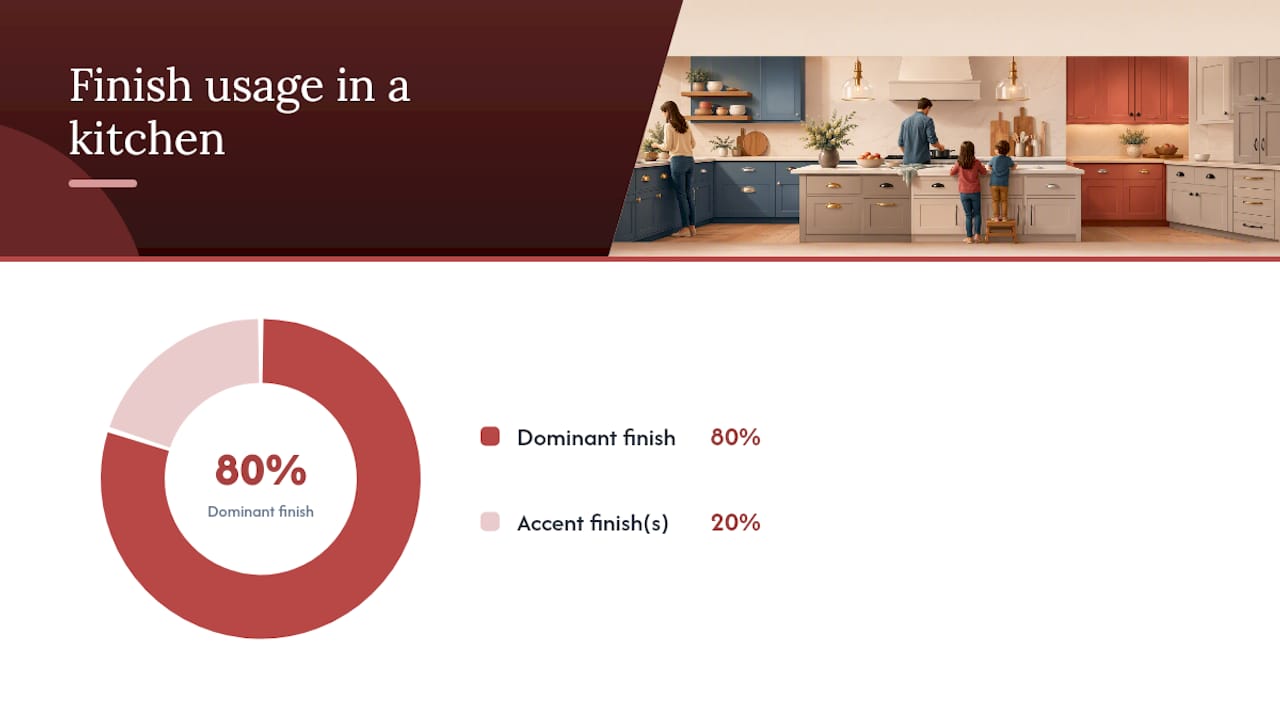
The single biggest mistake families make when updating hardware is treating every cabinet as its own decision. Designers who work on mixed hardware every day generally hold to one rule: limit yourself to two or three hardware styles total, and repeat each one enough times that it reads as a pattern instead of a mismatch.
A kitchen with five different pull shapes looks like a hardware store display. A kitchen with a bar pull on every drawer and a knob on every door, in one or two finishes, looks intentional even if the shapes themselves are simple.
- Anchor the island with one statement pull style, since it’s the visual centerpiece of most kitchens.
- Repeat the same pull shape around the full perimeter of lower cabinets for rhythm.
- Save a slightly larger or more decorative pull for the pantry door, it’s a single door, so it can afford a little flourish.
- Keep upper cabinets on small, simple knobs since they’re viewed from a distance and touched less often.
- Pick a dominant finish for roughly 80% of the room and use a second finish only on accent pieces, like a range hood or island.
That repetition principle matters more than people expect: a finish or shape that shows up twice in a room reads as deliberate, even when you’re technically mixing metals. One brushed brass pull on the island next to brushed nickel everywhere else won’t look accidental if the same brass shows up again on a faucet or light fixture nearby.
Cabinet Finishes That Hold Up to Family Life
Trends come and go, but the finish question for families really boils down to one thing: how much does it show fingerprints, and how gracefully does it age? Matte black, brushed nickel or stainless, brushed or antique brass, and matte bronze cover most of what’s popular right now, and they don’t perform equally.
- Matte black hides smudges better than almost anything else and reads as modern in nearly any kitchen style.
- Brushed nickel or stainless is the most forgiving all-around choice, durable, neutral, and easy to clean with a damp cloth.
- Brushed or antique brass develops a soft patina over time rather than showing scratches, which works in the family’s favor.
- Matte bronze hides daily wear well and pairs naturally with warm wood tones.
- Polished chrome or polished brass looks sharp on day one but shows every fingerprint by day two, tough call in a house with kids.
Finishes like matte black, brushed nickel, and patinated bronze are consistently recommended over polished metals specifically because they mask everyday touch marks instead of highlighting them. If you want a genuinely trendy look, save the shinier or more delicate finish, like polished brass or a mixed-metal edge pull, for a low-traffic accent like a bathroom vanity or a glass hutch, and keep the workhorse zones (island, lower cabinets, pantry) on a matte or brushed finish that won’t need wiping down every hour.
Sizing and Placement Rules That Prevent Costly Mistakes
Getting the size and position of hardware wrong is the most common (and most expensive) mistake families make, because it often means drilling new holes or patching old ones. The Rule of Thirds is the simplest fix: a pull’s length should generally sit at about one third the height of a drawer front, or one third the width for wider drawers, to look proportional instead of stubby or oversized.
Before ordering anything, measure your existing hole centers, the distance between the two screw holes on a pull. Common sizes are 96mm (about 3.78 inches), 128mm (5 inches), and 160mm (6.3 inches). Buying a pull with the wrong hole spacing means new drilling, filler, and touch-up paint you didn’t budget for.
- Mount knobs and short pulls vertically on cabinet doors, centered near the edge closest to the opening side.
- Mount bar pulls horizontally on drawers, centered on the drawer face.
- Keep mounting height consistent across all cabinets of the same type, uneven placement is one of the fastest ways to make a kitchen look unfinished.
Pro Tip: If you’re not sure what hole-center size your cabinets use, measure before you shop online, a mismatch by even a few millimeters means the pull won’t fit without new drilling.
Safety, Materials, and Durability for Growing Families
Hardware in a family kitchen has to survive things a showroom sample never sees: sticky hands, dropped pots, a toddler using a pull as a step stool. Function-first thinking applies here as much as it does to placement.
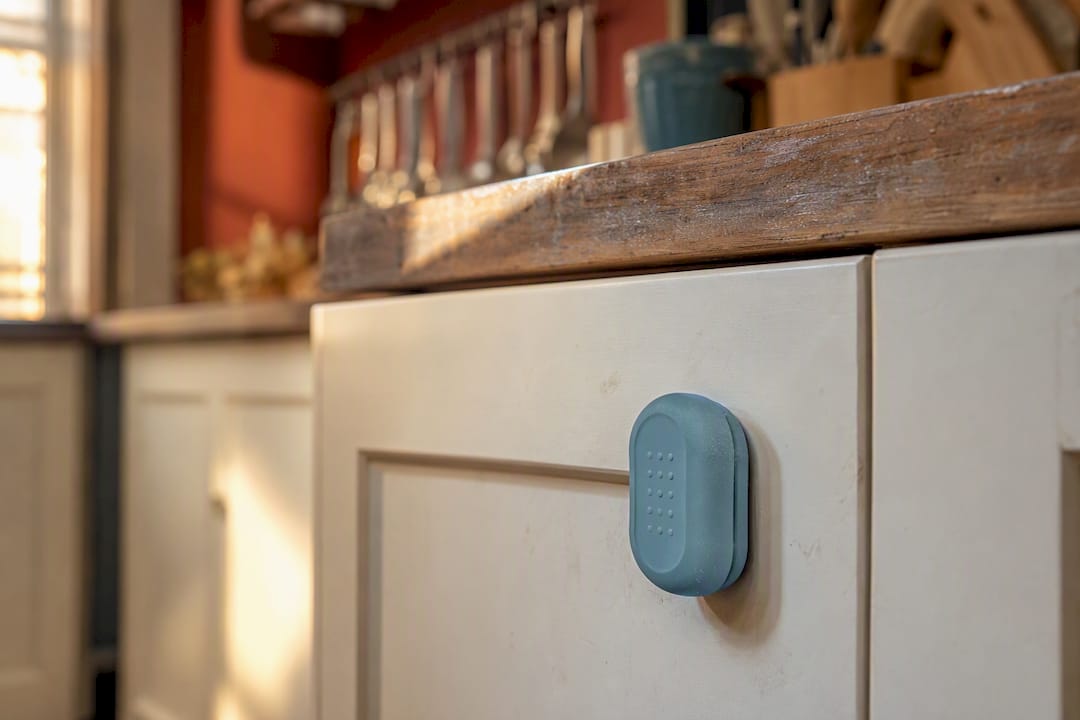
For cabinets kids can reach, choose rounded edges and impact-resistant materials, ABS plastic or soft-touch silicone work well because there’s no sharp metal edge to catch a small hand or forehead. Avoid pointed ring pulls or angular edge pulls in any cabinet under about four feet off the ground.
For hazardous storage, cleaning chemicals, knives, glassware, latches are genuinely useful because they require more coordination to open than a standard knob or pull, which buys you time even without a full childproof lock system.
On materials, solid metal hardware outperforms plated alloys almost every time. A cheap plated knob will show brass or nickel wearing through to gray metal within a year or two of daily use; solid brass or solid zinc alloy holds its finish far longer.
- Pick up the hardware in-store before buying online. Weight is a decent proxy for quality, lighter often means thinner, cheaper metal.
- Check the screw posts. Machine screws threaded into a solid post outlast the thin sheet-metal tabs found on bargain hardware.
- Order two or three extra pieces of whatever you choose. Hardware gets discontinued, and a broken pull five years from now shouldn’t mean replacing every handle in the kitchen.
Pro Tip: Give the sample a firm tug before buying a full set, if it flexes or rattles in the store, it will fail faster once toddlers start using it as a pull-up bar.
What Cabinet Hardware Costs and Where to Buy It
Hardware pricing splits into three rough tiers. Big-box retailers carry budget pulls and knobs, usually plated metal, fine for low-traffic doors but not something you want on a 200-pound pot drawer. Specialty hardware retailers sit in the mid-range with solid metal construction and a much wider range of finishes and shapes. Designer or solid bronze hardware sits at the premium tier, worth the splurge on high-visibility pieces like an island pull or pantry handle, but rarely necessary on every cabinet in the house.
- Splurge on the island and pantry, the pieces everyone sees and touches most.
- Save on upper cabinets and low-traffic doors, where a simpler knob does the job.
- Look at adjustable or dual-mount pulls if you’re replacing hardware with different hole spacing, they cover old holes and can spare you a refinishing bill just to fix drill marks.
- Order a sample box from a specialty retailer before committing to a full kitchen’s worth of one style.
- Buy two or three spares of whatever you pick, since matching an exact style years later gets harder.
Pairing Hardware Updates With Professional Refinishing
New hardware alone can only do so much if the cabinets underneath are chipped, yellowed, or covered in old drill holes from a previous style. That’s usually the point where a hardware swap turns into a full refresh.
Cabinetsrefinishing uses a factory-finish spray methodology, heavy prep work followed by multiple protective coats, that typically finishes a kitchen in 3 to 5 days for $3,000 to $8,000, against $15,000 to $40,000 and several weeks for full cabinet replacement.
Consider pairing hardware and refinishing when:
- Old hardware holes don’t line up with your new pulls’ hole centers.
- You’re changing cabinet color and want the new hardware finish to match a fresh surface, not old, worn paint.
- Several doors show chips or wear that new knobs alone won’t disguise.
If your cabinets show any of these signs, it’s worth reading through the 7 signs your cabinets need refinishing instead of replacing before you commit to hardware alone.
Keeping Hardware Clean Across Different Finishes
Cleaning hardware sounds like an afterthought until you’ve got a five-year-old with peanut butter hands opening the pantry twenty times a day. Different finishes need different care, and using the wrong cleaner is how a nice finish gets ruined early.
Matte black and matte bronze do best with a soft, damp cloth and mild dish soap, avoid abrasive scrubbers or anything with bleach, which can dull or strip the matte coating over time. Brushed nickel and stainless are the most forgiving finishes in the house; a microfiber cloth and warm water handle most grime, and they tolerate the occasional stronger cleaner better than darker finishes.
Brass and bronze hardware, whether brushed or antique, generally prefers gentler treatment. Skip the metal polish unless you actually want to strip away the patina that makes these finishes look good with age. A little tarnish on brass isn’t a defect, it’s the finish doing what it’s supposed to do.
For hardware in high-touch zones like the pantry or under-sink latch, a quick wipe-down once a week keeps grime from building into a sticky film that’s much harder to remove later. Keep a small bottle of all-purpose cleaner and a microfiber cloth near the kitchen sink specifically for this, it takes thirty seconds and saves you a deep scrub later.
Styling Hardware to Match Your Home’s Decor
Hardware is one of the few kitchen upgrades that lets you shift the whole feel of a space without touching the cabinets themselves. Farmhouse kitchens lean on bin pulls and matte black, often with a slightly oversized scale that reads as sturdy and utilitarian. Transitional kitchens, the most common style in family homes, tend to favor brushed nickel or brushed brass bar pulls in a clean, simple bar shape that doesn’t lean too traditional or too modern.
Modern and minimalist kitchens often use edge pulls or slim bar pulls in matte black or stainless, keeping surfaces visually quiet. Traditional kitchens still favor knobs on doors and shorter pulls on drawers, frequently in an antique brass or bronze finish that echoes older hardware styles.
None of these styles require abandoning the family-first rules above. A farmhouse kitchen can still use latches under the sink. A modern kitchen can still put bin pulls on the heaviest drawers. Decor style determines shape and finish; family life determines where the sturdy stuff goes. If you’re also rethinking cabinet color alongside hardware, family-friendly cabinet color choices pair naturally with whichever hardware finish you land on.
Adapting Hardware as Kids Grow Up
The hardware that works for a toddler-proofed kitchen isn’t necessarily what you want once your kids are teenagers who can open a latch just fine. The good news is that most hardware swaps are cheap and reversible compared to almost any other kitchen change.
Kid-specific or playful knobs on a child’s bathroom vanity or bedroom cabinet are a low-risk choice specifically because involving kids in picking their own hardware gives them ownership, and swapping four or five knobs later costs almost nothing compared to a repaint or new cabinets.
As kids get older, you can retire the latches on lower cabinets without any structural change, since the cabinet box and holes stay the same. If you originally installed dual-mount or adjustable pulls, you’ve got even more flexibility to change styles later without drilling new holes.
A practical approach: keep receipts and note which hole-center size you used, and buy two or three spare pulls of your current style when you first install them. That way, whether you’re removing latches in five years or updating the whole look for a teenager’s taste, you’re working with the same hole spacing and won’t need to patch a single cabinet face.
Ergonomics for Every Age in the House
A pull that works for a six-foot-tall parent doesn’t automatically work for an eight-year-old, and hardware sized for adult hands can genuinely frustrate younger kids or aging grandparents visiting the house.
For toddlers and young kids, wider bar pulls and bin pulls are easier to grip than small round knobs, since a full hand can wrap around the shape instead of pinching fingers around a narrow bar. Lower cabinets, the ones kids can actually reach, benefit most from this shape.
For older kids and teens, standard adult-sized pulls work fine, hand strength and reach are no longer the limiting factor, so style choices matter more than accessibility at this stage.
For grandparents or anyone with arthritis or grip limitations, larger pulls with a rounded profile are noticeably easier to use than small knobs that demand a pinch grip. If multiple generations use the kitchen regularly, that’s a real argument for choosing pulls over knobs on the drawers used most, cookware, utensils, everyday dishes, since a pull accommodates a wider range of hand strength than a knob does.
A Practical Note on Balancing Style and Family Life
Hardware decisions get overthought because people treat them like a design problem first and a function problem second. Flip that order. Once the pulls that need to survive daily abuse are in the right places, the style choices basically make themselves…
— Jesse
Sources
- “The Jewelry on Your Cabinets”: How to Choose Hardware Styles
- Mix and Match Cabinet Hardware: Style Rules That Work
- The Ultimate Guide to Children’s Cabinet Hardware
- How to choose kitchen cabinet hardware (Liberty® guidance)
- How to pick hardware finish for a whole-home remodel
Recommended
- Family-Friendly Kitchen Cabinet Colors: 2026 Guide – Cabinet Refinishing and Cabinet Painting Denver 720-219-9716
- Farmhouse DenverKitchen Cabinet Style: What You Need to Know
- You Can Update Cabinet Style Without Replacing It
- Cabinet Box vs Door: What Every Homeowner Should Know – Cabinet Refinishing and Cabinet Painting Denver 720-219-9716