
Cabinet finish sheen level is defined as the degree of light reflectivity in a painted or coated surface, measured in Gloss Units (GU) on a standardized 0–100 scale. The role of cabinet finish sheen levels goes far beyond looks. Sheen determines how well your cabinets resist grease, how easy they are to wipe clean, and how long they hold up under daily kitchen use. Semi-gloss finishes measure 35–70 GU and are the professional standard for kitchen cabinets. Understanding the four main categories — matte, satin, semi-gloss, and gloss — gives you the foundation to make a choice you won’t regret.
How do different sheen levels affect the look of kitchen cabinets?
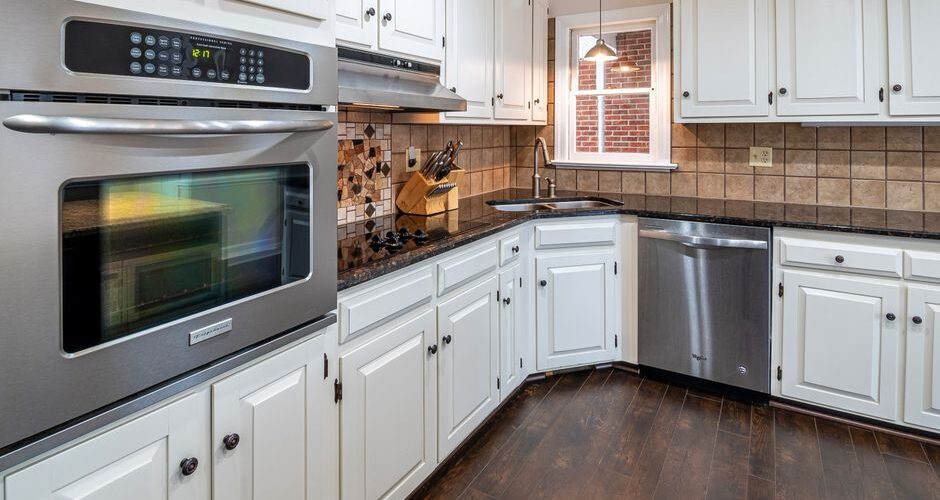
Sheen level controls how much light bounces off your cabinet surface, and that directly shapes how your kitchen feels. A high-gloss finish reflects light like a mirror, making colors appear vivid and saturated. Matte finishes scatter light in all directions, creating a flat, chalky appearance that reads as soft and understated.
The four main sheen categories behave very differently under kitchen lighting:
- Matte (below 10 GU): Absorbs light, hides surface texture, and creates a velvety look. Colors appear slightly muted.
- Satin (20–40 GU): Offers a gentle sheen with a pearl-like quality. Satin hides minor imperfections better than semi-gloss while still reflecting enough light to feel polished.
- Semi-gloss (35–70 GU): Reflects light clearly, making colors pop. Surface flaws become more visible.
- Gloss (above 70 GU): Creates a mirror-like surface. Every dent, brush mark, and dust particle shows up clearly.
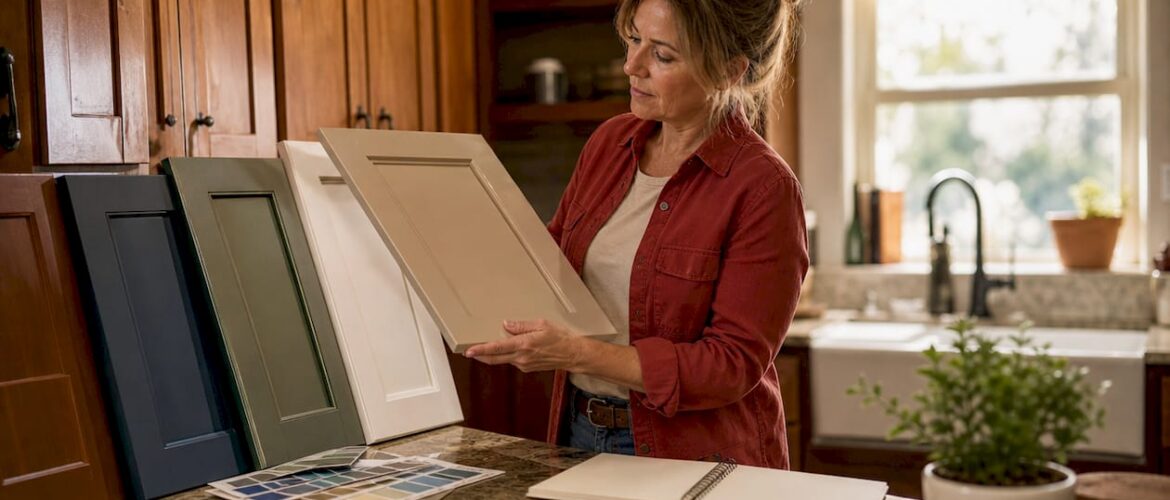
Color depth also shifts with sheen. A navy blue cabinet in semi-gloss looks richer and more saturated than the same color in matte. That’s because higher reflectivity amplifies the pigment’s visual intensity.
High-gloss finishes under directional LED lighting reveal surface imperfections that look invisible in a showroom or shop. The recommended sheen range under modern LED kitchen lighting is 25–45 GU. That range sits squarely in the satin-to-lower-semi-gloss zone, which explains why so many professional finishers favor satin for residential kitchens.
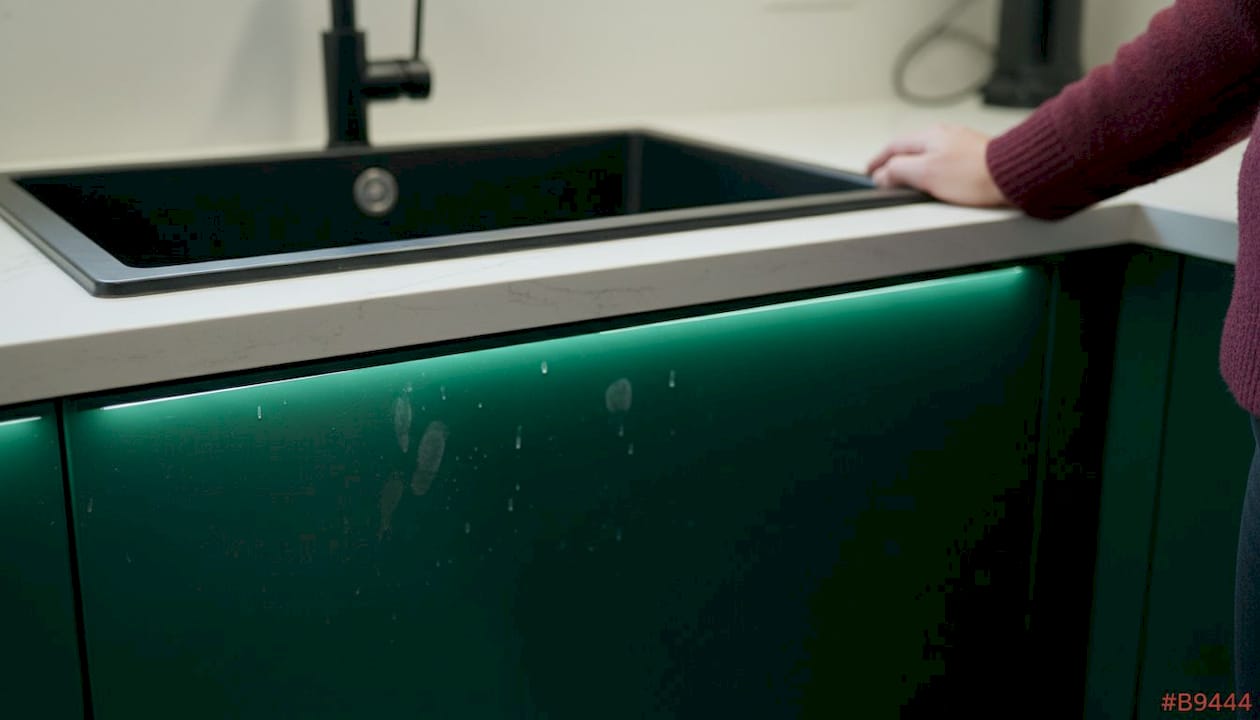
Pro Tip: Test your chosen sheen on a cabinet door in your actual kitchen, under your real lighting, before committing to the full job. Showroom lighting is almost always softer and more forgiving than kitchen LEDs.
What role does sheen level play in cabinet durability and maintenance?
Sheen level directly affects how well your cabinets resist the grease, moisture, and daily contact that kitchens generate. This is where the functional side of sheen choices becomes critical for homeowners.
Here is how each sheen level performs across the key maintenance factors:
-
Moisture and grease resistance: Higher-sheen finishes resist moisture and grease better because their tighter, smoother surface films prevent liquid penetration. Semi-gloss and gloss finishes create a near-impermeable barrier in high-humidity kitchen environments.
-
Cleanability: Matte finishes have a micro-texture created by flatting agents. That texture traps grease and food particles, making scrubbing necessary. Semi-gloss wipes clean with a damp cloth in seconds.
-
Fingerprints and smudges: High-sheen surfaces show every fingerprint clearly because the reflective surface amplifies contrast between clean and touched areas. Satin is far more forgiving in this regard.
-
Scratch and dent visibility: Gloss and semi-gloss finishes highlight dents and scratches more than matte finishes do. The reflective surface magnifies surface damage, making even minor dings look significant.
-
Touch-up difficulty: High-gloss touch-ups are hard to blend because the mirror-like surface highlights edges and thickness differences in the new paint layer. Mid-sheen finishes like satin blend touch-ups far more invisibly.
One often-overlooked issue with matte finishes is burnishing. Matte finishes develop shiny patches at high-contact points like door edges and pull areas. Those patches are permanent and cannot be repaired without full refinishing. That makes matte a risky choice for busy kitchens.
Pro Tip: If you love the look of matte but need durability, choose a satin finish instead. It reads as nearly as soft visually, but it resists burnishing and cleans up with a simple wipe.
It’s also worth knowing that polymer resistance is nearly identical across sheen levels within the same product line. The difference in cleanability comes from surface texture, not chemical resistance. That means a well-formulated satin finish is just as chemically tough as a gloss finish from the same manufacturer.
How do kitchen lighting and cabinet usage influence the best sheen?
The right sheen for your kitchen depends heavily on two factors: the type of lighting you have and how hard your household uses the kitchen. Getting this wrong is the most common mistake homeowners make.
Directional LED lighting, now standard in most kitchen renovations, casts sharp shadows across cabinet surfaces. That kind of light reveals every brush stroke, roller texture, and surface flaw on high-gloss finishes. Sheen uniformity discrepancies from application technique become visible under LED lighting in ways that softer incandescent light would never expose. Coat count, sanding grit, and spray distance all affect the final sheen reading.
Consider these common kitchen scenarios when choosing your sheen level:
- Busy family kitchen with young children: Semi-gloss (35–70 GU) is the best choice. It cleans easily, resists grease, and holds up to repeated wiping without wearing down.
- Low-light kitchen with small windows: Satin or semi-gloss adds reflectivity that makes the space feel brighter. Matte absorbs light and can make a dark kitchen feel smaller.
- Open-plan kitchen with abundant natural light: Satin (20–40 GU) works well. It avoids the harsh glare of full gloss while still reflecting enough light to feel lively.
- Showpiece or designer kitchen with minimal cooking: Gloss finishes deliver the high-impact look, but they require near-constant cleaning to stay presentable.
| Kitchen Scenario | Recommended Sheen | GU Range |
|---|---|---|
| Busy family kitchen | Semi-gloss | 35–70 GU |
| Low-light kitchen | Satin to semi-gloss | 25–50 GU |
| Natural light, moderate use | Satin | 20–40 GU |
| Designer/showpiece kitchen | Gloss | 70+ GU |
Kitchen size also matters. Gloss finishes in a small kitchen can feel overwhelming because the reflectivity bounces light aggressively in a confined space. Satin gives you the brightness benefit without that visual intensity. For guidance on sheen under different lighting conditions, matching your finish to your specific kitchen setup makes a measurable difference in the final result.
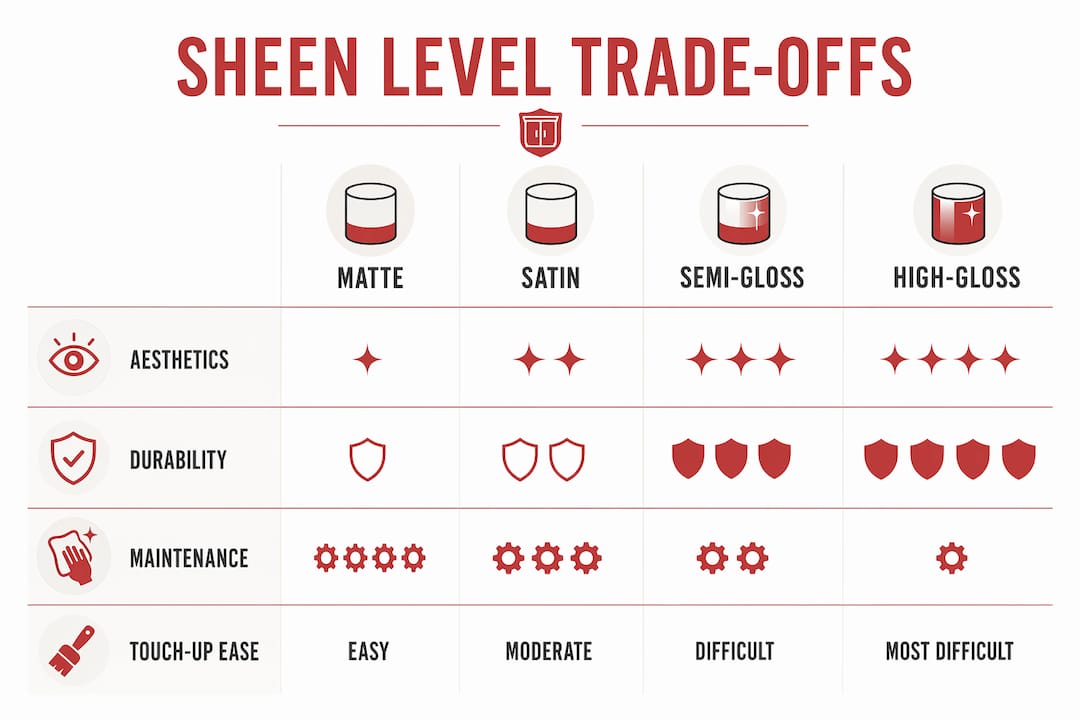
What are the trade-offs among popular cabinet finish sheen levels?
Every sheen level involves a real trade-off. There is no universally perfect finish. The right choice depends on your priorities across aesthetics, durability, maintenance, and application skill.
| Sheen Level | Aesthetics | Durability | Maintenance | Touch-Up Ease |
|---|---|---|---|---|
| Matte (below 10 GU) | Soft, modern, hides texture | Prone to burnishing | Hard to clean; traps grease | Easiest to blend |
| Satin (20–40 GU) | Pearl-like, balanced | Good; resists daily wear | Easy to wipe clean | Blends well |
| Semi-gloss (35–70 GU) | Bright, color-rich | Excellent; resists moisture | Very easy to clean | Moderate difficulty |
| Gloss (above 70 GU) | Mirror-like, dramatic | Excellent film hardness | Requires constant wiping | Very difficult to blend |
Surface preparation requirements also vary by sheen. Gloss finishes demand near-perfect surface prep because every flaw shows. Matte finishes are more forgiving of minor surface irregularities during application. Satin sits in the middle, requiring good prep but not the obsessive sanding that gloss demands.
For homeowners who want a comparison of satin vs. semi-gloss in a real kitchen context, the decision often comes down to how much daily cooking and cleaning the kitchen sees. Satin is the most forgiving all-around choice. Semi-gloss is the professional standard for kitchens that need maximum cleanability.
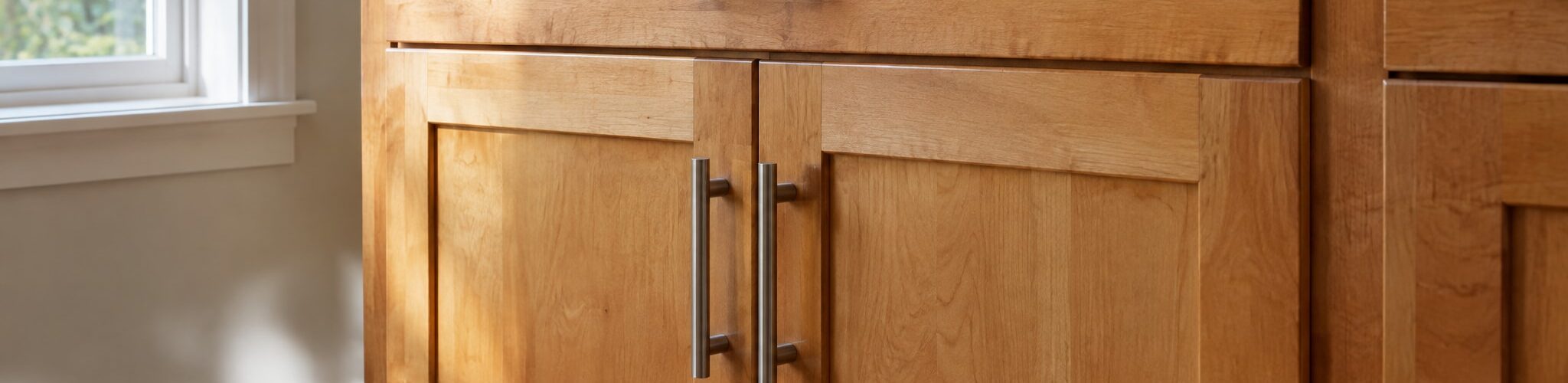
Cabinet style also guides sheen selection. Shaker-style cabinets with flat center panels look excellent in satin or semi-gloss. High-end European-style flat-front cabinets often use gloss to emphasize their clean geometry. Ornate raised-panel cabinets benefit from satin, which highlights the wood detail without creating distracting glare in the recesses.
Key Takeaways
Sheen level is the single most consequential finish decision for kitchen cabinets because it determines appearance, cleanability, and long-term durability all at once.
| Point | Details |
|---|---|
| Semi-gloss is the professional standard | At 35–70 GU, semi-gloss resists grease and moisture better than any lower sheen level. |
| Matte burnishes at contact points | High-traffic areas develop permanent shiny patches that require full refinishing to fix. |
| LED lighting exposes high-gloss flaws | The recommended sheen range under kitchen LEDs is 25–45 GU to avoid visible imperfections. |
| Satin is the best all-around compromise | It hides minor surface flaws, cleans easily, and blends touch-ups better than gloss. |
| Surface prep requirements rise with sheen | Gloss finishes demand near-perfect sanding; matte tolerates minor surface irregularities. |
Why sheen selection is the decision most homeowners get wrong
I’ve seen this pattern repeat itself more times than I can count. A homeowner falls in love with a high-gloss white kitchen in a magazine photo, commits to full gloss, and then spends the next two years wiping fingerprints off cabinet doors every single day. The magazine photo was shot under controlled studio lighting with no children, no cooking, and no real life happening in it.
The functional reality of sheen levels only becomes clear once you live with your choice. Gloss looks spectacular in photos. In a working kitchen with overhead LEDs and a family that actually cooks, it becomes a maintenance burden. Matte has the opposite problem. It photographs beautifully and feels sophisticated, but burnishing at door edges and pull points turns it patchy within a year or two in a busy household.
What most homeowners overlook is that sheen consistency during application matters as much as the sheen level itself. Differences in coat count, sanding between coats, and spray distance create visible sheen variation across cabinet doors and frames. That inconsistency shows up brutally under kitchen lighting. Professional application discipline, not just product selection, determines whether the final result looks factory-quality or amateur.
My honest recommendation for most Denver kitchens: satin or lower semi-gloss in the 25–45 GU range. That window gives you good cleanability, reasonable fingerprint resistance, and enough forgiveness in application and touch-ups to hold up beautifully over years of real use. Align your sheen choice with your lighting and your lifestyle, not with a photo that was never meant to represent a real kitchen.
— Jesse
How Cabinetsrefinishing delivers the right sheen for your kitchen
Choosing the right sheen level is only half the equation. Applying it consistently across every cabinet door, frame, and drawer front is where most DIY projects fall short.

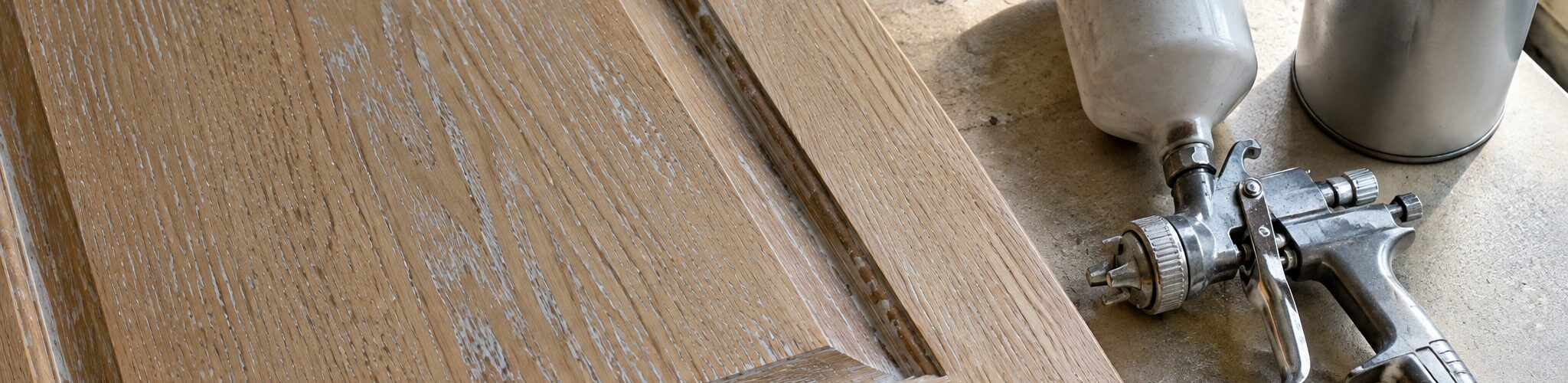
Cabinetsrefinishing uses a factory-finish methodology that controls coat count, sanding grit, and spray distance across every surface. That process delivers sheen uniformity that holds up under kitchen LED lighting without the visible inconsistencies that plague brush-applied or roller-applied finishes. Projects are completed in 3–5 days, and refinishing costs run $3,000–$8,000 compared to the $15,000–$40,000 typically required for full cabinet replacement. For homeowners ready to get a flawless, durable cabinet finish with the right sheen for their kitchen, Cabinetsrefinishing handles every detail from prep to final coat.
FAQ
What is the best sheen level for kitchen cabinets?
Semi-gloss at 35–70 GU is the professional recommendation for kitchen cabinets because it resists moisture and grease while cleaning easily with a damp cloth.
Does matte finish hold up in a kitchen?
Matte finishes below 10 GU are prone to burnishing at high-contact points, creating permanent shiny patches that require full refinishing to correct. Satin is a more durable alternative with a similar soft appearance.
How does kitchen lighting affect cabinet sheen choice?
Directional LED lighting reveals surface imperfections on high-gloss finishes. The recommended sheen range under modern kitchen LEDs is 25–45 GU, which falls in the satin-to-lower-semi-gloss zone.
Why are high-gloss touch-ups so difficult?
High-gloss surfaces reflect light like a mirror, which makes edges and thickness differences in new paint layers immediately visible. Touch-ups blend far more invisibly on satin or eggshell finishes.
Is satin or semi-gloss better for a busy family kitchen?
Semi-gloss is the better choice for high-traffic family kitchens because its smoother, less porous surface resists grease and cleans faster. Satin works well in moderate-use kitchens where fingerprint visibility is a bigger concern than maximum cleanability.
Recommended
- Best Sheen for Kitchen Cabinets in Denver: The Professional Guide
- Satin vs. Semi-Gloss Cabinet Paint: Which Finish is Best for Your Denver Kitchen?
- Why Matte Finish Suits Cabinet Painting in 2026 720-219-9716
- The Best Sheen for Kitchen Cabinet Paint: A Professional Denver Guide – Cabinet Refinishing and Cabinet Painting Denver 720-219-9716