

Low-VOC cabinet paint options are waterborne alkyd enamels formulated to deliver under 50 g/L of volatile organic compounds while matching the hardness and durability of traditional oil-based finishes. If you are planning a kitchen refresh, these paints protect your family’s health, reduce odor during application, and meet increasingly strict indoor air quality standards. The right choice depends on your finish goals, your prep quality, and whether you need a non-toxic cabinet finish that holds up to daily grease, moisture, and cleaning.
1. What are the best low-VOC cabinet paint options?
Benjamin Moore Advance and Sherwin-Williams Emerald Urethane Trim Enamel are the two most recommended low-VOC waterborne alkyd cabinet paints on the market. Both deliver VOCs under 50 g/L and produce furniture-quality finishes that resist chipping, yellowing, and everyday kitchen abuse. That combination of low emissions and professional durability is what separates these from standard latex wall paints.
Benjamin Moore Advance levels exceptionally well, meaning brush and roller marks flatten out as the paint cures. Sherwin-Williams Emerald Urethane adds a urethane resin to the formula, which boosts scuff resistance on high-traffic cabinet doors. Coverage for both products runs 350–400 sq ft per gallon, and prices range from $64–$115 per gallon depending on finish and retailer.
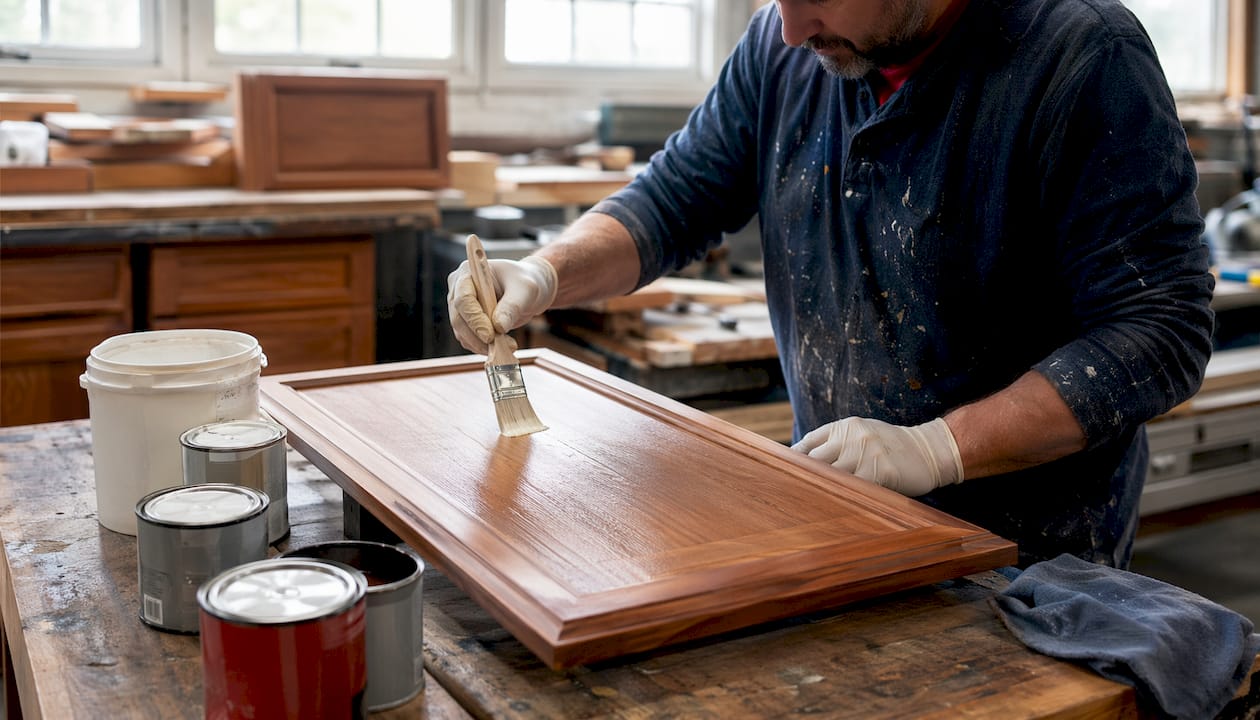
Pro Tip: Choose a satin or semi-gloss sheen for cabinets. Flat and eggshell finishes absorb grease and are nearly impossible to wipe clean without dulling the surface.
Both paints come in hundreds of colors. If you are painting white or light gray cabinets, verify the specific colorway is available in a low-VOC tint base. Darker tints require more pigment, which can push VOC levels higher than the base paint label states.
2. How do low-VOC cabinet paints differ from traditional oil-based and latex paints?
Waterborne alkyd paints use a hybrid chemistry that bonds alkyd resin molecules into a water-based carrier. The result is a paint that cleans up with soap and water, dries in 2–4 hours, and cures to a hard, oil-like film. Traditional oil-based paints require mineral spirits for cleanup, take 8–24 hours to dry, and emit VOCs well above 150 g/L in many formulas.
Standard latex paints sit at the other end of the spectrum. Low-VOC latex paints carry 10–50 g/L VOCs and have light odor, but they are generally softer and less durable than waterborne alkyds. On cabinets, that softness shows up as dents, scuffs, and doors that stick together in humid weather.
“Waterborne alkyd paints combine the hardness and durability of oils with the low fumes and easy cleanup of water-based paints, making them a superior choice for cabinets. Solvent-based oil paints yellow over time, especially on white cabinets, while modern waterborne alkyds maintain color stability for over a decade.”
The yellowing issue is a real problem for homeowners who painted white kitchens with oil-based paint in the 1990s or early 2000s. Modern waterborne alkyds prevent yellowing by eliminating the linseed oil oxidation process that causes discoloration. For light-colored kitchens, that color stability alone justifies the switch.
Key differences at a glance:
- Waterborne alkyd: VOCs under 50 g/L, water cleanup, 2–4 hour dry time, hard durable film, no yellowing
- Traditional oil-based: VOCs above 150 g/L, solvent cleanup, 8–24 hour dry time, very hard but yellows
- Standard latex: VOCs 10–50 g/L, water cleanup, 1–2 hour dry time, softer film, less durable on cabinets
3. What are key application tips to maximize performance?
Prep quality determines 90% of cabinet finish durability. Great paint cannot compensate for inadequate degreasing, sanding, or primer application. Follow these steps in order.
- Degrease twice. Kitchen cabinets accumulate cooking oil and grease that standard cleaners miss. Use a TSP substitute or a dedicated degreaser, wipe down every surface, then repeat. Skipping the second pass leaves an invisible film that causes peeling within months.
- Scuff sand with 180–220 grit. You are not stripping the finish. You are creating microscopic scratches for the primer to grip. Sand with the grain, wipe off dust with a tack cloth, and do not skip corners or edges.
- Apply a bonding primer. A waterborne bonding primer seals the surface and gives the topcoat a consistent base. One coat is usually enough on previously painted cabinets. Two coats are needed on bare wood or MDF.
- Apply 2–3 thin coats. Thick coats sag, take longer to cure, and trap solvents. Thin coats level better and build a harder film. Allow full dry time between coats as listed on the product label.
- Use an HVLP sprayer for best results. HVLP sprayers with 1.3–1.5 mm tip sizes produce smooth, factory-like results with minimal overspray. If you are rolling, use a 4-inch foam roller to reduce texture.
- Allow 14–30 days to fully cure. The paint may feel dry to the touch in hours, but full chemical cure takes 14–30 days. Rehang doors after 48–72 hours, but avoid scrubbing or heavy use for at least two weeks.
Pro Tip: Remove all cabinet doors and hardware before painting. Painting doors flat on sawhorses eliminates drips and gives you better access to edges and corners.
Avoid these common mistakes: painting in temperatures below 50°F or above 90°F, skipping the primer on glossy surfaces, and recoating before the previous coat is fully dry. Each of these leads to soft spots, peeling, or a finish that never fully hardens. For a full breakdown of what goes wrong, the DIY cabinet painting mistakes guide from Cabinetsrefinishing covers the most common errors in detail.
4. What primers and sealers best complement low-VOC cabinet paints?
The primer you choose matters as much as the topcoat. Poor primer compatibility is the primary cause of premature finish failure. Using the wrong primer under a quality topcoat still results in peeling, especially on slick factory-finished or melamine cabinet surfaces.
The best primers for low-VOC cabinet projects fall into two categories:
- Waterborne bonding primers: Products like Zinsser Bulls Eye 1-2-3 or STIX Waterborne Bonding Primer grip slick surfaces without solvents. They dry fast, sand easily, and stay within the low-VOC profile of your topcoat. These are the right choice for most previously painted or factory-finished cabinets.
- Shellac-based stain blockers: Zinsser BIN is the standard for cabinets with tannin bleed, smoke stains, or strong odors. It has higher VOCs than waterborne options, so use it selectively and ventilate well. One coat is typically enough to seal the problem before switching to a waterborne topcoat.
Primers with under 50 g/L VOCs that provide stain and odor blocking improve topcoat adhesion and reduce total VOC emissions during the drying phase. That matters if you have children or pets in the home during the project.
Confirm primer compatibility by checking the topcoat manufacturer’s technical data sheet. Benjamin Moore and Sherwin-Williams both publish recommended primer pairings for their cabinet lines. Using a mismatched primer from a different brand can void the topcoat’s performance warranty. For guidance on preparing surfaces properly, the process applies equally to cabinets and interior walls.
5. How VOC levels change after tinting
The VOC number on the paint can reflects the base paint before color pigment is added. Adding color pigments can increase VOC levels beyond base paint claims. For homeowners with chemical sensitivities or respiratory conditions, this is a critical detail that most paint store staff do not volunteer.
Deep base tints, which are used for dark colors like navy, charcoal, or forest green, require the most pigment. That pigment load can push a “low-VOC” base paint above the 50 g/L threshold. If you or someone in your household has severe chemical sensitivities, ask the paint store for the post-tint VOC data before purchasing.
Light and medium colors in standard tint bases stay well within low-VOC limits for most major brands. White and off-white shades typically have the lowest post-tint VOC levels because they use minimal pigment. This is one reason why white and light gray remain the most popular choices for eco-friendly cabinet paint projects.
6. When low-VOC cabinet paints make the most sense
Low-VOC cabinet coatings deliver the clearest value in specific situations. Families with young children, pregnant homeowners, or anyone with asthma or chemical sensitivities benefit most from the reduced emissions. Kitchens are enclosed spaces with limited ventilation, which concentrates fumes during and after painting.
Sustainable kitchen renovations also benefit from the environmental impact of low-VOC choices. Lower VOC emissions mean less air pollution during application and less off-gassing into your home over the following weeks. Refinishing existing cabinets with low-VOC paint instead of replacing them also keeps usable wood out of landfills.
Cost is another factor. A full cabinet refinishing project using premium low-VOC waterborne alkyds costs a fraction of replacement. Cabinetsrefinishing completes refinishing projects in 3–5 days at a cost of $3,000–$8,000, compared to $15,000–$40,000 for full cabinet replacement. The durability of waterborne alkyd finishes also means fewer repaints over time, which reduces long-term costs and VOC exposure.
Low-VOC paints are the right choice when:
- You have children, pets, or family members with respiratory sensitivities
- You want to avoid strong odors during a kitchen project
- You are committed to a sustainable home improvement approach
- You want a durable finish that resists yellowing for a decade or more
- You are refinishing rather than replacing to reduce waste and cost
Key Takeaways
Waterborne alkyd enamels like Benjamin Moore Advance and Sherwin-Williams Emerald Urethane Trim Enamel are the best low-VOC cabinet paint options because they combine oil-like durability, color stability, and VOCs under 50 g/L.
| Point | Details |
|---|---|
| Top paint choices | Benjamin Moore Advance and Sherwin-Williams Emerald Urethane Trim Enamel both stay under 50 g/L VOC. |
| Prep drives durability | Degreasing, scuff sanding, and bonding primer determine 90% of how long the finish lasts. |
| Tinting raises VOCs | Post-tint VOC levels can exceed base paint claims; verify data for dark colors if sensitivities exist. |
| Cure time matters | Full chemical cure takes 14–30 days; avoid heavy use or scrubbing during that window. |
| Primer compatibility | Waterborne bonding primers prevent peeling on slick or factory-finished cabinet surfaces. |
What I have learned after years of watching cabinet projects succeed and fail
The biggest misconception I see from homeowners is that buying the best paint is the hard part. It is not. The paint is almost irrelevant if the prep is wrong. I have watched $100-per-gallon waterborne alkyds peel off cabinets within six months because someone skipped the degreasing step or used a cheap roller-applied primer on a glossy melamine surface.
The second misconception is that low-VOC means low performance. That was true fifteen years ago. Today, waterborne alkyds from major manufacturers genuinely rival oil-based paints in hardness and longevity. The chemistry has caught up. The hesitation has not.
What I tell every homeowner: spend 60% of your time and budget on prep, and the paint will do its job. Scuff sand every surface. Degrease twice. Use a bonding primer that is compatible with your topcoat. Then apply thin coats and wait. The brush mark avoidance techniques matter too, but they are secondary to surface preparation.
One more thing worth saying plainly: if you have light-colored cabinets and you are still using oil-based paint because “it’s tougher,” you are trading long-term color stability for short-term hardness. Waterborne alkyds are now tough enough. And they will not turn your white kitchen yellow by year five.
— Jesse
Cabinetsrefinishing brings factory-finish results with low-VOC paints
Cabinetsrefinishing uses Benjamin Moore Advance and other premium waterborne alkyd enamels on every kitchen cabinet project in Denver. The process starts with two rounds of degreasing, scuff sanding, and a bonding primer before a single coat of topcoat is applied. Every project uses HVLP spray application for a smooth, factory-level finish that a brush or roller simply cannot replicate.
Projects are completed in 3–5 days, and the cost runs $3,000–$8,000 compared to $15,000–$40,000 for full cabinet replacement. If your cabinets are worn, dated, or just need a fresh color, professional cabinet refinishing in Denver is the most cost-effective path to a kitchen that looks new. Call or text 720-219-9716 to get a quote.
FAQ
What VOC level qualifies as low-VOC for cabinet paint?
Low-VOC cabinet paint is defined as paint with under 50 g/L of volatile organic compounds. Some products marketed as “zero-VOC” fall below 5 g/L in their base formula, though tinting can raise that level.
Are waterborne alkyd paints truly as durable as oil-based paints?
Waterborne alkyd paints cure to a hardness that matches or exceeds traditional oil-based paints on cabinets. They also resist yellowing, which oil-based paints cannot do over time.
How long does low-VOC cabinet paint take to fully cure?
Low-VOC waterborne alkyd cabinet paint reaches full chemical cure in 14–30 days. The surface feels dry in hours, but avoid heavy scrubbing or moisture exposure during the full cure window.
Does tinting low-VOC paint increase VOC levels?
Yes. Adding color pigment, especially for deep or dark shades, can push post-tint VOC levels above the base paint’s label claim. Homeowners with chemical sensitivities should request post-tint VOC data from the paint store.
What primer works best under low-VOC cabinet paint?
Waterborne bonding primers are the best match for most low-VOC cabinet topcoats. They grip slick surfaces, dry fast, and keep the overall VOC profile of the project low. Shellac-based primers like Zinsser BIN work for stain or odor blocking but carry higher VOCs.
Recommended
- Family-Friendly Kitchen Cabinet Colors: 2026 Guide – Cabinet Refinishing and Cabinet Painting Denver 720-219-9716
- The Best Sheen for Kitchen Cabinet Paint: A Professional Denver Guide – Cabinet Refinishing and Cabinet Painting Denver 720-219-9716
- Best paint for kitchens in Co. homes and Denver Metro area.
- Low VOC Paint in Denver: Guide to Healthier, Flawless Finish