
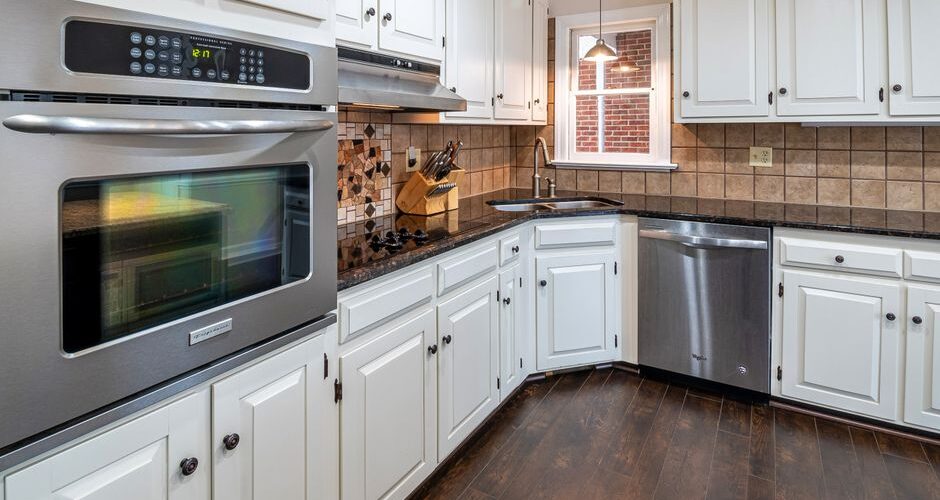
In Denver in 2026, the average cost to refinish kitchen cabinets is $4,500 to $9,500 for most kitchens. Small kitchens with 15 to 20 doors run $3,500 to $5,500, medium kitchens with 25 to 35 doors run $5,500 to $8,500, and large kitchens with 40 or more doors run $8,500 to $13,000. Refinishing means sanding cabinets to bare wood and applying new stain plus clear lacquer, not painting, which is why it costs more in labor than painting.
Table of Contents
- What is the average cost to refinish kitchen cabinets in Denver in 2026?
- How much does it cost to refinish versus paint versus reface versus replace?
- What drives the cost of refinishing kitchen cabinets up or down?
- What does the refinishing process include, and why does it justify the cost?
- When does refinishing make sense instead of painting?
- How does Cabinet Refinishing Denver answer the cost question for local homeowners?
- Which Denver-area homeowners does this pricing apply to?
- Key Takeaways
- References
What is the average cost to refinish kitchen cabinets in Denver in 2026?
In Denver in 2026, most kitchens cost $4,500 to $9,500 to refinish, with the final number driven by door count and wood condition. Small kitchens with 15 to 20 doors and drawers typically run $3,500 to $5,500. Medium kitchens with 25 to 35 openings run $5,500 to $8,500. Large kitchens with 40 or more openings run $8,500 to $13,000.
Refinishing costs more than painting because the process requires stripping every door, drawer front, and face frame down to bare wood. Paint can bond to a properly prepared existing finish, but stain cannot. The old lacquer or varnish must be removed completely before new stain can penetrate the wood evenly.
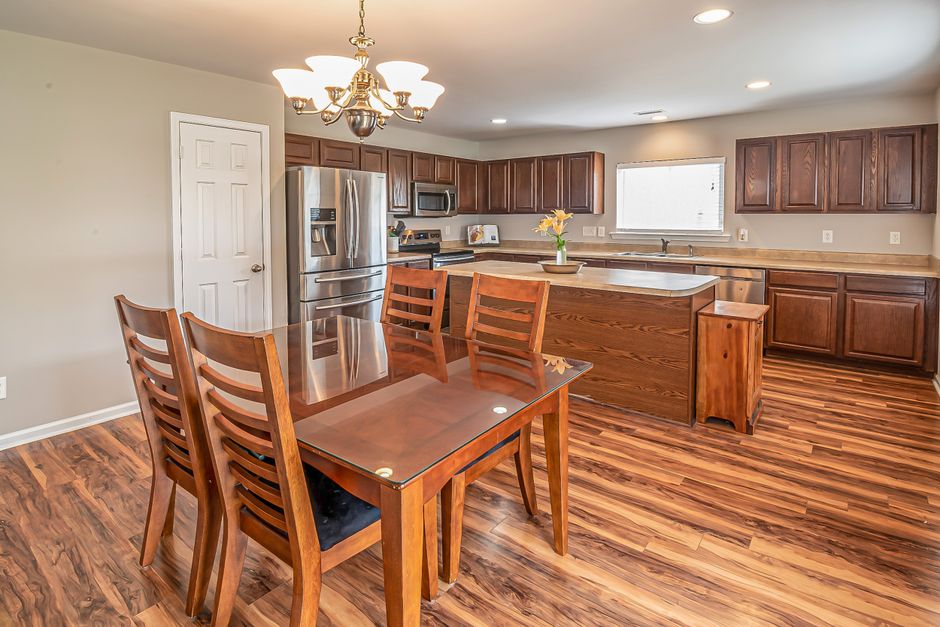
National data shows a lower average because it mixes refinishing with lighter surface work. According to Angi, the 2026 national average cost to refinish cabinets is $3,117, based on 4,344 verified projects, with most homeowners paying between $1,992 and $4,495. Denver pricing runs above that average due to higher labor rates and the dry-climate topcoat requirements that protect wood from Colorado's low humidity.
A more honest way to price refinishing is cost per opening. In the Denver market, homeowners should expect $150 to $280 per door, drawer, or box, including off-site shop time. This method accounts for the fact that a drawer front takes nearly as much labor as a door, and face frames require handwork that square footage pricing ignores.
According to HomeAdvisor, a typical cabinet refinishing job can start as low as $2,000 nationally, but that figure reflects small jobs in lower-cost markets. A Denver kitchen with 30 openings and solid wood cabinets will not land at that number.
How much does it cost to refinish versus paint versus reface versus replace?
Refinishing costs $4,500 to $9,500 for most Denver kitchens, painting costs roughly 20 to 30 percent less, refacing runs $12,000 to $20,000, and full replacement runs $18,000 to $45,000. Each option is a different process with a different result.
Refinishing means sanding to bare wood, keeping the real wood grain visible, and applying new stain plus clear lacquer. Painting means applying a solid color factory finish over the existing finish after proper preparation. Reface means installing new doors and drawer fronts plus veneer over the existing boxes. Replace means removing everything and installing new cabinets.
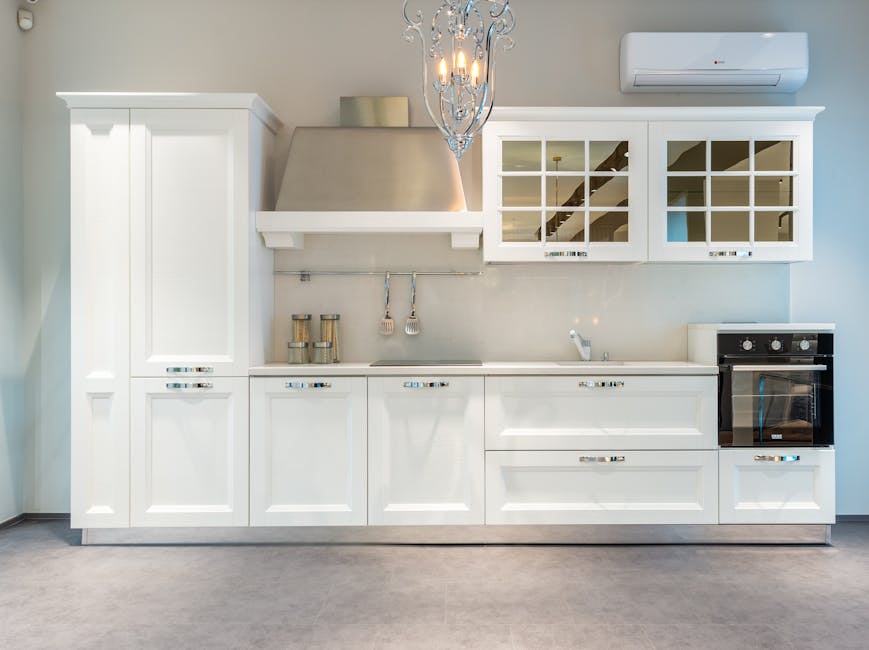
According to Home Depot, the average cabinet refacing project costs approximately $15,000, based on 27 linear feet of cabinets in a 200-square-foot kitchen. Angi reports refacing costs between $4,300 and $10,000 nationally, though Denver refacing jobs with custom doors typically exceed that range.
Cabinet replacement nationally averages $2,000 to $11,000 according to Angi, but that figure includes stock cabinets in small kitchens. Full kitchen replacement in Denver with quality materials runs far higher, typically $18,000 to $45,000 when demolition, installation, and finishing are included.
Refinishing saves 60 to 70 percent versus replacement and preserves solid wood that would otherwise go to a landfill. That savings is the primary reason Denver homeowners choose refinishing over new cabinets.
Refinishing is not recommended for veneer cabinets, according to Angi. The thin veneer layer cannot withstand sanding to bare wood. Fiberboard or non-wood particleboard cabinets are better replaced than refinished because stain will not take to those materials.
What drives the cost of refinishing kitchen cabinets up or down?
Wood species is the first cost driver. Oak, maple, cherry, and alder each take stain differently and require different prep work. Oak has open grain that accepts stain readily but can raise during stripping. Maple is dense and can blotch without proper conditioning. Cherry darkens with age and may need toning to even out color. Alder is soft and requires careful sanding to avoid burnishing.
Stripping old lacquer adds labor hours that painting does not require. The existing finish must be removed completely, and the method depends on what was originally applied. Chemical stripping works on most finishes but requires neutralization and drying time. Mechanical stripping is faster on flat surfaces but risks damage on detailed profiles.
Grain raising occurs when water-based products contact bare wood, and it must be sanded back before staining. Water damage repair adds more labor, especially around sinks and dishwashers where cabinet boxes have swelled or delaminated. These repairs are priced per affected opening.
Custom stain matching and toning add cost because they require sample boards and multiple test applications. According to N-Hance, upgrading with finishing techniques like glazing or antiquing increases the final cost of refinishing. Those techniques add hand-applied layers that cannot be sprayed in a single pass.
The conversion varnish topcoat specified for Colorado's dry climate costs more than standard lacquer but provides better moisture resistance and UV stability. Islands and built-ins add surface area and often require matching existing cabinetry, which increases the total project price.
According to Angi, homeowners should plan for cabinet repairs around $300 and under-cabinet lighting at $230 to $300 per light. These add-ons are separate from the refinishing scope but commonly occur during the same project.
What does the refinishing process include, and why does it justify the cost?
The refinishing process starts with removing and labeling every door and drawer front, then transporting them to a controlled shop environment. The alternative, working inside the home, produces dust and uneven drying. Off-site shop time is built into the cost per opening and is the reason professional refinishing cannot match the price of a surface-level refresh.
In the shop, doors and drawer fronts go through chemical or mechanical stripping to bare wood. Face frames on the cabinet boxes are stripped on site or in the shop depending on the kitchen layout. Every surface that will receive stain must be free of old lacquer, varnish, or paint.
Sanding follows stripping, working through 120 to 220 grit. The sequence matters because coarser grits remove material quickly but leave scratches that stain will highlight. Finer grits close the grain too much and prevent even stain penetration. Damage repair happens at this stage, before any finish is applied.
The wood is conditioned, then stained to the specified color. Custom stain matching requires sample boards approved by the homeowner before production begins. After the stain dries, three coats of conversion varnish are applied. Each coat is sanded lightly before the next, and the final coat cures in a dust-free environment.
Reinstallation happens after the finish has cured, typically on day six through ten. New soft-close hardware is fitted at this stage. The kitchen stays usable throughout most of the process because the cabinet boxes remain in place and only the doors and drawer fronts leave the home.
The durability expectation is 10 or more years, which is what separates a shop finish from a surface-level refresh. According to HomeAdvisor, professional refinishing produces a harder, more uniform finish than what is possible with on-site application methods.
When does refinishing make sense instead of painting?
Refinishing makes sense when the cabinets are real wood you want to keep, you want to go lighter or darker with stain, and you do not want to hide the grain. The process reveals the natural character of oak, maple, cherry, or alder in a way that paint cannot.
Refinishing also makes sense when the cabinet boxes are solid and structurally sound. If the face frames are square, the shelves are stable, and the drawer boxes slide properly, refinishing restores the visible surfaces without replacing what still works. That is where the 60 to 70 percent savings versus replacement comes from.
Paint is the better choice when the cabinets are MDF or thermofoil. According to Angi, stain works for solid wood while paint suits laminate. MDF has no grain to reveal, and thermofoil cannot be stripped to bare wood without destroying the substrate.
From a pure cost standpoint, refinishing can be slightly less expensive than painting, according to N-Hance. That may seem counterintuitive, but painting requires multiple primer and topcoat layers with sanding between each, while refinishing applies stain directly to prepared wood.
The decision comes down to what the homeowner wants to see. Refinishing keeps the wood visible and changes its tone. Painting covers the wood entirely and changes the color. Both produce a factory finish when done by a professional shop, but they are not interchangeable processes.
How does Cabinet Refinishing Denver answer the cost question for local homeowners?
Professional cabinet refinishing with guaranteed factory finish for homeowners in Denver, Golden and Arvada, CO is the core service Cabinet Refinishing Denver provides. The shop has been family-owned and refinishing cabinets in Denver since 1984, which means the pricing reflects four decades of labor costs, material costs, and finish performance in this specific climate.
Pricing starts with a free estimate. Homeowners provide the number of doors, number of drawers, wood species, and city, and the shop returns an exact quote rather than a square-footage range. That approach avoids the ambiguity of national averages and gives Denver homeowners a number they can compare against replacement bids.
The fast turnaround is 2 to 5 days for most kitchens, which is shorter than the 6 to 10 day timeline typical of larger operations. The shop achieves that speed because the process is refined and the crew works on one kitchen at a time. The kitchen stays usable while doors and drawer fronts are in the shop.
The workmanship warranty is 2 years, covering finish adhesion and application defects. The finish itself is a factory finish, meaning it is sprayed in a controlled environment and cured under conditions that cannot be replicated on site.
The cost position is straightforward: refinishing costs roughly 70 percent less than replacement and keeps solid wood cabinets in service. For Denver homeowners weighing a kitchen update against a full remodel, that number is the deciding factor. For homeowners in Golden and Arvada, the same pricing and process apply without a travel premium.
Which Denver-area homeowners does this pricing apply to?
The pricing applies to homeowners in Denver, Lakewood, Littleton, Arvada, Aurora, Highlands Ranch, and Golden. These are the core service areas where Cabinet Refinishing Denver has worked since 1984, and the labor rates and material costs are consistent across the metro.
Real estate agents preparing homes for sale use refinishing to update kitchens without the timeline or budget of a full remodel. A refinished kitchen photographs well, shows as updated in listing descriptions, and avoids the disruption that would delay a listing. Color consultation for resale is available as part of the scope, helping agents choose stains that appeal to the broadest buyer pool.
Homeowners in high-equity neighborhoods like Washington Park and Cherry Hills use refinishing to boost property value without a major renovation. These homes often have solid wood cabinets that are worth preserving, and refinishing restores them to a condition that matches the home's value.
The sustainable renovation angle matters to Denver homeowners. Refinishing keeps existing cabinets out of landfills and avoids the manufacturing footprint of new cabinet production. According to HomeAdvisor, refinishing is the lowest-cost way to update a kitchen while preserving the existing cabinet structure.
Key Takeaways
- In Denver in 2026, most kitchens cost $4,500 to $9,500 to refinish, with small kitchens at $3,500 to $5,500, medium at $5,500 to $8,500, and large at $8,500 to $13,000.
- Refinishing means sanding to bare wood and applying new stain plus clear lacquer; painting applies a solid color finish over the existing surface.
- The national average cost to refinish cabinets in 2026 is $3,117, with most homeowners paying between $1,992 and $4,495, according to Angi.
- Refacing runs roughly $12,000 to $20,000 and full replacement $18,000 to $45,000, so refinishing saves 60 to 70 percent and keeps solid wood.
- Cost per opening runs $150 to $280 per door, drawer, or box, including off-site shop time.
- The process takes 6 to 10 days with the kitchen staying usable, and the finish is built to last 10 or more years.
- Refinishing is not recommended for veneer cabinets, and fiberboard or non-wood particleboard cabinets are better replaced.
References
- Is $4500 descent price to professional refinish and paint — Reddit, date unknown
- Cabinet Refacing Cost Guide — Home Depot, date unknown
- How Much Does It Cost to Refinish Cabinets? — Angi, updated August 31, 2026
- How Much Does It Cost to Refinish Cabinets? — N-Hance, date unknown
- What is the cost difference between refacing and painting — Facebook, date unknown
- Is it cheaper to refinish kitchen cabinets or to just buy new ones — Quora, date unknown
- Kitchen Cabinet Refinishing Cost Calculator (2025) — Allbright Painting, December 2025
- Cost to Refinish Cabinets — HomeWyse, date unknown
- How Much Does Refinishing Cabinets Cost? [2025 Data] — HomeAdvisor, 2025