

Most sticky cabinet doors come from one of three causes: grease and body-oil residue, a hinge that’s fallen out of alignment, or a paint or lacquer finish that hasn’t fully cured. Wipe a hidden spot with warm soapy water first. If the tacky film lifts, you’ve solved it. If the door still binds or rubs, check the hinge screws before touching the finish, and if the whole surface feels soft rather than sticky, leave it alone and consider refinishing.
TL;DR:
- Grease and body oils near handles or steam from cooking can cause sticky cabinet doors, especially in high-traffic areas.
- Finish that feels soft or rubbery often indicates incomplete curing or deterioration, requiring removal and reapplication rather than cleaning.
- Cleaning solutions like mild dish soap, diluted vinegar, or baking soda paste are safest on finished surfaces, with stronger degreasers reserved for stubborn buildup.
- Hinges are usually the source of rubbing or sticking issues, and adjusting their screws or tightening loose ones can fix most mechanical problems.
- Warped doors from humidity may need replacement or professional recalibration, as hinge adjustments cannot correct shape distortions.
Table of Contents
- What’s Causing Your Sticky Cabinet Doors?
- How Do You Safely Clean Sticky Cabinet Residue?
- How Do You Fix a Cabinet Door That Rubs or Won’t Close?
- Could the Problem Be the Finish, Not the Cabinet?
- Simple Habits That Keep Cabinet Doors From Sticking
- How Do You Know if the Cabinet Frame Itself Is Warped?
- When to Fix It Yourself vs. When to Call In a Pro
- Get a Factory Finish That Won’t Turn Sticky Again
- Sources
- FAQ
What’s Causing Your Sticky Cabinet Doors?
Before you grab a cleaner or a screwdriver, figure out which of the three buckets you’re actually dealing with. Guessing wrong wastes time and, in the case of finish damage, can make things worse.
Run through this quick diagnostic:
- Feel the surface. A greasy sheen that transfers to your fingers points to cooking residue or body oils, especially near handles and pulls.
- Check the location. Doors near the stove or dishwasher pick up grease and steam; doors near a sink pick up soap film and hard-water spots.
- Open and close the door slowly. If it drags, rubs against the frame, or won’t latch, that’s mechanical, not residue. Most sticky-feeling door problems trace back to hinge misalignment or loose screws rather than the hardware itself failing.
- Think about timing. Did the sticking start right after painting or refinishing? That’s a strong signal the finish hasn’t cured yet.
- Dry-wipe a small area. If a dry cloth removes most of the tack, you’re dealing with surface residue. If nothing changes and the surface feels slightly soft or rubbery, the finish itself is compromised.
Write down what you notice at each step. A door that’s greasy AND rubbing against the frame might need both a cleaning pass and a hinge tweak, which is common on cabinets near a busy stove that also see heavy daily use.
How Do You Safely Clean Sticky Cabinet Residue?
The right cleaner depends on what’s stuck to the door and what the door is finished with. Painted cabinets, enamel, varnish, and laminate all react differently to moisture and chemicals, so identify the finish before you start scrubbing.
Start with the gentlest option and test it first. Dab your chosen cleaner on an inconspicuous spot, like the top inside edge of a door, and wait a few minutes to check for discoloration or softening before treating the whole surface.
- Warm water and mild dish soap: Mix a few drops of grease-cutting dish soap into warm water, apply with a soft cloth (never spray directly onto the door), wipe in the direction of the grain, then dry immediately with a second clean cloth. This combination is the standard recommendation for cleaning grease off finished wood cabinets without damaging the finish underneath.
- Diluted white vinegar: For light grease film, mix one part vinegar to a few parts water, test on a hidden patch, wipe on, then rinse with a damp cloth so the acidity doesn’t sit on the finish.
- Baking soda paste: For stubborn spots, make a thick paste with water and apply with a soft cloth using gentle circular motion. Baking soda can lift tough grease from finished wood but has to be applied and rinsed gently so it doesn’t scratch the surface.
- Commercial degreasers: Reserve these for grease buildup that soap and water won’t touch, and always test first since some formulas are too aggressive for painted or lacquered surfaces.
What to avoid entirely: bleach, abrasive powders, steel wool, and strong solvents like acetone. These can strip color, cloud a clear coat, or eat through a painted finish in seconds, and the damage isn’t something a second cleaning pass fixes.
Pro Tip: Wipe in one direction, then dry immediately. Leaving moisture sitting on a painted or laminate surface is what actually causes long-term dulling, not the cleaner itself.
If you’re prepping a full kitchen for a fresh coat, cabinet degreasing best practices walk through the deeper clean that a repaint requires versus routine maintenance.
How Do You Fix a Cabinet Door That Rubs or Won’t Close?
If cleaning didn’t solve it, the problem is almost certainly the hinge. Identify what you’re working with first: Euro-style concealed hinges (the round cup visible inside the door when open), traditional exposed butt hinges, or soft-close hinges with a built-in damper.
- Locate the three adjustment screws on Euro hinges. These control depth (how far the door sits from the frame), lateral position (side-to-side), and height (up and down).
- Adjust one screw at a time in quarter-turns. Most hinge adjustments are typically quick and can be done efficiently with small incremental turns. (https://furnica.com/blogs/guides/how-to-choose-adjust-kitchen-cabinet-hinges), and testing the door after each small turn keeps you from overcorrecting into a new problem.
- Tighten any loose mounting screws you find along the way. A door that’s merely loose in its hinge plate can feel like it’s sticking when it’s really just sagging.
- Repair stripped screw holes by dipping a toothpick or two in wood glue, packing them into the hole, snapping off the excess, and re-driving the screw once the glue sets. It’s a genuinely durable fix, not a stopgap.
- Add a magnetic catch if the door swings open on its own or won’t stay latched.
Pro Tip: Skip the WD-40. It’s a solvent, not a lubricant, and it attracts dust and grime over time. A dry silicone spray on the hinge pivots stops squeaks and binding without leaving residue behind.
Could the Problem Be the Finish, Not the Cabinet?
If the door surface itself feels soft, slightly rubbery, or tacky all over rather than just greasy in spots, you’re likely looking at a finish that hasn’t finished curing, or one that’s degraded with age.
There’s a real difference between residue sitting on top of a finish and a finish that hasn’t hardened yet. Cleaning solves the first problem. It does nothing for the second, and scrubbing at it can actually make things worse.
- Many cabinet paints and enamels feel dry to the touch within 24 to 72 hours but need 14 to 30 days to reach full hardness. Closing doors against the frame during that window is what causes blocking, where two painted surfaces bond together and peel or tear when separated.
- Humidity and rushed drying times make blocking worse, since trapped moisture slows the chemical hardening process underneath a surface that already looks finished.
- In the interim, prop doors open slightly, run a fan for airflow, and add adhesive bumpers so doors don’t press flush against the frame while the paint keeps curing.
- If the finish is genuinely soft rather than just new, aggressive solvents will only strip or gum it further. That’s a sign the coating has broken down and needs to be removed and reapplied, not scrubbed.
Widespread softening, blocking across multiple doors, or a finish that’s simply worn past saving is the point where professional refinishing becomes the more sensible option over another round of cleaning.
Simple Habits That Keep Cabinet Doors From Sticking
Prevention here is mostly about routine, not special products. A few consistent habits do more than any deep clean.
- Wipe doors down weekly near the stove and monthly elsewhere with warm water and mild soap, since routine cleaning with nonabrasive products is what keeps oils and grease from softening the finish over time in the first place.
- Run your range hood or crack a window when cooking with oil. Grease travels further than people expect, and steam from a dishwasher adds humidity that swells wood over time.
- Handle painted cabinets carefully for the first month. Avoid slamming doors shut, and choose a satin or semi-gloss sheen for durability if you’re painting cabinets yourself, since flat finishes show wear faster.
- Check hinges twice a year. A quick quarter-turn adjustment before a door starts dragging is faster than fixing a fully stuck one later.
- Keep hands relatively dry and clean when handling cabinets while cooking, since body oils build up on handles and door edges just as fast as cooking grease does.
How Do You Know if the Cabinet Frame Itself Is Warped?
Sometimes the hinge is perfectly adjusted and the door still won’t sit right. That usually means the door or frame has warped, and no amount of quarter-turning will fix a shape problem.
Look for a consistent gap that changes as the door travels. If the top of the door clears the frame fine but the bottom binds (or vice versa), and hinge adjustments haven’t fixed it after a couple of tries, warping is the likely cause. Set a straightedge or a level flat against the door’s face. Any visible bow, especially near the top or bottom corners, confirms it. Humidity is the usual culprit: solid wood and even some MDF panels absorb moisture unevenly, especially on cabinets near a dishwasher, sink, or a kitchen that runs humid in summer.
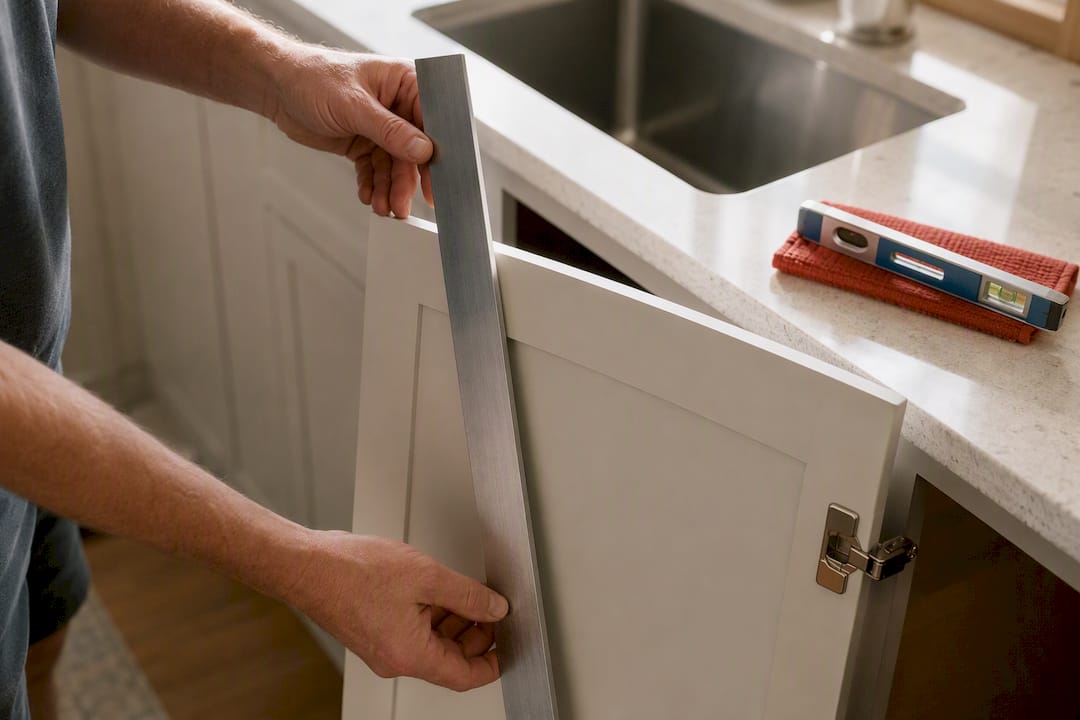
A dehumidifier in the kitchen, or simply better ventilation, can slow future warping, but it won’t undo a shape that’s already set into the wood. Adjusting the hinge can sometimes mask a mild warp by shifting the door’s resting position enough to clear the frame, and that’s a legitimate short-term fix worth trying. But a door that’s visibly bowed usually needs to be replaced or, if the box itself has racked out of square, professionally reset. Chasing the same warp with repeated hinge adjustments just wears out the screw holes faster.
When to Fix It Yourself vs. When to Call In a Pro
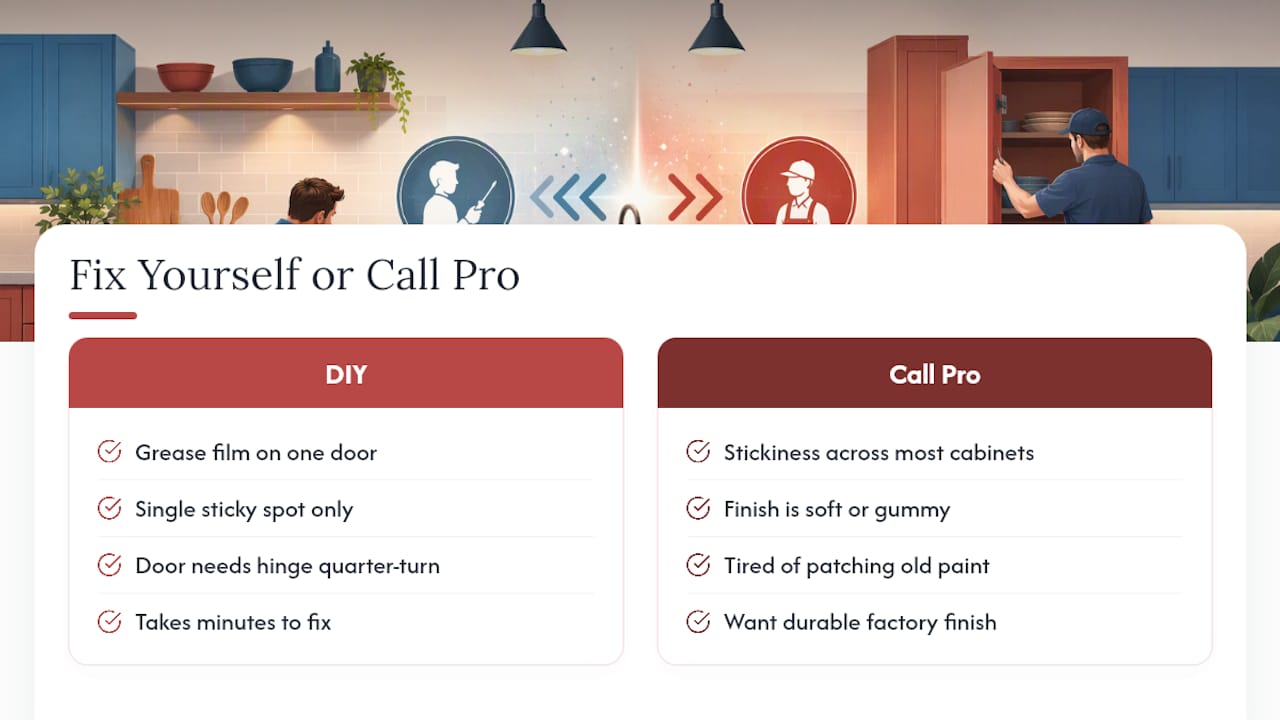
Grease film, one sticky spot, or a door that needs a quarter-turn on the hinge? Handle it yourself. It takes minutes.
Call a professional when the stickiness shows up across most of your cabinets, the finish itself has gone soft or gummy, or you’re tired of patching an old paint job and want a genuinely durable factory finish. That’s a different job than a soapy rag can fix.
— Jesse
Get a Factory Finish That Won’t Turn Sticky Again
If your cabinets are past the cleaning-and-adjusting stage, refinishing solves the problem at the source instead of masking it every few months. Some professional refinishing services use a shop-based, factory-finish spray process, never brushes or rollers, with multiple protective coats designed to resist grease and hand oils.

The process covers everything from prep and degreasing to the final protective layers, and most projects wrap up in 3 to 5 days rather than the weeks a full replacement demands. Cabinet refinishing runs $3,000 to $8,000 as a one-time cost, well under the $15,000 to $40,000 that new cabinets typically run, and it comes backed by a 3-year warranty. If your kitchen cabinets in the Denver metro area are sticky, softened, or just tired of being cleaned instead of fixed, see the cabinet painting and refinishing options and get a quote for your project.
Sources
- Room-by-room cleaning guide
- How long does cabinet paint take to cure? (Timeline + Do/Don’t)
- How to fix sticky kitchen cabinet doors (hinge adjustment and leveling)
FAQ
What Is the Best Cleaner for Sticky Wood Cabinets?
Warm water mixed with a small amount of mild dish soap, applied with a soft cloth, works for most grease and residue on finished wood. It’s the safest first choice for finished wood cabinets because it cuts grease without stripping color or sheen the way harsher cleaners can.
How Do You Remove Sticky, Greasy Gunk From Kitchen Cabinets?
Apply a warm soapy water mix or a diluted white vinegar solution with a soft cloth, working in small sections and drying immediately afterward. For stubborn buildup, a gentle baking soda paste can lift grease that soap alone won’t budge, but always test on a hidden spot first and rinse it off rather than letting it sit.
Does Murphy’s Oil Soap Remove Grease From Kitchen Cabinets?
Oil-based wood soaps can help with light grease on some finished wood surfaces, but they’re not universally safe for painted, laminate, or lacquered cabinets. Test any oil soap on a hidden patch first, since it can leave a dull film on certain finishes that plain dish soap and water won’t.
Can I Use WD-40 on Kitchen Cabinets?
WD-40 is a solvent, not a lubricant, so it’s not recommended for hinges or cabinet surfaces despite being marketed for squeaky hardware. A light silicone spray lubricates hinge pivots without attracting dust and grime the way WD-40 does over time.
How Much Does Professional Cabinet Refinishing Cost?
Cabinet refinishing through Cabinetsrefinishing typically runs $3,000 to $8,000 depending on the size of the kitchen and scope of work, compared to $15,000 to $40,000 for full cabinet replacement. Most projects are completed in 3 to 5 days.