
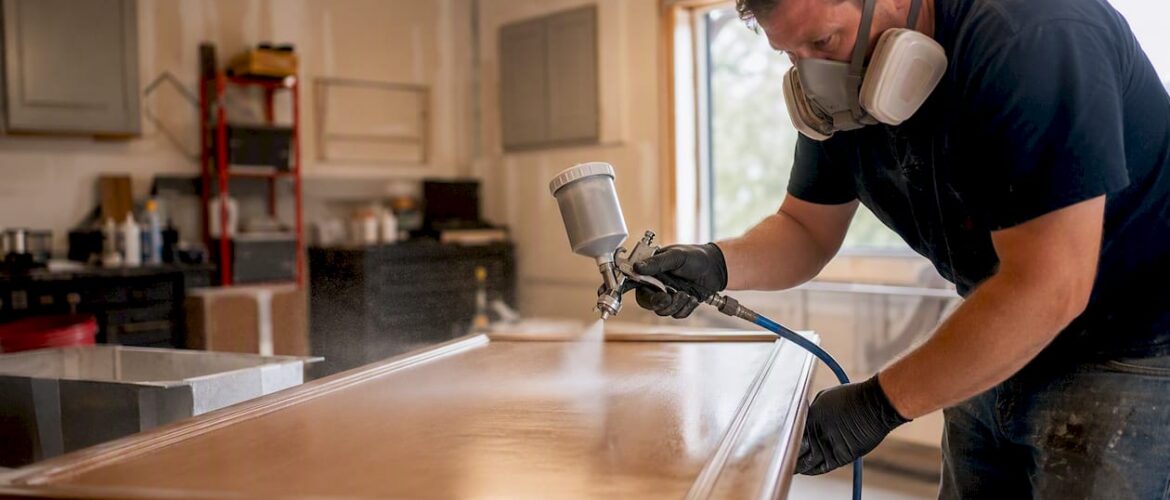
A scratch-resistant cabinet finish protects visible surfaces, reduces maintenance, and extends the life of kitchen cabinets. For busy kitchens, the most reliable options are professional factory/2K spray systems using catalyzed lacquers, conversion varnishes, or high-solids 2K polyurethane. Engineered surfacing like thermofoil and laminate works well when the substrate or budget points that direction.
The practical benefits come down to three things:
- Appearance retention: Finishes formulated for scratch resistance hold their sheen and color longer, so cabinets look newer for years without touch-ups.
- Easier cleaning: A hard, cross-linked surface lets you wipe off grease, food, and fingerprints without scrubbing into the finish itself.
- Fewer replacements: Durable finishes slow the wear cycle, which means refinishing rather than replacing becomes a realistic long-term strategy.
Before you commit to any finish, ask the contractor three questions: What film thickness are you targeting? Has this product been tested to KCMA/ANSI A161.1 standards? What does the warranty actually cover?
Key Takeaways
Professional factory/2K spray systems deliver the most durable scratch-resistant cabinet finishes because they combine catalyzed chemistry, consistent film thickness, and controlled cure, which retail-grade products cannot reliably replicate.
| Point | Details |
|---|---|
| Best finish for busy kitchens | Catalyzed lacquer, conversion varnish, or 2K polyurethane applied professionally outperforms retail-grade options in high-traffic use. |
| KCMA/ANSI A161.1 is the benchmark | Ask for test compliance and a TDS; finishes that pass include 25,000 drawer cycles and 24-hour chemical exposure testing. |
| Hardness alone isn’t durability | Balancing hardness with elasticity prevents edge chipping; film thickness and prep matter more than brand name. |
| Refinishing vs. replacement cost | Professional refinishing typically runs $3,000–$8,000 versus $15,000–$40,000 for full replacement, completed in 3–5 days. |
| Cabinetsrefinishing factory-finish approach | Cabinetsrefinishing uses a factory-spray methodology with catalyzed topcoats, custom color matching, and 3–5 day project turnarounds in the Denver metro area. |
Table of Contents
- What are the main scratch-resistant cabinet finish benefits?
- How do manufacturers measure scratch resistance?
- Why harder doesn’t always mean more durable
- Does application method affect scratch resistance?
- How do you clean and maintain a scratch-resistant finish?
- What does professional refinishing cost, and how long does it take?
- How do you choose the right finish for your kitchen?
- What practitioners know that marketing copy doesn’t say
- Why refinishing with a factory finish is often the smarter call
- Cabinet Refinishing Denver can help you get a durable finish fast
- Sources
What are the main scratch-resistant cabinet finish benefits?
The industry term for what most homeowners call “scratch-resistant” is mar resistance, a measurable property that describes a finish’s ability to resist surface damage from abrasion, impact, and daily contact. Marketing labels like “scratch-proof” are not standardized. Mar resistance is.
Here is how the major finish types compare on that standard:
-
Polyurethane (single-component, water-based): The most common retail option. Water-based versions dry faster and have lower VOCs; oil-based versions cure harder. Single-component (1K) polyurethane builds a reasonably durable film but lacks the cross-linking density of two-component systems. Best for light-use kitchens or second homes.
-
2K polyurethane (two-component): A catalyst is added at the time of application, triggering a chemical cross-linking reaction that produces a much harder, more chemical-resistant film than 1K systems. This is a professional-grade product. It performs well on MDF, plywood, and solid wood, and it handles edge profiles better than most alternatives. High-traffic family kitchens and pet households benefit most.
-
Conversion varnish: An acid-catalyzed finish that cures to exceptional hardness. It resists chemicals, heat, and moisture at a level that puts it near the top of the durability range for spray-applied wood finishes. The trade-off is brittleness on thin edges if applied too thick or over a poorly prepped substrate. Requires professional spray equipment and controlled conditions.
-
Catalyzed lacquer / 2K lacquer: Fast-drying, catalyzed, and formulated for cabinetry. Sher-Wood Catalyzed Lacquer reports approximately 21% volume solids and strong chemical and print resistance, making it a standard choice in professional cabinet shops. Easier to spray than conversion varnish, with slightly less hardness at full cure.
-
Water-based 2K systems: Modern water-based two-component finishes have closed much of the performance gap with solvent systems. Sayerlack’s kitchen coating guide references UNI EN 15186:2012 and UNI EN 12720 scratch and chemical resistance standards, and describes anti-scratch, anti-fingerprint water-based cycles that rival older solvent products. Lower odor during application and faster return-to-service times are real advantages in occupied homes.
-
Thermofoil: A vinyl film heat-pressed onto MDF or particleboard. Scratch resistance comes from the film itself, not a topcoat. Consistent, factory-applied, and available in many colors and textures. The vulnerability is edges and corners: if the film lifts or peels, repair is difficult. Works well for rental properties and budget renovations where a uniform, easy-clean surface matters more than repairability.
-
Laminate: High-pressure laminate (HPL) bonds a resin-saturated paper layer to a substrate under heat and pressure. The result is one of the hardest, most scratch-resistant surfaces available for cabinetry. Kitchen cabinet material research confirms that laminate and thermofoil surfaces resist scratching better than painted natural wood in comparable conditions. The limitation is that laminate cannot be refinished; replacement is the only repair option.
-
Melamine: A melamine-formaldehyde resin surface bonded directly to particleboard or MDF. Common in stock and semi-custom cabinetry. Harder than paint but more brittle than HPL laminate. Chips at edges under impact and is difficult to repair invisibly. Suitable for light-use kitchens where cost is the primary driver.
Substrate matters. MDF holds paint and catalyzed finishes well because its surface is uniform, but it is vulnerable to moisture at exposed edges. Solid wood moves with humidity, which can stress a brittle high-hardness finish over time. Plywood sits between the two. Sheen also affects how scratches read: satin finishes tend to hide small marks better than high gloss, which highlights micro-scratches and swirl marks under direct light.
How do manufacturers measure scratch resistance?
The most useful standard for U.S. homeowners is ANSI/KCMA A161.1, which covers a battery of tests designed to simulate real kitchen conditions. It includes chemical-resistance spot tests (common household cleaners, acids, and solvents held on the surface for 24 hours), humidity cycling, and mechanical tests that include a high number of loaded drawer cycles. A finish that passes KCMA testing has been evaluated against the kind of daily stress a busy kitchen actually produces.
What a KCMA pass means in your kitchen: The chemical resistance portion tests exposure to substances like vinegar, mustard, coffee, and bleach solutions. If a finish passes, those substances won’t permanently stain or etch the surface under normal contact time.
Beyond KCMA, look for these tests on a product’s Technical Data Sheet (TDS):
- Mar/scratch resistance: Often measured with a stylus or weighted probe dragged across the cured film. A pass indicates the surface resists visible marking under defined load.
- Cross-hatch adhesion: A grid is cut into the film and tape is pulled. Good adhesion means the finish stays bonded to the substrate, which is the foundation of all other durability claims.
- Hot/cold resistance: Simulates a hot pan or cold glass on the surface. Relevant for countertop-adjacent cabinet faces.
- Chemical spot tests: Individual household chemicals applied for set durations. DuraVar Plus from M.L. Campbell, a two-component high-solids system, reports excellent print resistance, edge soak performance, and AWI TR-4 chemical resistance alignment in its test matrix.
Volume solids is the number to check on a TDS when comparing finishes. It represents the percentage of the wet coating that remains as a cured film after solvents evaporate. Higher volume solids mean a thicker dry film per coat, which directly correlates to better scratch and mar resistance. A finish with 21% volume solids (like Sher-Wood Catalyzed Lacquer) builds a meaningfully thicker protective layer than a consumer-grade product at 10–12%.
Why harder doesn’t always mean more durable
The most common misconception in finish selection is treating pencil hardness as the only metric that matters. A finish that scores 2H on the pencil hardness scale but has low elasticity will chip cleanly off an edge when a cabinet door takes a knock. A slightly softer finish with better elongation absorbs that impact and stays intact.
The failure modes worth understanding:
- Edge chipping: Usually caused by a film that is too brittle, too thin at the edge, or applied over inadequate primer. Edges receive more impact and flex more than flat faces.
- Crazing: A network of fine cracks across the surface, typically from thermal or humidity cycling on a film that cannot flex. Common on solid wood cabinets finished with a high-hardness conversion varnish applied too thick.
- Surface mars: Shallow scratches that don’t penetrate the full film. Often from abrasive cleaning or daily contact. A properly thick film absorbs these without exposing the substrate.
- Adhesion failure: The finish lifts or peels, usually from inadequate surface prep, wrong primer, or moisture ingress at an edge.
Pro Tip: Film thickness and surface prep are more decisive than the brand of coating. A properly sanded, degreased, and primed surface with a well-applied mid-build coat will outperform an expensive topcoat sprayed over a poorly prepared substrate. Ask your contractor what primer they use and why.
A factory-spray multi-layer system avoids most of these failure points because each coat is applied at a consistent wet-film thickness, allowed to cure properly before the next coat, and the entire system is designed to work together, similar to epoxy floor coating — residential & commercial garages systems that provide industrial-grade surface protection. Brush and roller application creates variable film thickness, with thin spots at edges and corners where failures start. The professional vs. DIY refinishing comparison makes this gap concrete.
Does application method affect scratch resistance?
Yes, significantly. The chemistry of the coating matters, but the application environment and method determine whether that chemistry performs as designed.
Professional/factory 2K spray systems apply finish in a controlled environment with HVLP or airless spray equipment. The result is a consistent wet-film thickness across flat faces, edges, and profiles. Cross-linking chemistry in catalyzed and 2K systems requires accurate mix ratios; spray application makes that consistency achievable at scale. Systems like Axalta’s Zencore combine primer and enamel performance into a single factory system, reducing variability and delivering mar-resistant finishes with production consistency.
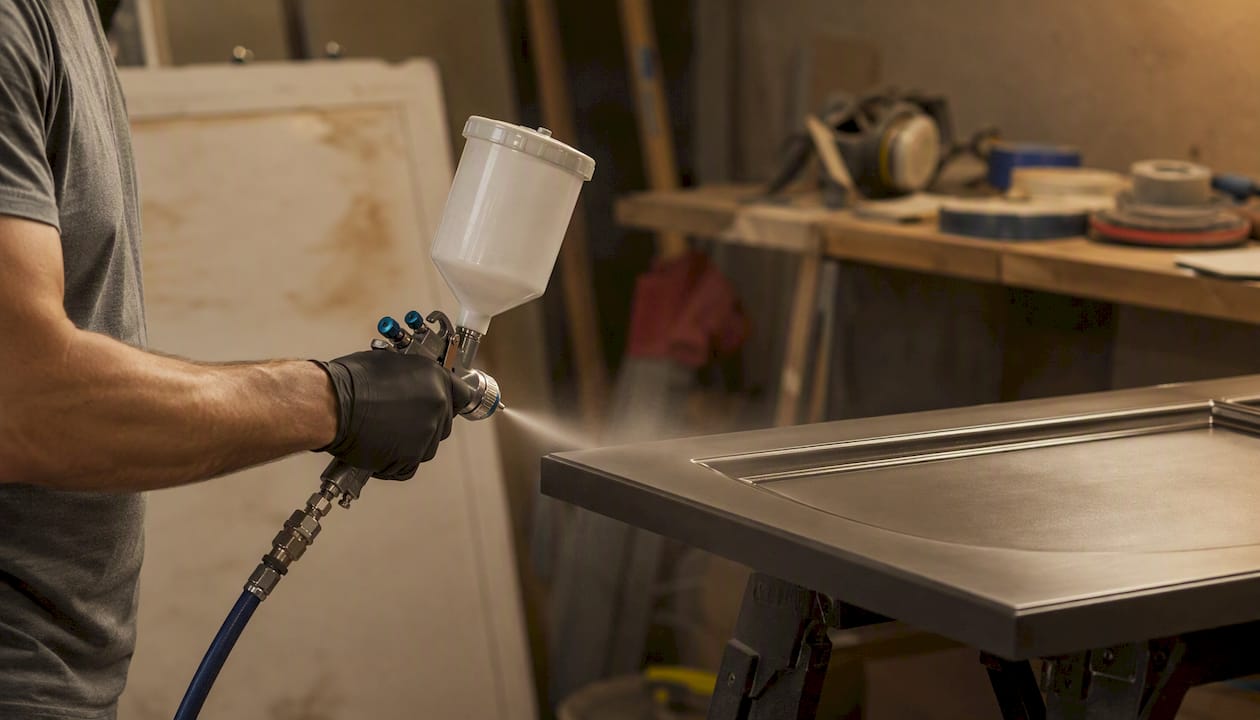
DIY brush and roller finishes introduce variability at every step: uneven film thickness, brush marks that create thin ridges and valleys, and difficulty maintaining consistent mix ratios in 2K products. The outcome is a finish that may look acceptable initially but shows wear faster at high-contact points.
Pro Tip: Before hiring a finisher, ask for the TDS for every product in the system, the target dry-film thickness per coat, and whether the system meets KCMA or AWI references. A professional who can’t answer those questions on the spot is probably not using professional-grade products.
What homeowners can expect from each approach:
- Factory/2K spray (professional): Consistent film, full cross-linking, KCMA-testable results, 10+ year lifespan on a properly prepped substrate.
- Professional brush/roller (retail-grade products): Acceptable appearance, moderate durability, 5–8 year lifespan before visible wear in high-traffic areas.
- DIY spray (rattle can or consumer HVLP): Variable results; adequate for low-traffic areas or touch-ups, not recommended as a primary finish for a busy kitchen.
- Thermofoil/laminate factory application: Consistent and durable for the surface layer; durability depends on substrate quality and edge sealing.
Insl-X Cabinet Coat from Benjamin Moore is a retail-grade option that claims resistance to chipping, scuffing, grease, and water, with a dry-to-touch time of approximately one hour and a recoat window of six hours. It’s a reasonable choice for a DIY refresh on low-traffic cabinets, but it is not a substitute for a catalyzed professional system in a high-use kitchen.
How do you clean and maintain a scratch-resistant finish?
Daily care is straightforward, but a few habits will determine whether a good finish lasts 10 years or 6.
- Wipe spills immediately. Even chemical-resistant finishes benefit from prompt cleanup. Acids (vinegar, citrus) and alkalis (some cleaners) can dull a finish over extended contact.
- Use a soft microfiber cloth with warm water or a mild dish soap solution. That covers 95% of kitchen cabinet cleaning needs.
- Dry the surface after cleaning. Standing water at door edges is where moisture ingress begins, especially on MDF substrates.
- Avoid abrasive pads, steel wool, and powdered cleansers. These create micro-scratches that accumulate into visible dullness.
- Skip harsh solvents (acetone, paint thinner, bleach solutions) on painted or lacquered finishes. They can soften or cloud the film.
- Don’t scrub newly finished cabinets hard for the first 30 days. Most catalyzed finishes reach handling hardness quickly but continue to cure for several weeks. Heavy scrubbing during that window can mar the surface permanently.
For minor scratches already present, the repair path depends on depth:
- Shallow surface mars: A mild automotive polish or cabinet-specific touch-up polish can reduce visibility on satin and semi-gloss finishes. Test in an inconspicuous spot first.
- Deeper scratches that reach the substrate: Color-matched touch-up systems are available from most professional finishers. For a factory-matched result, professional touch-up guidance covers when DIY is realistic and when a pro is the better call.
- Widespread wear or adhesion failure: That’s a refinishing job, not a touch-up. Warranty claims typically cover manufacturing defects in the finish, not wear from use or improper cleaning.
What does professional refinishing cost, and how long does it take?
Professional refinishing with a factory-grade 2K spray system typically runs several thousand dollars for a full kitchen, depending on variables like cabinet count and color; full cabinet replacement costs significantly more. The cost comparison between cabinet painting and replacement breaks down the financial case in detail.
A professional refinishing project timeline:
- Day 1: Hardware removal, surface degreasing, sanding/keying, and minor repairs.
- Days 2–3: Primer application, cure time, and first topcoat.
- Days 3–4: Final topcoat(s), edge detail work, and initial cure.
- Day 5: Reassembly, hardware reinstallation, and final inspection.
That’s a 3–5 day turnaround for a trained crew, compared to weeks of disruption for a full replacement. The factory-finish methodology that Cabinetsrefinishing uses follows this structure.
Key cost drivers to expect:
- Number of doors and drawer fronts (the primary labor variable)
- Extent of surface repairs (dents, delamination, edge damage)
- Specialty or custom color matching
- Hardware replacement or upgrade
- Regional labor rates (Denver metro tends to run at the higher end of national averages)
A high-quality factory 2K finish, properly applied and maintained, typically lasts 10 or more years before refinishing becomes necessary. Retail-grade recoats on a DIY basis often show wear in high-contact areas within 3–5 years.
How do you choose the right finish for your kitchen?
The right finish depends on how the kitchen is actually used, not on which product has the most impressive marketing claims.
By household type:
- High-traffic family kitchen: Catalyzed lacquer, conversion varnish, or 2K polyurethane applied professionally. Satin sheen hides daily marks better than gloss. MDF doors with a factory finish hold up well if edges are properly sealed.
- Pet households: Same professional-grade options, with extra attention to lower cabinet faces and toe kicks. Conversion varnish or 2K poly for maximum chemical resistance to cleaning products.
- Rental property: Thermofoil or laminate for the lowest maintenance and highest resistance to tenant wear. If the existing cabinets are wood, a professional 2K spray finish is more cost-effective than replacement.
- Light-use second home: Water-based 1K polyurethane or a quality retail cabinet paint (like Insl-X Cabinet Coat) may be sufficient. The lower traffic doesn’t justify the cost premium of a full catalyzed system.
Questions to ask any finisher before signing:
- What specific product system are you using, and can I see the TDS?
- What dry-film thickness are you targeting per coat?
- Does this system meet KCMA/ANSI A161.1 or AWI standards?
- What are the VOC content and cure profile?
- What is the recoat window if I need a touch-up in two years?
- What does your warranty cover, and for how long?
Red flags:
- No TDS available or “we use our own blend” with no documentation
- No mention of cure time or film thickness targets
- No references or photos of completed projects
- Warranty language that excludes “normal wear” so broadly it covers nothing
On sheen: Satin (typically 30–40 gloss units) is the practical choice for busy kitchens. It reads as clean and finished, hides micro-scratches, and is easier to touch up than high gloss. Semi-gloss works in lower-traffic areas or for a more formal look. High gloss is unforgiving on imperfect surfaces and shows every fingerprint.
On substrate fit: MDF takes paint and catalyzed finishes evenly but needs sealed edges. Solid wood needs a flexible enough finish to accommodate seasonal movement. Thermofoil and laminate are substrate-specific products, not topcoats, and require factory application to perform as intended.
What practitioners know that marketing copy doesn’t say
The most durable cabinet finishes in real kitchens share one characteristic that no product label mentions: they were applied correctly. Preparation, film thickness, and cross-linking chemistry matter more than the brand name on the can.
The insight most homeowners miss: A properly applied water-based 2K system can outperform a poorly sprayed solvent-based conversion varnish. The chemistry sets the ceiling; the application determines whether you reach it. Thin spots, skipped primer coats, and rushed cure times are where finishes fail, not in the lab.
A common scenario in professional refinishing: a family kitchen with MDF flat-panel doors that had been brush-painted with a retail latex. Within two years, the edges were chipping and the high-contact areas around pulls were showing bare substrate. A factory/2K spray system applied over properly sanded and primed MDF, with attention to edge build, resolved both failure points. The cross-linked film on the flat faces resisted daily contact; the adequate edge build prevented chipping at the corners.
Pro Tip: Schedule your refinishing project with at least 72 hours before heavy kitchen use resumes. Most catalyzed finishes reach handling hardness in 24 hours but don’t reach full chemical resistance for 5–7 days. Wiping down cabinets with a damp cloth is fine; scrubbing with a cleaning product is not.
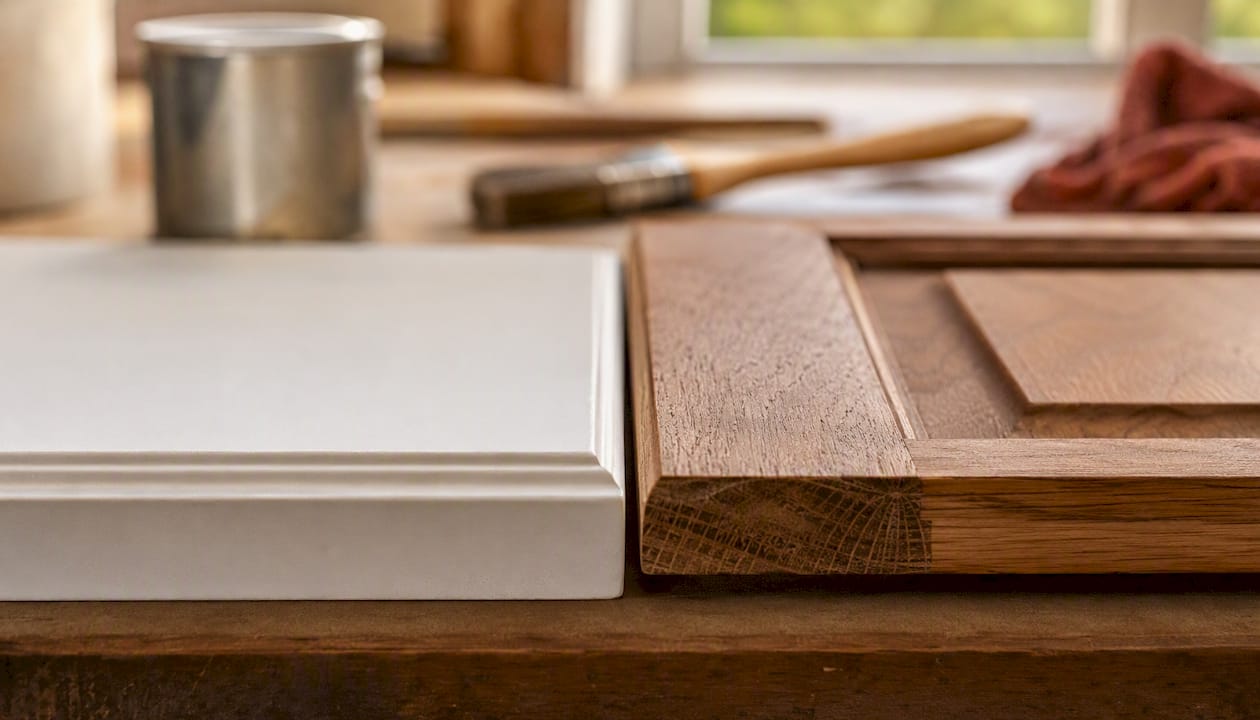
When vetting a professional, ask for a small sample panel finished with the actual product system they plan to use. A confident professional will provide one. It lets you check color, sheen, and surface feel before committing. Proper surface preparation is the foundation of any result worth having.
Why refinishing with a factory finish is often the smarter call
Professional factory-finish refinishing delivers scratch-resistant, durable results at a fraction of replacement cost, and it does so in days rather than weeks. The factory-spray methodology prioritizes surface prep, consistent film thickness, and catalyzed chemistry, which are the same variables that determine whether a finish lasts 3 years or 13. For homeowners who want a kitchen that holds up to real daily use without constant maintenance, that combination of speed, cost, and durability is hard to argue with.
Cabinet Refinishing Denver can help you get a durable finish fast
Cabinetsrefinishing delivers professional cabinet refinishing in Denver using a factory-finish spray methodology: full surface prep, catalyzed topcoats, custom color matching, and minor repairs included. Projects complete in 3–5 days, not weeks, and the cost runs $3,000–$8,000 compared to $15,000–$40,000 for replacement. Low-VOC water-based options are available for homeowners who want a durable result with minimal disruption.

Service highlights:
- Factory-grade 2K spray application with consistent film thickness
- Custom color matching and minor structural repairs
- Low-VOC, water-based finish options
- 3–5 day project turnaround for a full kitchen
- Significant cost savings versus full cabinet replacement
Ready to see what your cabinets could look like? Request an estimate or call/text 720-219-9716 to ask about a sample panel for your specific cabinet material and color.
Sources
The sources below back the technical claims and product references in this article:
- Kitchen Cabinet Manufacturers Association (KCMA)
- Zencore Cabinet Coating System | Axalta
- Insl‑X® Cabinet Coat | Benjamin Moore