
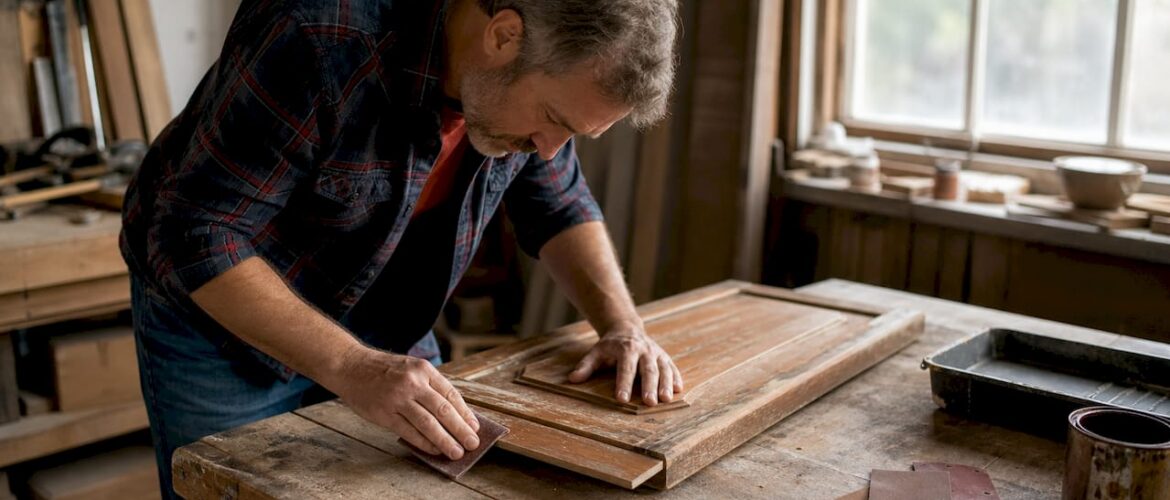
Cabinet refinishing is defined as the process of stripping, sanding, and recoating existing cabinet surfaces with fresh primer, paint, or stain to restore their appearance without replacing the underlying structure. The signs cabinets need refinishing are almost always surface-level: peeling topcoats, faded color, dull sheen, and scratches that cleaning cannot fix. Recognizing these cabinet damage indicators early saves you thousands of dollars. Cabinet refinishing costs range from $3,000 to $8,000, compared to $15,000 to $40,000 for full replacement. That gap makes reading your cabinets correctly one of the most valuable skills a homeowner can have.
1. Signs cabinets need refinishing: peeling or flaking finish
Peeling and flaking are the clearest cabinet refinishing signs you will ever see. The finish is literally separating from the wood, which means the topcoat has failed. This happens most often around door edges, drawer fronts, and areas near the sink where moisture is highest.
The good news is that peeling finish with firm doors usually signals surface-level damage, not structural failure. If you press on the door and it feels solid, the wood underneath is almost certainly intact. That means refinishing is the right call, not replacement.
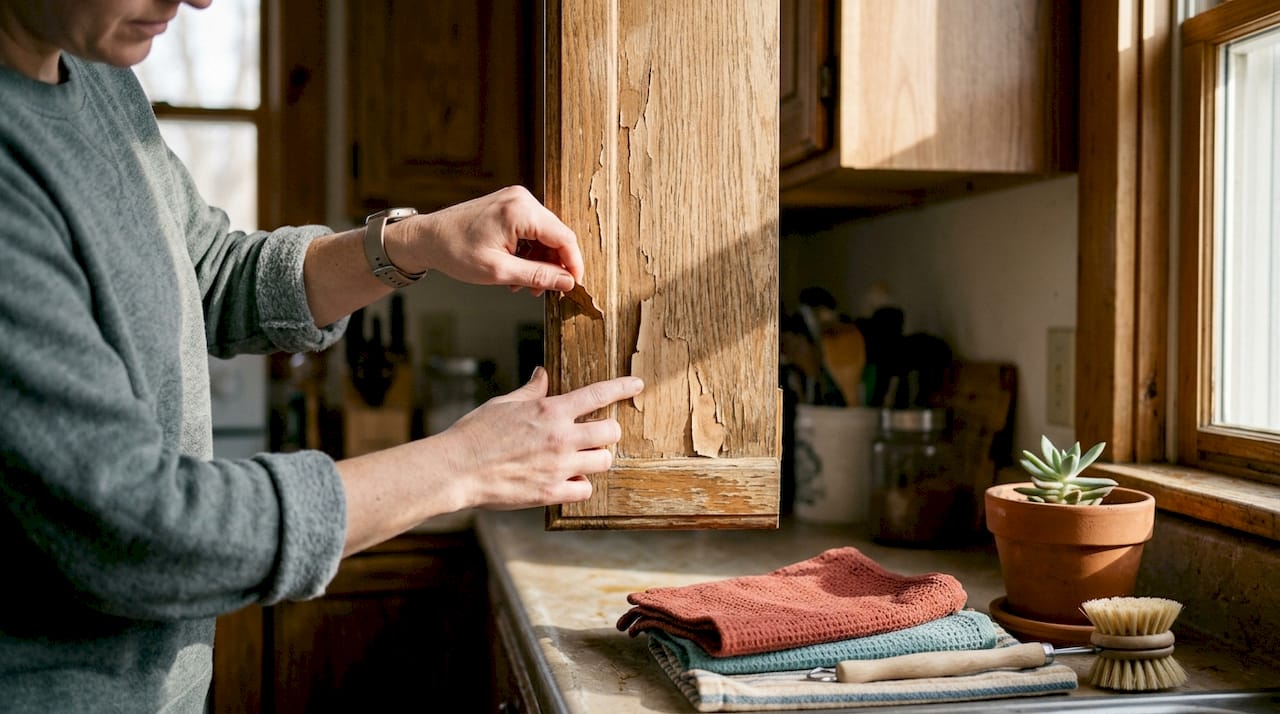
Pro Tip: Run your fingernail along the edge of a peeling area. If the wood beneath feels hard and dry, you have a finish problem. If it feels soft or spongy, moisture has reached the substrate and you need a deeper assessment.
2. Faded, yellowed, or uneven color
Color change is one of the most common cabinet wear indicators homeowners overlook. Cabinets near windows fade unevenly because one side gets more sun than the other. White and cream cabinets often yellow near the stove from heat and grease exposure.
Fading is not a cleaning problem. No amount of scrubbing restores pigment that UV light has broken down. When the color looks patchy or washed out in certain zones, the finish has reached the end of its useful life.
3. A dull or lifeless sheen
A healthy cabinet finish reflects light evenly. When that sheen goes flat, the topcoat has oxidized or worn through. UV light degrades cabinet topcoats over a 5–10-year period, leaving a dull, chalky surface that no polish can permanently fix.
A quick test helps you separate surface oxidation from deep finish failure. Apply a small amount of mineral spirits to a hidden spot. If the shine temporarily returns, the damage is surface-level and refinishing will restore the look. If the surface stays dull, the finish has failed through to the substrate.
4. Scratches and dents that won’t buff out
Light scratches in a healthy finish buff out with a fine abrasive and some polish. When scratches cut through the topcoat and into the wood grain, buffing only makes them more visible. This is a clear refinishing warning sign.
Pay attention to high-traffic areas: the cabinet below the sink, the doors next to the dishwasher, and the drawer pulls on the most-used storage. These spots accumulate damage faster than anywhere else. When you see bare wood showing through, the finish is gone and the wood is now exposed to moisture and grease every day.
5. Sticky or tacky surfaces
A sticky cabinet surface is not a grease problem. Tacky or rough finishes result from degraded topcoats caused by humidity, heat cycling, or improper original curing. The finish has broken down chemically and is now attracting grime rather than repelling it.
Cleaning a tacky cabinet with degreaser gives temporary relief, but the stickiness returns within days. The only real fix is stripping the old finish and applying a fresh topcoat with proper preparation.
Pro Tip: If your cabinets feel tacky right after cleaning, that is a strong sign the topcoat has failed. Healthy finishes feel smooth and dry immediately after wiping.
6. Haze, cloudiness, or water rings
Cloudiness on cabinet doors usually appears near the dishwasher, above the stove, or around the sink. Steam and kitchen humidity cause haze, peeling, and finish flakes by penetrating the topcoat and disrupting its bond with the wood below.
Water rings are a related sign. They form when moisture sits on the surface long enough to penetrate the finish layer. Once you see permanent white rings that do not wipe away, the finish integrity is compromised in that zone. Spot repairs rarely match the surrounding finish well, which is why full refinishing produces a cleaner result.
7. The finish fails the structural check
Before committing to refinishing, you need to confirm the cabinet structure is sound. Checking frame sturdiness and door alignment is the fastest way to assess whether the “bones” of your cabinets are worth saving.
Run through this quick structural check:
- Press firmly on each door panel. It should feel rigid with no flex.
- Open and close every door. Alignment should be consistent with no sagging.
- Check the interior cabinet boxes for swelling or soft spots along the bottom and back panels.
- Look at the toe kick and base for signs of water damage or warping.
- Pull out drawers and check the drawer box sides for delamination or splitting.
Swollen, warped, or delaminating cabinet boxes require replacement, not refinishing. A fresh finish will not adhere properly to a compromised substrate, and the underlying damage will continue to worsen. Refinishing is the right choice only when the structure passes this check.
Pro Tip: Particleboard and thermofoil cabinets often cannot be sanded without damage. Solid wood cabinets are the best candidates for refinishing. Check the edge of a door or drawer to identify your cabinet material before scheduling any work.
When refinishing beats replacement on value
Refinishing makes the most financial sense when your cabinets have a functional layout and sound structure. The cost difference between refinishing and replacement is substantial: $3,000 to $8,000 versus $15,000 to $40,000. That is not a marginal gap. It is the difference between a weekend project and a months-long renovation.
Professional refinishing projects typically complete in 3–5 days, compared to weeks for full cabinet replacement. You keep your kitchen layout, your existing cabinet boxes, and your budget intact. Refinishing also generates far less waste than replacement, which makes it the more sustainable choice for homeowners who care about material efficiency.
Replacement becomes necessary when cabinets have structural rot, severe water damage, or a layout that no longer works for how you use the kitchen. Refinishing addresses aesthetics but cannot fix storage problems or ergonomic issues. If you are constantly frustrated by the layout, a new finish will not solve that frustration.
Key Takeaways
The most reliable way to know if your cabinets need refinishing is to check for surface-level damage first, then confirm the structure is sound before investing in any finish work.
| Point | Details |
|---|---|
| Surface signs come first | Peeling, fading, dullness, and stickiness all point to a failed topcoat, not structural failure. |
| Structural check is non-negotiable | Press, open, and inspect every door and box before scheduling refinishing work. |
| Cost gap is decisive | Refinishing costs $3,000–$8,000 versus $15,000–$40,000 for replacement. |
| Environment accelerates damage | Steam, UV light, and grease speed up finish breakdown near stoves, sinks, and windows. |
| Solid wood is the best candidate | Particleboard and thermofoil cabinets may not survive sanding, limiting refinishing options. |
What I have learned from watching homeowners make this decision
Most homeowners I talk to have already decided their cabinets need replacing before they ever look closely at the wood. They see peeling paint and assume the worst. The reality is that peeling or discoloration rarely means the wood is damaged. The finish fails long before the wood does, and that is actually good news.
The mistake I see most often is skipping the structural check entirely. Homeowners either assume the cabinets are fine and refinish over hidden water damage, or they assume the worst and spend $30,000 on new cabinets when $5,000 would have done the job. Neither outcome is good.
One thing most articles skip: timing matters more than people realize. Scheduling refinishing during cooler, less humid seasons improves how the finish cures and can reduce project costs. Fall and early spring tend to be the best windows in most climates.
My honest advice is to assess your layout before you assess your finish. If you love how your kitchen is organized and you just hate how it looks, refinishing is almost certainly the right answer. If you have been frustrated with the layout for years, a new finish will not fix that. Separate those two questions before you spend a dollar.
— Jesse
A fresh finish is closer than you think
Your cabinets may look tired, but the structure underneath is likely in better shape than you realize. Cabinetsrefinishing specializes in professional cabinet refinishing in Denver using a factory-finish methodology that includes meticulous surface preparation and multiple protective layers for a result that lasts.

Projects complete in 3–5 days, not weeks. Costs run $3,000 to $8,000, a fraction of what full replacement demands. Whether your cabinets show peeling, fading, or a finish that just looks worn out, Cabinetsrefinishing can assess your situation and give you a clear picture of what refinishing will deliver. Reach out for a free quote and find out what your kitchen could look like with a finish that actually holds up.
FAQ
What are the most obvious signs cabinets need refinishing?
Peeling or flaking finish, a dull or chalky sheen, visible scratches through the topcoat, and sticky surfaces are the clearest indicators. These signs point to a failed topcoat rather than structural damage.
How do I know if my cabinets need refinishing or replacing?
Press on each door panel and check for firmness. If the structure feels solid and doors align properly, refinishing is likely sufficient. Swelling, warping, or soft spots in the cabinet box indicate replacement is needed.
How long does professional cabinet refinishing take?
Professional cabinet refinishing typically takes 3–5 days, significantly faster than the weeks required for full cabinet replacement.
Can I refinish cabinets that have water damage?
Surface water rings and minor haze can be addressed through refinishing. Cabinets with swollen panels, delamination, or soft substrate require replacement because a new finish will not bond properly to damaged wood.
Is cabinet refinishing worth it financially?
Refinishing costs $3,000 to $8,000 compared to $15,000 to $40,000 for full replacement, making it a strong value choice when the cabinet structure is sound and the kitchen layout works for your needs.
Recommended
- Sanding Cabinets for Refinishing: A DIY Success Guide – Cabinet Refinishing and Cabinet Painting Denver 720-219-9716
- Updating 90s Oak Cabinets: Professional Refinishing Secrets for Denver Homeowners – Cabinet Refinishing and Cabinet Painting Denver 720-219-9716
- Cabinet Refinishing Environmental Impact: A Homeowner’s Guide – Cabinet Refinishing and Cabinet Painting Denver 720-219-9716
- Save Money With Cabinet Refinishing In The Denver Metro Area