
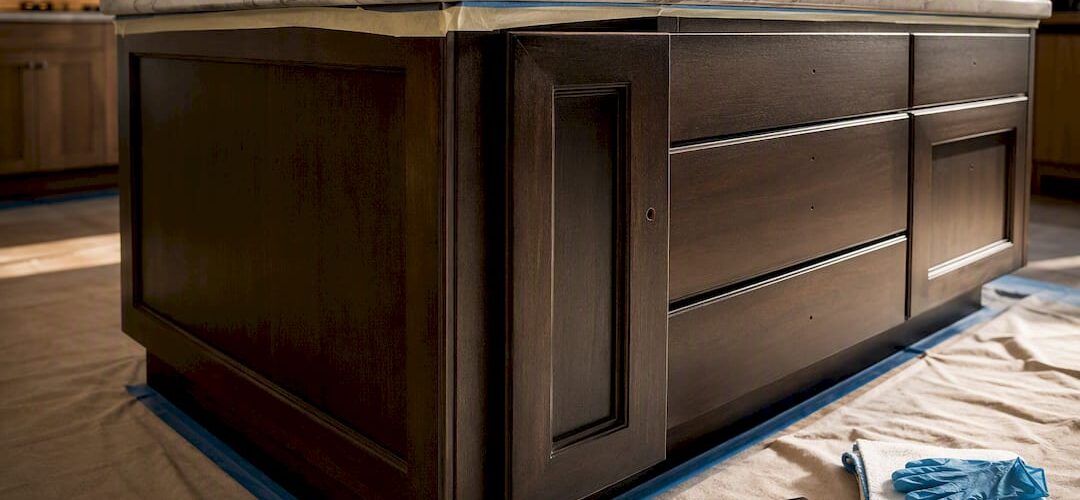
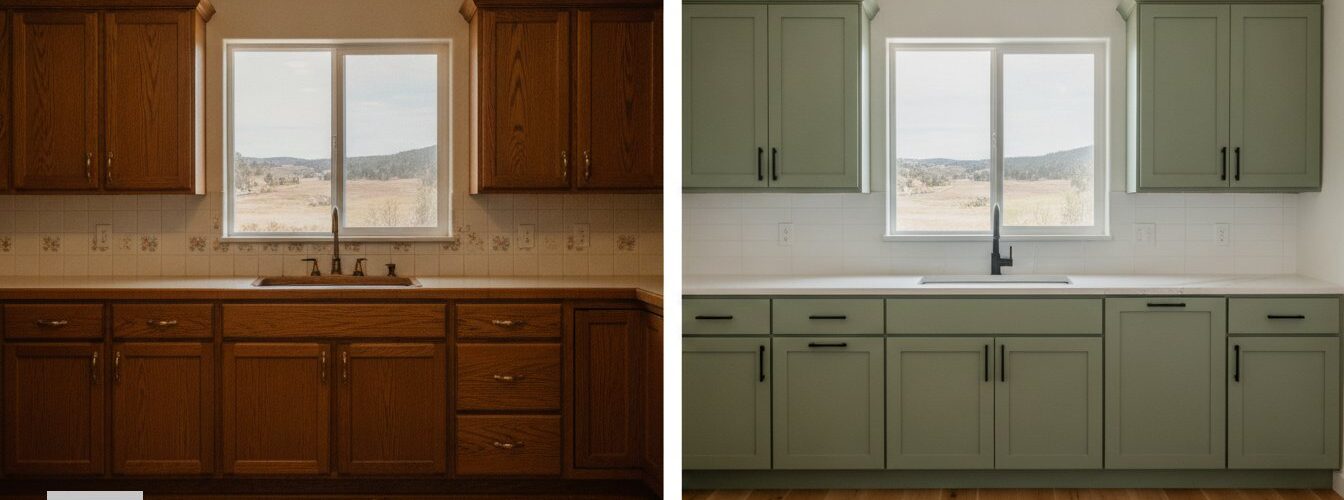

Kitchen cabinets look outdated when their color, finish, and style no longer match current design standards. The three primary causes of dated kitchen design are color choices that clash with modern palettes, decorative details that belong to a past era, and structural wear that no amount of paint can hide. Understanding which factor is driving the problem in your kitchen determines whether you need a fresh coat of paint, new hardware, or a full structural assessment. This guide covers all three, with specific examples and cost comparisons to help you make the right call.
Why kitchen cabinets look outdated: color and finish
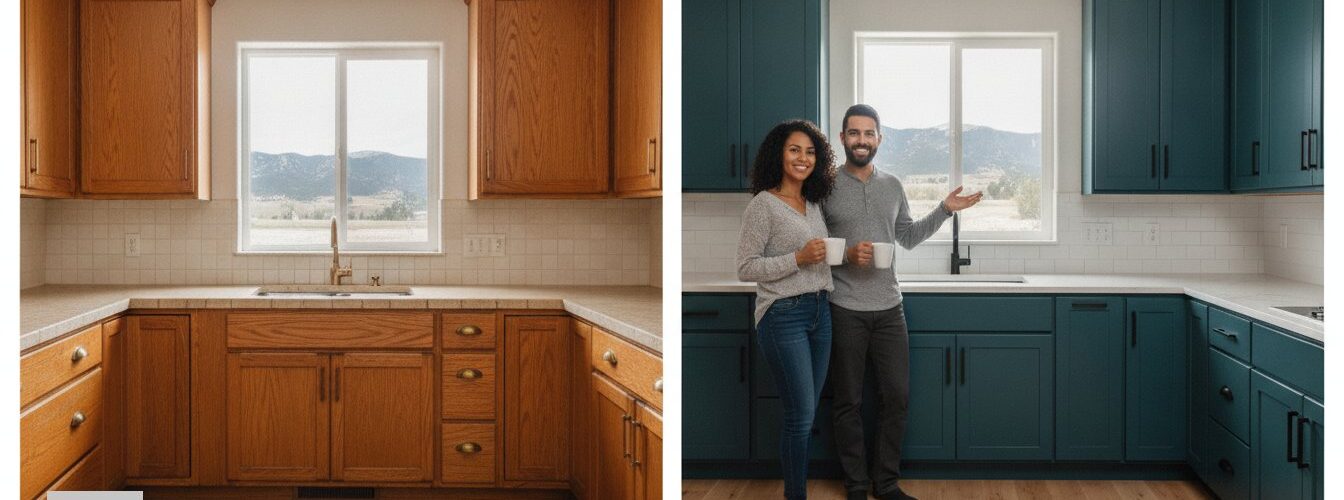
Color is the fastest signal of a dated kitchen. Honey-toned oak and red-based woods like cherry or mahogany are the primary drivers of outdated kitchen aesthetics in 2026. Those warm, orange-leaning tones were everywhere in the 1990s and early 2000s, and they now read as a timestamp rather than a design choice.
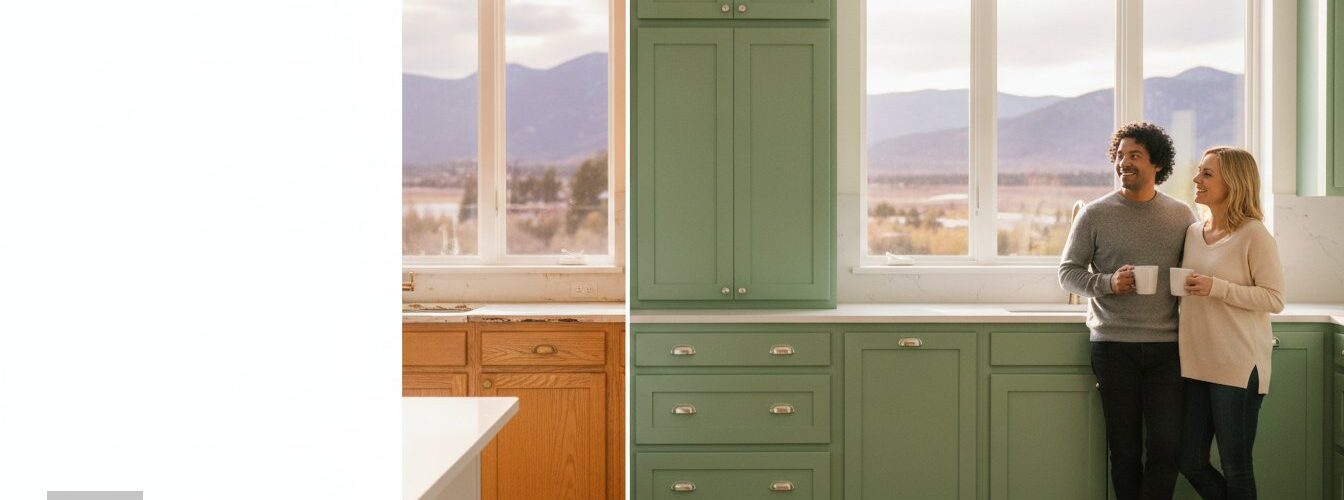
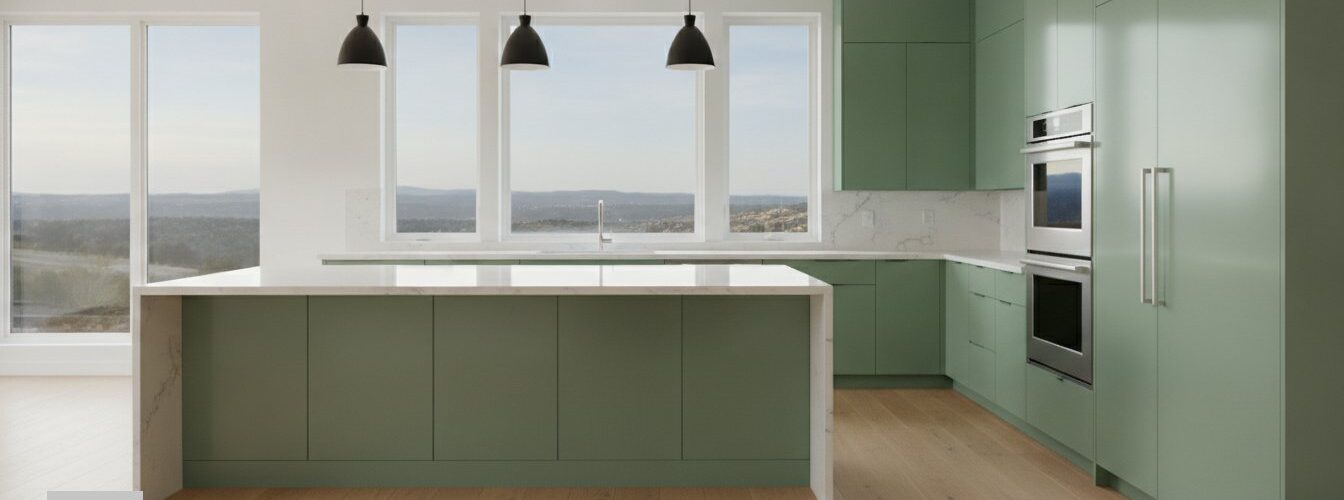
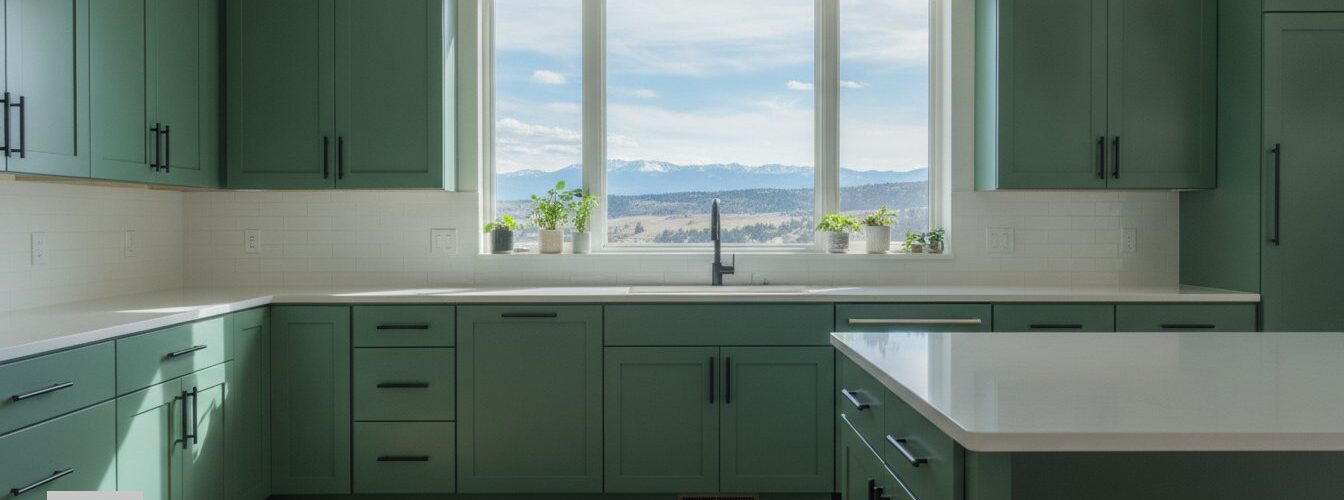
Flat white and flat black have also aged poorly. Both colors strip warmth from a kitchen and create a sterile, unfinished feel. Medium gray, once the dominant neutral of the 2010s, now signals a kitchen that peaked a decade ago. Sage green is becoming oversaturated and viewed as trend-driven rather than timeless. That matters because a color that feels trendy today often feels tired within five years.
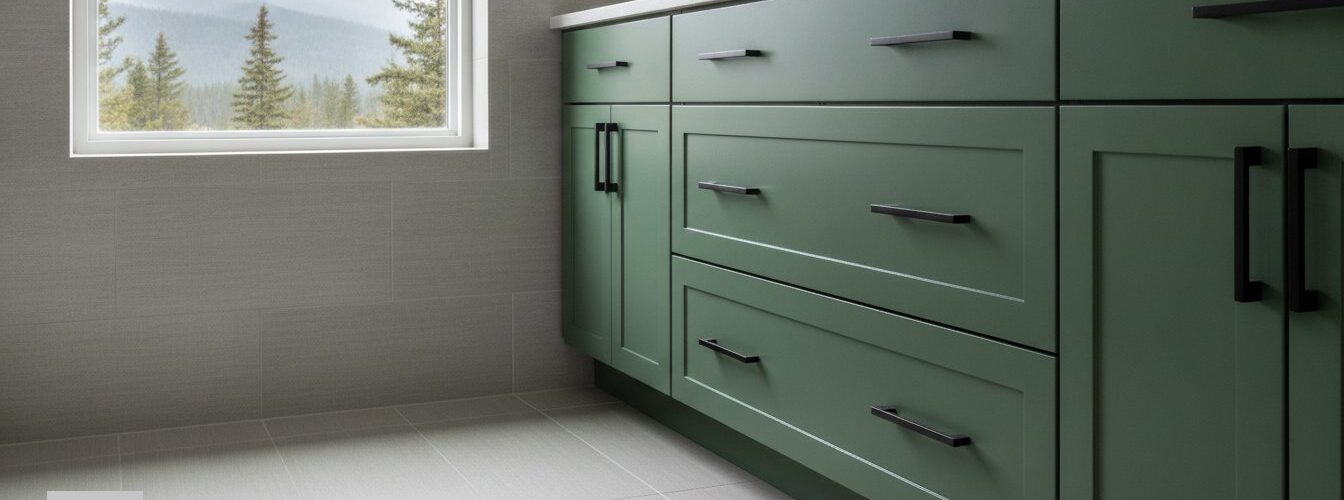
Modern palettes favor depth and warmth without leaning orange. Think warm whites with a slight cream undertone, soft navy, deep forest green, or earthy terracotta. These colors age well because they connect to natural materials rather than a specific design moment.
- Honey-toned oak: reads as 1990s builder-grade
- Cherry and mahogany stains: too red, too formal for modern kitchens
- Flat white: sterile and cold without complementary warm tones
- Medium gray: peaked in 2015, now feels generic
- Oversaturated sage green: trend-driven, not timeless
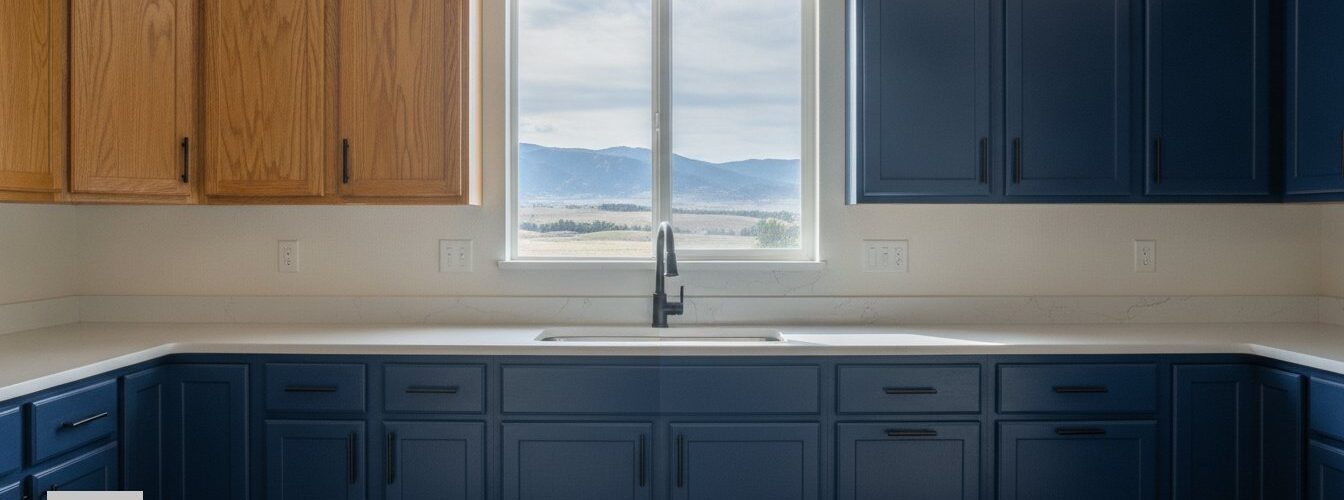
Pro Tip: Designers note that colorful cabinets are the fastest way to add personality to a flat kitchen. If you fear color, start with a deep, saturated lower cabinet paired with a lighter upper. The contrast reads as intentional and current.
How do structural conditions make cabinets look and feel outdated?
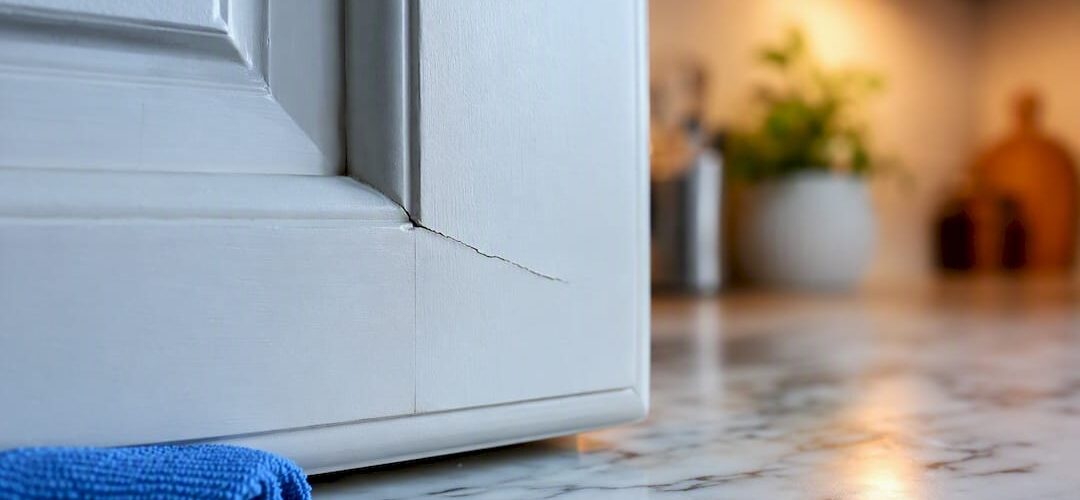
Structural problems are often misread as cosmetic aging. Cabinets pulling away from walls, irreparable water damage, sagging drawers, and failing hardware indicate structural issues that refinishing cannot fix. These problems typically appear after 15–20 years of wear or chronic moisture exposure.
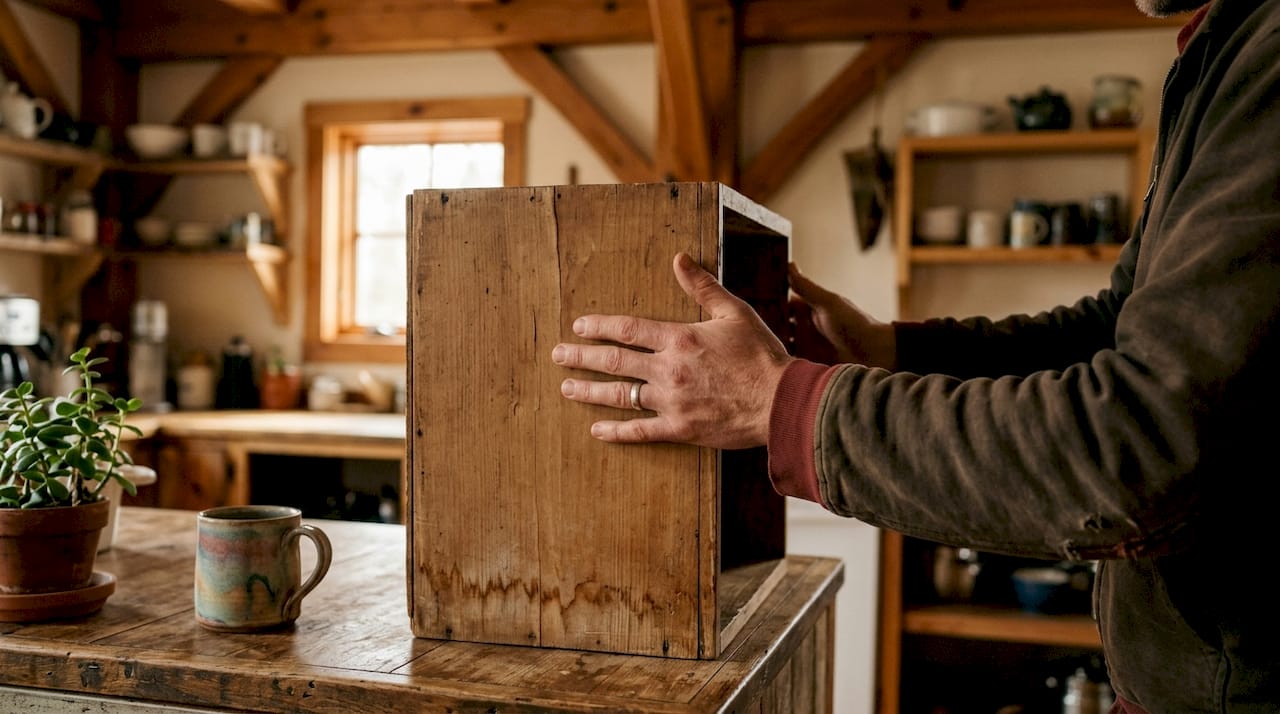
The material your cabinet boxes are made from determines how long they last and what your options are. Plywood and solid wood boxes can be refinished multiple times without losing structural integrity. Particleboard is prone to moisture swelling and irreparable damage. Once particleboard swells, no amount of sanding or painting restores it. MDF falls in a similar category: it handles paint well when dry, but moisture exposure causes it to fail permanently.
Homeowners frequently mistake cosmetic aging for structural failure, and the reverse is also true. A cabinet box that looks rough on the surface may be structurally sound underneath. The test is simple: check the joints, the drawer slides, and the wall anchors. If those hold firm and the material is plywood or solid wood, cosmetic updates are a legitimate option.
Signs that point to replacement, not refinishing
- Cabinet boxes pulling away from the wall at the mounting points
- Drawer bottoms that have swollen, warped, or collapsed
- Door hinges that no longer hold alignment after adjustment
- Visible mold or water staining that has penetrated the box material
- Particleboard or MDF that has swollen and cannot be sanded flat
Pro Tip: Before calling a contractor, open every cabinet door and press firmly on the box sides and bottom. Solid plywood feels rigid. Swollen particleboard feels soft or spongy. That single test tells you whether you are dealing with a cosmetic problem or a structural one.
The decision between repair and replacement mirrors the logic used in exterior home repairs: if the underlying structure is sound, surface restoration delivers strong value. If the structure has failed, surface work is money spent on a problem that will return.
| Material | Lifespan | Refinishable? | Moisture resistance |
|---|---|---|---|
| Plywood | 25+ years | Yes, multiple times | Good |
| Solid wood | 30+ years | Yes, multiple times | Good with proper sealing |
| MDF | 10–15 years | Once, if dry | Poor |
| Particleboard | 8–12 years | Not recommended | Very poor |
What affordable cosmetic updates can modernize outdated cabinets?
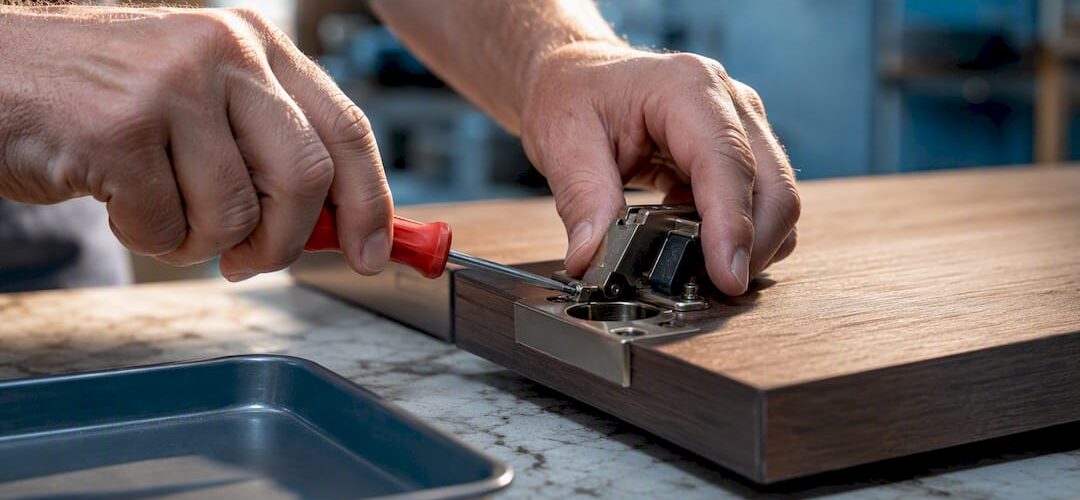
The most cost-effective updates work on the surface without touching the cabinet boxes. Swapping hardware costs under $200 and delivers an immediate visual shift. Replacing brass pulls from the 1980s with matte black or brushed brass bar handles takes less than an afternoon and changes the entire character of a kitchen.
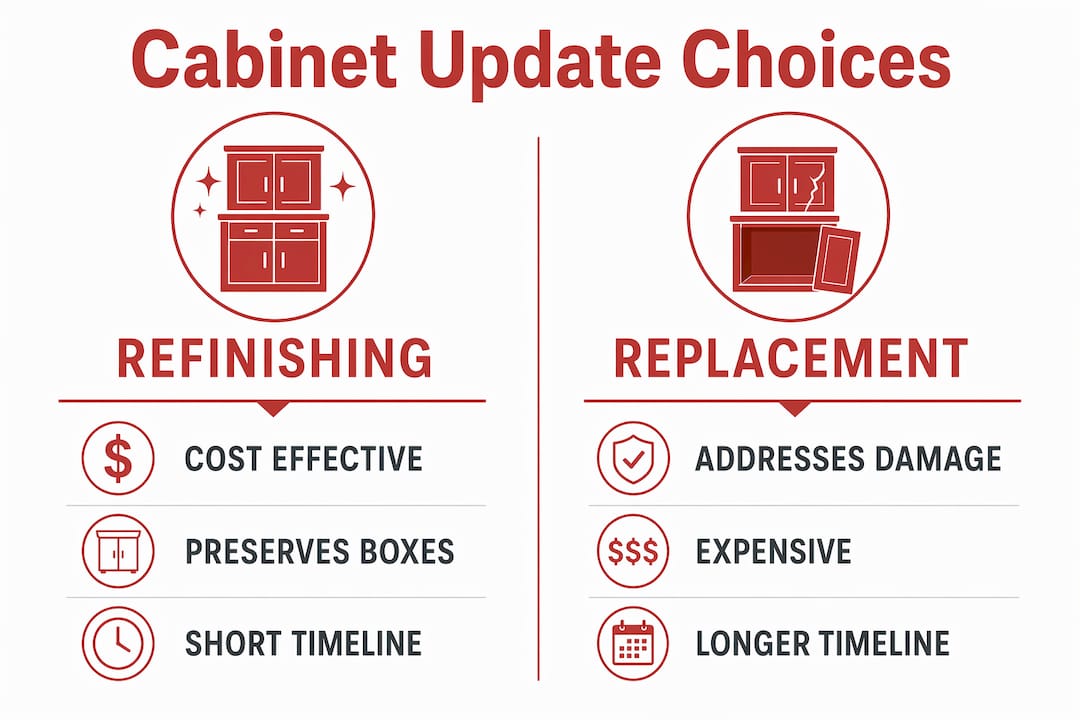
Painting is the next tier. A professional refinishing job runs $3,000–$8,000 and is completed in 3–5 days. A full cabinet replacement costs $15,000–$40,000 and takes weeks. The math strongly favors refinishing when the cabinet boxes are structurally sound.
- Hardware swap: under $200, DIY-friendly, immediate impact
- New cabinet doors: replaces the visual face without touching the boxes
- Professional paint refinishing: $3,000–$8,000, factory-quality finish
- Backsplash update: changes the color relationship around the cabinets
- Under-cabinet lighting: warm 2700K LED bulbs soften old orange tones and reduce harsh visual weight
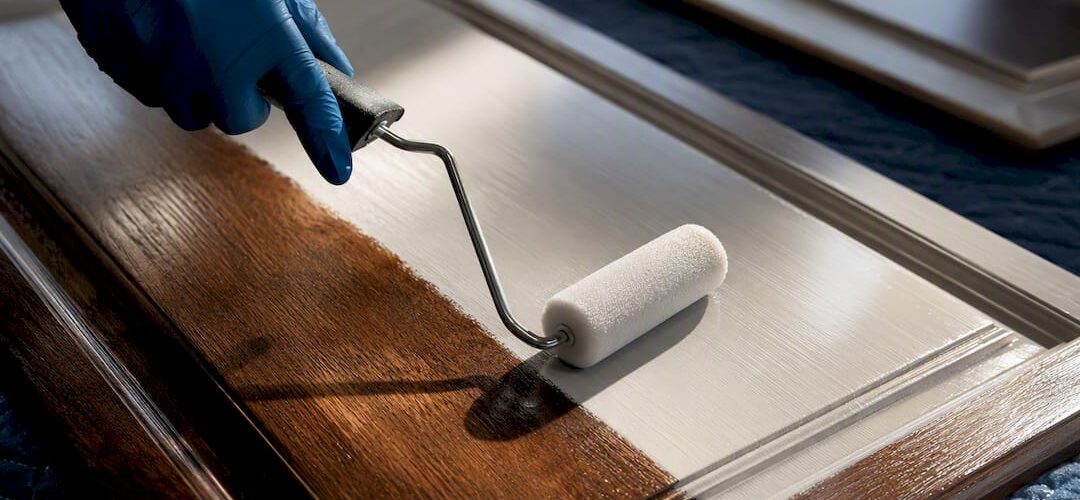
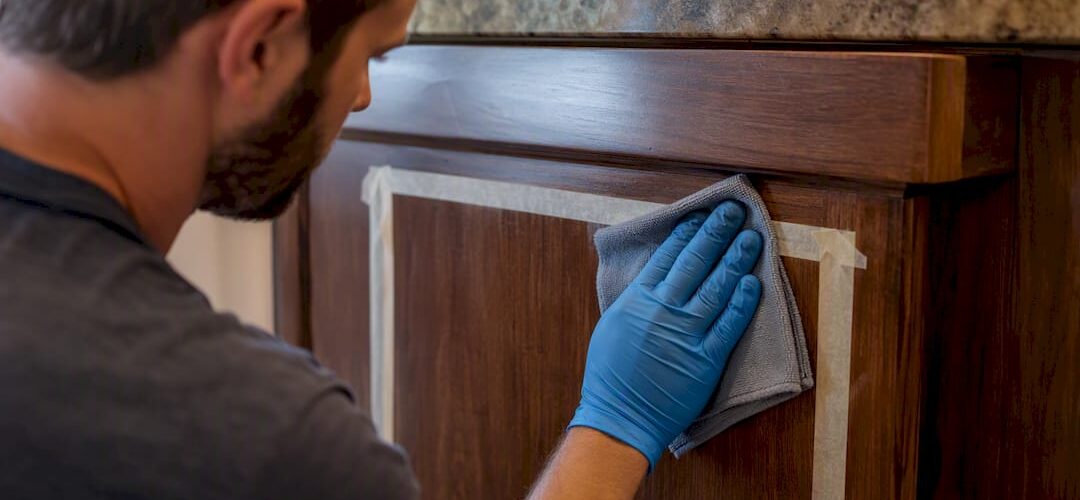
Pro Tip: DIY painters often skip the degreasing step, which causes paint to peel within 6–12 months. Professionals use industrial-grade bonding primers that bond to the existing finish rather than sitting on top of it. If you paint yourself, use a dedicated cabinet degreaser and a shellac-based or bonding primer before any topcoat.
Replacing just the cabinet doors while keeping the boxes is one of the most underused updates in kitchen renovation. Keeping structurally sound boxes while swapping to shaker or slab-style doors delivers a dramatic visual change without demolition or layout disruption. The cost is a fraction of full replacement, and the result looks like a new kitchen.
Lighting changes the perception of cabinet color more than most homeowners expect. Harsh cool-white bulbs make honey-toned wood look more orange and flat white look clinical. Switching to warm ambient LEDs at 2700K softens the entire kitchen without touching a single cabinet.
Which modern cabinet styles help avoid a dated look?
The dominant shift in 2026 cabinet design is toward visual containment. Designers are moving away from open shelving and glass-front cabinets, which create visual clutter and require constant styling. Opaque, minimalist cabinetry reduces cognitive load and looks consistently clean regardless of what is stored inside.
Shaker-style doors remain the most versatile choice. Their simple recessed panel works with traditional, transitional, and modern kitchens. Slab doors, which are completely flat with no frame or panel detail, suit kitchens leaning toward a contemporary or European aesthetic. Both styles avoid the ornate raised-panel profiles that date cabinets most aggressively.
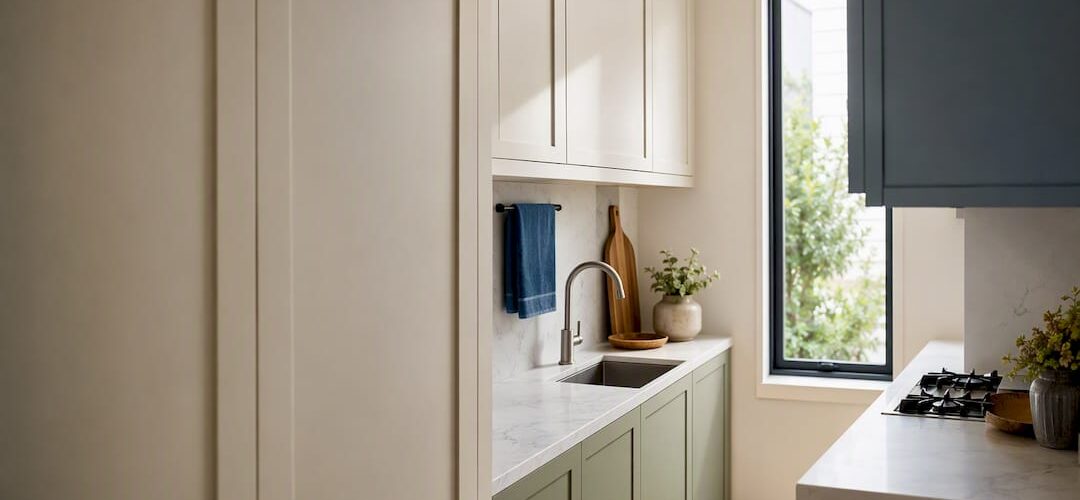
Two-tone cabinetry with lighter uppers and deep saturated lowers remains a strong modern look. The contrast introduces personality without overwhelming the space. Common pairings include warm white uppers with navy or forest green lowers, or cream uppers with a charcoal base.
Crown molding deserves mention as a targeted update. Adding crown to existing cabinet boxes elevates the visual finish of a kitchen without replacing any structure. It closes the gap between the cabinet top and the ceiling, which is one of the most common signs of builder-grade cabinetry.
| Style | Best for | Avoid if |
|---|---|---|
| Shaker | Traditional, transitional, modern | You want ultra-minimal European look |
| Slab | Contemporary, European, minimalist | Your kitchen has ornate trim details |
| Two-tone | Any kitchen needing personality | The color contrast is not intentional |
| Crown molding add-on | Builder-grade boxes needing polish | Ceiling height is already low |
Key takeaways
Outdated kitchen cabinets are almost always fixable without full replacement when the cabinet boxes are structurally sound and the right update is matched to the actual problem.
| Point | Details |
|---|---|
| Color is the top aging signal | Honey oak, red-based woods, flat gray, and oversaturated sage green date cabinets fastest. |
| Structure determines your options | Plywood and solid wood boxes support refinishing; particleboard and MDF usually do not. |
| Hardware swap is the fastest fix | Replacing pulls and knobs costs under $200 and changes the kitchen’s character immediately. |
| Refinishing beats replacement on cost | Professional refinishing runs $3,000–$8,000 versus $15,000–$40,000 for full replacement. |
| Modern styles favor clean lines | Shaker and slab doors with opaque finishes age better than ornate raised-panel profiles. |
What homeowners consistently get wrong about cabinet updates
Most homeowners I talk to have already decided their cabinets need to be replaced before anyone has looked at the boxes. They see peeling paint, worn edges, and dated color, and they assume the whole thing is shot. That assumption costs them tens of thousands of dollars they do not need to spend.
The real question is never “do these cabinets look old?” The question is “are the boxes structurally sound?” If the answer is yes, you have options. A professional refinishing process that includes proper degreasing, bonding primer, and multiple protective topcoats will outlast a DIY paint job by years. I have seen cabinets refinished with factory-grade methods that look better at year five than a DIY job looks at year one.
The other mistake is underestimating how much lighting and hardware affect the perception of cabinet color. I have watched homeowners spend weeks agonizing over paint colors while their under-cabinet lighting was throwing a harsh cool-white cast over everything. Change the bulbs to 2700K warm LEDs first. You will see the cabinet color completely differently, and you may find the update you need costs $40, not $4,000.
The homeowners who get the best results are the ones who treat the assessment as a separate step from the solution. Look at the boxes. Test the hardware. Check the material. Then decide what the problem actually is before spending a dollar.
— Jesse
Cabinetsrefinishing: professional results without the replacement price
Outdated cabinets do not require a full kitchen remodel to look current. Cabinetsrefinishing applies a factory-finish methodology that includes industrial degreasing, bonding primer, and multiple protective layers. Projects are completed in 3–5 days, not weeks.
Refinishing with Cabinetsrefinishing costs $3,000–$8,000, compared to $15,000–$40,000 for full cabinet replacement. That gap funds a new backsplash, lighting upgrade, and hardware swap with money left over. If your cabinet boxes are solid and you want a kitchen update in Denver that holds up for years, a professional refinishing consultation is the right first step. Call or text 720-219-9716 to get a price on your project.
FAQ
What colors make kitchen cabinets look the most outdated?
Honey-toned oak, cherry, mahogany stains, flat white, medium gray, and oversaturated sage green are the colors most associated with dated kitchens in 2026. These shades either reference a specific past decade or have been overused to the point of feeling generic.
Can you refinish cabinets made from particleboard?
Particleboard cabinets are generally not good candidates for refinishing. Particleboard swells with moisture exposure and cannot be sanded flat once damaged, making any surface update temporary at best.
How long does professional cabinet refinishing take?
Professional cabinet refinishing typically takes 3–5 days from start to finish. That compares to several weeks for a full cabinet replacement, with significantly lower cost and no demolition required.
Is replacing just the cabinet doors worth it?
Replacing cabinet doors while keeping structurally sound boxes is one of the most cost-effective kitchen updates available. It delivers a dramatic visual change without touching the layout or the cabinet frames.
Does lighting really affect how cabinets look?
Warm 2700K LED bulbs soften orange-toned wood and reduce the harshness of flat white cabinets. Switching from cool-white to warm ambient lighting can change the perceived color of your cabinets without any paint or refinishing work.
Recommended
- Modernizing Kitchen Cabinets on a Budget: The Denver Homeowner’s Guide to High-End Results
- Why Cabinets Are the Kitchen Focal Point – Cabinet Refinishing and Cabinet Painting Denver 720-219-9716
- Smart cabinet finishing solutions for outdated kitchenscalll
- Updating 90s Oak Cabinets: Professional Refinishing Secrets for Denver Homeowners – Cabinet Refinishing and Cabinet Painting Denver 720-219-9716