

Why Durable Cabinet Refinishing Matters In Real Kitchens
In a showroom, any cabinet finish looks good. In a real residential kitchen, cabinets take daily abuse: greasy hands, steam, kids’ homework, dog paws, tenants slamming doors, and constant cleaning. If the finish is not engineered for durability, it will chip, peel, and yellow long before its time.
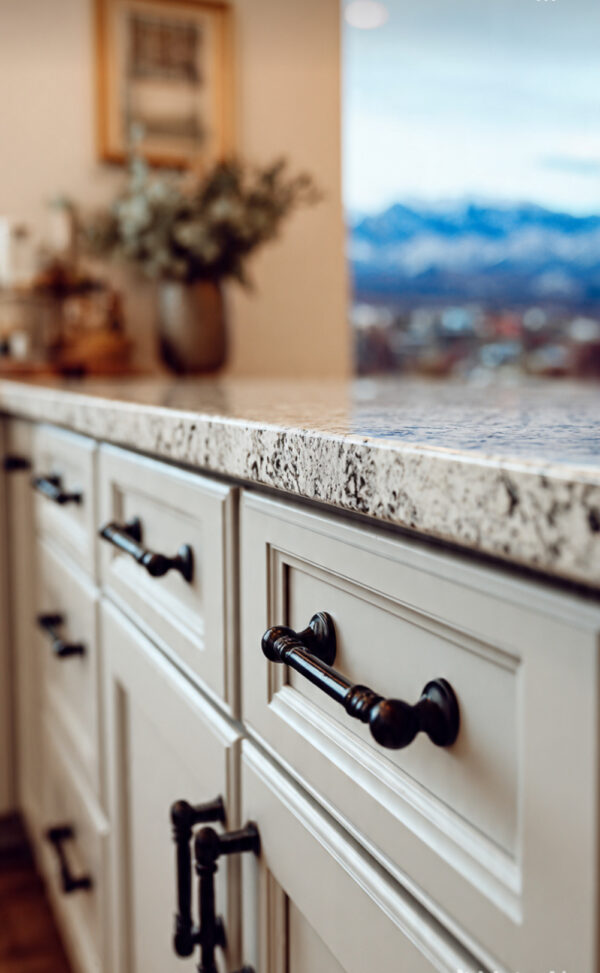
Cabinet painting and refinishing Denver CO
My Review of Graco FFLP Tips for Spraying Cabinets
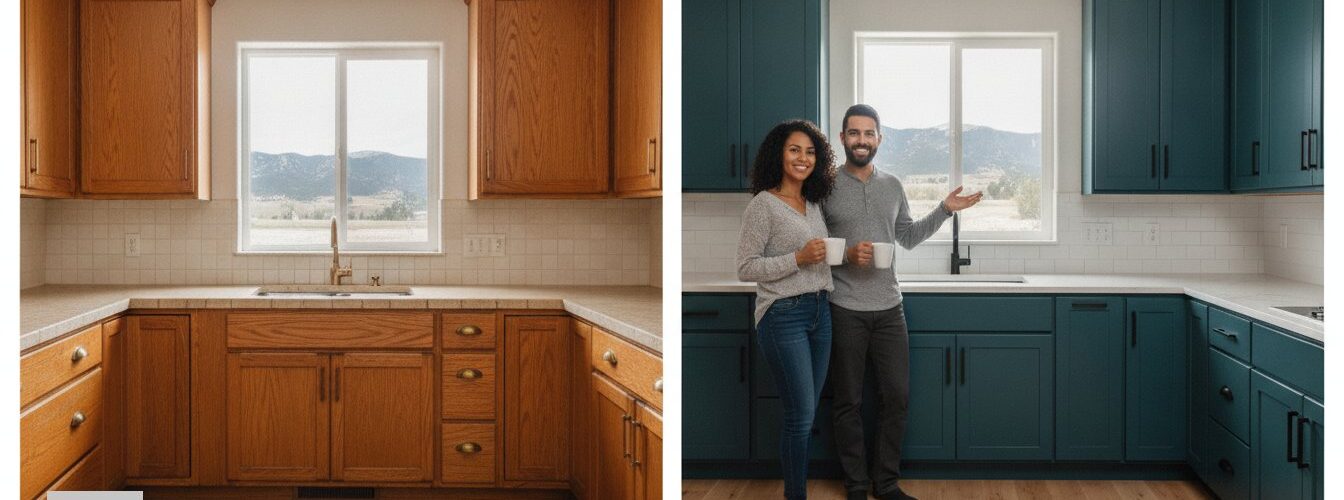
For homeowners, investors, and contractors in the Denver metro area, durable cabinet refinishing is one of the highest ROI upgrades available. It can refresh a dated kitchen for a fraction of full replacement, without changing layout or countertops. The key is treating cabinets like a high‑traffic surface, not a simple paint job.
Cabinet Painting Service Areas in Denver & Surrounding Cities, Cabinet Refinishing in Denver County,
Serving Lakewood, CO, Littleton, CO, Golden, CO, Evergreen CO, Roxborough Park CO, Ken Carl Ranch CO,
Arvada, CO, Wheat Ridge, CO,
and Parker CO. Castle Pines CO. Englewood CO. Centennial CO.
Cabinet Painting in Arapahoe County, CO
Including Centennial, CO, Greenwood Village, CO,
Cherry Hills Village, CO, Englewood, CO,
and Aurora, CO.
Cabinet Painting in Adams County & Broomfield, CO
This guide breaks down the materials, prep, and techniques that create long‑lasting results, plus how to choose between DIY and professional refinishing for residential kitchens in Denver and similar climates.
What “Durable” Really Means For Kitchen Cabinet Finishes
Durability is more than “looks good after painting.” For residential kitchens, a durable cabinet refinishing system must handle several stress factors.
Everyday Wear In Residential Kitchens
A high performance finish should resist:
- Repeated touching at pulls and edges
- Cleaning with mild detergents or degreasers
- Heat and moisture from dishwashers, ovens, and sinks
- Impact from dishes, pans, and vacuum handles
- UV exposure in sunny kitchens that causes yellowing and fading
For rentals and flips, add tenant turnover and rougher use. Property managers often report that poorly finished cabinets show visible wear within 6 to 12 months, especially around garbage pull‑outs and under the sink.
Performance Benchmarks To Aim For
Look for or ask about:
- Stain resistance tests, especially against kitchen grease and coffee
- Block resistance, so doors do not stick to face frames when closed
- Hardness ratings, often measured by pencil hardness tests
- Moisture resistance, especially critical in Denver where indoor humidity can swing seasonally
Key Takeaway: A truly durable cabinet refinish behaves more like a factory finish on new cabinetry, not like standard wall paint that just happens to be on doors.
Choosing The Right Products For Long‑Lasting Cabinet Refinishing
Product choice is where many DIY and low‑bid jobs fall apart. Cabinets need a system: cleaner or deglosser, bonding primer, and a robust topcoat that are all compatible.
Comparing Common Cabinet Finish Options
| Finish Type | Pros | Cons / Risks | Best For |
|---|---|---|---|
| Regular wall latex paint | Easy to find, low cost | Soft, chips easily, not designed for cabinets | Never recommended for cabinets |
| Acrylic enamel cabinet paints | Good hardness, non‑yellowing, water clean‑up | Prep sensitive, needs correct primer | Homeowners, light to medium use |
| 2K urethane or catalyzed coatings | Very hard, chemical and scratch resistant | Complex, strong fumes, pro equipment needed | High‑traffic kitchens, rentals, flips |
| Oil‑based enamels | Smooth leveling, durable once cured | Yellows over time, odor, regulations in some areas | Limited, specialty restoration |
For a deeper dive into specific material systems and application tools, see the detailed guidance in Cabinet Refinishing Denver Materials And Techniques For Kitchen Cabinet Projects.
Primers And Bonding Systems
The primer is as important as the topcoat. Look for:
- Dedicated bonding primers formulated for slick, factory‑finished cabinets
- Stain blocking capability to stop tannin bleed in oak or cherry
- Manufacturer approval for use under your chosen topcoat
If you are hiring, ask your contractor which specific primer and topcoat system they use, and whether they follow the manufacturer’s full spec. Cheap substitutions often show up as peeling, especially around handles and near the sink.
Surface Preparation: The Non‑Negotiable Foundation Of Durability
The best coating will fail if it sits on top of grease, silicone, or a glossy factory finish that has not been properly broken down.
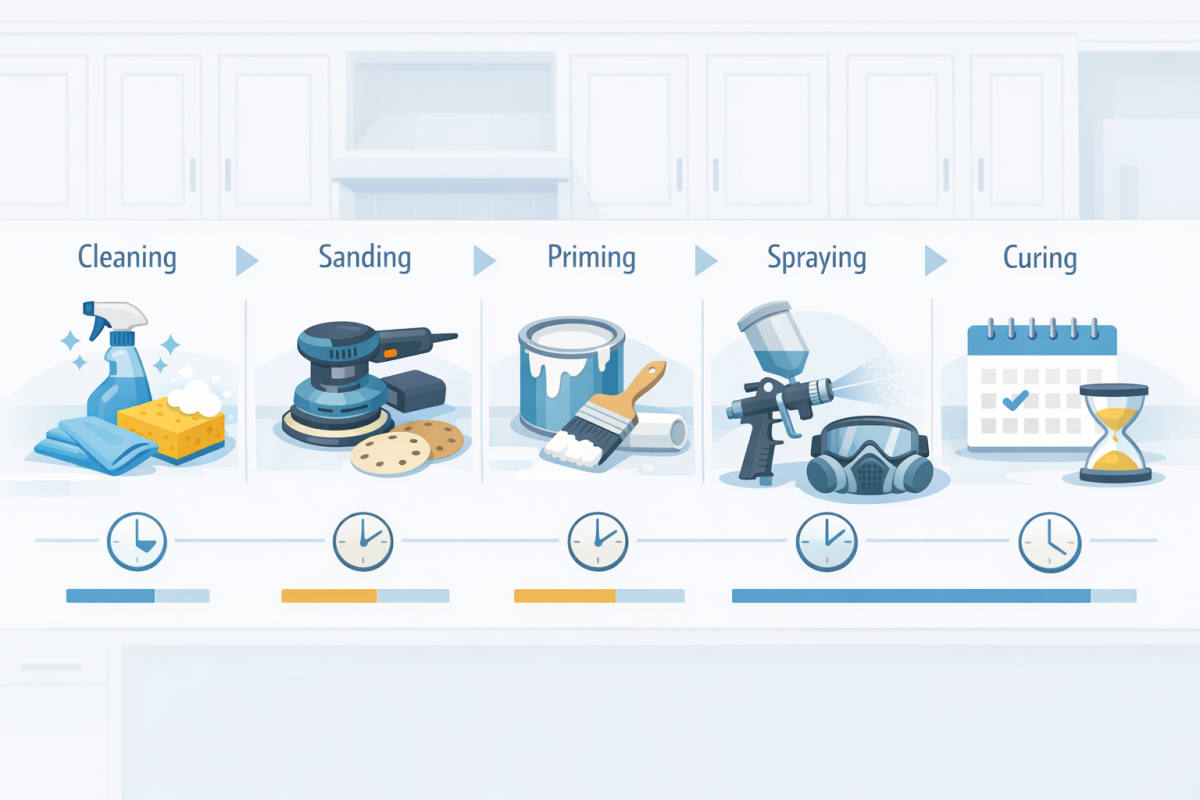
Deep Cleaning And De‑Greasing
Steps that should never be skipped:
- Scrub all cabinet surfaces with a high quality degreaser, especially above the range and near pulls and knobs
- Rinse thoroughly to remove cleaner residue that can interfere with adhesion
- Remove or neutralize any silicone contamination from polishes or caulks
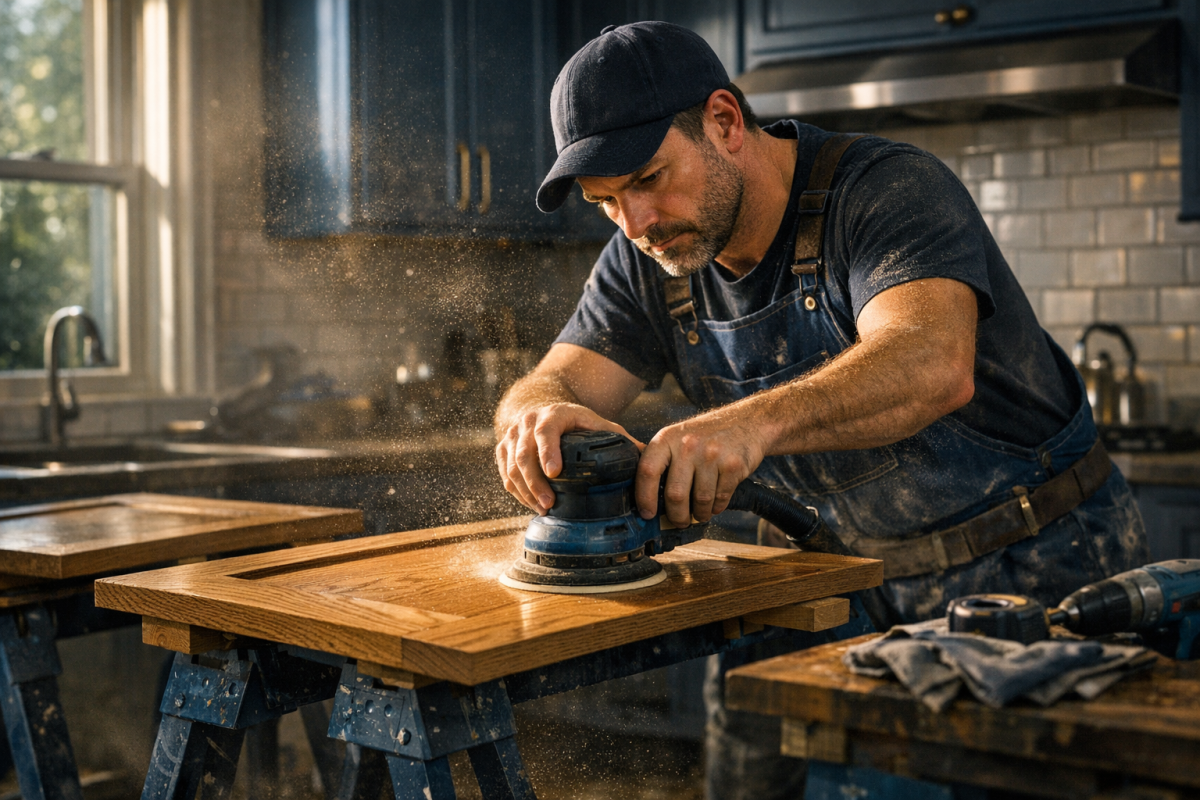
Sanding And Mechanical Profile
Even with a strong bonding primer, a light mechanical profile improves adhesion:
- Scuff sand factory finishes with 180 to 220 grit sandpaper or sanding sponges
- Sanding should dull all sheen, including profiles and edges
- Vacuum and tack cloth dust before priming
Pro Tip: If your cloth still picks up any oily residue after sanding, repeat the degreasing step before you open any primer. Contamination at this stage will telegraph through even expensive coatings.
Repairs And Caulking
Quality refinishing also addresses:
- Filling door dings, hardware dents, and minor veneer damage
- Tightening loose hinges and adjusting misaligned doors
- Caulking gaps at crown or light rail that will be painted
This prep work is where professional cabinet refinishing teams in Denver often outperform general painting crews that are more used to walls and trim. You can see more about process standards in Cabinet Refinishing Kitchen Cabinet Painting Denver.
Application Methods That Maximize Durability And Appearance
Once surfaces are clean, bonded, and primed, application technique determines how the finish wears and looks over time.
Spraying Vs Brushing And Rolling
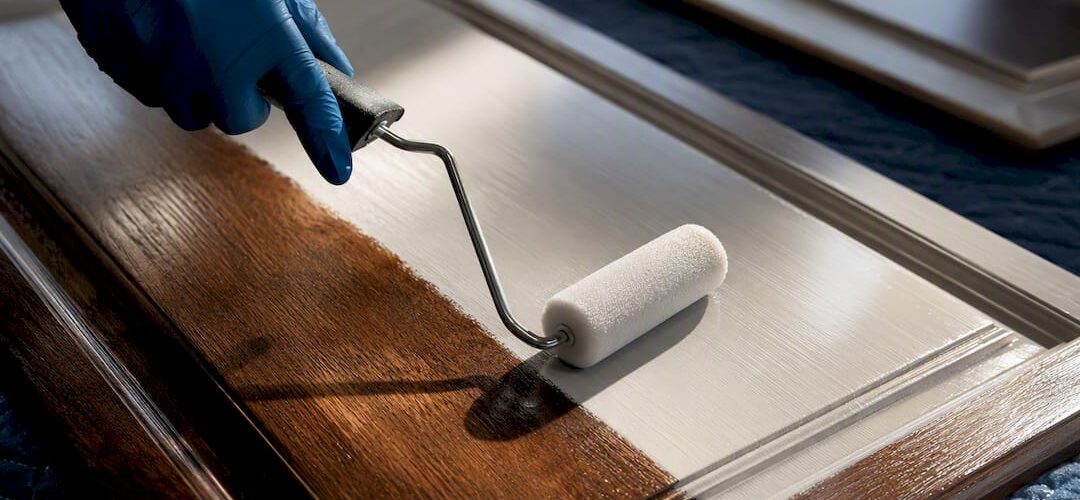
- Spraying with a fine finish sprayer produces a smoother, factory‑like finish that is easier to clean and less likely to show brush marks and lint
- Brushing and rolling can be successful with high quality enamel and foam rollers, but typically result in more texture
- For high value homes and flips, most pros in the Denver market prefer sprayed finishes for both durability and resale appearance
Film Build And Coat Count
Durability depends on achieving the correct dry film thickness:
- At least one coat of quality bonding primer, often two for oak or heavily used kitchens
- Two finish coats, sometimes three for white tones over dark wood
- Adequate dry time between coats, adjusted for Denver’s elevation and lower humidity
Thin coats that are rushed between recoat windows can lead to soft finishes that never fully cure.
Curing Time And Early Use
Most cabinet coatings are dry to the touch within hours, but full cure can take 7 to 30 days depending on product and conditions. During this period:
- Avoid hanging heavy bags from knobs
- Use gentle cleaning only when necessary
- Open doors from the edges instead of freshly coated hardware areas
Special Considerations For Denver Homes, Rentals, And Flips
The Denver metro area has climate and market factors that affect cabinet refinishing choices.
Climate And Environmental Factors
- Lower humidity generally helps coatings cure harder and faster, but rapid drying can cause lap marks and roughness if not managed
- Strong sunlight at elevation can accelerate yellowing of oil products and fading of low quality whites
- Seasonal indoor humidity swings can move doors, which exposes weak finishes at edges and hinge areas
Professionals who specialize in Cabinet Refinishing Cabinet Painting Services Denver Co Golden Co Arvada Co Kitchen Cabinet Painting adjust products and schedules to these conditions.
Different Needs By Property Type
- Owner‑occupied homes: Often prioritize smooth, custom colors and non‑yellowing finishes, with special attention to detail around crown, glass doors, and islands.
- Rental properties and multi‑unit buildings: Need maximum hardness and cleanability. A 2K urethane or similar pro‑grade system is usually worth the investment versus standard cabinet paint.
- Flips: Need fast turnaround and a finish that photographs well and survives the first few years. Proper prep with an efficient spray system is crucial to avoid callbacks or inspection issues.
- Designer‑led projects: Often involve satin or matte sheens to minimize imperfections. These finishes require particularly good surface prep to avoid telegraphing grain and patches.
Important: For multi‑unit projects, insist on using the same product system and sheen across units. Mixing materials to cut costs is a common cause of inconsistent wear and warranty issues.
Maintenance Habits That Extend Cabinet Finish Life
Once your cabinets are professionally refinished, simple habits can significantly extend the life of the finish.
Cleaning Best Practices
- Use mild, non‑abrasive cleaners and soft cloths or sponges
- Avoid scouring pads, magic erasers, or gritty cleansers that act like sandpaper
- Wipe spills and splatters promptly, especially tomato sauce, wine, and strong dyes
- Do not soak edges or hinge areas with water
Hardware And Daily Use
- Consider adding soft‑close hinges and dampers to reduce door slamming
- Use pulls and knobs instead of grabbing door edges with greasy hands
- Add bumpers to doors and drawers if they are missing, to prevent finish‑to‑finish impact
Periodic Inspection
Twice a year, quickly inspect:
- Under‑sink cabinets for moisture issues or leaks
- Doors near the range and dishwasher for early wear
- High traffic drawers near the trash and silverware
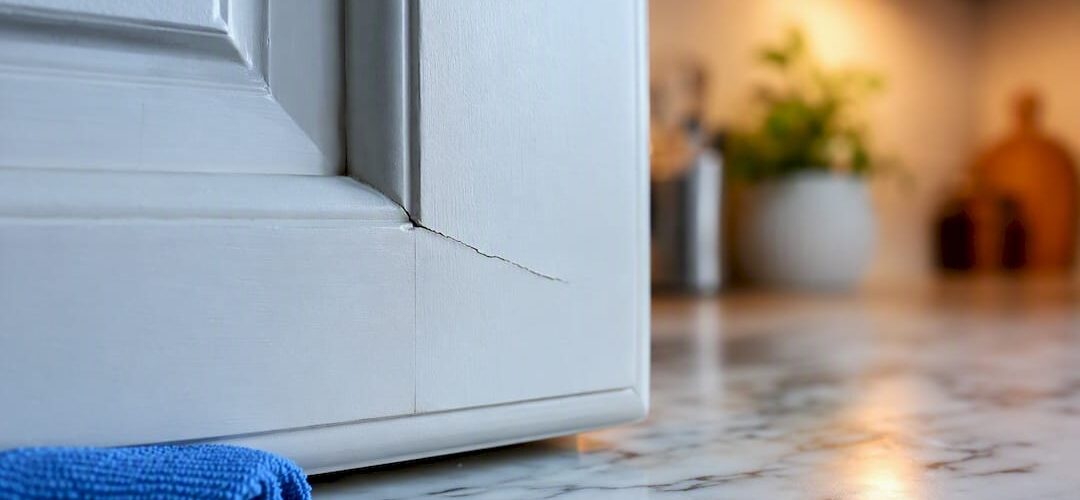
Addressing small chips or wear early prevents moisture intrusion that can lead to larger failures.
When To Hire Professionals Vs Attempt DIY
Durable cabinet refinishing is possible as a DIY project, but it requires time, space, and attention to detail that many homeowners, investors, and managers do not have.
DIY Is More Realistic When
- You have an isolated workspace where doors can cure undisturbed
- You are comfortable with thorough sanding, masking, and multiple steps
- You are finishing a lower value rental where absolute perfection is not required
Professional Refinishing Makes Sense When
- The kitchen is a primary selling feature for a home or flip
- You want a sprayed, factory‑grade appearance with high durability
- You cannot afford a learning curve that might require redoing the project
- You manage multiple units and need consistent, repeatable results
A specialized service like Cabinet Refinishing Denver brings dedicated equipment, pro‑grade coatings, and a proven process that has been refined on many kitchens in the Denver metro area. If durability and resale value are priorities, this usually produces a better long term outcome than experimenting with off‑the‑shelf products.
Ready To Upgrade? How Cabinet Refinishing Denver Can Help
If your goal is durable cabinet refinishing for a residential kitchen in Denver, Golden, Arvada, or nearby, partnering with specialists matters more than picking a trendy color.
Cabinet Refinishing Denver focuses specifically on kitchen cabinet projects, which means:
- Product systems selected for high traffic, family and tenant use
- Process control from degreasing through curing, tailored to Colorado’s climate
- Sprayed finishes that look and perform like new factory cabinetry
- Experience with single family homes, rentals, flips, and multi‑unit buildings
You can explore their approach, materials, and project gallery at https://cabinetsrefinishing.com.
Learn how their team can design a refinishing plan that matches how your kitchen is actually used, not just how it looks on day one.
Call to action: Visit Cabinet Refinishing Denver and learn more about creating a durable, long‑lasting finish for your next kitchen project.
Frequently Asked Questions
How long does a professionally refinished cabinet finish last in a busy kitchen?
With proper prep, quality primer and topcoat, and normal maintenance, a professionally refinished cabinet system in a residential kitchen typically lasts 10 to 15 years before it needs more than minor touch‑ups. High traffic rentals may see cosmetic wear sooner, but good products and hardware upgrades usually keep cabinets presentable through multiple tenant cycles.
Can I just use regular wall paint on my kitchen cabinets to save money?
You can, but it is almost never a good idea if durability is the goal. Wall paints are softer and formulated for low contact vertical surfaces. On cabinets, they tend to chip at edges, wear through around pulls, and burnish or stain when cleaned. Any upfront savings are usually lost when you have to repaint or strip and refinish properly within a year or two.
How long before I can use my kitchen after cabinet refinishing?
Most professional systems allow light use within 24 to 48 hours, once coatings are dry to the touch and handles are reinstalled. However, full cure can take 7 to 30 days. During this cure window, you should handle doors gently, avoid heavy cleaning or strong chemicals, and not hang bags from knobs. Your contractor should give product‑specific guidelines based on temperature and humidity.
Is spraying always better than brushing and rolling for cabinet durability?
Spraying is not inherently stronger, but it usually produces a smoother, more uniform film. This smoother surface tends to clean better and show less wear. Durability mostly comes from surface prep and the coating system itself. High quality enamel that is brushed and rolled carefully can perform well, but residential and investor clients usually prefer the sprayed, factory‑like look for kitchens.
Will refinishing hide heavy oak grain or existing damage?
Standard refinishing will soften grain appearance but will not completely hide deep oak grain or prior damage. To significantly reduce visible grain, additional grain filling, sanding, and sometimes multiple primer coats are required. Existing dents and chips need to be filled and sanded. A professional refinisher should review these expectations in person and price additional prep if a smoother, furniture‑like finish is desired.