
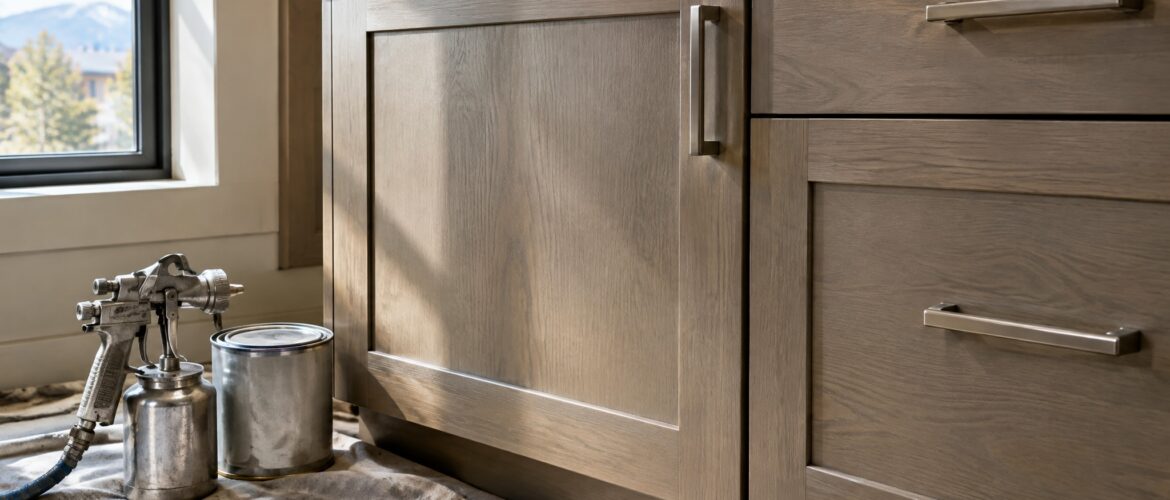
Finding the best cabinet refinishing company in Denver means looking past polished marketing photos and understanding the chemistry and equipment actually touching your wood. A real factory finish costs what it costs because of industrial-grade materials and spray technology that brushed paint can’t replicate. Warranty terms and verified reviews tell you whether a contractor stands behind the work once the crew leaves. You need a shop that knows Colorado’s dry climate demands specific prep and coating systems, or the finish fails early.
Factory Finish vs. Brushed Paint: What Defines the Best Cabinet Refinishing Company in Denver
The gap between a professional refinish and a standard paint job comes down to application method and material science. Cabinet Refinishing Denver has operated since 1979, spraying factory finishes with HVLP equipment and crosslinking urethane lacquer instead of brushing on paint. That technical difference is what separates a durable restoration from a cosmetic fix that fails within months.
Why HVLP Spray Equipment Matters for Durability
High Volume Low Pressure spray technology atomizes coating into a fine mist that settles evenly across vertical surfaces without running or sagging. Brushes and rollers leave ridges, streaks, and embedded bristles that hurt both looks and adhesion over time. Your cabinets need a glass-smooth surface, and only pressurized atomization delivers that consistently across dozens of doors and drawer fronts.
Crosslinking Urethane Lacquer vs. Standard Paint
Standard latex or acrylic paints stay thermoplastic. That means they soften under heat and moisture near stoves and dishwashers. Crosslinking urethane lacquer cures chemically into an irreversible molecular bond, producing a hard shell that resists hot pans, steam, and cleaning chemicals. This two-component system is nothing like single-stage wall paint, which is why professional results last decades instead of years.
Precat primers with acid catalysts strengthen that bond further by etching into existing finishes and raw wood at the same time. Skip that chemical bridge, and even the best topcoat eventually peels off oily or previously varnished surfaces.
Cabinet Refinishing Cost vs. Replacement: Understanding the Value Proposition
Budget drives most renovation decisions, but comparing quotes means understanding what each option actually delivers. Professional refinishing typically saves homeowners about 70% compared to a $25,000+ full cabinet replacement job. That savings comes from keeping your existing solid wood boxes and frames and replacing only the visible finish layer.
Typical Savings Compared to $25,000+ Replacements
Full replacement costs stack up fast: demolition, disposal, new cabinetry, installation labor, countertop adjustments, often plumbing or electrical work too. Refinishing cuts nearly all of that out because your existing infrastructure stays put. You keep the storage layout you already use and change the look for a fraction of the tear-out price.
Factors Influencing Your Specific Quote
Kitchen size, door count, glazing complexity, and any repairs needed all move the final price. For a precise breakdown of what affects your project, check our detailed cabinet refinishing cost breakdown before scheduling an estimate. Glazing adds hand-applied layers that take more labor time, and structural repairs on water-damaged boxes need carpentry before finishing even starts.
No shop worth hiring gives you a binding number without seeing the space. Hidden damage or an unusual layout can change the scope fast.
Evaluating Warranty Coverage and Service Guarantees
Warranty length tells you more about contractor confidence than any sales pitch. The shop backs its refinishing work with a 3-year warranty and a 2-5 day turnaround for most projects. That combination of protection and speed reflects four decades of doing this specific work.
What a 3-Year Warranty Actually Covers
A warranty worth having covers adhesion failure, peeling, cracking, and yellowing under normal residential use. It should spell out exclusions, like damage from abuse, harsh cleaning agents, or unauthorized modifications, instead of hiding behind vague “defects” language. Read it carefully and confirm it protects against the failure modes that actually show up in kitchens.
Turnaround Time Expectations: 2-5 Days
A long kitchen shutdown disrupts your household more than it costs you in dollars. Crews that control their environment and use fast-cure chemistry can spray, cure, and reinstall inside a single work week. Expect clear word on daily milestones and a completion date the shop can actually hit.
Delays happen. The shops worth hiring build contingency into the schedule instead of making promises they can’t keep.
How to Vet Reviews and Credentials for Denver Refinishers
Online reputation matters, but verifying it takes more than glancing at star ratings. Homeowners can check trusted local businesses through the BBB Directory of Cabinet Refinishing near Denver, CO, which lists accredited ratings and customer review histories. That third-party check catches the operators who disappear after collecting a deposit.
Checking BBB Accreditation and Licensing
Accreditation means a business has shown it resolves complaints and operates transparently over time. Confirm active state licensing and current liability insurance directly with the issuing authorities, not just a badge on a website. An uninsured contractor leaves you exposed if a worker gets hurt on your property or chemicals damage your kitchen during the job.
Reading Beyond Star Ratings for Process Details
A five-star review praising politeness tells you nothing about how the finish holds up. Look for mentions of specific techniques, like spray application, primer type, or updates on performance years later. Photos of smooth, orange-peel-free surfaces tell you more than compliments about punctuality, because they document actual craftsmanship.
A review describing how the finish held up after two or three years of cooking carries more weight than praise written the week the job finished.
Refinishing vs. Resurfacing: Choosing the Right Restoration Method
Refinishing keeps your existing wood and applies new color and protective coating directly onto it. Resurfacing replaces door and drawer fronts entirely, or glues veneers over the existing faces, without touching the structure underneath. The two methods fit different needs and budgets.
Refinishing suits solid wood cabinets in good shape, where the goal is a new color or sheen without changing dimensions. Resurfacing makes sense when the doors are too damaged to save or you want a different door style altogether. Neither method fixes a structurally compromised box, so check frame integrity before picking either path.
The decision comes down to whether the problem is cosmetic wear or actual physical damage.
Achieving Durable Results in Colorado’s Dry Climate
Denver’s low humidity makes wood shrink seasonally, which stresses any coating applied without accounting for that. A finish that holds up fine in coastal humidity will crack and peel here, because it can’t flex through Denver’s contraction cycles. Local experience with how wood moves in this climate isn’t optional if you want results that last.
Preventing Peeling and Cracking
Flexible crosslinking polymers expand and contract with seasonal moisture changes without losing their grip. Rigid paints built for stable indoor environments can’t handle the dimensional shifts Colorado wood goes through every year, so they fail. Get the material wrong and you’re looking at callbacks within eighteen months.
Proper Prep Work for Long-Term Adhesion
Cleaning has to strip out decades of cooking grease, wax buildup, and silicone residue that blocks the coating from penetrating. Mechanical abrasion creates microscopic tooth for the chemical primers to grip. Skip thorough degreasing, and the topcoat fails no matter how good it is, because contamination keeps the finish from ever making real contact with the wood underneath.
You can view our recent refinishing project photos to see how proper prep turns into a flawless final result across different wood species and starting conditions.
Next Steps for Your Kitchen Transformation
Now you’ve got criteria for judging factory finish cost, warranty coverage, and real credentials, so you can tell a qualified pro from a general painter. The next step is getting eyes on your specific kitchen, because no article replaces an onsite look at wood species, existing finish, and structural condition.
We serve homeowners throughout the metro area, including spray finish specialists serving Aurora and the surrounding communities. Every kitchen has its own quirks, and only an in-person evaluation catches them.
Schedule your in-home estimate to get a firm quote based on your actual cabinet layout and the outcome you want.
Frequently Asked Questions
What is the most durable kitchen cabinet finish?
Crosslinking urethane lacquer provides superior durability because it chemically cures into a hard, heat-resistant shell that withstands steam and cleaning chemicals. Two-component systems outperform single-stage paints by forming irreversible molecular bonds that resist softening near dishwashers and stoves. Precat primers enhance adhesion to prevent delamination over decades of use.
What is the difference between refinishing and resurfacing cabinets?
Refinishing applies new coatings directly to existing wood surfaces while preserving original doors and frames. Resurfacing replaces door fronts entirely or adheres new veneer sheets over existing faces without treating the underlying structure. Choose refinishing for cosmetic updates on sound wood; choose resurfacing when doors are damaged or style changes are desired.
How much do restaining cabinets cost?
Restaining typically costs less than painting because it requires fewer coating layers and no opaque primer coverage. Pricing varies based on wood species, existing finish removal difficulty, and whether grain filling is needed for smooth results. Expect restaining to fall at the lower end of refinishing price ranges since material usage is reduced.
How to make old wood cabinets look new without sanding?
Professional refinishing uses chemical deglossers and liquid abrasives to prepare surfaces without aggressive dust-generating sanding. These methods remove gloss and contamination while preserving wood profile details that heavy sanding destroys. However, some mechanical scuffing remains necessary for reliable adhesion even when chemical prep dominates the process.