
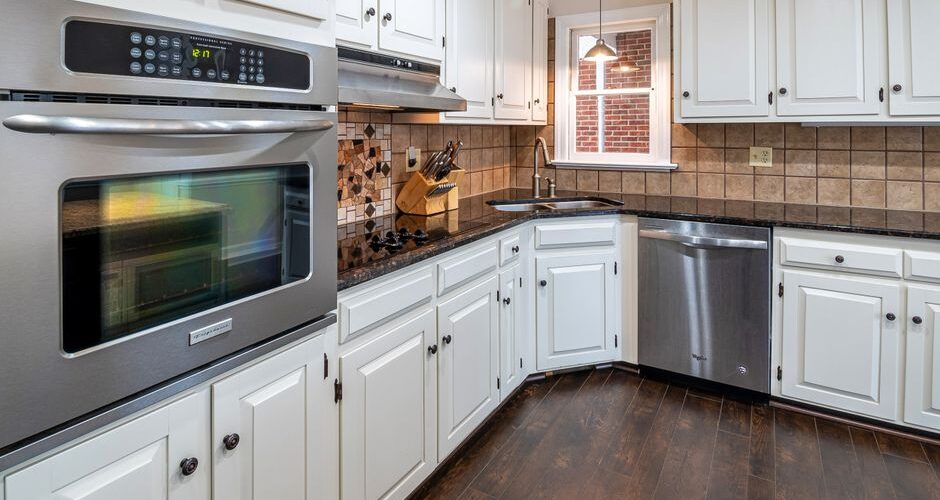
Most kitchen photos never show the part homeowners actually live with: the smell. A cabinet job happens inside a working house, often with kids, pets, and a fridge that cannot be unplugged for a week. That practical constraint is a big reason low-VOC cabinet refinishing has become a standard request across Denver in 2026, rather than a niche add-on for the eco-conscious. The goal is a finish that looks factory-smooth and does not turn the kitchen into a hazmat zone.
Here is how low-VOC products actually behave, why Denver’s dry air complicates the curing timeline, and what to ask before you sign anything.
What Low-VOC Actually Means on a Cabinet Job
VOC stands for volatile organic compounds, the solvents that evaporate out of a coating as it dries. That evaporation is what produces paint smell, and in a closed kitchen it is also what produces headaches and eye irritation for sensitive people. Low-VOC and zero-VOC products are marketed on exactly those two points: fewer fumes and faster dry times.
What the label does not tell you is how the coating performs. A lower-solvent product still has to level, adhere, and harden on a cabinet door that gets opened twenty times a day. Formulation quality matters more than the VOC number on the can. Ask any Denver refinishing company for the product line and the technical data sheet for the specific topcoat they plan to spray, not a general promise about being “green.”
Why Denver’s Dry Air Changes the Cure Conversation
Low humidity is the local variable that catches people off guard. Denver’s air pulls moisture out of a film quickly, which means a sprayed cabinet door can feel dry and look flawless the day the painter packs up and still disappoint two weeks later. Doors that stick shut, a permanent ring where a coffee mug sat, a corner that scuffs when a fingernail catches it: those complaints almost always trace back to one misunderstanding. The paint was dry, but it was not cured.
Dry and cured are different stages. Dry means the solvent has flashed off enough to touch. Cured means the film has crosslinked into the hard, chemical-resistant surface you are paying for. In a low-humidity climate that gap behaves a little differently than it does in a steamy summer elsewhere, and it is worth asking your contractor how they account for it in their schedule and their handling instructions for the first couple of weeks.
The Green Case for Refinishing Instead of Replacing
Material choice is only half the sustainability story. The other half is whether new cabinets get built at all. Refinishing reuses the boxes already in your kitchen, which means no new cabinet manufacturing, no demolition debris, and no truckload of replacement doors. For a kitchen whose layout works and whose cabinet boxes are solid, that is generally the lighter option on both waste and budget.
- Existing cabinet frames and boxes stay in place and get a new sprayed finish.
- No tear-out dust from removing and disposing of old cabinetry.
- Lower-solvent coatings reduce the odor load inside the home during application.
- The project timeline is usually shorter than a full replacement because layout and plumbing do not change.
What Cabinet Refinishing Costs in Denver
Cost is where vague promises fall apart, so it helps to start with a real reported range. Local professional listings on Houzz put the average cost for cabinet refinishing in Denver between $1,800 and $4,320. That is a range, not a quote, and the spread is wide for ordinary reasons: how many doors and drawers, how much repair the existing finish needs, and how dramatic the color change is.
| Item | Detail |
|---|---|
| Reported average range in Denver | $1,800 to $4,320 for cabinet refinishing |
| Source type | Local professional listings published on Houzz |
| What shifts the number | Door and drawer count, condition of the current finish, repair work, and the coating system specified |
| How to confirm | Get an itemized written estimate for your specific kitchen rather than relying on an average |
Treat that table as a starting point for a conversation. Two kitchens with the same door count can land at opposite ends of the range if one needs veneer repair and the other just needs a scuff sand and a color change.
Spray-Only Application and the Factory Finish
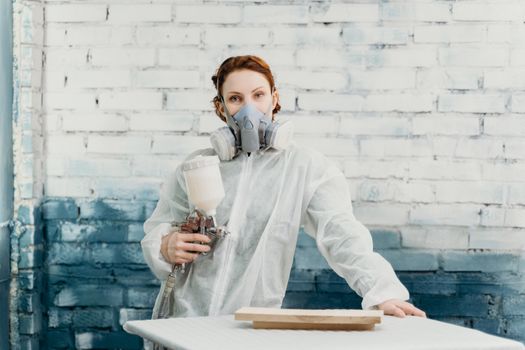
Application method affects both the look and the environmental profile. Spray equipment lays down a uniform film with no lap marks, no brush ridges, and no stipple in the corners, which is the difference between a finish that reads as factory and one that reads as a weekend project. Some Denver shops advertise high-performance two-component coatings such as Renner 2K, sprayed through professional equipment to build a hard, smooth surface.
Spraying also changes how the job is contained. Overspray has to be managed with masking and plastic, and the workspace needs real airflow. A crew that sprays well usually masks well, because the two skills come from the same discipline. Walk through the containment plan before work starts, especially if the kitchen opens onto living space you cannot vacate.
Living in the House While the Work Happens
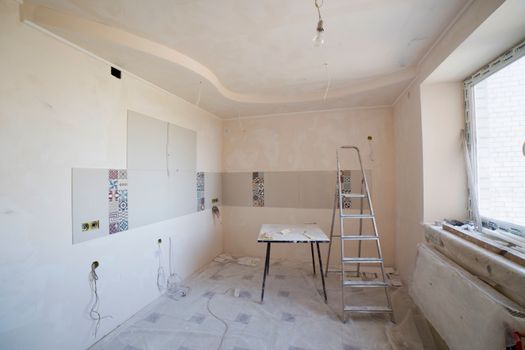
Low-VOC products reduce odor, but they do not eliminate the need for ventilation. Plan on open windows, running fans, and a clear agreement about which rooms stay usable on which days. Ask how the crew will seal doorways and protect counters, and ask what your handling instructions are for the first two weeks after the last coat, because that window is when a soft film is most vulnerable to fingerprints, mugs, and cleaning products.
If someone in the household is chemically sensitive, say so before the estimate, not after. Product selection happens at the quoting stage, and swapping a topcoat mid-job is a scheduling problem nobody wants.
Questions to Ask a Denver Refinishing Contractor
- Which specific primer and topcoat will you spray, and can I see the technical data sheet?
- How do you account for Denver’s low humidity when you schedule recoat and cure times?
- What does your containment and ventilation setup look like in an occupied home?
- How do you handle doors that are warped, swollen, or scratched before finishing?
- What does your warranty cover, and for how long?
- Which paint brands can you color match, and can I see samples on my own door before the full job?
Color matching to Sherwin Williams and Benjamin Moore lines is routine for established Denver shops, but samples on your actual cabinet door still beat a fan deck every time.
When Refinishing Is Not the Right Answer
Refinishing works best on cabinets that are structurally sound. If doors are badly warped, boxes are water damaged, or the layout no longer functions, a new finish will not fix the underlying problem. Cabinet refacing, which replaces doors and drawer fronts while renewing the visible surfaces, is a middle option some Denver companies offer. Repair work for warped doors and scratched painted cabinets is also available on its own, which is worth knowing if you inherited a finish you did not choose.
The honest version of the greener-kitchen pitch is this: keep what is solid, repair what is fixable, and put your money into a coating system and an application method that will still look right two years from now. Low-VOC gets you a more comfortable job site. It does not replace prep, product quality, or craft. Call a Denver refinishing specialist, get a free no-obligation estimate, and ask the questions above before anyone opens a can.
Frequently Asked Questions
Does low-VOC cabinet paint mean no smell at all?
No. Low-VOC and zero-VOC products are formulated to reduce fumes compared with conventional coatings, and they are often marketed as faster drying as well, but some odor is still normal during spraying and in the first days of curing. Ventilation still matters. Ask which product line will be used and what drying and curing windows the manufacturer publishes for it.
How long until Denver cabinets are fully cured?
Dry and cured are not the same thing, and low humidity in Denver can widen the gap between them. A film may feel dry the day the crew leaves while still hardening for a longer stretch afterward. Complaints such as sticking doors or mug rings typically show up about two weeks later. Ask your contractor for the manufacturer’s full-cure guidance and follow it.
Can I stay in my home during a low-VOC cabinet refinishing job?
Many homeowners do, since lower-solvent products reduce the odor load inside the house. It still requires planning: open windows, running fans, sealed doorways, and a clear schedule for which days the kitchen is off limits. Tell your contractor up front about chemical sensitivities, pets, or anyone who needs to use the kitchen daily so the containment plan can be built around it.
Is refinishing cheaper than replacing cabinets in Denver?
Reported averages for cabinet refinishing in Denver range from $1,800 to $4,320 according to local professional listings on Houzz, which is generally a smaller commitment than a full replacement kitchen. Your actual number depends on door count, current finish condition, repairs needed, and the coating system you choose. Get an itemized written estimate for your kitchen instead of relying on the average.