
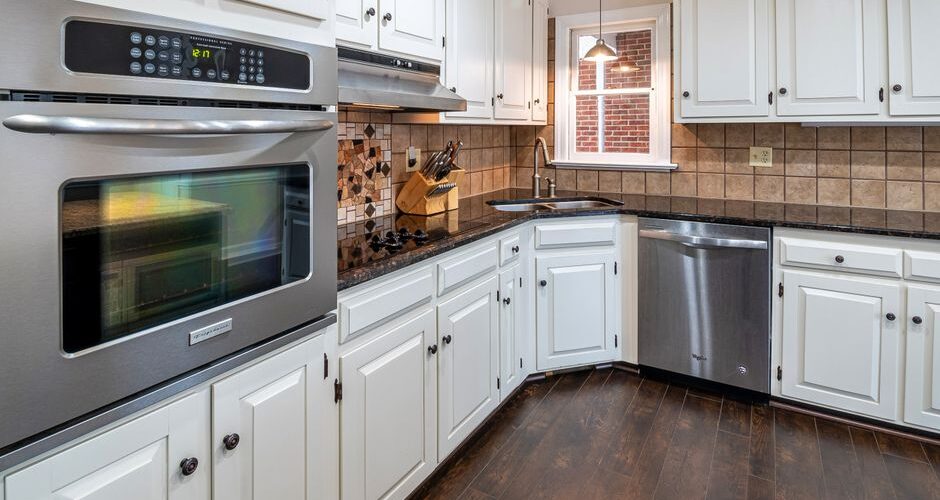
Denver homeowners reach the same fork in the road every year. The cabinet boxes are still square, the doors still close, and everything works, but the finish looks dated. Do you pay someone to refinish what is already there, or do you tear it out and start over?
In Denver, professional cabinet refinishing for an average kitchen typically costs $4,500 to $7,500, offering substantial savings compared to full cabinet replacement, which starts around $15,000 and can exceed $35,000. Cabinet refinishing is ideal when existing cabinet boxes are structurally sound and the goal is to update the finish and appearance, addressing issues like worn edges or outdated colors. Conversely, full cabinet replacement is necessary when there are structural problems such as water damage or soft panels, or if a complete kitchen layout change is desired.
The cabinet refinishing vs replacement decision in Denver usually comes down to two things: the condition of the boxes and the size of your budget. Cost is where the two paths separate fastest, and the gap in this market is wider than most homeowners expect.
The 2026 Cost Gap in Denver
For an average Denver kitchen, professional cabinet refinishing runs roughly $4,500 to $7,500. Full cabinet replacement starts around $15,000 and climbs past $35,000 depending on the size of the kitchen and the cabinet line you choose. That is a spread of tens of thousands of dollars for a room that ends up looking finished either way.
| Option | Typical Denver cost | What it covers |
|---|---|---|
| Professional cabinet refinishing | About $4,500 to $7,500 | Cleaning, repairs, sanding, and a sprayed finish on your existing boxes and doors |
| Full cabinet replacement | $15,000 to $35,000+ | New boxes, doors, and drawer fronts, plus removal and installation labor |
Refinishing providers around Denver advertise savings in the range of 60 to 80 percent compared with full replacement, and the local numbers above line up with that. When someone quotes you $30,000 to replace and $6,000 to refinish, the refinishing figure is not a discount trick. It is the difference between keeping your boxes and paying to build, deliver, install, and finish new ones.
What Refinishing Actually Fixes
Refinishing is not the same as brushing a coat of paint on your doors over a weekend. A professional job starts with cleaning and degreasing every surface, then filling, sanding, or smoothing out damage with professional repair compounds before any finish goes on. Gouges, small dents, and worn edges get handled at that stage.
Once prep is done, the cabinets are sprayed rather than brushed and rolled. Spray application is what produces the even, factory-like finish that holds up to daily use and reads consistently across every door and drawer front. Color matching to Sherwin Williams and Benjamin Moore paint lines gives you a wide palette without committing to a full remodel.
What refinishing does not fix is the layout. If the boxes are the wrong size, if a cabinet blocks the light, or if you want to move the sink, no amount of spraying solves that. Refinishing is a finish-level decision, not a floor-plan-level one.
What Replacement Actually Buys You
Replacement is the right call when the structure is the problem. Water damage, soft or swollen panel material, cabinets that will not sit level, or a layout you have outgrown all point toward new boxes. So does a kitchen where you want to add cabinet runs, change the door style entirely, or shift the footprint.
The tradeoff is disruption and cascade cost. New cabinets mean tear-out, delivery, and installation, and they often pull new countertops and backsplash along with them because the old surfaces will not fit back cleanly. That knock-on effect is why a cabinet decision can quietly turn into a full kitchen budget.
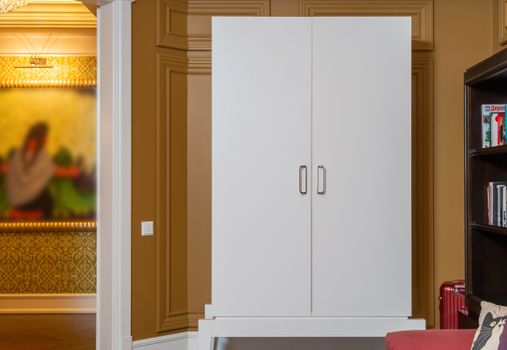
What are common arguments about cabinet refinishing vs. replacement?
Search long enough and you will find the contrarian take. In a Houzz discussion about replacing versus refacing cabinets, one commenter argued that repaint and reface work requires so much labor that a correctly refinished job ends up costing about the same as replacing. That post dates to 2013, repainting and refacing are not the same as a spray-only refinishing process, and current Denver pricing shows the gap holding wide.
Other discussions tell a more common story. One homeowner described 15-year-old cabinets that were still in excellent condition, wanting a refreshed look without touching the granite. A separate Houzz thread from 2015 followed the same logic in reverse, with homeowners debating whether new counters and appliances already justified new cabinets. The pattern holds: people replace when the structure or layout forces it, and refinish when only the finish has aged.
When Refinishing Pays Off Most
- Cabinets are structurally sound and the layout already works for you.
- You want a color change without tearing the kitchen apart.
- Counters, appliances, or flooring are staying.
- You are prepping a home for sale in the Denver metro.
- Budget matters and you want the largest visual change per dollar.
- You prefer lower-VOC, lower-waste work over discarding usable material.
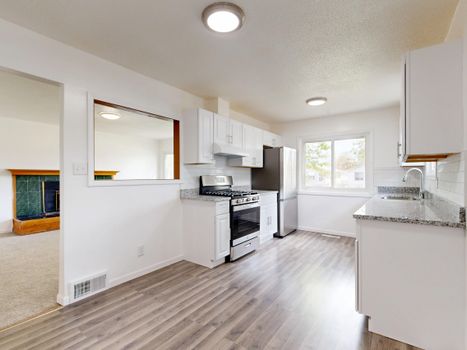
When Replacement Wins
- The boxes are damaged, sagging, or affected by water.
- You want a different layout or substantially more storage.
- Cabinet sizes or configurations no longer suit the room.
- You are already remodeling counters, plumbing, and flooring.
- You want a door profile or wood species that refinishing cannot deliver.
Resale Value in the Denver Market
Denver-area sellers lean on refinishing as listing prep because it changes what buyers see in photos for a fraction of a remodel budget. A spray-finished kitchen in a current color reads as updated. Buyers rarely ask what the cabinets looked like a decade ago; they react to what is in front of them during a showing.
If resale value is your deciding factor, ask a local real estate agent what comparable homes in your neighborhood are showing and price your update against that. Agent guidance is the only reliable way to weigh a kitchen refresh against your specific price point, since buyer expectations shift block by block across Denver, Aurora, Littleton, Centennial, Parker, Boulder, Lakewood, Arvada, and Golden.
How to decide between cabinet refinishing and replacement?
- Inspect the boxes. Open every door and drawer and look for soft spots, swelling, or cracks around the hinges.
- Test the layout. If you would not move anything even with a blank check, refinishing stays on the table.
- Get a refinishing quote. Compare the real number to what you assumed replacement would cost.
- Get a replacement quote. Ask what else has to change, including counters, backsplash, and plumbing.
- Weigh the disruption. Refinishing leaves the kitchen mostly in place; replacement takes it out of service.
- Vet the contractor. Ask how the finish is applied, what warranty backs it, and how color matching works.

Questions Worth Asking Any Cabinet Contractor
Whether you refinish or replace, the crew matters as much as the decision. Ask whether the finish is sprayed or brushed and rolled, since brush marks and roller texture are the usual reason painted cabinets look amateur. Ask what the warranty covers and how long it runs. Ask how color is matched and which paint lines are offered. Ask whether repairs to dings and worn edges are included in the quoted price.
Refinishing specialists in the Denver area often point to decades of local experience and factory-like spray finishes, and some back the work with warranty coverage worth confirming in writing. A three-year warranty is a reasonable benchmark to ask for. Verify experience claims and coverage terms directly with whoever you hire, since they vary from company to company.
Frequently Asked Questions
Is it cheaper to refinish cabinets or replace them in Denver?
Refinishing is significantly cheaper. Professional cabinet refinishing in Denver typically runs about $4,500 to $7,500 for an average kitchen, while full replacement starts around $15,000 and can exceed $35,000. Refinishing providers often advertise savings of 60 to 80 percent against replacement, which matches the Denver price ranges. The catch is that refinishing only makes sense when the boxes and layout are worth keeping.
Is it better to reface kitchen cabinets or replace them?
It depends on the boxes. Refacing and refinishing both keep the existing cabinet structure, so they work when the layout is fine and the boxes are solid. Replacement becomes the better choice when cabinets are damaged, sized wrong for the room, or part of a larger layout change. If you are also replacing counters and appliances, get both quotes first.
How much does it cost to have someone refinish your cabinets?
In the Denver area, expect roughly $4,500 to $7,500 for a professional refinishing job on an average kitchen. Pricing varies with cabinet count, condition, and how much repair the doors and boxes need before spraying. Get an on-site quote rather than a phone estimate, because prep requirements are hard to judge from photos alone.
Do I need new cabinets if I am already replacing my counters?
No, not automatically. Homeowners on Houzz have debated exactly this question when new counters and appliances were already in the budget, and many end up refinishing while keeping the counters they chose. The deciding factor is the cabinet boxes themselves. If they are solid and the layout works, refinishing pairs fine with new counters.
What should I ask before hiring a cabinet refinisher in Denver?
Ask whether the finish is sprayed rather than brushed and rolled, what the warranty covers, how color matching is handled, and whether repair of dings and worn edges is included in the price. Request a written scope of work and confirm the company serves your part of the metro, whether that is Denver, Aurora, Littleton, Parker, Boulder, Lakewood, Arvada, or Golden.