

Cabinets that look tired may still be worth keeping, while a smooth-looking surface can hide problems that make paint a poor choice. If you’re wondering how to tell if cabinets can be painted, the answer depends on more than appearance: the cabinet material, the condition of the surface, and the existing finish all matter.
Peeling coatings, water damage, or a slick surface can all affect the result. This checklist will help you spot conditions that may support painting, recognize when a professional assessment is a better next step, and compare painting with refinishing or replacement. Painting adds a new color and coating; refinishing removes the old finish and restores a natural wood appearance when the cabinets are suitable.
For Denver homeowners, keeping sound cabinets and updating their finish can be a cost-conscious alternative to replacement. Cabinet refinishing Denver specializes in professional cabinet painting and refinishing, with over 38 years of experience. This article explains why preparation depends on the cabinet material, what cleaning, sanding, and masking involve, and how spray application is used to pursue a smooth finish. By the end, you’ll have a clearer basis for deciding what your cabinets need.
Key Takeaways
- Check the cabinet boxes, doors, joints, and existing finish for signs that may affect whether painting is practical.
- Learn how to tell if cabinets can be painted by considering the material, surface condition, and preparation needs together.
- Compare painting, refinishing, and replacement based on cabinet condition and the look you want.
- A professional assessment can evaluate visible damage and the existing finish, then help clarify a suitable approach.
- When requesting a Denver-area assessment, share clear cabinet photos and point out visible damage.
How to Tell If Cabinets Can Be Painted: Start With These Signs
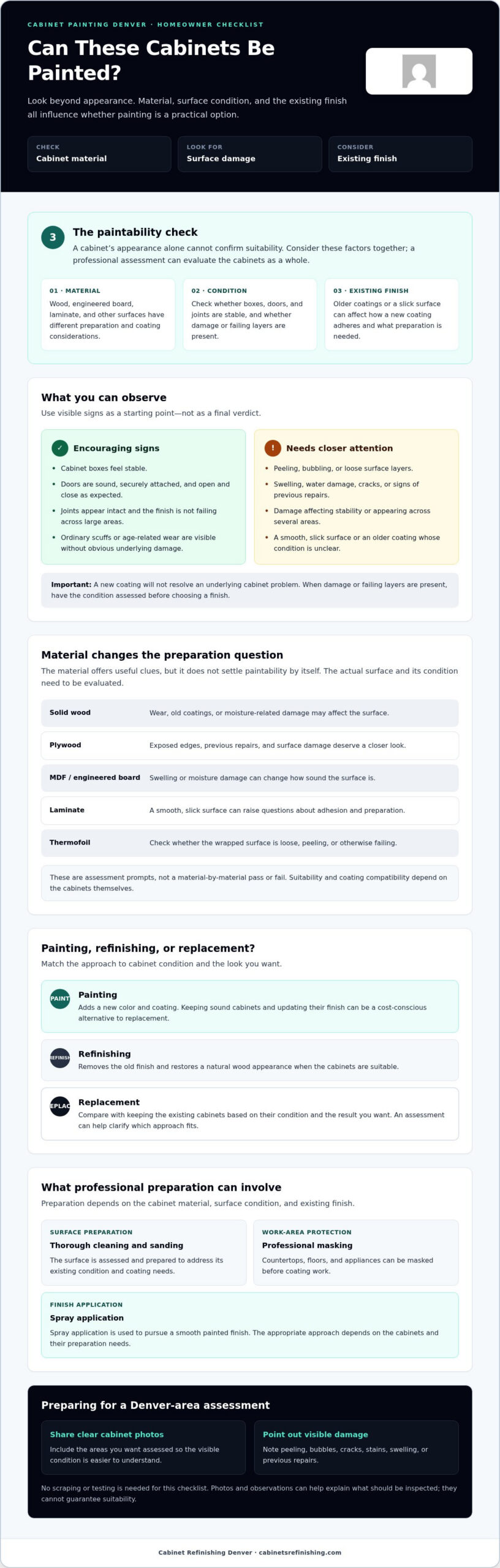
Many existing cabinets may be candidates for painting, but the decision depends on their material and condition. Start with the basics: cabinet boxes feel stable, doors are sound and securely attached, joints appear intact, and the finish isn’t failing across large areas.
Looks alone can’t confirm paintability. A clean-looking door may conceal swelling or an earlier repair, while an older finish may affect how a new coating adheres. The practical rule is simple: cabinet paintability depends on the substrate, surface condition, and professional preparation.
For a visual example of painted cabinets, watch the video below. The finished appearance alone doesn’t show whether your own cabinets are suitable for painting.
What cabinet condition suggests painting may be an option?
Stable boxes and doors that open, close, and remain firmly attached are encouraging signs. Ordinary scuffs or age-related wear don’t automatically rule out painting. Widespread peeling, bubbling, swelling, water damage, cracks, or loose surface layers deserve closer attention because a new finish won’t resolve an underlying problem.
If damage affects structural stability or appears across several areas, ask a professional to assess the cabinets before you choose a finish. An assessment can help distinguish surface wear from conditions that may call for restoration or another approach.
What should homeowners check before requesting an assessment?
Make a brief checklist. Note visible peeling, bubbles, cracks, stains, and previous repairs. Identify the materials as best you can, such as wood, engineered board, laminate, or another surface. You don’t need to test or scrape anything; these details simply help a professional understand what needs inspection.
Existing coatings matter too. Wood surfaces may have different oils, lacquers, varnishes, or other finishes, as described in this overview of understanding wood finishes. A professional evaluates the surface and determines the preparation and coating needs.
For professional cabinet painting in Denver, preparation can include thorough cleaning, sanding, and masking countertops, floors, and appliances, followed by spray application. Painting adds a painted finish; refinishing restores a natural wood appearance. This checklist is for observation, not a DIY test or a guarantee of suitability. A professional assessment is the way to evaluate the cabinets as a whole.
How Cabinet Material and Existing Finish Affect Paintability
The cabinet material gives a professional useful information, but it doesn’t settle the question by itself. Solid wood, plywood, MDF, laminate, and thermofoil can have different surface and coating considerations. Damage, the condition of the existing finish, and the preparation required all affect whether painting is appropriate.
Use this comparison as a starting point, not a verdict. Suitability and coating compatibility should be confirmed by assessing the actual cabinets.
| Material or surface | Common concern | Professional assessment guidance |
|---|---|---|
| Solid wood | Wear, old coatings, or moisture-related damage can affect the surface. | Check the wood’s condition and existing finish before determining preparation and coating needs. |
| Plywood | Exposed edges, previous repairs, or surface damage may need evaluation. | Assess the visible surface and construction rather than assuming all plywood cabinets are alike. |
| MDF | Swelling or damaged areas can change how sound the surface is. | Inspect for moisture damage and confirm suitability before selecting a coating system. |
| Laminate | A smooth, slick surface can raise questions about adhesion. | Evaluate the surface condition and determine whether an appropriate preparation approach is available. |
| Thermofoil | A wrapped surface may be loose, peeling, or otherwise failing. | Examine the wrap and its condition; don’t assume it can support a new finish. |
Can wood, plywood, or MDF cabinets be painted?
They may be candidates, but material labels alone don’t guarantee a suitable result. Wood and engineered substrates have different surface characteristics, and the right preparation depends on the actual cabinets. Swelling, water damage, or failing joints need attention before a professional can recommend a finish. A cabinet refinisher can assess these conditions and determine whether painting or another option makes more sense.
What if cabinets have laminate, thermofoil, or a glossy finish?
Slick, wrapped, or previously coated surfaces deserve closer evaluation. The key questions are whether the surface is sound and what preparation and coating system may be appropriate. Don’t rely on appearance alone or assume a particular product will solve an adhesion concern. For general background on the process, Bob Vila offers a step-by-step guide to painting cabinets, but an article can’t determine the condition of your specific surfaces.
If you’re still unsure how to tell if cabinets can be painted, note the material and any peeling, swelling, or loose areas, then request a professional assessment. Homeowners in Denver, Colorado, and nearby communities can learn more about cabinet painting and refinishing and discuss which approach may suit their existing cabinets.
Paint, Refinish, or Replace? Match the Choice to Cabinet Condition
These options solve different problems. Cabinet painting applies a new painted finish to suitable existing cabinets. Cabinet refinishing removes the old finish and restores a natural wood appearance. Replacement involves removing the existing cabinets and installing a new cabinet system, so it may be worth considering if the current cabinets have extensive structural damage.
The best fit depends on the cabinets’ condition and the appearance you want. A professional assessment can help distinguish cosmetic wear from damage that affects whether the existing cabinets are suitable to keep.
When is cabinet painting a practical alternative to replacement?
If the cabinet boxes are stable, doors are sound, and your main goal is a different color or painted look, painting may be a practical option. Keeping suitable existing cabinets avoids replacing the whole cabinet system just to change its appearance. That can make painting a cost-conscious update, though cabinet condition and preparation needs still matter.
A professional process involves more than applying a new color. It includes evaluating the surface, thorough cleaning and sanding, and masking countertops, floors, and appliances. Spray application can help create a smooth finish. In Denver, cabinet painting may suit homeowners who want to update their kitchen while keeping cabinets that remain sound.
When should homeowners consider refinishing or replacement?
Discuss refinishing if you prefer to reveal and restore a natural wood appearance rather than cover the surface with paint. The existing wood and finish condition will guide what restoration may be appropriate.
Consider replacement if cabinet boxes, joints, or other structural areas have extensive damage. Peeling or worn finish alone doesn’t necessarily mean cabinets must be replaced. An evaluation can help determine whether the problem is cosmetic or signals deeper damage that painting or refinishing won’t address.
- Consider painting when the cabinets are sound and you want a painted appearance.
- Discuss refinishing when a natural wood look is the goal and the cabinets may be suitable for restoration.
- Assess replacement when significant structural damage could compromise the existing cabinet system.
If you’re weighing how to tell if cabinets can be painted against refinishing or replacement, start with the cabinet structure, then match the finish choice to your preferred look. A cabinet professional can assess the existing surfaces and explain the options for your Denver home.
Cabinet Paintability Checklist: What a Professional Assessment Should Cover
A professional assessment follows a clear sequence: inspect the cabinet construction, evaluate the surface, note visible damage, consider the existing finish, and discuss the result you want. This helps determine whether painting is reasonable or whether the cabinets need closer evaluation before a finish is selected.
The assessment also turns observations into a project plan. A professional can explain which conditions are clear from the inspection and which questions may require further examination, rather than treating photos or appearance as a guarantee of suitability.
- Construction: Review cabinet boxes, doors, and joints.
- Surface and damage: Check visible wear, cracks, swelling, and repairs.
- Existing finish: Consider its condition and how it may affect preparation.
- Desired result: Discuss whether you prefer a painted finish or natural wood appearance.
Why do preparation and spray application matter?
Preparation is based on the assessment, not a one-size-fits-all assumption. A professional process includes thorough cleaning and sanding, with countertops, floors, and appliances carefully masked. These steps prepare the cabinets for coating and help protect nearby surfaces during the work.
In professional cabinet painting, spray application is used to pursue a smooth, consistent finish. It’s one part of the process, not a substitute for assessing the substrate and planning suitable preparation. The finished surface depends on the cabinet condition and the care taken during preparation.
What should you ask before choosing a finish?
Ask what the assessment found, what preparation is recommended, and whether any damage or existing coating needs closer review. Clarify how the proposed coating system relates to the cabinet material and surface condition. If you’re deciding between a painted appearance and natural wood refinishing, make sure the recommendation considers both your goal and the cabinets themselves.
Painting Kitchen Cabinets Denver provides professional cabinet painting and refinishing in the Denver area. To discuss an assessment and appropriate next steps for your cabinets, request a cabinet assessment.
Choosing Cabinet Painting in Denver: Your Next Steps
Start by checking whether the cabinet construction appears sound, then consider the surface condition and the finish you want. Photos and notes about visible damage can help a professional understand what to assess. Painting Kitchen Cabinets Denver serves homeowners in Denver, Colorado, as well as Highlands Ranch, Parker, Castle Pines, Englewood, Cherry Hills, Washington Park, Lakewood, Arvada, Wheat Ridge, Littleton, Aurora, and Centennial. Sharing these details is a practical first step toward a clear recommendation.
What information helps a cabinet specialist assess your project?
Share clear photos of the cabinet doors, cabinet boxes, and any areas that appear damaged. Include your preferred look, whether painted or natural wood, and mention any known history of peeling, moisture exposure, repairs, or previous finish work.
- Photograph affected areas and the surrounding cabinets for context.
- Note which surfaces show peeling, bubbling, cracks, or swelling.
- Describe the finish you hope to achieve.
These details help guide the conversation, but photos alone can’t confirm whether cabinets are suitable for a particular finish. An assessment can clarify what needs closer inspection.
How can Denver homeowners move forward confidently?
A professional evaluation can help determine whether cabinet painting, refinishing, or another option fits the cabinets’ condition and your goals. Painting Kitchen Cabinets Denver brings over 38 years of experience to cabinet painting and refinishing. Its professional approach emphasizes careful preparation, including cleaning and sanding, as well as masking countertops, floors, and appliances before finish application.
If you’re ready to discuss your cabinets and preferred finish, request a cabinet painting assessment. A clear assessment can help you choose the next step with confidence.
Make Your Cabinet Decision With Confidence
Knowing how to tell if cabinets can be painted starts with more than checking their appearance. Sound construction, the surface condition, and the existing finish all help determine whether painting is suitable. The right choice also depends on your goal: painting creates a new painted look, while refinishing restores a natural wood appearance.
A professional assessment can help distinguish surface wear from deeper damage and clarify whether painting, refinishing, or another option makes sense. For suitable cabinets, professional preparation matters. Thorough cleaning, sanding, and masking countertops, floors, and appliances support a carefully managed process.
Painting Kitchen Cabinets Denver brings over 38 years of experience to specialized cabinet painting and refinishing in the Denver area. If you’re ready to discuss your cabinet condition and preferred finish, request a cabinet painting assessment. A clear evaluation is a practical first step toward choosing an update that fits your home.
Frequently Asked Questions
How can I tell if my kitchen cabinets are suitable for painting?
Stable cabinet boxes, sound doors, intact joints, and surfaces without widespread peeling are encouraging signs. Look for visible swelling, water damage, bubbling, cracks, or loose finish, and note where these appear. These observations help you understand how to tell if cabinets can be painted, but they can’t confirm what’s happening beneath a coating. A professional assessment can evaluate construction, surface condition, and preparation needs before recommending an approach.
Can laminate or thermofoil cabinets be painted?
Some laminate or thermofoil cabinets may be candidates for painting, but suitability depends on the specific surface and its condition. Smooth, slick surfaces raise adhesion questions, while loose or peeling thermofoil needs careful evaluation. Don’t assume a coating will bond simply because the cabinets look intact. A cabinet professional can inspect the surface and determine whether preparation and a suitable coating system can be considered.
Can swollen or water-damaged cabinets be painted?
Painting doesn’t repair swelling or water damage, so the affected areas need assessment before a finish is chosen. If damage is limited and the cabinet structure remains sound, a professional can determine whether restoration or painting is appropriate. Widespread swelling, loose joints, or damage affecting stability may point to a deeper issue. Share where the damage is visible and any known history of moisture exposure during the evaluation.
Is cabinet painting better than replacing cabinets?
Cabinet painting may be a practical, cost-conscious alternative when the existing cabinet boxes and doors are in sound condition and you want a painted appearance. It updates the finish without replacing the entire cabinet system. Replacement may warrant consideration if the cabinets have extensive structural damage or no longer suit your needs. A professional assessment can help distinguish cosmetic wear from issues that affect whether existing cabinets are worth keeping.
What is the difference between cabinet painting and refinishing?
Cabinet painting applies a new painted finish to suitable existing cabinets. Cabinet refinishing removes the old finish and restores a natural wood appearance when the cabinets and existing surface are appropriate for that work. The choice depends on the look you want and the condition of the material beneath the current finish. An assessment helps clarify which service aligns with both your goal and the cabinets’ condition.
Does cabinet material determine whether it can be painted?
No. Material matters, but it doesn’t determine paintability on its own. Solid wood, plywood, MDF, laminate, and thermofoil each have surface characteristics and preparation considerations, while damage and the existing finish also affect the evaluation. For example, swelling in an engineered surface or peeling on a wrapped finish calls for closer inspection. A professional can assess the actual cabinets rather than rely on the material label alone.
Why do professionals clean, sand, mask, and spray cabinets?
Each step supports a controlled professional finishing process. Thorough cleaning addresses grease and residue, while sanding prepares the surface for subsequent work. Masking helps protect countertops, floors, and appliances. Spray application is used to pursue an even, smooth finish across cabinet surfaces. The preparation plan and coating system should reflect the cabinets’ material and condition, since the application method alone can’t resolve underlying damage or a failing surface.